
Attribution software is supposed to answer a deceptively difficult question: which marketing activity deserves credit for a conversion? The answer changes depending on your sales cycle, data volume, channels, and tolerance for modeling assumptions. This guide compares top marketing attribution software across 10 tools, including dedicated attribution platforms, incrementality products, ecommerce analytics suites, and a few adjacent options that may fit a practical growth workflow better than a traditional attribution dashboard.
Start here
The fastest way to narrow the field is to start with the measurement problem, not the feature list.
Need multi-touch attribution and consolidated reporting? Start with Growify. It combines consolidated metrics, multi-touch attribution, and comparative creative analysis, although its starting price will make it a considered purchase for a small business.
Need incrementality rather than another last-click report? Look at WorkMagic. Its geo testing and incrementality-calibrated marketing mix modeling are a better fit for teams asking whether ads caused additional demand.
Need ecommerce ROAS visibility? TrueROAS focuses on ad attribution, real-time ROAS tracking, and identifying wasted spend.
Need Shopify and Klaviyo-oriented analysis? MagicBean is a lighter, more accessible route to AI-powered insights and actionable ecommerce reporting.
Need to remove invalid traffic from the equation? Bearkd Clicktracker specializes in click fraud prevention, invalid traffic analysis, and adblock-proof tracking.
Need a broader growth system rather than pure attribution? Conversion Blitz, Metric.Tech, and AI Marketing CRM Software extend into lead generation, automation, CRM, and marketing control.
One important caveat: this is a broad field guide. Testmarket and MarketingAI, for example, are more adjacent to attribution than dedicated attribution suites. They remain useful alternatives when your real need is sales analysis, ROI planning, or campaign decision support rather than a formal multi-touch model.
Segment comparison
| Segment | Best starting point | What it measures or supports | Main trade-off |
|---|---|---|---|
| Multi-touch attribution | Growify | Consolidated metrics, multi-touch attribution, creative comparisons | Starter pricing begins at $299/month |
| Incrementality and causal measurement | WorkMagic | Geo incrementality testing and calibrated marketing mix modeling | Data loading can take 24-48 hours |
| Ecommerce ad attribution | TrueROAS | Real-time ROAS, AI ad attribution, ad waste | Results depend on campaign and data quality |
| Ecommerce insight layer | MagicBean | AI insights with Shopify and Klaviyo connections | Integrated-platform accuracy matters |
| Traffic quality and fraud | Bearkd Clicktracker | Invalid traffic analysis and click fraud prevention | Higher plans unlock more features |
The distinction between attribution and incrementality matters. Attribution distributes credit among touchpoints; incrementality asks what would have happened without the marketing activity. A platform can be excellent at one and unhelpful at the other, so do not treat every attractive ROAS dashboard as a causal measurement system.
Shortlist paths
| Your situation | Shortlist | Why these tools belong together |
|---|---|---|
| Small business building a measurable marketing stack | Growify, MagicBean, AI Marketing CRM Software | Reporting, ecommerce insight, and customer workflows in one practical path |
| Ecommerce brand scaling paid acquisition | TrueROAS, WorkMagic, Bearkd Clicktracker | ROAS, causal testing, and traffic-quality controls address different blind spots |
| Shopify-led operation | MagicBean, Metric.Tech | Both emphasize ecommerce workflows and Shopify integration |
| SEO or inbound-led growth | Conversion Blitz, MarketingAI | Lead generation, marketing plans, channel selection, and ROI projection |
| Marketplace or seller strategy | Testmarket, Growify | Seller analysis and broader marketing performance reporting |
Ranking snapshot
| Rank | Tool | Score | Best for | Starting price |
|---|---|---|---|---|
| #1 | Testmarket | 93/100 | Online shoppers | Check vendor pricing |
| #2 | Growify | 93/100 | Small businesses | Starter: $299 / month |
| #3 | WorkMagic | 93/100 | E-commerce brands | Check vendor pricing |
| #4 | Conversion Blitz | 92/100 | SEOs | Trial: Free |
| #5 | TrueROAS | 92/100 | E-commerce store owners | Starter Plan: $99/mo |
| #6 | MagicBean | 92/100 | E-commerce marketers | STARTER: $16/mo |
| #7 | Metric.Tech | 92/100 | Shopify store owners | Check vendor pricing |
| #8 | Bearkd Clicktracker | 89/100 | PPC specialists | Lite: $10 / month |
| #9 | MarketingAI | 89/100 | SaaS founders | Per URL: $79 $39 |
| #10 | AI Marketing CRM Software | 89/100 | Sales teams | Starter: $29.99 / Month |
How we grouped and ranked the list
A useful attribution shortlist needs more than a high feature count. We grouped these products by the job they perform: distributing conversion credit, testing causal lift, improving ecommerce ad visibility, filtering invalid traffic, or supporting the planning and execution around measurement.
We then weighed four practical questions. First, does the product offer a clear measurement mechanism, such as multi-touch attribution, incrementality testing, ROAS tracking, or invalid-traffic analysis? Second, is the workflow appropriate for the stated audience? A Shopify owner and a media science team should not receive the same recommendation. Third, how much operational friction is visible in the buying and setup process? Minimum order volume, data loading delays, sales-led pricing, and technical learning curves all count. Finally, does the tool provide a credible next action rather than merely another report?
The scores are close because the products solve different problems. Growify and WorkMagic lead dedicated measurement use cases, while Testmarket ranks first as a broad match for sales analysis and optimization. The lower-ranked tools are not necessarily weaker products; they are more specialized, more adjacent to attribution, or more dependent on a particular stack.
Ranked field notes
1. Testmarket

- Online shoppers
- Free membership with AI strategy and cashback rewards
- Starts at Check vendor pricing
- Usage signal: 44.6K

Why it matters Testmarket takes an unusual route into marketing attribution: it combines cashback and rewards for buyers with AI-powered sales strategy and analysis for sellers. That makes it less like a conventional media measurement console and more like a marketplace-oriented decision layer. Sellers can use A/B testing and AI analysis to examine which approaches perform better, while shoppers receive a direct rewards mechanism. For businesses selling through Amazon, eBay, Etsy, or Walmart, that combination is the reason to investigate it; for teams seeking a formal cross-channel attribution model, the marketplace dependence deserves careful scrutiny.
Best for
Marketplace sellers who want AI-assisted sales analysis.
Teams interested in A/B testing and optimization around marketplace activity.
Online shoppers who value cashback and rewards alongside purchasing.
Limitations
Reliance on third-party marketplaces, including Amazon, eBay, Etsy, and Walmart.
Results depend on the quality of the AI analysis and A/B testing process.
It is an adjacent choice rather than an obvious fit for a traditional enterprise attribution program.
Shortlist signal: Add Testmarket when marketplace sales strategy and buyer rewards matter as much as formal attribution reporting.
2. Growify

- Small businesses
- 14-day free trial
- Starts at Starter: $299 / month
- Usage signal: 6.9K
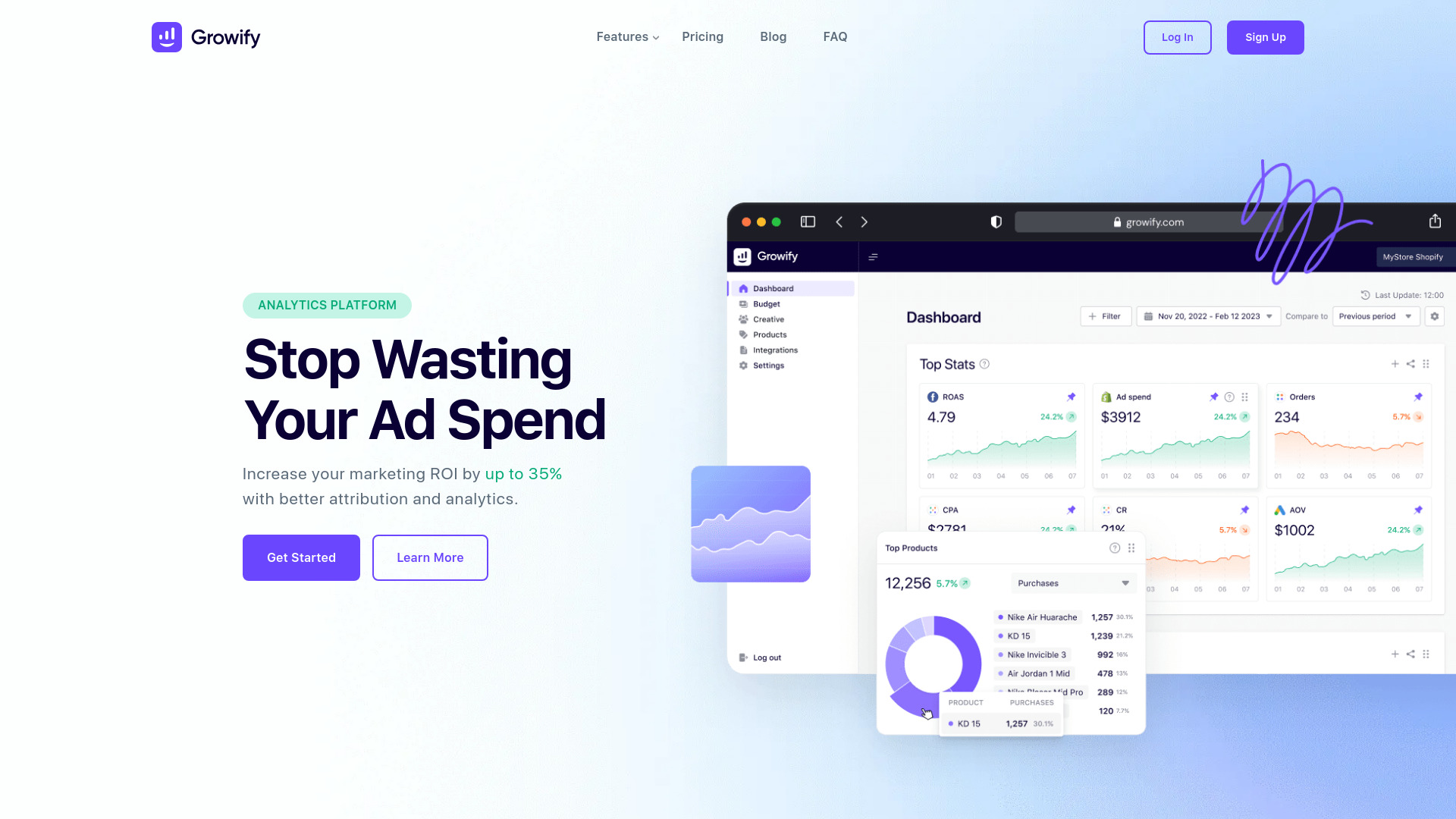
Why it matters Growify is the cleanest fit here for a buyer who wants attribution to sit inside a broader marketing performance view. Consolidated Metrics brings data into one place, while Multi-Touch Attribution gives the team a way to examine several interactions instead of defaulting to the final click. Comparative Creative Analysis adds a useful decision layer for teams that need to connect reporting with creative optimization. The catch is price: a $299 monthly starting point can be difficult to justify before tracking hygiene and reporting routines are already established.
Best for
Small businesses running marketing across multiple platforms.
Teams that need multi-touch attribution and consolidated metrics together.
Marketers comparing creative performance as part of optimization.
Limitations
Pricing may be a barrier for very small businesses.
Custom plan pricing requires contacting sales.
The value depends on having enough clean marketing data to consolidate.
Shortlist signal: Choose Growify when multi-touch reporting is the core requirement and a $299 monthly starting point fits the budget.
3. WorkMagic

- E-commerce brands
- Free access not specified
- Starts at Check vendor pricing
- Usage signal: 19.6K

Why it matters WorkMagic is the strongest specialist option for marketers who are tired of treating attributed revenue as proof of causation. Its Incrementality-based Attribution, Geo Incrementality Testing, and incrementality-calibrated Marketing Mix Modeling point toward a more rigorous measurement workflow. Automated testing reduces manual configuration, which is particularly valuable when a team wants repeatable experiments rather than one-off analysis. This is a serious option for ecommerce brands, but it is not a lightweight install: advertisers typically need a minimum order volume, and data loading can take 24-48 hours.
Best for
Ecommerce brands with enough order volume to run incrementality tests.
Performance teams evaluating geographic or channel-level causal lift.
Marketers who want marketing mix modeling calibrated against incrementality.
Limitations
Advertisers typically need a minimum order volume to participate in incrementality testing.
Data loading can take 24-48 hours.
Pricing is not presented as a clean public starting point, so buying requires vendor confirmation.
Shortlist signal: Put WorkMagic first when proving incremental lift matters more than producing another attributed-revenue chart.
4. Conversion Blitz

- SEOs
- Free unlimited articles and 200 enrichment features
- Starts at Trial: Free
- Usage signal: 4.0K
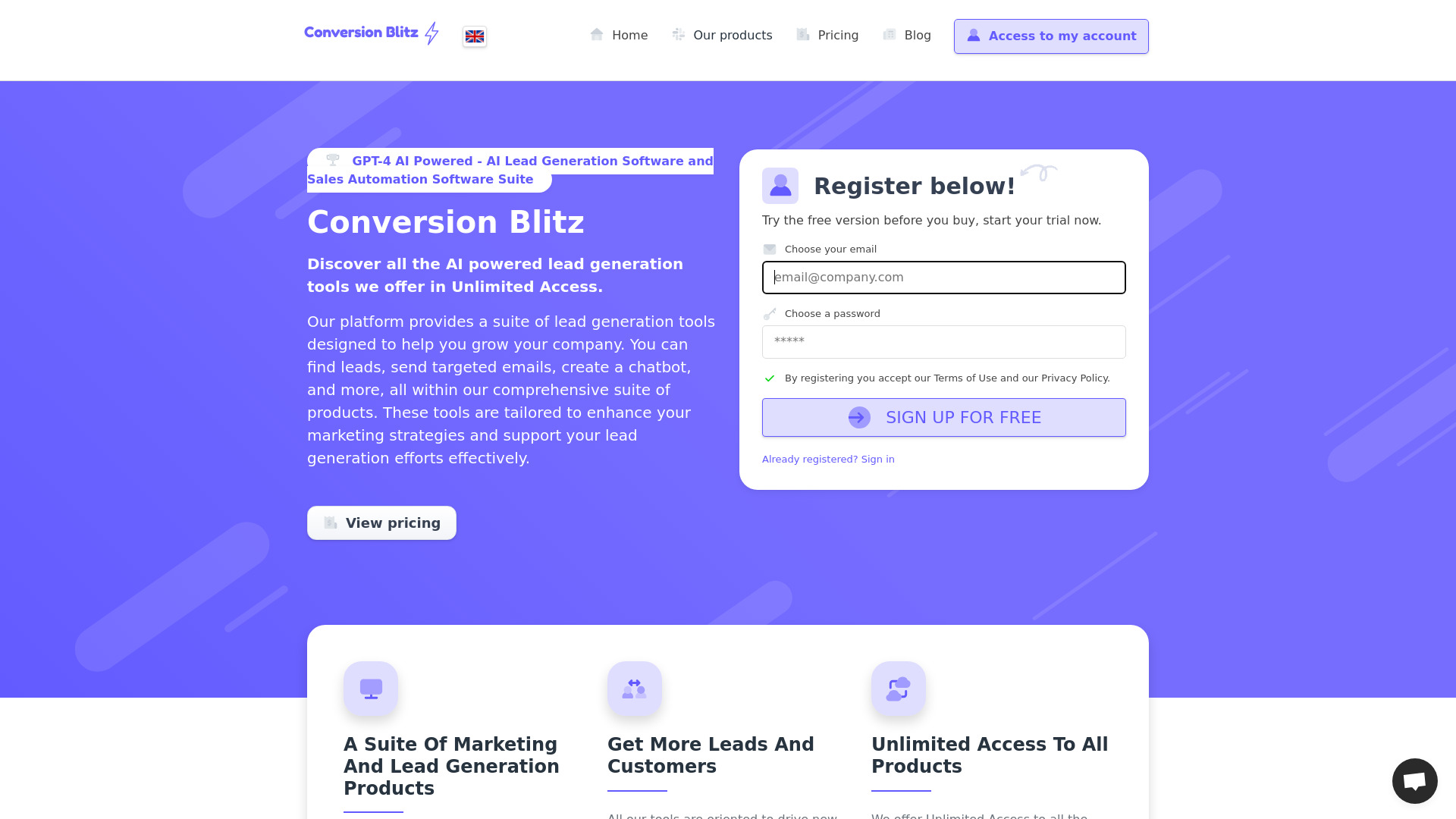
Why it matters Conversion Blitz approaches measurement from the top of the funnel. Its AI-powered lead generation, sales automation, and email marketing features can help an SEO or inbound team connect acquisition activity to downstream sales work. It is not a dedicated attribution model in the same sense as Growify or WorkMagic, but that broader workflow can be more useful for a team whose immediate problem is turning traffic into identifiable leads. The free version gives buyers a low-friction starting point, though the feature set is limited and some capabilities may require technical knowledge.
Best for
SEO teams building lead-generation workflows around organic traffic.
Businesses that need email marketing and sales automation alongside acquisition.
Users wanting to explore the product through a free trial experience.
Limitations
The free version has limited features.
Some features may require technical knowledge.
It is better suited to lead-generation operations than formal multi-touch attribution.
Shortlist signal: Add Conversion Blitz when the attribution question starts with lead capture, enrichment, and sales follow-up rather than media modeling.
5. TrueROAS

- E-commerce store owners
- 14-day free trial
- Starts at Starter Plan: $99/mo
- Usage signal: 3.0K
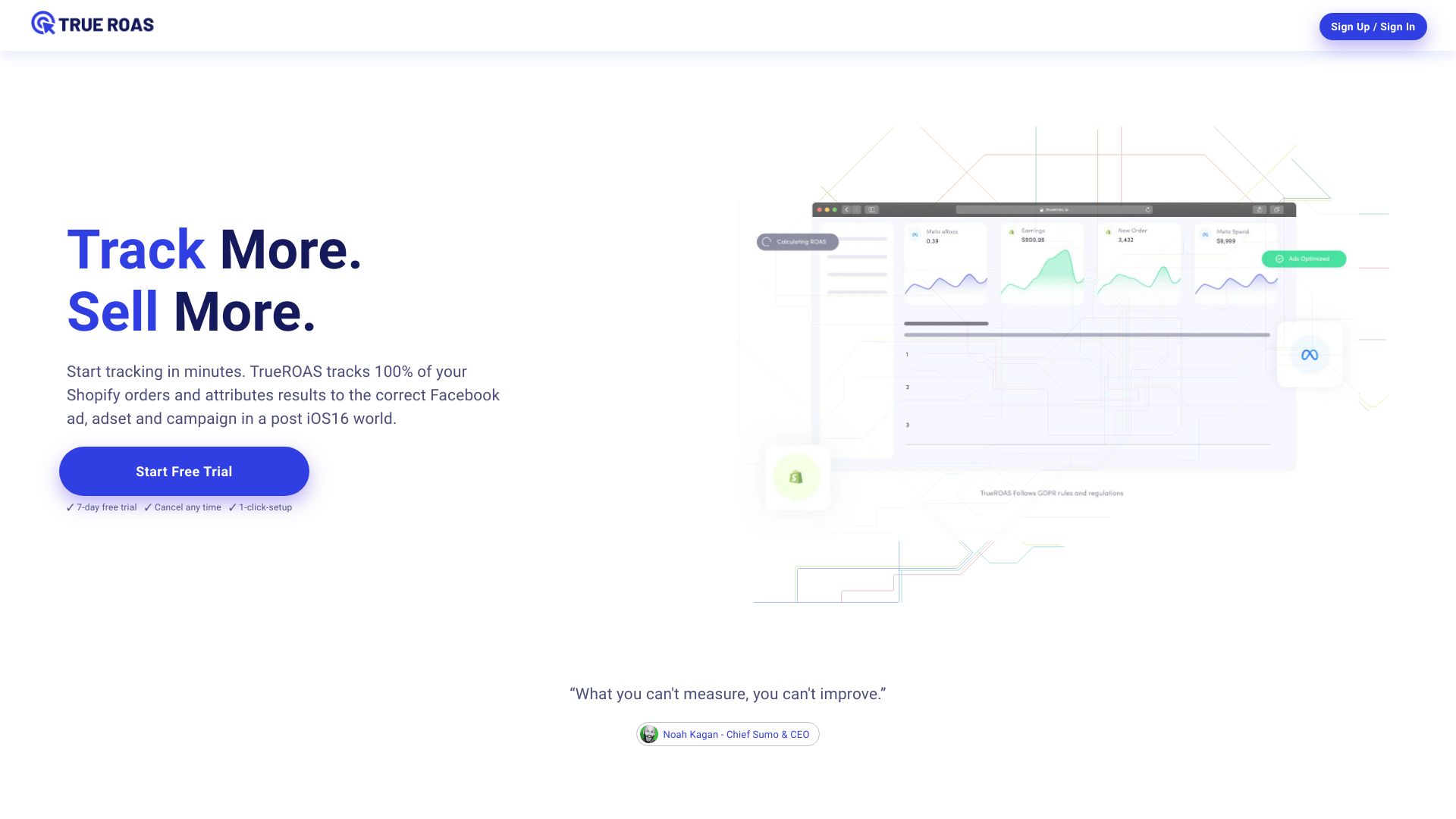
Why it matters TrueROAS keeps its promise narrow and useful: help ecommerce operators understand ad performance, improve ROAS, reduce CPA, and find wasted spend. AI-powered ad attribution and real-time ROAS tracking make it a practical choice for a store owner who needs campaign decisions without building a full marketing science function. Its positioning around accurate tracking in a post-iOS 17 environment is especially relevant for teams dealing with weaker signal quality. Still, the output can only be as dependable as the ad campaign setup and underlying data.
Best for
Ecommerce owners managing paid advertising directly.
Teams that prioritize real-time ROAS and CPA improvement.
Marketers looking for ad waste identification and AI-assisted optimization.
Limitations
Full access may require a paid subscription after the 14-day trial.
Effectiveness depends on data accuracy and ad campaign setup.
It focuses on ad attribution rather than the full breadth of customer-journey analysis.
Shortlist signal: Choose TrueROAS when your immediate buying decision is about paid ad efficiency, ROAS, and wasted spend.
6. MagicBean

- E-commerce marketers
- 14-day free trial
- Starts at STARTER: $16/mo
- Usage signal: 3.5K

Why it matters MagicBean is appealing because it turns ecommerce data into a more approachable insight workflow. AI-powered insights, Shopify and Klaviyo integration, and custom prompts and templates give marketers several ways to explore performance without starting from a blank analytics screen. Its $16 monthly starting price is notably easier to test than several products higher on this list. That accessibility comes with a reminder: the platform relies on the accuracy of the connected ecommerce systems, and the plans may not suit every business as usage grows.
Best for
Ecommerce marketers working with Shopify and Klaviyo.
Small teams that want actionable insights without a large analytics project.
Users who prefer custom prompts and templates for recurring questions.
Limitations
Pricing plans may not be suitable for all businesses.
Insights depend on the accuracy of integrated platforms.
It is an insight and analytics option, not the deepest incrementality product here.
Shortlist signal: Start with MagicBean when you want an inexpensive ecommerce insight layer connected to Shopify and Klaviyo.
7. Metric.Tech

- Shopify store owners
- Free access not specified
- Starts at Check vendor pricing
- Usage signal: 2.5K

Why it matters Metric.Tech is designed for the Shopify operator who wants marketing activity, automation, and store performance managed in a connected environment. AI-Powered Marketing, Seamless Integrations, and Marketing Control suggest a broader operating layer rather than a single-purpose attribution report. That can be valuable when the same person is responsible for campaign execution and measurement. The trade-off is a learning curve, while pricing is not readily available on the landing page, making a live vendor conversation part of the evaluation.
Best for
Shopify store owners managing marketing without a large specialist team.
Businesses seeking AI-powered marketing automation and integration.
Operators who want more control over campaign workflows and store growth.
Limitations
It may take time and training to use the full feature set.
Pricing information is not readily available on the landing page.
Buyers seeking only a dedicated attribution model may find the broader scope unnecessary.
Shortlist signal: Consider Metric.Tech when Shopify marketing control and automation are more important than a standalone attribution dashboard.
8. Bearkd Clicktracker

- PPC specialists
- 7-day free trial
- Starts at Lite: $10 / per month
- Usage signal: Not listed
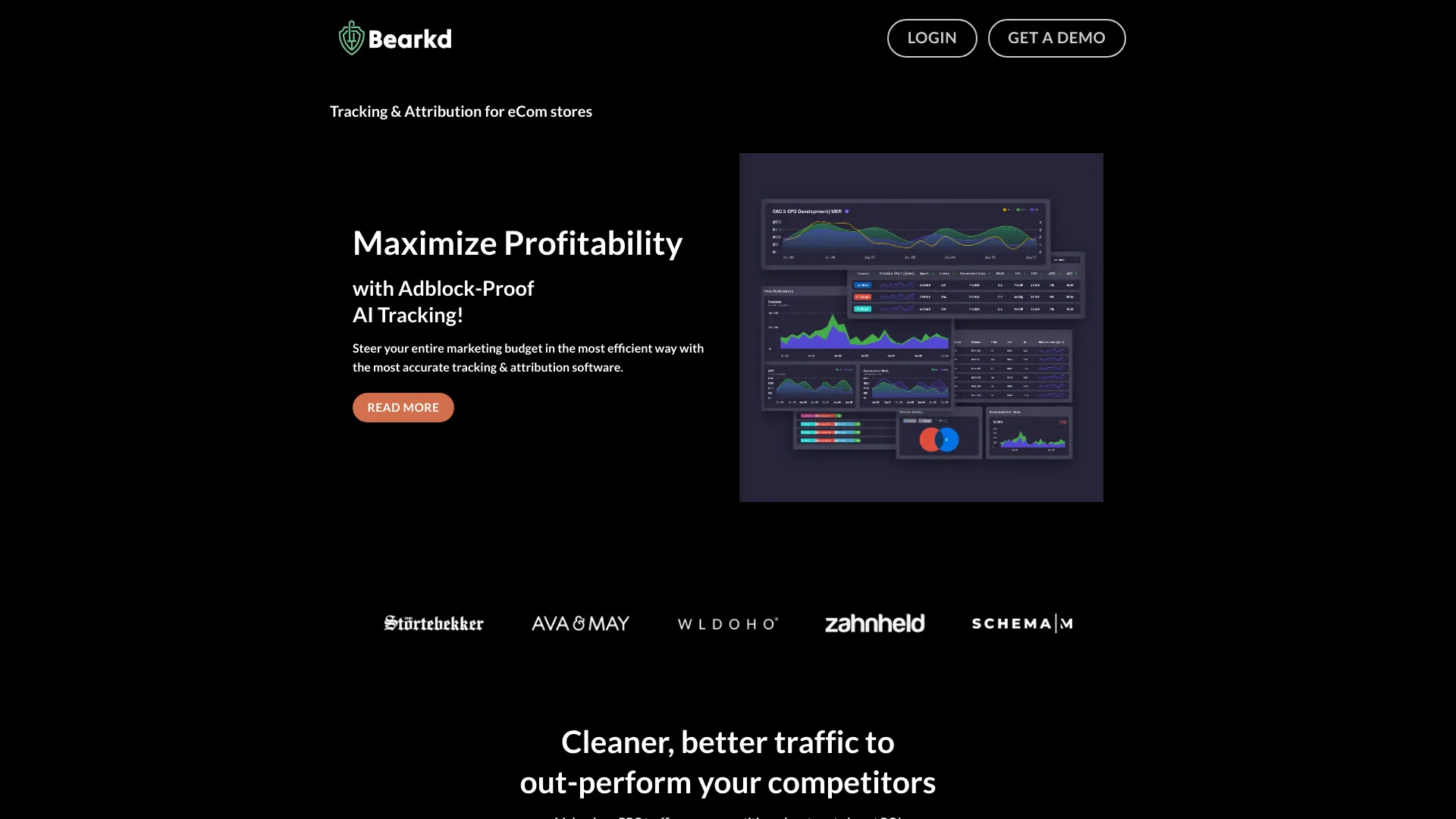
Why it matters Attribution breaks down when a meaningful share of clicks are fraudulent or invalid. Bearkd Clicktracker addresses that upstream problem with click fraud detection and prevention, invalid traffic analysis, comprehensive reporting, and adblock-proof AI tracking. PPC specialists can use it to protect the quality of the signals that later feed campaign decisions. It is a focused tool, not a replacement for a multi-touch attribution suite, and its pricing tiers limit spend and website count while some features are reserved for higher plans.
Best for
PPC specialists concerned about click fraud and invalid traffic.
Advertisers who need adblock-proof tracking.
Teams that want automated click fraud prevention and reporting.
Limitations
Pricing tiers limit spend and website count.
Some features are available only in higher-priced plans.
The tool focuses on traffic validity rather than assigning full customer-journey credit.
Shortlist signal: Add Bearkd before comparing ROAS tools if invalid clicks could be polluting your attribution data.
9. MarketingAI

- SaaS founders
- Customized marketing plan with ROI projection
- Starts at Per URL: $79 $39
- Usage signal: Not listed
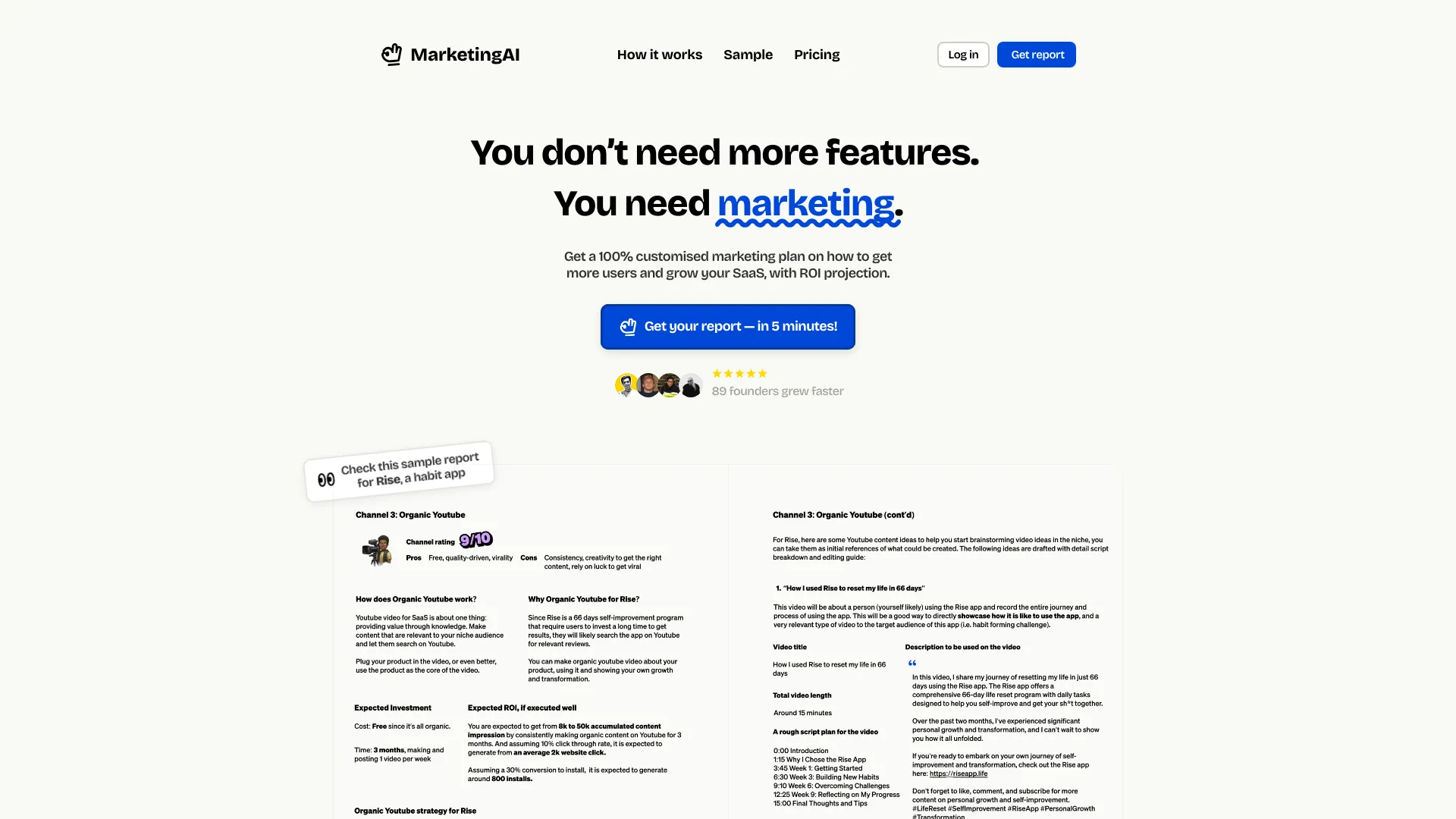
Why it matters MarketingAI is an adjacent choice for founders who are still deciding where attribution should begin. It generates a customized marketing plan, channel selection, and ROI projection in about five minutes, giving a SaaS team a concrete strategy to evaluate before investing in a larger measurement stack. The workflow is useful for planning and prioritization, but it should not be confused with ongoing event-level attribution. Cost per URL can add up, and relying on AI for strategy means the output still needs review against the company's actual funnel and data.
Best for
SaaS founders planning user acquisition and channel mix.
Teams that need a quick ROI projection and step-by-step guide.
Buyers exploring measurement priorities before adopting a full platform.
Limitations
The product charges per URL.
Strategy quality depends on the AI output and the information it can assess.
It is a planning tool, not a substitute for persistent conversion attribution.
Shortlist signal: Use MarketingAI when you need a fast channel and ROI plan before choosing a deeper attribution system.
10. AI Marketing CRM Software

- Sales teams
- Free access not specified
- Starts at Starter: $29.99 / Month
- Usage signal: Not listed
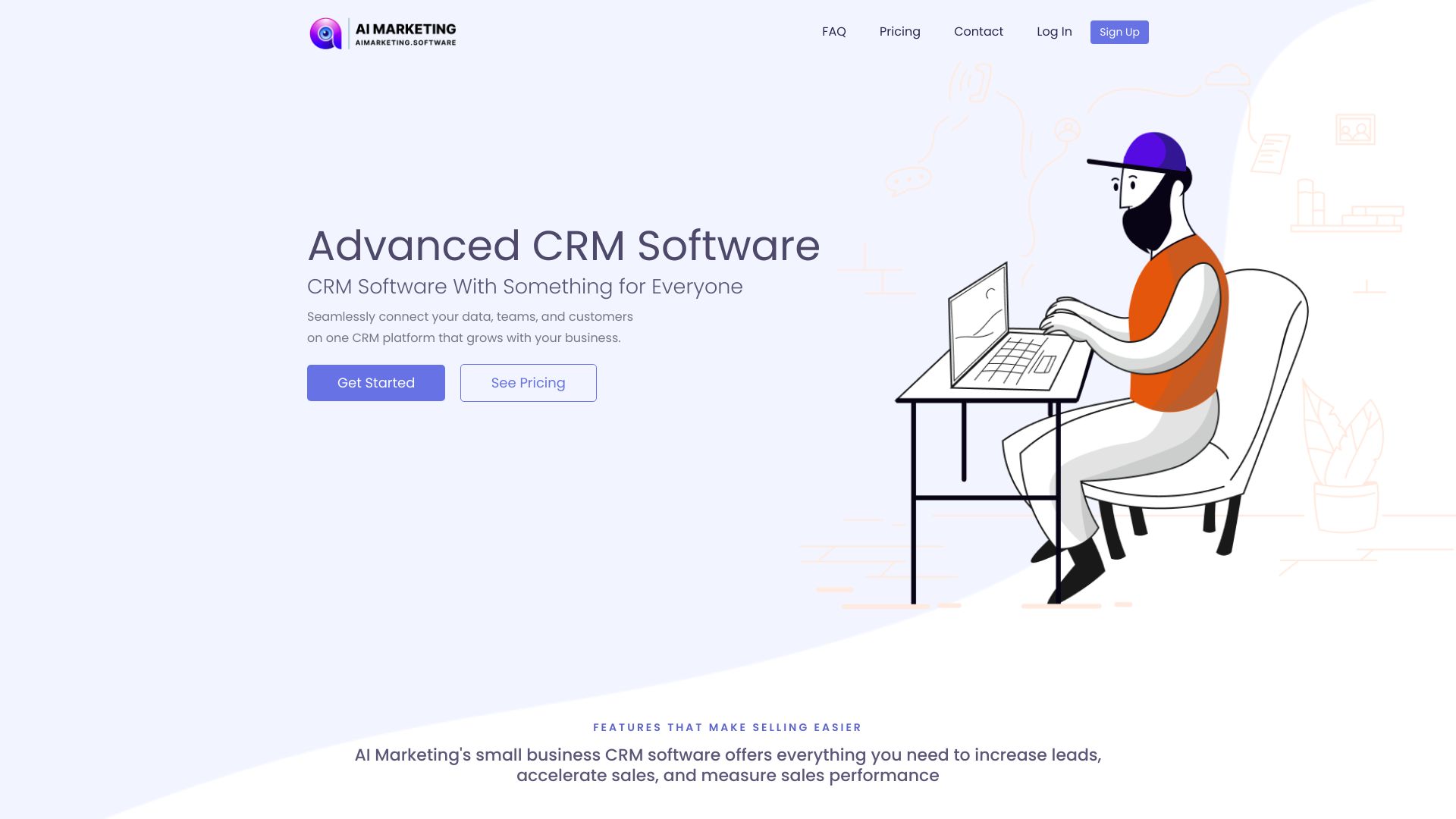
Why it matters AI Marketing CRM Software belongs on this list for teams whose attribution problem is inseparable from what happens after the lead arrives. Real-time analytics, personalized communication, and automated workflows bring measurement closer to sales execution, which can help a team act on campaign information rather than leave it in a reporting silo. The product is positioned as a comprehensive CRM, so it is a broader purchase than an attribution-only tool. Buyers should also allow time for training and make sure the pricing works for the intended team size.
Best for
Sales teams that need analytics and customer communication in one platform.
Businesses building automated workflows around incoming leads.
Organizations that value CRM context alongside marketing performance data.
Limitations
Teams may need training to use all features effectively.
Pricing may be a barrier for some small businesses.
Its broader CRM scope may be excessive for buyers seeking only attribution reporting.
Shortlist signal: Choose this route when the best attribution insight is the one your sales team can immediately use in a CRM workflow.
What to test before choosing
A demo can make every attribution product look interchangeable. Use a controlled checklist instead.
- 1
Trace one real conversion. Ask the vendor to show every available touchpoint, not just the winning channel. Confirm whether the product supports multi-touch attribution, single-touch views, or a modeled result.
- 2
Define the counterfactual. If incrementality matters, ask how geo tests are designed, what minimum order volume is required, and how long the test takes. WorkMagic, for example, explicitly notes a 24-48 hour data-loading window.
- 3
Inspect data freshness. "Real-time" should mean something operationally useful to your team. Ask when events arrive, when reports refresh, and whether historical data is backfilled.
- 4
Test a bad-data scenario. Deliberately examine duplicate events, missing campaign parameters, blocked pixels, or invalid clicks. A clean demo dataset hides the problems that distort attribution in production.
- 5
Separate reporting from action. Determine whether the tool only explains what happened or also supports creative comparison, ad waste identification, sales automation, or campaign changes.
- 6
Price the actual deployment. Check plan limits, order volume requirements, website counts, URL charges, trial restrictions, and whether custom pricing requires a sales call. The public starting prices in this list range from $10 per month to $299 per month, while several tools require vendor confirmation.
What to do next
Pick two tools from the same segment and one adjacent alternative. For example, an ecommerce brand could compare TrueROAS with WorkMagic, then use Bearkd Clicktracker to test whether traffic quality is undermining both reports. A Shopify operator could put MagicBean beside Metric.Tech, while a small business could compare Growify with the broader CRM workflow of AI Marketing CRM Software.
Bring the same questions and a representative data sample to each demo. Set a short evaluation period with one measurable outcome: reconcile reported conversions, identify wasted spend, validate incremental lift, or improve lead-to-sale visibility. Do not adopt a platform merely because it has more dashboards. Adopt it when the team can explain what changed, why the change matters, and what action follows.
Common mistakes when choosing from a complex top list
Treating all attribution as causal measurement. A model that allocates credit does not automatically prove that a channel created incremental demand.
Choosing by score alone. The 93/100 tools here solve materially different problems. Growify's multi-touch focus is not interchangeable with WorkMagic's incrementality testing.
Ignoring data prerequisites. Minimum order volume, integrated-platform accuracy, campaign setup, and data-loading time can matter more than the headline feature list.
Calling every analytics product attribution software. MagicBean, Metric.Tech, and the AI Marketing CRM are broader workflow products. That can be a benefit, but only if you need the surrounding capabilities.
Overlooking traffic quality. Invalid clicks can make downstream ROAS and attribution analysis look precise while remaining unreliable. A click fraud layer may be the better first purchase.
Comparing trial access with production readiness. A 7-day or 14-day trial can show the interface, but it may not reveal how the product handles historical data, reporting delays, or a complete customer journey.
Assuming public pricing is the final price. Confirm limits, custom-plan requirements, spend caps, website counts, and usage-based charges with the vendor before making a budget decision.
FAQ
Marketing attribution software helps teams analyze how marketing interactions relate to conversions and revenue. Depending on the product, that can include multi-touch attribution, AI-powered ad attribution, real-time ROAS tracking, incrementality testing, marketing mix modeling, or adjacent CRM and sales workflows.