
The phrase top answer engine optimization tools for saas companies covers a range of needs: measuring whether AI search engines mention your brand, improving content and technical SEO, and turning insights into changes your team can actually ship. We compared 10 tools for those workflows. A quick reality check: not every product here is a dedicated answer engine optimization platform. Sorank, Answerbit, Searchify, and Yo MaaS have the clearest direct connection; several others are adjacent tools whose fit depends on the work behind your visibility strategy. This guide separates those cases rather than pretending every tool solves the same problem.
Start here
Want SEO and AI-search work in one workflow? Start with Sorank. It combines AI-first SEO and GEO article generation with mention tracking across several prominent AI assistants.
Need daily visibility and citation monitoring? Look at Answerbit, which tracks answers, visibility scores, average rank, and competitor mentions across a set of AI platforms. Confirm that its supported engines match your target audience.
Want a first-pass AI search assessment? Searchify offers a free analysis, an AI Search Score, and recommendations. Its lightweight presentation makes it a sensible starting point, not a substitute for a broader measurement program.
Need technical diagnostics and GEO guidance? Yo MaaS joins website audits with GEO/AIO and strategy features. Budget for the per-scan charge before relying on deep dives.
Selling software to businesses? Treat the ecommerce, advertising, review-management, and general writing products below as adjacent options, not as direct AEO replacements. Their relevance depends on your actual acquisition channel and content workflow.
Segment comparison
| Segment | Tool | What it brings to the workflow | Main caveat |
|---|---|---|---|
| SEO plus AI-search optimization | Sorank | Content generation, SEO tasks, AI mention tracking, and backlinks | Three-day trial; subscription is per website |
| AI visibility measurement | Answerbit | Daily answer collection, visibility and rank tracking, competitor comparison | Pricing needs vendor confirmation; engine coverage is a consideration |
| Lightweight visibility assessment | Searchify | AI Search Score, recommendations, and content creation | Confirm pricing and workflow limits |
| Website diagnostics and GEO | Yo MaaS | Technical and SEO audits, GEO/AIO, buyer-persona guidance | Deep-dive scans cost $49.95 each |
| Adjacent marketing and research | Nexscope, Selzee Ads, RightResponse AI, Didoo AI, Build or Skip, BukiTools | Ecommerce research, ad production, reviews, market signals, or writing tasks | These are not core AEO measurement platforms |
Shortlist paths
| Your immediate goal | Start with | Why this path makes sense |
|---|---|---|
| Build a combined SEO and GEO content process | Sorank | It brings content generation, AI mention tracking, and backlink acquisition together. |
| Establish a repeatable AI visibility report | Answerbit | Daily collection and brand-versus-competitor visibility comparisons suit recurring monitoring. |
| Get an initial read without signing up | Searchify | Its free analysis and recommendations offer a low-friction first check. |
| Find technical and strategy issues on a site | Yo MaaS | It connects site diagnostics with GEO/AIO and growth recommendations. |
| Improve a supporting workflow, not AEO measurement itself | Build or Skip or BukiTools | The former explores product-market signals; the latter supplies a small set of free writing and productivity tools. |
Ranking snapshot
| Rank | Tool | Score | Best for | Starting price |
|---|---|---|---|---|
| #1 | Sorank | 92/100 | SEO professionals | $99/site/month |
| #2 | Nexscope | 92/100 | Ecommerce sellers | Free trial listed; currently waitlist/coming soon |
| #3 | Selzee Ads | 92/100 | Ecommerce brand owners | Free plan; paid from $75/month is advertised |
| #4 | Answerbit | 92/100 | SEO professionals | Check vendor pricing |
| #5 | RightResponse AI | 92/100 | Small business owners | $10/location/month, pay-as-you-go |
| #6 | Didoo AI | 91/100 | SMBs running Meta ads | $69/month, monthly Starter price listed |
| #7 | Build or Skip | 91/100 | Independent developers | Free preview; paid from $15.83/month is indicated |
| #8 | Searchify | 90/100 | SEO professionals | Check vendor pricing |
| #9 | Yo MaaS | 88/100 | Small business owners | Free plan; deep-dive scans cost extra |
| #10 | BukiTools | 88/100 | Content writers | Free |
How we grouped and ranked the list
This is a mixed field, so a single score should not be mistaken for a claim that all 10 products are interchangeable. We gave the strongest practical fit to products that connect directly to AI-search visibility, GEO, or the technical and content work that supports it. Sorank leads because it combines SEO and AI-search optimization tasks with AI mention tracking. Answerbit stands out for recurring visibility and citation monitoring, while Searchify and Yo MaaS address assessment and optimization from different angles.
The remaining tools serve neighboring jobs: ecommerce intelligence, advertising, review responses, product research, or lightweight writing. Those workflows can matter to a SaaS marketing organization, but they do not, on their own, measure whether a product appears in AI-generated answers. Their placement reflects their score and potential utility in the broader marketing stack, not a claim of direct AEO capability. Check the feature set and current availability before making a purchase decision, especially where a tool is waitlist-only or pricing is not clearly listed.
Ranked field notes
1. Sorank
- SEO professionals combining organic search and GEO work
- 3-day free trial
- Starts at $99 per site per month
- Usage signal: 39.9K
Why it matters
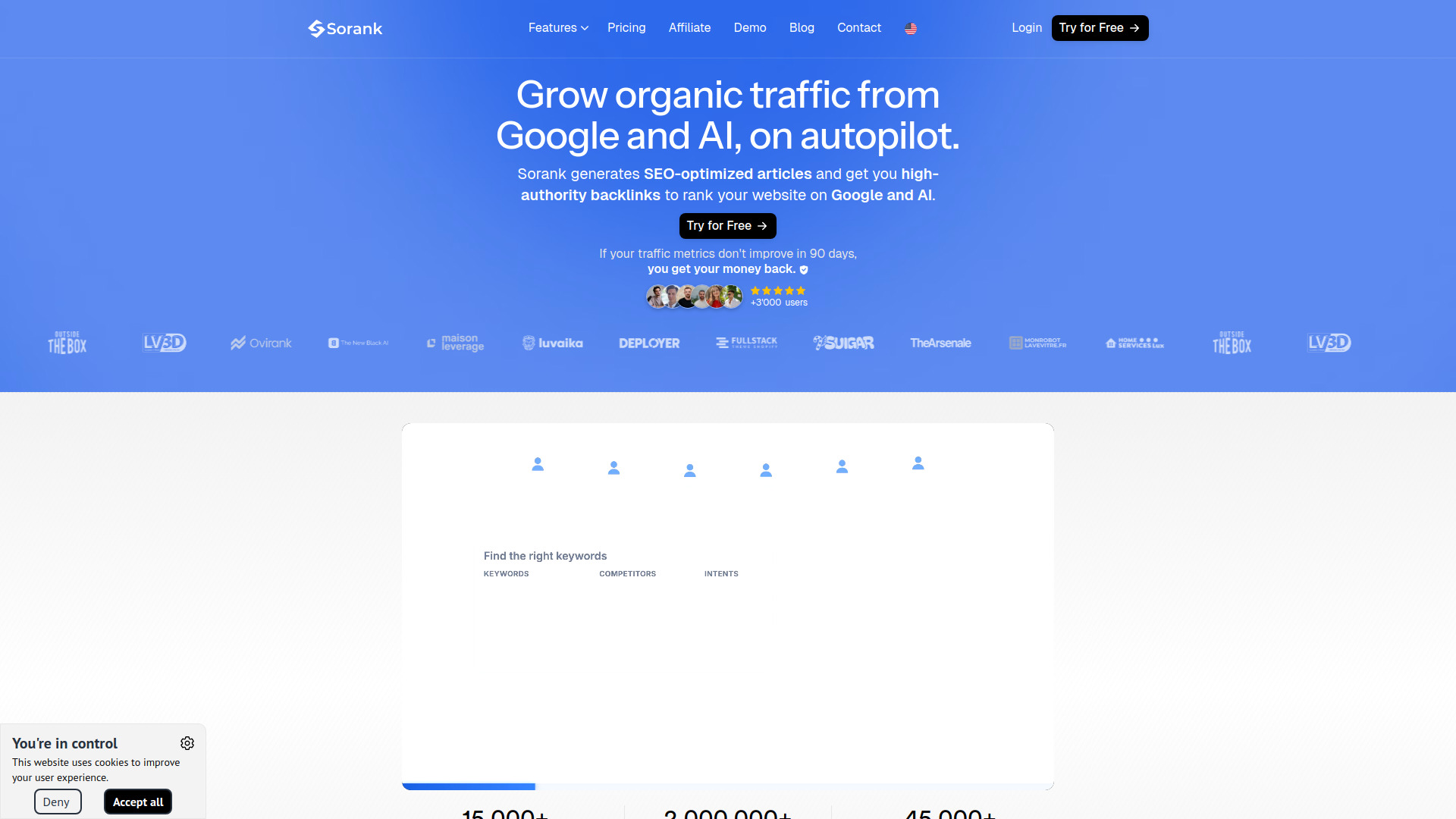
Sorank is the most convincing all-rounder in this set for a team trying to connect conventional SEO work with AI-search visibility. It combines AI-first SEO and GEO article generation with mention tracking across ChatGPT, Perplexity, Claude, Gemini, and Grok. The platform also automates keyword research, technical audits, and contextual backlink acquisition, giving a lean team several parts of the visibility workflow in one place. That breadth is useful, but it also means you should validate the quality of each output against your own editorial standards rather than assuming automation replaces review.
Best for
SEO teams building a repeatable GEO content and optimization process.
SaaS marketers who want to monitor mentions across multiple well-known AI assistants.
Teams willing to manage a separate subscription for each website.
Limitations
The free trial lasts only three days, leaving little time for a full evaluation.
Each website requires its own subscription, which can raise costs for multi-site companies.
The starting price is $99 per site per month, so check the economics before rolling it out broadly.
Shortlist signal: Add Sorank when you want SEO production and AI-mention monitoring in one paid workflow and can justify the per-site cost.
2. Nexscope

- Ecommerce sellers researching products and markets
- Early access; product research and competitor monitoring
- Starts at Free trial listed
- Usage signal: 48.2K
Why it matters
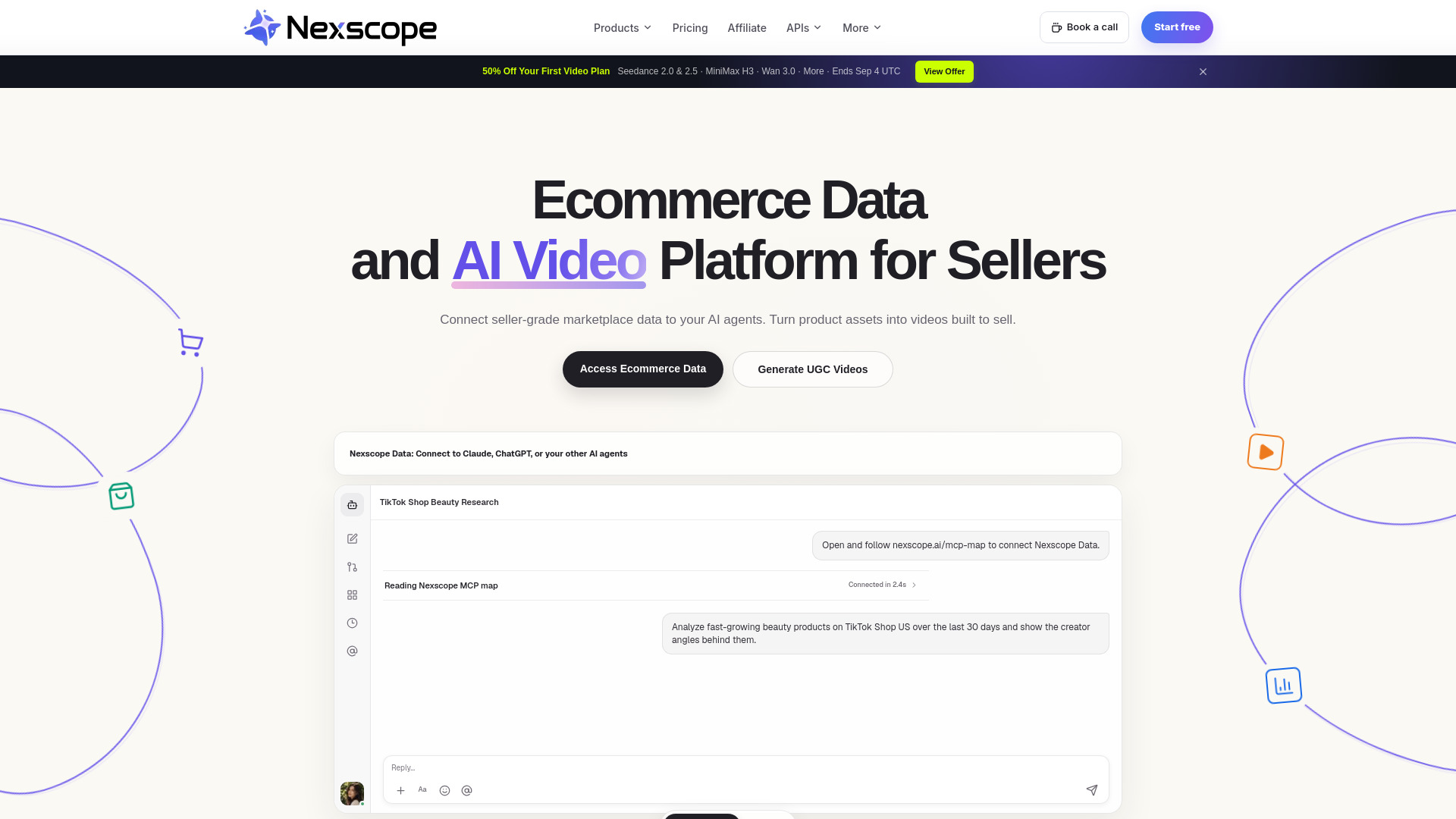
Nexscope uses specialized AI agents and multi-platform ecommerce data for product research, market intelligence, competitor checks, pricing analysis, and listing analysis. That can help an ecommerce operator investigate demand and listings, but it is not a direct answer engine optimization platform for a SaaS business. The key buying issue is availability: the product is described as coming soon or waitlist-only. Until you can access the working product, treat its stated scope as a reason to monitor it rather than a tool you can confidently put into an active AEO stack.
Best for
Ecommerce sellers looking to consolidate research and competitor workflows.
Teams that need product, pricing, or listing analysis across marketplaces.
Early-access seekers comfortable evaluating a product before full availability.
Limitations
It is currently in a coming-soon or waitlist phase.
The broad agent feature set may take time to learn.
Its ecommerce focus does not directly address SaaS brand visibility in AI answers.
Shortlist signal: Keep Nexscope on an adjacent-tool watchlist if ecommerce research matters to your business, but confirm access before planning around it.
3. Selzee Ads

- Ecommerce brands producing on-brand static ads
- 25 ads free; no payment card required
- Starts at Free; paid plan advertised from $75/month
- Usage signal: 22.8K
Why it matters
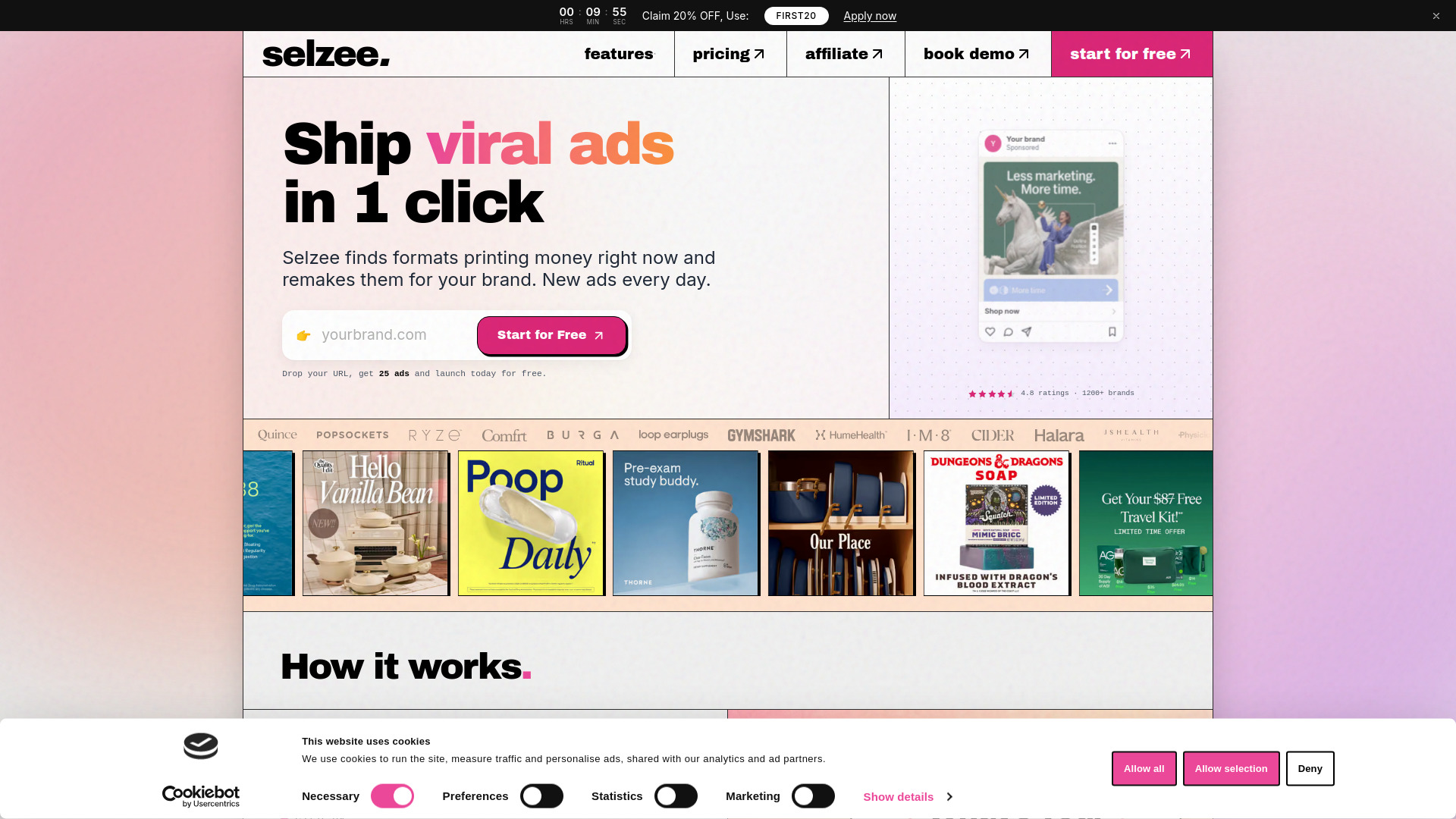
Selzee Ads takes a practical creative-production angle: it rebuilds static ads from winning Meta examples and applies a brand's products, logo, fonts, and colors. The service advertises 25 ads free without a payment card and says it can provide new ads daily. For a SaaS company, this might support paid social campaigns that sit alongside an organic or AI-search program; it does not track answer-engine mentions or optimize GEO content. That distinction matters when you compare it with a dedicated AEO product.
Best for
Ecommerce brand owners who need a steady stream of branded static ads.
Teams testing Meta creative concepts without commissioning every asset individually.
Marketers who value a free starting allowance before committing to a paid plan.
Limitations
It produces static image ads, not video, UGC video, or AI-avatar content.
Posting or scheduling is described for Instagram and Facebook.
It is an advertising-creative tool, not an answer engine visibility tracker.
Shortlist signal: Consider Selzee Ads for a separate paid-social creative workflow, not as a substitute for AEO measurement or GEO optimization.
4. Answerbit

- SEO teams tracking AI answers and citations
- Free access not specified
- Starts at Check vendor pricing
- Usage signal: 22.7K
Why it matters
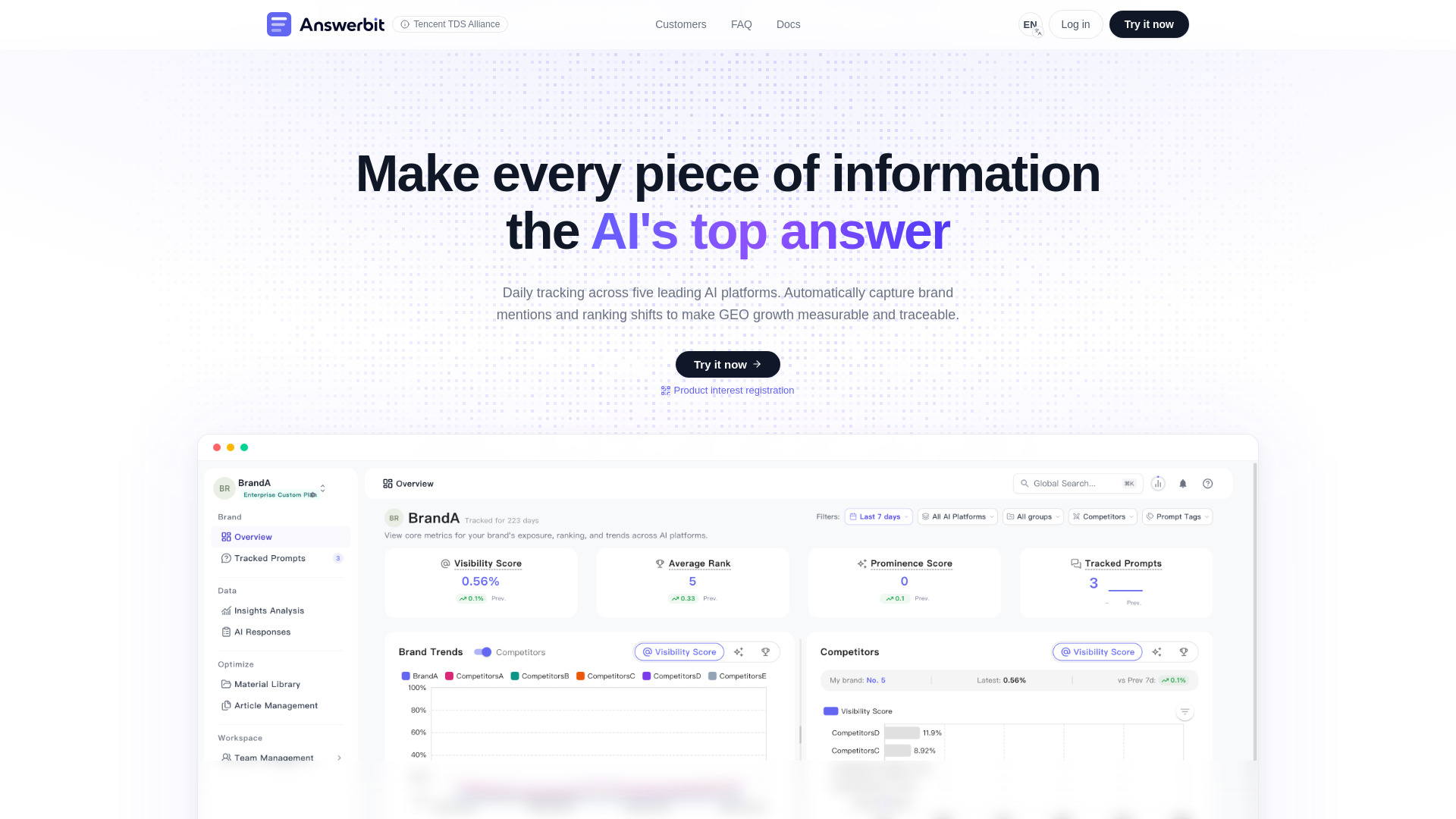
For teams that need a recurring read on AI-search presence, Answerbit's daily monitoring is the clearest part of its pitch. It collects AI answers and reports a Visibility Score and average rank, then lets you compare brand mentions with competitor visibility. Its listed engine coverage includes DeepSeek, Doubao, Yuanbao, Kimi, Qwen, and other leading platforms. That focus can be valuable if those engines matter to your customers, but buyers should check coverage against their actual audience and confirm pricing directly. Monitoring is a starting point; a useful evaluation should also show whether your team can turn findings into content or site changes.
Best for
SEO professionals who need daily monitoring rather than occasional spot checks.
Teams comparing their visibility with named competitors.
Companies whose audience uses the AI platforms Answerbit currently supports.
Limitations
Pricing is not clearly published, so request current commercial terms.
Its engine coverage is limited to the platforms it supports; verify that list before adopting it.
Visibility reports do not automatically resolve content, technical, or authority gaps.
Shortlist signal: Shortlist Answerbit when daily AI-answer visibility and competitor comparisons are your main measurement need.
5. RightResponse AI

- Small businesses managing reviews and responses
- 7-day trial with 1,000 free credits
- Starts at $10/location/month, pay-as-you-go
- Usage signal: 12.0K
Why it matters
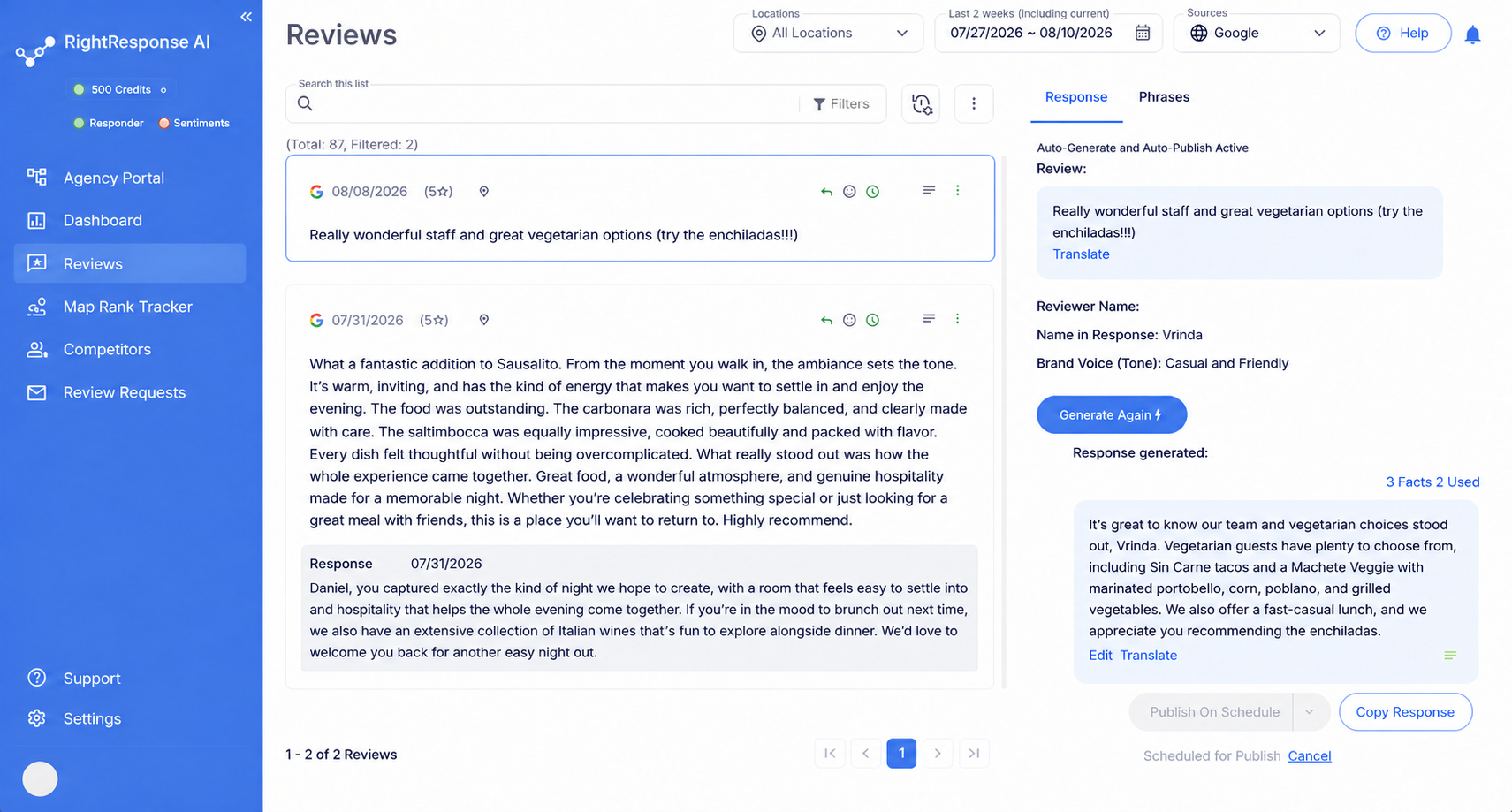
RightResponse AI handles review operations: its multi-agent workflow can generate and publish responses, with a human approval step, and it offers sentiment analysis. Those functions can support reputation management, an adjacent concern for businesses that care about how customers encounter their brand online. But this is not a dedicated answer engine optimization platform, and its listed Google Maps ranking workflow is more naturally aligned with local visibility than SaaS search strategy. Its relevance depends on whether public reviews are part of your acquisition and trust-building process.
Best for
Small businesses that need help responding to customer reviews at scale.
Teams that want AI-generated responses subject to human approval.
Operators who can use sentiment analysis and local rank tracking in their reputation workflow.
Limitations
Usage-based pricing can make monthly spending less predictable.
Some enterprise features are described as requiring higher-tier capabilities.
Its review and local-reputation focus is not a replacement for AI answer monitoring.
Shortlist signal: Consider RightResponse AI when review response operations are a real marketing priority, not because you need an AEO dashboard.
6. Didoo AI - URL in, Meta ads out. One Click to Outperform.

- SMBs automating Meta ad campaigns
- 7-day free trial
- Starts at $69/month, Starter monthly plan
- Usage signal: 9.5K
Why it matters
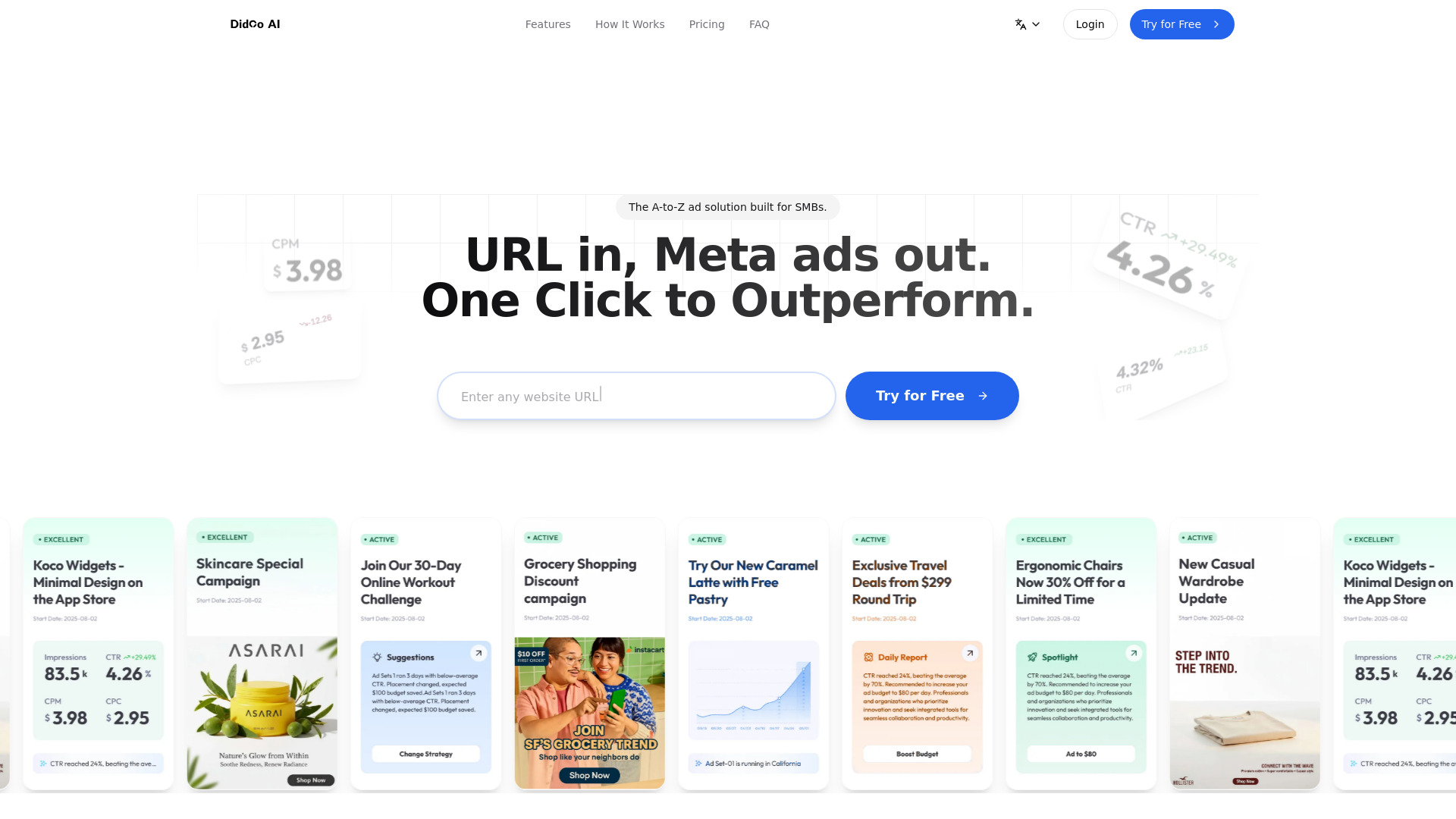
Didoo AI takes a URL-first approach to Meta advertising: it can create and launch ads, generate creative and copy, target audiences, and optimize budgets. That can be useful for a small team trying to run Facebook and Instagram campaigns with less manual setup. Its workflow is about paid acquisition, not appearing in AI-generated answers. The distinction is especially important for SaaS buyers who may be comparing AEO software by monitoring, citation analysis, and content optimization rather than campaign automation.
Best for
SMBs running campaigns exclusively on Facebook and Instagram.
Teams that want to generate and launch ads from a website URL.
Marketers seeking automated targeting and budget optimization for Meta campaigns.
Limitations
The product focuses on Meta Ads, not a broad set of ad platforms.
Monthly versus quarterly pricing can be presented confusingly; confirm the billing terms.
It does not provide the AI-search visibility workflow this guide primarily evaluates.
Shortlist signal: Add Didoo AI only if Meta campaign automation is a separate, immediate need for your team.
7. Build or Skip
- Independent developers researching product signals
- Free preview
- Starts at Free preview; paid from $15.83/month indicated
- Usage signal: 7.2K
Why it matters
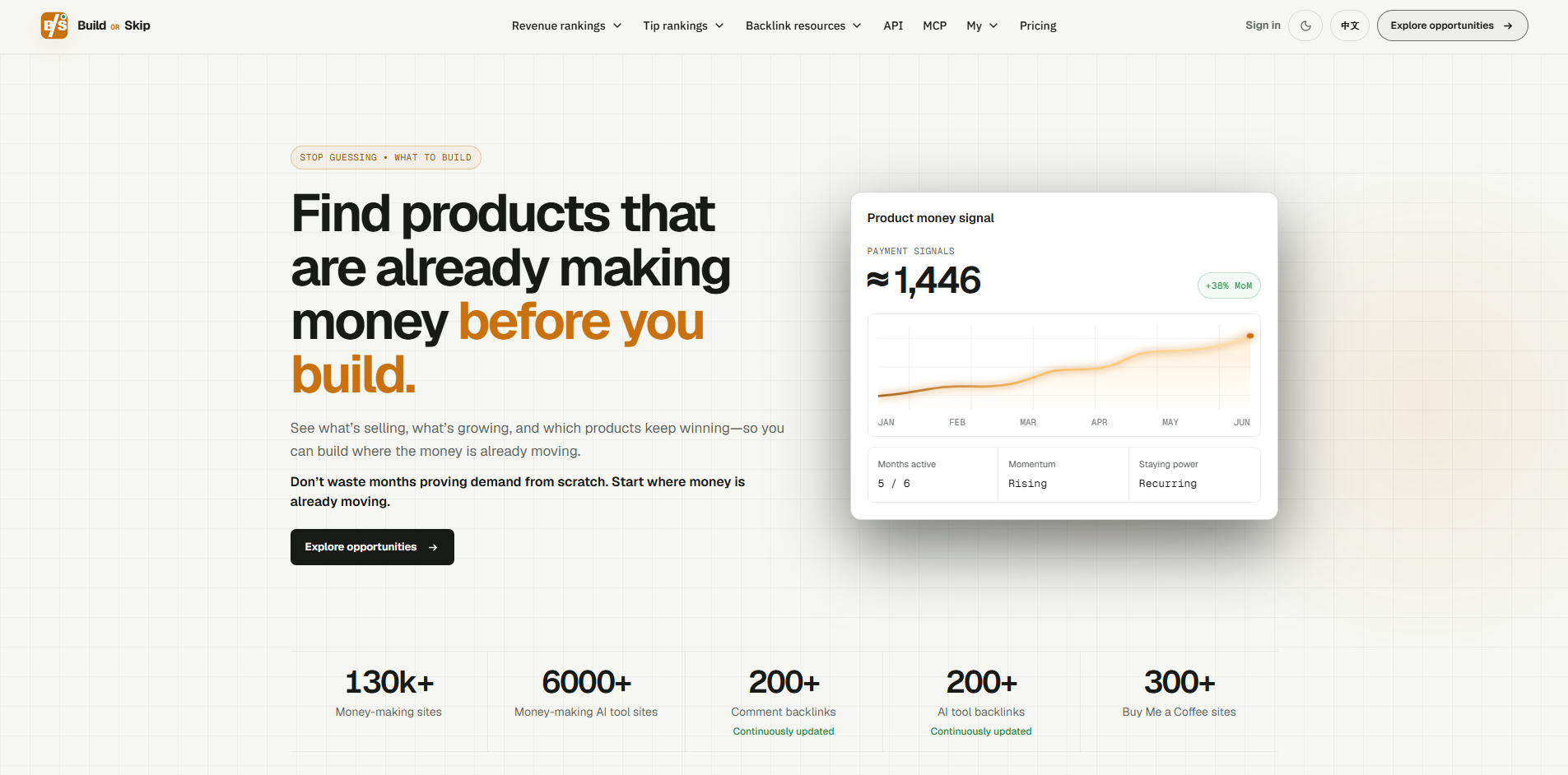
Build or Skip looks outward at product-market signals rather than inward at your own AI-search performance. It combines estimated payment signals, tipping trends, traffic, domain data, and backlink research, with month-by-month views intended to help developers assess product momentum. That can inform competitive research or idea validation, but payment estimates are not verified revenue, orders, or customer counts. For SaaS marketers, treat it as a research aid-not evidence that a competitor is succeeding or a tool that measures your brand's citations in AI answers.
Best for
Independent developers exploring products and commercial signals.
Researchers comparing estimated trends over time.
Teams interested in domain, backlink, or public tipping data as context.
Limitations
Payment signals are estimates, not verified sales or revenue.
Domain registration dates do not prove when a product launched.
The product does not directly track SaaS visibility in AI-generated answers.
Shortlist signal: Use Build or Skip as a supplementary market-research tool when you understand the uncertainty in its estimates.
8. Searchify

- SEO professionals seeking an initial AI-search assessment
- Free analysis; no sign-up required
- Starts at Check vendor pricing
- Usage signal: 106
Why it matters
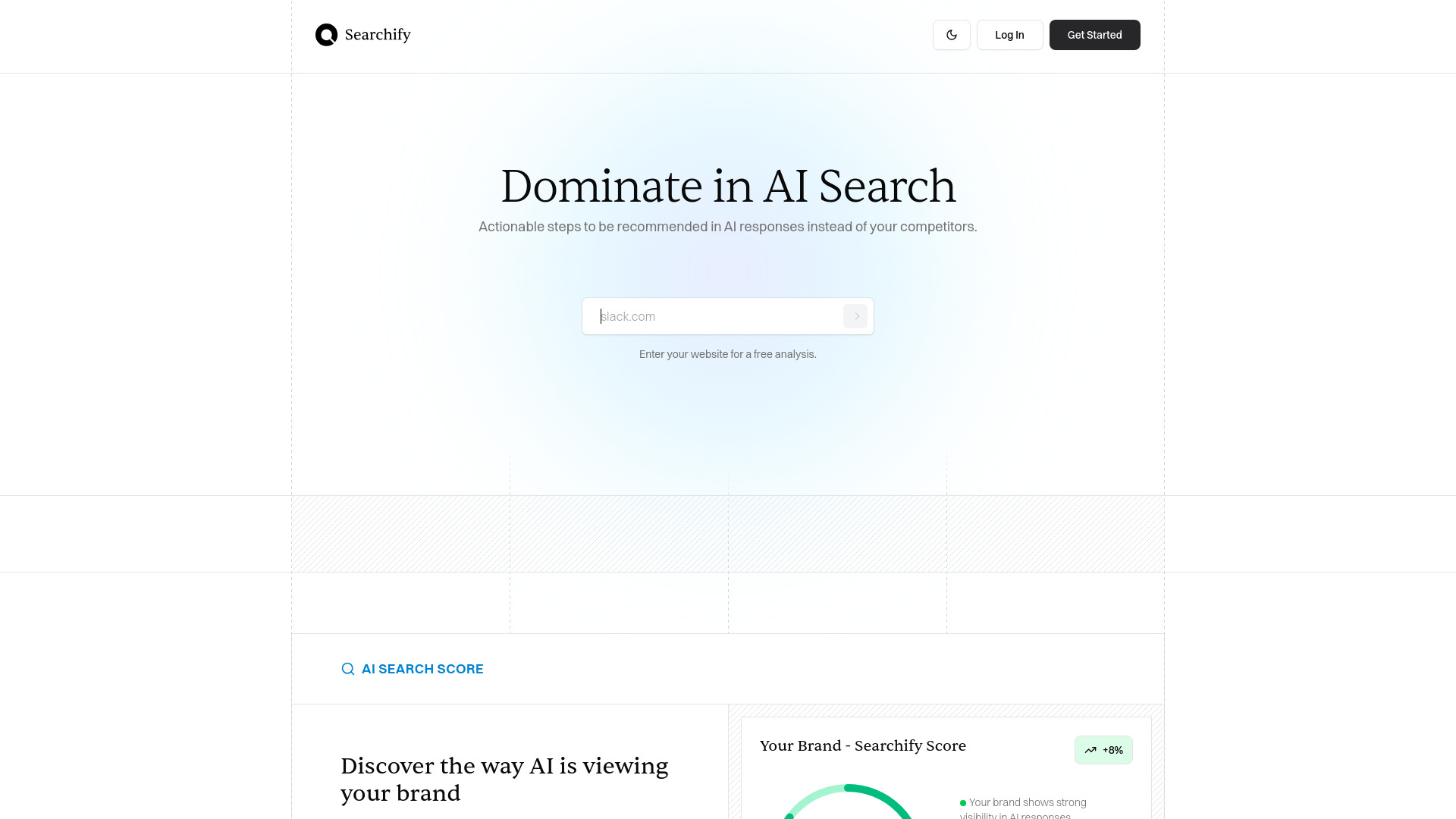
Searchify offers a straightforward starting point for understanding AI-search visibility: an AI Search Score, actionable recommendations, and content creation. The free analysis with no sign-up required lowers the barrier to getting an initial read. That simplicity is useful when your team is still deciding what questions to ask, but it should not be confused with a proven, full-scale monitoring program. Check what the analysis measures, how often tracking updates, and what the paid workflow includes before making it part of a reporting process.
Best for
SEO professionals looking for an initial AI visibility check.
Teams that want recommendations before committing to a larger platform.
Marketers who prefer to try a no-sign-up analysis first.
Limitations
Confirm current pricing, product fit, and workflow limits with the vendor.
The feature summary does not establish the depth or cadence of ongoing tracking.
A score is only actionable if your team can connect it to specific changes and follow-up measurement.
Shortlist signal: Try Searchify for a low-friction first assessment, then verify that its monitoring depth matches your reporting needs.
9. Yo MaaS (Marketing-as-a-Service)

- Small businesses needing site diagnostics and growth guidance
- 7-day Essential trial
- Starts at Free plan; $49.95 per deep-dive scan
- Usage signal: Not listed
Why it matters
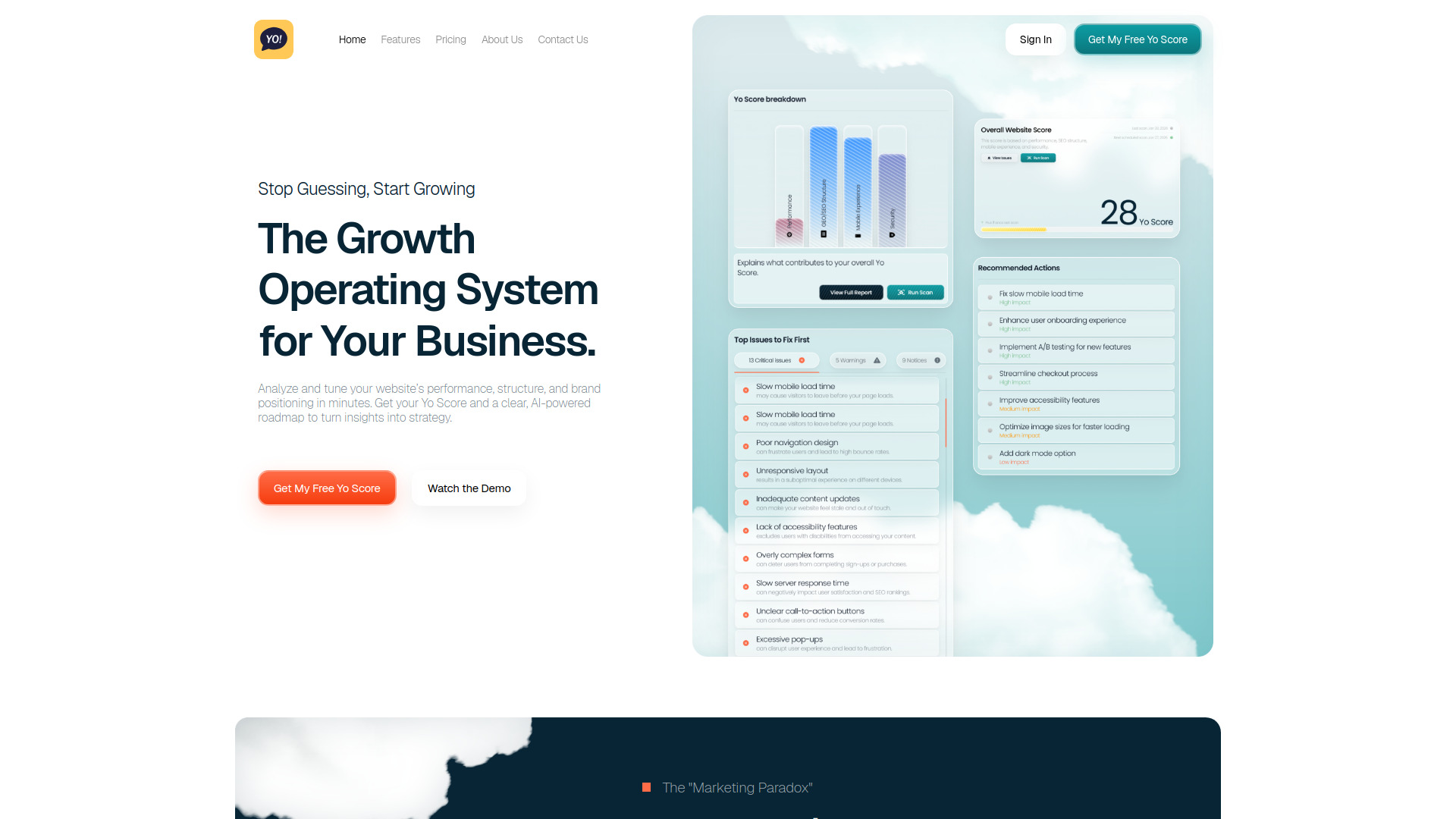
Yo MaaS connects technical and SEO diagnostics with Generative Engine Optimization, AI optimization, buyer personas, and strategy guidance. Its Yo Score and prioritized recommendations aim to translate website metrics into business actions, which may appeal to smaller teams that need help deciding what to fix first. The cost model needs attention, though: full website deep-dive scans cost $49.95 per scan on every plan, while the free plan only reveals the top three issues and scans the homepage weekly. Work out how often you need a full scan before comparing the headline free option with paid alternatives.
Best for
Small businesses seeking diagnostics packaged with strategy guidance.
Teams exploring GEO/AIO alongside technical SEO work.
Owners who need prioritized recommendations rather than raw metrics alone.
Limitations
Each full website deep-dive scan costs $49.95, regardless of plan.
The free plan scans the homepage weekly and shows only the top three issues.
Confirm what each plan includes before budgeting for recurring audits.
Shortlist signal: Shortlist Yo MaaS if you want guided site diagnostics and GEO advice, and the per-scan cost fits your audit cadence.
10. BukiTools
- Content writers using lightweight AI utilities
- Free forever; no sign-up required
- Starts at Free
- Usage signal: Not listed
Why it matters
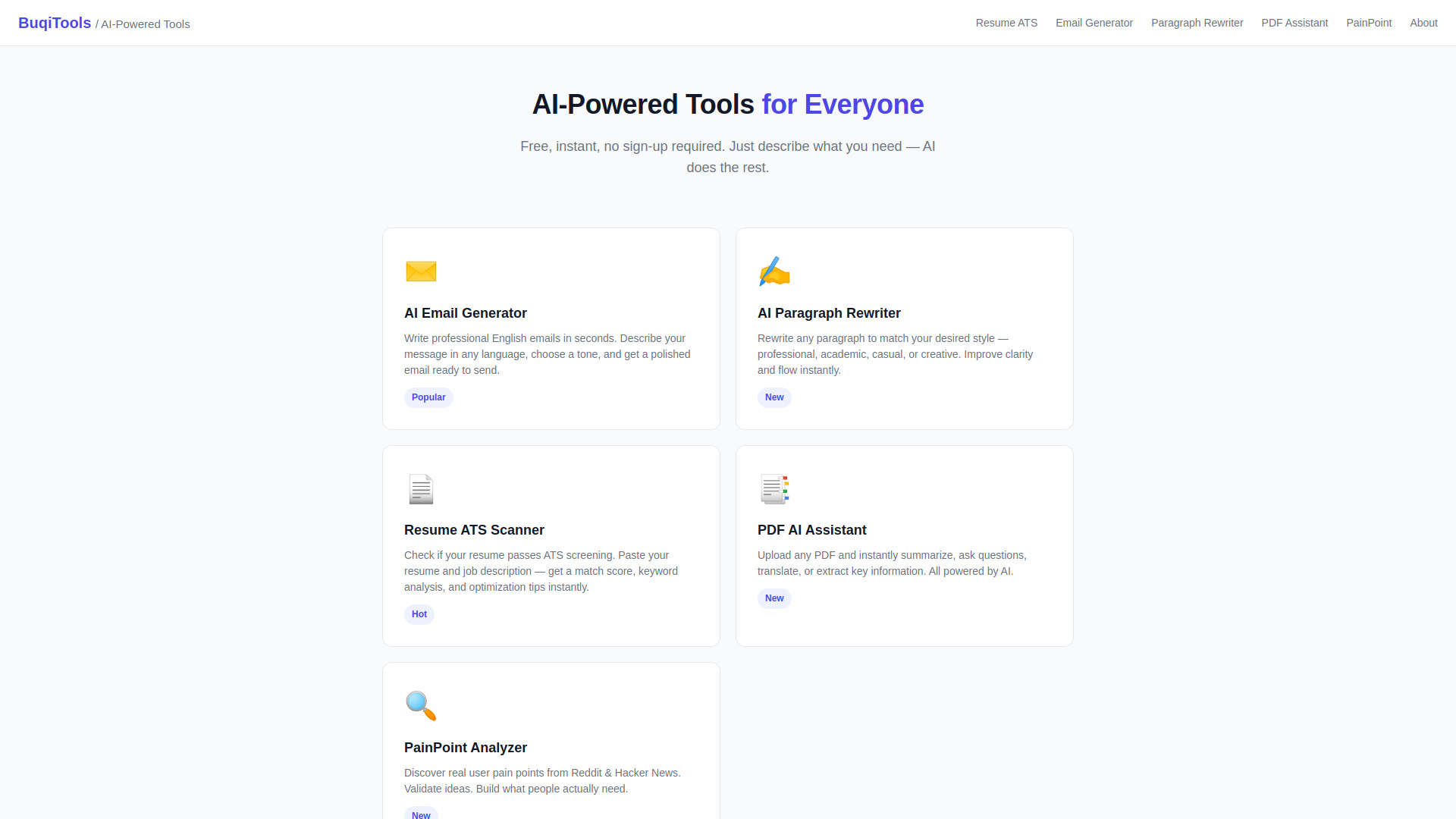
BukiTools is a small, free suite of five AI utilities, including a resume ATS optimizer, email generator, paragraph rewriter, PDF assistant, and pain-point analyzer. It requires no registration and says it does not store data, making it easy to try for discrete writing or productivity tasks. For a SaaS content team, a rewriter or pain-point analysis utility may be handy around the edges of a campaign, but the tool list is limited and does not include dedicated AEO tracking or optimization. Its value is convenience, not depth.
Best for
Content writers who want simple utilities without creating an account.
Users handling occasional rewriting, email, or PDF tasks.
Teams looking for a free supplementary tool rather than a central content platform.
Limitations
The suite is limited to the tools listed on the site.
No advanced paid tiers or pricing plans are provided.
It does not replace AI visibility monitoring, technical audits, or GEO strategy.
Shortlist signal: Use BukiTools for small, free writing tasks; do not shortlist it as an answer engine optimization platform.
What to test before choosing
Before you commit to any tool, test the workflow that should change your team's decisions-not just the dashboard that looks most convincing.
- 1
Check coverage against your customers. Ask which AI engines, markets, languages, and prompt types the product monitors. Answerbit's listed engines, for example, may or may not match where your buyers search.
- 2
Run prompts that reflect real buying questions. Include category comparisons, product alternatives, implementation questions, and use cases. Keep the prompt set stable enough to compare results over time.
- 3
Inspect the evidence behind a mention. Can the tool show the answer, citation, source URL, date, and competitor context? A score without evidence can be difficult to turn into an action.
- 4
Test the route from insight to work. Look for a practical next step: an article brief, a technical issue, a content recommendation, or a way to monitor a change after publishing.
- 5
Verify frequency and repeatability. One answer snapshot is not a trend. Find out how often measurements run and whether you can rerun the same prompts consistently.
- 6
Price the full operating model. Include per-site charges, usage-based fees, scan fees, and the time needed to review generated work. A short trial may be too brief to assess a complete process.
- 7
Separate AEO from adjacent jobs. Ad production, review response, and product research can support a broader marketing plan, but they do not automatically measure or improve AI-answer visibility.
What to do next
Pick one direct AEO need first: visibility monitoring, content and SEO production, or technical diagnosis. Then evaluate one or two tools against the same prompts, pages, and reporting questions. Sorank is the broadest starting point here; Answerbit is a more focused monitoring option; Searchify is an easy initial assessment; and Yo MaaS brings diagnostics and GEO guidance with a per-scan cost to consider.
Keep the adjacent tools in a separate shortlist if you also need ecommerce research, paid ads, review operations, or writing utilities. Ask vendors to confirm current pricing and availability, and make sure your team can explain what a reported score means before using it to set targets. The most useful platform is the one that helps you make a defensible change and check whether that change improved visibility-not simply the one with the longest feature list.
Common mistakes when choosing from a complex top list
Treating every listing as a dedicated AEO tool. Several products here handle advertising, reviews, ecommerce, or general productivity instead.
Choosing from a score alone. A high score cannot tell you whether a product covers the AI engines your audience uses or fits your team's workflow.
Confusing visibility with business impact. A mention or citation is a useful signal, not proof of qualified pipeline, conversions, or revenue.
Skipping the evidence check. Ask to see the actual answers, sources, and methodology behind a visibility score.
Ignoring availability and pricing details. Nexscope is described as coming soon or waitlist-only; Answerbit and Searchify require a vendor pricing check; Yo MaaS charges for full deep dives.
Expecting automation to remove editorial judgment. Generated articles, ads, and review responses still need human review for accuracy, brand fit, and compliance.
FAQ
Answer engine optimization (AEO) is the work of improving how a company and its content appear in AI-generated answers. For SaaS teams, that can include tracking brand mentions and citations, improving relevant pages, and making content more useful and discoverable. AEO overlaps with SEO and GEO, but a useful program should define what it measures and how the team will act on the results.