
The phrase top affordable tools for ugc video marketing covers more ground than it first appears to: some platforms generate complete avatar ads, others turn a product brief into a script and video, and a few are broader text-to-video studios that work better for creative experiments than direct-response campaigns. I compared 10 tools across those segments, looking at speed, audience fit, free access, pricing, production control, and the friction that shows up once you move beyond a single test video.
Start here
For most paid-social teams, start with MakeUGC. It has the clearest balance of AI avatars, script generation, speed, and agency-friendly workflow. UGC Maker AI is the more flexible choice when you want several underlying AI models and both image-to-video and text-to-video generation. For a low entry price, UGC Maker is unusually approachable, although its watermark and expiring credits matter.
A few decisions become easier when you separate the use case from the format:
Need performance ads at scale? Start with MakeUGC, UGC Maker AI, or UGC Ads AI.
Need app-focused creative quickly? AutoUGC and UGC Ads are the most natural fits.
Need to test the idea before paying? UGC Maker AI, UGC Maker, and AI UGC Video Generator offer the clearest free-entry paths.
Need a broader visual generator? h3max.io adds synchronized audio, while C2Anime is a specialist storytelling studio rather than a conventional UGC ad platform.
Segment comparison
| Segment | Strongest match | What it does well | Main trade-off |
|---|---|---|---|
| Full UGC ad platforms | MakeUGC | Avatars, scripts, and rapid marketing videos | Credits are consumed during edits |
| Multi-model generation | UGC Maker AI | Text, image, and video generation across several models | Free users share a queue and have short history storage |
| E-commerce ad production | UGC Ads AI | 500+ AI actors and viral script generation | Monthly credits expire |
| Low-cost entry | UGC Maker | Product links and briefs turned into UGC-style ads | Free exports carry a watermark |
| Creative alternatives | h3max.io | Video with native synchronized audio | Short clips and output limits on H3 Max |
The important distinction is control. A dedicated UGC platform usually gets you closer to an ad-ready result with fewer decisions. A general video generator can produce more unusual creative, but you may spend more time shaping prompts, fixing scenes, and judging whether the result actually feels like a believable recommendation.
Shortlist paths
| Your situation | Shortlist first | Why |
|---|---|---|
| Agency producing multiple client concepts | MakeUGC, UGC Ads AI | Fast production, AI actors, and ad-oriented workflows |
| DTC brand testing product angles | UGC Maker, UGC Maker AI | Low entry cost and product-led generation |
| Mobile app growth team | AutoUGC, UGC Ads | App-focused actors, scenes, and short-form ads |
| Creator or marketer needing a simple prompt workflow | UGC Video Generator, AI UGC Video Generator | Fast text-to-video or avatar-and-voice creation |
| Story-led or unusual visual campaign | h3max.io, C2Anime | Audio, image guidance, or consistent narrative characters |
This is also where the broader search terms become useful. The best tools for creating shoppable UGC videos for Facebook ads are not necessarily the best tools for TikTok-style concept testing, and the best UGC video editing apps for content creators may be the wrong choice if you need automated actors and scripts. Choose the production model first, then compare plans.
Ranking snapshot
| Rank | Tool | Best for | Score | Starting price |
|---|---|---|---|---|
| #1 | MakeUGC | Agencies | 94/100 | Startup: $49/month |
| #2 | UGC Maker AI | Brands | 93/100 | Free plan |
| #3 | UGC Ads AI | E-commerce businesses | 93/100 | Lite: $49.99/month |
| #4 | UGC Maker | E-commerce brands and DTC sellers | 93/100 | Starter: $9/month |
| #5 | UGC Ads | Mobile apps | 90/100 | From $5/video |
| #6 | AutoUGC | App developers | 90/100 | Solo: $29/month |
| #7 | AI UGC Video Generator | Marketing professionals | 89/100 | Starter: $191/year |
| #8 | UGC Video Generator | Marketers | 89/100 | Check vendor pricing |
| #9 | h3max.io | Video creators | 88/100 | Lite: $29.90/month |
| #10 | C2Anime | Anime creators | 87/100 | Creator: $29/month |
How we grouped and ranked the list
This is a complex category, so a single feature count would produce a misleading result. I grouped the tools by the job they help complete: generating direct-response UGC ads, producing app creative, creating prompt-driven video, or building a more distinctive visual story. The ranking then weighs five practical factors:
- 1
Workflow completeness: Can the product move from idea or brief to usable video, or does it only perform one narrow generation step?
- 2
Audience fit: Does it make sense for an agency, DTC brand, app team, or independent creator?
- 3
Production speed: The strongest options support rapid creative testing rather than a long production cycle.
- 4
Cost visibility: Free credits, starting prices, and credit-expiration rules matter because inexpensive generation can become expensive when output is iterative.
- 5
Creative control: Avatars, voices, scenes, image guidance, models, and editing options determine how much the final result can be shaped.
Market signals such as monthly visits and usage indicators help provide context, but they do not override workflow fit. A specialist with fewer visits can still be the better choice for a narrow campaign.
Ranked field notes
1. MakeUGC

- Agencies producing fast, repeatable UGC campaigns
- From $39/month for AI-powered UGC videos
- Starts at Startup (Monthly): $49/month
- Usage signal: 138.1K
Why it matters
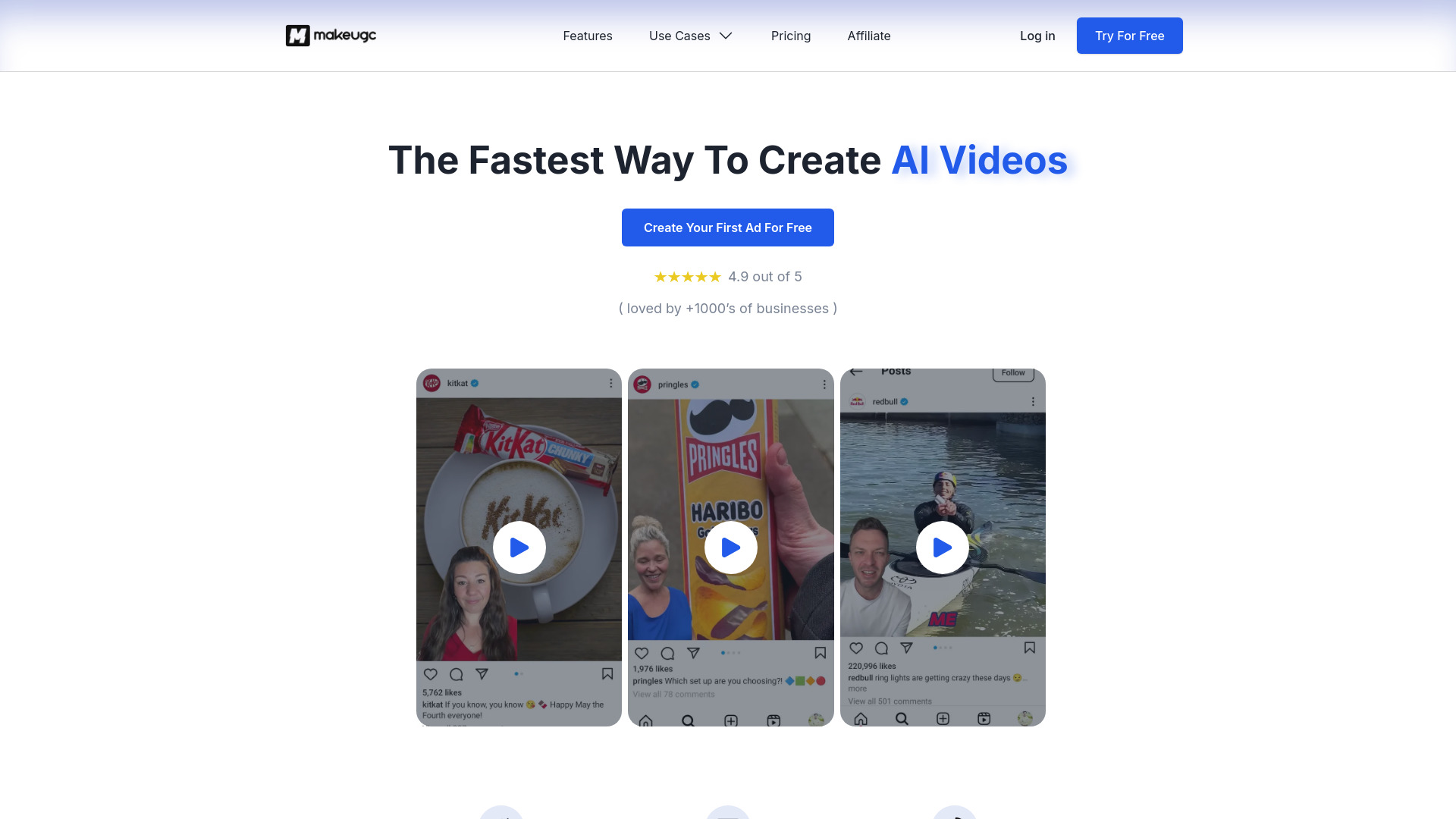
MakeUGC earns the first position because it connects the pieces an agency actually needs: AI-powered video generation, customizable AI avatars, and AI script generation. That combination is more useful than a bare text-to-video box when you are producing several concepts for different clients or testing multiple hooks for the same product. The platform is built around speed, with video creation positioned as a minutes-long workflow and a cost profile below traditional UGC production. It is the most balanced option here for turning a brief into a recognizable marketing asset without assembling several separate tools.
Best for
Agencies creating multiple client variations
Teams that need scripts and avatars in the same workflow
Paid-social marketers prioritizing rapid concept testing
Limitations
Video credits are consumed even when you edit generated videos
Generation time can double during peak hours
The Startup plan is a paid commitment rather than a broad free sandbox
Shortlist signal: Add MakeUGC first when you need an agency-ready UGC workflow that goes from script to avatar video quickly.
2. UGC Maker AI

- Brands testing multiple AI video and image-generation models
- 60 new-user credits plus 20 daily credits
- Starts at Free Plan: Free
- Usage signal: 37.4K
Why it matters
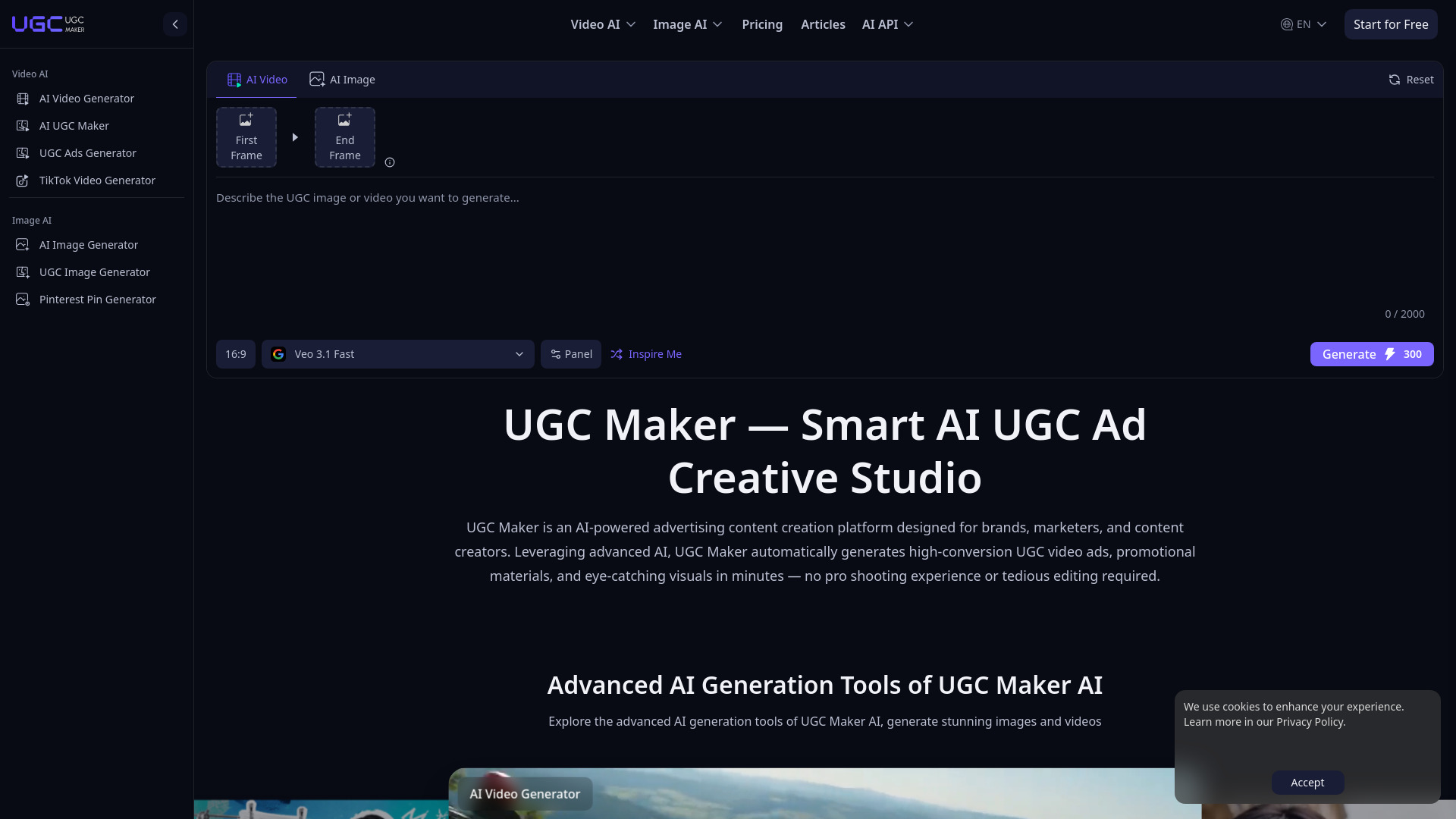
UGC Maker AI stands out for breadth. Instead of locking the workflow to one generation approach, it supports models including Seedance, Veo, and Kling, alongside text-to-image and image-to-video tools. That makes it a good fit for a brand that wants to turn existing product imagery into moving creative, create a visual from a prompt, or compare different model outputs before committing to a paid workflow. The generous-looking entry allocation also makes it one of the more practical UGC video creation apps with free tiers, although the free experience has meaningful limits.
Best for
Brands experimenting with several generation models
Marketers starting from product images or static assets
Teams comparing visual concepts before production spending
Limitations
The free tier uses a shared generation queue
Free users have limited access to top-tier AI models
Free history storage lasts only 15 days
Shortlist signal: Choose UGC Maker AI when model choice and image-to-video flexibility matter more than a tightly prescribed ad workflow.
3. UGC Ads AI

- E-commerce businesses creating direct-response ad variations
- 5 free credits
- Starts at Lite: $49.99/month
- Usage signal: 26.8K
Why it matters
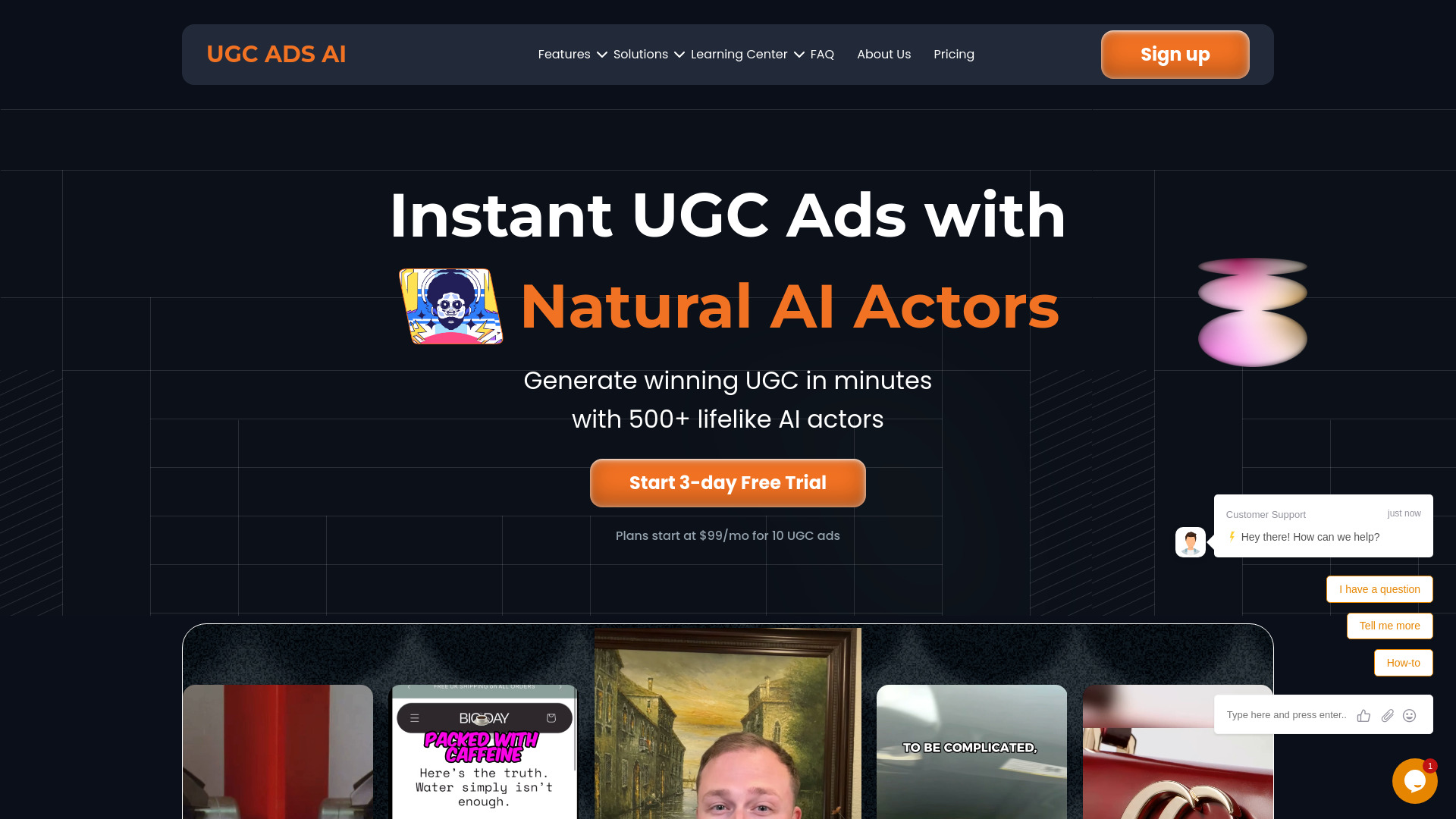
The pitch here is deliberately performance-oriented: generate UGC video ads in minutes, select from more than 500 AI actors, and use viral script generation to move from product idea to multiple hooks. That focus makes UGC Ads AI a strong contender for e-commerce teams that care about testing creative angles rather than producing one polished brand film. It is also one of the more obvious choices among the top tools for creating shoppable UGC videos for Facebook ads, provided the generated output matches your brand and platform requirements.
Best for
E-commerce teams testing many ad concepts
Marketers who want a large actor selection
Campaigns that need script ideas as well as video output
Limitations
Unused credits expire monthly
Refund policies have limitations
A credit-based workflow requires careful volume planning
Shortlist signal: Put UGC Ads AI on the list when actor variety and fast e-commerce ad iteration are your main buying criteria.
4. UGC Maker

- E-commerce brands and DTC sellers starting on a small budget
- 10 credits upon registration
- Starts at Starter: $9 USD/month
- Usage signal: 4.2K

Why it matters
UGC Maker is the budget-friendly option that deserves serious attention rather than a token mention. It can transform a product link or brief into a realistic UGC-style ad, using AI avatars, voices, and script generation to remove the need for actors or a production crew. At $9 per month to start, it is particularly appealing for a DTC seller that wants to test the format without signing up for a larger production platform immediately. The trade-off is that low cost does not mean friction-free iteration.
Best for
Small e-commerce and DTC teams
Sellers starting from a product page or link
Marketers who need a low-cost first experiment
Limitations
Free-plan exports include a watermark
Credits expire every two months across all plans
The product is less compelling if you need extensive hands-on editing control
Shortlist signal: Choose UGC Maker when the $9 starting price and link-to-video workflow outweigh watermark and credit-expiration concerns.
5. UGC Ads

- Mobile app teams needing end-to-end AI UGC production
- Unlimited AI UGC generation
- Starts at AI UGC videos: starting at $5/video
- Usage signal: Usage signal not listed
Why it matters
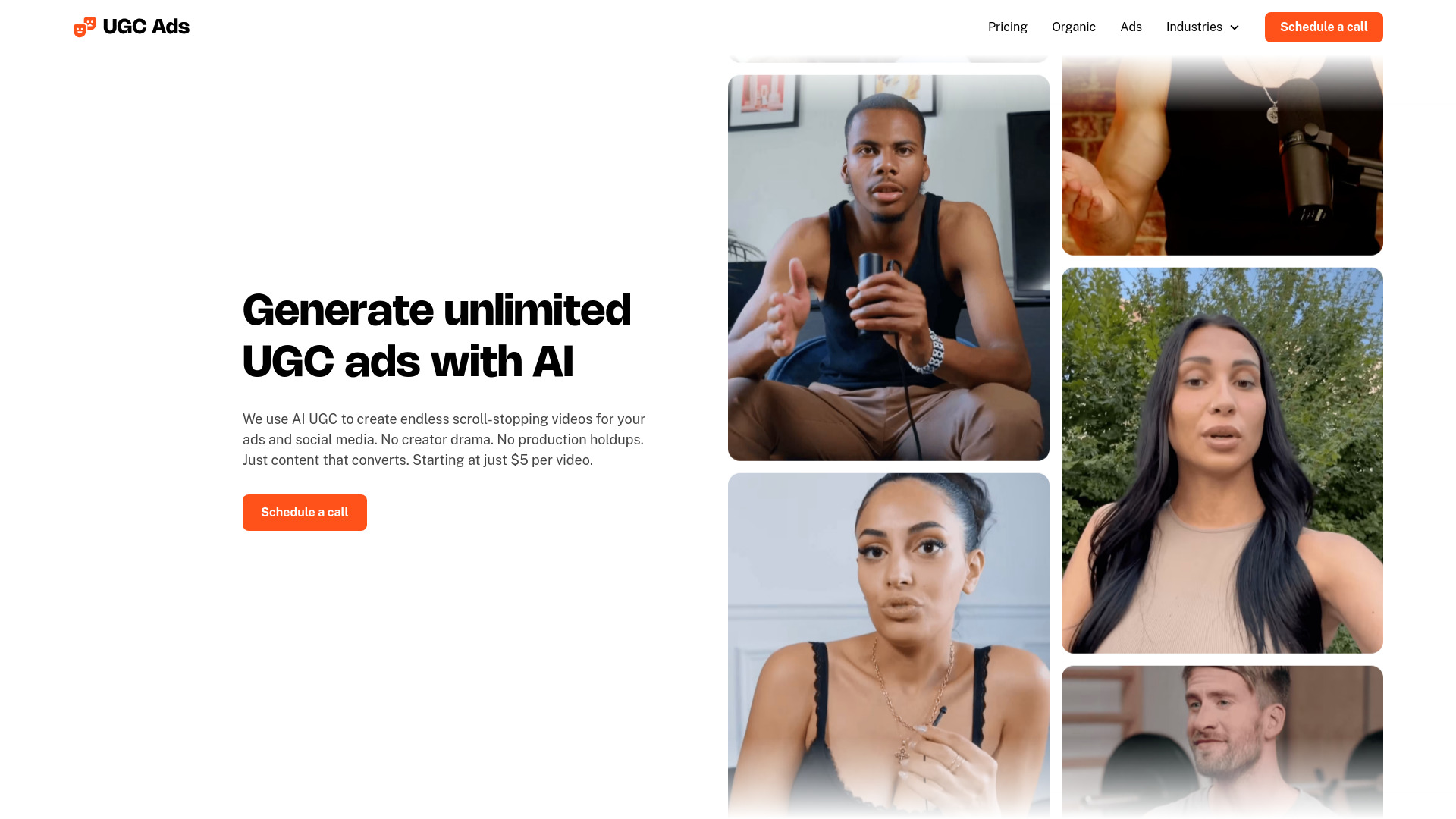
UGC Ads takes a service-like approach to production. Its offer centers on unlimited AI UGC generation, AI-powered video creation, and end-to-end content management from concept to delivery. The starting price of $5 per video is easy to understand and can be attractive for app teams that want a predictable way to produce short-form creative without traditional casting and filming. The stated one-to-two-week turnaround is not as immediate as an instant generator, but it may suit teams that prefer a managed path from idea to asset.
Best for
Mobile app acquisition teams
Buyers who prefer per-video pricing
Campaigns needing concept-to-delivery management
Limitations
AI output may feel less authentic than genuine user content
AI reliance can limit creative control
The workflow may be less suitable for buyers who need instant self-serve revisions
Shortlist signal: Shortlist UGC Ads when you want app-focused UGC with transparent per-video entry pricing and a managed production path.
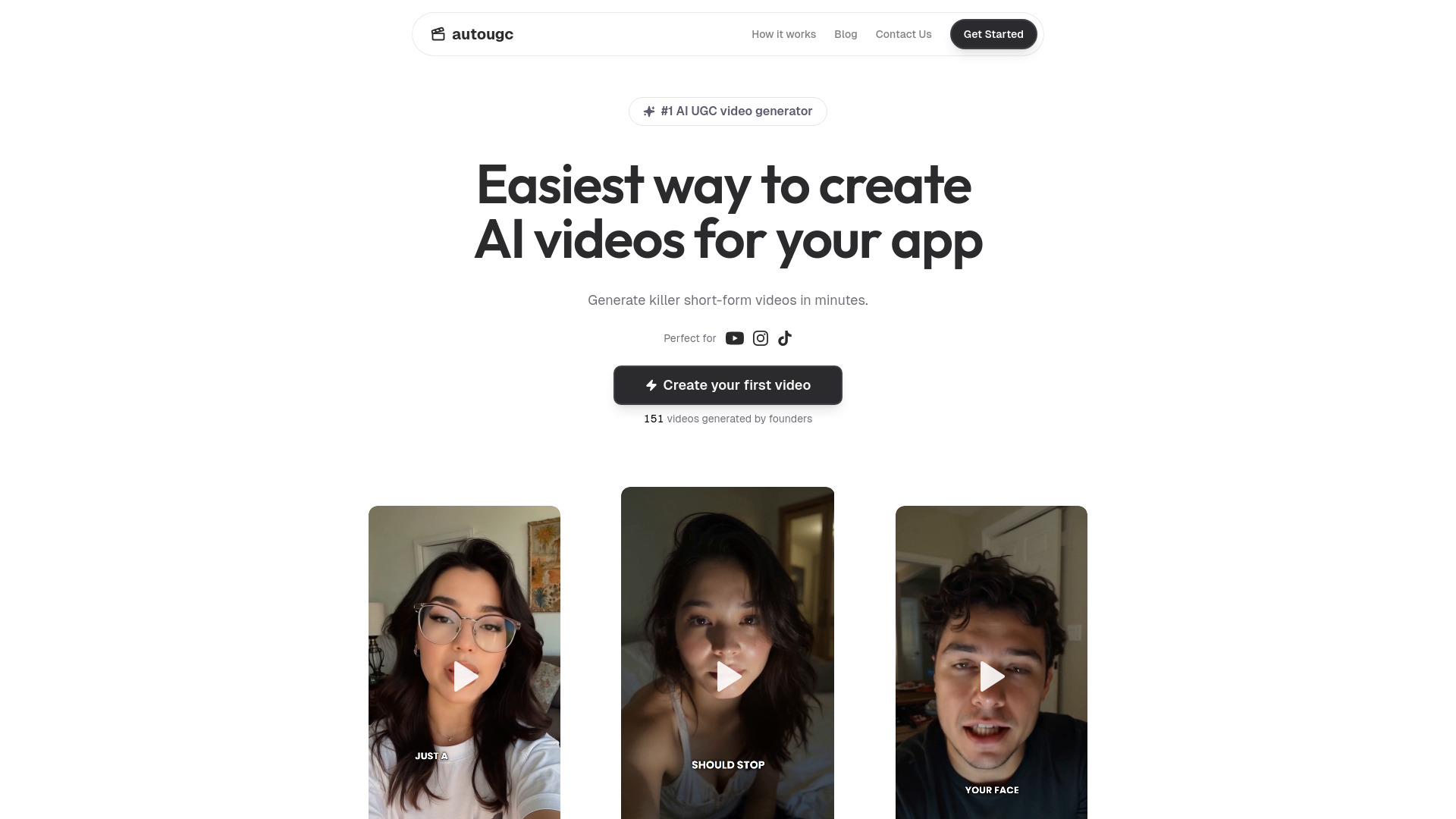
6. AutoUGC

- App developers creating short-form product demos
- Free plan available
- Starts at Solo: $29/month
- Usage signal: Usage signal not listed
Why it matters
AutoUGC focuses on the pieces that make an app ad watchable: AI-powered actors, dynamic scenes, and realistic voices. Its stated comparison of roughly 15 minutes for generation versus one to two weeks for traditional production captures the appeal for small growth teams that need creative frequently. The cost comparison also makes it one of the more compelling options for developers who cannot justify a traditional creator budget for every new feature or update. It is less attractive if authenticity is non-negotiable, but strong for rapid creative volume.
Best for
App developers and lean growth teams
Product demos needing actors and scene changes
Teams comparing AI production against creator fees
Limitations
AI-generated content may not feel as authentic as real UGC
Subscription pricing may not suit occasional users
Realism and brand fit should be checked across several outputs, not one demo
Shortlist signal: Add AutoUGC when an app team needs dynamic, voiced creative in minutes and can accept an AI-first production style.
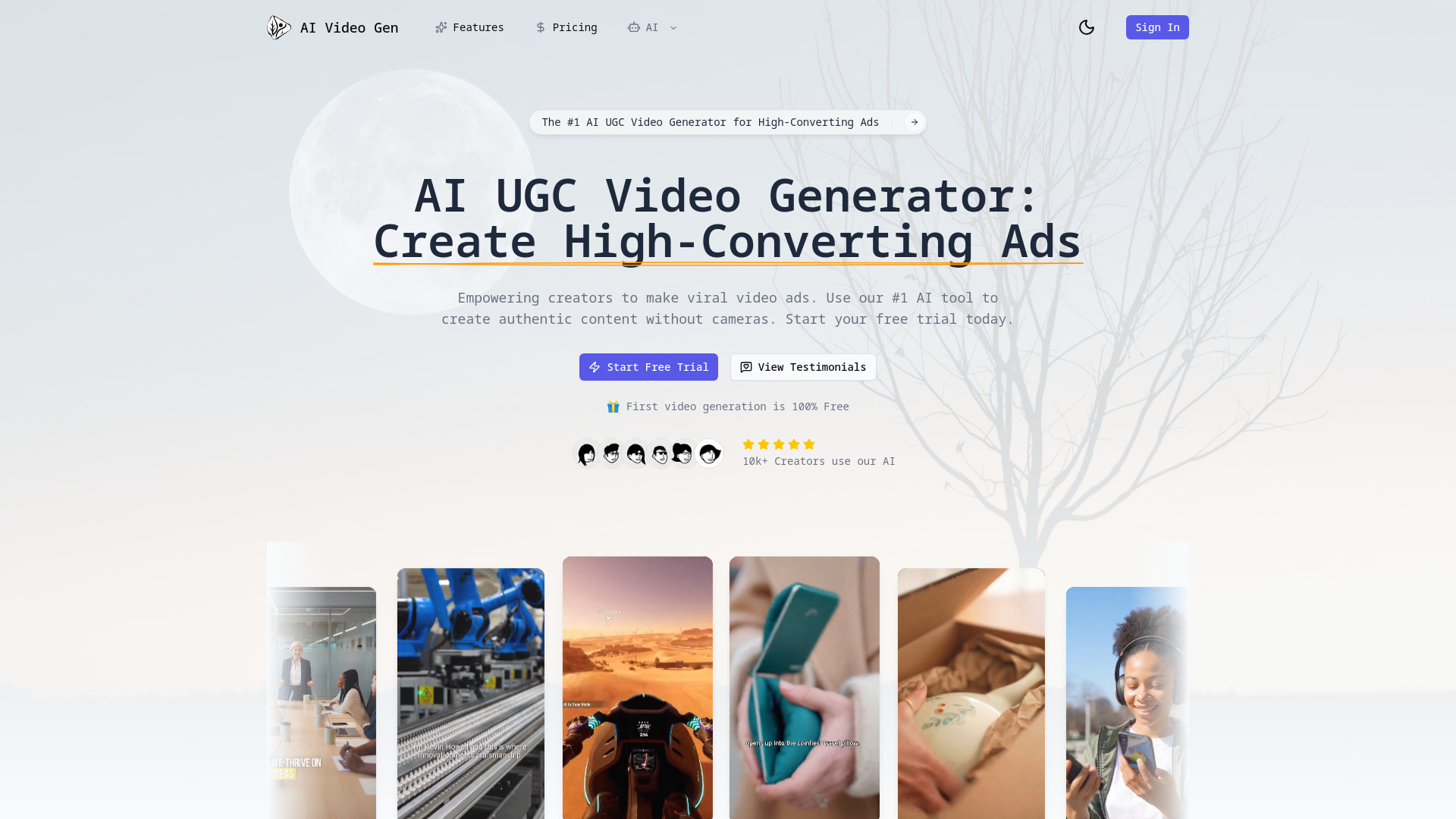
7. AI UGC Video Generator

- Marketing professionals producing avatar-led ad tests
- Free first video generation
- Starts at Starter: $191/year
- Usage signal: Usage signal not listed
Why it matters
AI UGC Video Generator is built around the simplest version of the promise: create realistic avatars and voiceovers, then produce a high-converting ad in minutes without filming. That makes it a practical candidate for marketers who already know the message they want to test and do not need a large production suite. The free first video is useful for checking whether the avatar style works for your audience. Premium access is important, though, because 1080p video and dedicated support require the higher tier.
Best for
Marketers testing avatar-led ad messages
Teams with a clear script or product angle
Buyers who prefer an annual starting plan
Limitations
Credit-based pricing requires usage tracking
1080p output and dedicated support require Premium access
The annual Starter price is less flexible for short experiments
Shortlist signal: Choose this tool when you want to validate an avatar-and-voice concept quickly and are comfortable planning around credits.
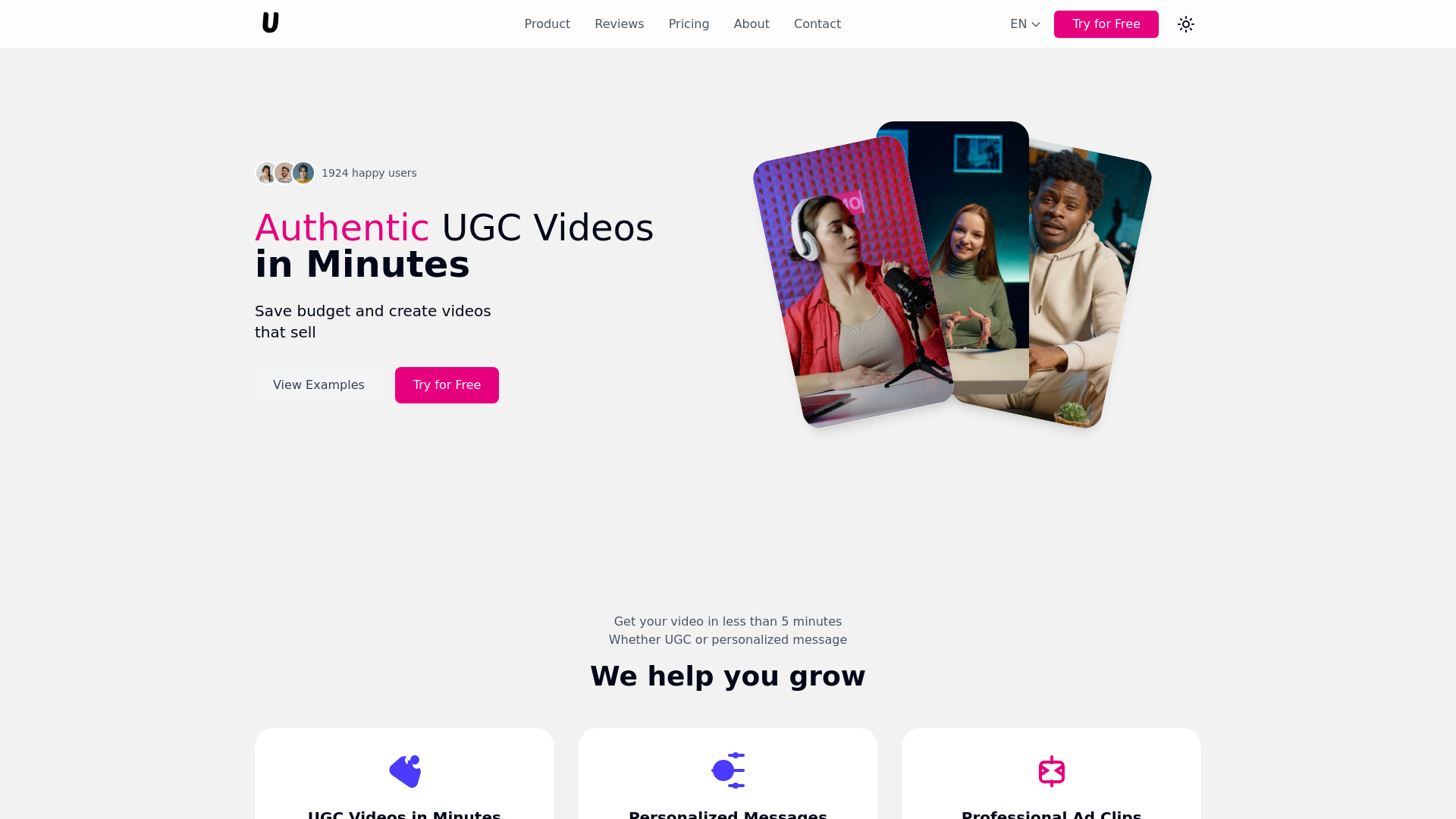
8. UGC Video Generator
- Marketers who want straightforward text-to-UGC generation
- Free plan available
- Starts at Check vendor pricing
- Usage signal: Usage signal not listed
Why it matters
UGC Video Generator keeps the proposition narrow: transform text into UGC videos. That simplicity can be useful when the buyer wants a quick first pass rather than a deep production environment. It belongs in the conversation about top UGC video software for product demos because a concise script can be enough to validate a basic explanation or hook. However, the available product detail is limited, so this should be treated as a tool to test hands-on rather than a platform to approve from a feature checklist.
Best for
Marketers who prefer a text-first workflow
Quick concept and product-demo experiments
Users who value ease of use over advanced controls
Limitations
Video quality and customization options need hands-on validation
Functionality is limited to text-to-video conversion
Pricing details are not presented as a clean public starting point
Shortlist signal: Try UGC Video Generator when a simple text-to-video test is enough and you are willing to confirm output quality before scaling.
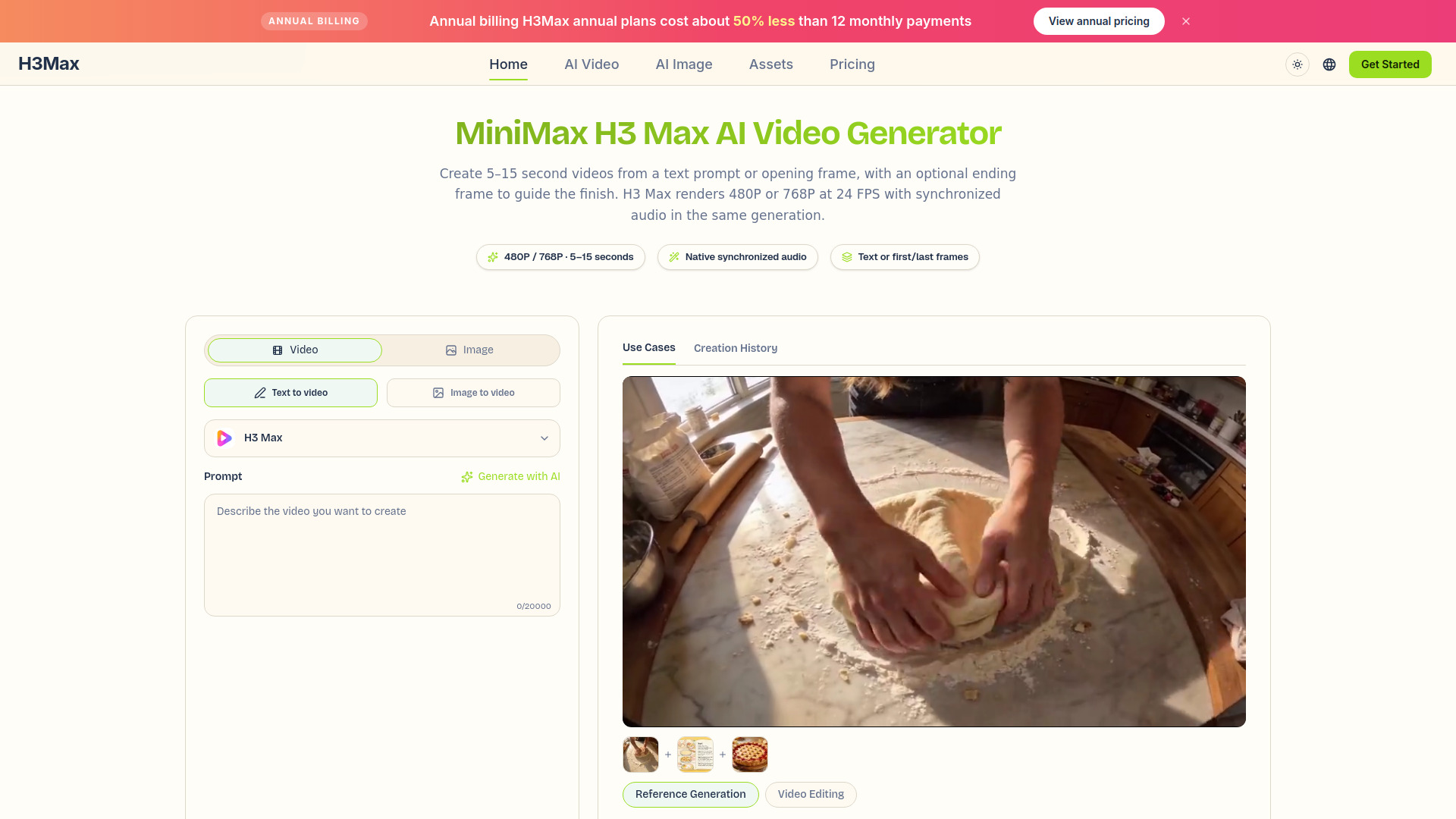
9. h3max.io

- Video creators adding synchronized audio to short clips
- Free plan available
- Starts at Lite: $29.90/month
- Usage signal: Usage signal not listed
Why it matters
h3max.io is an unexpected but worthwhile alternative for UGC-style creative. It generates video and synchronized stereo audio in the same pass, including ambience, music, dialogue, and sound effects. It also accepts long text prompts and supports first-frame and optional last-frame image guidance. Those controls can help a creator build a more directed hook or product scene than a basic prompt-only tool. It is not the obvious pick for conventional avatar ads, but it belongs among broader visual studios worth knowing when sound design is part of the concept.
Best for
Video creators developing short-form visual concepts
Campaigns where dialogue, music, or sound effects matter
Users starting from text prompts or reference images
Limitations
H3 Max is limited to 480P or 768P output
H3 Max clips run only 5 to 15 seconds
Multi-reference generation and existing-video editing require standard H3
Shortlist signal: Shortlist h3max.io when synchronized audio and image-guided scenes matter more than a traditional UGC actor workflow.
10. C2Anime

- Anime creators building consistent story-led video
- Create your first anime for free
- Starts at Creator: $29/month
- Usage signal: Usage signal not listed

Why it matters
C2Anime is the biggest category stretch in the ranking, but it demonstrates why a complex field guide should not confuse UGC with one visual style. The platform moves from story, script, novel, or idea to anime video, with screenplay planning, storyboard creation, and reusable character, location, and prop references. For a creator-led brand or an entertainment campaign, that consistency can be more valuable than a realistic talking avatar. It is not the right tool for a conventional product testimonial, but it is a credible adjacent studio for narrative short-form content.
Best for
Anime creators and story-led campaigns
Teams needing consistent characters across scenes
Users who want planning and storyboarding before generation
Limitations
Higher-quality video tiers consume credits faster
Scene re-renders require additional paid credits
The anime focus makes it a poor fit for realistic product testimonials
Shortlist signal: Choose C2Anime only when consistent animated storytelling is part of the campaign brief, not merely because you need a cheap UGC ad.
What to test before choosing
A polished sample can hide the exact problems that appear during production. Before paying, run the same short brief through two or three finalists and compare the results side by side.
1. Test the first three seconds
Use the same opening hook and check whether the avatar, voice, captions, and visual pacing feel credible immediately. For TikTok-style creative, the first seconds matter more than a beautiful closing frame. This is where the top tools for making TikTok UGC videos should be judged: by hook clarity and repeatable output, not just resolution.
2. Test one product-specific claim
Generic scripts are easy. Ask each tool to demonstrate a real product benefit and see whether it keeps the wording accurate. A tool that invents details or produces vague praise will create extra review work, even if the video looks convincing.
3. Test revision economics
Regenerate one scene, change the voice, shorten the opening, and export again. Check whether each action consumes credits. MakeUGC, for example, consumes video credits even when edits are made to generated videos; other platforms expire credits on a schedule or charge more for quality tiers.
4. Test the free tier honestly
Look for watermarks, queue priority, history retention, output resolution, and access to better models. Free credits are useful only if they let you evaluate the workflow you would actually buy. A free text-to-video clip is not a meaningful test of an enterprise production plan.
5. Test platform fit and reviewability
Export the same aspect ratio and inspect captions, voice clarity, branding, and the ability to create variations. Also verify commercial-use rights, ad-platform policies, and whether the vendor supports the content category you operate in. Those details should be confirmed directly before launch.
What to do next
Start with one campaign, not an entire content calendar. Choose a single product, write three different hooks, and create a small batch with the two tools that best match your segment. Track production time, usable-output rate, revision count, and the cost per approved video.
For most teams, the sensible first comparison is MakeUGC versus UGC Maker AI. Add UGC Ads AI if direct-response e-commerce is the priority, or UGC Maker if the lowest entry price matters most. App teams should compare AutoUGC and UGC Ads. If your concept depends on sound design, image guidance, or a distinctive visual world, test h3max.io instead of forcing a conventional UGC platform to do a job it was not designed for.
The tools in this guide are not substitutes for audience insight. They can shorten production, but they cannot decide which customer objection to address or whether a claim will earn trust. Use them to increase the number of thoughtful creative tests, then let performance and human review determine what stays.
Common mistakes when choosing from a complex top list
Treating every AI video generator as a UGC platform: Text-to-video, avatar ads, and managed UGC production solve different problems.
Comparing sticker prices without counting credits: Expiration rules, regeneration costs, queues, and premium output tiers can change the real cost.
Assuming realistic means persuasive: A lifelike avatar still needs a specific hook, believable delivery, and a product claim worth hearing.
Ignoring revision friction: The first generation is rarely the final ad. Test changes to scenes, voices, scripts, and exports before committing.
Using the wrong benchmark: A tool designed for anime storytelling should not be judged like an e-commerce testimonial platform.
Skipping the free-tier details: Watermarks, short history windows, shared queues, and limited model access can make a free plan unsuitable for serious evaluation.
Calling generation "management": The best UGC management tools also need review, organization, approvals, and reuse workflows; not every generator provides those capabilities.
Assuming low cost guarantees authenticity: AI can reduce production expense, but real customer footage may still be the better choice for trust-sensitive campaigns.
FAQ
MakeUGC is the strongest overall match for agencies and marketing teams because it combines AI video generation, customizable avatars, and script generation in a fast workflow. Its main cost caveat is that credits are consumed even when you edit generated videos, so estimate revision volume before buying.