
Finding the top ai search optimization platforms for data accuracy takes more than checking whether a product mentions AI search, SEO, or content. The real question is whether the tool helps your brand appear correctly in AI-generated answers, validates the claims behind your content, or gives you a dependable way to monitor and improve what search systems say about you. I compared 10 tools across those jobs, including a few unexpected alternatives that approach accuracy through reviews, multi-model verification, advertising data, or fact-checked writing.
Start here
The shortlist is easier to use when you decide what "accuracy" means for your team first. Searchify is the clearest direct fit: it measures AI search visibility and turns findings into recommendations. ContentIQ is the better choice when inaccurate source claims are the problem before publication. RightResponse AI fits businesses whose public reputation depends on accurate, timely review responses and local visibility.
The remaining tools are adjacent rather than conventional AI search optimization platforms. Sup AI takes a verification-first, multi-model approach; aiOS focuses on business automation; Didoo AI and Muze AI optimize paid campaigns; SpeedAI works on academic text; Aisa.to assesses AI skills; and AI World Generator targets interactive 3D content. They belong here because data accuracy is often a workflow problem, not just a ranking dashboard problem.
| Best starting point | Tool | Why shortlist it |
|---|---|---|
| Direct AI search visibility | Searchify | AI Search Score and actionable recommendations |
| Fact-checked content | ContentIQ | Checks claims against live sources before drafting |
| Reputation and local data | RightResponse AI | Review responses, sentiment analysis, and Google Maps tracking |
| Confidence in AI answers | Sup AI | Multi-model synthesis and logprob confidence scoring |
| Automated marketing execution | aiOS | One AI employee controlled through several messaging channels |
Segment comparison
These products should not be judged by one universal feature checklist. Searchify and ContentIQ address the information layer directly, while RightResponse AI improves customer-generated signals. The ad platforms affect the accuracy and consistency of campaign inputs, and the remaining tools solve narrower data or content problems.
| Segment | Strongest fit | Core accuracy angle | Main trade-off |
|---|---|---|---|
| AI search optimization | Searchify | Measures visibility in AI responses | Vendor pricing needs confirmation |
| Source-verified content | ContentIQ | Live-source claim validation and citations | Only the first article is free |
| Local reputation data | RightResponse AI | Sentiment-aware review workflows | Usage-based costs can vary |
| Multi-model answer quality | Sup AI | Confidence scoring and model synthesis | Some listed models may need updating |
| Paid-growth data | Muze AI | Automated optimization and budget allocation | Lower tier supports up to $10,000 monthly ad spend |
Shortlist paths
Use these paths instead of treating the ranking as a one-size-fits-all buying order. The right pick depends on where inaccurate information enters your process.
| Your situation | Start with | Add if needed |
|---|---|---|
| Your brand is absent or misrepresented in AI answers | Searchify | ContentIQ for source-backed pages |
| Writers publish plausible but weakly sourced claims | ContentIQ | Sup AI for difficult research |
| Reviews contain inconsistent business information | RightResponse AI | Searchify to monitor AI visibility |
| You need automated campaign execution | aiOS | Didoo AI for Meta Ads |
| Academic or compliance-sensitive text needs rewriting | SpeedAI | Test formatting and citation preservation carefully |
Ranking snapshot
All but one tool received a score of 91, so the rank order is best read as a fit hierarchy rather than a claim that every product is equally suited to the same task. ContentIQ's lower score reflects its narrower scope, while AI World Generator's 90 reflects a specialized product with limited relevance to conventional search work.
| Rank | Tool | Score | Best for | Starting price |
|---|---|---|---|---|
| #1 | Searchify | 91/100 | SEO professionals | Check vendor pricing |
| #2 | Aisa.to | 91/100 | Operations managers | Check vendor pricing |
| #3 | aiOS | 91/100 | Founders | Try: Free |
| #4 | Didoo AI | 91/100 | SMBs | Starter: $69/month |
| #5 | Muze AI | 91/100 | Shopify brands | Free: $0 for 7 days |
| #6 | RightResponse AI | 91/100 | Small business owners | PAYGO: $10/location/month |
| #7 | Sup AI | 91/100 | Students | Free: $0/month |
| #8 | SpeedAI | 91/100 | Academic researchers | Free: ¥0 |
| #9 | AI World Generator | 90/100 | Game studios | Free: $0/month |
| #10 | ContentIQ | 87/100 | Founders | Single brand: $39/month |
How we grouped and ranked the list
I grouped the tools by the point at which they can improve accuracy. Searchify operates closest to the AI search results themselves. ContentIQ works before publication by checking claims and attaching source citations. RightResponse AI addresses public feedback and local business signals. Sup AI focuses on uncertainty and cross-model agreement.
The other products earned places as adjacent workflow options. aiOS, Didoo AI, and Muze AI can help teams produce and optimize marketing work, but they are not substitutes for an AI search visibility audit. Aisa.to measures AI capability in people rather than website data. SpeedAI is built around AI detection and academic rewriting. AI World Generator is a specialized interactive-content platform. That distinction matters: the top rated ai search optimization platforms for data accuracy are not necessarily the tools with the broadest AI feature lists.
Ranking weight went to concrete capabilities, audience fit, ease of starting, stated free access, usage signals, and the seriousness of each tool's limitations. I also penalized products that require a narrow interpretation of the category or introduce a purchasing constraint that could surprise a small team.
Ranked field notes
1. Searchify

- SEO professionals
- Free analysis; no sign-up required
- Starts at Check vendor pricing
- Usage signal: 3.5K
Why it matters
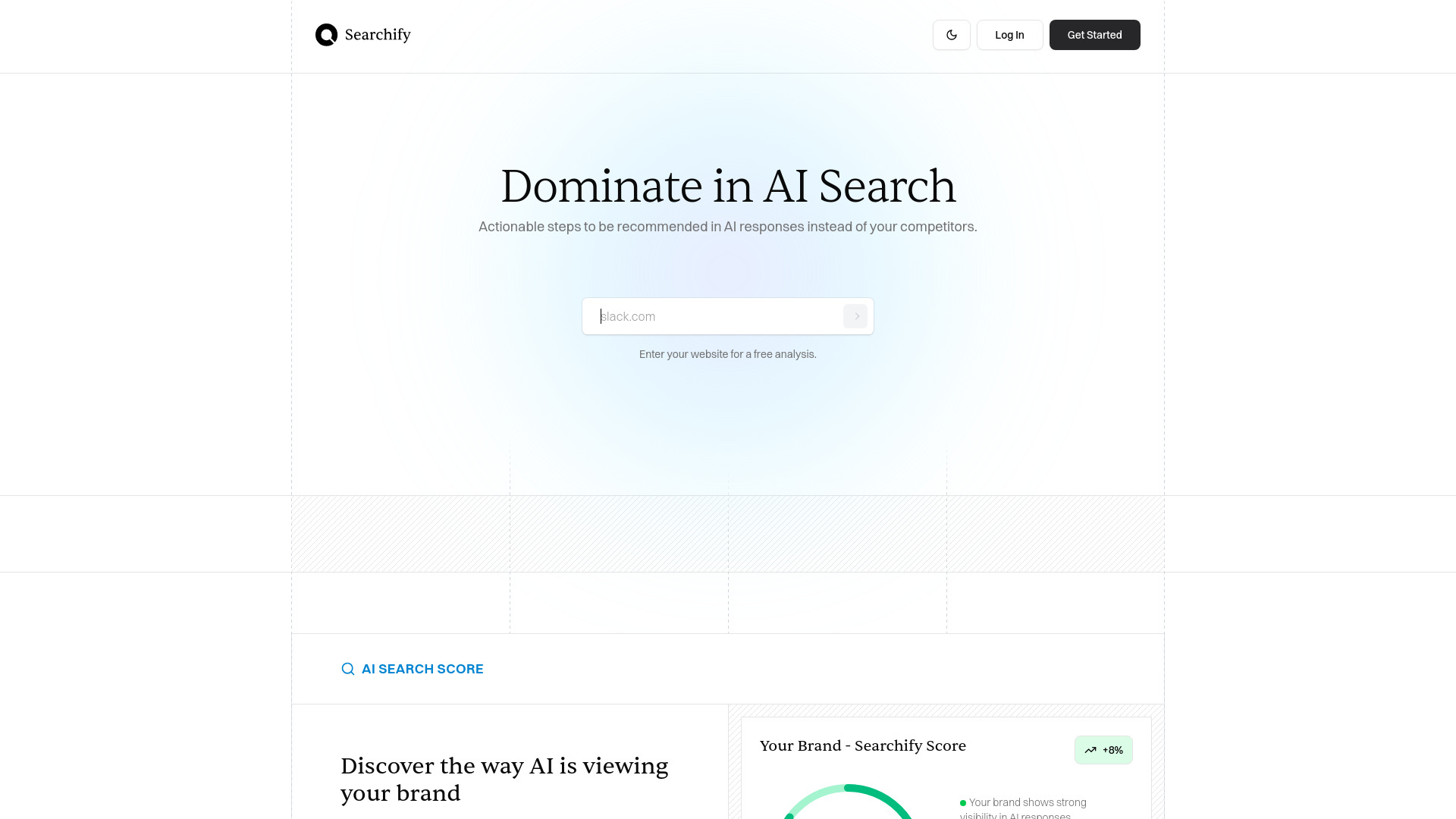
Searchify is the strongest direct match for this category because it treats AI search visibility as something you can inspect and improve rather than a vague brand-awareness goal. Its AI Search Score gives SEO professionals a concrete starting point, while its actionable recommendations are designed to move from diagnosis to implementation. Content creation is also part of the feature set, which makes the workflow more compact than switching between an audit tool and a separate writing system. The free analysis and no-sign-up entry point reduce the cost of testing whether its recommendations are useful for your site.
Best for
SEO professionals auditing how brands appear in major AI search platforms
Teams that want prioritized recommendations instead of raw visibility data
Marketers testing an AI-search workflow before buying a subscription
Limitations
Pricing and workflow limits need to be confirmed directly with the vendor
It is a better fit for search visibility than for broad business automation
Recommendations still require an editor or SEO lead to validate before publishing
Shortlist signal: Add Searchify first when your primary question is how to understand, improve, and track your AI ranking.
2. Aisa.to

- Operations managers
- Free 20-minute AI skills test and certificate
- Starts at Check vendor pricing
- Usage signal: 25.4K
Why it matters
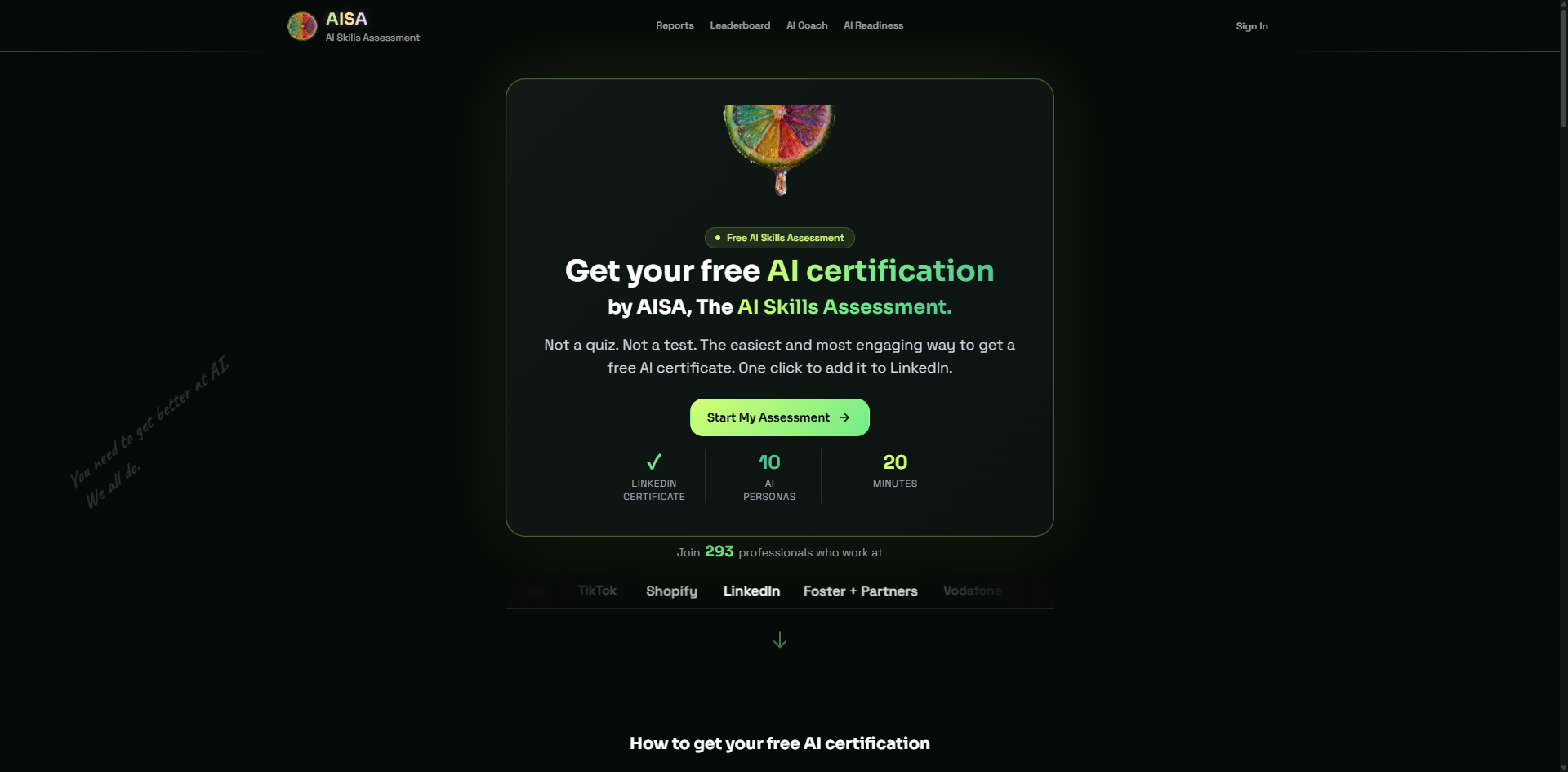
Aisa.to takes a different route to data accuracy: it evaluates whether the people operating an AI workflow have the skills to produce reliable results. Instead of a static multiple-choice quiz, the platform uses a 20-minute conversational interview and evaluates five dimensions across 11 criteria, including prompt engineering, critical thinking, and workflow-related skills. The resulting report identifies one of 10 AI personas and provides a prioritized learning plan. For operations managers, that can expose a human bottleneck behind inconsistent AI-generated data.
Best for
Operations managers assessing AI readiness across individuals or teams
Employers that need a data-backed skills report
Professionals who want a free, LinkedIn-verifiable certificate
Limitations
The assessment requires a continuous 20-minute conversation
Specialized team upskilling and workplace management dashboards may require vendor contact
It measures AI capability, not website visibility or search-result accuracy directly
Shortlist signal: Choose Aisa.to when process quality depends on whether your team can use AI critically and consistently.
3. aiOS

- Founders
- 5 lifetime messages per device; no sign-up required
- Starts at Try: Free
- Usage signal: 16.5K
Why it matters
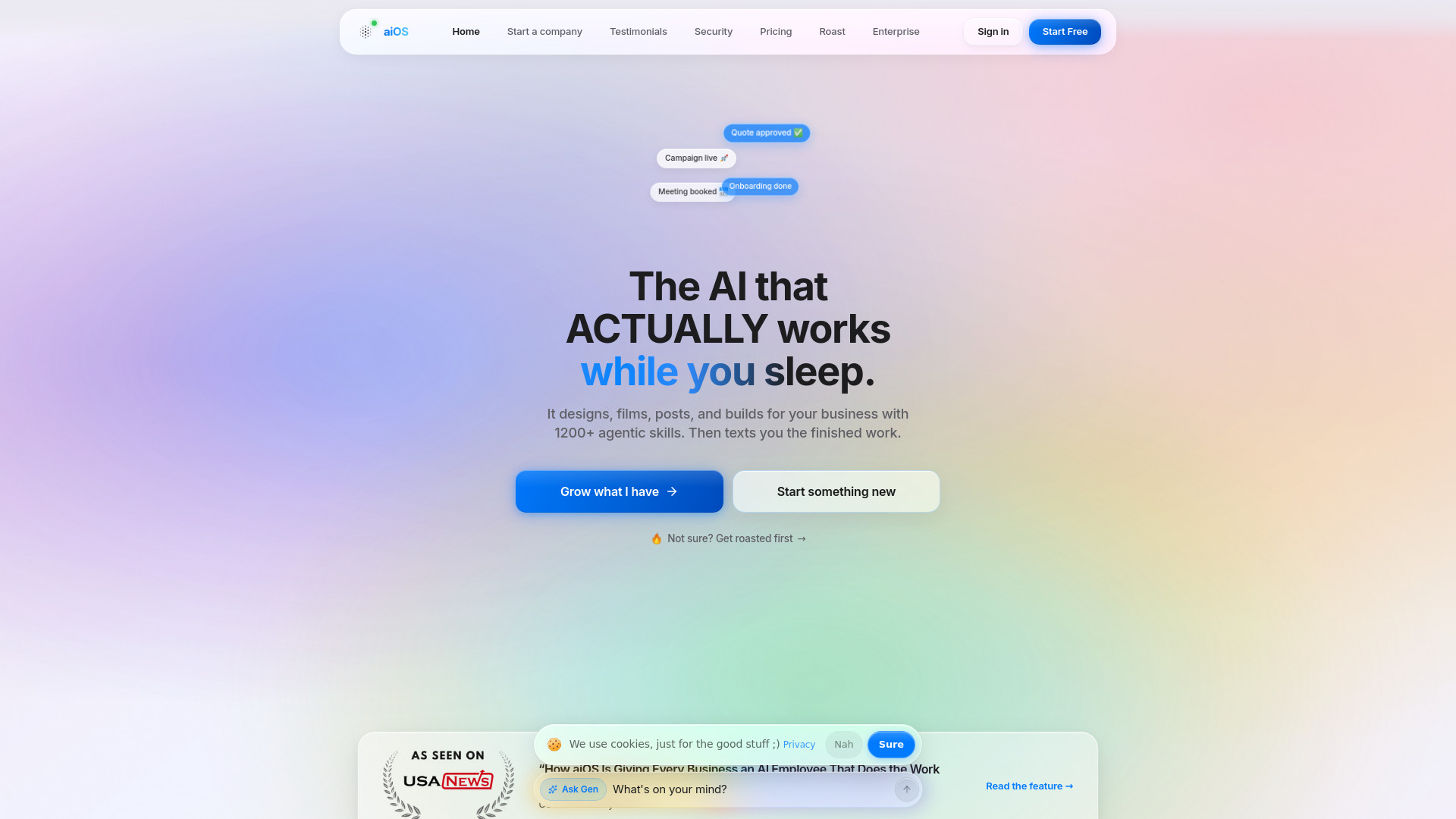
Founders often lose accuracy because business information is scattered across too many tools and handoffs. aiOS consolidates an AI employee for business automation and lets users control it through iMessage, the web, WhatsApp, Telegram, and phone. It can generate carousels, posts, images, video, and websites, so it is attractive when the goal is to move from a request to a finished marketing asset without coordinating several applications. The free trial requires no signup or card, making a real workflow test straightforward.
Best for
Founders managing content and operational tasks from a single interface
Small teams that prefer text-based control over complex dashboards
Businesses looking to replace several AI subscriptions with one system
Limitations
Pricing tiers and usage limits can be difficult to compare
Advanced capabilities require higher-priced plans
Broad automation does not equal dedicated AI search measurement or source verification
Shortlist signal: Add aiOS when reducing tool sprawl matters more than getting a specialized search-accuracy dashboard.
4. Didoo AI - URL in, Meta ads out. One Click to Outperform.

- Small and medium businesses
- 7-day free trial
- Starts at Starter (Monthly): $69/month
- Usage signal: 11.9K
Why it matters
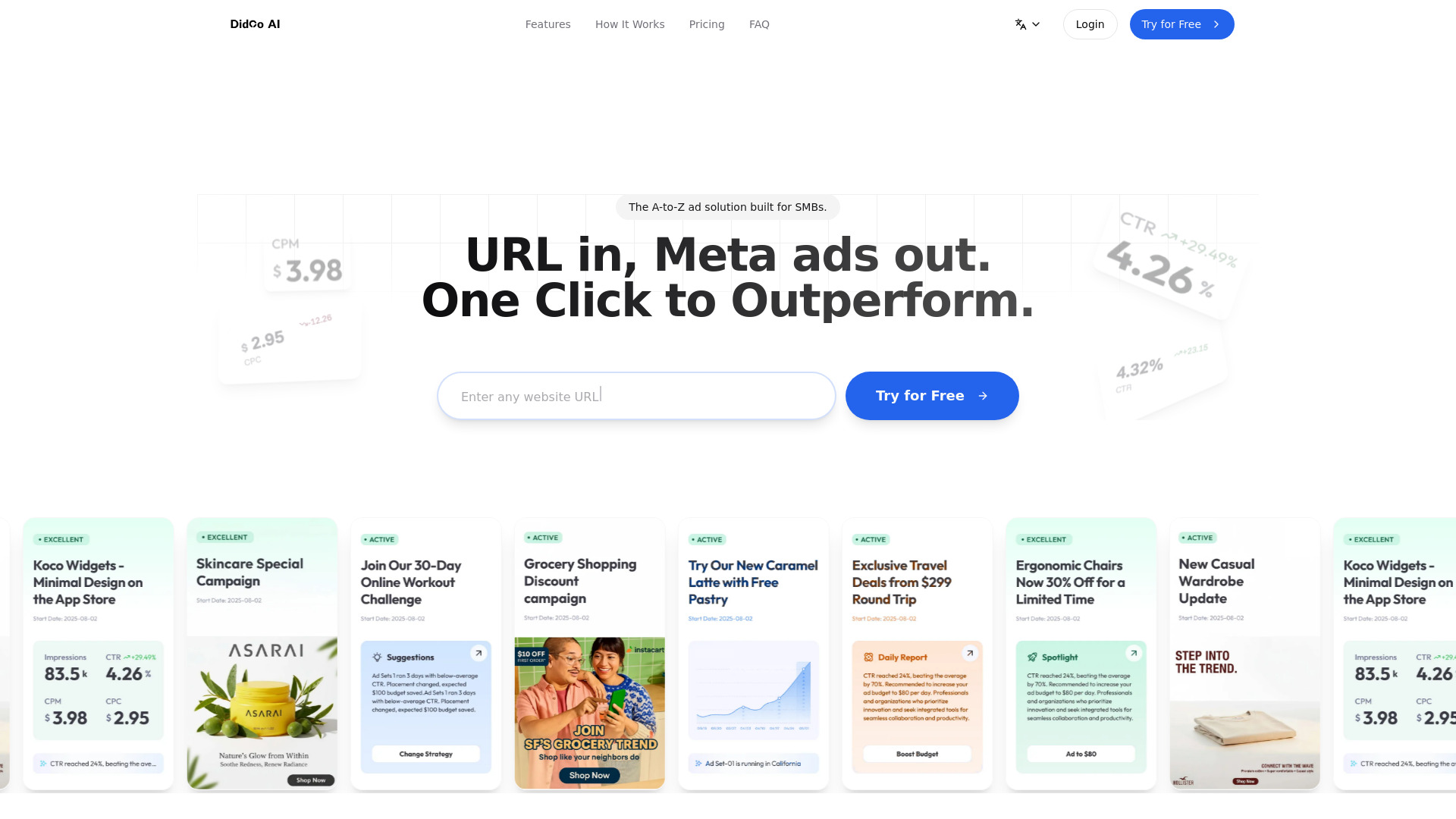
Didoo AI starts with a URL and turns it into a Meta advertising campaign, including ad creation, audience targeting, budget optimization, and generated creative and copy. That makes it an adjacent option for businesses whose data-accuracy problem is really inconsistent campaign execution: the system can use the same business URL as the starting context rather than asking a small team to rebuild campaign inputs by hand. Its 24/7 auto-optimization positioning is appealing for SMBs, but it should be evaluated as a Meta Ads tool, not as a general AI search platform.
Best for
SMBs running Facebook and Instagram campaigns
Teams that want URL-based ad setup and generated creative
Marketers seeking automated audience and budget adjustments
Limitations
It focuses exclusively on Meta Ads rather than multiple ad platforms
Monthly and quarterly pricing can be confusingly presented
Automated ad optimization cannot replace independent checks on business claims
Shortlist signal: Choose Didoo AI when accurate business context needs to flow quickly into Meta campaign creation and optimization.
5. Muze AI

- Shopify brands
- 7-day free trial
- Starts at Free: $0 for 7 days
- Usage signal: 10.5K
Why it matters
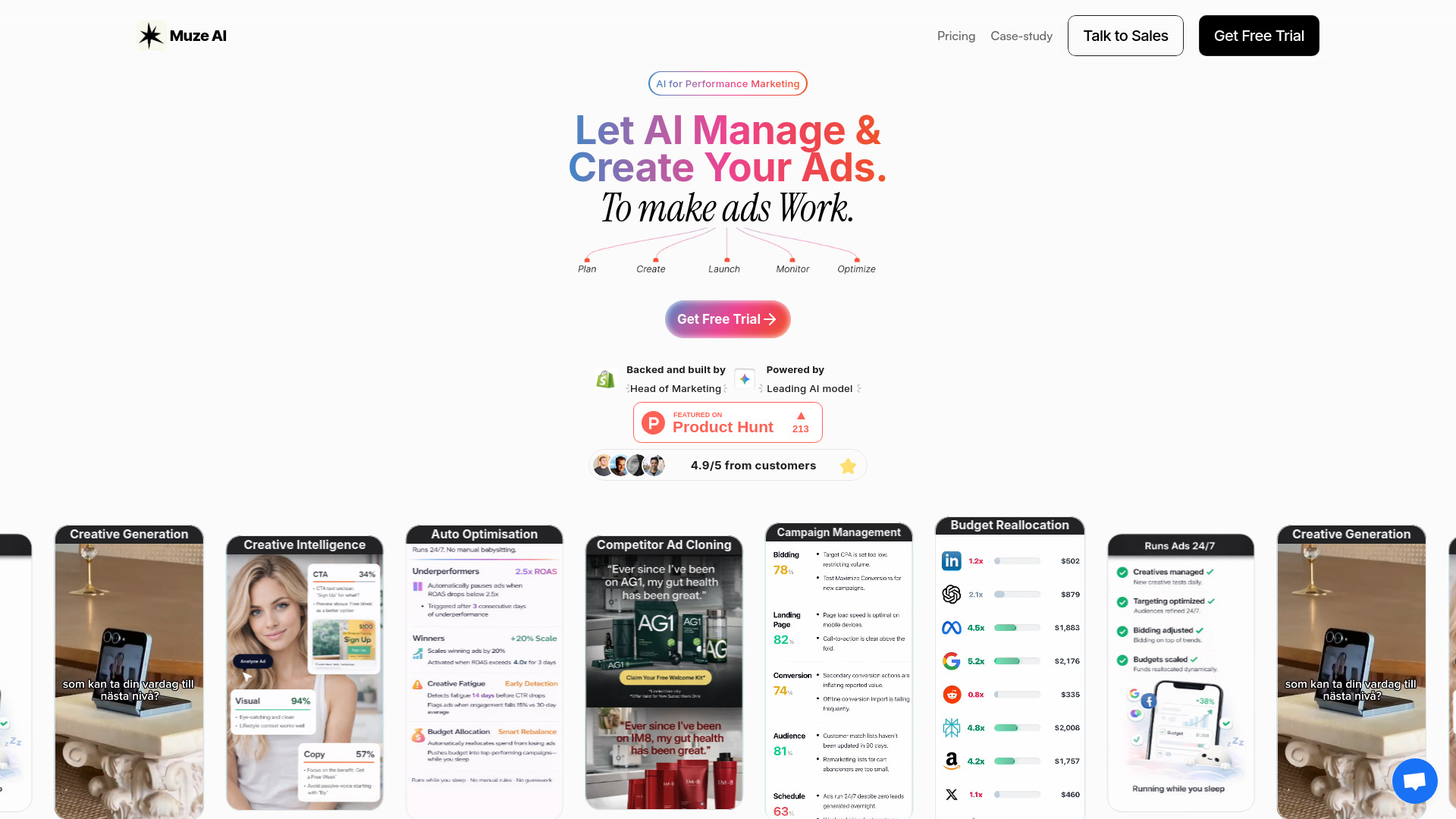
Muze AI is built for brands that want the platform to handle performance marketing end to end. It creates image and video ads, runs campaigns, optimizes continuously, and reallocates budget. The ability to generate 10 ad variations in 90 seconds is especially useful for Shopify teams that need creative volume without building an internal production pipeline. The trade-off is control: the more of the strategy and execution you delegate, the more carefully you need to review spend, inputs, and performance assumptions.
Best for
Shopify brands running Meta and Google performance campaigns
Teams that need rapid image and video ad variation
Businesses comparing an autonomous platform with agency or in-house execution
Limitations
The platform becomes responsible for critical end-to-end marketing decisions
The Power plan supports up to $10,000 per month in ad spend
The stated $399/month Power starting point may be substantial for early-stage brands
Shortlist signal: Put Muze AI on the list when creative speed and automated budget optimization outweigh hands-on campaign control.
6. RightResponse AI

- Small business owners
- 7-day trial with 1,000 free credits
- Starts at PAYGO: $10/location/month
- Usage signal: 7.4K
Why it matters
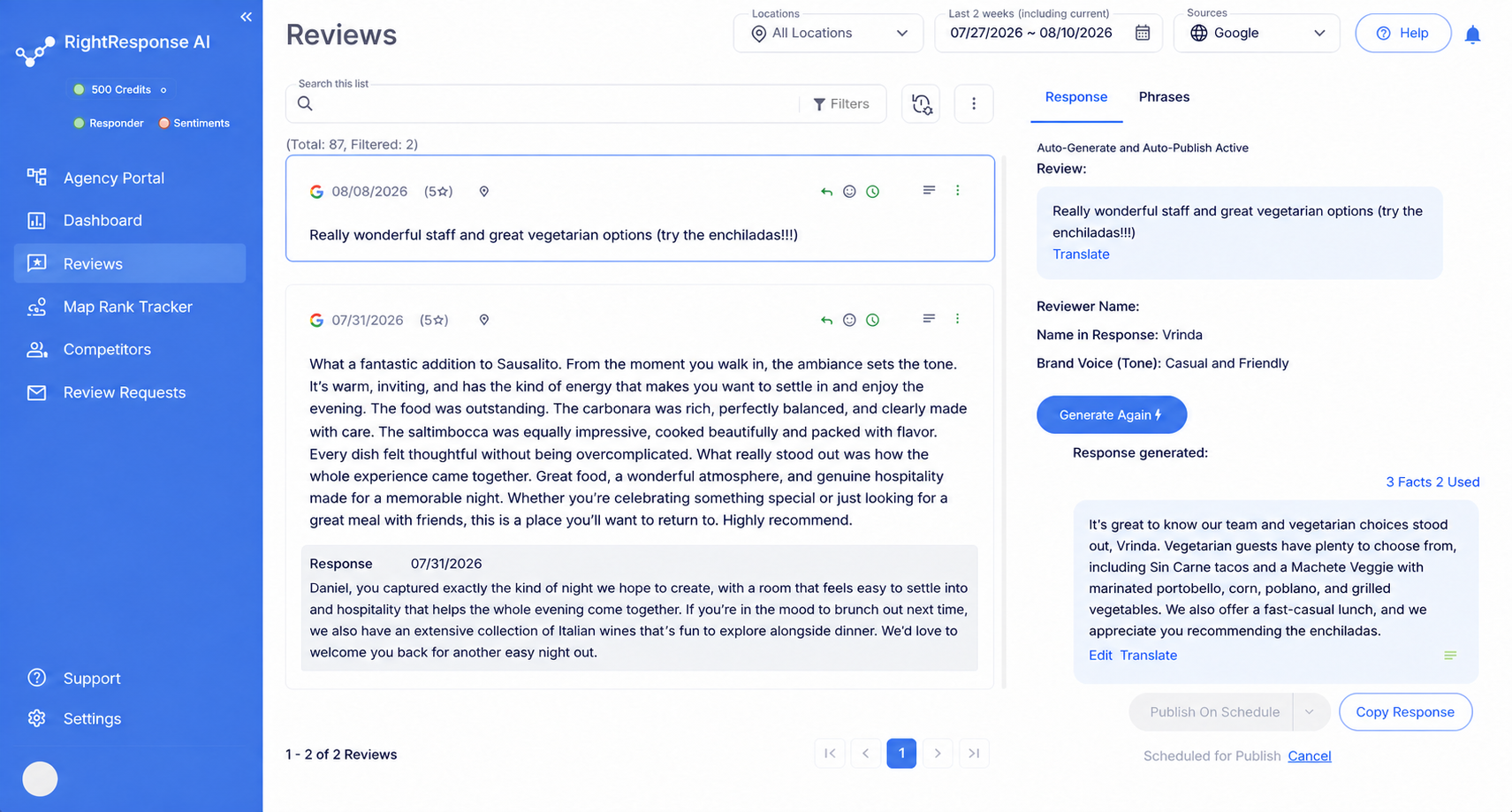
Public reviews are a major source of business information, and inaccurate or generic responses can reinforce the wrong impression. RightResponse AI uses a multi-agent review response workflow, automated response generation and publishing, and human approval. It also offers sentiment analysis and Google Maps local rank tracking. That combination makes it a useful reputation layer for businesses trying to keep customer-facing data coherent across locations. The human approval step is important: it gives owners a chance to correct context before an automated response goes live.
Best for
Small businesses managing Google reviews and local visibility
Multi-location teams that need consistent response workflows
Owners who want sentiment analysis with a review approval step
Limitations
Usage-based pricing can make monthly costs variable
Advanced brands, regions, permissions, and response controls may require a higher tier
Automated responses still need human review for sensitive or factually disputed reviews
Shortlist signal: Choose RightResponse AI when reviews and local listings are the data source most likely to shape your AI-visible reputation.
7. Sup AI

- Students
- 50 fast, 10 thinking, and 2 deep-thinking messages daily
- Starts at Free: $0/month
- Usage signal: 3.0K
Why it matters
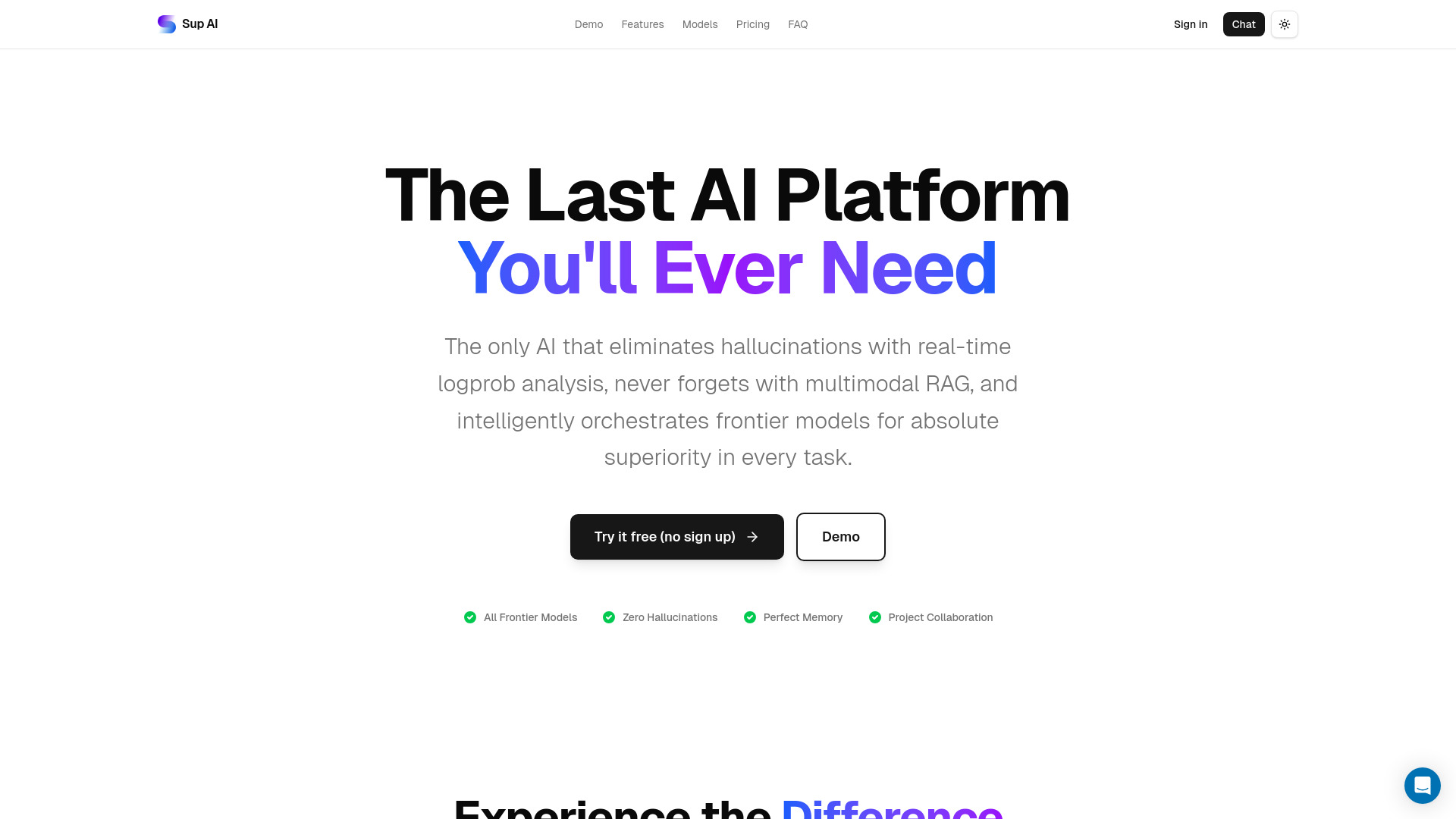
Sup AI is one of the more technically interesting adjacent tools because it tries to expose uncertainty instead of hiding it behind a polished answer. Its Pro Mode combines nine frontier language models, while logprob confidence scoring analyzes token-level probability and its K-Min Token Hedge aims to stop low-confidence responses. Multimodal retrieval supports images, PDFs, and text. For research-heavy work, that makes Sup AI worth testing as a second-opinion layer before important claims reach a website or report.
Best for
Students and researchers comparing answers across multiple models
Users working with mixed PDF, image, and text sources
Teams that want visible confidence signals rather than a single model response
Limitations
Some listed frontier models may be deprecated and require updating
GPT-5 Pro can take minutes on complex requests
Confidence scoring is a useful signal, not proof that a claim is true
Shortlist signal: Add Sup AI when answer uncertainty and cross-model review are more important than direct search-rank tracking.
8. SpeedAI

- Academic researchers
- 500-point free trial
- Starts at Free: ¥0
- Usage signal: 8.2K
Why it matters
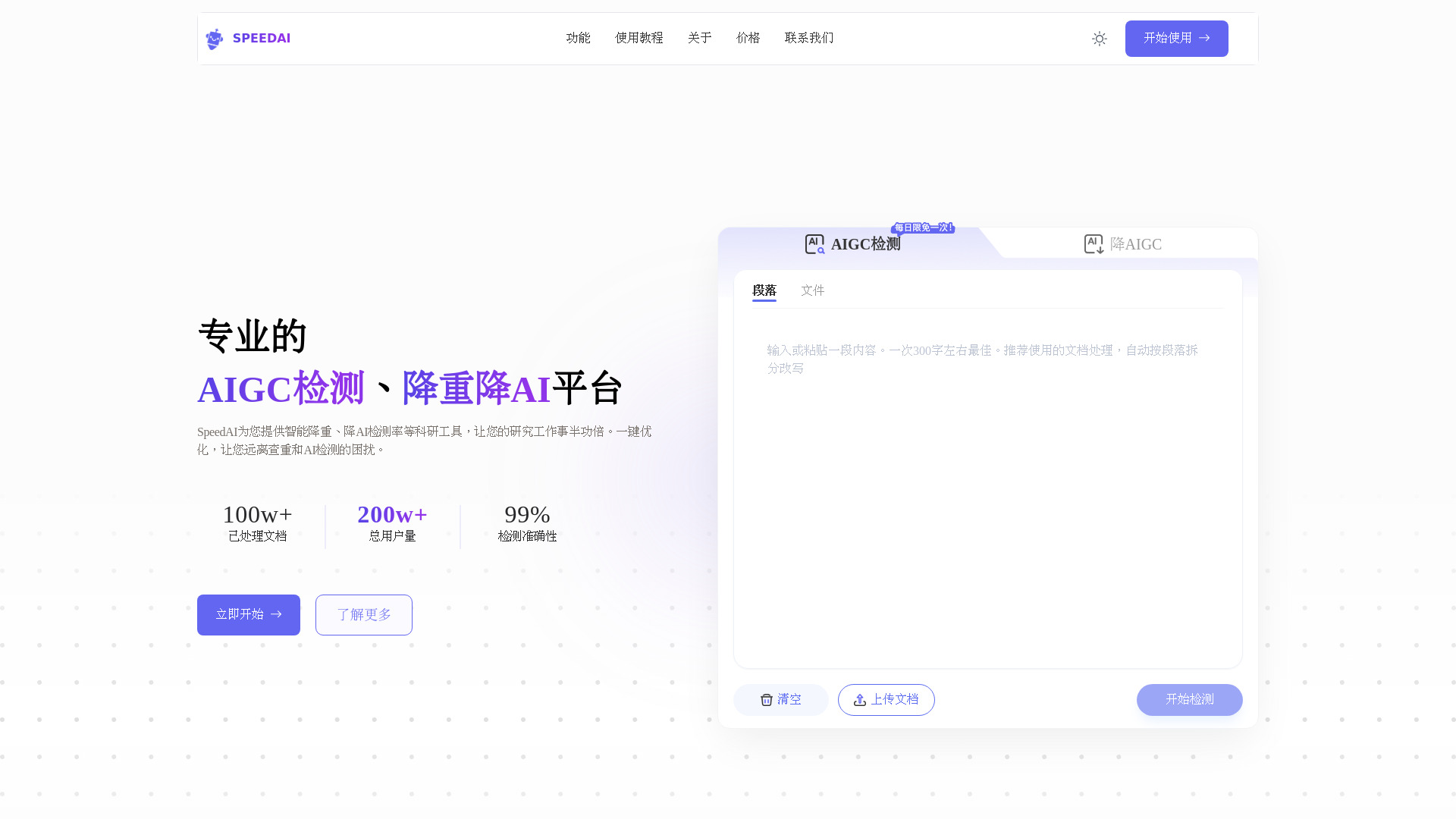
SpeedAI belongs on this list for a narrow but practical reason: it works on text quality and AI-detection concerns in academic workflows. It supports Turnitin, CNKI, VIP, and Gezida, and its non-destructive formatting feature is designed to preserve fonts, headers, and citations while rewriting. Its AI detection feature covers text generated by models such as ChatGPT, Claude, and Gemini. That can help researchers audit how their writing may be classified, although it is not a replacement for source validation or scholarly editing.
Best for
Academic researchers checking AI-generated text and repetition
Users who need formatting and citation structure preserved during rewriting
Writers working with the supported academic detection platforms
Limitations
Full functionality requires buying points or credits
The workflow may work best when paraphrasing precedes AI reduction
A lower AI-detection signal does not guarantee factual accuracy or academic integrity
Shortlist signal: Consider SpeedAI for academic text diagnostics, not as your primary AI search optimization platform.
9. AI World Generator

- Game studios
- 6 world-builder credits
- Starts at Free: $0/month
- Usage signal: 1.7K
Why it matters
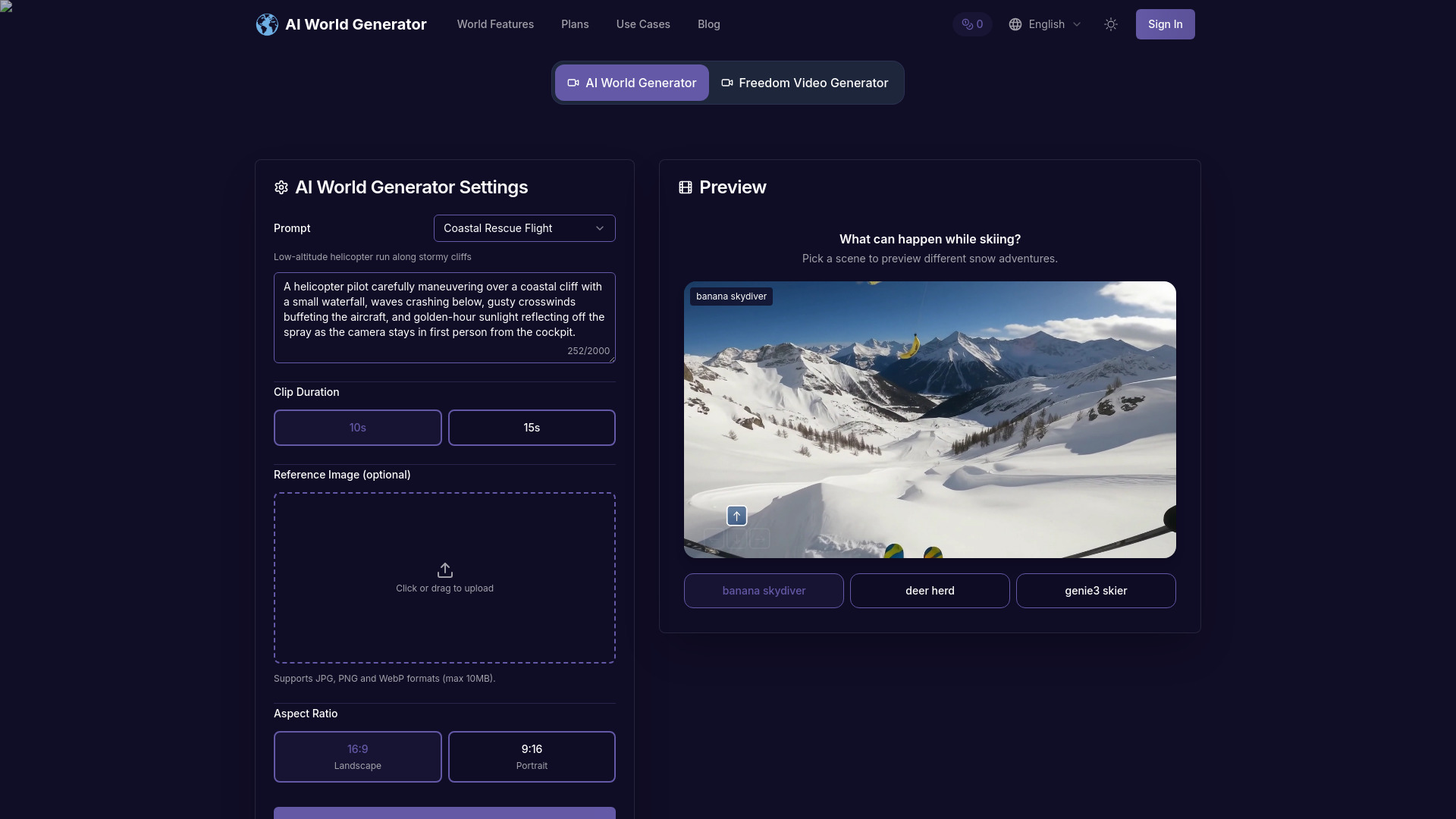
AI World Generator is an unexpected alternative for teams whose "data accuracy" challenge is really continuity inside an interactive experience. Its text-to-world engine creates explorable spaces in seconds, persistent world memory maintains spatial and narrative state for several minutes, and natural-language events can change weather, lighting, or characters during a session. For game studios, consistent world state is a form of content accuracy. The product is much farther from SEO than Searchify, but it illustrates why complex AI categories sometimes benefit from a broader field guide.
Best for
Game studios prototyping explorable 3D environments
Teams testing promptable world events
Creators who need short-session spatial and narrative continuity
Limitations
World memory eventually fades during extremely long runs
Action space remains constrained
Multi-agent choreography is still experimental
Shortlist signal: Shortlist AI World Generator only when interactive world continuity is your actual accuracy problem.
10. ContentIQ

- Founders
- First article free
- Starts at Single brand: $39/month
- Usage signal: Usage signal not listed
Why it matters
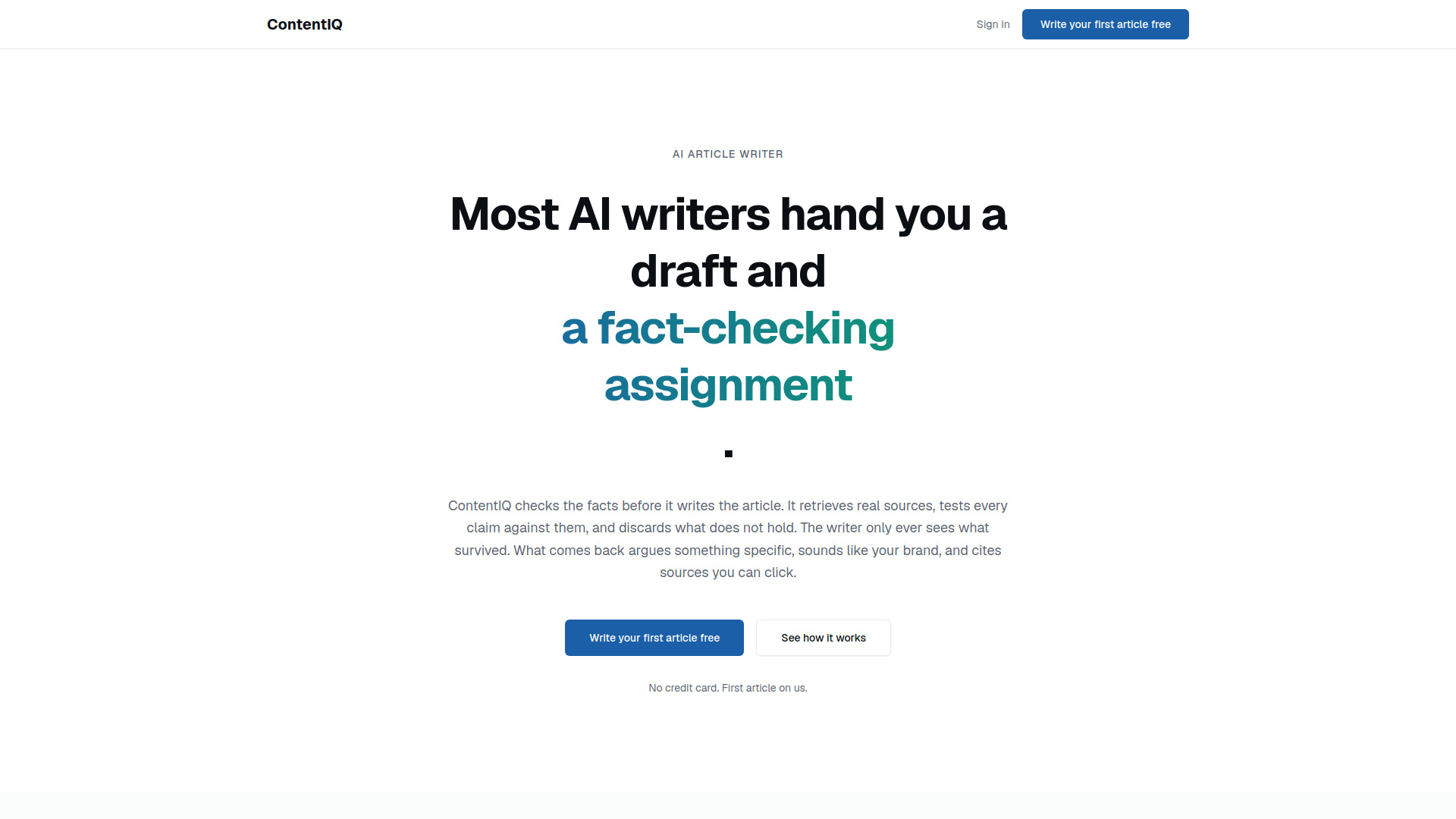
ContentIQ addresses one of the most common reasons AI search content becomes unreliable: the draft sounds confident before anyone checks its claims. It validates facts against live sources before writing, uses a one-time Brand Profile setup to maintain voice and positioning, and provides a source panel with linked citations and verification counts. That sequence is valuable because it puts evidence ahead of prose. For founders publishing thought leadership, product explainers, or comparison pages, ContentIQ can improve the inputs that search systems later summarize.
Best for
Founders publishing source-sensitive articles under a consistent brand voice
Small content teams that need clickable citations
Writers who want claim checking before drafting rather than after publication
Limitations
The initial Brand Profile setup adds a preparation step
Continued use beyond the first free article requires a paid plan
It validates article claims but does not directly measure AI search rankings
Shortlist signal: Choose ContentIQ when factual sourcing before publication is the highest-leverage way to improve AI-visible content.
What to test before choosing
Run the same small test across the finalists. A 30- to 60-minute evaluation will reveal more than a long feature list.
- 1
Use one real brand or topic. Ask each candidate to work from the same page, business profile, or research brief.
- 2
Check evidence, not confidence. Look for linked sources, verification counts, confidence signals, or a clear explanation of how recommendations were produced.
- 3
Test correction handling. Introduce one outdated claim, ambiguous review, or incomplete business detail. See whether the tool flags it, asks for context, or confidently repeats it.
- 4
Inspect the handoff. A useful result should become an export, recommendation list, approved response, report, or publishable draft without excessive cleanup.
- 5
Measure the right outcome. Searchify should be judged on visibility recommendations; ContentIQ on source quality; RightResponse AI on review workflow; ad tools on campaign performance. Do not use one metric for every segment.
- 6
Confirm limits and pricing. Pay particular attention to credits, locations, messages, ad-spend caps, model availability, and whether a free trial requires a card.
What to do next
Start with Searchify if your problem is specifically AI search visibility. Use its free analysis to identify whether the issue is discoverability, weak content, or inaccurate information appearing in answers. Then bring the findings into a content workflow that includes source review.
If the main weakness is factual content, test ContentIQ on one article and compare its source panel with your editor's research process. Local businesses should run RightResponse AI against a representative set of reviews, including positive, negative, and ambiguous examples. Teams considering Sup AI should compare one difficult question across its multi-model workflow and a trusted manual research process.
The adjacent tools are worth testing only when their operating context matches yours. Didoo AI is for Meta campaigns, Muze AI is for broader performance marketing, SpeedAI is for academic text, and AI World Generator is for interactive 3D worlds. Their inclusion should broaden your decision, not blur the buying criteria.
Common mistakes when choosing from a complex top list
Treating every AI tool as an SEO platform. A content writer, ad optimizer, and search visibility monitor solve different problems.
Confusing fluent output with accurate output. A polished answer still needs sources, review, or an observable confidence signal.
Ignoring the data source. Reviews, website copy, campaign inputs, and academic documents each require different checks.
Ranking by score alone. The close scores here make audience fit and workflow friction more important than a one-point difference.
Overlooking usage-based pricing. Credits, locations, messages, and ad-spend limits can matter more than the headline starting price.
Automating publication too quickly. Keep human approval for claims, sensitive reviews, regulated topics, and important brand statements.
Failing to retest after updates. AI models, source pages, rankings, and product limits change; an initial accuracy check is not permanent.
FAQ
Searchify is the strongest direct match because it provides an AI Search Score and actionable recommendations. ContentIQ is a strong companion for fact-checked content, while RightResponse AI is more relevant when reviews and local business information shape your public profile.