
Choosing the top rated ai for network security is less about finding one universal platform and more about matching the product to the security problem in front of you. We compared 10 tools spanning network detection and response, deep packet inspection, cloud analytics, code security, API protection, identity safety, and conversational infrastructure management. That breadth creates useful alternatives, but it also means a developer security platform should not be judged by the same criteria as an enterprise NDR product.
Start here
Use this quick shortlist before reading the full field notes. The first five tools are the most directly relevant to security operations or network visibility; the remaining options cover adjacent use cases that can still matter in a modern security stack.
Best overall match for broad digital safety: Aura combines identity theft protection, credit monitoring, VPN, and online privacy features for families.
Best for developers: Aikido brings 12-in-1 security scanning together with AI AutoTriage and AI AutoFix.
Best for network visibility: Netify uses deep packet inspection and cloud-based analytics to enrich network data.
Best for security operations: Vectra AI focuses on attack signal intelligence and network detection and response.
Best for remediation workflows: Raia correlates security data and automates remediation activities.
Best for IP lookups: MyIP AI is a lightweight utility for IPv4/IPv6 information, ASN details, and ISP data.
Best for phishing and ransomware defense: AI ShieldNet applies cloud-based AI analysis to zero-day ransomware and phishing detection.
Best for iOS API protection: AIProxy protects API keys and monitors API usage in Mac and iOS applications.
Best for AI-agent credentials: ai.pw manages passwords and shared login information for AI agents.
Best for conversational network administration: CyberTraceAI translates natural-language requests into network management workflows.
Segment comparison
The list is easier to understand when divided by the job each product performs. These segments are not interchangeable: NDR investigates network behavior, while developer security finds weaknesses in code and cloud configuration.
| Segment | Strongest fit | What it covers | Watch first |
|---|---|---|---|
| Security operations | Vectra AI, Raia | Threat signals, correlation, response, and remediation | Existing tool integrations and data quality |
| Network intelligence | Netify, CyberTraceAI | Packet inspection, telemetry, commands, and infrastructure insight | Device compatibility and telemetry coverage |
| Developer and application security | Aikido, AIProxy | Repositories, API keys, endpoints, and usage controls | Deployment effort and request volume |
| Endpoint and user protection | Aura, AI ShieldNet | Identity, privacy, phishing, and ransomware protection | Plan boundaries and cloud dependence |
| Credential and IP utilities | ai.pw, MyIP AI | AI-agent logins and IP/network information | Trust model and narrow scope |
Shortlist paths
A practical buying decision usually starts with the asset you need to protect, not with the word AI in a product description.
| Your starting point | Shortlist | Why this path makes sense |
|---|---|---|
| You need to investigate suspicious network behavior | Netify or Vectra AI | One emphasizes packet-level visibility; the other emphasizes attack signals and NDR |
| Your team is buried in code-security alerts | Aikido | AutoTriage, AutoFix, and multiple scanners are consolidated in one platform |
| You already collect security data but struggle to act on it | Raia | Its value is in correlation, unified visibility, and remediation workflows |
| You operate a Cisco-heavy network | CyberTraceAI | Natural-language network control is appealing, provided the required telemetry is available |
| Your concern is user, family, or credential safety | Aura, AI ShieldNet, or ai.pw | These tools address identity, phishing, ransomware, or AI-agent credentials rather than core NDR |
Ranking snapshot
Scores are a useful sorting signal, not a substitute for a proof-of-value test. Notice that several products share a score while serving very different audiences.
| Rank | Tool | Score | Best for | Starting price |
|---|---|---|---|---|
| #1 | Aura | 92/100 | Families | Family: $32/mo annually; $50/mo monthly |
| #2 | Aikido | 92/100 | Developers | Developer: $0 / free forever |
| #3 | Netify | 92/100 | Network administrators | Check vendor pricing |
| #4 | Vectra AI | 92/100 | Security analysts | Check vendor pricing |
| #5 | Raia | 90/100 | Security analysts | Check vendor pricing |
| Rank | Tool | Score | Best for | Starting price |
|---|---|---|---|---|
| #6 | MyIP AI | 90/100 | Travelers | Check vendor pricing |
| #7 | AI ShieldNet | 89/100 | Law firms | Check vendor pricing |
| #8 | AIProxy | 89/100 | iOS developers | Starter: $10 / month |
| #9 | ai.pw | 89/100 | AI developers | Check vendor pricing |
| #10 | CyberTraceAI | 89/100 | Network administrators | Check vendor pricing |
How we grouped and ranked the list
This is a complex category, so a single feature checklist would produce a misleading result. We grouped the tools by their primary security job: seeing network activity, detecting threats, fixing security issues, protecting identities and endpoints, securing application access, or operating infrastructure.
We then considered four practical questions. First, does the product have a concrete security workflow rather than simply an AI label? Second, can the intended buyer use its output to investigate, fix, monitor, or control something? Third, what setup or dependency could slow adoption? Finally, does the product's audience match the problem it claims to solve?
The ranking also uses the supplied score and market-usage signals as context. That is why Aura appears first even though it is aimed at families rather than security operations teams: its broad protection package and 2.3M monthly visits make it a strong overall digital-safety option. Aikido, Netify, and Vectra AI score equally, but their buying cases are completely different. Treat the rank as a starting point, then filter by segment.
Ranked field notes
1. Aura

- Families managing identity and online privacy
- 14-day free trial
- Starts at Family: $32/mo annually or $50/mo monthly
- Usage signal: 2.3M
Why it matters
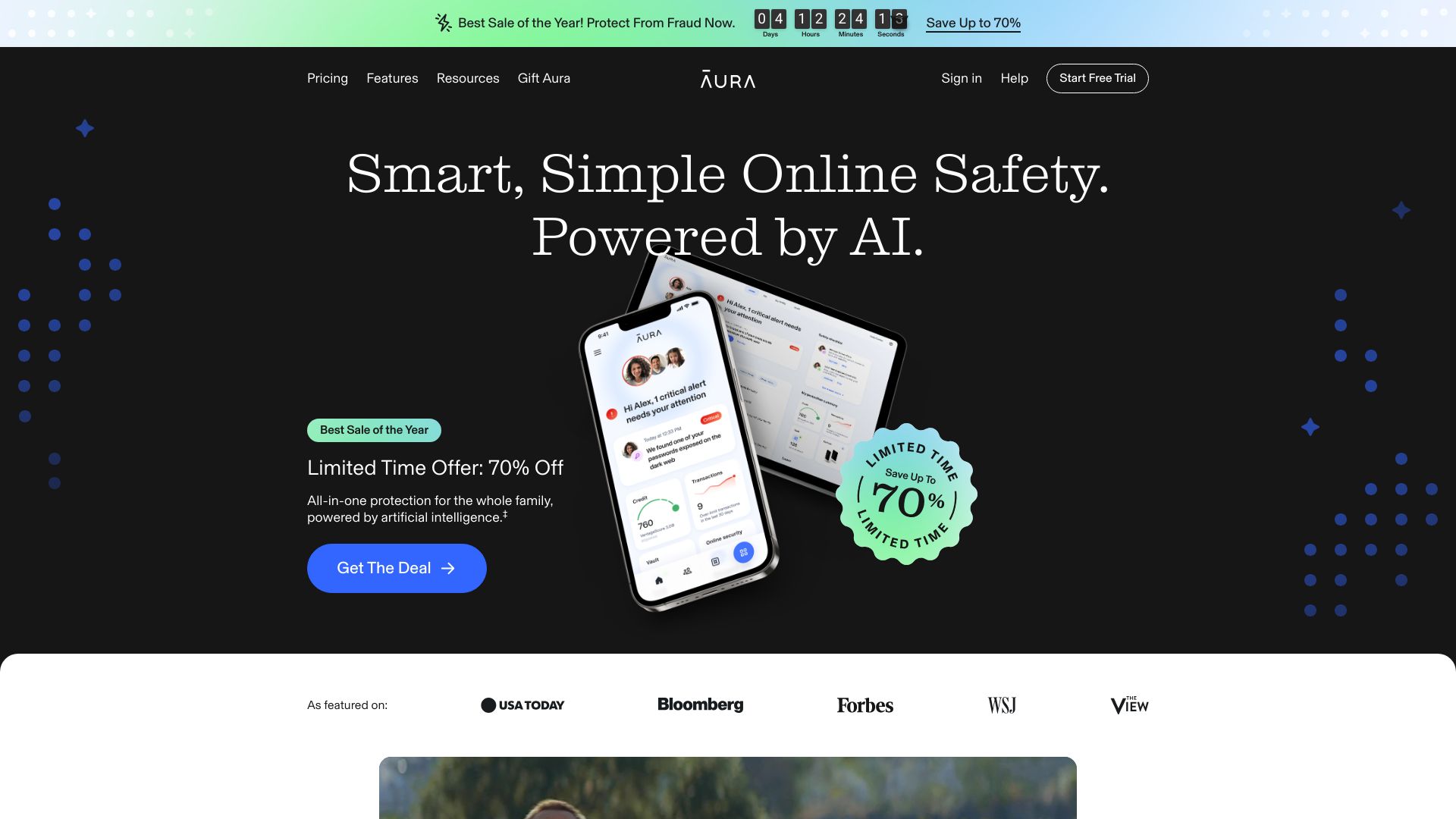
Aura takes the broadest interpretation of network and online security in this group. Instead of focusing on packet telemetry or SOC workflows, it bundles identity theft protection, credit monitoring, VPN, and online privacy features into a family-oriented safety platform. That makes it a sensible first shortlist candidate for households that need coverage across people and devices, not a specialist console for investigating lateral movement. The 14-day free trial gives buyers a straightforward way to test the experience before committing.
Best for
Families managing identity theft and credit-monitoring concerns
Households that want VPN and online privacy features in the same package
Buyers who prefer one consumer-facing protection platform over several separate services
Limitations
Some features are available only on specific plans
Not every feature uses AI capabilities
The product is a poor fit for a SOC seeking dedicated NDR or packet-level investigation
Shortlist signal: Add Aura when broad family identity and online-threat protection matters more than enterprise network telemetry.
2. Aikido

- Developers securing code, cloud, and runtime
- Free for 2 users and 10 repos; 2 AI AutoFixes/mo
- Starts at Developer: $0 / free forever
- Usage signal: 586.3K
Why it matters
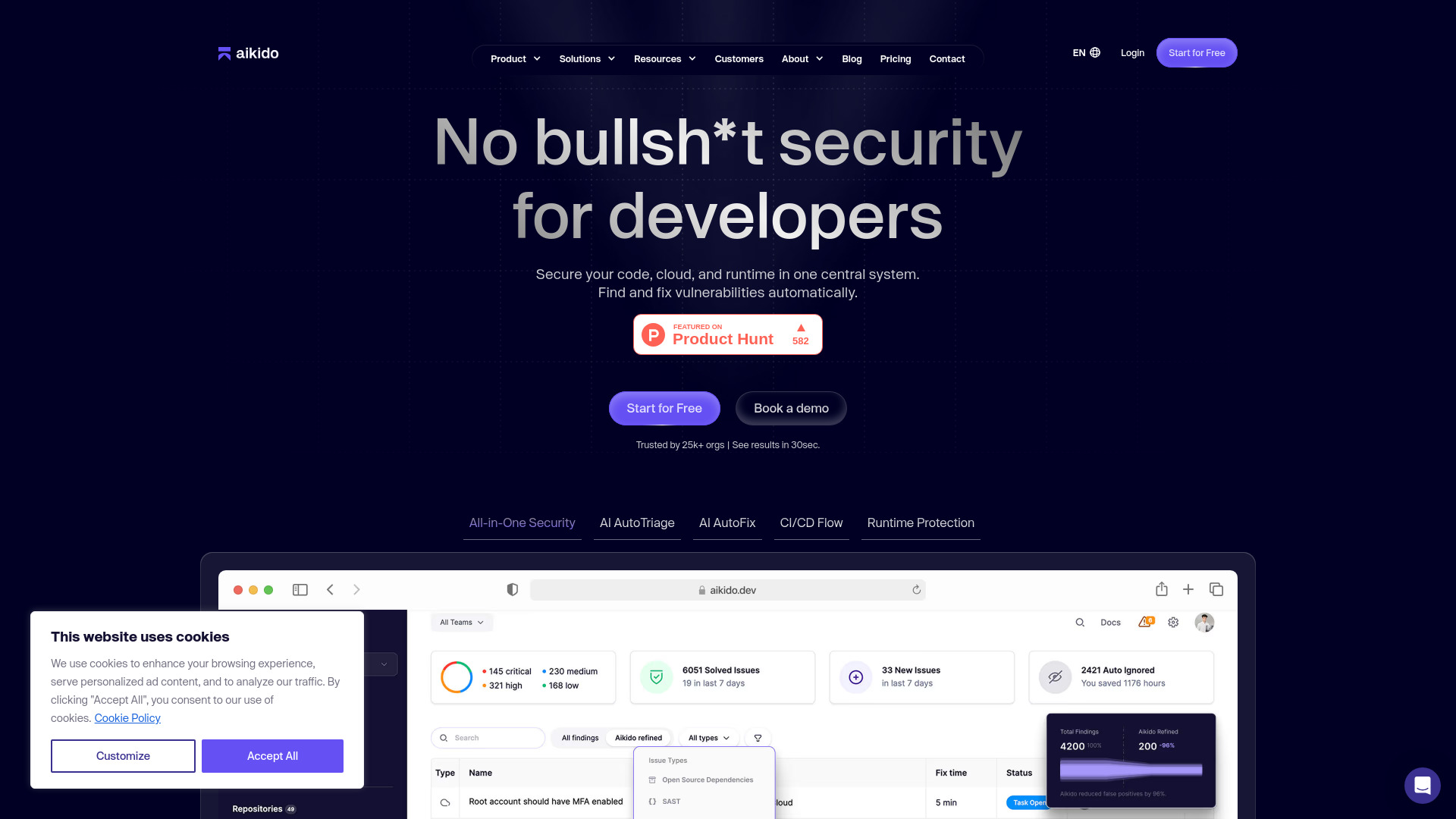
Aikido earns its place by consolidating a long list of developer-security checks instead of forcing teams to stitch together separate scanners. Its 12-in-1 coverage includes SCA, SAST, DAST, CSPM, IaC, secrets, containers, and malware scanning. The more distinctive layer is the remediation loop: AI AutoTriage is designed to cut false positives by 85%, while AI AutoFix can create one-click fixes and generate pull requests. That combination speaks directly to the developer complaint that security tools find more work than engineering teams can reasonably process.
Best for
Development teams that want one platform for repository, cloud, and runtime security
Teams spending too much time sorting false positives and noisy findings
Small teams that want to begin with a free plan covering two users and 10 repositories
Limitations
The free tier includes only two AI AutoFixes per month
Consolidating many scanners may still require thoughtful configuration and workflow ownership
Buyers should validate how the included scanners map to their existing development process
Shortlist signal: Choose Aikido when reducing security noise and turning findings into pull requests is the main operational goal.
3. Netify

- Network administrators needing packet-level visibility
- Free access available for DPI and cloud network analytics
- Starts at Check vendor pricing
- Usage signal: 332.0K
Why it matters
Netify is the clearest choice here when the starting point is understanding what is happening on the network. Deep packet inspection supplies the raw visibility, while cloud-based analytics and enriched data feeds turn that activity into more useful network intelligence. The emphasis on transparency and customizable data makes it interesting for administrators who need to inspect traffic patterns rather than simply receive a high-level alert. It is a visibility layer, so buyers should evaluate how its output fits into the rest of their security workflow.
Best for
Network administrators investigating traffic and application activity
Teams that need deep packet inspection and enriched network data feeds
Organizations that want customizable analytics rather than a black-box alert stream
Limitations
The DPI engine must be integrated into network devices
Cloud-based analytics may raise privacy concerns for some organizations
Pricing is hidden behind a sales conversation, so confirm deployment and data terms early
Shortlist signal: Put Netify on the shortlist when packet-level network visibility is the missing foundation for security analysis.
4. Vectra AI

- Security analysts investigating attack signals
- Free access available for advanced attack signal intelligence
- Starts at Check vendor pricing
- Usage signal: 172.7K
Why it matters
Vectra AI is aimed squarely at teams that need to separate meaningful attack behavior from a crowded alert queue. Its Attack Signal Intelligence and Network Detection and Response capabilities give it a more focused security-operations profile than the consumer and utility tools elsewhere in the list. The claimed reduction in alert noise by 80% and faster incident response by 99% are compelling reasons to run a measured pilot, especially for analysts who need to investigate incidents faster. The important test is whether it integrates cleanly with the security tools and data sources already in place.
Best for
Security analysts handling network threat detection and incident response
Teams looking to reduce alert noise and prioritize stronger attack signals
Organizations with an existing security stack that can support integration work
Limitations
It may require integration with existing security tools
Cost may be significant for smaller organizations
A pilot should verify response improvements in the buyer's own environment rather than relying on headline percentages
Shortlist signal: Choose Vectra AI when the central problem is turning noisy network alerts into actionable attack signals.
5. Raia

- Security analysts coordinating remediation
- Free access available for unified remediation workflows
- Starts at Check vendor pricing
- Usage signal: 865
Why it matters
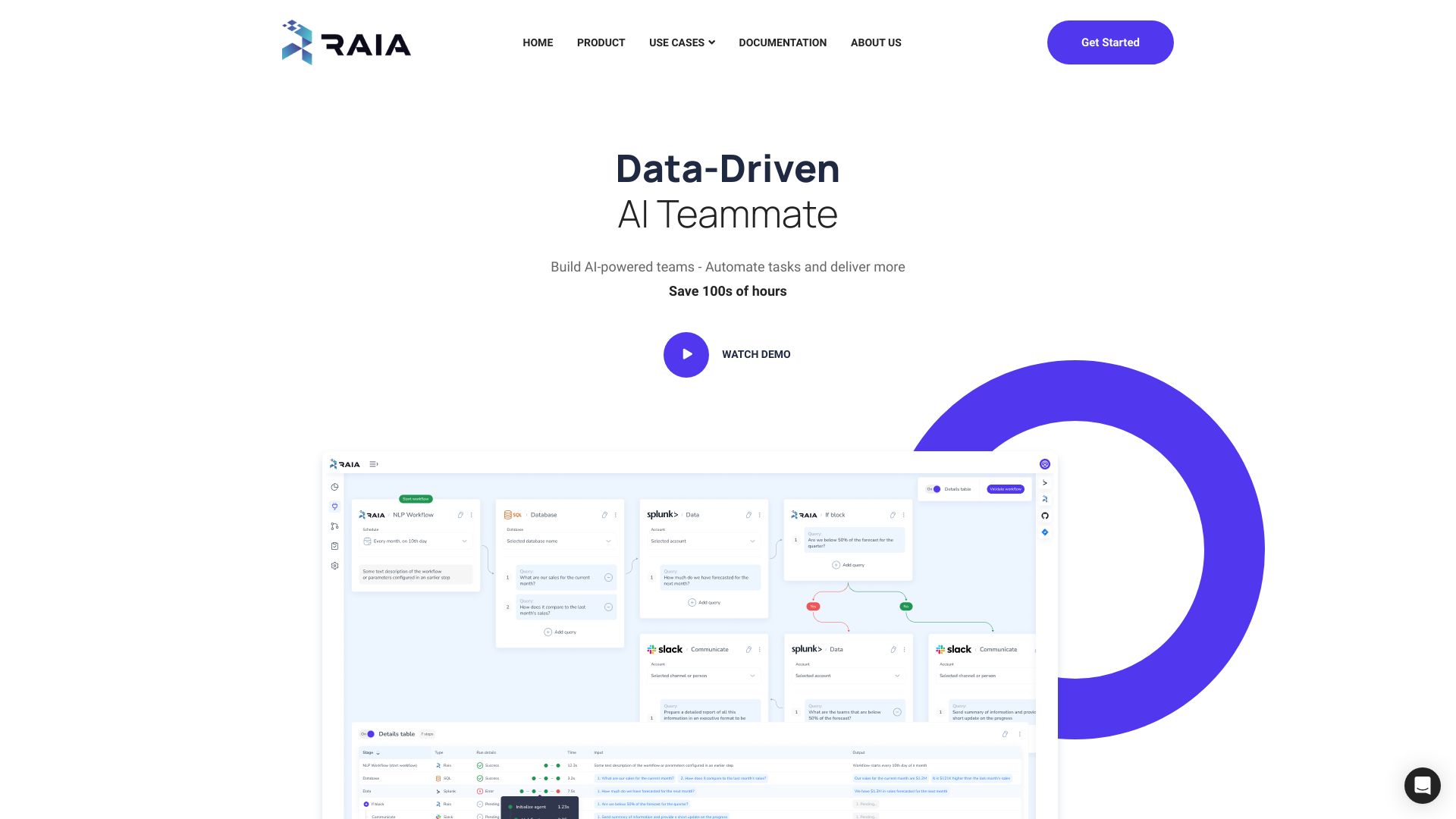
Raia focuses on the part of security work that often gets neglected after detection: correlation, prioritization, and remediation. Its unified security visibility and remediation workflow is designed to bring threat analysis and data correlation into one operating layer, with automated remediation actions reducing manual effort. That makes it a useful alternative for teams that already have several sources of security information but struggle to move from finding an issue to resolving it. Its relatively small usage signal means buyers should spend extra time validating maturity, integrations, and support during evaluation.
Best for
Security analysts coordinating findings from multiple sources
Teams trying to reduce alert fatigue and remediation time
Organizations that want automated remediation workflows rather than another dashboard
Limitations
Initial setup and configuration may be needed to connect existing systems
Results depend on the quality and completeness of integrated data sources
Pricing is not public in a clean starting plan, so request a workflow-specific quote
Shortlist signal: Add Raia when your bottleneck is coordinated remediation, not simply discovering more threats.
6. MyIP AI

- Travelers and users checking IP information
- Free access available; no login or sign-up required
- Starts at Check vendor pricing
- Usage signal: 173
Why it matters
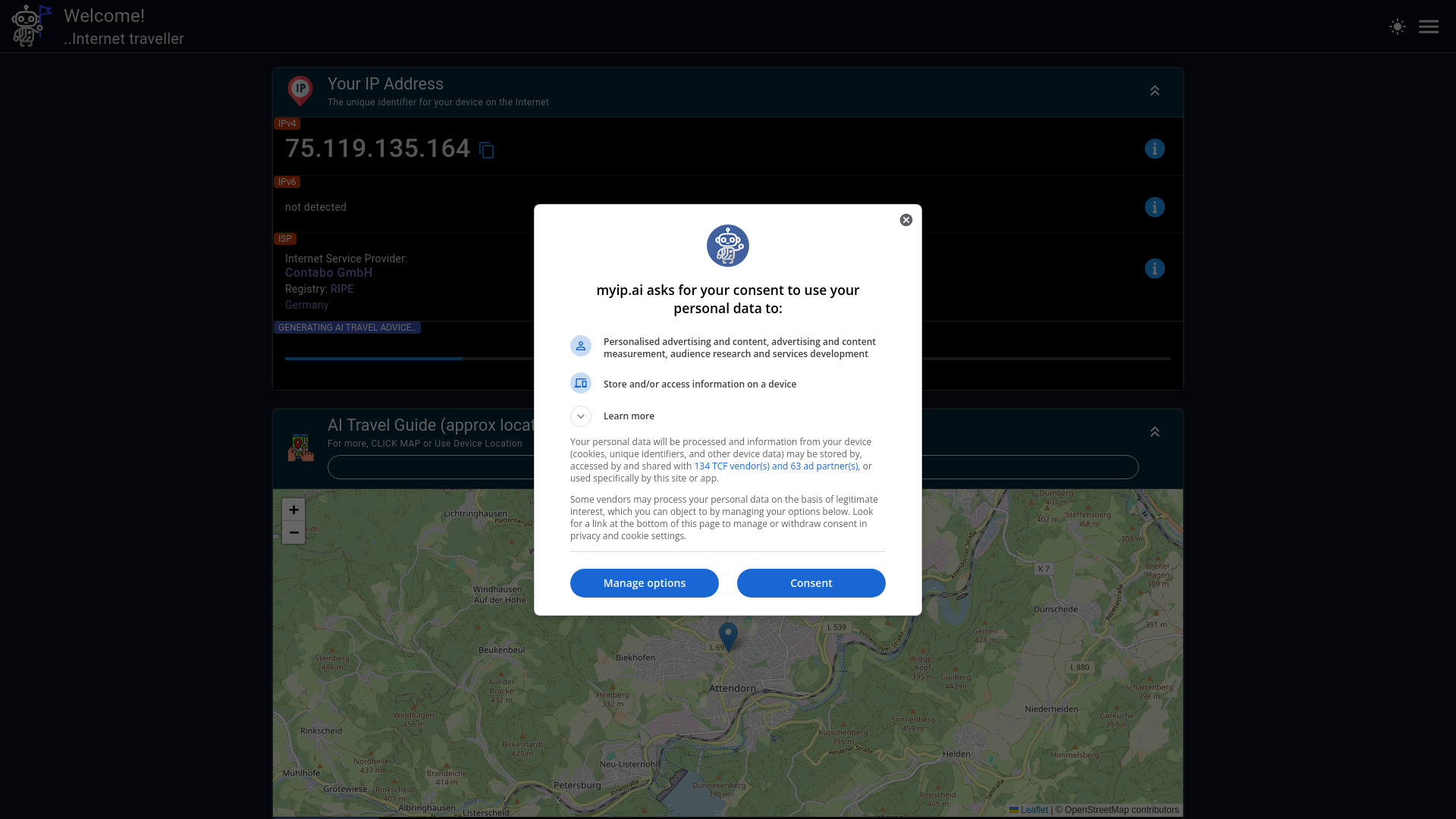
MyIP AI is an unexpected alternative in a network-security field guide, but it can be useful at the edge of everyday network investigation. It provides IPv4 and IPv6 lookup details along with ASN, ISP, and IP-range information, and it adds AI-generated travel guides as a separate utility. This is not an NDR platform and should not be evaluated as one. Its appeal is speed and simplicity: someone checking an address or basic network context can get useful information without an account.
Best for
Users who need quick IPv4/IPv6 and ISP information
Travelers using the site's AI-generated travel-guide utility
Simple troubleshooting moments where a full security console would be excessive
Limitations
JavaScript must be enabled
Travel-guide information may be limited or generic
The narrow IP-lookup workflow does not replace detection, response, or network analytics
Shortlist signal: Consider MyIP AI as a lightweight investigation utility, not as the primary security platform for a network team.
7. AI ShieldNet

- Law firms defending against phishing and ransomware
- Free access available for single-agent protection
- Starts at Check vendor pricing
- Usage signal: Usage signal not listed
Why it matters
AI ShieldNet takes a targeted approach to the threats that can disrupt organizations quickly: phishing and zero-day ransomware. Its cloud-based analysis, SaaS reporting, and control features give administrators a way to manage a unified defense rather than treating every suspicious message or file as an isolated event. The law-firm positioning is notable because those organizations often handle sensitive information and need clear reporting. Still, cloud dependence and model accuracy deserve a close look before deployment.
Best for
Law firms and organizations prioritizing phishing and ransomware defense
Teams that want SaaS-based reporting and control
Buyers evaluating single-agent protection as an entry point
Limitations
Analysis relies on cloud connectivity
Effectiveness depends on the accuracy of the AI models
The product's focus is narrower than a full network detection and response platform
Shortlist signal: Add AI ShieldNet when phishing and zero-day ransomware are the immediate risks you need to address.
8. AIProxy

- iOS developers protecting application API access
- 1K requests/month free
- Starts at Starter: $10 / month
- Usage signal: Usage signal not listed
Why it matters
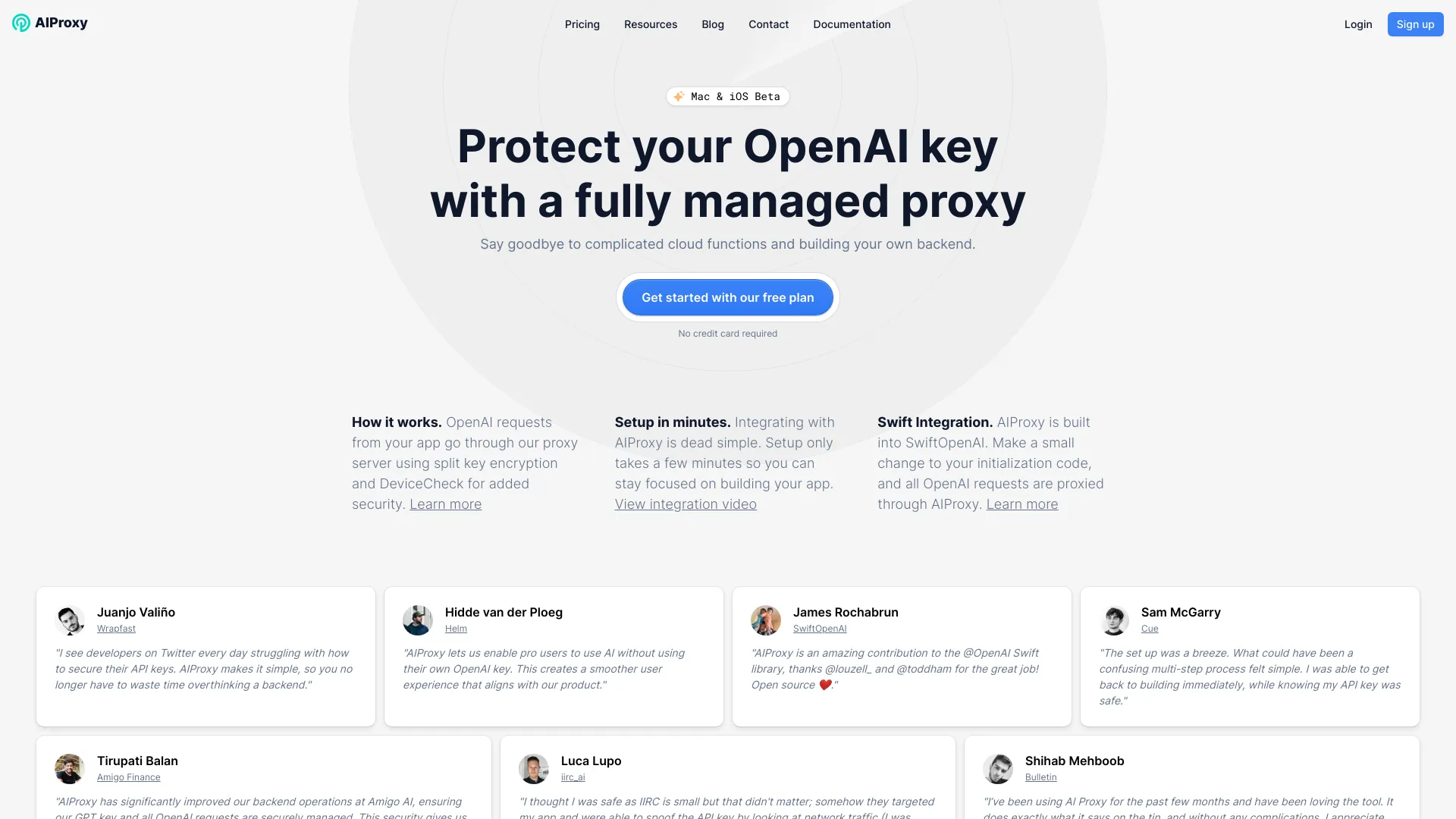
AIProxy addresses a specific but important application-security problem: protecting API keys inside Mac and iOS apps. Its Swift client library, split-key encryption, DeviceCheck, and certificate pinning create a practical security layer around API access, while usage monitoring and custom rate limits add operational visibility. This belongs on a network-security shortlist only when application endpoints and API consumption are part of the risk model. For the right developer, that narrower focus is a strength rather than a weakness.
Best for
iOS developers building applications that call protected APIs
Teams that need API-key protection and endpoint security together
Developers who want usage monitoring and custom rate limits, starting at $10 per month
Limitations
The client library must be integrated into the application
Request-volume pricing may become expensive for high-usage applications
It is not a substitute for network detection or broader security operations tooling
Shortlist signal: Choose AIProxy when exposed API credentials in an iOS or Mac application are the security gap you need to close.
9. ai.pw

- AI developers managing agent credentials
- Free access available for AI-agent password management
- Starts at Check vendor pricing
- Usage signal: Usage signal not listed
Why it matters
As AI agents handle more signups and logins, credentials become an operational security problem of their own. ai.pw is built around password management for AI agents, secure sharing of login information, and integration with agents such as OpenAI's Operator. Its value is not network visibility; it is reducing the temptation to place credentials directly into agent instructions or interrupt an automation every time authentication is needed. That makes it an adjacent tool for teams building agent-based workflows.
Best for
AI developers automating signups, logins, and browser-based tasks
Teams that need to share credentials with agents without repeated manual interruptions
Builders evaluating password management designed specifically for AI-agent workflows
Limitations
Buyers must trust ai.pw's own security practices and handling of credentials
ShareLinks create a potential risk if they are compromised
The product does not provide network detection, packet inspection, or threat response
Shortlist signal: Consider ai.pw when AI-agent credentials, rather than network traffic, are the weak point in your automation stack.
10. CyberTraceAI

- Network administrators using conversational commands
- Free access available for natural-language network management
- Starts at Check vendor pricing
- Usage signal: Usage signal not listed
Why it matters
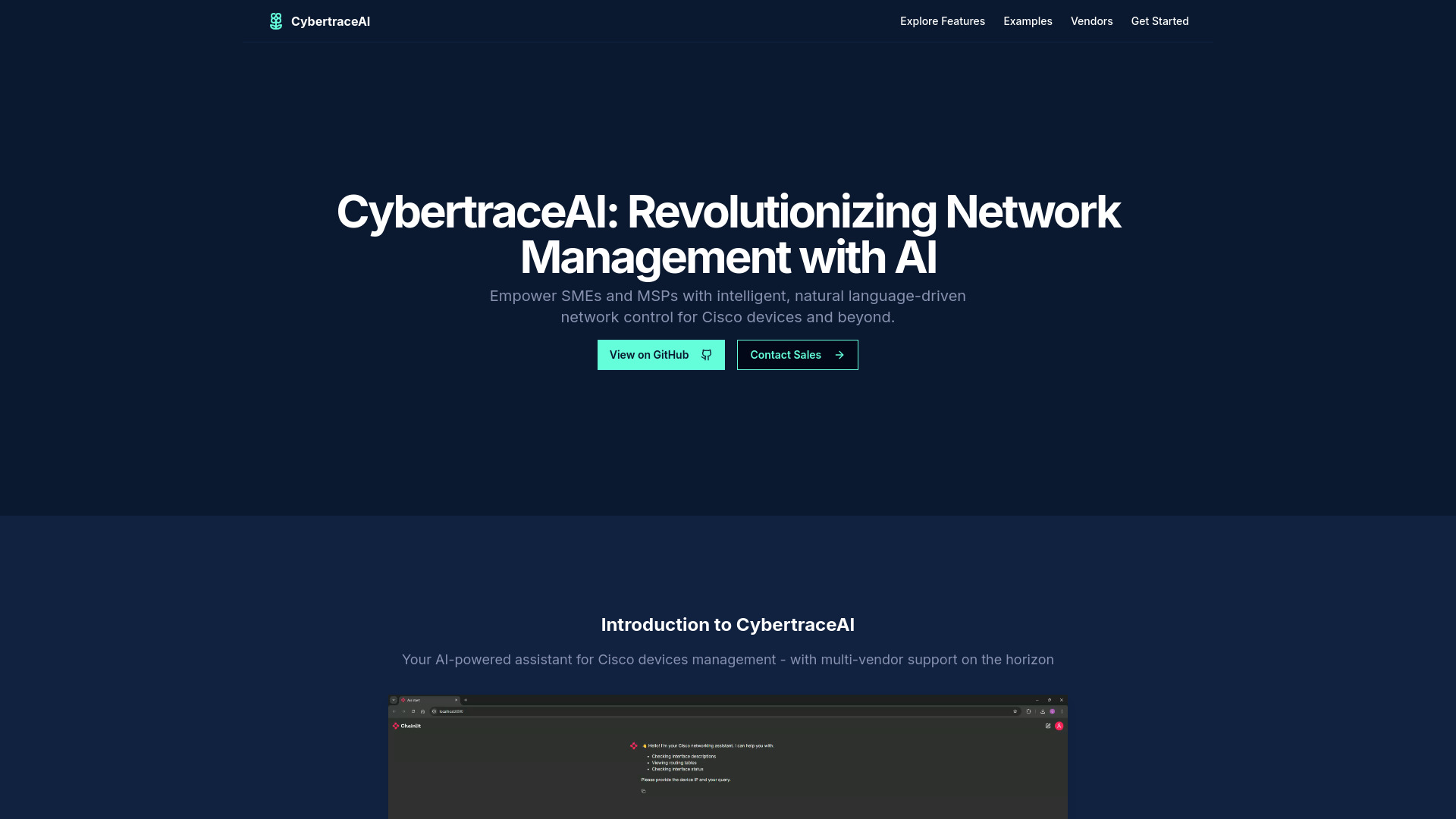
CyberTraceAI makes network administration more conversational. Its natural-language interface interprets commands and provides real-time insights into IT infrastructure, which could reduce the friction of querying network state or carrying out routine management tasks. The product is especially interesting for administrators who want a faster way to observe and control infrastructure without translating every request into a command-line sequence. The catch is scope: current vendor support is limited, primarily to Cisco, and full functionality requires telemetry data.
Best for
Network administrators managing Cisco-oriented environments
Teams that want conversational access to network commands and insights
Operators who need real-time infrastructure observation alongside command interpretation
Limitations
Vendor support is currently limited, primarily to Cisco
Full functionality requires telemetry data
Natural-language control should be tested carefully against permission and change-management processes
Shortlist signal: Add CyberTraceAI when conversational network operations fit your environment and you can provide the required telemetry.
What to test before choosing
A polished demo is not enough for a security purchase. Run each candidate against a small, representative workflow and record what happens.
- 1
Test the data path. For Netify, verify that the DPI engine can be integrated into the network devices you actually operate. For Vectra AI and Raia, confirm which existing security tools and data sources can be connected.
- 2
Measure signal quality. Feed the system known benign activity alongside realistic suspicious activity. Aikido's AutoTriage should be assessed against your own repository findings, while Vectra AI should be judged by the quality of attack prioritization in your environment.
- 3
Verify the action loop. Detection without a usable next step creates another queue. Check whether Aikido can generate useful pull requests, whether Raia can support your remediation workflow, and whether CyberTraceAI's conversational actions fit approval controls.
- 4
Check cloud and privacy requirements. Netify and AI ShieldNet rely on cloud-based analysis. Ask what data leaves the environment, how it is handled, and whether the design fits your legal or compliance requirements.
- 5
Test scope boundaries. MyIP AI, AIProxy, and ai.pw can be valuable for specific problems, but they do not replace an NDR, SIEM, endpoint, or vulnerability-management program.
- 6
Price the real workload. AIProxy uses request-volume economics, Aikido's free plan has defined user, repository, and AutoFix limits, and several vendors require a quote. Use your expected users, repositories, devices, traffic, and requests rather than a headline entry price.
What to do next
Start with one primary risk and one measurable outcome. If the risk is suspicious network behavior, compare Netify and Vectra AI using the same traffic sample. If the issue is alert overload in development, begin with Aikido. If the team already sees issues but cannot close them, evaluate Raia's remediation workflow instead of adding another detection feed.
For a small or family-oriented use case, Aura may be the more sensible first test. For a narrow application or automation concern, AIProxy or ai.pw can be better aligned than a broad security suite. And if your goal is conversational network administration, validate CyberTraceAI's Cisco and telemetry requirements before investing time in a wider rollout.
Keep the first pilot small: one team, one workflow, and a clear baseline. Track false positives, time to investigate, time to remediate, integration effort, and the number of actions that still require manual work. Those measures will tell you more than a generic claim that AI improves security.
Common mistakes when choosing from a complex top list
Treating every tool as an NDR product. Vectra AI and Netify are the most direct network-security choices here. Aikido, AIProxy, and ai.pw solve application or credential problems instead.
Confusing a broad bundle with specialist depth. Aura covers identity, credit, VPN, and privacy, but its audience and workflow differ from a security-operations team.
Ignoring the integration burden. DPI engines, client libraries, existing security tools, device vendors, and telemetry can determine whether a product succeeds after the demo.
Accepting AI claims without a baseline. Measure alert noise, investigation time, remediation time, and model accuracy using your own data.
Overlooking data governance. Cloud analytics can be useful, but confirm what information is transmitted and how that affects your organization.
Using traffic or popularity as proof of fit. Monthly visits provide context, not a guarantee that a product matches your architecture or threat model.
Skipping the pricing conversation. Quote-based products should be evaluated with concrete workload estimates, while free plans should be checked for limits that matter to your team.
FAQ
Netify is the most direct starting point when you need deep packet inspection, cloud-based analytics, and enriched network data feeds. Vectra AI is a better starting point when the priority is detecting and prioritizing attack signals rather than building raw visibility.