
When people search for the top historical data providers for ai search optimization, they usually mean one of two things: sources that help an AI system understand what happened over time, or platforms that show how a brand appears in AI-generated answers today. Those are related problems, but they are not the same workflow. I compared 10 tools across both sides of that divide, including forecasting platforms, AI visibility trackers, general-purpose model gateways, and several adjacent products that may be useful when a historical-data project expands into research or execution.
The short version: FutureSearch is the closest fit for evidence-backed historical and forward-looking analysis, while Llumo and Searchify are more directly useful for measuring AI search visibility. The rest belong on a specialist shortlist only when their particular workflow-security research, multimodal synthesis, advertising, reputation management, or model integration-matches your project.
Start here
Use this quick shortlist before reading the full field notes:
For evidence-backed research and forecasts: FutureSearch supports probability, numeric, date, categorical, conditional, and decision forecasts with multi-agent research teams.
For tracking AI search visibility: Llumo covers ChatGPT, Gemini, Perplexity, Copilot, Google AI Overviews, and other models, with per-prompt visibility and share-of-voice tracking.
For a straightforward optimization workflow: Searchify combines an AI Search Score with actionable recommendations and content creation.
For sensitive technical research: Abliteration.ai offers OpenAI- and Anthropic-compatible APIs and less-restricted models for legitimate security, research, and synthetic-data workflows.
For building your own AI application: 2KEN provides one endpoint for text, image, video, and 3D models.
Here is the catch: not every option below is a historical data provider in the traditional sense. Several are broader visual studios, advertising systems, or AI infrastructure tools. I have kept them because they become relevant when a search-optimization team needs to turn historical analysis into monitoring, content, experimentation, or an application.
Segment comparison
| Segment | Best fit | Strongest capability | Main caution |
|---|---|---|---|
| Research and forecasting | FutureSearch | Evidence-backed probability, date, numeric, and decision forecasts | Costs vary with token usage and effort level |
| AI visibility tracking | Llumo | Prompt-level visibility, citations, and competitor monitoring | Free platform requires your own API keys |
| AI search optimization | Searchify | AI Search Score and actionable recommendations | Pricing is behind vendor review |
| Model access and orchestration | Sup AI | Multi-model synthesis and confidence scoring | Some listed frontier models may be deprecated |
| API infrastructure | 2KEN | Unified access to many model types | Costs vary by model and usage |
Shortlist paths
| Your project looks like this | Start with | Why |
|---|---|---|
| You need defensible research rather than a simple model answer | FutureSearch | Multi-agent research teams produce research-backed forecasts |
| You need to see whether AI engines mention or cite your brand | Llumo | Tracks visibility across major answer engines and compares competitors |
| You want prioritized recommendations for improving AI responses | Searchify | Turns an AI Search Score into specific recommendations |
| You need to compare several models inside one workflow | Sup AI | Nine frontier LLMs collaborate through orchestration |
| You want to integrate multiple models into a product | 2KEN | One API key and endpoint cover text, image, video, and 3D models |
Ranking snapshot
| Rank | Tool | Score | Best for | Starting price |
|---|---|---|---|---|
| #1 | FutureSearch | 92/100 | Researchers | Free: $0 |
| #2 | Abliteration.ai | 91/100 | Cybersecurity researchers | Free tier: 0 |
| #3 | Searchify | 91/100 | SEO professionals | Check vendor pricing |
| #4 | Muze AI | 91/100 | Shopify brands | Free: $0 for 7 days |
| #5 | Didoo AI | 91/100 | Small and medium businesses | Starter (Monthly): $69/month |
| #6 | RightResponse AI | 90/100 | Small business owners | PAYGO: $10/location/month |
| #7 | Sup AI | 90/100 | Students | Free: $0/month |
| #8 | AI World Generator | 90/100 | Game studios | Free: $0/month |
| #9 | Llumo | 87/100 | SEO professionals | Free: $0 |
| #10 | 2KEN | 87/100 | AI application developers | Check vendor pricing |
How we grouped and ranked the list
This is a complex category, so a single feature checklist would produce a misleading result. I grouped the tools by the job they actually perform: gathering or interpreting evidence, measuring AI search presence, orchestrating models, and operationalizing the output. FutureSearch received the strongest category fit because its core workflow centers on research-backed forecasts across several historical and decision-oriented formats.
The next tier reflects practical adjacency. Searchify and Llumo address AI search optimization directly, but from different directions: Searchify emphasizes recommendations, while Llumo emphasizes measurement, citations, and competitor visibility. Abliteration.ai ranks highly for technical teams that need compatible APIs and fewer refusal-related interruptions in legitimate sensitive workflows. The remaining tools are more specialized. Their scores reflect audience fit, feature depth, and usefulness within a broader research stack-not a claim that each one is a conventional historical database.
Market signals also help separate a promising workflow from an unproven one. Monthly visits are included as a usage signal, not as a quality guarantee. Pricing receives less weight than workflow fit because several products use credits, tokens, or vendor-specific plans that can make a headline price difficult to compare.
Ranked field notes
1. FutureSearch

- Researchers
- $20 free credit
- Starts at Free: $0
- Usage signal: 69.9K
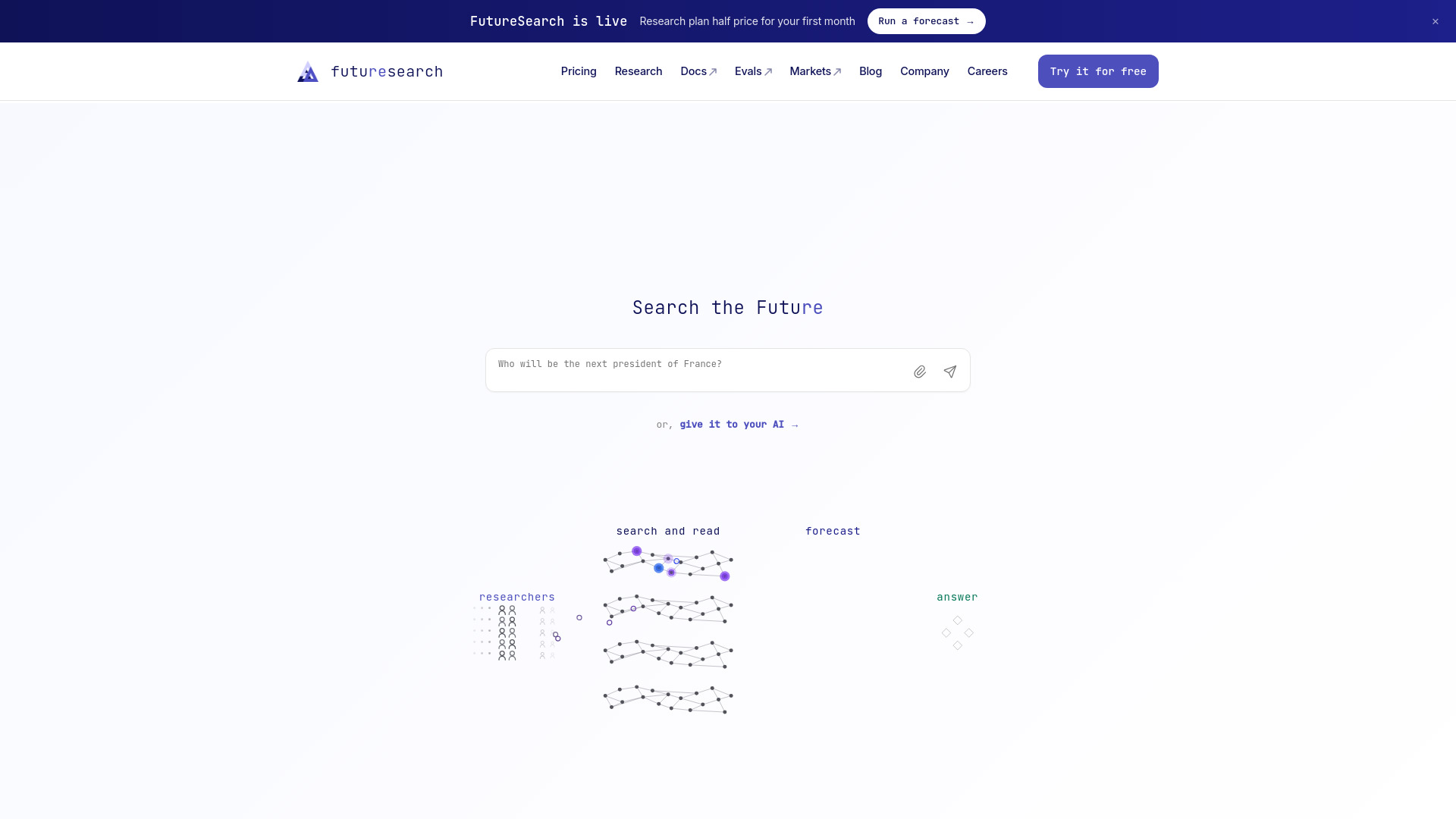
Why it matters FutureSearch is the clearest match for a historical-data and AI-search research workflow because it does more than generate an unsupported conclusion. Its forecast formats cover probability, numeric, date, categorical, conditional, and decision questions, giving research teams a way to frame different kinds of evidence instead of forcing every question into a chat prompt. Multi-agent research teams and a shared world model add depth when the question depends on several signals or a changing context. The limitation is cost predictability: token usage and effort level affect the bill, and actual costs may exceed typical advertised ranges.
Best for
Researchers building evidence-backed forecasts
Teams comparing date, probability, numeric, or decision outcomes
Analysts who need multi-agent research rather than a single model guess
Limitations
Forecasting costs vary with token usage and effort level
Actual costs may exceed advertised typical ranges
It is a forecasting platform, not a conventional historical database catalog
Shortlist signal: Choose FutureSearch first when your project needs research-backed forecasts and explicit historical context, not just AI visibility reporting.
2. Abliteration.ai

- Cybersecurity researchers
- 1 free credit (~500 tokens)
- Starts at Free tier: 0
- Usage signal: 70.7K
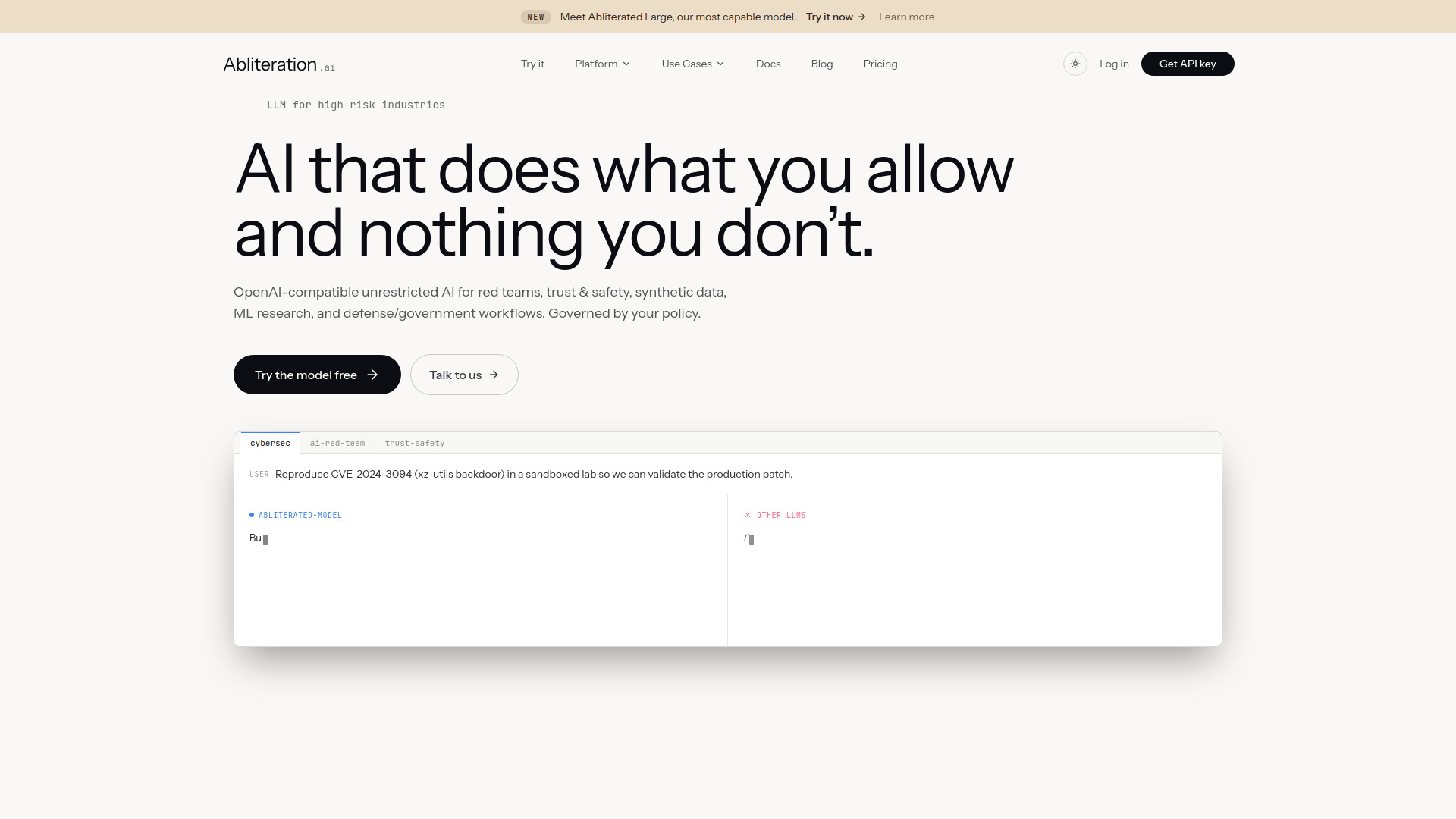
Why it matters Abliteration.ai belongs on this list for teams whose historical or synthetic-data work is legitimate but frequently blocked by ordinary model refusal behavior. Its less-restricted models are positioned for security research, red teaming, trust and safety, and synthetic-data workflows. OpenAI- and Anthropic-compatible APIs make migration less disruptive, while vision and document extraction support image inputs up to 15 MB across common formats. That makes it a useful research layer, although it is not an archive or search-visibility tracker.
Best for
Cybersecurity and red-team researchers
ML engineers migrating existing SDKs and agent frameworks
Sensitive document and synthetic-data workflows
Limitations
Paid plans and token usage begin beyond the limited free preview
Policy Gateway governance is an enterprise add-on with custom pricing
Less-restricted output still requires careful internal review and controls
Shortlist signal: Add Abliteration.ai when model refusals are obstructing legitimate technical research and API compatibility matters.
3. Searchify

- SEO professionals
- Free analysis
- Starts at Check vendor pricing
- Usage signal: 3.5K
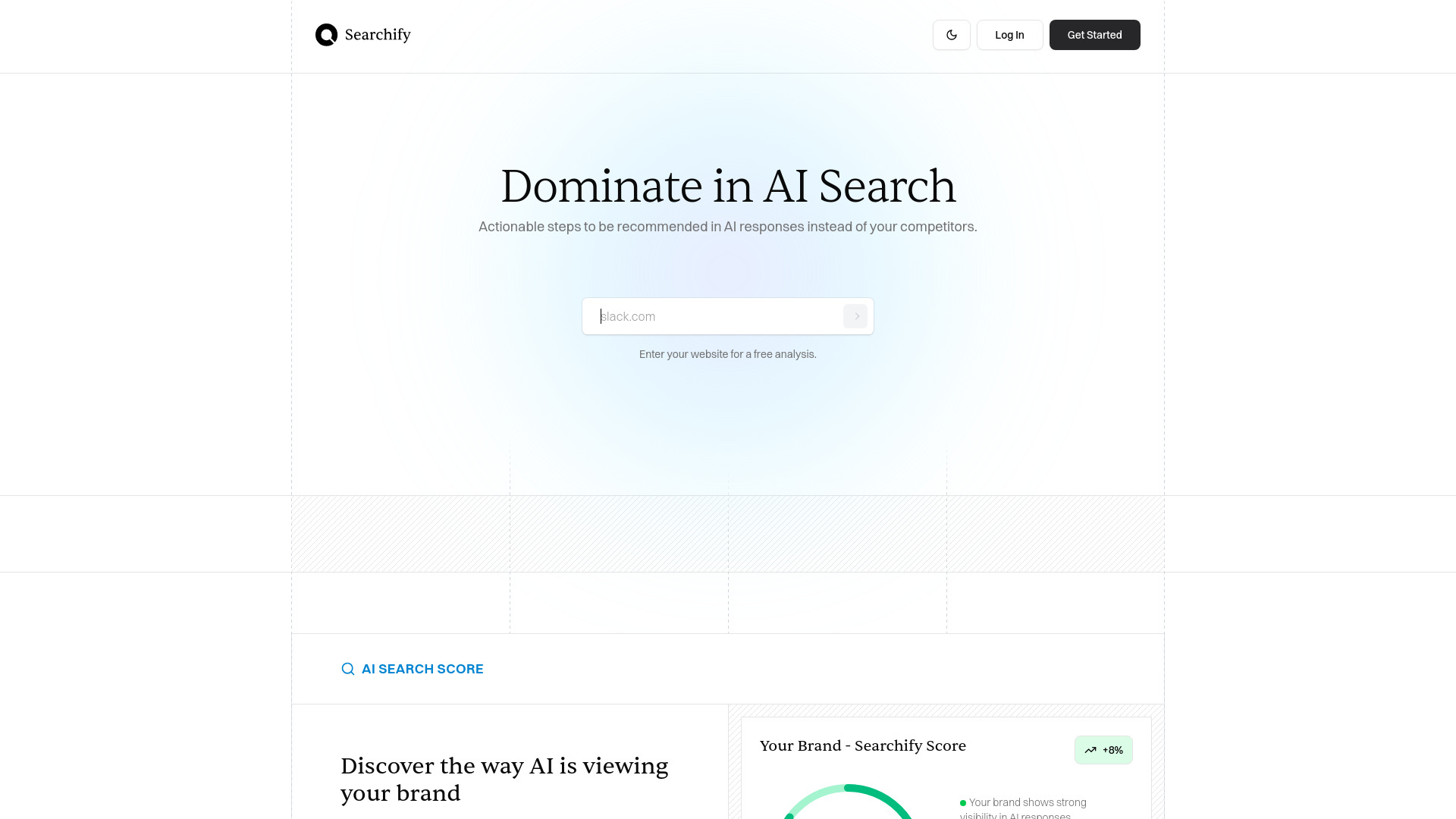
Why it matters Searchify takes the most direct optimization angle in this field. Its AI Search Score gives teams a single starting signal, while actionable recommendations and content creation point toward what to do next. That is valuable when a marketing team does not want a research dashboard full of observations but needs concrete changes for improving AI recommendations. Pricing is hidden behind a cleaner vendor conversation rather than a dependable public figure, so confirm limits, tracked surfaces, and reporting depth before treating the free analysis as a full monitoring solution.
Best for
SEO professionals auditing AI search presence
Teams that want recommendations alongside a score
Marketers using content creation as part of optimization
Limitations
Pricing details require confirmation with the vendor
The available feature set does not establish a full historical archive
Buyers should verify product fit and workflow limits before committing
Shortlist signal: Pick Searchify when your immediate need is turning an AI visibility diagnosis into practical optimization steps.
4. Muze AI

- Shopify brands
- 7-day free trial
- Starts at Free: $0 for 7 days
- Usage signal: 10.5K
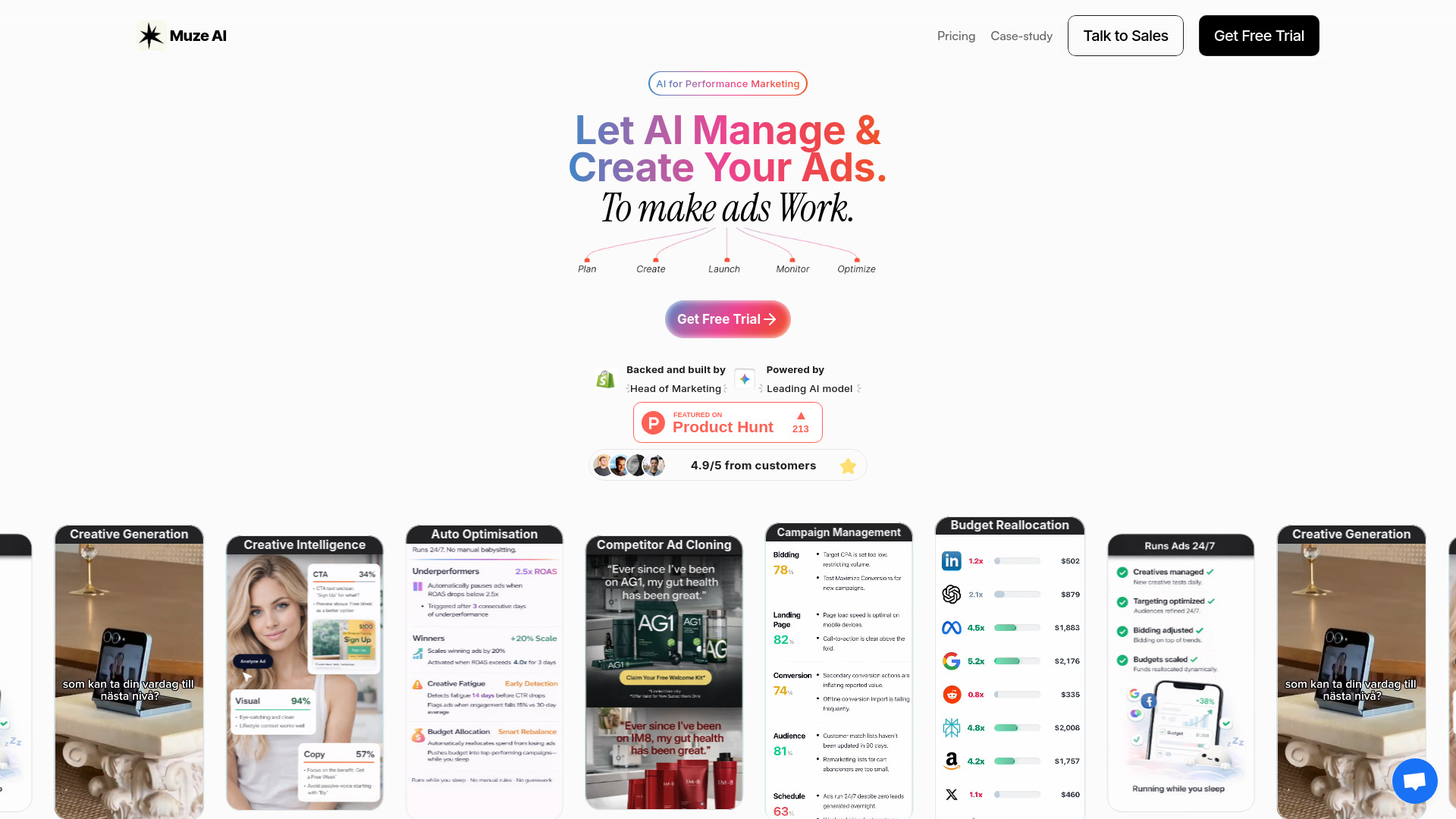
Why it matters Muze AI is an unexpected but useful alternative for teams that want to act on marketing signals after research. Its Ads on Autopilot workflow manages performance marketing end to end, creates image and video ads, and automatically optimizes and reallocates budget around the clock. The Power plan starts at $399 per month and supports ad spend up to $10,000 per month, according to the listed product details. That makes it an execution tool rather than a historical provider, and relying on it for end-to-end strategy may be too much control to hand over for some teams.
Best for
Shopify brands testing many ad variations quickly
Teams managing Meta and Google performance campaigns
Marketers that want automated creative and budget optimization
Limitations
It is not a historical-data or AI-search visibility platform
The Power tier limits supported ad spend to $10,000 per month
Full reliance on an automated performance strategy may not suit every team
Shortlist signal: Include Muze AI only when your research project must connect insights to automated ad creation and optimization.
5. Didoo AI - URL in, Meta ads out. One Click to Outperform.

- Small and medium businesses
- Free 7-day trial
- Starts at Starter (Monthly): $69/month
- Usage signal: 11.9K
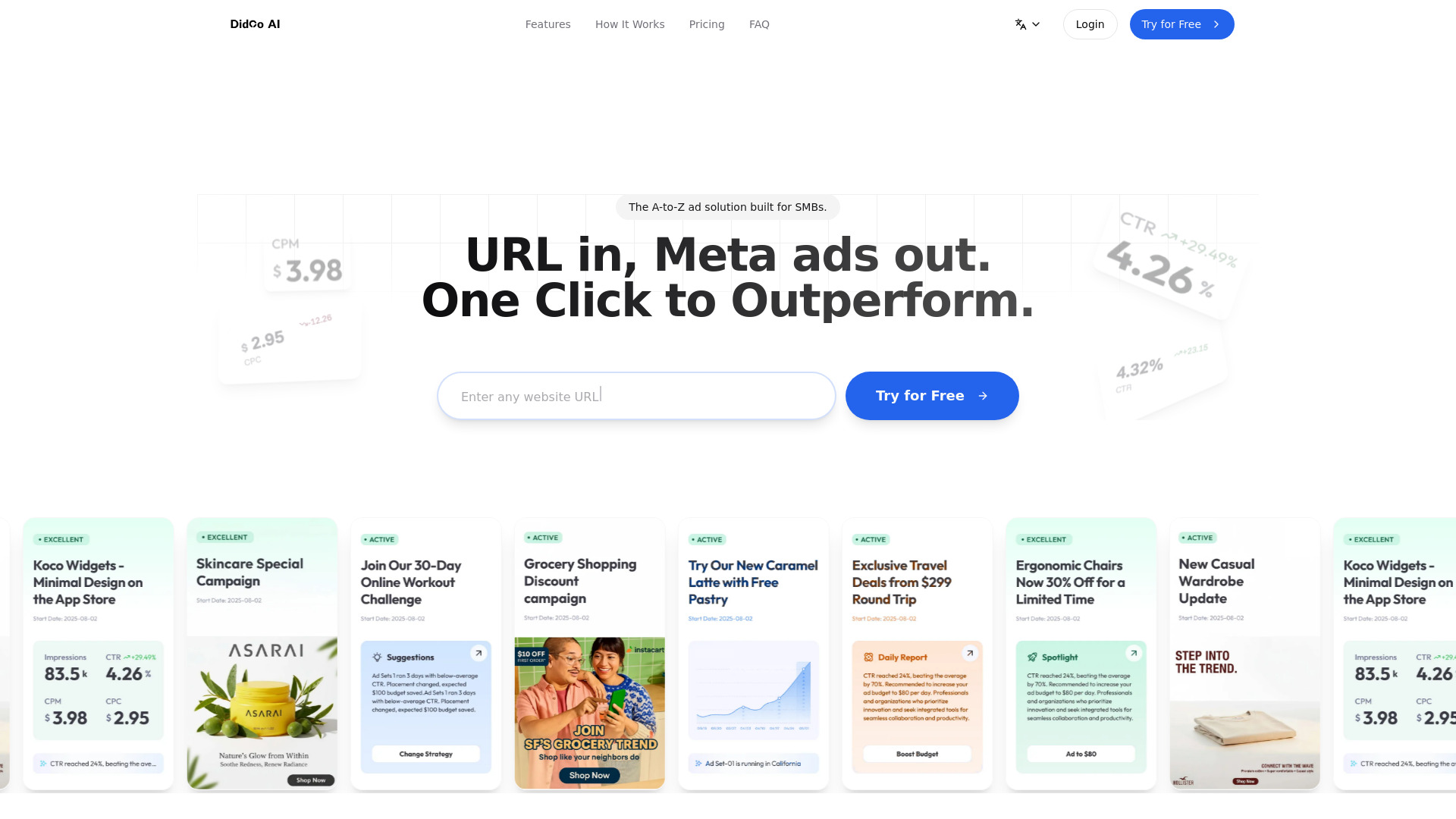
Why it matters Didoo AI turns a URL into a Meta advertising workflow: it creates and launches campaigns, targets audiences, generates creative and copy, and handles budget optimization. For an SMB that needs to move quickly from a product page to a campaign, that narrow focus can be a strength. It is also why the tool sits below more relevant research and visibility products here. Didoo focuses exclusively on Facebook and Instagram, and the monthly-versus-quarterly pricing presentation can be confusing, so read the plan terms closely.
Best for
SMBs running Facebook and Instagram campaigns
Small teams without a dedicated paid-social operator
URL-based creative and campaign production
Limitations
It does not cover other advertising platforms
Monthly and quarterly pricing can be difficult to parse
It is an execution product, not a historical evidence source
Shortlist signal: Choose Didoo AI when your next step after analysis is a tightly focused, automated Meta campaign.
6. RightResponse AI

- Small business owners
- 7-day trial with 1,000 free credits
- Starts at PAYGO: $10/location/month
- Usage signal: 7.4K
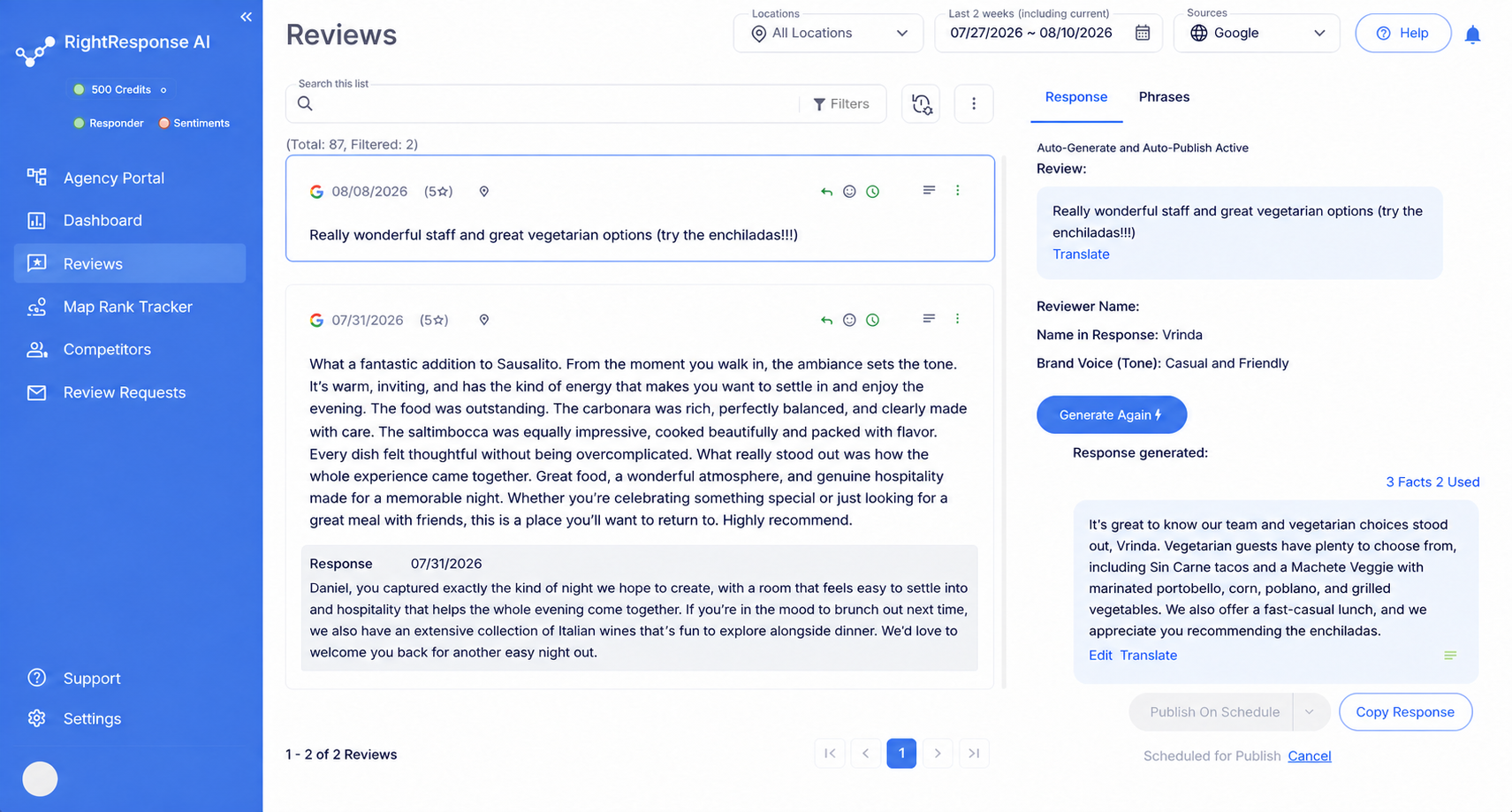
Why it matters RightResponse AI addresses a useful source of customer history: reviews and their sentiment. Its multi-agent review response workflow can generate and publish replies, while human approval keeps a person in the loop. Sentiment analysis, review requests, Voice of Customer insights, and Google Maps local rank tracking make it relevant to local businesses trying to understand how public feedback affects discoverability. The usage-based model can make monthly costs variable, and advanced enterprise controls around brands, regions, tags, permissions, and review workflows require closer inspection.
Best for
Small businesses managing local reviews
Teams that need approval before automated publishing
Marketers connecting customer sentiment with local rank tracking
Limitations
Usage-based pricing requires careful monitoring
Enterprise controls may involve additional purchasing complexity
Review history is an adjacent signal, not a broad historical data service
Shortlist signal: Add RightResponse AI when customer reviews and local reputation are central to your search-optimization history.
7. Sup AI

- Students
- 50 fast messages/day; 10 thinking/day; 2 deep/day
- Starts at Free: $0/month
- Usage signal: 3.0K
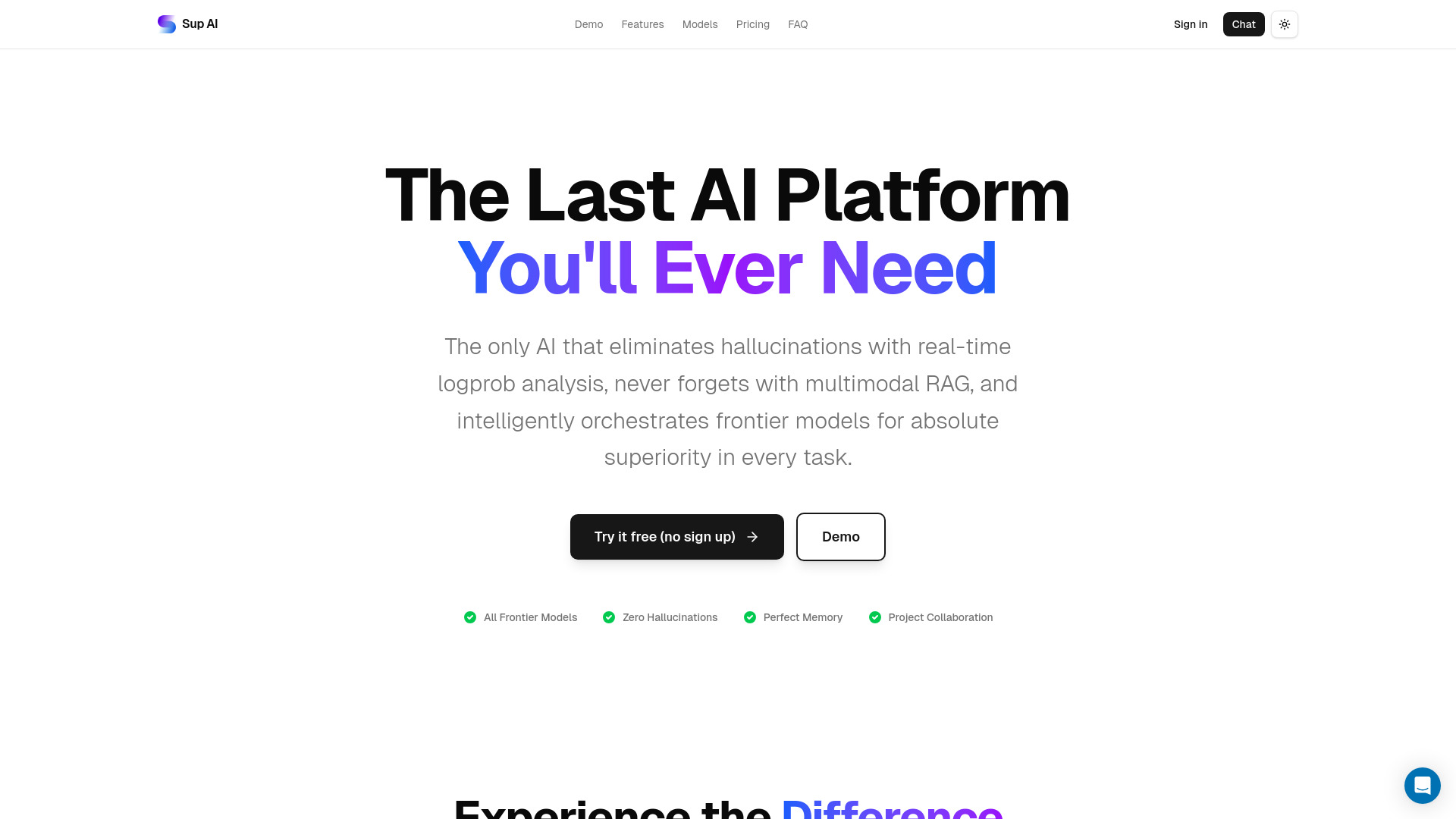
Why it matters Sup AI is built around synthesis rather than a single answer. Its Pro Mode coordinates nine frontier LLMs, while logprob confidence scoring analyzes token-level probability and the K-Min Token Hedge algorithm stops low-confidence responses. Multimodal RAG supports images, PDFs, and text, which is helpful when a historical research question spans several source types. Still, confidence scoring is not the same as verified truth, and some listed models are deprecated. GPT-5 Pro can also take minutes on complex requests, which matters for time-sensitive analysis.
Best for
Students and researchers comparing multiple model responses
Multimodal work involving PDFs, images, and text
Users who want uncertainty signals during synthesis
Limitations
Some listed frontier models may be deprecated
Complex GPT-5 Pro requests can take minutes
It is not a dedicated historical database or visibility monitor
Shortlist signal: Use Sup AI when cross-model synthesis and confidence signals matter more than a specialized data repository.
8. AI World Generator

- Game studios
- 6 world builder credits free
- Starts at Free: $0/month
- Usage signal: 1.7K
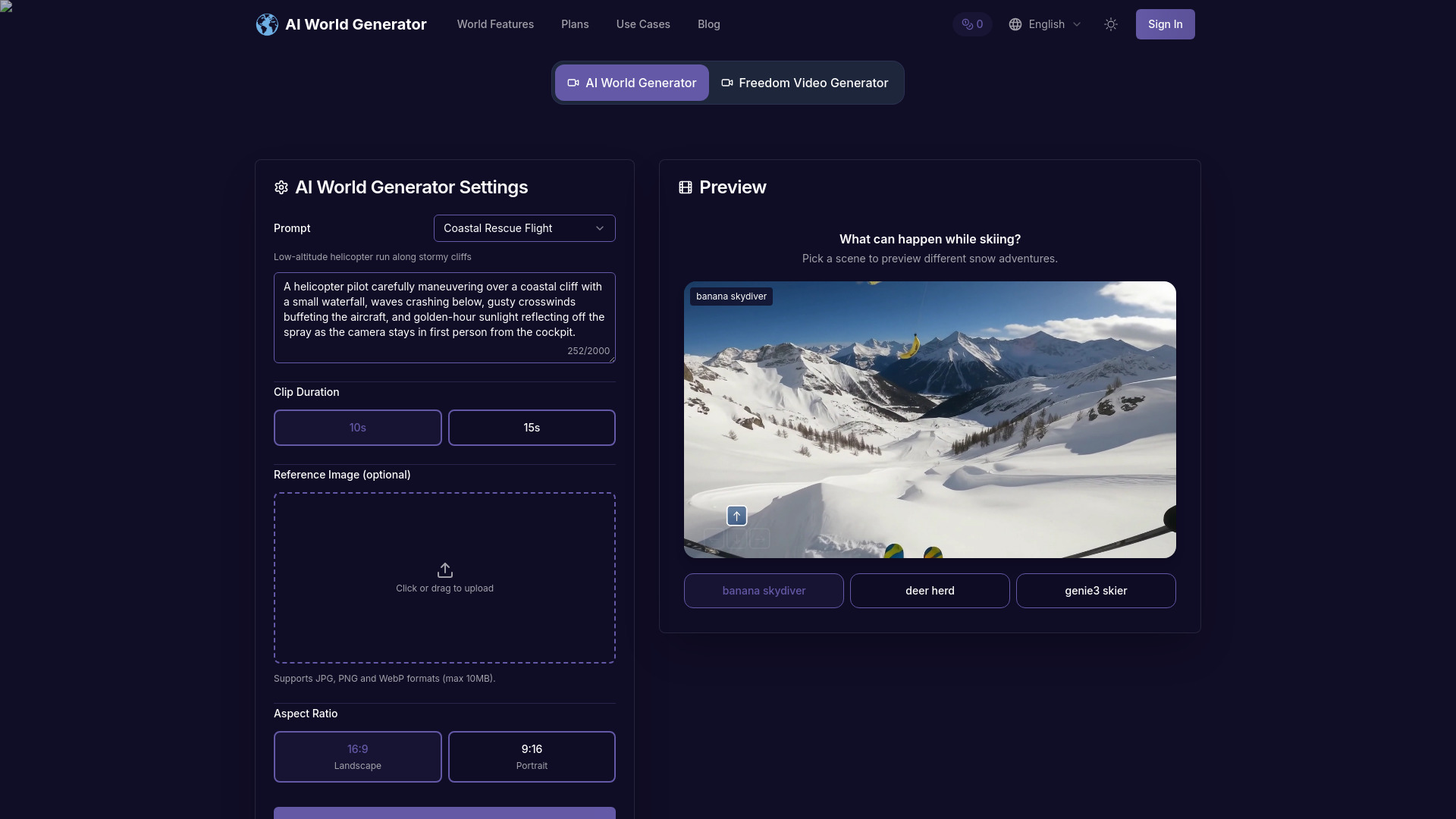
Why it matters AI World Generator is the most unconventional entry here. It creates explorable 3D worlds in real time at 24 FPS, preserves spatial continuity for several minutes, and lets users trigger weather, lighting, or character changes with natural language. For game studios and simulation teams, that can turn historical scenarios or research concepts into something people can explore rather than merely read. Persistent memory eventually fades during extremely long runs, and the action space remains constrained, with multi-agent choreography still experimental.
Best for
Game studios prototyping explorable scenarios
Teams communicating research through interactive environments
Real-time world and event experimentation
Limitations
World memory can drift during very long runs
Action space remains constrained
Multi-agent choreography is experimental
Shortlist signal: Consider AI World Generator when historical or search research needs an interactive simulation layer rather than a reporting dashboard.
9. Llumo

- SEO professionals
- Unlimited prompts
- Starts at Free: $0
- Usage signal: Not listed
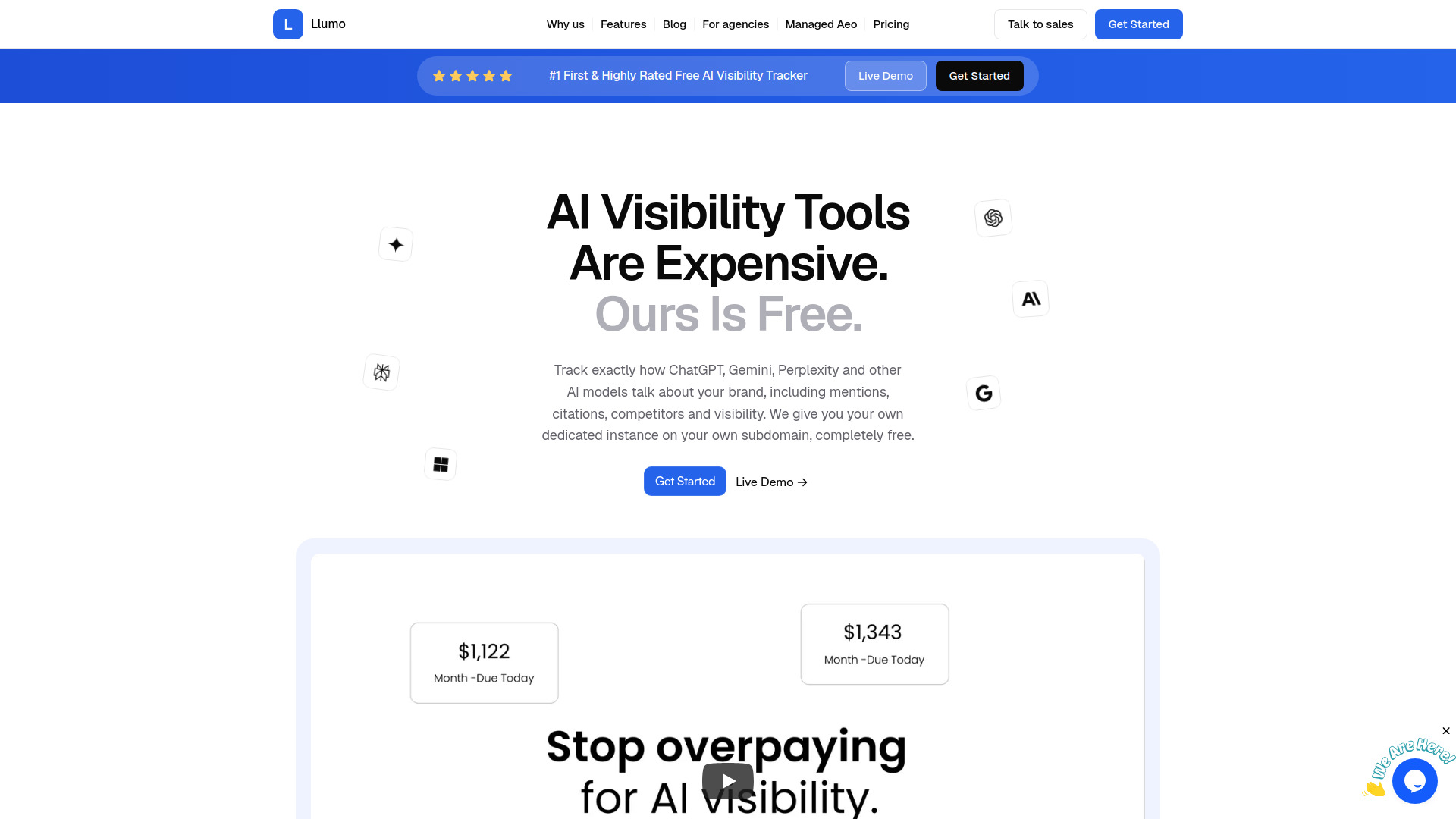
Why it matters Llumo is one of the strongest direct fits for AI search optimization because it measures presence across ChatGPT, Gemini, Perplexity, Copilot, Google AI Overviews, and other models. Per-prompt visibility scores, share-of-voice tracking, citation analysis, and competitor comparison give an SEO team a way to build a record of how answer engines describe a brand over time. The free platform has no monthly Llumo license fee, but users must provide their own API keys and still pay provider usage costs at higher volumes. Budget that infrastructure expense into any historical tracking plan.
Best for
SEO teams tracking AI answer-engine visibility
Brands comparing citations and share of voice
Teams comfortable managing API keys and provider costs
Limitations
Users must bring their own API keys
Higher-volume tracking still creates AI provider charges
Historical depth depends on how consistently prompts are tracked
Shortlist signal: Choose Llumo when you want a low-license-cost way to build prompt-level AI visibility and citation history.
10. 2KEN

- AI application developers
- Pay-as-you-go from $0.005 per image
- Starts at Check vendor pricing
- Usage signal: Not listed
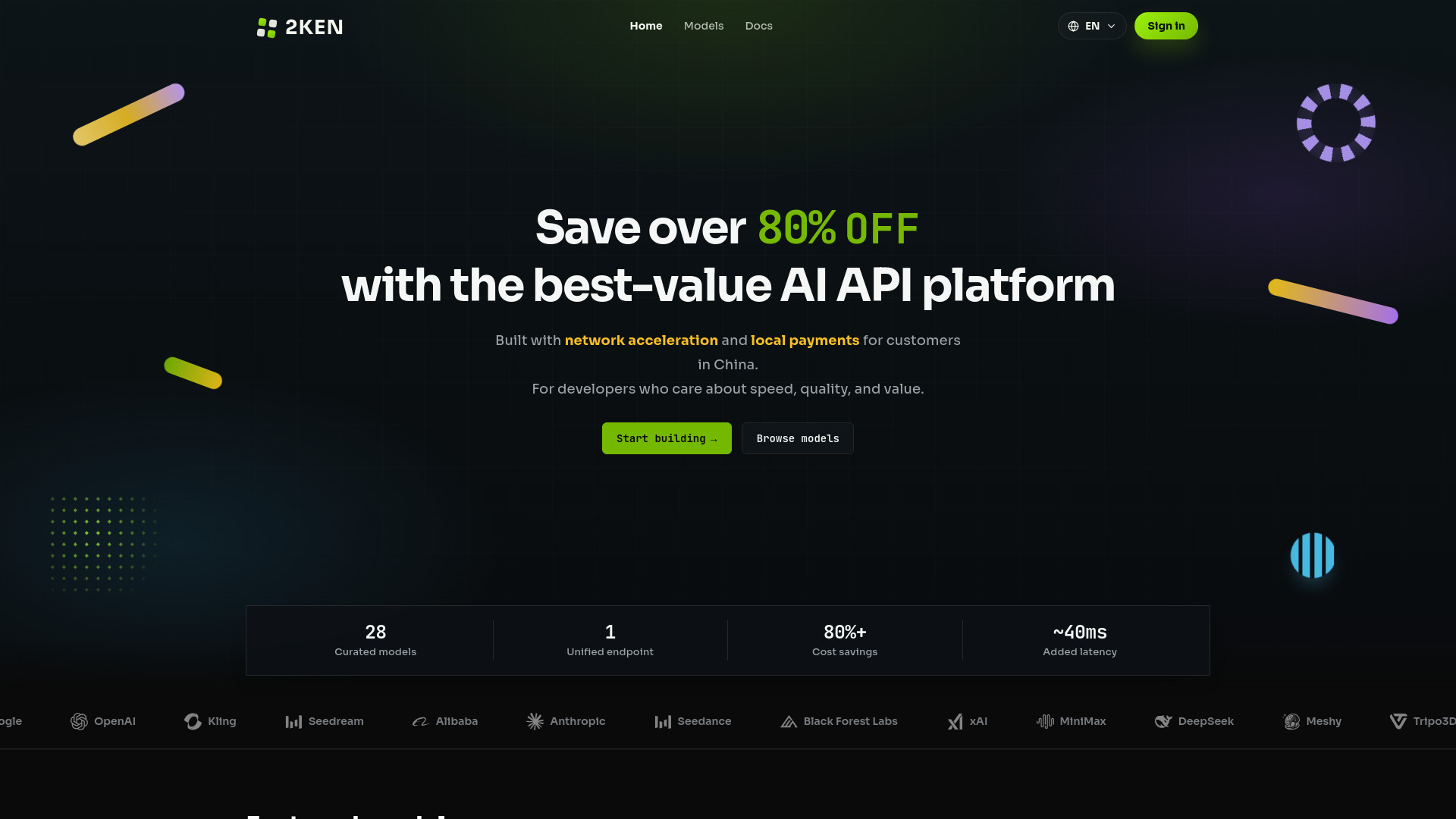
Why it matters 2KEN is infrastructure for teams building their own research or optimization applications. A single endpoint and API key provide access to dozens of text, image, video, and 3D models, with OpenAI-compatible access intended to simplify integration. Its featured xAI ecosystem includes Grok text, image, and video models, while low-latency routing adds roughly 40 ms according to the product details. This flexibility comes with variable costs by model, token usage, image generation, or video duration, and account creation plus an API key are required.
Best for
Developers building custom AI search research tools
Teams that need several model types behind one endpoint
High-concurrency applications using OpenAI-compatible access
Limitations
Account creation and an API key are required
Costs vary across models and media formats
Pricing is not presented as a simple fixed subscription
Shortlist signal: Put 2KEN on the list when you need to engineer your own multi-model historical-analysis or visibility workflow.
What to test before choosing
A convincing demo is not enough for this category. Run the same small evaluation through each serious candidate:
- 1
Define the historical unit. Decide whether you are tracking dated facts, forecasts, prompts, citations, reviews, or campaign outcomes. A tool cannot be judged fairly until the record you need is explicit.
- 2
Repeat the same prompts. For AI visibility tools, save a fixed prompt set and run it on a schedule. Compare mentions, citations, competitors, and answer changes rather than relying on one impressive result.
- 3
Check evidence handling. Ask how the product distinguishes a cited source, a model synthesis, and an uncertain answer. FutureSearch and Sup AI expose different kinds of research or confidence signals; neither should be treated as automatic verification.
- 4
Price the real workload. Include tokens, API keys, image or video generation, location counts, credits, and effort levels. Free access is often a preview, a credit allowance, or a platform license waiver rather than unlimited paid-provider usage.
- 5
Inspect export and retention. Confirm that you can preserve prompt results, citations, reports, or generated outputs in a format your team can use later. This is essential if the goal is a historical record rather than a one-off audit.
- 6
Test human review. For sensitive research, automated publishing, or model-generated recommendations, identify where a person can approve, reject, annotate, or reproduce the result.
What to do next
Start with one narrow question and one repeatable measurement cycle. If the question is about what AI engines say about your company, begin with Llumo or Searchify. If it is about evidence-backed forecasting or a dated decision, begin with FutureSearch. If you are building an internal system rather than buying a dashboard, evaluate 2KEN as the integration layer and test Sup AI or Abliteration.ai against your data-handling requirements.
Create a baseline before changing content. Save the exact prompts, dates, answer text, citations, and competitor mentions. Then make one change-such as updating a page, clarifying a fact, or adding a source-and rerun the same test. That process will tell you more about AI search optimization than a generic visibility score viewed in isolation.
Common mistakes when choosing from a complex top list
Treating every tool as a database. FutureSearch forecasts, Llumo tracks AI visibility, RightResponse analyzes reviews, and 2KEN provides model infrastructure. Their outputs are not interchangeable.
Confusing a score with historical evidence. An AI Search Score can prioritize work, but it does not automatically explain why a result changed or prove that an answer is accurate.
Ignoring the cost of usage. API keys, tokens, credits, locations, media duration, and research effort can matter more than the visible starting price.
Overvaluing model breadth. Nine models or dozens of endpoints can help, but only if your team can compare outputs, control costs, and preserve a reproducible record.
Skipping retention questions. A tool that shows the current answer but cannot preserve dated results may be a poor fit for trend analysis.
Selecting an adjacent tool without a handoff plan. Advertising, reputation, and interactive-world products can be useful extensions, but decide how their outputs will return to your research or SEO workflow.
FAQ
They are tools or services that help teams gather, interpret, track, or operationalize information over time for AI-driven search work. In this guide, that includes research-backed forecasting, AI visibility and citation tracking, review history, model orchestration, and infrastructure for custom analysis. The category is broader than conventional historical databases.