
Choosing the top solutions for historical trend analysis of ai brand mentions is harder than searching for a single dashboard. Some platforms track how a brand appears in AI answers, while others analyze sentiment, reviews, financial news, competitor activity, or the market signals that explain why mentions rise and fall. I compared 10 tools across those practical use cases, with particular attention to historical context, evidence quality, audience fit, access limits, and how easily a team can turn findings into action. The result is a field guide for separating true brand-intelligence platforms from useful adjacent tools.
Start here
The quickest way to narrow this category is to decide what "brand mention" means for your team. If you mean sentiment across channels, BrandJet AI is the clearest starting point. If you mean visibility inside ChatGPT, Gemini, Perplexity, or Google AI Overviews, Llumo and Searchify are more relevant. If you need the surrounding market story, FutureSearch and AlphaAI add forecasting and structured financial signals. The remaining tools are useful adjacent options for ecommerce research, reviews, or creating content in response to a trend.
Practical shortlist
Best overall match: BrandJet AI for unified brand intelligence, sentiment, and outreach.
Best for research-backed forecasting: FutureSearch for probability, date, numeric, and decision forecasts.
Best for AI-search visibility: Llumo for prompt-level visibility and share of voice.
Best structured news layer: AlphaAI for scored financial news and SEC events.
Best review-response workflow: RightResponse AI for sentiment-aware replies with human approval.
The important distinction: historical analysis is only as good as the underlying archive. Before buying, ask whether the product stores raw mentions, sentiment changes, citations, prompts, competitors, and timestamps-or only shows a current score.
Segment comparison
| Segment | Strongest fit | What it helps you analyze | Main caution |
|---|---|---|---|
| Brand intelligence | BrandJet AI | Multi-channel mentions, sentiment, and outreach | Confirm historical retention and export options |
| AI-search visibility | Llumo, Searchify | Brand presence, citations, recommendations, and share of voice | Llumo requires your own API keys; Searchify pricing needs checking |
| Forecasting and market research | FutureSearch | Evidence-backed probabilities, dates, numeric outcomes, and decisions | Usage-based forecasting costs can vary |
| Financial and corporate signals | AlphaAI | Ticker sentiment, SEC filings, relevance, and impact | Free archive is limited to 30 days |
| Reviews, ecommerce, and creative response | RightResponse AI, Nexscope, AI Inspo | Customer feedback, competitors, products, and trend-led content | These are adjacent workflows rather than pure mention archives |
Shortlist paths
| Your priority | Start with | Add next | Why |
|---|---|---|---|
| Track brand sentiment over time | BrandJet AI | RightResponse AI | Monitor sentiment, then operationalize review responses |
| Measure visibility in AI answers | Llumo | Searchify | Compare prompt visibility with actionable optimization guidance |
| Explain a market shift | FutureSearch | AlphaAI | Pair forecasts with scored news and corporate events |
| Investigate ecommerce demand | Nexscope | BrandJet AI | Combine product and competitor research with brand context |
| Turn a trend into assets | AI Inspo | LTX-2 AI | Move from templates to open-source, higher-spec video production |
Ranking snapshot
| Rank | Tool | Best for | Score | Starting price |
|---|---|---|---|---|
| #1 | BrandJet AI | Marketing professionals | 93/100 | Starter: $60/month |
| #2 | FutureSearch | Researchers | 91/100 | Free: $0 |
| #3 | Nexscope | Ecommerce sellers | 91/100 | Free trial: Free |
| #4 | AI Inspo | Content creators | 91/100 | Check vendor pricing |
| #5 | Searchify | SEO professionals | 91/100 | Check vendor pricing |
| Rank | Tool | Best for | Score | Starting price |
|---|---|---|---|---|
| #6 | LTX-2 AI | Content creators | 91/100 | Basic: $10/month |
| #7 | RightResponse AI | Small business owners | 90/100 | PAYGO: $10/location/month |
| #8 | AlphaAI | Algorithmic traders | 90/100 | Free: $0 |
| #9 | Llumo | SEO professionals | 87/100 | Free: $0 |
| #10 | ai influencer generator | Solo creators | 87/100 | $15.83/month billed annually |
How we grouped and ranked the list
This is a deliberately broad category. "AI brand mentions" can refer to conventional brand intelligence, mentions inside answer engines, reviews, news coverage, or indirect signals such as competitor and product movement. Rather than pretend those are interchangeable, I grouped each tool by the signal it actually exposes.
The ranking favors tools that can contribute to a historical view: sentiment with context, timestamped or structured market information, prompt-level visibility, competitor comparisons, or evidence-backed forecasts. We also considered whether the output is useful to a real team. A score alone is less helpful than a score that explains a change, identifies the source, or suggests the next action.
Pricing and access affect the shortlist, too. BrandJet AI starts at $60 per month and offers a seven-day trial. FutureSearch includes $20 in free credit, but forecast costs vary with token use and effort. Llumo is free at the platform level but requires your own API keys, so "free" does not necessarily mean zero operating cost. Treat each access offer as a test route, not a promise of unlimited historical data.
Ranked field notes
1. BrandJet AI

- Marketing professionals
- Try free for 7 days
- Starts at Starter: $60/month
- Usage signal: 28.8K
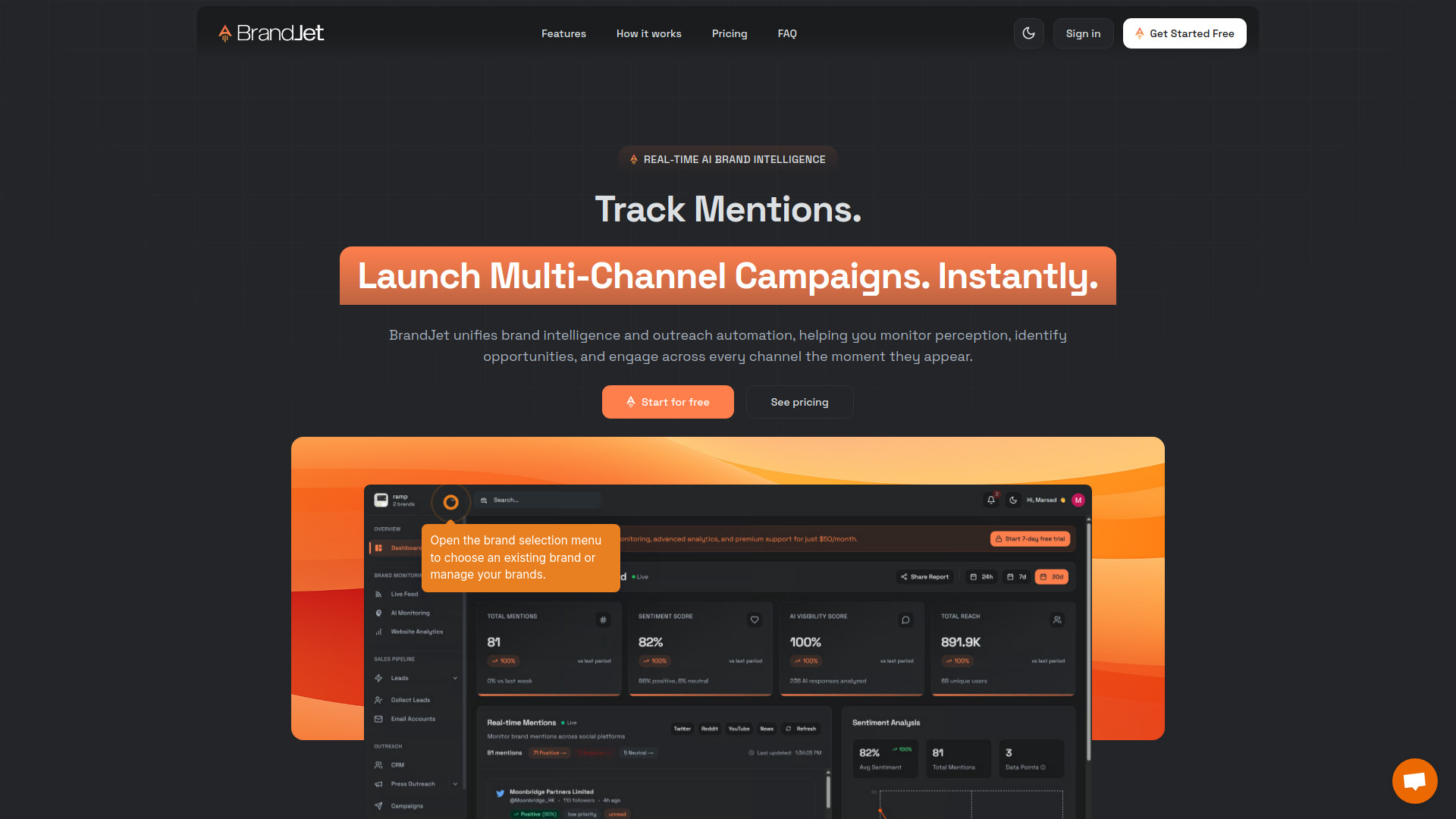
Why it matters BrandJet AI is the closest match for teams that want brand intelligence and response workflows in one place. Its real-time AI brand intelligence is paired with multi-channel outreach automation, while AI-powered sentiment analysis adds context and confidence metrics instead of relying only on keyword counts. That combination makes it easier to move from "mentions changed" to "what should marketing do next?" The key test is historical depth: confirm how far back the archive goes and whether you can inspect the underlying mentions behind a trend line.
Best for
Marketing teams monitoring brand perception across channels
Teams that want sentiment analysis connected to outreach
Professionals who need context and confidence around sentiment changes
Limitations
Verify historical retention, exports, and channel coverage before relying on it for long-term reporting
The platform may be broader than a dedicated AI-search visibility tracker
Pricing begins at $60 per month, so test the workflow before expanding access
Shortlist signal: Add BrandJet AI first when your definition of brand mentions includes sentiment, context, and a follow-up outreach workflow.
2. FutureSearch

- Researchers
- $20 free credit
- Starts at Free: $0
- Usage signal: 69.9K
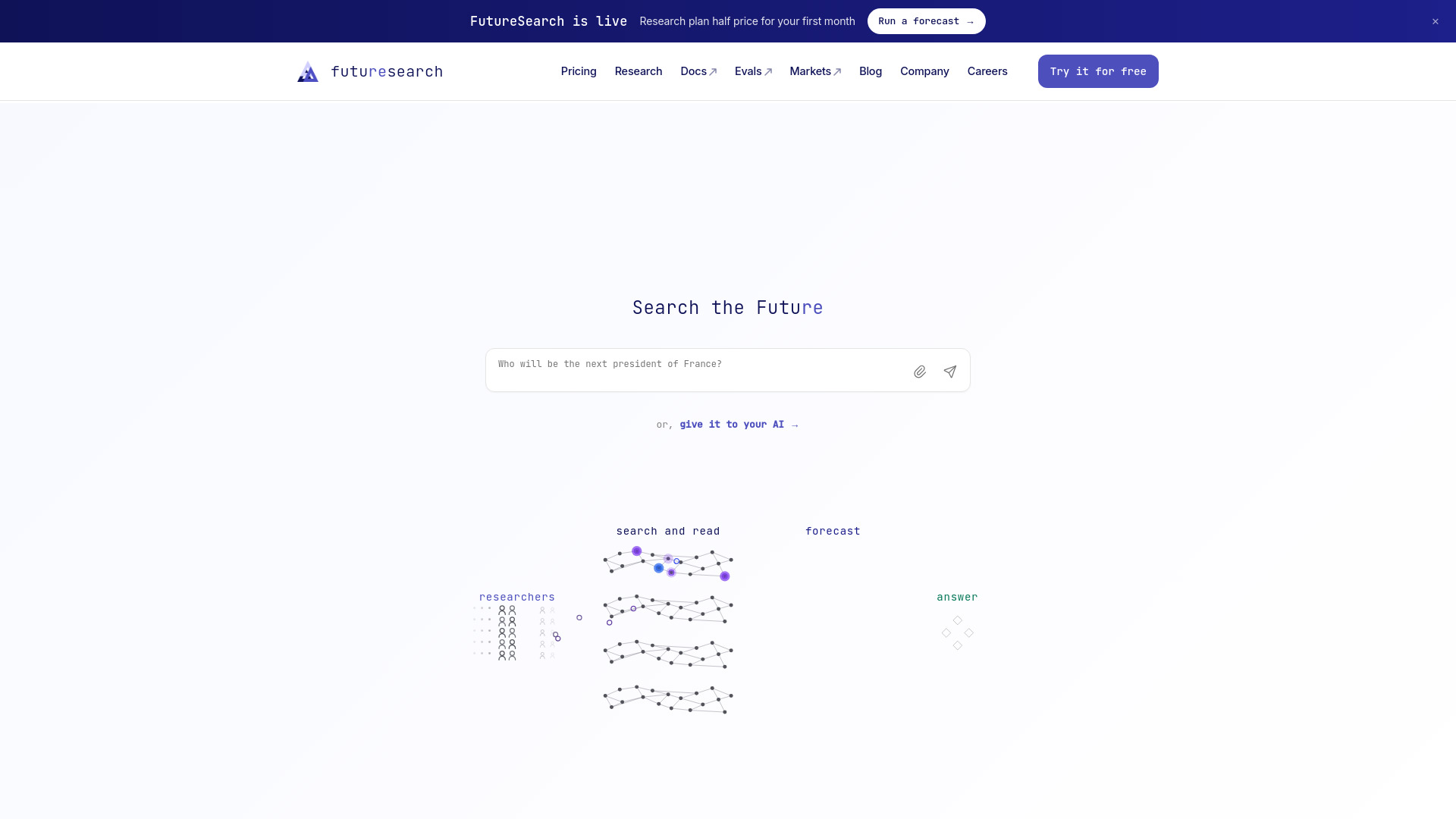
Why it matters A historical mention chart tells you what happened; FutureSearch helps investigate what may happen next and why. It supports probability, numeric, date, categorical, conditional, and decision forecasts, using multi-agent research teams and a shared world model for deeper analysis. That makes it a useful companion when a spike in AI brand mentions needs interpretation: is the shift temporary, tied to an event, or likely to continue? It is not a conventional brand-monitoring archive, so use it for structured analysis around a trend rather than as your sole source of mention history.
Best for
Researchers turning observed signals into explicit forecasts
Strategy teams comparing probability, date, and decision questions
Analysts who need research-backed reasoning rather than an unqualified model guess
Limitations
Forecasting costs vary with token usage and selected effort level
Actual costs can exceed typical advertised ranges
It does not replace a dedicated archive of brand mentions or AI-search prompts
Shortlist signal: Choose FutureSearch when the hard question is what a brand trend means for a future decision, not merely how many times the brand appeared.
3. Nexscope

- E-commerce sellers
- Get early access
- Starts at Free trial: Free
- Usage signal: 32.9K
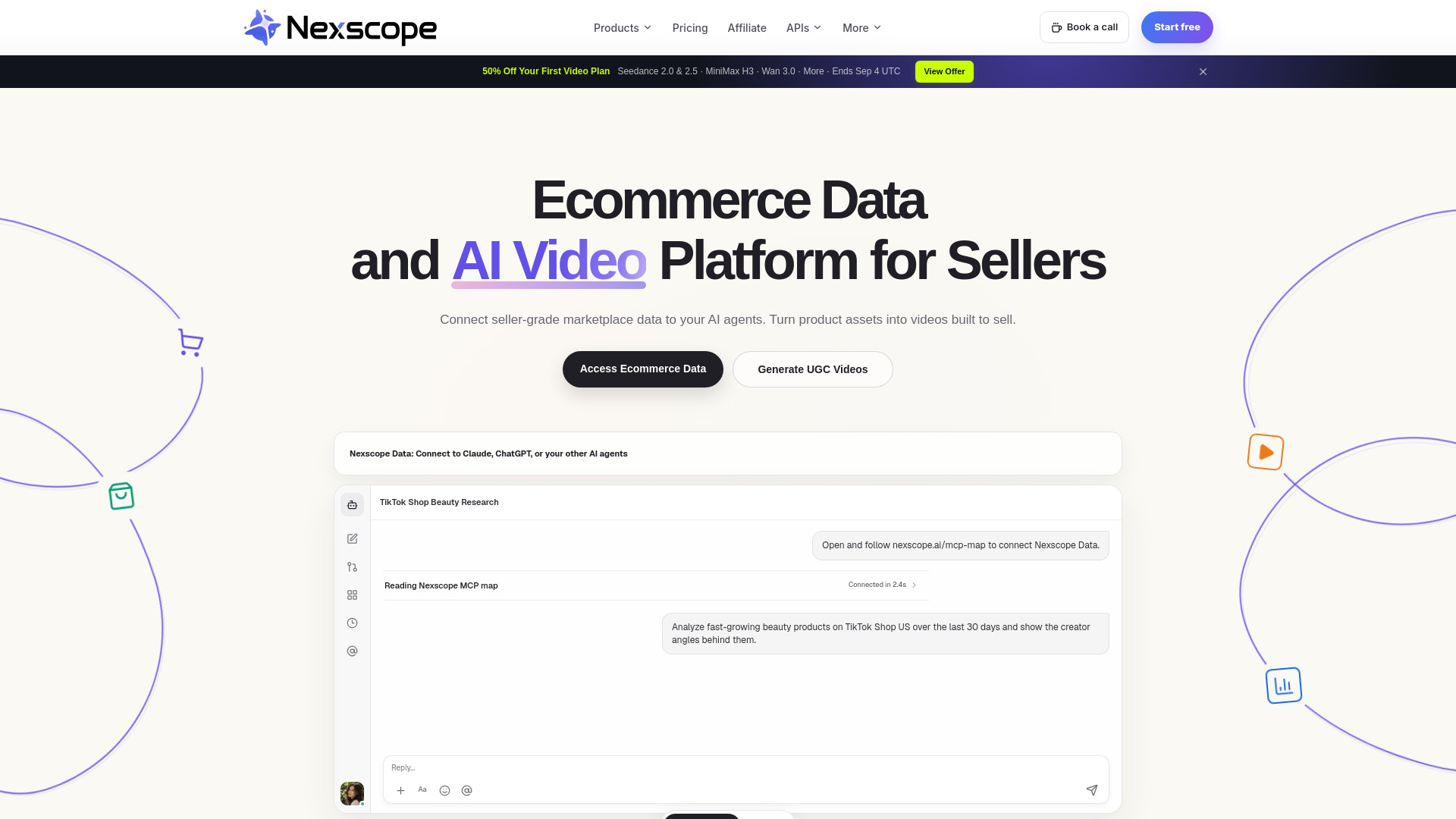
Why it matters Nexscope approaches brand trend analysis from the seller's side of the market. It consolidates multi-platform ecommerce data and uses role-based AI agents for product and market research, competitor analysis, pricing analysis, and listing analysis. That context can explain why a brand is being discussed more-or why competitors are winning the conversation. For ecommerce teams, this can be more actionable than a generic mention count. The catch is significant: Nexscope is currently in a coming-soon or waitlist phase, so treat it as an early-access option rather than a fully validated production system.
Best for
Ecommerce sellers researching products, competitors, and listings
Teams connecting market movement with brand and product positioning
Early adopters willing to evaluate a multi-agent workflow
Limitations
The product is currently in a coming-soon or waitlist phase
The full set of agents may take time to learn
Confirm archive depth, supported marketplaces, and availability before planning around it
Shortlist signal: Add Nexscope when ecommerce competitor and product data are essential to explaining a brand trend, and you can work with early access.
4. AI Inspo

- Content creators
- 100 credits weekly
- Starts at Check vendor pricing
- Usage signal: 26.2K

Why it matters AI Inspo belongs on this list as a response layer, not as a historical monitoring database. It lets creators start with ready-to-use templates, use current AI models, and generate creative content in one click. Support for models such as Sora, Veo, and Kling is particularly useful when a team has identified a brand or cultural trend and needs several creative directions quickly. In practice, it can shorten the distance between insight and publishable asset, though you still need another tool to establish whether a trend is real and persistent.
Best for
Content creators turning trend observations into visual concepts
Small teams that want one workflow instead of several creative AI tools
Users comparing outputs from multiple video models
Limitations
The free plan allows only three videos and three images weekly
Free-tier outputs contain watermarks
It does not provide the same historical mention analysis as a monitoring platform
Shortlist signal: Choose AI Inspo after you have identified a meaningful trend and need to produce creative variations quickly.
5. Searchify

- SEO professionals
- Free analysis; no sign-up
- Starts at Check vendor pricing
- Usage signal: 3.5K
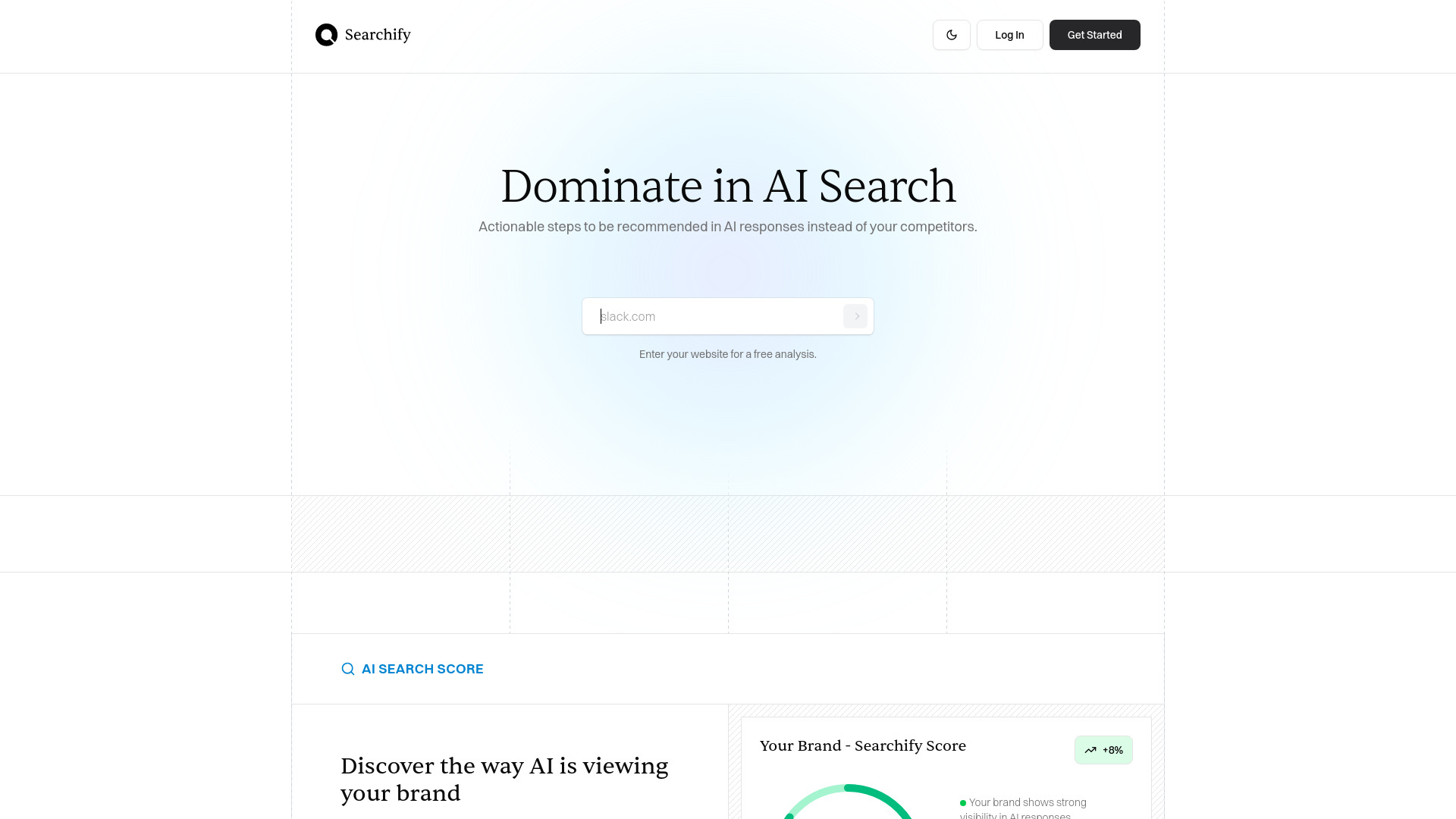
Why it matters Searchify focuses on the increasingly important question of whether AI systems recommend or surface your brand. Its AI Search Score, actionable recommendations, and content creation features make it more useful than a visibility number with no next step. SEO professionals can use the analysis to identify where AI responses are weak, then turn those findings into content or optimization work. It is best viewed as an AI-search diagnostic and improvement tool; verify whether its historical tracking supports the time-series reporting your team expects.
Best for
SEO professionals improving visibility across AI search platforms
Content teams that want recommendations tied to AI responses
Marketers needing a quick, no-sign-up analysis before a deeper evaluation
Limitations
Check current pricing, product fit, and workflow limits before committing
Confirm how long scores and recommendations are retained
A search score is not the same as a complete archive of every brand mention
Shortlist signal: Put Searchify on the list when actionable AI-search recommendations matter more than broad multi-channel listening.
6. LTX-2 AI

- Content creators
- Free credits daily
- Starts at Basic: $10/month
- Usage signal: 13.9K
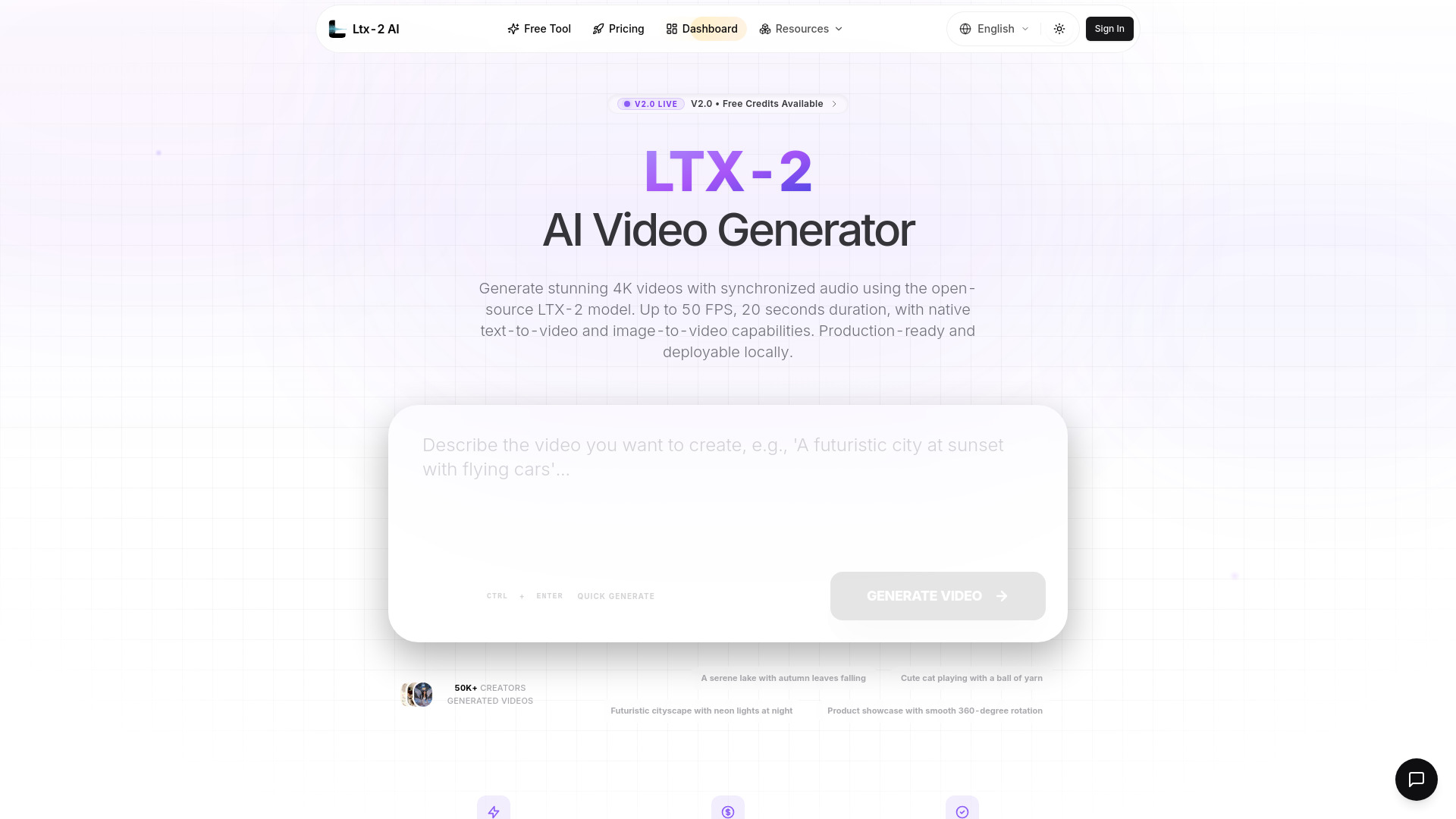
Why it matters LTX-2 AI is another adjacent option, aimed at producing content once a trend has been found. Its open-source Apache 2.0 model supports local deployment and ComfyUI, while native audio synchronization can generate dialogue, environmental sounds, and music that match the visuals. It also supports 4K video at up to 50 FPS. Those details matter for teams that want control over production rather than another hosted creative workspace. It is not a historical analysis tool, but it can help a brand respond to a detected trend without handing every production step to a closed platform.
Best for
Creators who need open-source and local deployment options
Teams producing high-resolution trend-response videos
ComfyUI users who want native audio synchronization
Limitations
Each generation is limited to 20 seconds
Longer projects require multiple clips to be generated and combined
It measures neither brand mentions nor AI-search visibility
Shortlist signal: Choose LTX-2 AI when production control and local deployment are part of your trend-response requirements.
7. RightResponse AI

- Small business owners
- 7-day trial with 1,000 free credits
- Starts at PAYGO: $10/location/month
- Usage signal: 7.4K
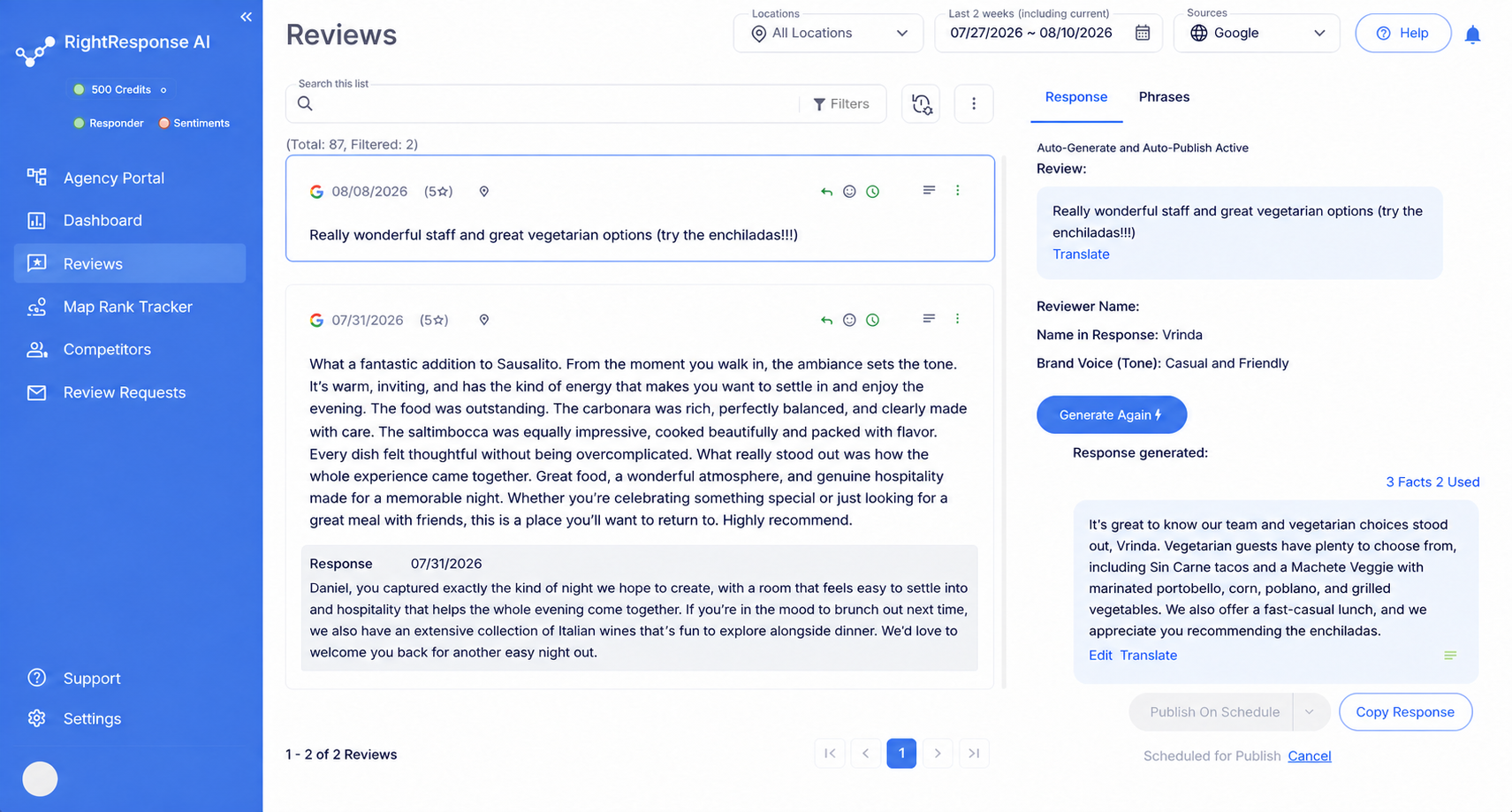
Why it matters Customer reviews are one of the most concrete forms of brand mention, and RightResponse AI gives them an operational workflow. Its multi-agent review response system can generate and publish replies, while a human approval step keeps the process from becoming an unattended automation loop. Advanced sentiment analysis goes beyond basic keyword matching, making the tool useful for spotting recurring customer themes. Usage-based pricing can make spend less predictable, but the seven-day trial and 1,000 free credits offer a reasonable way to test response quality and approval controls.
Best for
Small businesses managing review volume across locations
Teams that want automated drafts with human approval
Operators combining review sentiment with Google Maps local rank tracking
Limitations
Usage-based pricing can make monthly costs variable
Enterprise features such as brands, regions, tags, and advanced permissions may require a higher tier
Review analysis is narrower than full web or AI-answer monitoring
Shortlist signal: Add RightResponse AI when customer reviews are your most important brand-mention source and response execution matters.
8. AlphaAI

- Algorithmic traders
- 20 requests/minute and 100/day
- Starts at Free: $0
- Usage signal: 2.3K
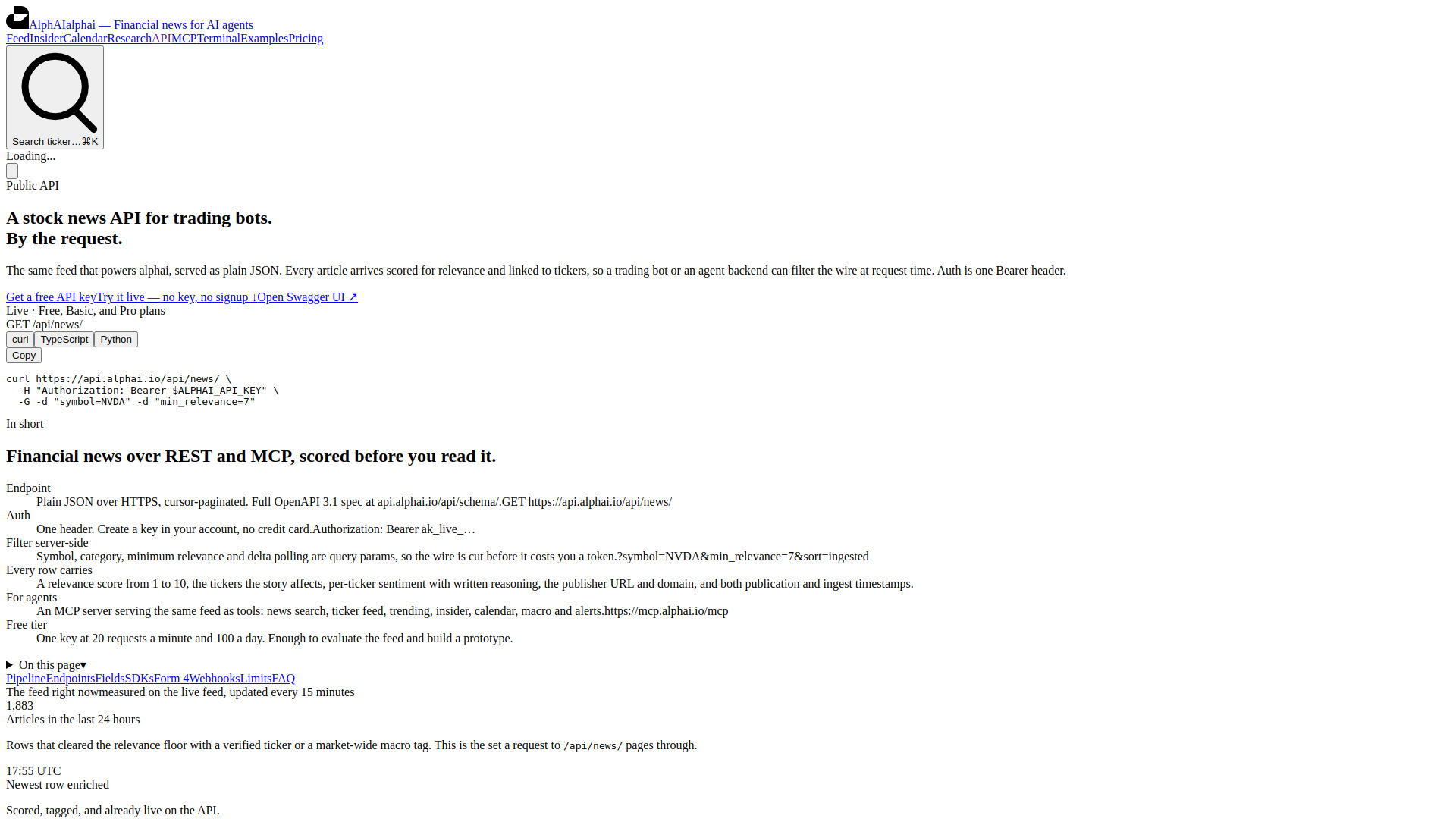
Why it matters AlphaAI supplies the kind of structured context that general brand-monitoring tools often lack. Every article receives a relevance score from 1 to 10 and per-ticker impact analysis, with written reasoning for ticker-level sentiment. It also exposes SEC Form 4 insider trades, SEC 8-K corporate events, and 6-K earnings releases in structured form. For a public-company brand, that can help distinguish a genuine market event from a noisy burst of mentions. The free tier is useful for exploration, but its request and archive limits matter for ongoing historical analysis.
Best for
Algorithmic traders and financial analysts
Teams studying public-company news alongside brand movement
Developers using REST API or MCP access for structured signals
Limitations
Free access is limited to 20 requests per minute and 100 requests per day
Free API and MCP access covers only a 30-day archive
Financial news signals do not capture every consumer or social brand mention
Shortlist signal: Choose AlphaAI when corporate filings, ticker impact, and scored financial news are necessary to interpret brand movement.
9. Llumo

- SEO professionals
- Unlimited prompts
- Starts at Free: $0
- Usage signal: Not listed
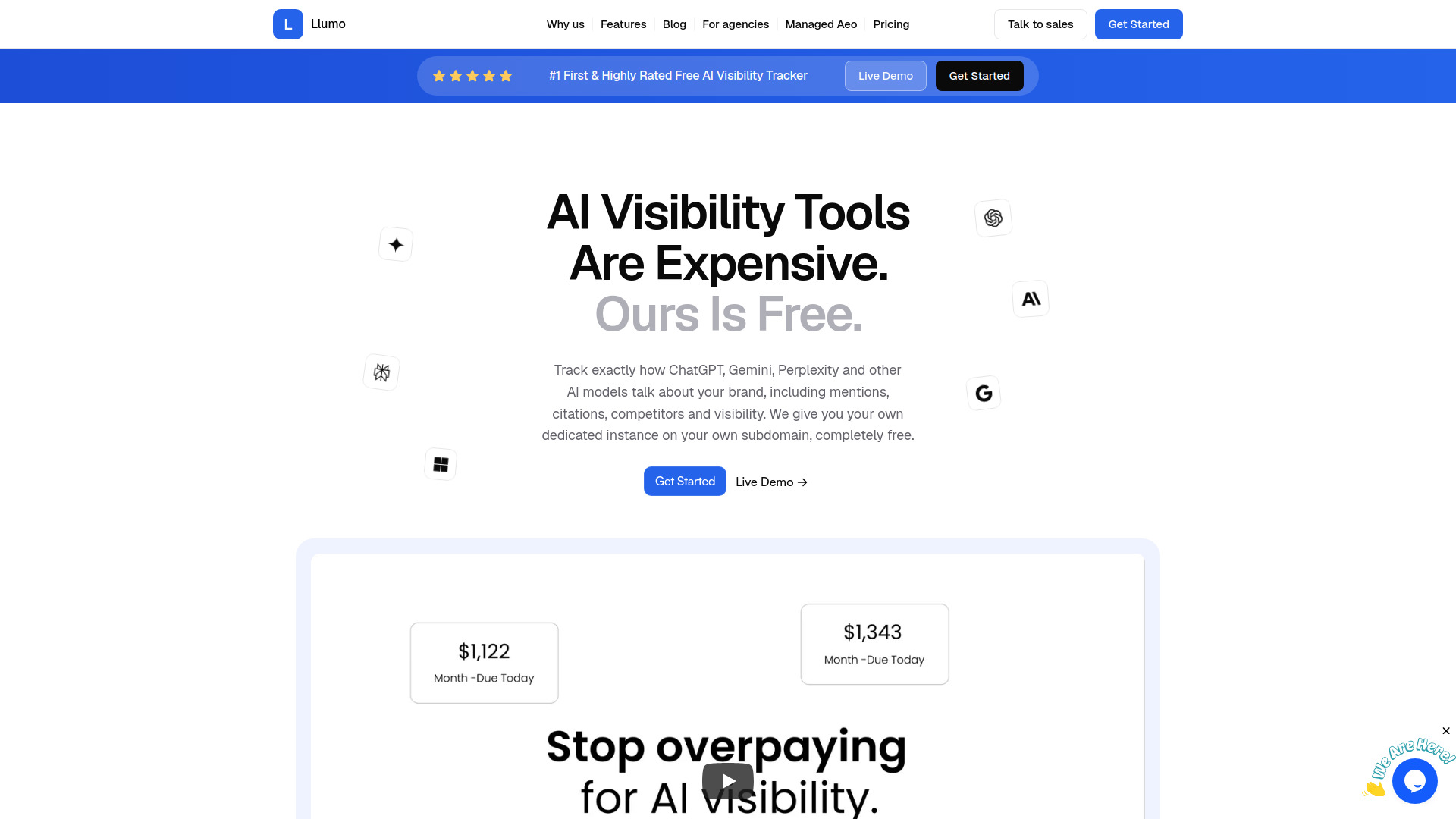
Why it matters Llumo is the strongest specialist option here for tracking how a brand appears across AI answer engines. It covers ChatGPT, Gemini, Perplexity, Copilot, Google AI Overviews, and other models, with per-prompt visibility scores, share-of-voice tracking, citation analysis, and competitor monitoring. That prompt-level view is valuable because "brand visibility in AI" is not one universal score: performance can change by question, model, competitor set, and citation source. Llumo's core platform is available at $0 per month, but users must bring their own API keys and absorb provider usage costs at higher volume.
Best for
SEO teams tracking visibility across multiple AI answer engines
Marketers comparing brand and competitor share of voice
Teams that need prompt-level scores and citation analysis
Limitations
Users must provide their own API keys
AI provider usage costs still apply at higher tracking volume
Confirm historical retention and reporting exports for longitudinal studies
Shortlist signal: Put Llumo first on an AI-search visibility shortlist when prompt-level history and competitor comparison are the core requirement.
10. ai influencer generator

- Solo creators
- 1 free 5-second video and 30 free credits
- Starts at $15.83/month billed annually
- Usage signal: Not listed
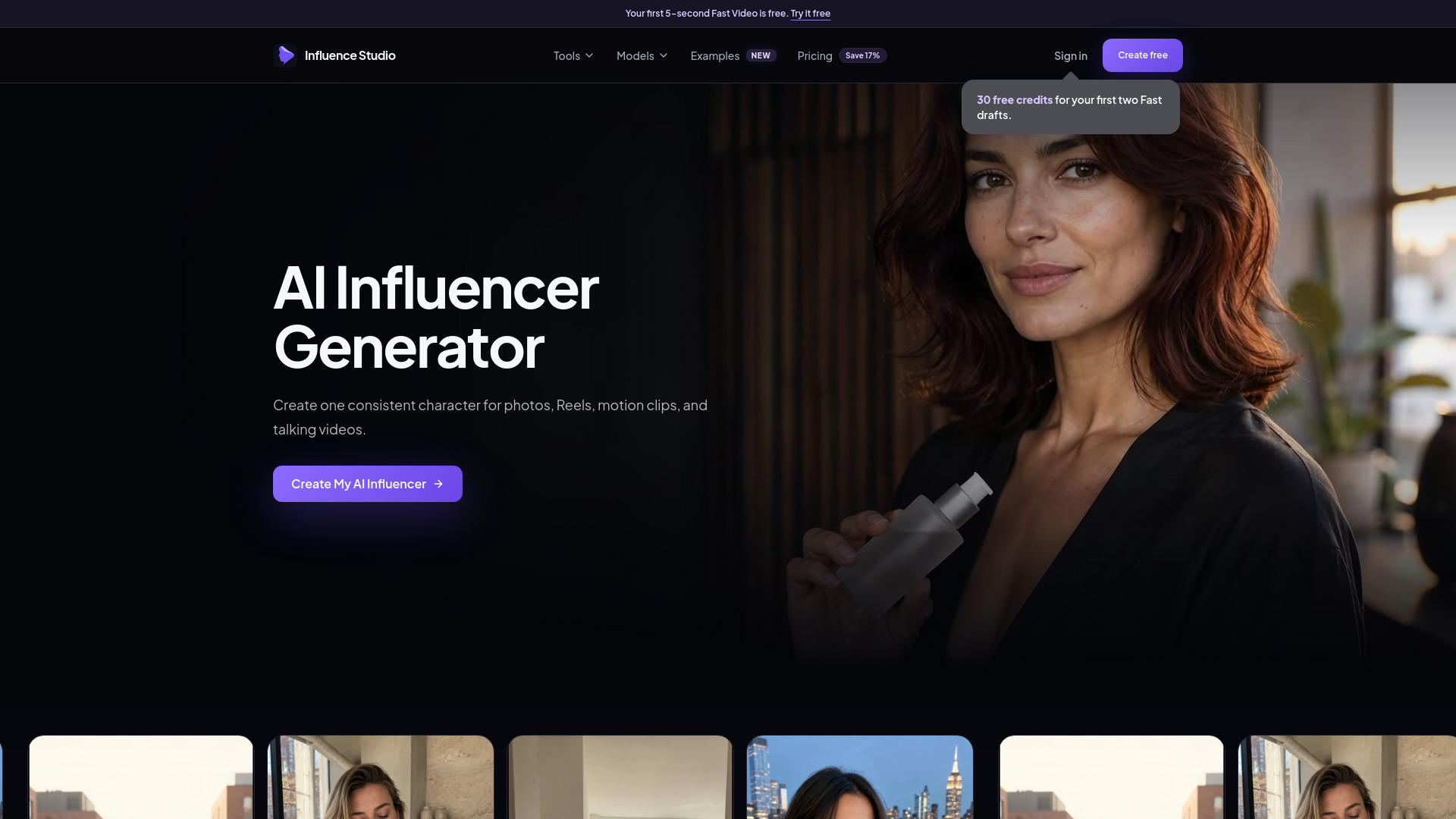
Why it matters The ai influencer generator is a practical response tool for teams exploring how a brand should show up in social content. It creates reusable virtual influencer characters, maintains consistency across supported photos and videos, and offers Fast, Consistent, Motion, and Talking modes. That makes it useful when historical trend analysis has identified a visual format or creator style worth testing. It should not be confused with a listening or forecasting platform, but its consistent-character workflow can turn an insight into repeatable social experiments without reshooting a real spokesperson.
Best for
Solo creators building a repeatable virtual influencer identity
Social teams testing short-form visual responses to trends
Users who need consistent character photos and image-to-video clips
Limitations
Image and video generation consume credits
The free offer is limited to initial credits and Fast Video trials
It does not monitor brand mentions or provide historical trend charts
Shortlist signal: Choose this tool when your next step after finding a trend is testing a consistent virtual creator across short social clips.
What to test before choosing
Run the same small evaluation in every serious candidate. Do not rely on a polished current score.
- 1
Recreate a known event. Pick a campaign, product launch, controversy, or news cycle with a clear date. Check whether the tool shows the rise, peak, and decline rather than only the current state.
- 2
Inspect the source layer. Open individual mentions, prompts, citations, reviews, articles, or filings. A trend without inspectable evidence is difficult to defend in a report.
- 3
Separate sentiment from visibility. A brand can appear frequently while being discussed negatively, or appear rarely but be recommended strongly by AI systems. Test both measures where possible.
- 4
Compare competitors. Use the same prompts, channels, timeframe, and audience for at least two competitors. Ask whether the comparison is normalized or just a raw count.
- 5
Check retention and export. Ask about historical lookback, raw-data exports, API access, report scheduling, and deletion rules. This is where many apparently affordable tools become unsuitable for longitudinal work.
- 6
Measure the operating cost. Include API keys, credits, token usage, locations, seats, and refresh frequency. Llumo and FutureSearch are especially worth testing at the volume you expect, not just at their free limits.
- 7
Test the handoff. A useful insight should reach the person who acts on it-SEO, PR, customer support, ecommerce, or creative. BrandJet AI and RightResponse AI stand out because their workflows extend beyond observation.
What to do next
Start with one business question and one historical slice. For example: "Why did our visibility in AI answers change after the product launch?" Use Llumo or Searchify to examine answer-engine visibility, BrandJet AI for broader sentiment and channel context, and AlphaAI when public-company news may be involved. If the question is forward-looking, use FutureSearch to turn the observed pattern into explicit scenarios.
For a lean pilot, choose one primary tool and one adjacent validation source. Avoid buying three dashboards that all report a slightly different version of the same current score. Define the report before you subscribe: timeframe, brand set, competitor set, source types, desired export, and the action that follows a meaningful change.
Common mistakes when choosing from a complex top list
Treating every mention as equivalent. A review, a news article, an AI recommendation, and a social clip have different meanings and should not be merged without context.
Confusing current visibility with historical analysis. A present-day score cannot explain a past change unless the product stores dated observations and lets you retrieve them.
Choosing the cheapest free tier. Free prompts, credits, or requests may be enough for a demo but not for daily monitoring, competitor comparisons, or long archives.
Ignoring source quality. Searchify and Llumo answer different questions from AlphaAI, which focuses on structured financial news and filings. Match the source to the decision.
Overlooking operational fit. A sentiment insight is less valuable if nobody owns the response. Review approval and outreach workflows can matter as much as the chart.
Treating adjacent creative tools as monitoring platforms. AI Inspo, LTX-2 AI, and ai influencer generator help teams respond to trends; they do not establish whether a brand trend exists.
Failing to verify live commercial terms. Pricing, archives, API limits, model coverage, and enterprise permissions can change. Confirm them with the vendor before building a reporting process.
FAQ
BrandJet AI is the best overall match for broad brand intelligence, sentiment, and outreach. Llumo is the more focused choice for visibility across AI answer engines, while Searchify emphasizes actionable AI-search recommendations. The right pick depends on whether your mentions come from multiple channels, AI responses, reviews, or financial news.