
Finding the top platform for feature enrichment for ml models is less straightforward than comparing a list of feature-store products. In practice, teams enrich ML systems through several layers: better source data, automated preprocessing, embeddings, model APIs, warehouse-native training, and repeatable deployment. This field guide compares 10 tools across those layers so you can identify the right fit instead of choosing the platform with the longest feature list.
Start here
The fastest way to narrow this list is to decide what kind of enrichment you actually need. Are you trying to add model-generated signals, improve training data, speed up the training loop, or make production data easier to use? These are different jobs, and the best choice changes accordingly.
Best overall match: Zhipu AI Open Platform for teams that need model APIs, embeddings, reranking, multimodal inputs, and fine-tuning in one broad platform.
Best for ML infrastructure: ClearML when GPU control, experiment management, development, and deployment matter more than turnkey enrichment.
Best no-code route: Plat.AI for analysts who want preprocessing, model building, and predictions without writing a conventional ML pipeline.
Best for warehouse-native training: Perpetual ML if your data already lives in Snowflake and faster iteration is the priority.
Best database-centered option: PostgresML for teams that want embeddings, models, and application data close together in PostgreSQL.
The important distinction: only some of these products are dedicated feature stores. The rest are adjacent platforms that can enrich the inputs, representations, training process, or delivery layer of an ML system. That broader view is more useful for most buyers because feature enrichment rarely happens in a single isolated product.
Segment comparison
| Segment | Strongest match | What it adds | Best starting point |
|---|---|---|---|
| Model and multimodal enrichment | Zhipu AI Open Platform | LLM, embedding, rerank, speech, OCR, image, and video services | AI engineers building model-powered features |
| ML operations and infrastructure | ClearML | GPU management, development workflows, testing, and deployment | Teams operating repeatable ML experiments |
| No-code predictive modeling | Plat.AI | Data preprocessing, automated model building, and real-time predictions | Analysts and business-led ML projects |
| Data preparation and insight discovery | ML Clever | Profiling, KPI discovery, dashboards, and pattern analysis | Business teams exploring predictive signals |
| Data movement and transformation | engraph | Automated ETL, reusable dbt models, and data-tool integrations | Data engineers preparing reliable pipelines |
This table shows why a single category label can be misleading. Zhipu AI adds derived signals through model services, while engraph improves the path those signals travel through. ClearML helps teams operationalize the work, and PostgresML keeps the resulting representations near the application database. They solve different bottlenecks.
Shortlist paths
| Your situation | Start with | Why |
|---|---|---|
| You need embeddings, reranking, or multimodal enrichment | Zhipu AI Open Platform | Broad API coverage plus fine-tuning and knowledge-base workflows |
| You need control over GPUs and experiments | ClearML | Combines infrastructure control with an AI development center |
| You want to build predictive models without coding | Plat.AI | Automates model building, preprocessing, and deployment |
| You need answers from connected business data | Analytics Model | Natural-language interaction and 500+ data-source integrations |
| You want ML inside your database | PostgresML | Builds and deploys models directly within PostgreSQL |
A practical buying sequence is to select one tool for the primary bottleneck and then check whether it can coexist with the rest of your stack. For example, an ETL platform may prepare cleaner training data but will not replace model serving. Conversely, a model API can create rich signals quickly but does not automatically solve lineage, monitoring, or warehouse governance.
Ranking snapshot
| Rank | Tool | Score | Best for | Starting price |
|---|---|---|---|---|
| #1 | Zhipu AI Open Platform | 93/100 | AI engineers | New User Bonus: Free |
| #2 | ClearML | 91/100 | AI builders | Check vendor pricing |
| #3 | Plat.AI | 91/100 | Data analysts | Check vendor pricing |
| #4 | ML Clever | 91/100 | Business analysts | Check vendor pricing |
| #5 | Analytics Model | 91/100 | CMOs | Check vendor pricing |
| #6 | Perpetual ML | 90/100 | Data scientists | Check vendor pricing |
| #7 | ModelFusion | 90/100 | Researchers | Basic: $6/week or $3/week |
| #8 | PostgresML | 90/100 | Data scientists | Check vendor pricing |
| #9 | Envole | 90/100 | Business analysts | Check vendor pricing |
| #10 | engraph | 89/100 | Data engineers | Self-serve: $85/user/month |
Scores are close because the list spans several segments. Treat the score as a shortlist signal, not a universal performance grade. A data scientist working in Snowflake may reasonably prefer Perpetual ML over the higher-ranked Zhipu AI Open Platform, while a product team building a multimodal application may make the opposite choice.
How we grouped and ranked the list
We grouped the tools by the layer they improve: model-generated features, data preparation, ML infrastructure, warehouse-native training, database integration, and no-code application development. This prevents a broad AI suite from being compared as if it were identical to an ETL tool.
The ranking uses four practical questions:
- 1
How directly can the platform enrich an ML workflow? Embeddings, reranking, preprocessing, continual learning, model training, and data integration all count, but they solve different problems.
- 2
How much of the workflow does it cover? Tools that connect preparation, experimentation, deployment, or analysis earned stronger consideration than point solutions with only one isolated capability.
- 3
Who can use it effectively? A no-code interface is valuable for analysts, while GPU controls and database extensions matter more to engineering teams.
- 4
What friction appears during adoption? We considered setup requirements, vendor lock-in, data-warehouse constraints, pricing clarity, and missing deployment options.
Market signals such as monthly visits and usage indicators provide context, but they do not override fit. A specialized platform with fewer visitors can still be the right choice if it matches your warehouse, database, or operating model.
Ranked field notes
1. Zhipu AI Open Platform

- AI engineers building model-powered data features
- 20M free tokens + 120 image/video resource pack uses
- Starts at New User Bonus: Free
- Usage signal: 6.6M
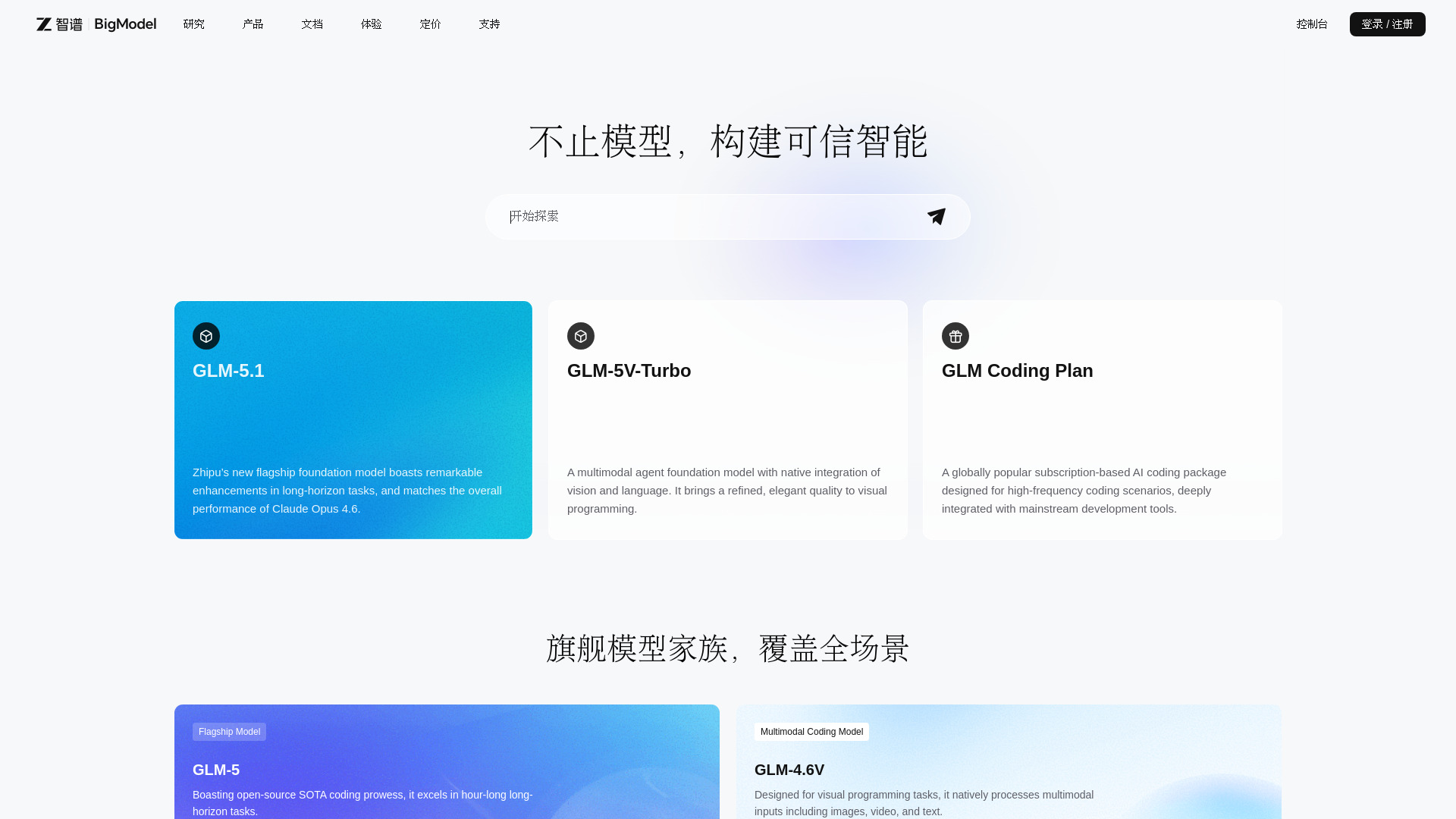
Why it matters The broadest route to feature enrichment on this list comes from combining model access with the services that turn raw content into usable signals. Zhipu AI Open Platform covers text and reasoning models, multimodal models, speech, OCR, image and video generation, search, embeddings, and reranking. That mix gives AI engineers several ways to create richer inputs for downstream models without stitching together every capability from a separate vendor. Agent, MCP, knowledge-base, and fine-tuning workflows make it more than a simple inference endpoint. The catch is breadth: pricing and service choices become harder to understand as the product surface expands, and private or enterprise deployment may require a sales conversation.
Best for
AI engineers adding embeddings, reranking, or multimodal signals
Teams building agents and knowledge-base workflows
Product groups that want one provider across text, speech, image, and video tasks
Limitations
Pricing and service options are complex across many product lines
Some enterprise and private deployment solutions require contacting sales
Shortlist signal: Add it when your enrichment roadmap includes model APIs, embeddings, and multimodal data rather than only tabular features.
2. ClearML

- AI builders managing ML infrastructure and development
- Free for up to 3 users, 100GB storage, and 1M API calls/month
- Starts at Check vendor pricing
- Usage signal: 49.4K
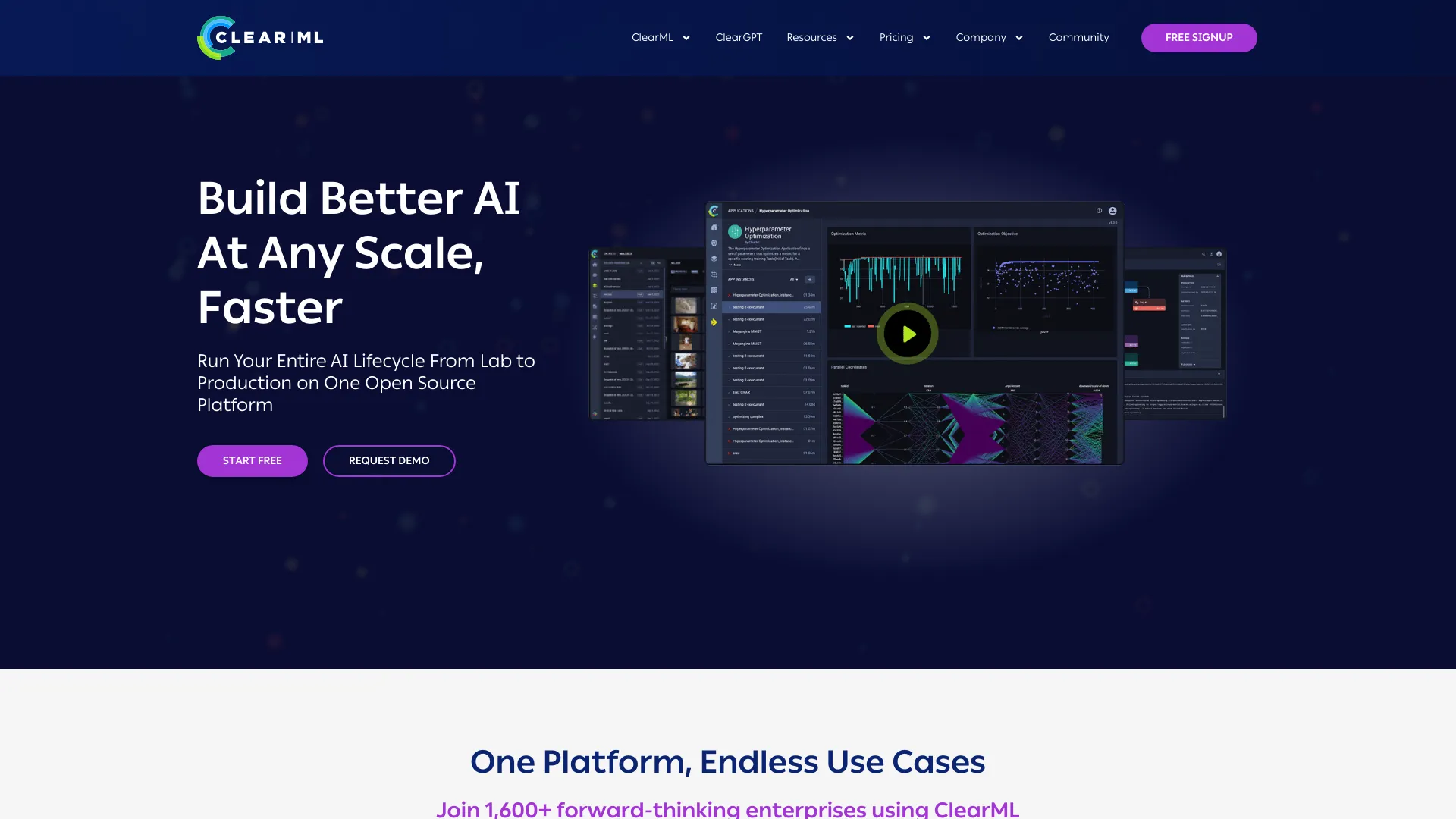
Why it matters Feature enrichment becomes much less useful when experiments are difficult to reproduce or GPU resources are poorly managed. ClearML addresses that operational gap with an Infrastructure Control Plane for GPU resource management, an AI Development Center for model development and testing, and a GenAI App Engine for LLM deployment. It is not a turnkey feature store, but it can make the surrounding enrichment workflow more repeatable: prepare data, run experiments, compare results, and move a working model toward deployment. The free team allowance makes it easier to test the workflow before committing, although setup and configuration still require a technically comfortable owner.
Best for
AI builders coordinating experiments and shared infrastructure
Teams managing GPU clusters across development workflows
Organizations that need a path from model testing to LLM deployment
Limitations
Pricing may vary based on the chosen plan
Requires initial setup and configuration
Shortlist signal: Choose it when infrastructure control and reproducible development are the main blockers around your enrichment pipeline.
3. Plat.AI

- Data analysts building predictive models without code
- 14-day free trial with 10,000 model requests
- Starts at Check vendor pricing
- Usage signal: 5.0K
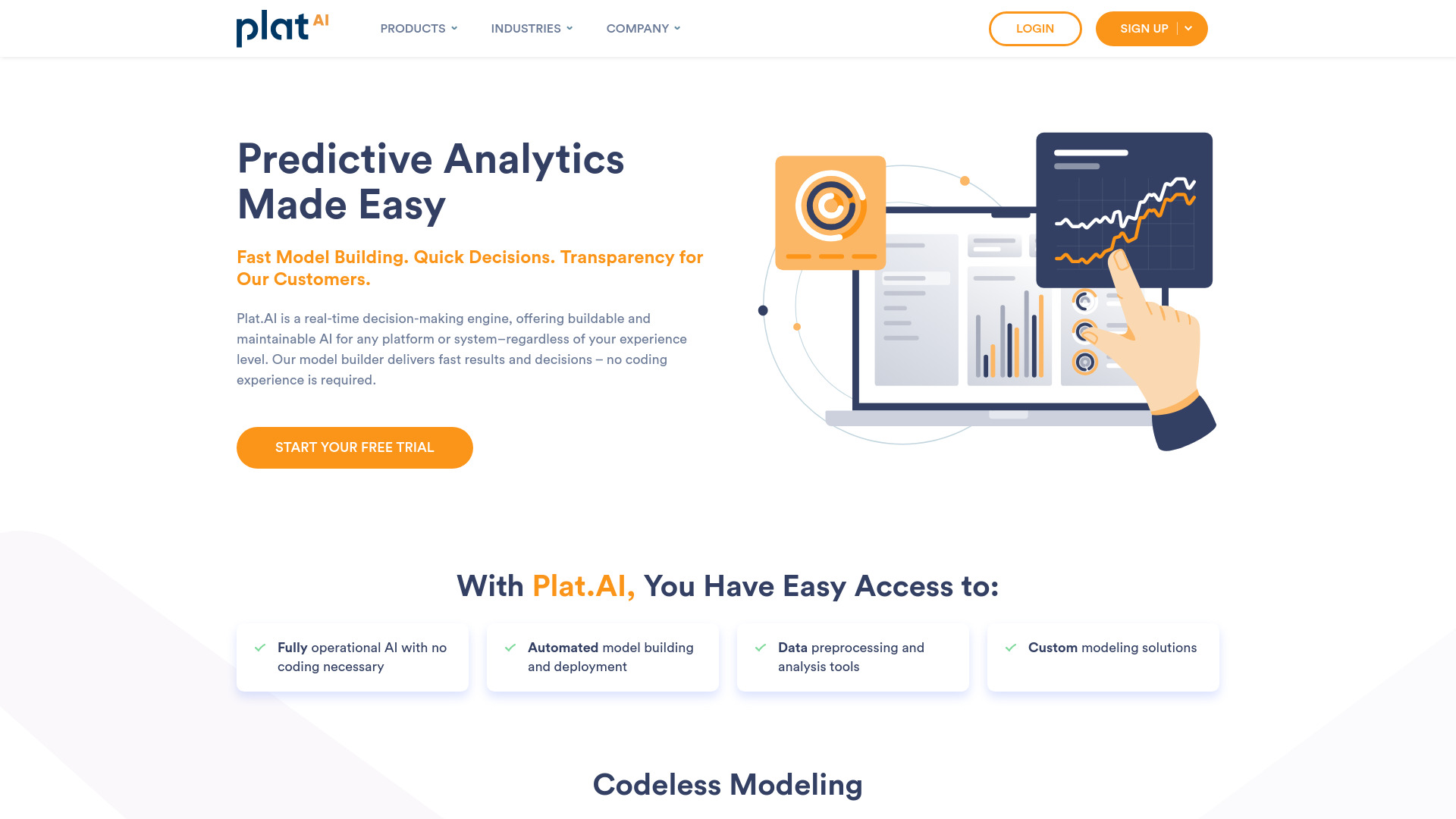
Why it matters Plat.AI is aimed at the part of the organization that often owns valuable data but lacks time for a full custom ML build. Its automated model-building and deployment workflow includes data preprocessing and analysis tools, real-time predictions, and custom modeling solutions. That makes it useful when enrichment means turning business data into additional predictive columns or scores quickly. The no-code approach reduces implementation friction, but it does not remove the need to understand the data. Analysts still need to recognize leakage, inconsistent labels, and unsuitable inputs before trusting an automated result.
Best for
Data analysts prototyping predictive features
Business teams that need real-time predictions without a large engineering project
Organizations testing whether a custom model is worth production investment
Limitations
May require some data understanding for optimal results
Custom modeling solutions may take longer
Shortlist signal: Add it when speed and accessibility matter more than complete control over model architecture.
4. ML Clever

- Business analysts discovering predictive patterns
- Free plan available
- Starts at Check vendor pricing
- Usage signal: 14.9K
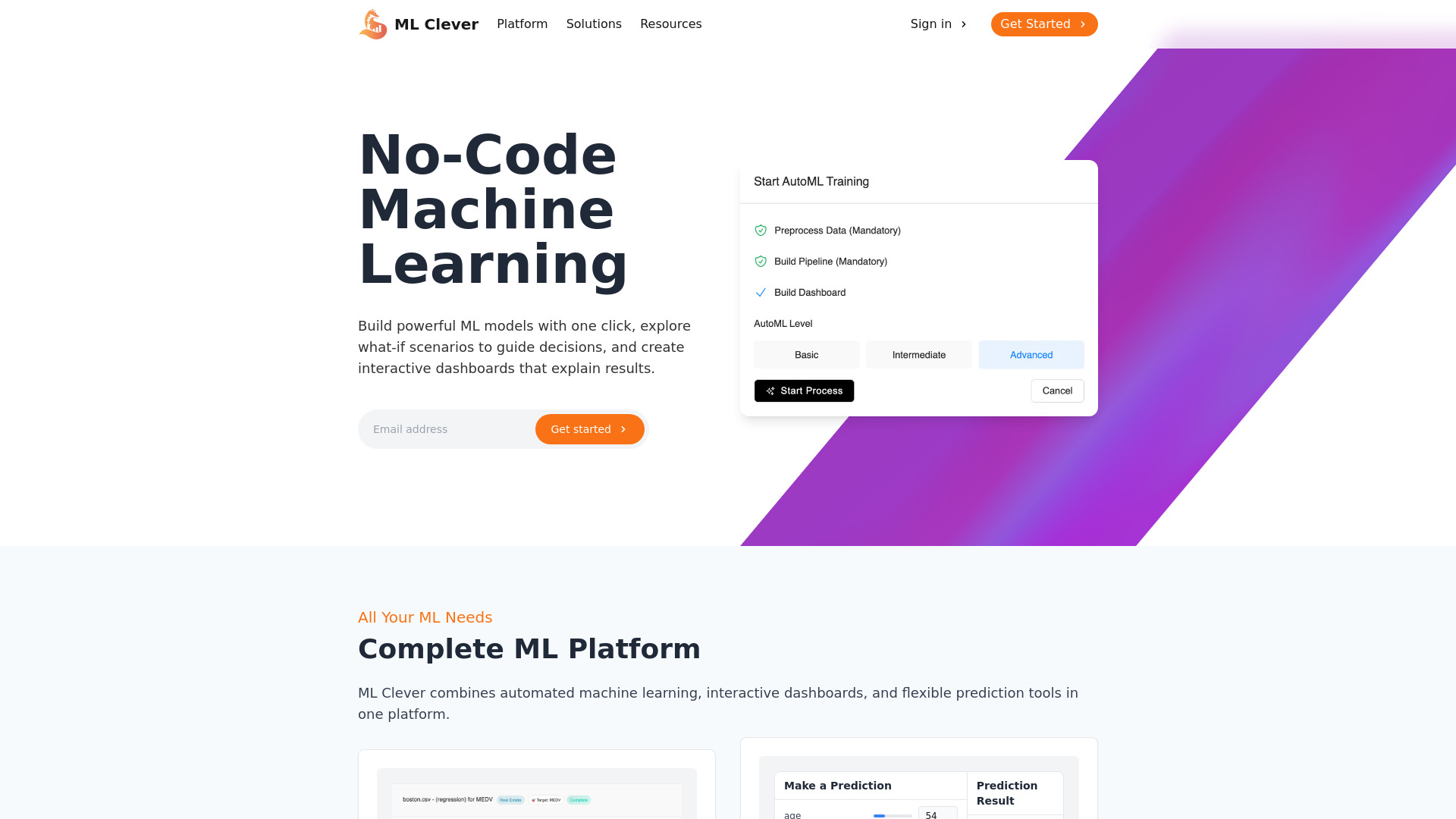
Why it matters Many enrichment projects begin with a simple question: which signals in our data are actually useful? ML Clever approaches that discovery problem through an AI Dashboard Generator, automated KPI discovery, and deep pattern analysis. Its no-code positioning makes it approachable for business analysts who need to inspect data, identify candidate variables, and surface predictive insights before handing a more defined requirement to a data science team. It is a better fit for exploration and decision support than for teams seeking detailed control over feature pipelines or production serving.
Best for
Business analysts exploring candidate KPIs and patterns
Teams that need automated dashboards before modeling
Organizations starting an ML initiative from existing business data
Limitations
May require some understanding of data analysis concepts
Limited information on pricing tiers
Shortlist signal: Choose it when the hardest part is finding useful signals in business data, not managing a sophisticated production stack.
5. Analytics Model

- CMOs turning connected business data into insights
- Free plan available
- Starts at Check vendor pricing
- Usage signal: 2.6K
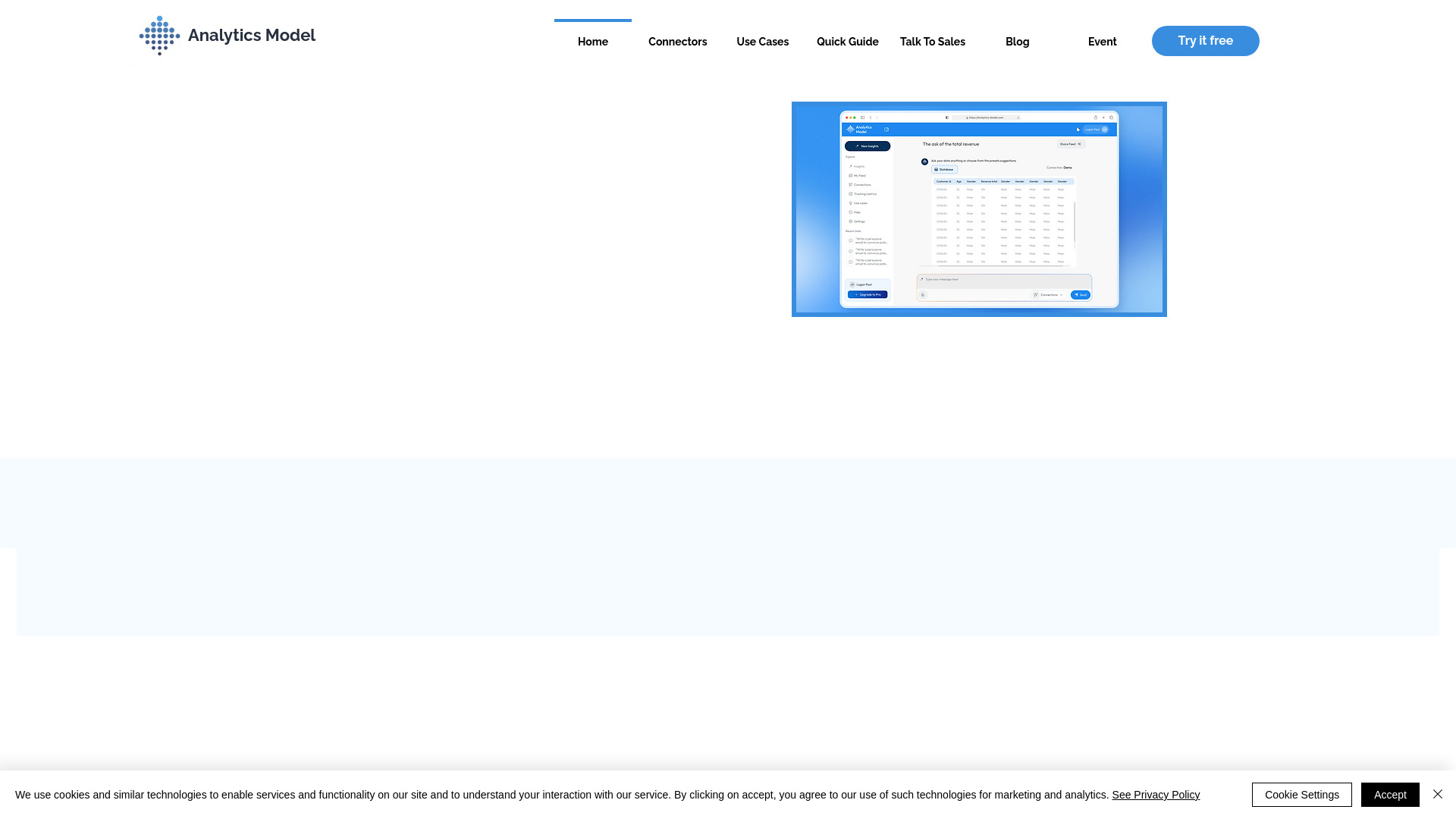
Why it matters Analytics Model focuses on the access layer between business data and the people trying to use it. AI-driven insight generation, natural-language data interaction, and more than 500 data-source integrations can help teams turn scattered information into usable context for analysis and modeling. For a marketing or revenue team, that can mean discovering segments, trends, or candidate signals without waiting for a custom query. The product depends on integration work, however, and its value will be limited if source definitions are inconsistent. Pricing is not presented cleanly on the main site, so buyers should clarify the cost of their data connections and user scope.
Best for
CMOs and business leaders investigating cross-source patterns
Teams that need natural-language access to operational data
Organizations with many external sources to connect and normalize
Limitations
Pricing information is not readily available on the main website content
Requires integration with external data sources, which may involve setup time
Shortlist signal: Put it on the list when data access and insight discovery are slowing down feature ideation.
6. Perpetual ML

- Data scientists training models in Snowflake
- Free plan available
- Starts at Check vendor pricing
- Usage signal: 2.4K
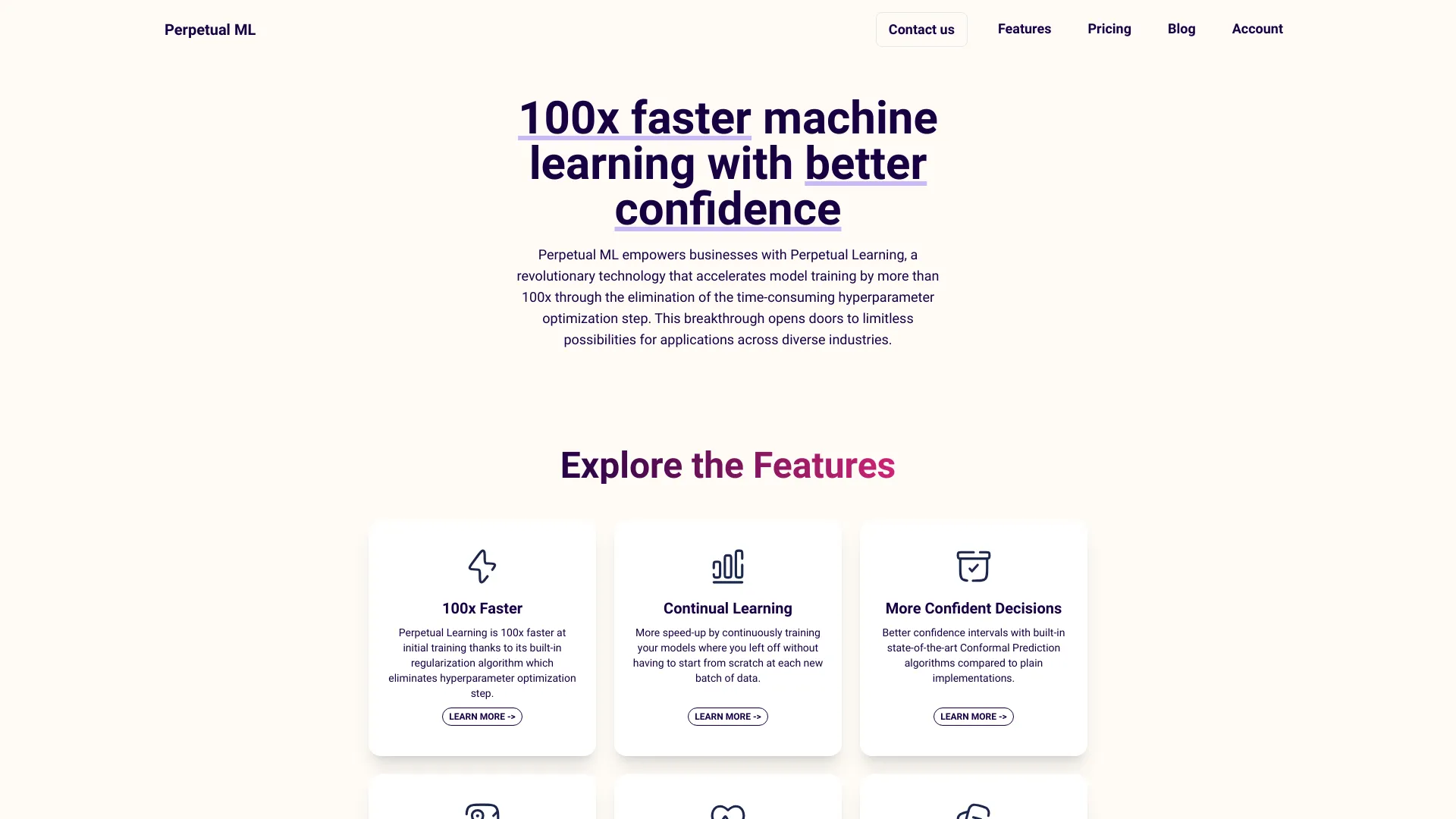
Why it matters Perpetual ML targets a familiar pain point: model training that takes too long and becomes stale between refreshes. Its PerpetualBooster claims 100x faster initial training, while continual learning updates models without starting from scratch. Conformal Prediction adds confidence intervals, which is particularly useful when a model's uncertainty matters as much as its point prediction. The low-code/no-code suite can shorten the path from warehouse data to a working model, but the current Snowflake focus is a material buying constraint. Teams centered on Databricks or another warehouse should confirm support before investing time in evaluation.
Best for
Data scientists working primarily in Snowflake
Teams needing faster initial training and recurring updates
Use cases where confidence intervals improve operational decisions
Limitations
Currently focused on Snowflake, with Databricks and other warehouses coming later
Pricing details require contacting the company
Shortlist signal: Choose it when continual learning and Snowflake-native speed are more important than broad warehouse coverage.
7. ModelFusion

- Researchers comparing multiple AI models and document signals
- 3-day free trial with 5,000 Fusion Credits
- Starts at Basic: $6/week or $3/week
- Usage signal: 1.0K
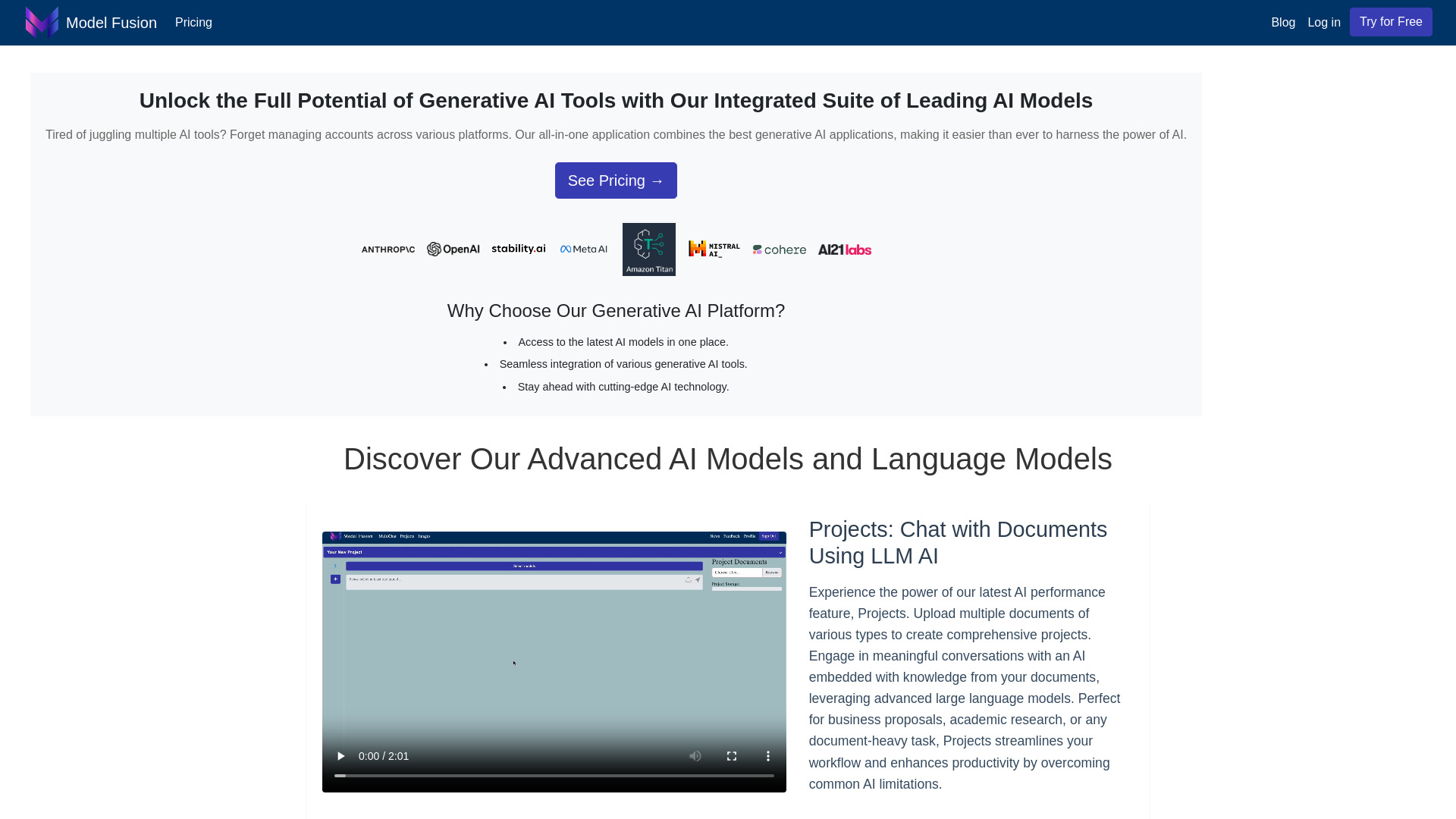
Why it matters ModelFusion is useful when enrichment depends on comparing outputs rather than committing immediately to one provider. MultiChat supports simultaneous interaction with 23 or more LLM models, while Projects supports document analysis and AI Image Analysis adds image understanding. Researchers can use that breadth to inspect how different models interpret the same source material, identify useful extracted signals, and test prompts or workflows before building a more formal application. FusionCredits introduce a metering layer that needs attention, and the convenience of many providers in one place may cost more than selecting an individual low-cost service.
Best for
Researchers comparing model behavior on the same inputs
Teams analyzing documents and images with multiple models
Early-stage projects that need broad model access before standardizing
Limitations
Usage is managed through FusionCredits, which may require monitoring
Cost may be higher than using individual free or lower-tier AI services
Shortlist signal: Add it when cross-model comparison is part of the enrichment process, not just a one-time model selection step.
8. PostgresML

- Data scientists building ML directly in PostgreSQL
- $100 in free credits
- Starts at Check vendor pricing
- Usage signal: 267
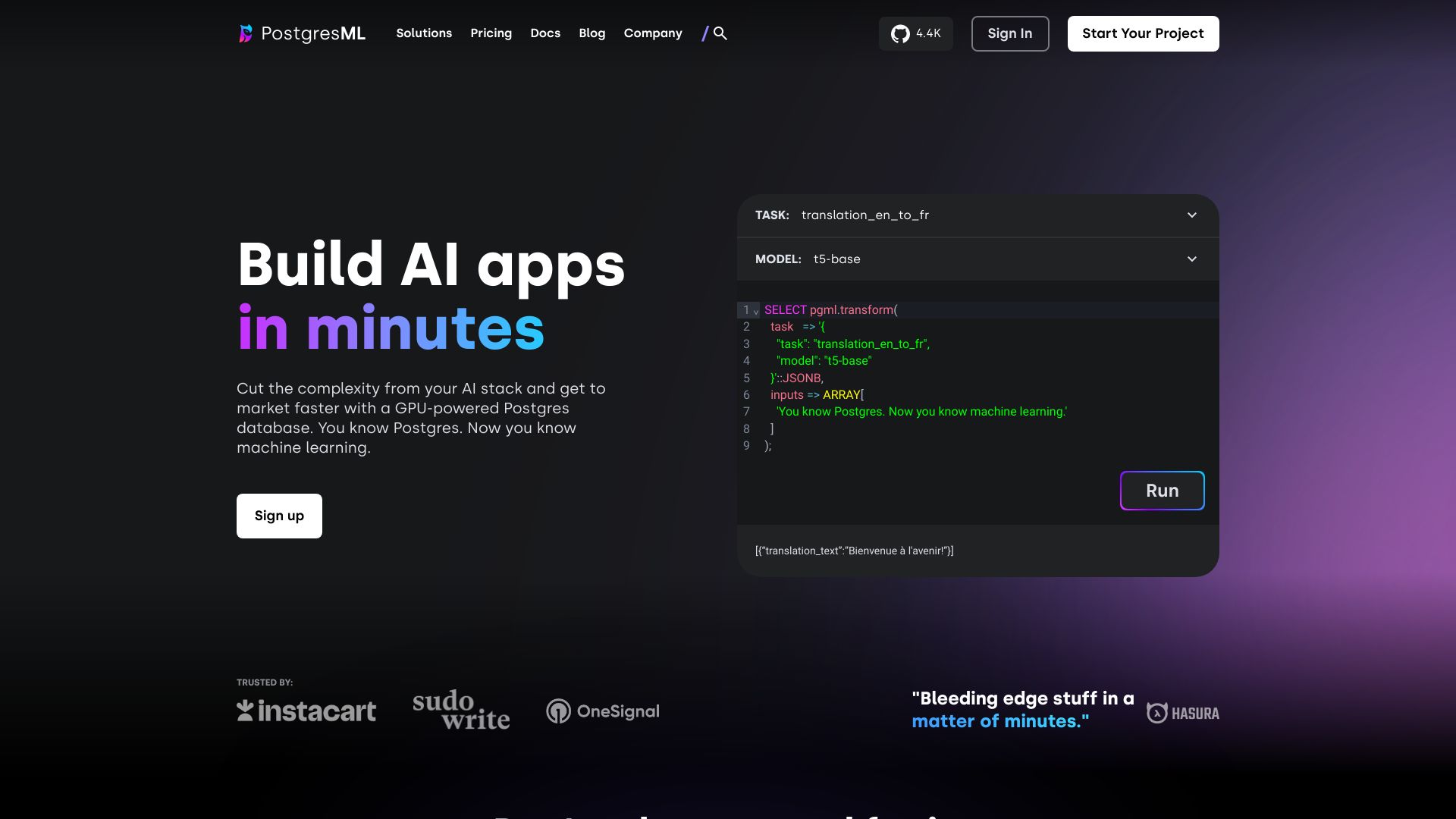
Why it matters PostgresML takes a database-first approach: build and deploy ML models directly within PostgreSQL, use GPU-powered Postgres databases, and generate vector embeddings and real-time outputs close to the data. That architecture can reduce the awkward handoffs between an application database, a separate feature service, and a model endpoint. It is especially compelling when low-latency access and data locality matter. The tradeoff is operational familiarity. Teams need to be comfortable with PostgreSQL, and non-cached models may take time to load. This is a focused engineering choice, not a point-and-click analytics product.
Best for
Data scientists and engineers already invested in PostgreSQL
Applications that need embeddings and model outputs near live data
Teams simplifying a stack that would otherwise split database and ML components
Limitations
May require familiarity with PostgreSQL
Loading non-cached models may take time
Shortlist signal: Choose it when colocating data, compute, embeddings, and inference is worth adapting your database workflow.
9. Envole

- Business analysts creating AI agents without code
- Free plan available
- Starts at Check vendor pricing
- Usage signal: 251
Why it matters Envole packages data cleaning, model training, deployment, and no-code AI agent creation into an end-to-end workflow. The plain-English agent builder is the most distinctive part: it gives business analysts a way to translate a workflow into an AI-driven process without assembling every component themselves. That can be useful when enrichment is part of a broader operational automation, such as cleaning incoming data before an agent uses it. The platform-hosting model simplifies maintenance but gives teams less control over where the system runs and how it is maintained.
Best for
Business analysts turning repeatable workflows into AI agents
Teams that want automated cleaning and training in one hosted product
Organizations prioritizing speed over infrastructure ownership
Limitations
May require some understanding of AI/ML concepts
Relies on Envole's platform for hosting and maintenance
Shortlist signal: Put it on the list when the desired outcome is an operational AI agent rather than a standalone feature registry.
10. engraph

- Data engineers automating transformation and ETL work
- Free plan available
- Starts at Self-serve: $85/user/month
- Usage signal: Usage signal not listed
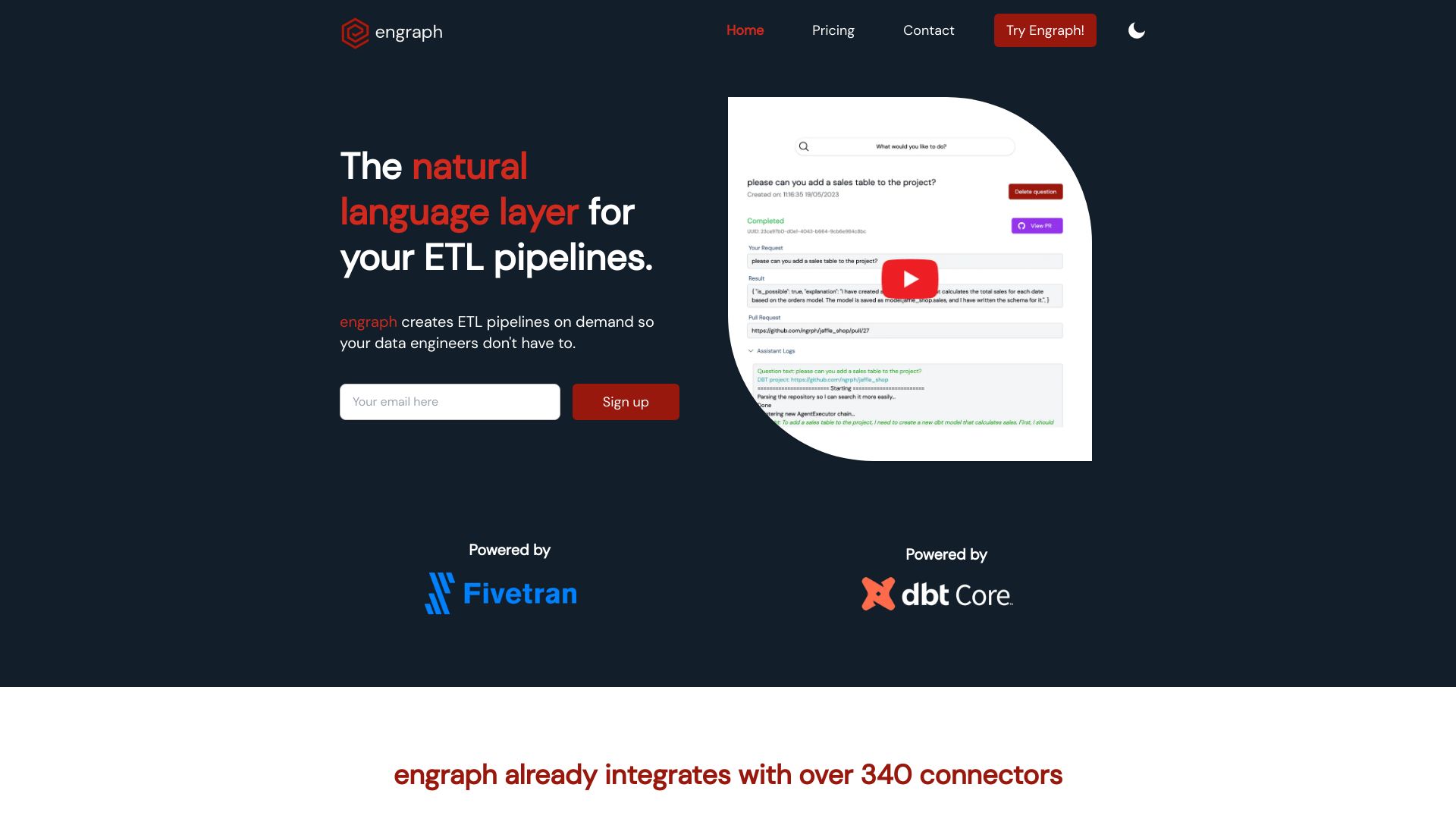
Why it matters A model cannot benefit from enriched features if the upstream data pipeline is brittle. engraph focuses on that foundation with automated ETL pipelines, reusable dbt models, and integrations with more than 340 data tools. It can reduce the manual effort involved in moving and transforming the data that eventually feeds a model or feature workflow. This makes it an adjacent but practical option for data engineering teams. The current limitations matter for regulated or infrastructure-sensitive deployments: on-premise deployment and pipeline monitoring are not yet available, and the per-user price can become significant as the team grows.
Best for
Data engineers reducing repetitive ETL work
Teams standardizing transformations through reusable dbt models
Organizations working across a wide range of data tools
Limitations
On-prem deployment and pipeline monitoring are coming soon, not currently available
Pricing can be expensive depending on the plan and number of users
Shortlist signal: Choose it when upstream data movement and transformation, rather than model selection, are holding back enrichment.
What to test before choosing
A convincing demo is not enough for this category. Use a small but representative slice of your own workflow and test the parts that tend to create hidden cost or rework.
1. Test the enrichment output, not just the interface
Take several real records, documents, images, or events and inspect the resulting embeddings, predictions, extracted fields, or transformed tables. Check whether the output is stable enough for downstream use and whether edge cases are visible to users.
2. Measure repeatability
Run the same workflow more than once. Compare model outputs, preprocessing behavior, schema handling, and deployment results. A platform that produces a good first result but cannot reproduce it will create governance problems later.
3. Check where data and compute live
PostgresML is attractive because it keeps ML close to PostgreSQL. Perpetual ML is attractive when Snowflake is central. Other products may host more of the workflow themselves. Confirm data residency, access controls, warehouse support, and whether your team can export the resulting data or models.
4. Price the complete workflow
Do not stop at the advertised entry point. Include model requests, tokens, credits, storage, users, data connectors, GPU usage, private deployment, and support. ModelFusion's FusionCredits and Zhipu AI's broad service catalog are good reminders that consumption can be harder to estimate than a simple seat price.
5. Test handoffs and failure modes
Ask what happens when a source changes schema, a model is unavailable, a GPU is oversubscribed, or a prediction cannot be generated. Check logs, retries, alerts, versioning, and rollback paths. These details determine whether a prototype can survive production.
6. Include the people who will own it
An analyst may prefer Plat.AI, ML Clever, or Envole, while a data scientist may prefer Perpetual ML or PostgresML. Include both the builder and the eventual operator in the evaluation. Ease of first use and maintainability are not the same thing.
What to do next
Start by writing a one-sentence definition of enrichment for your project. For example: "We need to generate embeddings for support documents," "We need cleaner warehouse features for a churn model," or "We need automated ETL before analysts train predictions." Then select two tools from the matching shortlist path and one adjacent alternative.
Build a small evaluation with the same inputs, success criteria, and time limit for each candidate. Record output quality, setup effort, latency, data movement, reproducibility, and total estimated cost. If the result is model-generated data, add a human review step. If it is a data pipeline, test schema changes and late-arriving data. If it is infrastructure, test a complete run from preparation through deployment.
For most teams, the first evaluation should look like this:
- 1
Choose one representative dataset or content collection.
- 2
Define the exact enriched fields or outputs you need.
- 3
Run the workflow in two candidate platforms.
- 4
Have a domain expert judge usefulness and errors.
- 5
Estimate production cost at your expected volume.
- 6
Confirm export, security, and ownership terms before signing.
Common mistakes when choosing from a complex top list
Treating every tool as a feature store. Some products generate model signals, some move data, and others manage infrastructure. Match the tool to the layer you need to improve.
Choosing the broadest platform by default. Breadth is useful when you need many modalities, but it can also mean more pricing complexity and a larger operational surface.
Ignoring the source-system constraint. Snowflake, PostgreSQL, and a multi-source ETL environment lead to very different shortlists.
Confusing no-code with no responsibility. Automated modeling still requires sensible labels, clean data, leakage checks, and monitoring.
Comparing trial quotas as if they were equivalent. Tokens, model requests, credits, storage, and user allowances measure different things.
Skipping deployment questions. A promising notebook or dashboard is not the same as a reliable production feature workflow.
Using traffic as a quality score. Monthly visits can indicate awareness, but they do not prove that a platform fits your data, team, or compliance requirements.
Failing to test adjacent tools together. A strong pipeline tool paired with a suitable model platform may outperform a single product that tries to do everything.
FAQ
Feature enrichment is the process of adding useful information or derived signals to the data used by a machine learning model. That may include embeddings, predictions, extracted text, multimodal metadata, cleaned fields, KPIs, or transformed warehouse data. The right platform depends on which type of signal you need and where your source data lives.