
Choosing among the top ai writing tools is less about finding one magical app and more about matching the writing workflow to the right kind of assistance. Some tools act like document editors, some focus on books and stories, while others add checking, image generation, or access to a broader AI toolbox. We compared 10 tools in 2026 so you can build a practical shortlist instead of testing every promising homepage yourself.
Start here
The fastest way to narrow this list is to decide what "writing" means in your workflow. For a general-purpose editor, Type.ai is the clearest first stop. Bloggers who also need images and multilingual output should look at AIWriter. Novelists and hobbyist screenwriters will get more relevant structure from AI Book Writer or AI Storyteller. Students may prefer Ag1 Labs for referenced documents and real-time data integration, while AI Checker is better treated as a review step than a drafting app.
| If you need... | Start with | Why it stands out |
|---|---|---|
| A general writing workspace | Type.ai | AI document editor and writing assistant in one workflow |
| Multilingual blog and content generation | AIWriter | Text generation in 33 languages, plus image and code generation |
| Book or chapter support | AI Book Writer | Chapter and book-name generation with cloud storage |
| Research-oriented documents | Ag1 Labs | Structured referenced documents and real-time data integration |
| Creative story development | AI Storyteller | Dialogue, narrative, and descriptive writing modes |
The catch is that the highest score does not automatically mean the best fit. A writer looking for plot help should not choose a general content hub simply because it lists more features, and a student should not assume a story generator will handle research responsibly. The segments below make those trade-offs easier to see.
Segment comparison
| Segment | Strongest fit | Useful capabilities | Main watch-out |
|---|---|---|---|
| Document and productivity writing | Type.ai, Ag1 Labs | Editing, structure, referenced documents, data integration | AI output still needs judgment and revision |
| Blog and marketing content | AIWriter, AraMind AI | Text generation, templates, images, content detection | Usage-based limits or variable output quality |
| Fiction and long-form creativity | AI Book Writer, AI Storyteller | Chapters, plot support, styles, dialogue | Generated prose requires substantial editing |
| Review and quality control | AI Checker | AI detection, plagiarism checks, language corrections | Complex text can reduce effectiveness |
| Discovery and broad experimentation | You AI Tools, Playground AI | Many widgets, directories, free trials or access | Tool quality and capabilities can vary widely |
This is a deliberately broad field guide. Several entries are writing-first products, while others are adjacent tools that become useful when writing sits inside a larger content process. That distinction matters when you are paying for a focused editor versus browsing a collection of utilities.
Shortlist paths
| Your situation | Best path | What to test first |
|---|---|---|
| You write every day and want one central workspace | Type.ai | Whether its editor fits your existing drafting habits |
| You publish in several languages | AIWriter | Output quality and editing effort across your key languages |
| You are outlining a novel, script, or book | AI Book Writer | Whether generated chapters preserve your intended direction |
| You need evidence-led academic or professional documents | Ag1 Labs | How real-time data becomes structured, referenced text |
| You want creative prompts and style control | AI Storyteller | Dialogue, narrative, and descriptive modes on one scene |
| You need to inspect text before publishing | AI Checker | Detection, plagiarism, and correction reports on representative copy |
A useful trial should involve the same assignment across two or three finalists. Give each tool a real brief, not a one-line demo prompt: a section outline, a rough draft, a target audience, and constraints. You will learn more from the revision loop than from a polished first paragraph.
Ranking snapshot
| Rank | Tool | Score | Best for | Monthly visits |
|---|---|---|---|---|
| #1 | Type.ai | 96/100 | Writers | 525.5K |
| #2 | AIWriter | 95/100 | Bloggers | 3.2K |
| #3 | AI Book Writer | 95/100 | Amateur writers | 1.0K |
| #4 | Ag1 Labs | 92/100 | Students | Not listed |
| #5 | AI Storyteller | 92/100 | Writers | Not listed |
| #6 | AI Checker | 92/100 | Writers | Not listed |
| #7 | AraMind AI | 92/100 | Content creators | Not listed |
| #8 | AuthorAI | 92/100 | Authors | Not listed |
| #9 | You AI Tools | 91/100 | Marketers | Not listed |
| #10 | Playground AI | 91/100 | AI enthusiasts | Not listed |
How we grouped and ranked the list
We grouped the tools by the job they help complete rather than by broad claims about artificial intelligence. Drafting and document products were assessed for the writing workspace they provide. Creative products were assessed for how directly they support chapters, stories, dialogue, and plot development. Review tools were kept separate because detection and plagiarism checks solve a different problem from generating prose.
Scores reflect feature relevance, audience fit, practical breadth, and market signals. Type.ai leads because its AI writing assistant and document editor map cleanly to a repeatable everyday workflow. AIWriter follows with unusually broad content support, including 33 languages and image generation. The lower-ranked directory-style products can still be useful, but their value depends more heavily on the quality of the individual tools or widgets you choose.
We also treated limitations as part of the ranking, not as footnotes. No-refund policies, unclear pricing, character-based pricing, incomplete features, and the need for human editing can materially change the buying decision. Before subscribing, test an actual piece of work and confirm the current plan details on the vendor site.
Ranked field notes
1. Type.ai

- Professional writers and everyday drafting
- Free plan available
- Starts at Check vendor pricing
- Usage signal: 525.5K
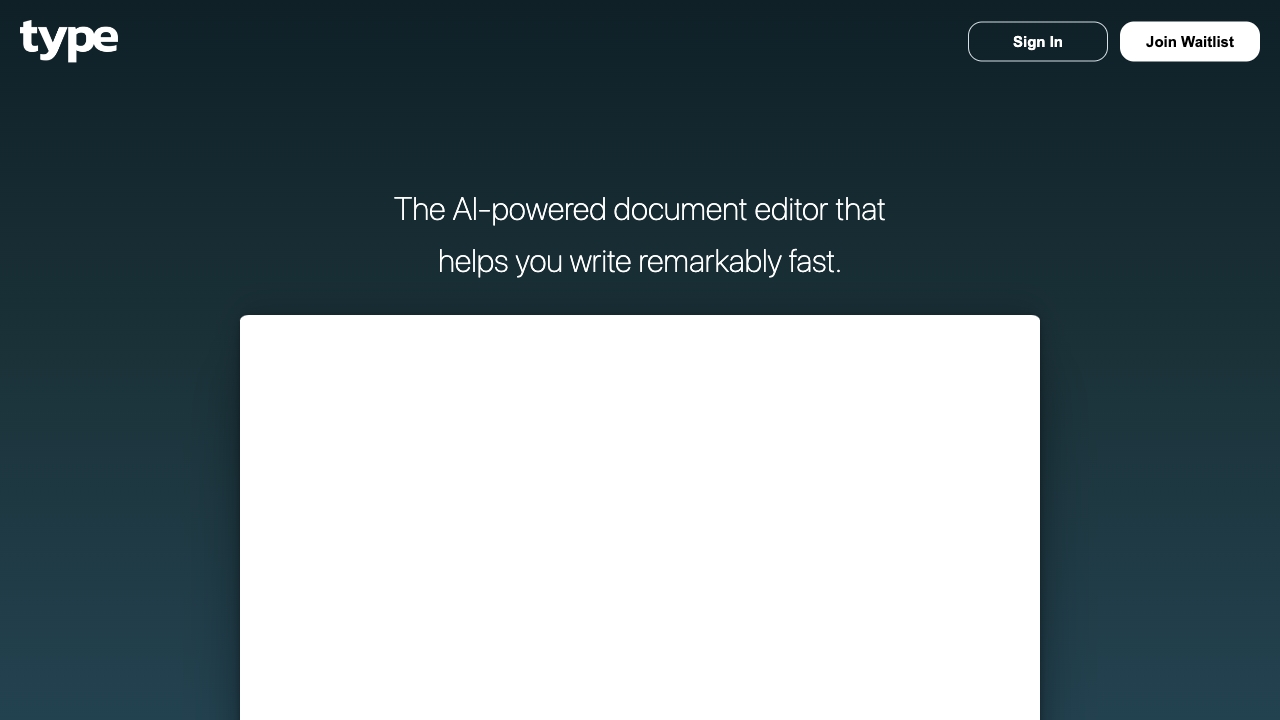
Why it matters The strongest all-around choice here is the one that keeps writing and editing in the same place. Type.ai combines an AI writing assistant with an AI document editor and AI writing editor, so it makes sense for writers who want help while working through a real document rather than jumping between isolated generators. Its feature set is focused enough to feel relevant to daily writing, and its large monthly-visit signal gives it more practical momentum than most of the niche options below. The main buying friction is pricing: you may need to navigate further before the plan structure becomes clear.
Best for
Professional or independent writers who want an AI-assisted document workspace
Drafting, rewriting, and improving longer documents
Users who prefer templates and an editor over a standalone chatbot
Limitations
Pricing is not clearly defined on the main page and requires further navigation
AI assistance can encourage dependence if you stop developing your own ideas
The editor still needs a human review pass for voice, accuracy, and originality
Shortlist signal: Add Type.ai first when you want one focused workspace for drafting and document editing.
2. AIWriter

- Multilingual bloggers and content creators
- Free trial
- Starts at Silver Plan: €9.90/month
- Usage signal: 3.2K
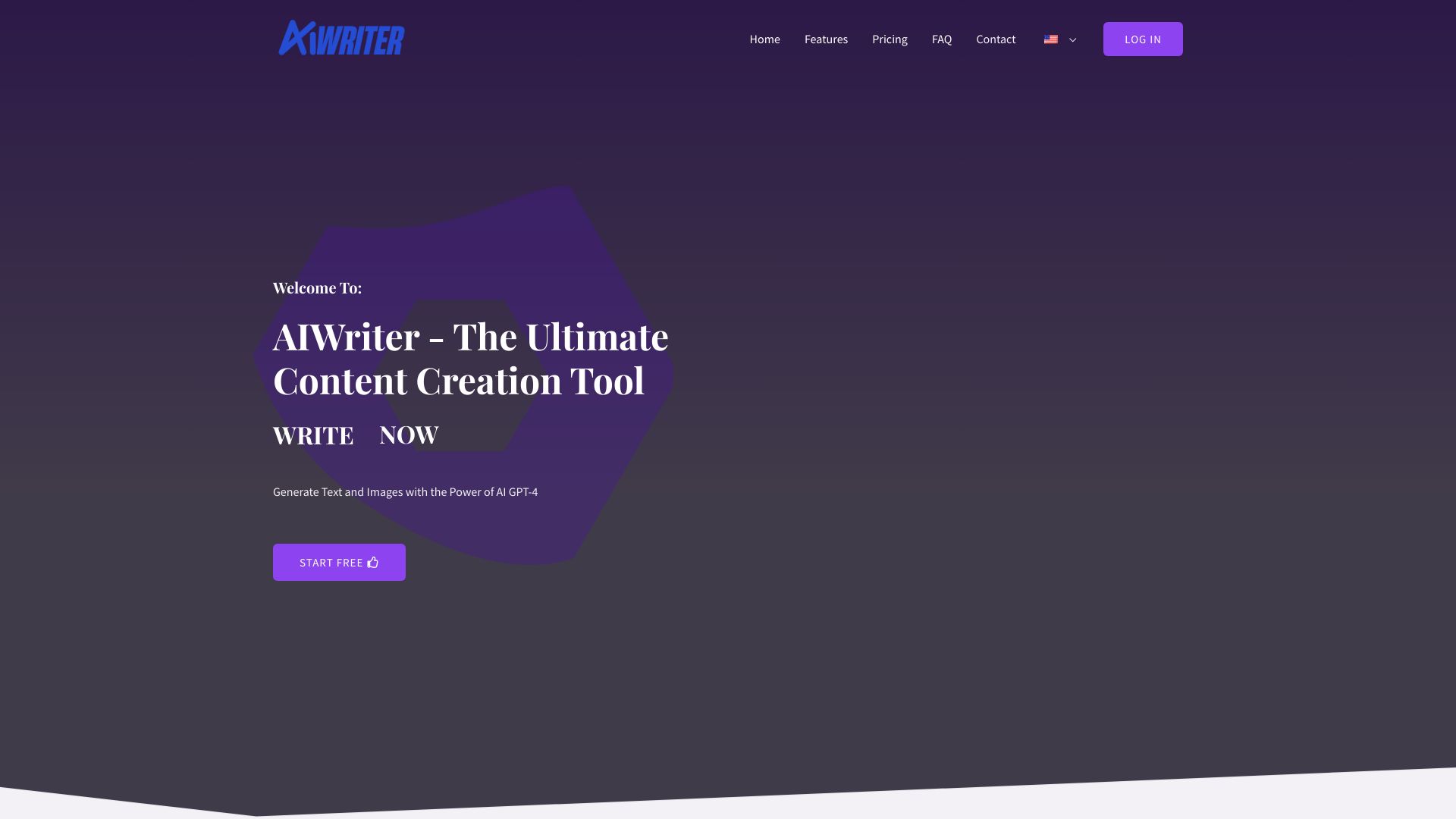
Why it matters AIWriter earns its place near the top by stretching beyond text alone. It supports AI text generation in 33 languages and adds image and code generation, which can be useful for a blogger or small content team assembling several parts of a campaign. That range makes it more versatile than a narrow blog drafter, although versatility also means you should inspect the quality of each output type separately. The Silver Plan is listed at €9.90 per month, and the free trial gives you a sensible way to test whether the tool saves time before committing.
Best for
Bloggers producing content for multilingual audiences
Small teams that need text, images, and occasional code in one place
Users who want to test a broader content workflow before paying
Limitations
Subscriptions do not offer refunds
Customer support is primarily handled by email, chat, or ticket
Generated content will still need fact-checking and editorial refinement
Shortlist signal: Choose AIWriter when language coverage and mixed media generation matter more than a specialized editor.
3. AI Book Writer

- Amateur novelists and first-time authors
- 10 credits for new users
- Starts at Professional: $4.95
- Usage signal: 1.0K
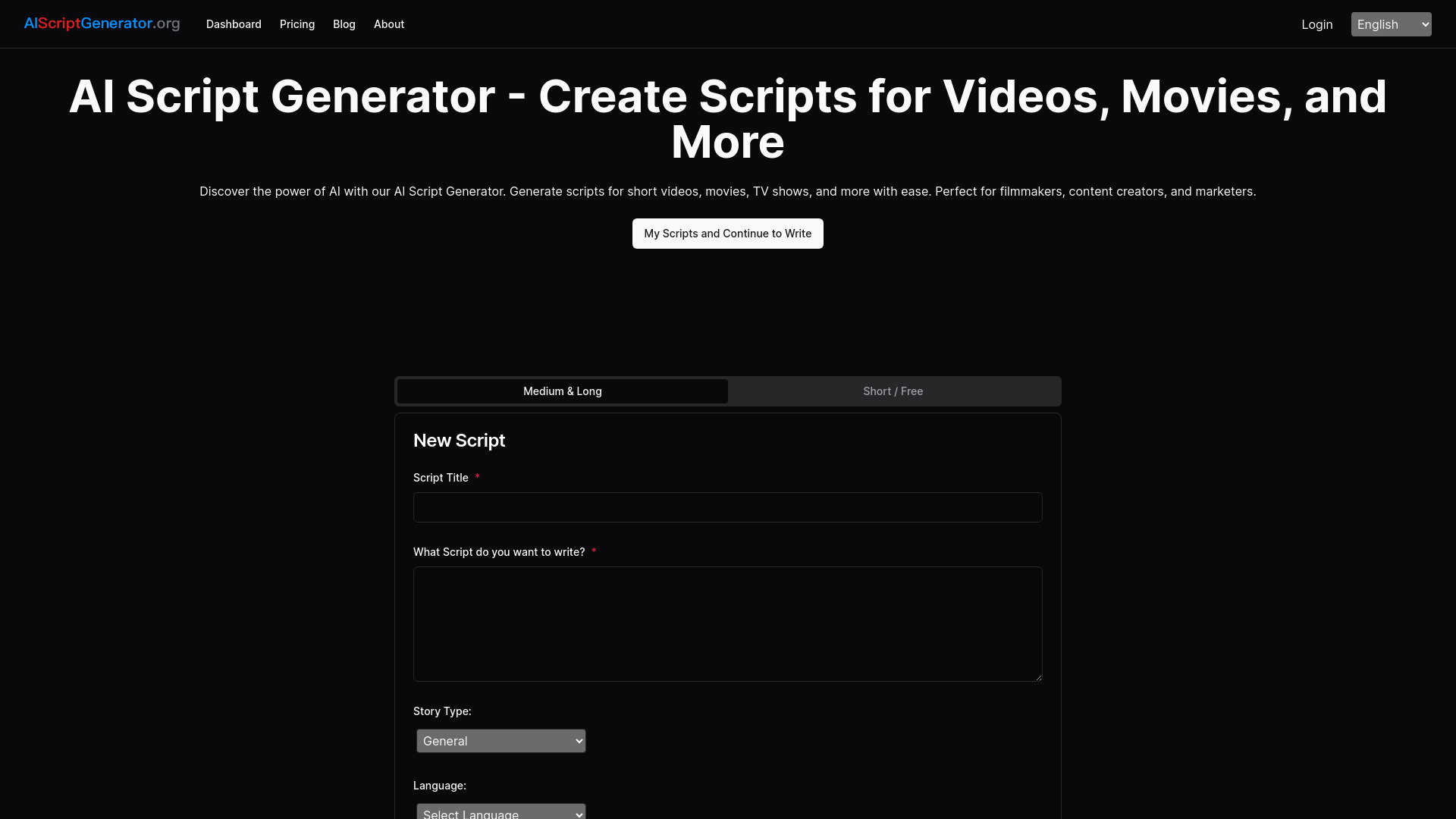
Why it matters Most general writing assistants are not designed around the shape of a book. AI Book Writer is more specific: its AI chapter generator and AI book-name generator address two early hurdles that can stall a new author. Cloud storage also points toward an ongoing project rather than a one-off paragraph. It is a compelling low-cost experiment for brainstorming and structure, but do not mistake generated chapters for finished manuscript pages. The tool can save time at the blank-page stage while still leaving the core work of voice, continuity, pacing, and revision to you.
Best for
Amateur writers starting a book, script, or long-form project
Brainstorming chapter concepts and possible book names
Writers who want cloud storage around an AI-assisted project
Limitations
Generated material may require substantial editing and refinement
The free version limits features and usage
A generated chapter can drift from the intended plot or character direction
Shortlist signal: Pick AI Book Writer when your main problem is turning a book idea into chapters and a workable starting structure.
4. Ag1 Labs

- Students building referenced documents
- Free plan available
- Starts at Check vendor pricing
- Usage signal: Not listed
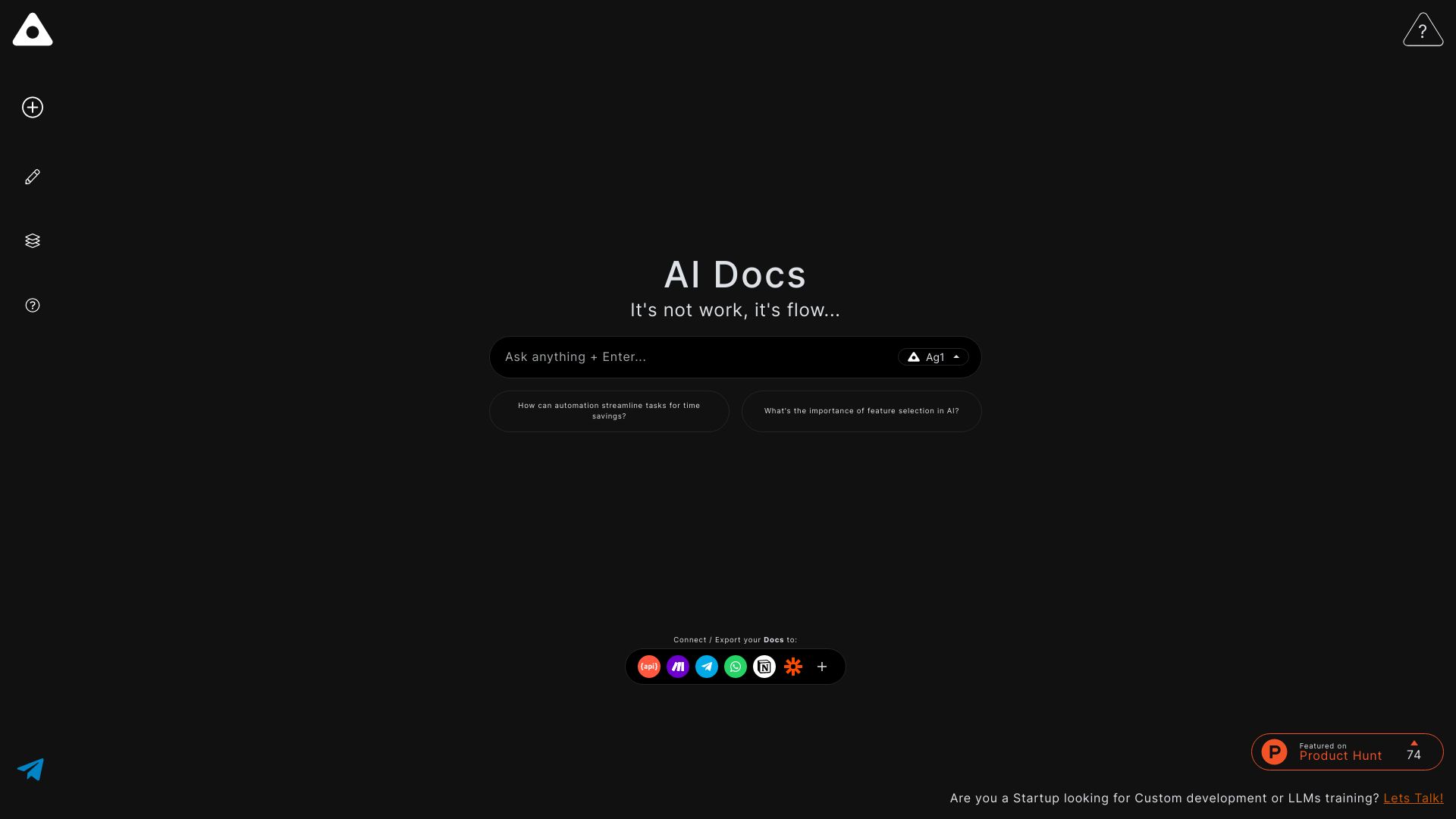
Why it matters Ag1 Labs takes a more organized approach than a basic text generator. Its AI-driven text editor, automated document structuring, and real-time data integration make it relevant to students and other users who need a document to have shape and references, not just fluent sentences. That combination could reduce the mechanical work of assembling a first draft. The important test is whether the data integration produces material you can actually inspect and cite. Treat the subscription as a productivity aid, not a replacement for reading sources or checking claims.
Best for
Students preparing structured essays and research documents
Users who want real-time data integrated into a writing workflow
Writers who need help organizing a document before polishing it
Limitations
Full access may require a subscription
Heavy reliance on AI can weaken independent thinking if used uncritically
Referenced output still needs source and accuracy checks
Shortlist signal: Add Ag1 Labs when document structure and research support are more important than creative style controls.
5. AI Storyteller

- Creative writers exploring different styles
- Free plan available
- Starts at Check vendor pricing
- Usage signal: Not listed
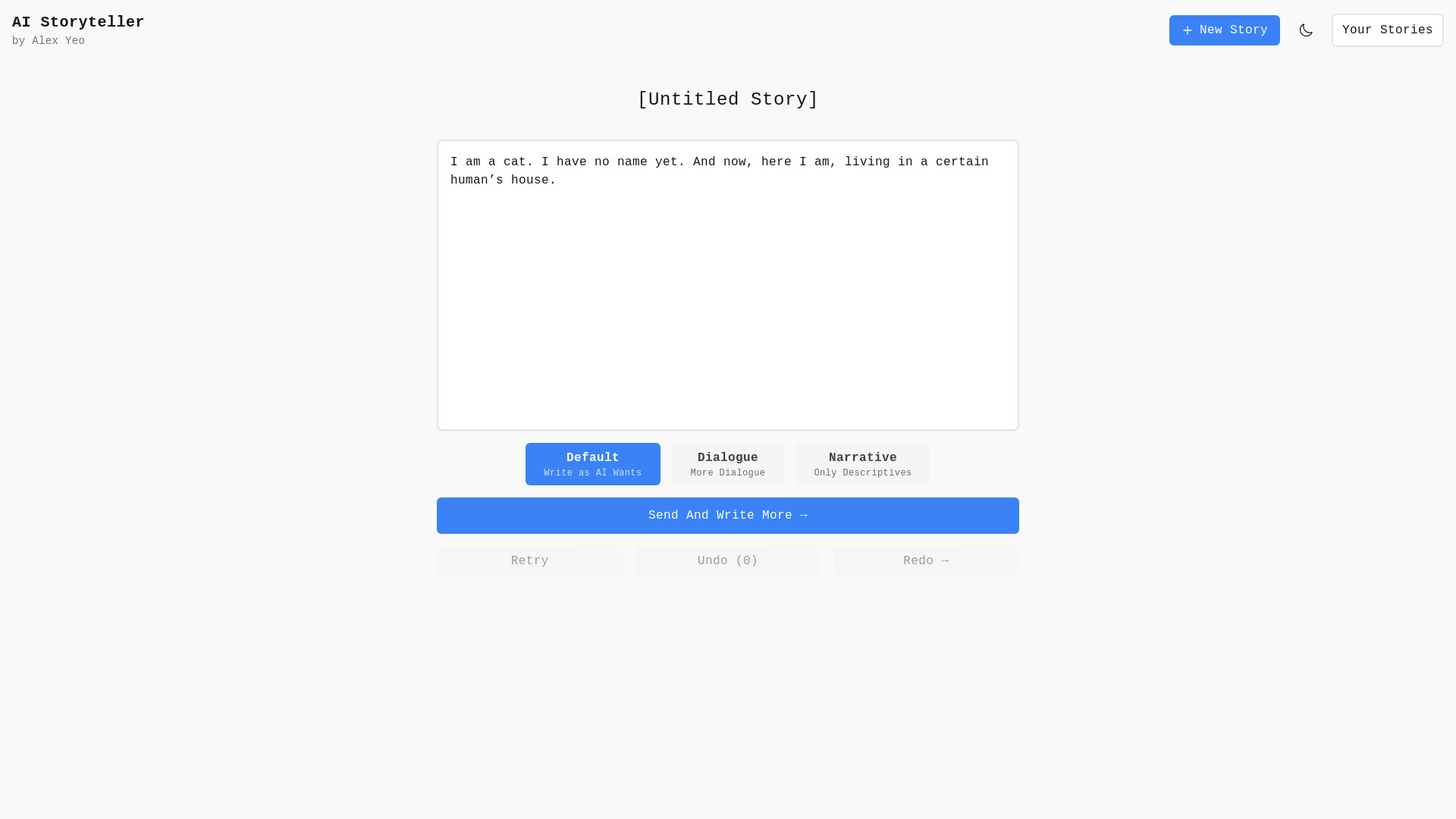
Why it matters AI Storyteller is built around the moment when a creative writer knows the scene but cannot find the right treatment. Its multiple writing styles-Dialogue, Narrative, and Descriptives-give you a simple way to explore how the same idea might read in different forms. Undo and redo functionality is especially useful in an experimental workflow because it lowers the cost of trying a variation. The product is less convincing as an automatic author than as a companion for generating options you can reshape in your own voice.
Best for
Writers developing scenes, dialogue, and descriptive passages
Creatives who want to compare multiple writing treatments
Early-stage ideation where speed matters more than final polish
Limitations
AI-generated prose may require significant editing
Customization options are not clearly extensive
Pricing details are not presented as a clean, easy-to-compare plan
Shortlist signal: Try AI Storyteller when style exploration and scene variation are your primary creative needs.
6. AI Checker

- Writers reviewing and validating drafts
- Free up to 1,000 characters
- Starts at Check vendor pricing
- Usage signal: Not listed
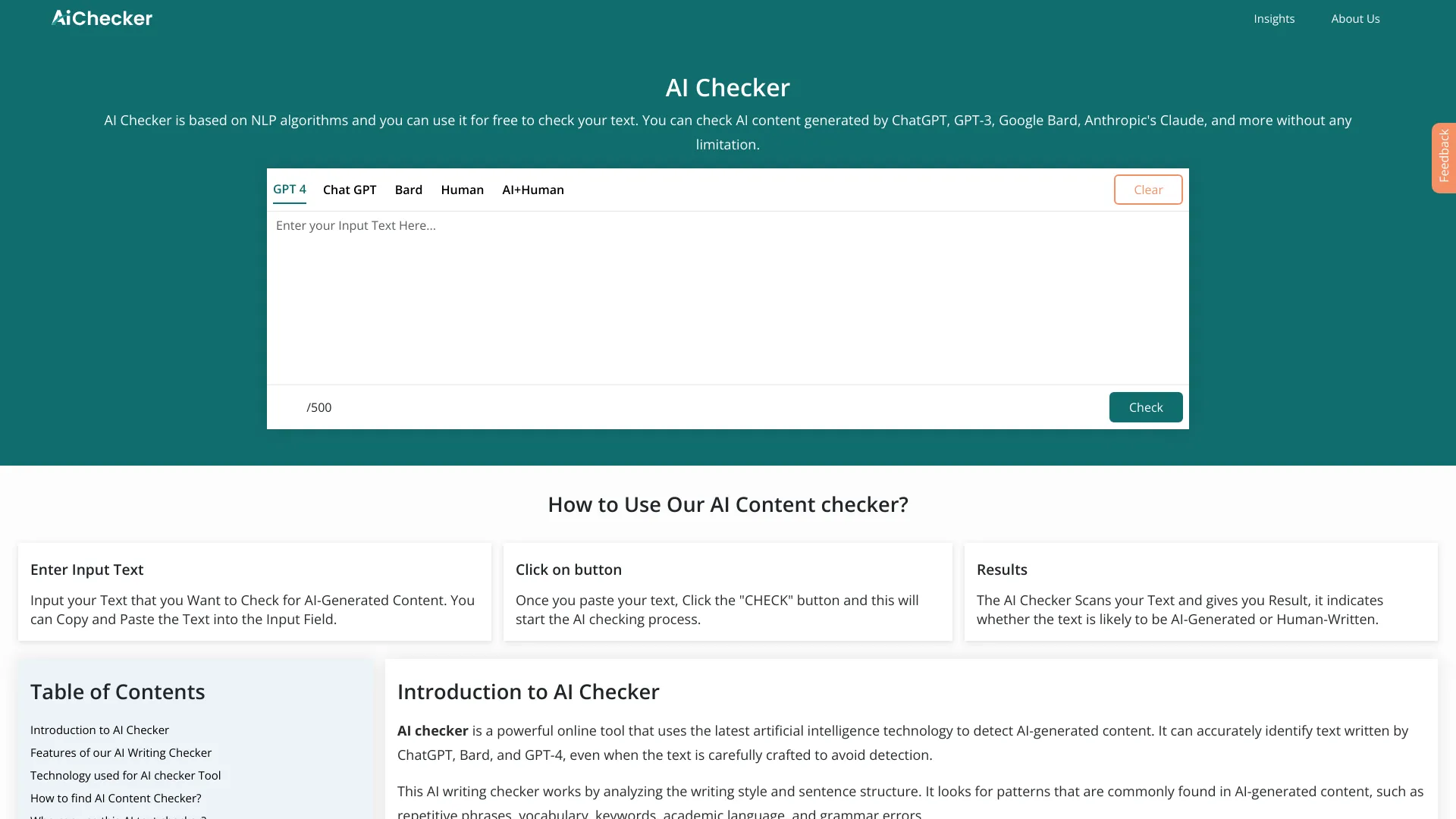
Why it matters AI Checker belongs in a different part of the writing process. It is not primarily for generating a draft; it is for examining one. AI-generated content detection, plagiarism detection, and reports that highlight potential issues can give writers a quick review layer before publication or submission. The free allowance of up to 1,000 characters makes a small test straightforward. Still, detection results should be treated as signals rather than absolute verdicts, especially for complex text, and specialized human editors remain important for high-stakes work.
Best for
Writers checking drafts before publishing or submitting them
Users who need AI-content and plagiarism checks together
Quick grammar, spelling, and punctuation review
Limitations
Effectiveness can vary with the complexity of the text
It is not a substitute for specialized human editing
Detection tools can inform a review without proving how text was created
Shortlist signal: Choose AI Checker as a final review layer, not as your main writing workspace.
7. AraMind AI

- Content creators needing a broad toolkit
- First 10K characters free
- Starts at Start for Free
- Usage signal: Not listed
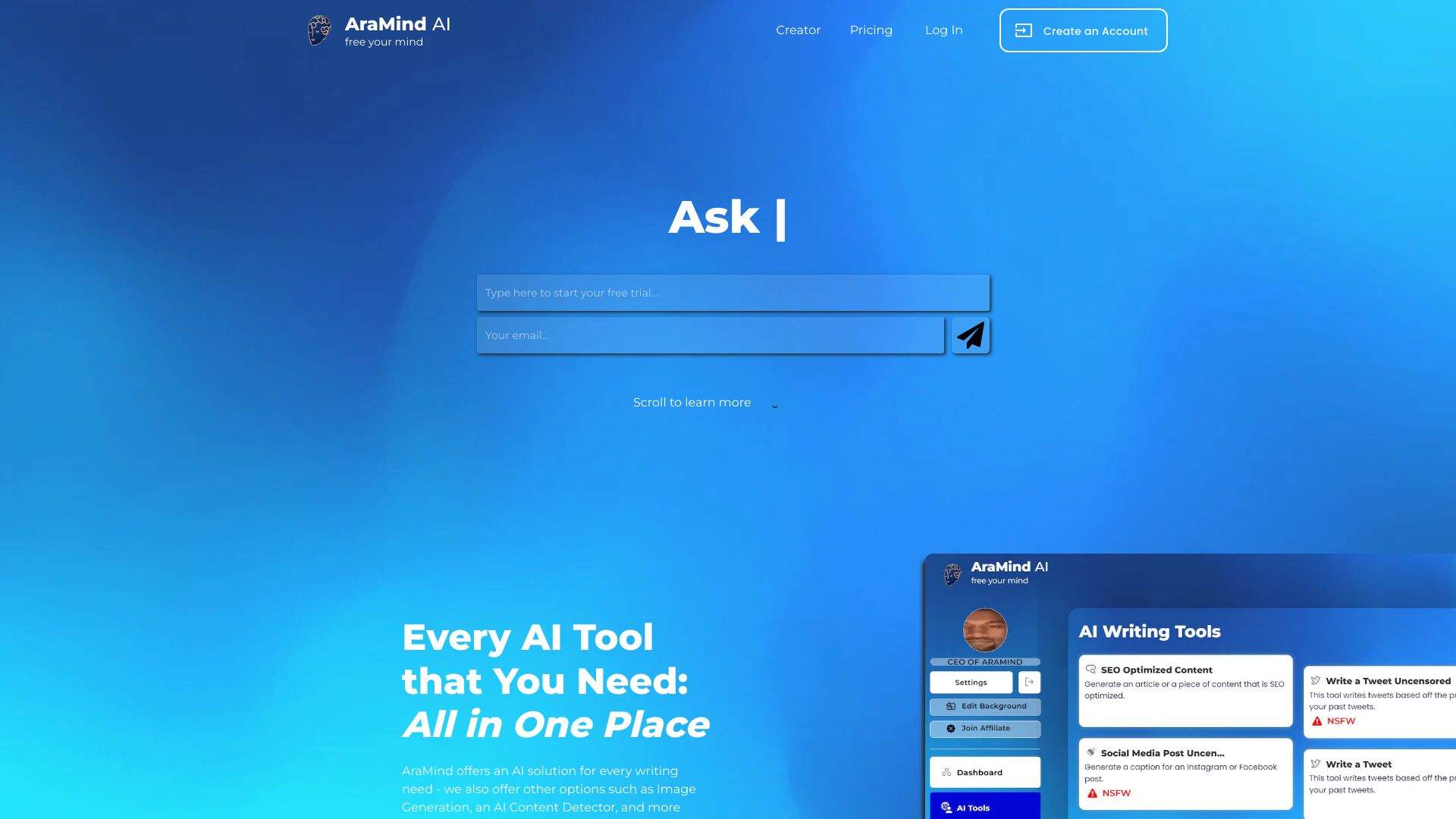
Why it matters AraMind AI is appealing when your content process crosses formats. It offers AI-powered writing tools alongside image generation and an AI content detector, so a creator can move from drafting to visual support to a basic review step without immediately adding several services. The first 10,000 characters are free, which makes the initial trial unusually concrete. The trade-off is a character-based pricing model: high-volume users need to watch consumption, and the promised social media feature is still coming rather than available today.
Best for
Content creators who need writing and image generation together
Users wanting an integrated content detector
People testing an all-in-one workflow with a generous initial allowance
Limitations
Pricing increases with character usage
The social media feature is not currently available
Broad tool coverage can mean less depth in any single writing task
Shortlist signal: Shortlist AraMind AI when one flexible content toolkit is more useful than a dedicated writing editor.
8. AuthorAI

- Authors exploring AI-assisted authoring
- Free plan available
- Starts at Check vendor pricing
- Usage signal: Not listed
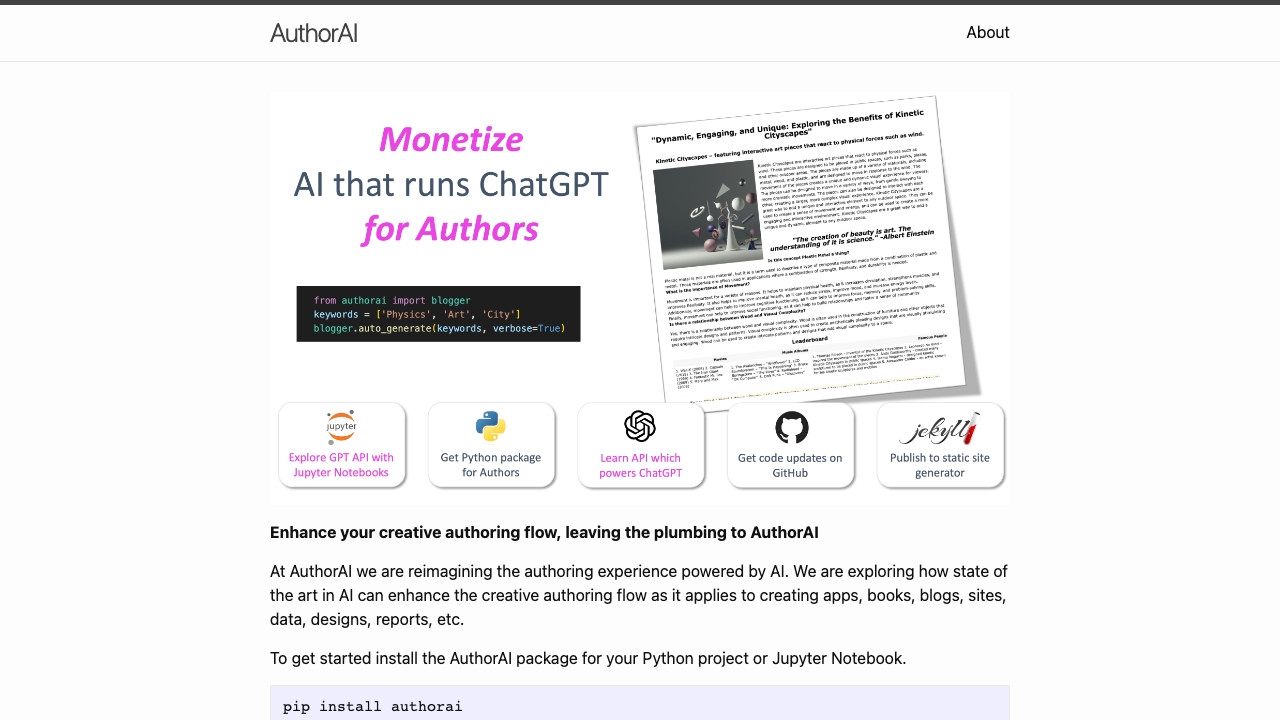
Why it matters AuthorAI has the most direct positioning for authors on this list: AI-powered authoring assistance intended to apply across content types. That broad promise may suit a writer who wants to explore how AI fits into a personal process rather than a user seeking a narrowly defined generator. However, the practical product picture is less detailed than the leaders here. Some of the surrounding page content is unrelated to writing, so I would approach it as a cautious trial and verify the actual authoring workflow before building a serious project around it.
Best for
Authors curious about AI support across different content types
Early experimentation with assisted authoring
Users willing to evaluate the workflow hands-on before committing
Limitations
Specific features and functionality are not clearly detailed
The page includes unrelated online-casino content, which creates focus concerns
There is limited evidence for customization, project structure, or pricing clarity
Shortlist signal: Consider AuthorAI only after a hands-on test confirms that its authoring tools match your project.
9. You AI Tools

- Marketers exploring task-specific widgets
- Free to try
- Starts at Check vendor pricing
- Usage signal: Not listed
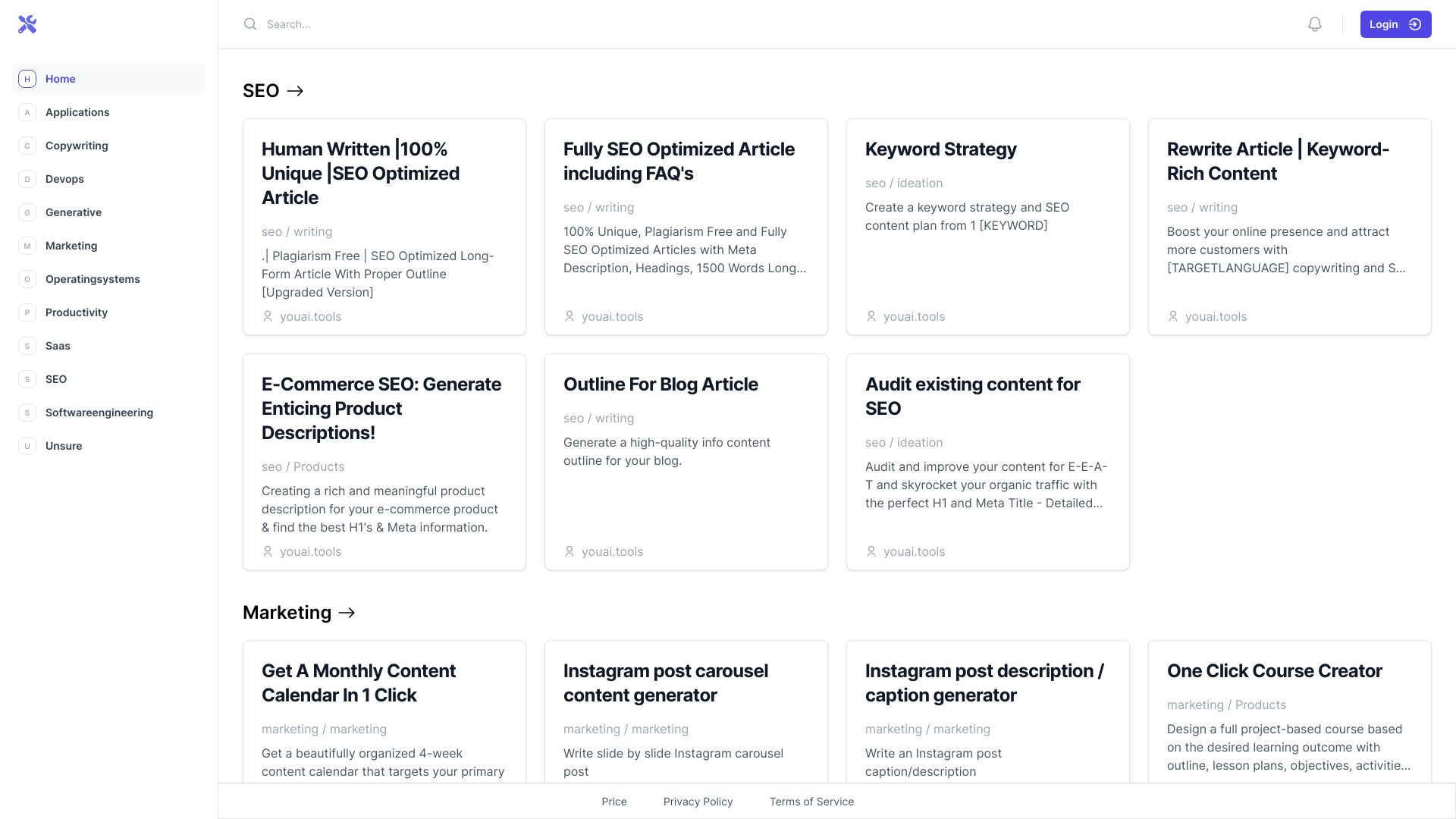
Why it matters You AI Tools works best as a collection of starting points rather than a single, opinionated writing environment. Its ChatGPT-based widgets span copywriting, DevOps, marketing, and other categories, including SEO-optimized article generation. That breadth is useful for marketers who regularly switch tasks and want to test a prompt-shaped utility without paying first. The downside is predictable: results depend on the underlying model and on your prompting skill, and a collection of widgets may not give you the continuity of a dedicated document editor.
Best for
Marketers testing different copywriting and SEO workflows
Users who prefer task-specific widgets to one large application
Curious teams that want to experiment before choosing a focused tool
Limitations
Output quality depends on the underlying ChatGPT model
Some widgets may require stronger prompting to produce useful results
The broad catalog can make repeatable project workflows less consistent
Shortlist signal: Use You AI Tools when you want free, task-specific experiments rather than a full writing production system.
10. Playground AI

- AI enthusiasts browsing broad tool collections
- Free plan available
- Starts at Check vendor pricing
- Usage signal: Not listed
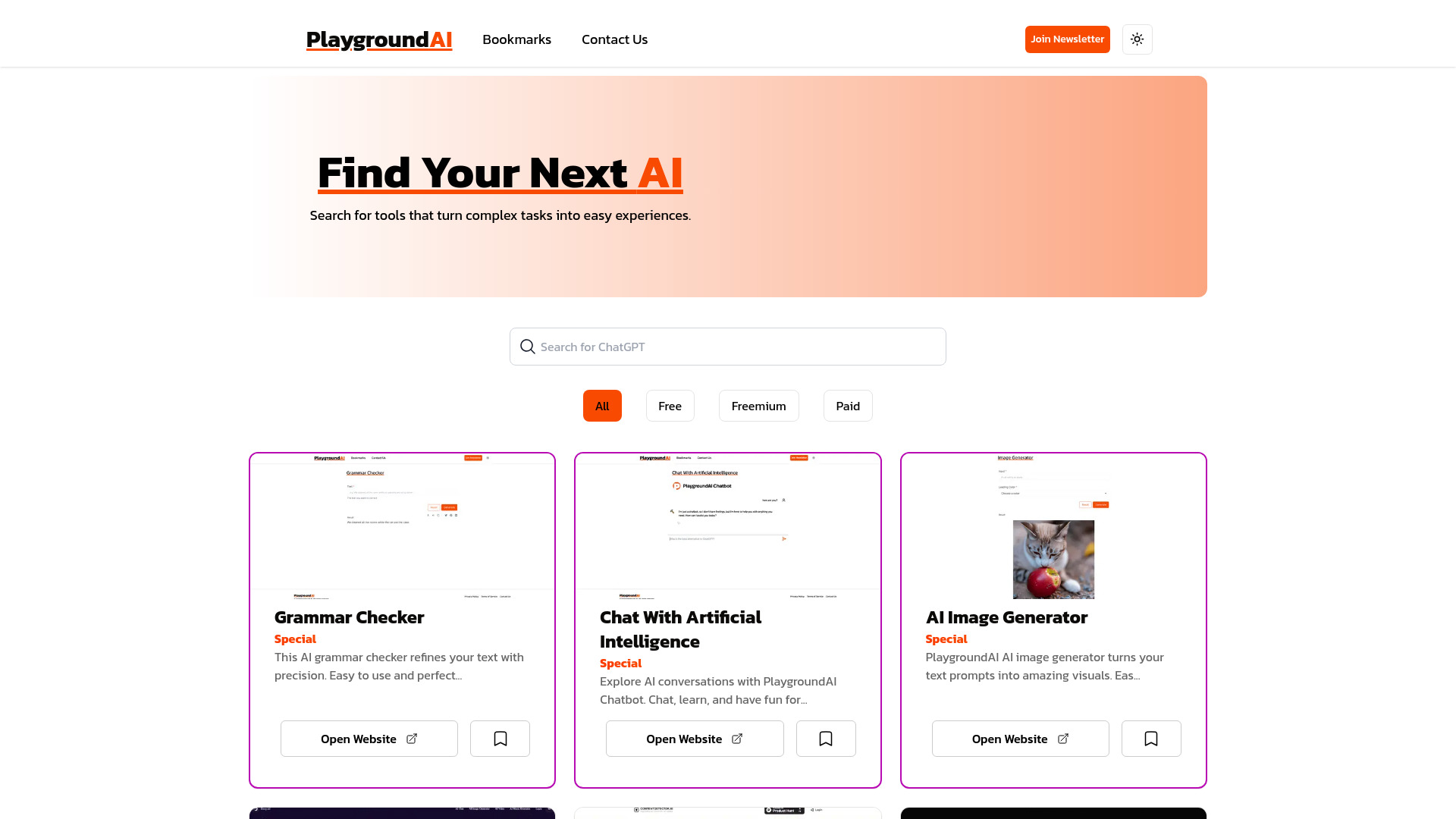
Why it matters Playground AI is the broadest discovery play in this guide. It offers a curated collection of more than 5,000 AI websites, plus an AI chatbot and AI image generator. For someone still mapping the AI landscape, that catalog can be more valuable than a narrowly focused writing app because it exposes alternatives and adjacent tools in one place. It ranks last because discovery is not the same as dependable writing execution. The quality and reliability of third-party listings can vary, and some tools may require separate subscriptions or payments.
Best for
AI enthusiasts researching many writing and content services
Users who want an approachable directory with built-in tools
Early discovery before selecting a specialized application
Limitations
The quality and reliability of listed third-party tools may vary
Some listed tools require their own subscription or payment
A large catalog does not guarantee a consistent writing workflow
Shortlist signal: Choose Playground AI for discovery and comparison, then validate any selected writing tool separately.
What to test before choosing
Run a short, repeatable test instead of judging these tools from their landing pages. Use one real assignment that includes a rough brief, a desired tone, a target length, and at least one source or set of facts. Then compare the first draft, the ease of requesting revisions, and the amount of cleanup required.
Test the editor: Can you revise in context, or must you copy text between screens?
Test instruction-following: Give the tool a structure, tone, length, and audience. See which constraints survive the draft.
Test continuity: For a book or story, ask for a second section that follows the first. Watch for contradictions.
Test evidence handling: With research-oriented tools, inspect references and confirm whether claims are traceable.
Test limits: Check character allowances, free credits, trial duration, and whether pricing scales with usage.
Test the human handoff: Ask whether the output is easy to edit, export, check, and publish in your normal workflow.
Test originality: Look for generic phrasing, repeated structures, and ideas that sound borrowed from the prompt rather than developed by you.
The most revealing metric is editing time. A tool that produces a fluent first draft but forces heavy factual and structural repairs may be slower than one that generates a rougher draft you can confidently shape.
What to do next
Start with two tools from the same workflow segment and one adjacent alternative. For example, compare Type.ai with Ag1 Labs for structured professional writing, or AI Book Writer with AI Storyteller for creative work. Give each the same assignment and record how long it takes to reach a publishable or usable result.
Before paying, open the vendor pricing page and confirm the details that matter to you: what counts as a credit or character, whether a trial converts automatically, which features sit behind a subscription, and what support channel is available. AIWriter's no-refund policy and AraMind AI's character-based pricing show why the cheapest headline price is not the whole decision.
For most readers, the practical starting order is Type.ai for general writing, AIWriter for multilingual and mixed-format content, AI Book Writer for book structure, and AI Checker as a review companion. Move toward the broader hubs only when discovery or variety is itself part of the job.
Common mistakes when choosing from a complex top list
Treating every writing tool as a drafting app: AI Checker is primarily for review, while Playground AI and You AI Tools are discovery-oriented.
Ranking by feature count alone: A long menu of widgets may be less useful than one editor that fits your daily workflow.
Ignoring the intended audience: A novelist, student, blogger, and marketer may need completely different controls and project structures.
Assuming generated prose is finished prose: Every tool here can require editing, fact-checking, or refinement; creative tools especially need human direction.
Skipping the pricing mechanics: Free credits, character allowances, trials, and no-refund policies can matter more than a low starting price.
Using detection scores as proof: AI-content detection and plagiarism checks can flag potential issues, but they should be interpreted carefully.
Confusing discovery with reliability: A directory can help you find options, but each third-party tool still needs its own quality and privacy review.
Letting the tool replace the brief: Better prompts help, but a clear audience, structure, source set, and definition of success matter just as much.
FAQ
Type.ai is the strongest overall match for writers who want an AI writing assistant and document editor in one workspace. Its 96/100 score reflects the clarity of that everyday use case. Verify the current pricing and plan limits before subscribing because the main page does not present pricing as a clean, complete summary.