
Generative search is not one neat software category yet. It spans AI visibility auditing, content production, product research, visual asset creation, and the structured experiences that help users discover answers instead of clicking through a conventional results page. To make the choice practical, I compared 7 tools for the top tools for implementing generative search experiences, then separated the genuine search-focused option from several broader platforms that can support the surrounding workflow.
Start here
For most teams, Searchify is the sensible first stop because it directly addresses visibility in AI responses. It offers an AI Search Score, actionable recommendations, and content creation without requiring sign-up for its free analysis.
The rest of the list is more specialized. Nexscope fits ecommerce teams building product and market intelligence workflows. Generor is a broad generator hub for creators. The remaining four are adjacent visual or interactive tools: useful when a generative search experience needs original images, video, 3D assets, or explorable worlds.
Quick shortlist
Best direct fit for AI search visibility: Searchify
Best ecommerce intelligence option: Nexscope
Best broad creator toolbox: Generor
Best for interactive 3D demonstrations: AI World Generator
Best for an all-in-one media workflow: Photogenerator AI
Best for exportable 3D assets: ModelGenerator
Best no-account visual experimentation: Free AI Image & Video Generator
Segment comparison
The important distinction is whether a tool measures or improves AI search presence directly, or whether it creates the data and media that make a generative search experience more useful.
| Segment | Strongest fit | What it contributes | Main caution |
|---|---|---|---|
| AI search visibility | Searchify | AI Search Score, recommendations, and content creation | Pricing and workflow limits need vendor confirmation |
| Ecommerce research | Nexscope | Product, competitor, pricing, and listing analysis | Currently in a Coming Soon / Waitlist phase |
| General content generation | Generor | Text, image, and audio generators | Some generators remain in development |
| Visual and interactive media | AI World Generator | Real-time explorable 3D worlds and promptable events | Action space and long-run memory are constrained |
| Asset production | Photogenerator AI | Images, video, audio, and virtual characters | Free plan is limited to 10 credits monthly |
Shortlist paths
A useful shortlist depends less on the headline score than on where your current workflow breaks. Start with the path that matches the job you need to complete.
| Your priority | Start with | Add if needed |
|---|---|---|
| Improve how a brand appears in AI answers | Searchify | Generor for supporting content |
| Research products and competitor positioning | Nexscope | Photogenerator AI for product media |
| Produce many kinds of content from one web app | Generor | Free AI Image & Video Generator for guest access |
| Add interactive 3D experiences to discovery journeys | AI World Generator | ModelGenerator for downloadable assets |
| Create images, video, and audio in one place | Photogenerator AI | Free AI Image & Video Generator for low-friction testing |
Ranking snapshot
Scores are useful as a first filter, not a substitute for testing. The ordering favors category relevance, practical feature coverage, audience fit, and the strength of the available usage signal.
| Rank | Tool | Best for | Score | Usage signal |
|---|---|---|---|---|
| #1 | Nexscope | Ecommerce sellers | 92/100 | 48.0K monthly visits |
| #2 | Generor | Content creators | 91/100 | 5.2K monthly visits |
| #3 | AI World Generator | Game studios | 91/100 | 3.2K monthly visits |
| #4 | Searchify | SEO professionals | 90/100 | 1.6K monthly visits |
| #5 | Photogenerator AI | Photographers | 89/100 | 22 monthly visits |
The final two are worth keeping in the comparison because they cover concrete production needs, even though they are not direct AI search optimization platforms: ModelGenerator scores 88/100, while Free AI Image & Video Generator scores 87/100. Their usage signals are not listed.
How we grouped and ranked the list
This is a complex category, so a single feature checklist would produce a misleading result. Searchify is the closest match to the core search problem, but a real implementation often needs more than a visibility score. Teams may need to investigate products, generate supporting media, or build interactive demonstrations that give AI systems and human visitors more useful material to work with.
I grouped the tools into four practical layers:
- 1
Visibility and measurement: Does the product help you understand or improve how your brand appears in AI responses?
- 2
Information and market intelligence: Can it support product research, competitor analysis, pricing analysis, or listing optimization?
- 3
Content production: Does it create text, images, audio, video, or other assets that can support a richer discovery workflow?
- 4
Interactive experiences: Can it produce explorable environments or reusable 3D assets rather than only static outputs?
The ranking then considers feature specificity, likely audience fit, stated limitations, pricing clarity, free access, and market signals such as monthly visits. A broad generator can rank well because it is useful in a supporting workflow, but it should not be mistaken for a dedicated AI search optimization platform.
Ranked field notes
1. Nexscope

- E-commerce sellers
- Early access for research, monitoring, and listing tools
- Starts at Free Trial: Free
- Usage signal: 48.0K
Why it matters
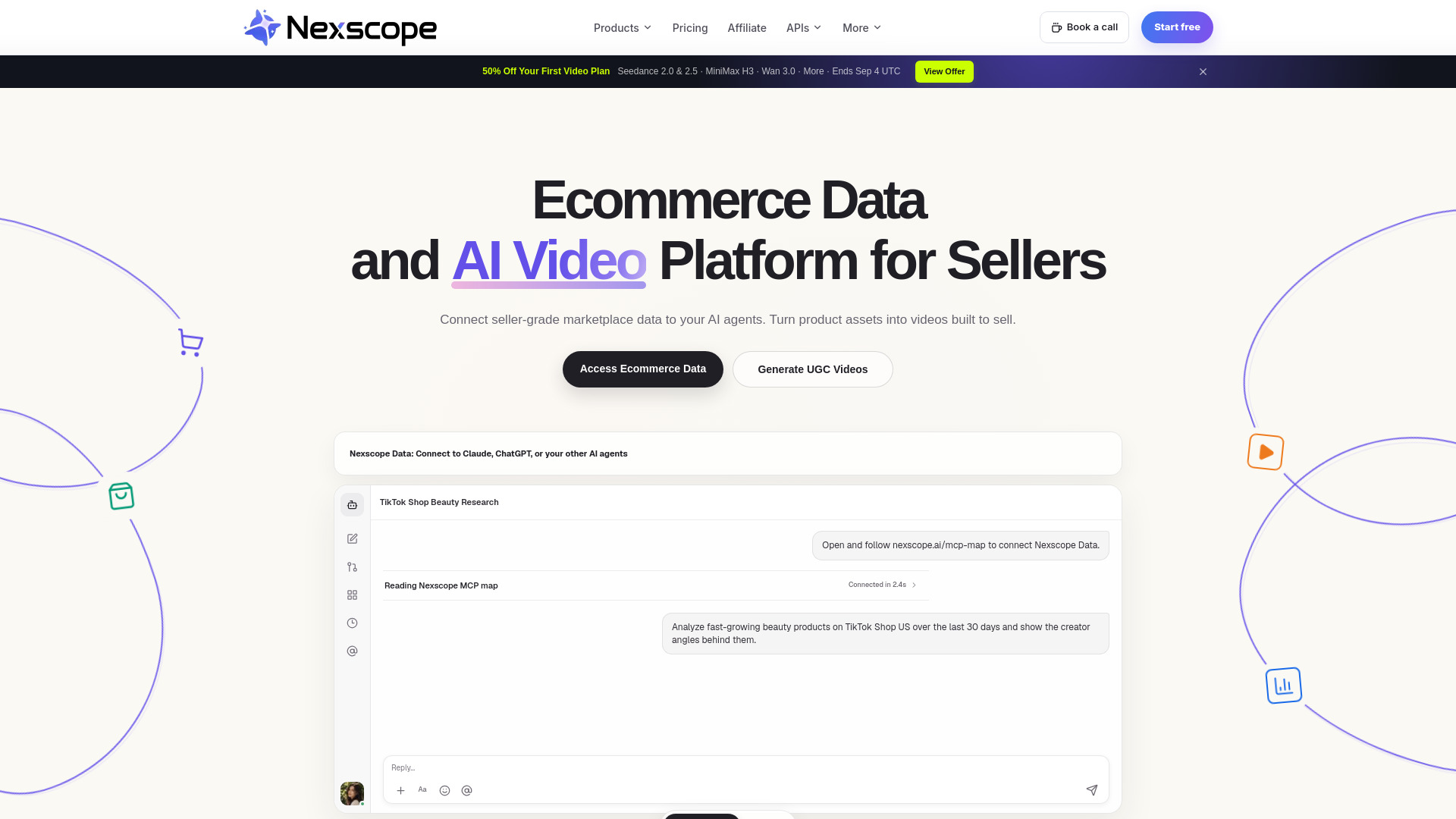
Nexscope takes the broadest view of ecommerce discovery in this guide. Its focus on multi-platform ecommerce data, product and market research, competitor analysis, pricing analysis, and listing analysis makes it a strong foundation for teams that want generative search experiences grounded in current catalog and market information. The role-based AI agents are the notable differentiator: instead of treating every task as a generic prompt, the platform consolidates several seller tools and assigns specialized expertise. That makes it easier to imagine a repeatable research-to-content workflow rather than a collection of disconnected chat sessions.
Best for
Ecommerce sellers comparing products, prices, competitors, and listings
Teams that want several seller workflows consolidated in one platform
Early adopters willing to shape a developing agent-based product
Limitations
The product is currently in a Coming Soon / Waitlist phase
The full feature set may require a learning curve to master all agents
A free trial does not remove the need to confirm live access and commercial terms
Shortlist signal: Add Nexscope when your generative search project depends on ecommerce research and market intelligence rather than SEO measurement alone.
2. Generor

- Content creators
- Generate text, images, and order products
- Starts at Basic: $15
- Usage signal: 5.2K
Why it matters
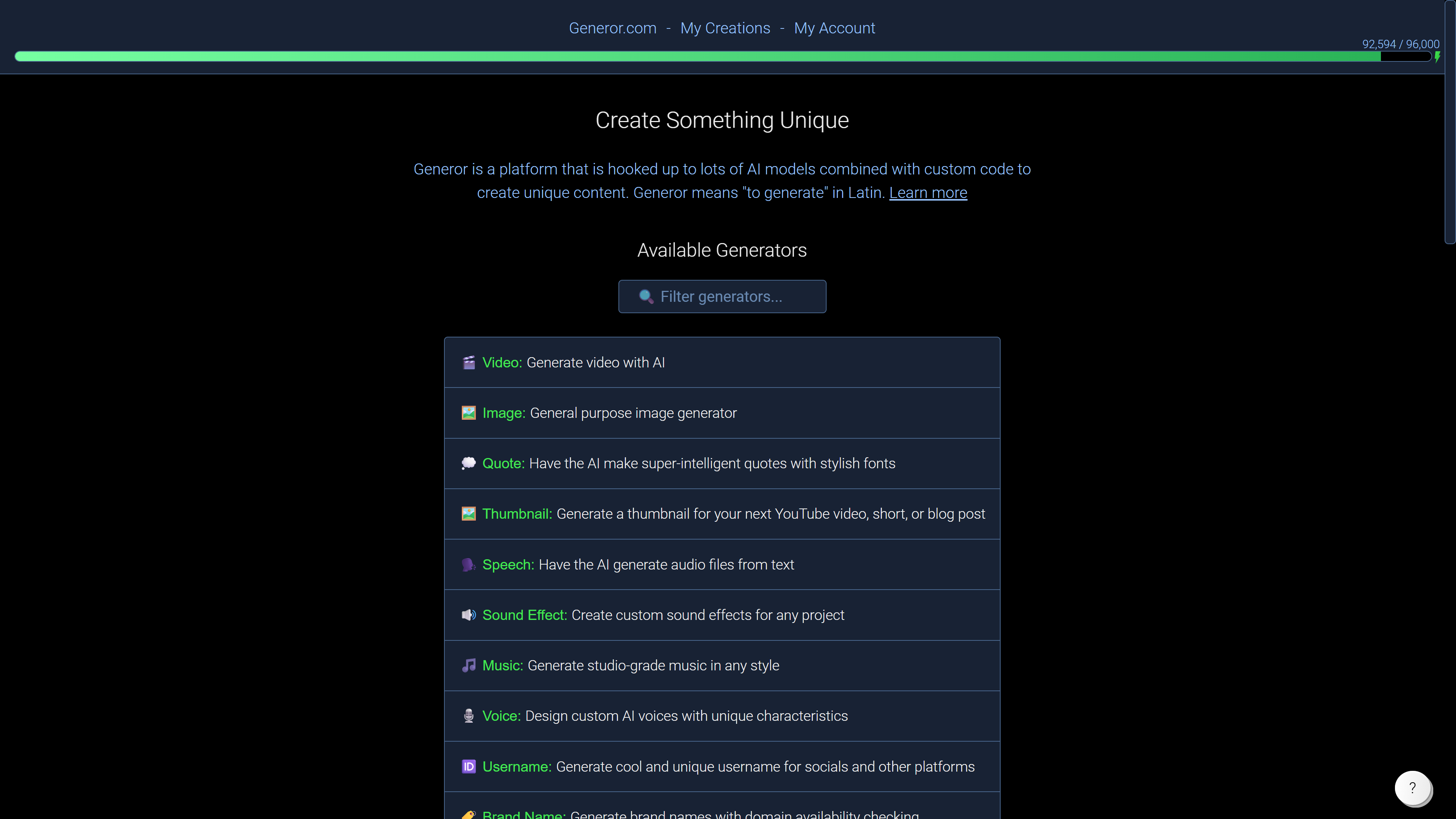
Generor is useful when your implementation needs a steady stream of different asset types instead of one narrow generator. The web app brings together text, image, and audio generation, with API connections for product ordering. That breadth makes it a practical companion for editorial teams, campaign builders, and creators assembling the content layer around a generative search experience. The easy-to-use interface should reduce the friction of trying several workflows, although the product's breadth also means you will need to check which generators are mature enough for production.
Best for
Content creators producing text, image, and audio variations
Small teams that prefer one web app over multiple specialized tools
Experiments that may connect generated content to product ordering
Limitations
Some generators are still in development
Reliance on external APIs can affect workflow consistency
The wide feature set may be less useful if you only need AI search analytics
Shortlist signal: Choose Generor when content variety matters more than a dedicated visibility dashboard.
3. AI World Generator

- Game studios
- 6 world builder credits free
- Starts at From $9.9/month
- Usage signal: 3.2K
Why it matters
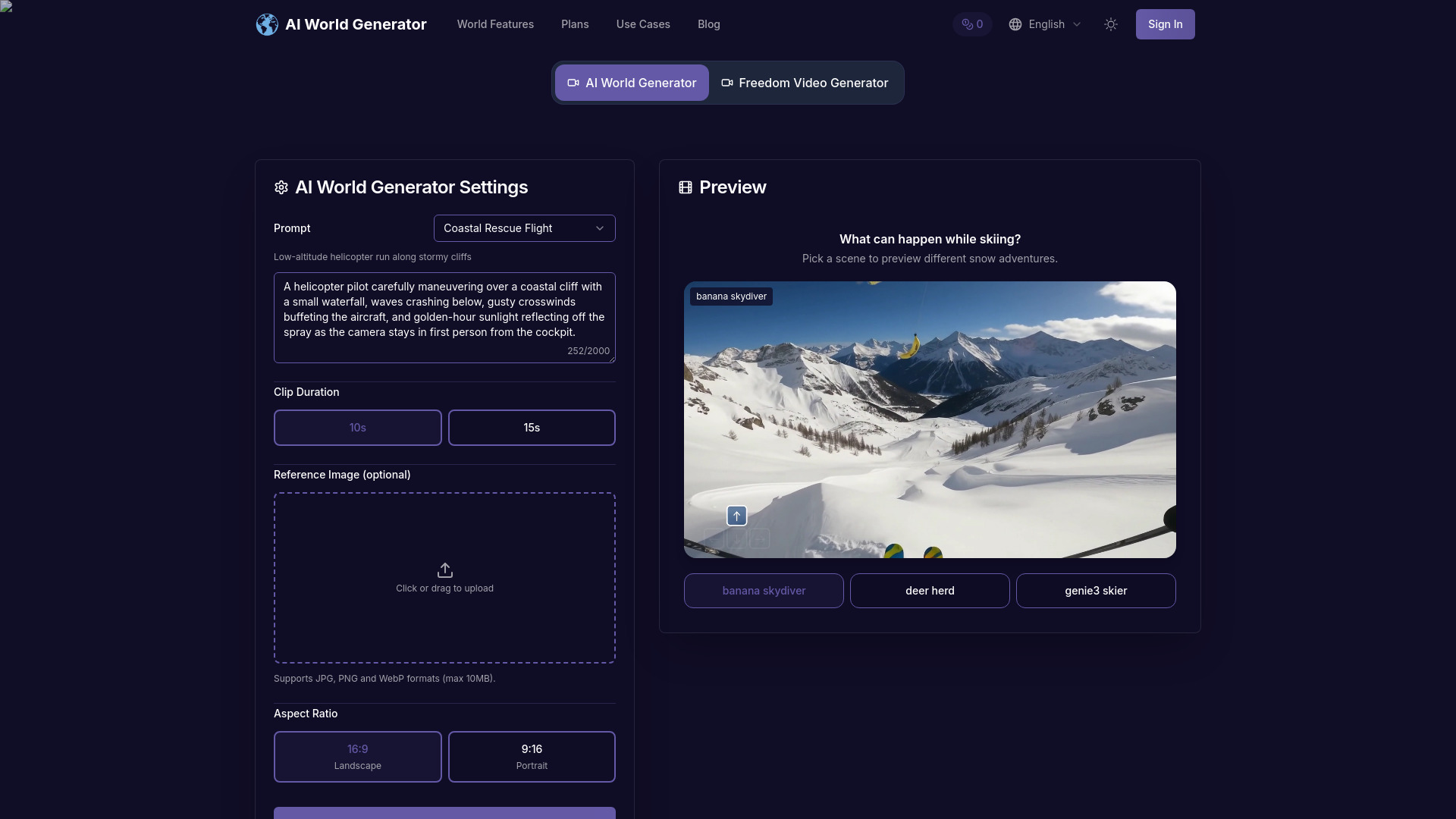
AI World Generator belongs on this list for teams exploring search experiences that need to be experienced, not merely read. Its interactive text-to-world engine generates explorable spaces in seconds, while persistent world memory maintains spatial continuity and narrative state for several minutes. Promptable world events let users trigger changes such as weather, lighting, or characters with natural language. That combination could support a product showcase, game discovery flow, or immersive answer format where the visitor explores a concept directly.
Best for
Game studios prototyping explorable environments
Teams testing interactive, natural-language product or world demonstrations
Projects where continuity across a short session matters
Limitations
World memory eventually fades during extremely long runs, causing gradual drift
The action space remains constrained
Multi-agent choreography is still experimental
Shortlist signal: Add AI World Generator when an interactive 3D environment is part of the experience you want users to discover.
4. Searchify

- SEO professionals
- Free analysis; no sign-up required
- Starts at Check vendor pricing
- Usage signal: 1.6K
Why it matters
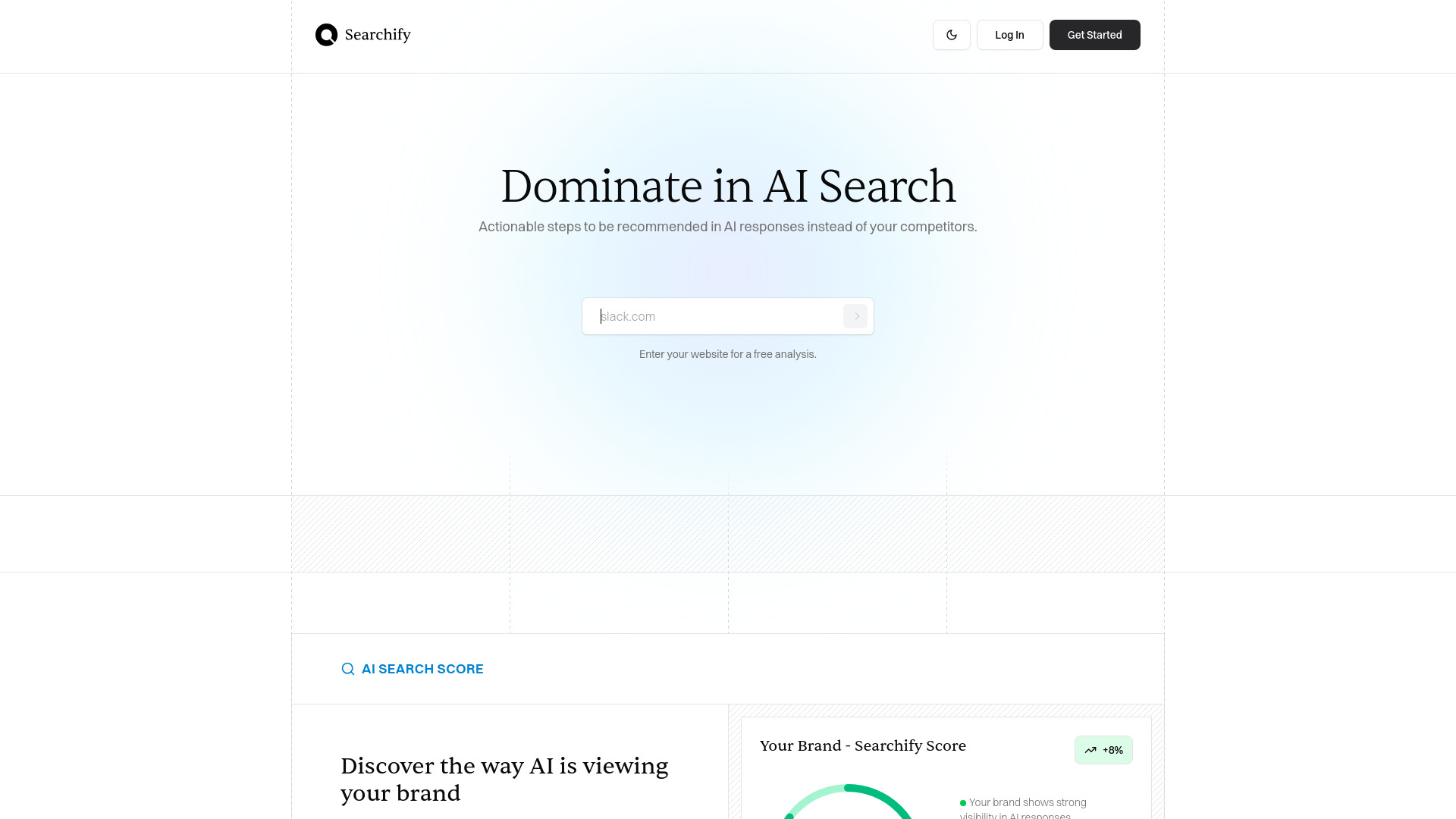
Searchify is the clearest direct answer for teams trying to understand and improve their appearance in AI responses. The AI Search Score gives the workflow a measurable starting point, while its actionable recommendations translate visibility findings into specific next steps. Content creation is included as well, which helps bridge the gap between diagnosing a weak presence and producing material intended to improve it. The no-sign-up free analysis is particularly useful during early vendor evaluation, though buyers should confirm current pricing and workflow limits before building an ongoing process around it.
Best for
SEO professionals monitoring AI search visibility
Marketing teams that need recommendations rather than raw reporting
Initial audits where a no-sign-up analysis lowers evaluation friction
Limitations
Pricing details are hidden behind the vendor's current commercial flow
You should check current product fit, pricing, and workflow limits before committing
It is less suited to teams primarily seeking 3D, video, or audio production
Shortlist signal: Make Searchify your first test when the primary question is how your brand is represented in AI-generated answers.
5. Photogenerator AI

- Photographers
- 10 credits per month
- Starts at From $8.3/month
- Usage signal: 22
Why it matters
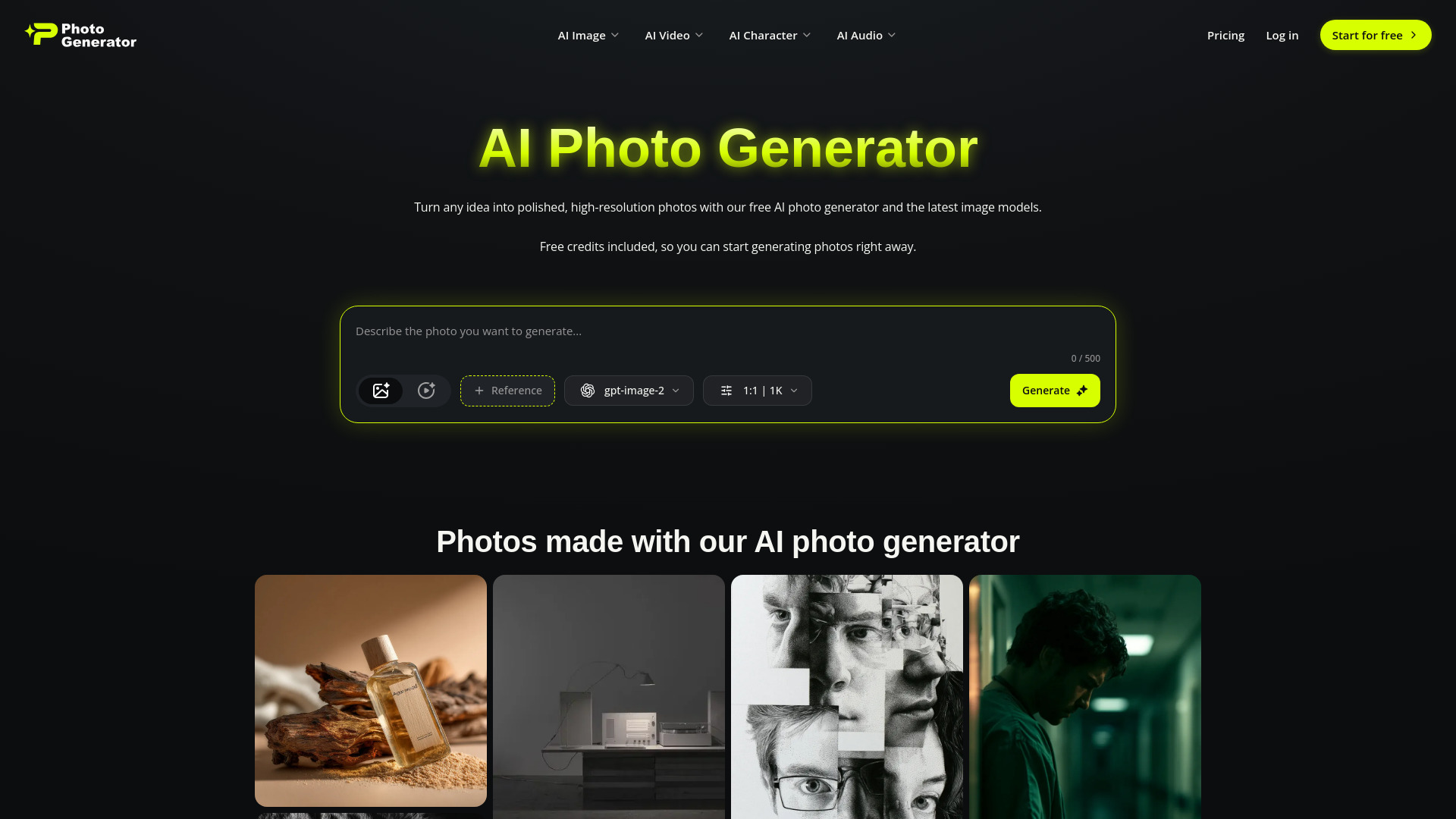
Photogenerator AI is a broad production suite rather than a search analytics product, but that distinction is exactly why it can help certain teams. Its cinematic video suite covers text-to-video, frame-to-video, Smart Shot planning, Motion Sync, and video upscaling. Image tools add high-resolution text-to-image, image-to-image editing, face swap, and 4K upscaling. Custom AI audio generation rounds out the workflow with music, voice-overs, and voice cloning. For a team building rich landing pages, product explainers, or visual answers, having those media modes together can reduce tool switching.
Best for
Photographers and creators producing mixed image, video, and audio assets
Teams that need cinematic planning alongside generation and editing
Visual content workflows that benefit from several leading AI models
Limitations
The free plan is limited to 10 credits per month
Free access requires login
Its broad media feature set does not replace dedicated AI search measurement
Shortlist signal: Choose Photogenerator AI when the missing piece in your discovery workflow is original, multi-format media.
6. ModelGenerator

- Game developers
- Free access available
- Starts at Check vendor pricing
- Usage signal: Not listed
Why it matters
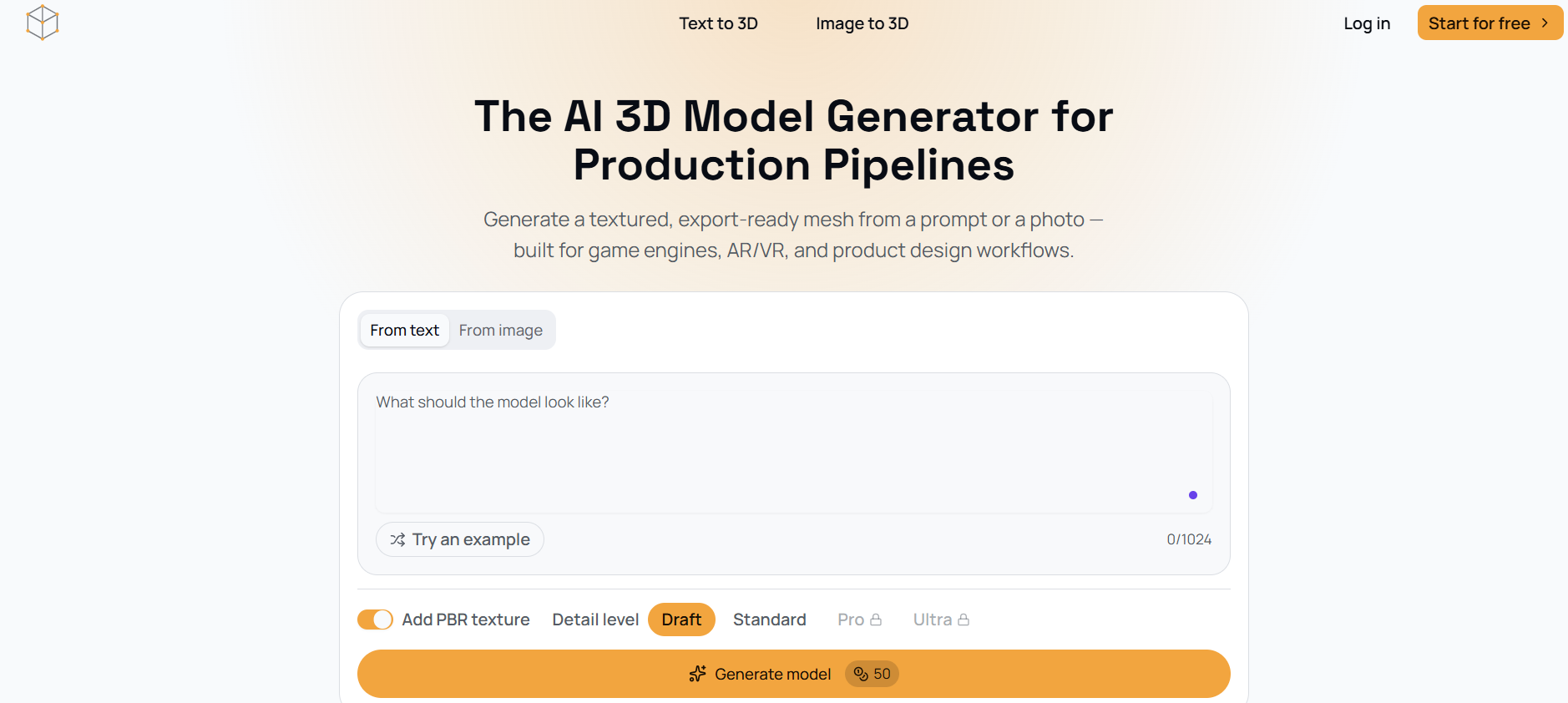
ModelGenerator focuses on a concrete asset problem: turning text prompts or photos into textured 3D models. The ability to export standard GLB files with PBR materials gives the output a clearer destination than a purely visual preview. That matters for game developers and teams creating interactive product pages, virtual showrooms, or explorable search results. Adjustable mesh density is also useful when balancing visual detail against downstream performance, although demanding production pipelines may still need additional refinement.
Best for
Game developers creating initial 3D assets from text or images
Teams building interactive product demonstrations
Workflows that need textured GLB exports with PBR materials
Limitations
The website does not provide detailed pricing or package information
Generated meshes may require additional refinement for demanding production pipelines
It is an asset-generation tool, not a platform for tracking AI search visibility
Shortlist signal: Add ModelGenerator when your generative search experience needs reusable 3D files rather than only generated copy or images.
7. Free AI Image & Video Generator

- Content creators
- 3 free images and 1 free video per day
- Starts at Basic Monthly: $19/month
- Usage signal: Not listed

Why it matters
The appeal here is simple: you can test image and video generation without creating an account. Guests receive three free image generations and one free video generation per day, while the product supports text-to-image, image-to-image, and AI video generation with multiple models, resolutions, and durations. Watermark-free image downloads make the free tier more practical for early prototypes. This is a useful low-friction way to create supporting visual material, but advanced models and continued generation require credits, so it is better suited to experimentation than an unplanned high-volume pipeline.
Best for
Content creators testing visual concepts without account setup
Small teams comparing image and video generation workflows
Early prototypes that can work within daily quotas
Limitations
Free usage is limited to daily quotas
Advanced models and continued generation require credits
It is not a direct substitute for AI search scoring or recommendations
Shortlist signal: Try this first when you need quick, no-account visual experiments before choosing a larger media workflow.
What to test before choosing
A credible generative search implementation needs more than an attractive output. Run the same small test across the tools that survive your initial shortlist.
1. Test the full path from input to useful answer
Give each candidate one real task, not a generic prompt. For Searchify, start with a brand or product and inspect whether its AI Search Score and recommendations point to actions your team can actually take. For Nexscope, use a real product category and check whether the research, competitor, pricing, and listing views answer the questions your merchandising team asks every week.
2. Separate creation from measurement
Generor, Photogenerator AI, ModelGenerator, and Free AI Image & Video Generator can create assets. That does not mean they measure whether those assets improve AI visibility. Keep a separate success criterion for discovery performance, and avoid selecting a media generator simply because its demo looks polished.
3. Check the free workflow honestly
Record what is available before payment, whether login is required, and where quotas begin. Photogenerator AI includes 10 monthly credits but requires login. Free AI Image & Video Generator offers guest access but limits free use daily. Searchify offers free analysis without sign-up. Those are very different evaluation experiences.
4. Inspect the handoff
For 3D workflows, verify whether the result can leave the tool in a format your team can use. ModelGenerator exports GLB files with PBR materials, while AI World Generator focuses on real-time explorable worlds. For content workflows, check whether the output can move into your existing publishing, catalog, or campaign process without repeated manual cleanup.
5. Test failure modes, not just successful generations
Run ambiguous prompts, revisions, and longer sessions. AI World Generator's persistent memory can maintain continuity for several minutes, but world memory eventually fades in extremely long runs. ModelGenerator outputs may need refinement. Generor relies on external APIs. Those limitations are easier to understand during a controlled test than after a project has already adopted the tool.
What to do next
Start with one narrow implementation brief. If your goal is to improve how a company appears in AI answers, test Searchify first and document the recommendations it produces. If your goal is an ecommerce assistant or product discovery layer, evaluate Nexscope alongside your existing catalog and competitor research process.
Then add only the supporting tools you can justify. Generor or Photogenerator AI may fill a content gap; ModelGenerator or AI World Generator may support an interactive 3D concept. Do not buy all 7 simply because they appear in one comparison. The strongest stack is usually one measurement tool plus one production tool that addresses a specific bottleneck.
Finally, set a review checkpoint after the first real workflow. Compare the time required, the amount of manual cleanup, the usefulness of the result, and the cost of continuing beyond free access. That evidence will tell you more than a feature count.
Common mistakes when choosing from a complex top list
Treating every tool as an AI search platform
Only Searchify directly centers on AI search visibility in this comparison. Nexscope addresses ecommerce intelligence, while the other tools mainly support content, visual, or interactive production. That does not make them irrelevant; it means they solve different layers of the implementation.
Ranking by score alone
A 92/100 tool can still be the wrong purchase if it is in a waitlist phase or aimed at ecommerce sellers. A lower-ranked tool may be the better choice when you need downloadable 3D assets, guest access, or a particular media format.
Ignoring access friction
Free access is not interchangeable. A daily quota, monthly credit allowance, free analysis, and early access program each create a different buying path. Confirm whether login, credits, or a sales conversation appears before your team can test the workflow you care about.
Confusing a good demo with a repeatable process
A single impressive image or world does not prove that a tool fits weekly production. Test revisions, exports, consistency, and handoffs. The tool should make the complete job easier, not just the first generation more interesting.
Skipping vendor verification
Pricing and product limits change. Searchify and ModelGenerator require a direct pricing check here, while Nexscope's current access is tied to early access. Verify live terms with the vendor before committing budget or promising a delivery timeline.
FAQ
Searchify is the closest direct match because it offers an AI Search Score, actionable recommendations, and content creation aimed at improving visibility in AI responses. It is the first tool to test when measurement and optimization are the primary goals.