
The top reviewed generative ai applications are not one neat product category. Some give developers a unified gateway to text, image, and video models; others turn models into web apps, organize thousands of specialist tools, or help executives understand where generative AI fits. I compared 10 tools across those segments so you can build a useful shortlist instead of picking the biggest name by habit.
Start here
Start with the workflow you need to improve, not the most impressive feature list. Agnes AI is the strongest general-purpose option for developers who want multimodal model access through one gateway. Genera.so is more focused on turning models into image applications, while Symph AI and AnyGen AI target teams building business-facing apps and chatbots without starting from scratch.
For content teams, Genbaz offers a very broad tool and agent library, although its breadth deserves a careful fit check. JoyAI makes more sense when the work already lives in business applications and needs embedded co-pilots. Executives who need orientation rather than software should look at ExecutiveGuide.ai. Finally, ReReview AI, Daily Tech AI, and ReviewTools.AI are discovery products: useful when the hard part is finding and comparing applications rather than generating an asset directly.
| Need | Best starting point | Why it belongs on the shortlist |
|---|---|---|
| Build with multiple AI models | Agnes AI | Unified gateway with text, image, and video capabilities |
| Create image-focused AI applications | Genera.so | Hosts generative image applications, including interior and architectural use cases |
| Browse a wide range of specialist tools | Genbaz | More than 40,000 specialized AI tools and thousands of agents |
| Build a chatbot with private or business data | AnyGen AI | No-code/low-code chatbot building with a unified LLM interface |
| Add AI co-pilots to work software | JoyAI | Supports JavaScript, browser extensions, and business applications |
The remaining picks are not filler. They cover the surrounding decisions that often determine whether an AI initiative gets used: understanding the market, discovering a credible tool, deploying a simple app, and aligning leadership around real use cases.
Segment comparison
The list spans four practical segments. This matters because a directory, a model gateway, and an executive guide should not be judged by the same yardstick.
| Segment | Strongest fit | What to compare | Watch for |
|---|---|---|---|
| Model access and app infrastructure | Agnes AI; Genera.so | Model breadth, speed, deployment path | Quotas, beta stability, and customization effort |
| Business app and chatbot building | Symph AI; AnyGen AI | No-code depth, data handling, extensibility | Pricing clarity and technical requirements for advanced work |
| Content and workflow execution | Genbaz; JoyAI | Breadth, automation, embedding, task speed | Product fit can vary widely across use cases |
| Research and tool discovery | ReReview AI; Daily Tech AI; ReviewTools.AI | Filtering, recommendations, freshness, coverage | Large catalogs can create more choice than certainty |
| Executive enablement | ExecutiveGuide.ai | Practical examples, concise guidance, decision support | It is a purchased PDF guide, not an application platform |
This comparison also explains why the scores sit close together. A 92-point no-code builder is not necessarily better than a 92-point tool directory; it is better for a different job. The ranking reflects usefulness within each segment, then overall shortlist value for a reader comparing complex options.
Shortlist paths
Use these paths to narrow the field before opening pricing pages or scheduling a demo.
| Your situation | Shortlist | Decision question |
|---|---|---|
| You are a developer evaluating model infrastructure | Agnes AI, Genera.so | Do you need API access across modalities or a hosted image application? |
| You need an internal or customer-facing business app | Symph AI, AnyGen AI | Will a no-code builder cover the workflow, or will data-aware chatbot control matter more? |
| You produce content across many formats | Genbaz, JoyAI | Do you need a large tool library or automation inside existing work software? |
| You are researching the AI market | ReReview AI, Daily Tech AI, ReviewTools.AI | Is personalized guidance more valuable than a broad, searchable catalog? |
| You need leadership-ready context | ExecutiveGuide.ai | Will a concise market overview and practical case studies answer the immediate question? |
A good shortlist usually contains two or three products, not all 10. Keep one broad option and one focused option in the running, then test the same workflow in each. That exposes the difference between a compelling landing page and a tool your team can actually operate.
Ranking snapshot
| Rank | Tool | Score | Best for | Starting price |
|---|---|---|---|---|
| #1 | Agnes AI | 95/100 | Software developers | Free API: Free |
| #2 | Genera.so | 93/100 | Model makers | Check vendor pricing |
| #3 | Genbaz | 92/100 | Content creators | Check vendor pricing |
| #4 | Symph AI | 92/100 | Businesses | Check vendor pricing |
| #5 | AnyGen AI | 92/100 | Chief data scientists | Check vendor pricing |
| #6 | ExecutiveGuide.ai | 92/100 | C-level executives | Ebook: $249 + VAT |
| #7 | ReReview AI | 91/100 | Product marketing | Check vendor pricing |
| #8 | JoyAI | 90/100 | Marketing teams | Starter: $25.00 monthly |
| #9 | Daily Tech AI | 89/100 | Content creators | Check vendor pricing |
| #10 | ReviewTools.AI | 89/100 | Marketers | Check vendor pricing |
How we grouped and ranked the list
I grouped the applications by the job they help complete: accessing models, hosting or building applications, executing content and business tasks, discovering other tools, and educating decision-makers. That prevents a large directory from automatically beating a focused developer platform simply because it lists more products.
The score combines three lenses. Feature depth asks whether the tool has a meaningful capability beyond a generic AI interface. Audience fit asks whether the product has a clear reason to exist for its stated users. Market signal uses the available traffic or usage indicator as a practical sign of attention, not as proof of quality. The final ranking also accounts for friction: unclear pricing, beta status, quotas, limited formats, and technical setup all affect how quickly a buyer can validate the product.
That methodology favors tools with a clear next step. Agnes AI scores highest because it joins multimodal capability with a unified AI gateway and free API access. The lower-ranked directories remain useful, but they require more judgment from the buyer because breadth does not guarantee depth, reviews, or a perfect match.
Ranked field notes
1. Agnes AI

- Software developers
- Free API access to frontier models
- Starts at Free API: Free
- Usage signal: 907.0K
Why it matters
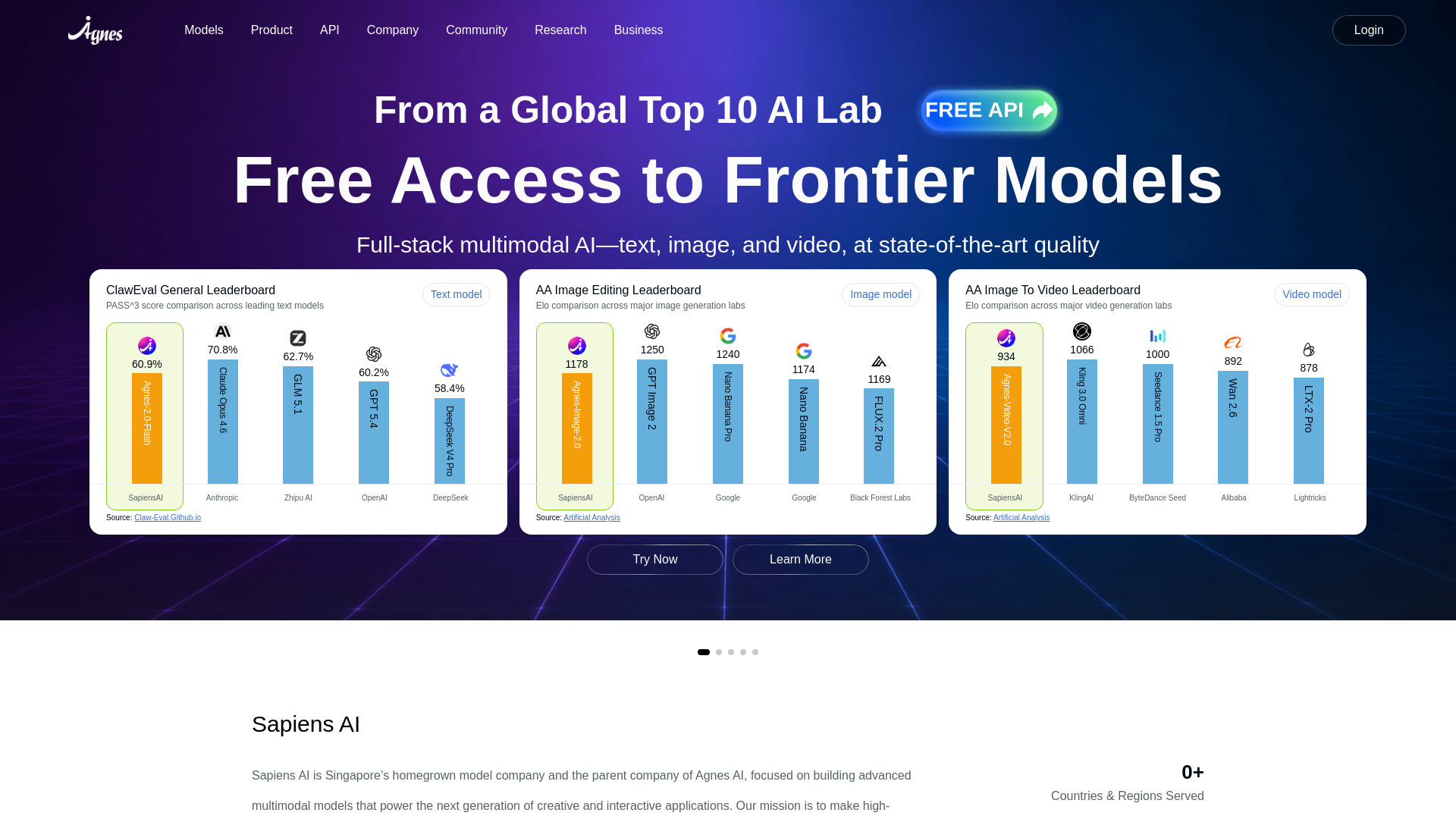
Agnes AI is the clearest all-rounder in this field because it treats generative AI as an infrastructure problem rather than a single-purpose prompt box. Its unified AI gateway brings together text, image, and video generation, while the Agnes-2.0-Flash model is described as reaching up to 150 TPS. That combination gives developers a practical starting point for experimenting with multiple AI applications without stitching every model provider together immediately. Free API access to frontier models strengthens the case for prototyping, especially when a team wants to test a multimodal workflow before committing to a larger build.
Best for
Developers prototyping text, image, and video workflows
Teams that want one gateway for multiple AI applications
Builders who value a free API entry point and high-speed model access
Limitations
Image and video generation rank slightly below leading services such as OpenAI and Kling on Elo leaderboards
Paid request quotas are tied to specific five-hour windows
It is better suited to technical builders than nontechnical content teams
Shortlist signal: Add Agnes AI when you want broad multimodal API access and a credible place to prototype several AI workflows.
2. Genera.so

- Model makers
- Free plan available
- Starts at Check vendor pricing
- Usage signal: 3.2K
Why it matters
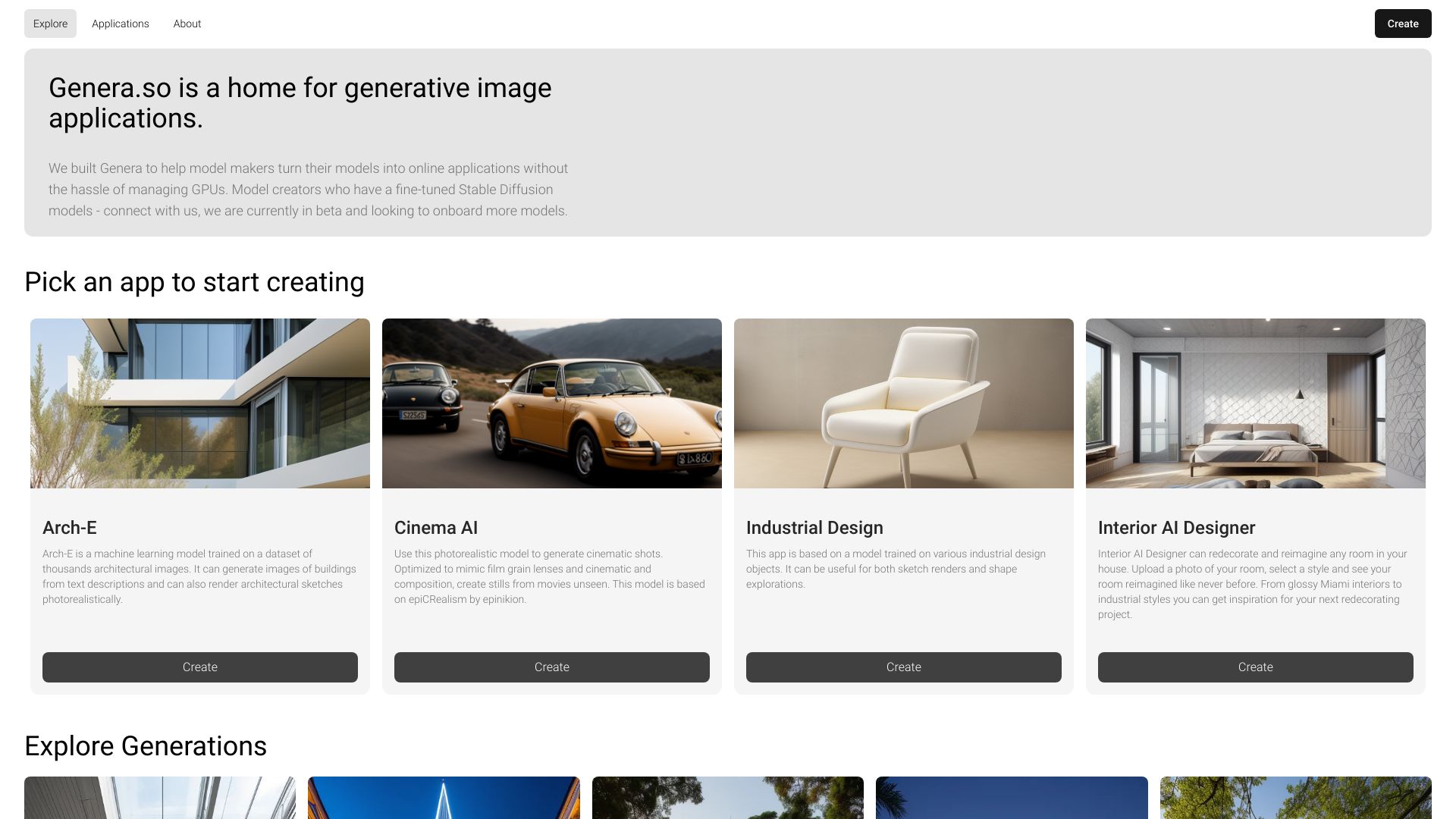
Genera.so focuses on the step many model makers struggle with: turning an AI model into something people can use online. Its generative image application hosting is complemented by Bau for AI interior design and Arch-E for architectural image generation. Those examples give the platform a more tangible shape than a generic model marketplace. It is especially interesting for a creator or technical team that wants to package visual generation into a dedicated application rather than ask users to navigate a raw model interface.
Best for
Model makers packaging generative image experiences
Interior design and architecture workflows
Teams testing specialized visual applications
Limitations
The product is currently in beta, so stability and feature coverage deserve testing
Results depend heavily on the quality and training of the underlying models
Pricing is hidden behind a sales or product-information gap, so confirm the commercial path early
Shortlist signal: Choose Genera.so when the goal is to host a focused image application, not simply call a general-purpose model.
3. Genbaz

- Content creators
- 40,000+ specialized tools and commercial rights
- Starts at Check vendor pricing
- Usage signal: 35.0K
Why it matters
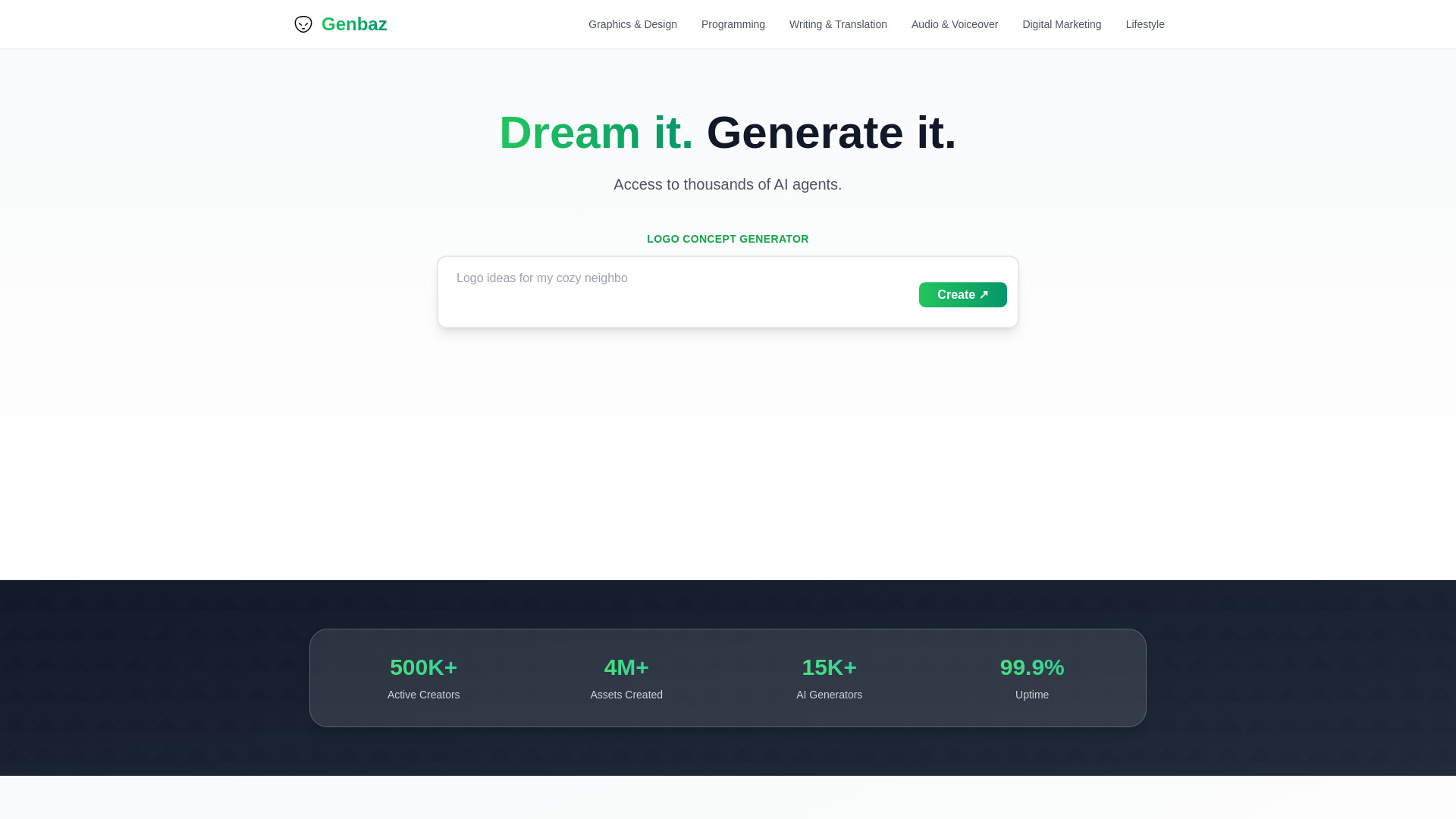
Genbaz takes the library approach. More than 40,000 specialized AI tools and access to thousands of AI agents make it a useful place for content creators who need to explore many narrow workflows rather than adopt one large platform. The appeal is speed: a creator can move from a broad idea to a specialized generation tool without building the workflow themselves. The trade-off is that a huge catalog shifts more evaluation work onto the buyer, so the best experience will depend on how clearly you can define the task before browsing.
Best for
Content creators testing specialized generation workflows
Users who want agents and tools in one broad library
Commercial projects where included commercial rights matter
Limitations
Catalog breadth can make it harder to identify the right tool quickly
Product fit, pricing, and workflow limits should be checked for the exact use case
A broad selection does not guarantee consistent depth across every tool
Shortlist signal: Add Genbaz when you value access to many specialized tools more than a tightly controlled, single-purpose workflow.
4. Symph AI

- Businesses
- Free plan available
- Starts at Check vendor pricing
- Usage signal: 12.6K
Why it matters
Symph AI targets the business gap between an AI experiment and a usable web application. Its AI-powered web app builder is positioned around no-code development, smarter decision-making, and faster development cycles. That is a sensible fit for teams that understand the business process they want to improve but do not want every prototype to wait for a full engineering sprint. The strongest case is a contained internal or customer workflow where faster iteration matters more than highly bespoke infrastructure.
Best for
Businesses creating AI-powered web apps without coding
Teams validating an internal workflow quickly
Decision-making use cases that need a dedicated application surface
Limitations
Specific feature details are limited, so test the builder against a real workflow
Pricing is not clearly stated and should be confirmed before planning a rollout
Advanced requirements may still need technical involvement
Shortlist signal: Consider Symph AI when a business team needs to turn an idea into a web app quickly and can accept a narrower information trail during evaluation.
5. AnyGen AI

- Chief data scientists
- Free plan available
- Starts at Check vendor pricing
- Usage signal: Not listed
Why it matters
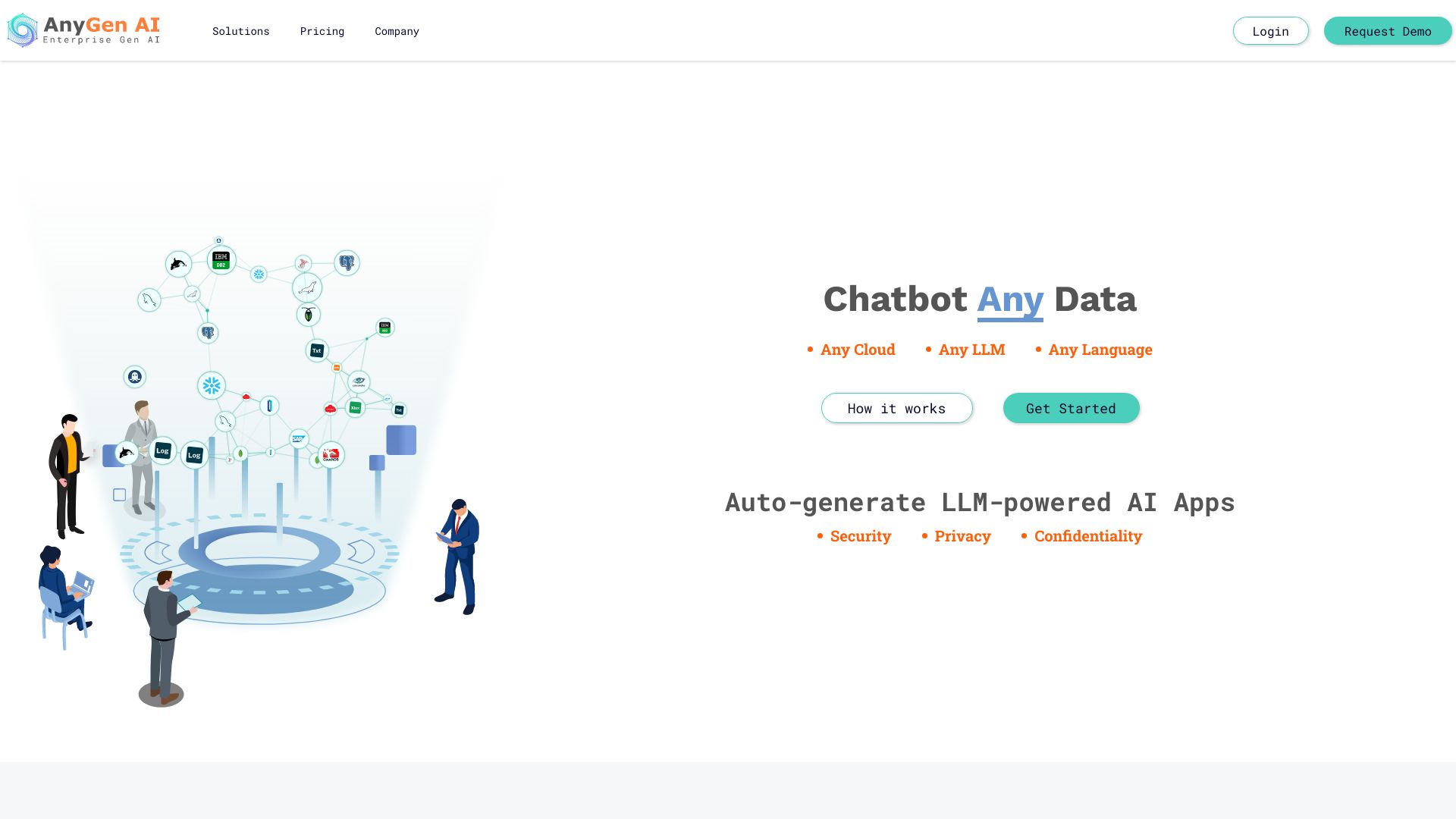
AnyGen AI is the most directly data-oriented application builder in the ranking. It lets teams build ChatGPT-like chatbots with their own data, provides a unified interface for LLM abstraction, and supports no-code or low-code development. That combination makes it relevant to enterprise teams that want to move beyond a generic chatbot while keeping the first build accessible to more than software engineers. The platform is worth separating from broad app builders because the data relationship is central to its proposition.
Best for
Data science and enterprise teams building chatbot experiences
Organizations that want to use their own data in an AI application
Low-code projects that need an abstraction layer across LLMs
Limitations
Advanced customization may require technical expertise
Pricing is not readily available, so budget discovery may take extra work
Validate how the platform handles the specific data sources and controls your project requires
Shortlist signal: Put AnyGen AI on the list when your primary question is how to turn business data into a usable chatbot without building the entire stack yourself.
6. ExecutiveGuide.ai
- C-level executives
- Free plan available
- Starts at Ebook: $249 + VAT
- Usage signal: 2.2K
Why it matters
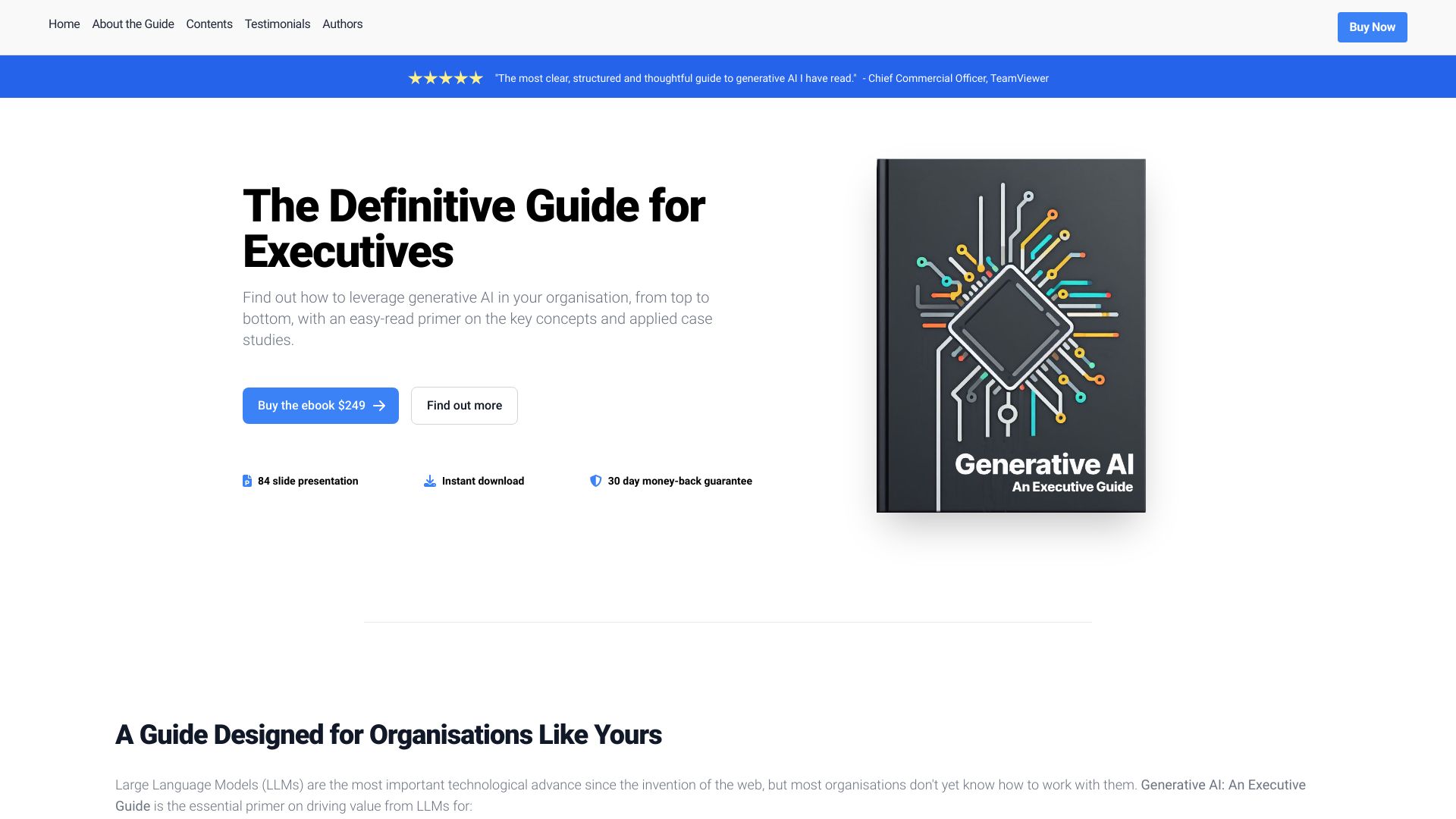
Not every generative AI decision starts with a software trial. ExecutiveGuide.ai is a concise PDF presentation designed as a roughly 30-minute read, with a market overview, real use cases, and cheat sheets. That makes it useful when leadership needs shared vocabulary and practical examples before approving a tool or program. Its value is not hands-on generation; it is reducing the time required to get decision-makers oriented around the technology and its organizational implications.
Best for
C-level executives evaluating where generative AI fits
Leadership teams that need a concise market overview
Organizations using real use cases and cheat sheets to frame discussion
Limitations
It requires a purchase and is limited to a PDF presentation format
It does not replace a product trial or technical assessment
The $249 plus VAT price makes the buying decision different from a free research directory
Shortlist signal: Choose ExecutiveGuide.ai when the immediate bottleneck is executive understanding, not access to another generation engine.
7. ReReview AI

- Product marketing
- Free plan available
- Starts at Check vendor pricing
- Usage signal: 1.5K
Why it matters
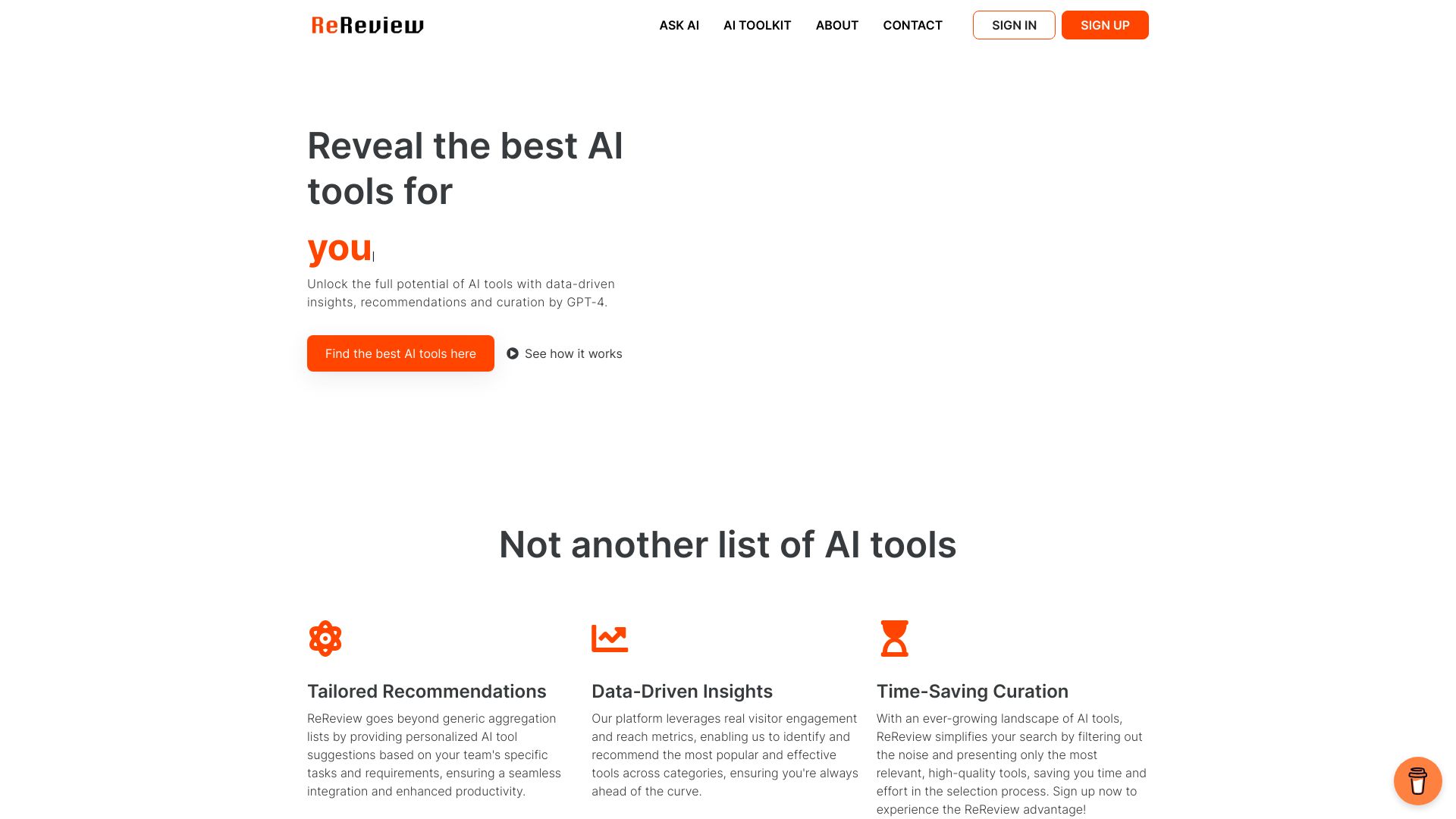
ReReview AI approaches selection as a recommendation problem. It offers tailored suggestions based on tasks and requirements, then adds data-driven insights using visitor engagement and reach metrics. That is a useful distinction from a static list: product marketers can start with the job to be done and work toward a smaller set of candidates. The recommendations rely on GPT-4 and visitor data, so the platform is most helpful as a research accelerator rather than a final authority on product quality.
Best for
Product marketers researching tools for a defined task
Buyers who want personalized recommendations instead of a huge catalog
Teams that value engagement and reach signals during discovery
Limitations
Full database access may require signing up
Recommendations rely on GPT-4 and visitor data, which can shape the results
Pricing is not clearly presented and should be checked before wider team use
Shortlist signal: Use ReReview AI when you have a specific requirement and want data-informed discovery to narrow the first round of candidates.
8. JoyAI

- Marketing teams
- Free plan available
- Starts at Starter: $25.00 monthly
- Usage signal: Not listed
Why it matters
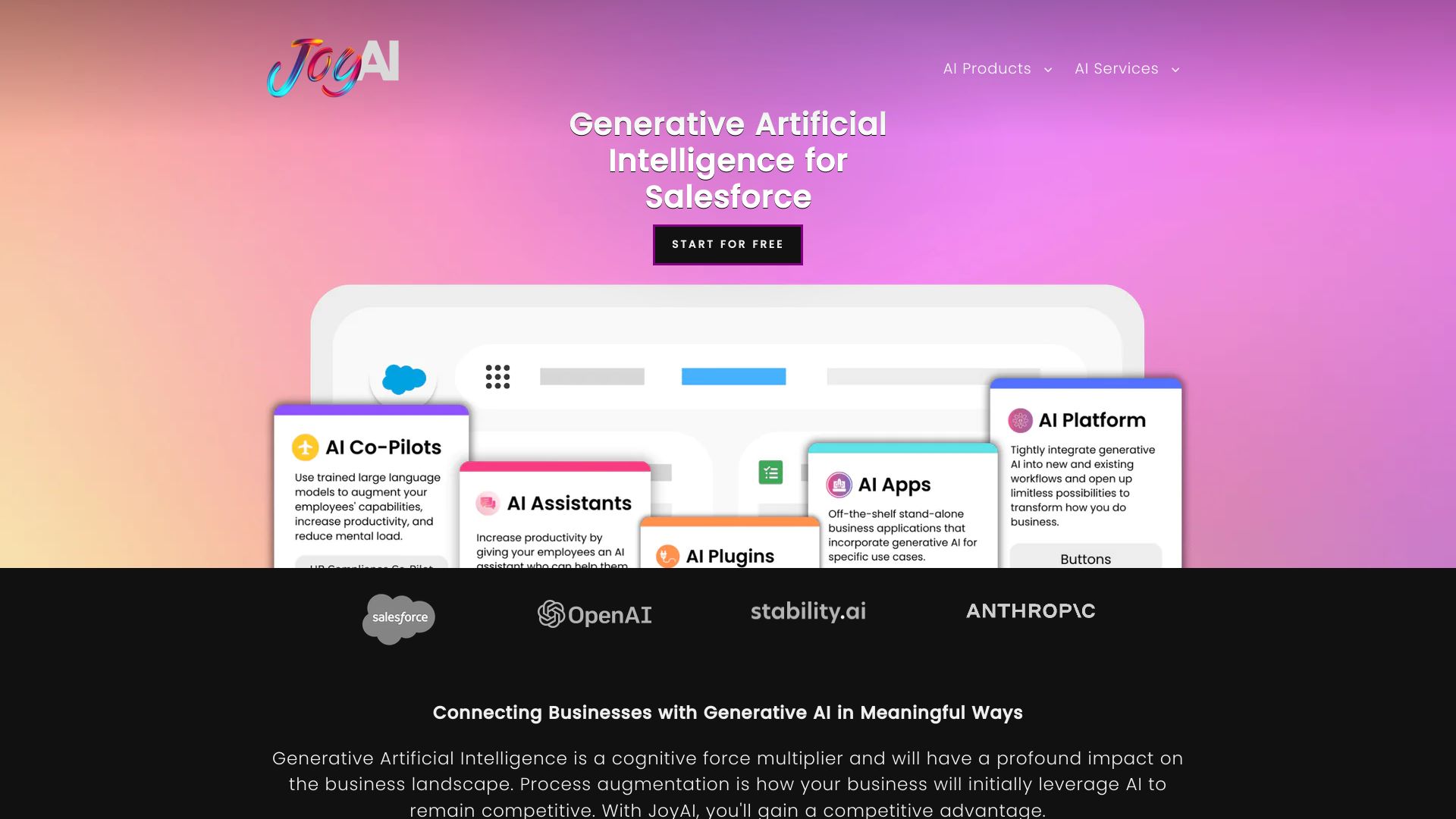
JoyAI is built around putting AI co-pilots into the places work already happens. Its capabilities include task automation and support, JavaScript and browser-extension integration, and extensions such as document generation and internet browsing. That makes the product more relevant to a marketing team trying to improve task completion than to someone shopping for a standalone chatbot. The $25 monthly Starter price gives the evaluation a clearer starting point, though embedding co-pilots still takes some technical confidence.
Best for
Marketing teams automating recurring analysis and document work
Organizations embedding AI into business applications
Teams comfortable using JavaScript or browser extensions
Limitations
Pricing may be a barrier for some users as usage and deployment expand
Embedding co-pilots requires some technical knowledge
The strongest value appears in integrated workflows, not isolated experimentation
Shortlist signal: Shortlist JoyAI when faster task completion inside existing tools matters more than a standalone AI workspace.
9. Daily Tech AI
- Content creators
- Free plan available
- Starts at Check vendor pricing
- Usage signal: Not listed
Why it matters
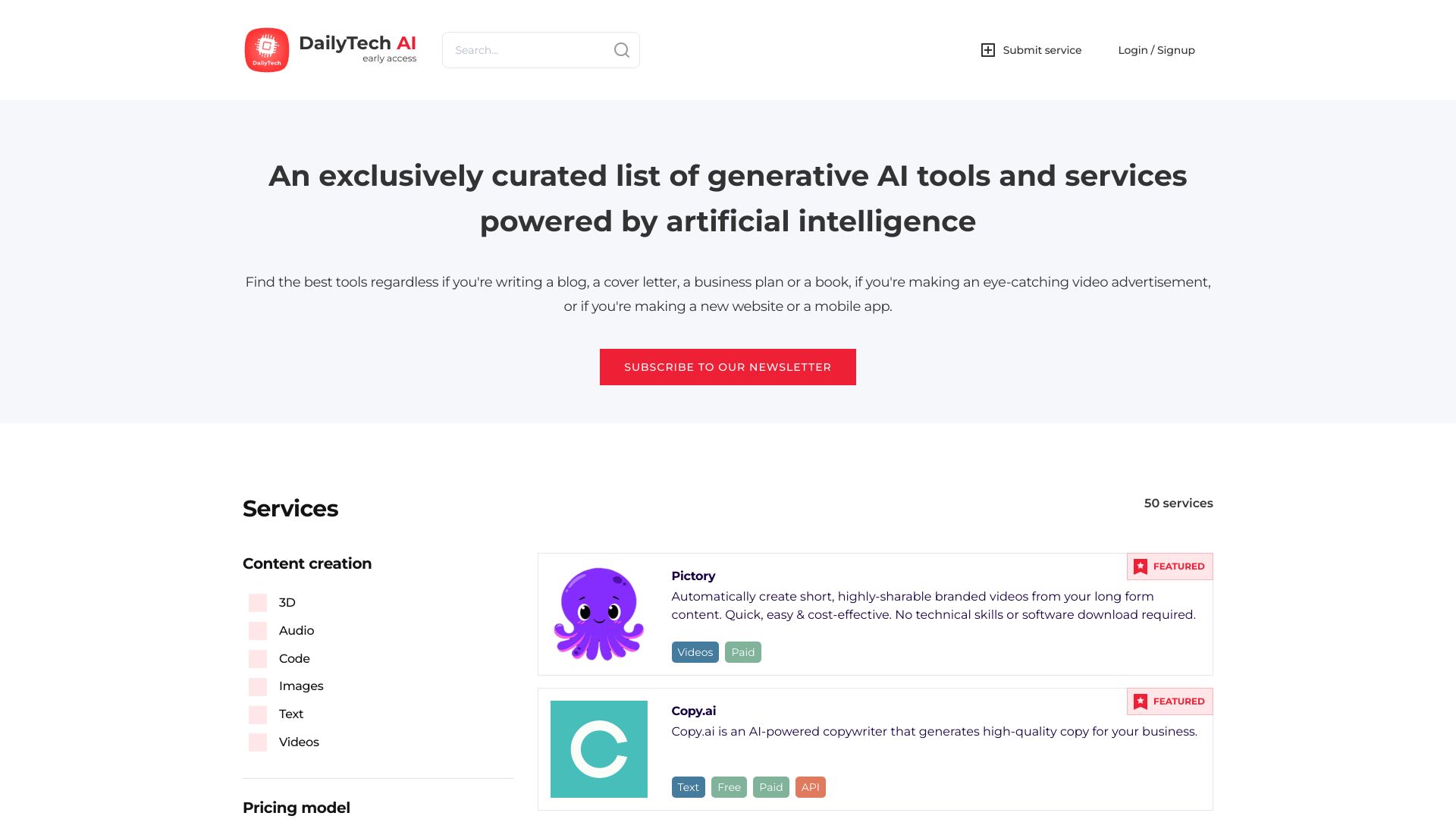
Daily Tech AI keeps discovery approachable with a curated list of generative AI tools, categories, and filters for pricing and features. It is a practical starting point for content creators who want to browse tools for content, visuals, and digital products without building a research spreadsheet from scratch. The interface is likely to be most useful early in the buying process, when you are mapping the landscape and collecting candidates rather than comparing deeply documented finalists.
Best for
Content creators exploring tools for visuals and digital products
Buyers who prefer category, pricing, and feature filters
Early-stage research before a hands-on trial
Limitations
New services depend on user submissions and may take time to appear
The selection may not be exhaustive in every category
A curated listing still requires independent checks of current product details
Shortlist signal: Use Daily Tech AI to build an initial candidate list when easy filtering matters more than exhaustive product depth.
10. ReviewTools.AI

- Marketers
- Free plan available
- Starts at Check vendor pricing
- Usage signal: Not listed
Why it matters
ReviewTools.AI is the broadest catalog in the group, listing more than 22,366 AI tools across 233 categories with daily updates of tools and GPTs. For marketers, that scale can be useful when the requirement is still changing or when a niche category is hard to find elsewhere. It is a discovery engine, not a substitute for a workflow test. The more entries a directory contains, the more important it becomes to filter aggressively and verify whether a listing has enough reviews or product detail to support a purchase.
Best for
Marketers surveying a large AI tool landscape
Buyers searching across many categories and GPTs
Teams that value frequent directory updates
Limitations
Some listings may lack user reviews or meaningful depth
The sheer number of tools can be overwhelming
Large directory coverage does not guarantee a close fit for your workflow
Shortlist signal: Choose ReviewTools.AI when you need maximum discovery breadth and already have a clear process for validating the finalists.
What to test before choosing
Run a small, repeatable test rather than judging tools from isolated demos. Use one representative input, one difficult edge case, and one output that a colleague can review without knowing which tool produced it.
Time to first useful result: Measure setup, sign-up, configuration, and generation separately. A fast model can still produce a slow workflow.
Output consistency: Repeat the same task several times and check whether quality, formatting, and controllability hold up.
Workflow fit: Confirm whether the result can move into the system where your team works, especially for JoyAI, Symph AI, and AnyGen AI.
Technical ownership: Identify who will manage prompts, APIs, data connections, quotas, and maintenance after the pilot.
Commercial terms: Verify live pricing, usage windows, commercial rights, VAT, and any required sign-up. Several tools here do not present pricing as a simple public plan.
Catalog quality: For Genbaz, Daily Tech AI, ReReview AI, and ReviewTools.AI, test how quickly you can move from browsing to a trustworthy shortlist.
The right test is deliberately boring. If a product saves time on the same recurring task three times in a row, it has a stronger case than a spectacular one-off result.
What to do next
Pick one path from the shortlist table and reduce it to two products. Then recreate the same small workflow in both. Developers should compare model access, speed, quotas, and integration effort. Business teams should compare how much they can build without help and what happens when the workflow needs customization. Discovery tools should be judged by the quality of the final three recommendations, not by how many listings they display.
Before paying, ask for the current plan details in writing if the public pricing page is unclear. For a team purchase, document the owner, success metric, data involved, and exit plan. That makes it easier to abandon a poor fit without confusing sunk setup time for product value.
Common mistakes when choosing from a complex top list
Comparing unlike products as if they were substitutes: An executive PDF, model gateway, and AI directory solve different problems.
Treating score as universal quality: The score is useful for prioritization, but audience fit should decide the final choice.
Confusing breadth with workflow depth: A catalog of thousands of tools may still leave you without a dependable production workflow.
Ignoring the implementation owner: No-code does not always mean no maintenance, especially when data, integrations, or embedded co-pilots are involved.
Skipping quota and rights checks: API windows, commercial rights, and output limits can change the economics of a promising pilot.
Accepting a beta product for a critical process: Genera.so may be compelling for experimentation, but stability should be proven before a core workflow depends on it.
Using traffic as a quality guarantee: Monthly visits indicate attention, not accuracy, output quality, security, or support.
Testing only the happy path: An application that works for a clean demo may fail on real documents, ambiguous prompts, or unusual inputs.
FAQ
Agnes AI is the strongest developer-oriented pick in this list because it combines a unified AI gateway with text, image, and video capabilities, free API access, and a high-speed Agnes-2.0-Flash model. Genera.so is the more focused alternative when the goal is hosting generative image applications.