
The top tools to reduce ml inference costs without sacrificing performance are not all model providers. Some improve local throughput, some help you compare token prices, and others prevent expensive calls by caching, routing, parsing, or replaying model requests offline. I compared 10 tools across those distinct jobs so you can build a practical shortlist instead of assuming the cheapest API automatically delivers the lowest total cost.
Start here
There is no single best way to lower inference spend. The right choice depends on whether your bill comes from hosted API tokens, GPU rental, repeated agent context, document preprocessing, or model evaluation. Start with the workflow that creates the waste:
Running models on Apple Silicon: oMLX is the clearest first test. Its paged SSD KV caching and continuous batching target response time and concurrent local requests.
Comparing model and provider economics: Models.dev gives developers a searchable view of specifications, capabilities, pricing, and availability.
Using several hosted models: LLMFly AI offers one OpenAI-compatible API and a centralized catalog for GPT, Claude, Gemini, Grok, and other models.
Renting GPUs instead of buying capacity: QuickPod is worth testing when hourly infrastructure cost matters more than a fixed cloud commitment.
Reducing repeated model calls in CI: EvalCore records model calls and replays them offline, making regression runs deterministic and cost-free after the initial live run.
Processing documents before they reach an LLM: Reducto can reduce downstream waste by parsing, extracting, splitting, classifying, and intelligently chunking difficult documents.
The remaining tools are more specialized. Abliteration.ai suits legitimate sensitive research that encounters refusal behavior, while Logic and Build or Skip address operational automation and product research rather than raw inference infrastructure. Llumo is an adjacent monitoring option for teams measuring how AI systems surface their content.
Segment comparison
| Segment | Best starting point | What it can improve | Main trade-off |
|---|---|---|---|
| Local inference | oMLX | Time-to-first-token, local concurrency, agent response delays | Apple Silicon and macOS 15 or later required |
| Model selection and routing | Models.dev | Provider and model cost comparisons | It does not execute inference itself |
| Multi-provider API access | LLMFly AI | Switching models and centralizing API access | Availability and provider charges can change |
| GPU capacity | QuickPod | Hourly compute cost for development and workloads | Supply, location, and demand affect rates |
| Evaluation and regression | EvalCore | Repeated test-call spend in CI | Requires an initial live recording |
The important distinction is between unit cost and system cost. A cheaper token price may not help if your application sends bloated context, repeats the same calls, or spends GPU time waiting on serial requests. Conversely, a parsing or evaluation tool can earn its place by preventing waste elsewhere in the stack.
Shortlist paths
| Your situation | Shortlist first | Why |
|---|---|---|
| You have an Apple Silicon workstation | oMLX | Native local serving with SSD KV caching and continuous batching |
| You need to compare providers before rewriting code | Models.dev, LLMFly AI | One focuses on transparent comparison; the other on unified API access |
| Your workload needs temporary GPU capacity | QuickPod | Pay-per-hour GPU and CPU rental with Jupyter environments |
| Long documents inflate prompt and processing cost | Reducto | Parsing, extraction, splitting, OCR, and intelligent chunking in one platform |
| CI repeatedly calls the same models | EvalCore | Offline deterministic replay after recording cassettes |
| You need automated decisions without building an API layer | Logic | Converts plain-English processes into functional APIs |
Ranking snapshot
| Rank | Tool | Score | Best for | Starting price |
|---|---|---|---|---|
| #1 | oMLX | 91/100 | Software developers | Check vendor pricing |
| #2 | Reducto | 91/100 | AI engineers | Standard: Free to start |
| #3 | Models.dev | 90/100 | AI developers | Check vendor pricing |
| #4 | Abliteration.ai | 90/100 | Cybersecurity researchers | Free tier: 0 |
| #5 | Logic | 90/100 | Business teams | Trial: $0/per user / month |
| #6 | QuickPod | 90/100 | Machine learning engineers | Check vendor pricing |
| #7 | Build or Skip | 89/100 | Independent developers | Free Preview: $0 |
| #8 | Llumo | 88/100 | SEO professionals | Free: $0 |
| #9 | LLMFly AI | 87/100 | Software developers | Check vendor pricing |
| #10 | EvalCore | 87/100 | LLM engineers | Check vendor pricing |
How we grouped and ranked the list
I grouped these products by the part of the inference workflow they can change: serving, model choice, input preparation, infrastructure, automation, measurement, or testing. That matters because a tool that does not run a model can still lower the cost of running one. Better document extraction can reduce unnecessary context. Offline replay can eliminate repeated test calls. A model catalog can expose a lower-cost provider before an application is locked into one endpoint.
The ranking balances four practical questions:
- 1
Does the product affect a real cost driver? Examples include GPU hours, repeated requests, context size, or provider selection.
- 2
Can a technical team adopt it without rebuilding everything? OpenAI-compatible APIs, REST access, SDK support, or preconfigured environments receive meaningful weight.
- 3
Does it preserve performance or operational usefulness? Lower spend is not a win if latency, throughput, compatibility, or output structure collapses.
- 4
Are the boundaries clear? I penalized tools where pricing, availability, or usage signals can change and called those limits out directly.
Scores are close because these tools solve different problems. oMLX leads for the category's central promise: lower local serving friction without giving up throughput features. Reducto follows because input preparation can have an outsized effect on downstream token and processing costs. The lower-ranked tools can still be the best choice for a narrowly defined stack.
Ranked field notes
1. oMLX

- Software developers
- Free plan available
- Starts at Check vendor pricing
- Usage signal: 166.6K
Why it matters
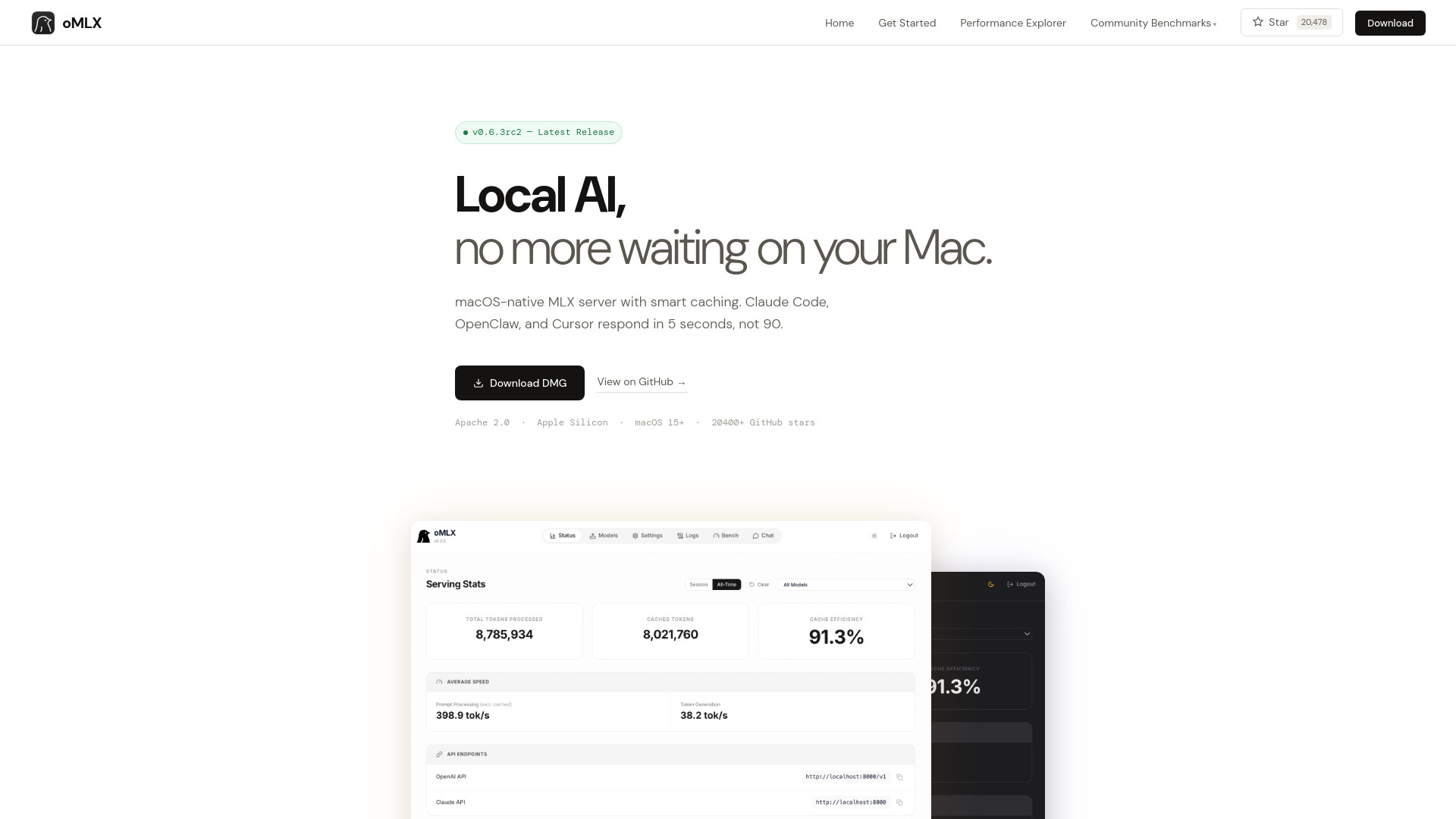
Local inference becomes much more attractive when the serving layer tackles the two annoyances that make workstation deployment feel slow: context-heavy responses and concurrent requests. oMLX is built specifically for Apple Silicon and macOS, with paged SSD KV caching aimed at faster responses and lower time-to-first-token, plus continuous batching for concurrent throughput. OpenAI-compatible and Anthropic-compatible APIs make it easier to test existing applications without changing the entire client layer. For developers already working on a Mac, this is the most direct route in the list to shifting suitable workloads away from metered hosted inference.
Best for
Developers serving models locally on Apple Silicon
Agent workflows where KV-cache growth affects response delays
Teams needing concurrent local requests through familiar APIs
Limitations
Requires Apple Silicon and macOS 15 or later
At least 16GB RAM is required, with larger models needing substantially more
It is a local serving option, not a general multi-cloud provider marketplace
Shortlist signal: Add oMLX when you have compatible Apple hardware and want to test local throughput before paying for hosted inference.
2. Reducto

- AI engineers
- $150 in free usage
- Starts at Standard: Free to start
- Usage signal: 117.2K
Why it matters
Many expensive LLM pipelines begin with poor input preparation. Reducto handles complex layouts, tables, charts, forms, handwriting, OCR, multilingual processing, and bounding-box preservation before the content reaches the model. It also combines parsing, structured extraction, splitting, classification, editing, and intelligent chunking. That combination can reduce the amount of irrelevant or malformed context sent downstream while producing schema-level data with citations. It is especially compelling for document-heavy systems where the cost problem is not just the model endpoint but the volume and quality of every request.
Best for
AI engineers building document question-answering or extraction systems
Workflows involving tables, forms, charts, or handwritten content
Teams that need structured, cited output rather than raw OCR text
Limitations
Advanced Growth and Enterprise pricing is customized and requires contacting sales
Usage-based costs vary by endpoint and can rise with large document volumes
It addresses document processing rather than general-purpose model serving
Shortlist signal: Choose Reducto when oversized, messy documents are driving unnecessary tokens or repeated downstream corrections.
3. Models.dev

- AI developers
- Free plan available
- Starts at Check vendor pricing
- Usage signal: 250.8K
Why it matters
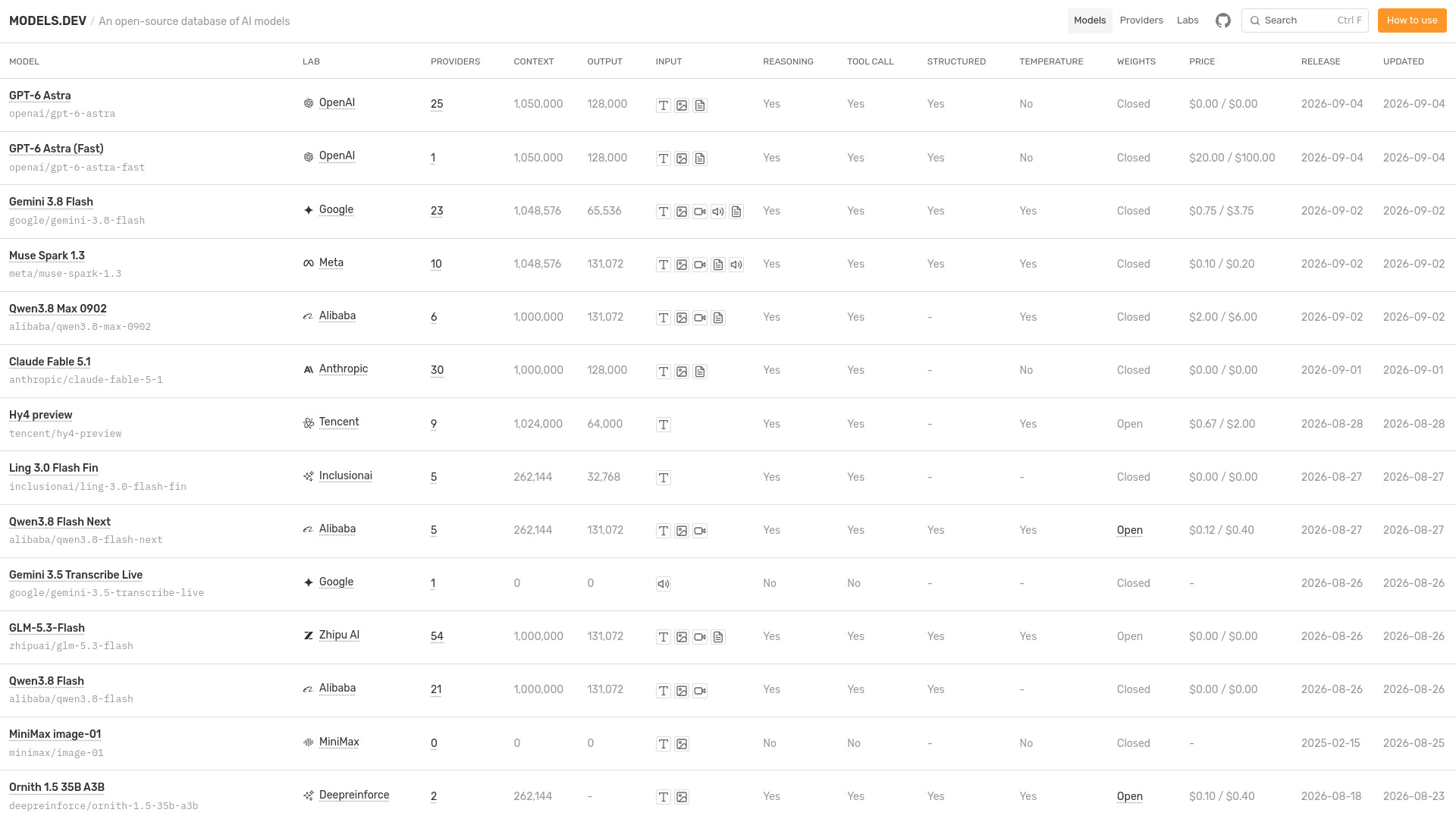
Cost optimization starts with knowing what you are actually comparing. Models.dev provides a searchable database of model specifications and capabilities, then places provider pricing and availability alongside context limits, output limits, release dates, weights, and supported features. The JSON API and type-safe SDK access make it more useful than a static catalog: developers can incorporate model metadata into internal selection or routing tools. It will not execute inference for you, but it can prevent a costly blind spot where teams choose a model by reputation instead of matching capability and price to the task.
Best for
Developers comparing models and providers before implementation
Teams building internal model selection or routing logic
Buyers who need context, output, capability, and pricing details together
Limitations
Provider pricing and availability can change after the catalog is updated
The product does not itself provide inference or API execution
Comparison data still needs validation before production routing decisions
Shortlist signal: Use Models.dev when the first cost-saving move is finding a capable, lower-priced model or provider for each task.
4. Abliteration.ai

- Cybersecurity researchers
- 1 free credit (~500 tokens)
- Starts at Free tier: 0
- Usage signal: 106.5K
Why it matters
Abliteration.ai occupies a specialized lane: it provides models with reduced refusal behavior for legitimate sensitive work, including security research, red-team activity, trust and safety work, and synthetic-data workflows. Its OpenAI- and Anthropic-compatible APIs support one-line base-URL migration for existing code, SDKs, and agent frameworks. Vision and document extraction are also available for image inputs up to 15 MB across common formats. The cost advantage here is operational: teams can avoid repeatedly adapting prompts, switching tools, or building workarounds when a provider's refusal behavior blocks an authorized task.
Best for
Cybersecurity researchers and red teams with legitimate sensitive use cases
ML engineers needing familiar API compatibility
Teams that need text, vision, or document workflows in one provider
Limitations
Monthly plans and token usage are paid beyond the limited free preview
Policy Gateway governance is an enterprise add-on with custom pricing
Reduced refusal behavior requires careful internal authorization and governance
Shortlist signal: Consider Abliteration.ai when legitimate security or research workflows are losing time and budget to provider refusal behavior.
5. Logic

- Business teams
- Free trial
- Starts at Trial: $0/per user / month
- Usage signal: 13.3K
Why it matters
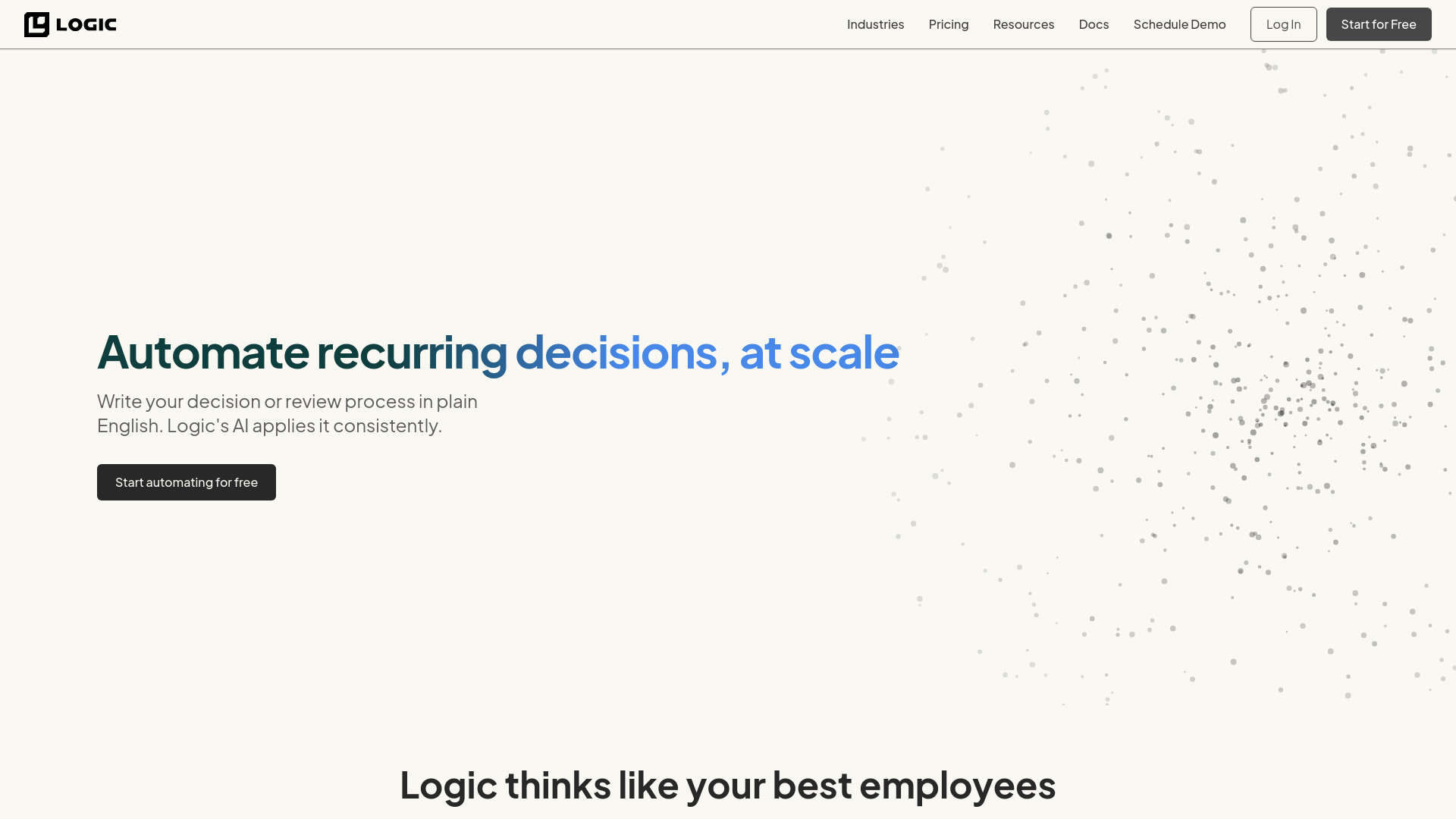
Not every inference-cost problem belongs in an ML platform. Logic converts plain-English process documents into functional APIs and automates recurring decisions and review processes at scale. By removing technical configuration, API keys, and prompt engineering from routine workflows, it can help business teams avoid ad hoc model usage and repeated manual handling. This is an adjacent pick rather than a serving engine, but it belongs in a field guide because replacing scattered one-off calls with a defined process can improve consistency and cost control.
Best for
Business teams automating recurring decisions or reviews
Operators who can describe a process but do not want to build an API
Organizations standardizing repeatable AI-assisted workflows
Limitations
Ultra-plan unlimited tasks are subject to abuse guardrails
Enterprise and API plans may add usage rates beyond base pricing
It is not a low-level inference runtime for ML engineers
Shortlist signal: Pick Logic when unstructured business processes, rather than GPU or token pricing, are causing repeated AI spend.
6. QuickPod

- Machine learning engineers
- Free plan available
- Starts at Check vendor pricing
- Usage signal: 19.3K
Why it matters
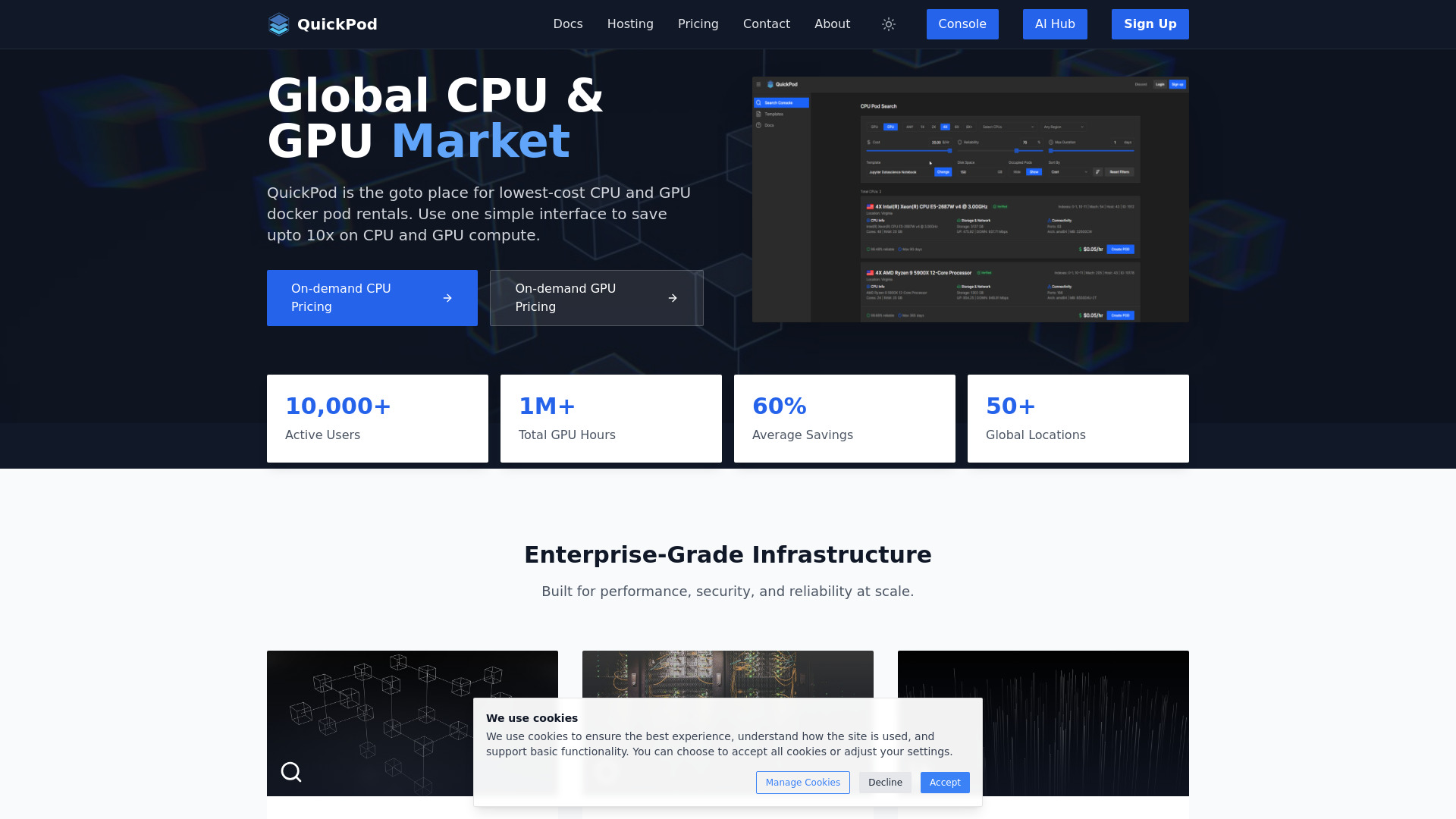
QuickPod takes a straightforward approach to compute economics: rent GPU or CPU capacity on demand and pay by the hour. Rates start from $0.02 per hour for some models, and preconfigured Jupyter environments support TensorFlow and PyTorch. That makes it useful for development, experiments, and workloads that do not justify a permanent cloud instance. The key benefit is flexibility: you can compare the hourly cost of a workload rather than committing to a large infrastructure footprint before you know its utilization.
Best for
ML engineers running experiments or intermittent workloads
TensorFlow and PyTorch users who want ready-to-use environments
Teams comparing rented compute with larger cloud providers
Limitations
Pricing changes with supply and demand
GPU availability and rates vary by location and time
Hourly savings do not automatically solve idle time or poor workload utilization
Shortlist signal: Test QuickPod when your workloads are bursty and the main expense is paying for GPU capacity that you do not use continuously.
7. Build or Skip

- Independent developers
- Free Preview: $0
- Starts at Free Preview: $0
- Usage signal: 2.2K
Why it matters
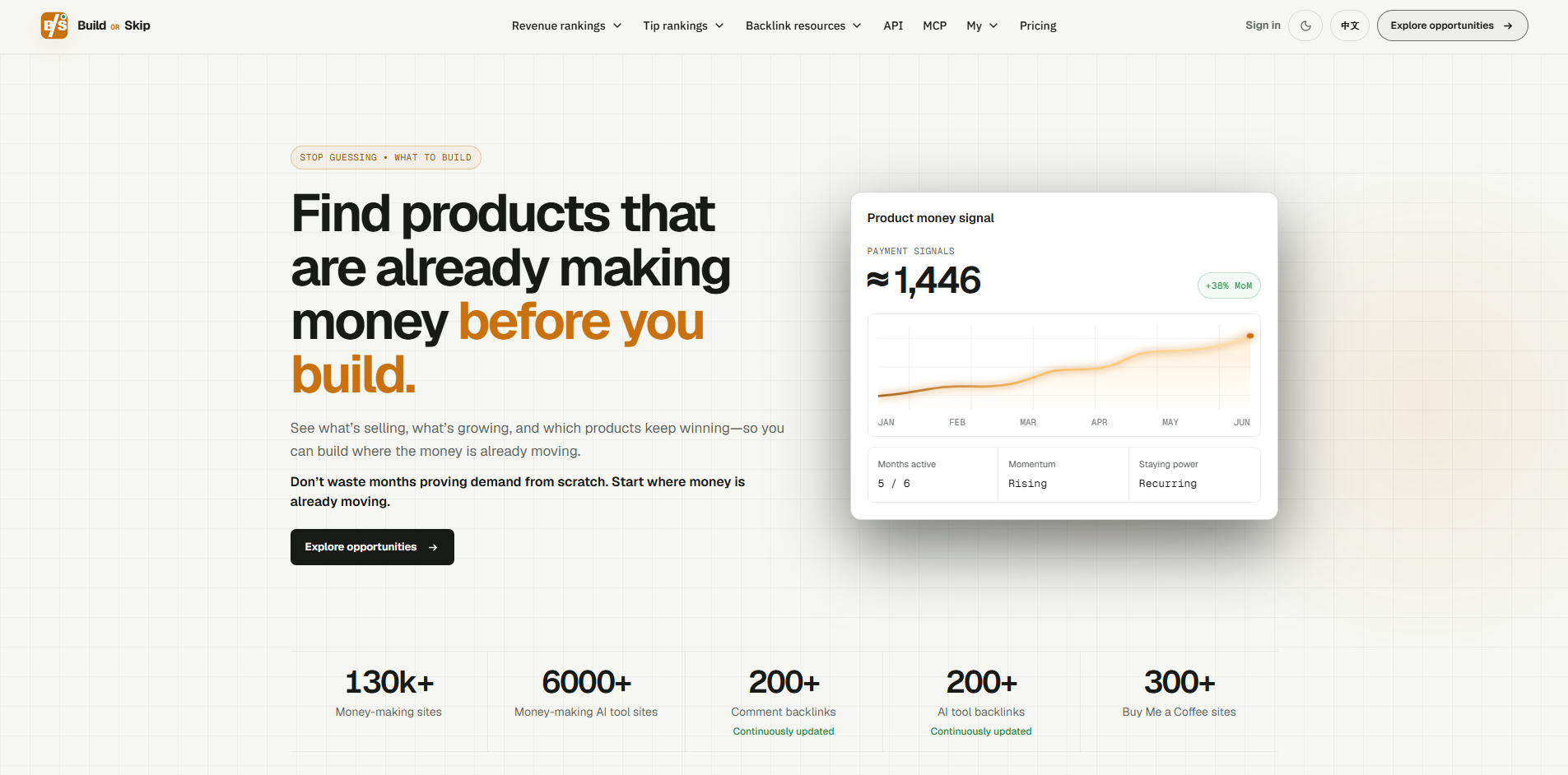
Build or Skip is an adjacent decision tool for developers deciding what to build, not an inference runtime. It combines estimated payment signals, tips, traffic, domain data, backlink research, and month-by-month momentum analysis. That can reduce wasted implementation effort before a team starts spending on model calls, hosting, and evaluation for an idea with weak commercial evidence. It is most useful early in the lifecycle, when avoiding an unnecessary build is a more meaningful saving than optimizing a token rate.
Best for
Independent developers validating product opportunities
Teams researching commercial momentum across websites
Builders who want traffic, payment, tipping, and backlink signals together
Limitations
Payment signals are estimates, not verified revenue, orders, or customers
Domain registration dates do not prove product launch dates
It does not reduce inference cost inside an existing production application
Shortlist signal: Use Build or Skip before investing in an AI product whose demand and workflow economics are still uncertain.
8. Llumo

- SEO professionals
- Unlimited prompts
- Starts at Free: $0
- Usage signal: 223
Why it matters
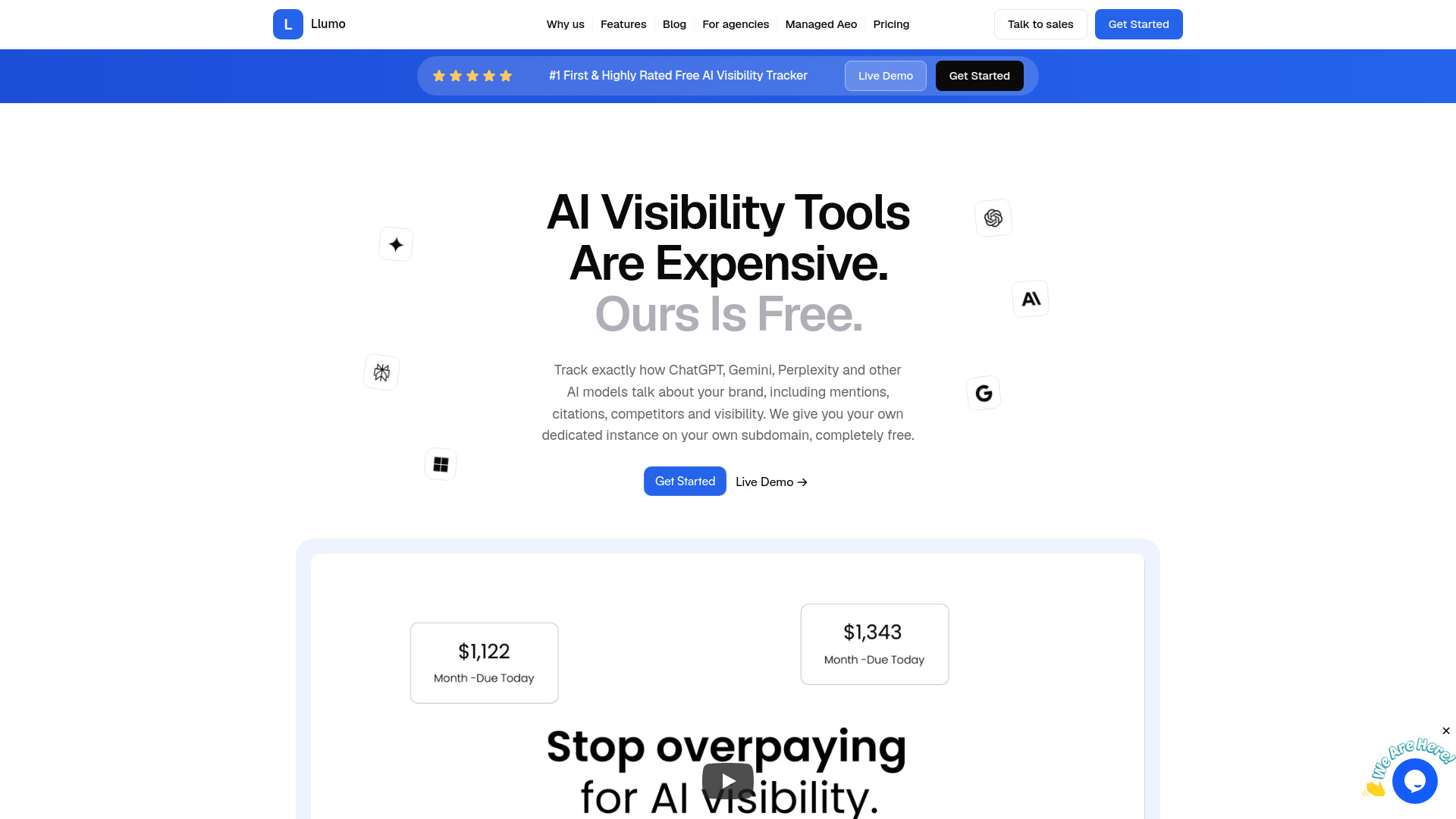
Llumo tracks AI visibility across ChatGPT, Gemini, Perplexity, Copilot, Google AI Overviews, and other model surfaces. Per-prompt visibility scores, share-of-voice tracking, citation analysis, and competitor monitoring help teams decide which AI-facing content work is worth continuing. It is not an inference-cost optimizer in the infrastructure sense, but it can reduce waste in AI visibility programs by showing where effort produces measurable coverage and where prompts or competitors are taking the attention.
Best for
SEO professionals monitoring answer-engine visibility
Teams comparing citations and share of voice across AI surfaces
Marketers who want competitor monitoring without a monthly Llumo license fee
Limitations
Users must provide their own API keys for the free platform
AI provider usage costs still apply at higher tracking volumes
It measures visibility rather than serving latency or model throughput
Shortlist signal: Add Llumo when you need to control the cost of AI visibility research by measuring prompts and competitors systematically.
9. LLMFly AI

- Software developers
- Free plan available
- Starts at Check vendor pricing
- Usage signal: Not listed
Why it matters
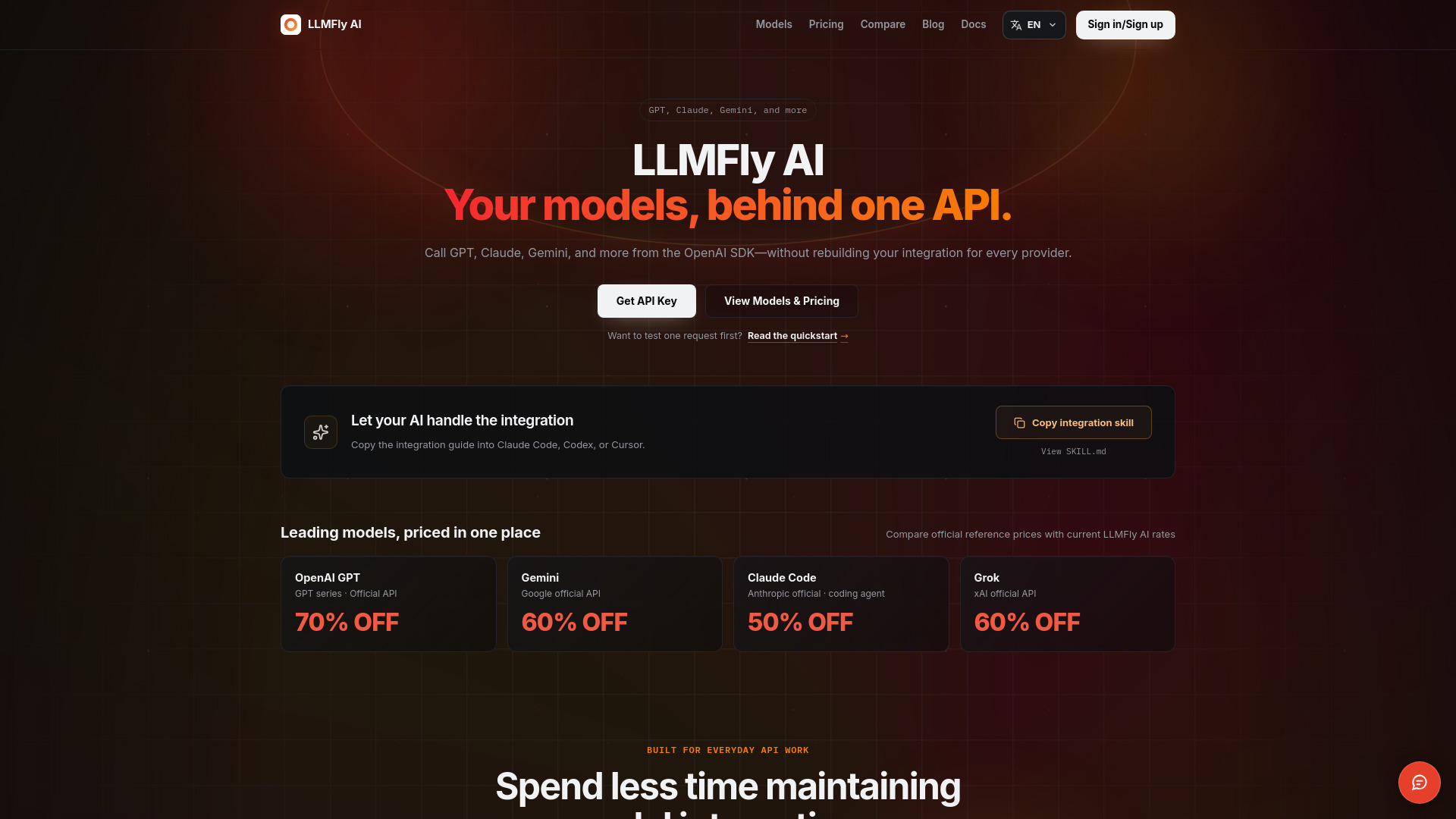
LLMFly AI puts multiple providers behind one OpenAI-compatible API, including GPT, Claude, Gemini, and Grok. Its centralized model catalog includes input, output, and cache pricing, while API key management separates applications and environments. This is useful when cost optimization depends on switching models without rewriting every integration. The practical benefit is not necessarily the lowest advertised price; it is the ability to test alternatives and keep provider access in one interface as model economics change.
Best for
Developers supporting several model providers
Teams already using OpenAI SDK-compatible integrations
Applications that need centralized model pricing and usage tracking
Limitations
Actual model availability can change
Provider list prices do not necessarily equal LLMFly AI charges
Vendor pricing details should be confirmed before forecasting savings
Shortlist signal: Choose LLMFly AI when provider switching and consistent API integration matter more than managing separate endpoints.
10. EvalCore

- LLM engineers
- Free
- Starts at Check vendor pricing
- Usage signal: Not listed
Why it matters
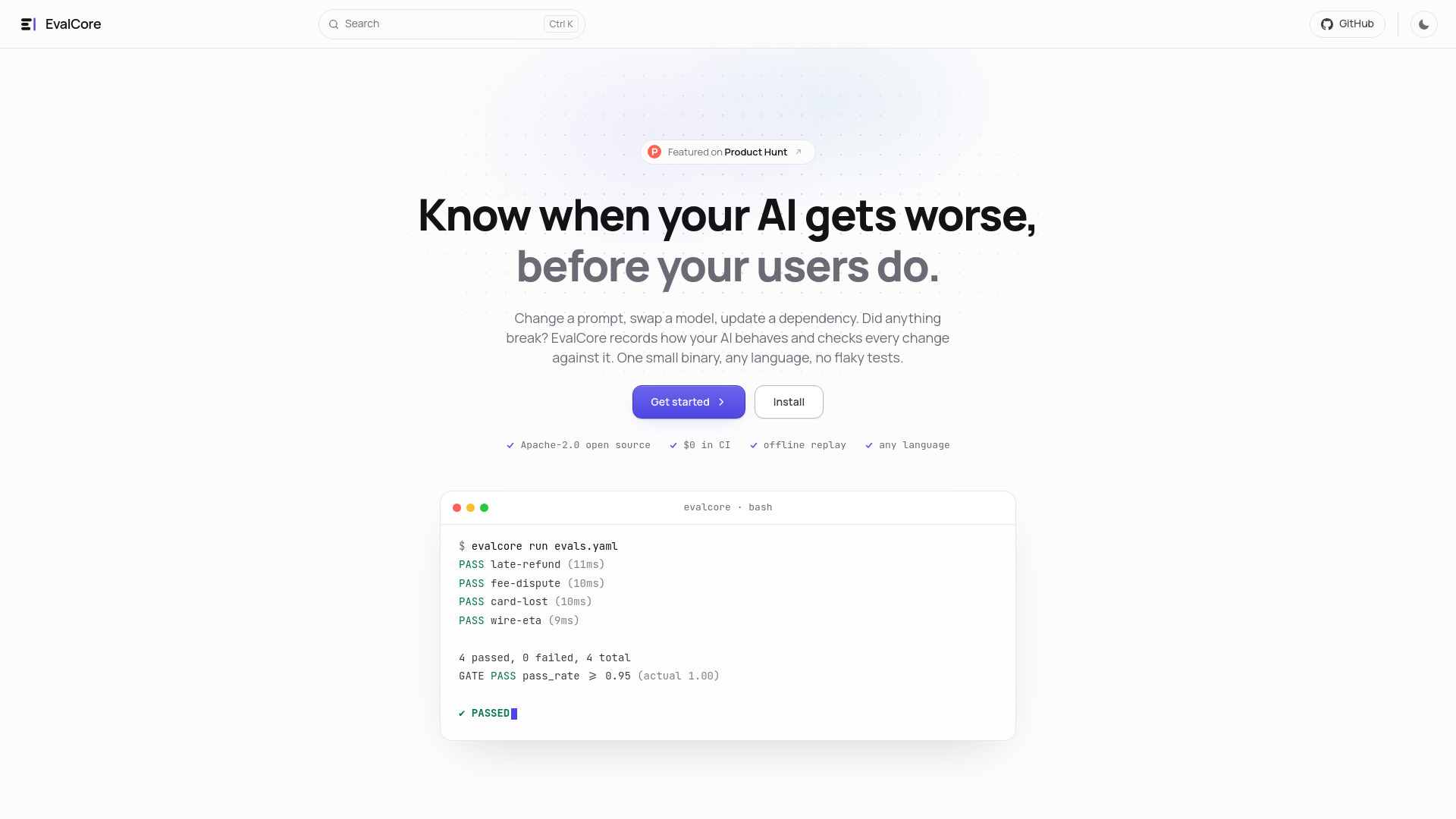
Repeated evaluation calls can quietly become a meaningful line item, particularly in CI. EvalCore is a single-binary runner for LLM applications and agents with YAML-based eval definitions and scorers. It records model calls into cassettes, then replays them offline for deterministic CI runs through REST or shell targets. The initial live run still costs money, but subsequent regression checks can run without repeatedly calling the model. That makes it a focused way to protect quality while reducing test-time inference spend.
Best for
LLM engineers maintaining regression suites
Teams that need deterministic model behavior checks in CI
Any language stack that can use REST or shell targets
Limitations
Requires an initial live run to record cassettes
Better suited to regression testing than interactive experimentation
Offline replay cannot replace fresh live tests when provider behavior changes
Shortlist signal: Add EvalCore when your CI pipeline repeatedly spends tokens testing behavior that could be replayed from recorded calls.
What to test before choosing
Run a small, representative benchmark instead of comparing headline prices. Use the same prompt set, documents, concurrency, and quality checks for every candidate. Record:
End-to-end cost: Include preprocessing, retries, failed calls, storage, and idle GPU time, not just token rates.
Time-to-first-token and total latency: Local caching may improve the first response while a hosted endpoint may win at sustained throughput.
Throughput under realistic concurrency: Continuous batching matters only if your workload actually sends concurrent requests.
Context efficiency: Measure tokens before and after parsing, splitting, deduplication, or retrieval changes.
Quality at the lower-cost setting: Compare extraction accuracy, citation behavior, refusal behavior, and task completion rather than assuming a cheaper model is interchangeable.
Operational friction: Test API compatibility, SDK changes, key management, deployment requirements, and monitoring.
Price volatility: QuickPod rates, provider availability, and model catalogs can change; record the date and assumptions behind every estimate.
For local serving, test the largest model your hardware can support comfortably, then repeat with multiple simultaneous requests. For a routing layer, send the same task to at least two providers and compare both output quality and total bill. For EvalCore, verify that cassette replay catches the regressions you care about without masking changes that require a live run.
What to do next
Start with one cost center rather than adopting several tools at once. If your bill is dominated by hosted calls, use Models.dev to compare viable alternatives and LLMFly AI to test provider switching. If context size is the culprit, benchmark Reducto on your hardest documents. If development and CI are the problem, pair a serving option such as oMLX or QuickPod with EvalCore so you measure performance without paying for every test iteration.
Create a short scorecard with five columns: workload, current cost, candidate tool, measured quality, and operational caveat. Run it for one week of representative traffic or one complete development cycle. The winning tool is the one that lowers total cost while keeping the latency, reliability, and output behavior your users actually notice.
Common mistakes when choosing from a complex top list
Treating all cost reduction as token-price reduction. Context bloat, retries, idle GPUs, and repeated CI calls can matter more than the advertised per-token rate.
Comparing tools from different layers as direct substitutes. Models.dev informs a decision; it does not serve a model. EvalCore reduces test calls; it does not replace production monitoring.
Ignoring hardware constraints. oMLX requires Apple Silicon, macOS 15 or later, and at least 16GB of RAM. A theoretically cheaper local path is irrelevant if your team cannot run it.
Assuming compatibility means identical behavior. An OpenAI-compatible API can simplify migration, but model quality, refusal behavior, context handling, and pricing still differ.
Using free access as a production cost estimate. Free previews, credits, and free platforms are useful for testing but may require your own API keys or stop covering usage at scale.
Skipping a quality floor. A lower bill is not a saving if support tickets, human review, or failed workflows increase.
Failing to verify live pricing. Provider rates, GPU availability, usage charges, and enterprise terms can change after a comparison is published.
FAQ
First identify the dominant cost driver. For local Apple Silicon workloads, test oMLX. For provider selection, compare models and prices with Models.dev. For repeated CI calls, EvalCore can move recorded tests offline. The fastest result usually comes from eliminating wasteful calls rather than changing models immediately.