
Enterprise marketing automation is no longer one neat software category. The top enterprise marketing automation platforms with ai now span outbound sales engagement, CRM workflows, autonomous agents, customer support, advertising, content production, and strategic planning. I compared 10 tools across those segments so you can build a practical shortlist instead of forcing every marketing team into the same platform. The result is a deliberately broad field guide: Instantly.ai and ActiveCampaign lead for repeatable marketing and outreach, while several adjacent platforms make more sense when automation starts in ERP, support, paid media, or ecommerce.
Start here
Use the shortlist below to narrow the field before you schedule demos. The best choice depends less on the word "AI" in the product description and more on where your existing workflow breaks.
Best overall match for agency-led outreach: Instantly.ai combines unlimited email accounts and warmups with lead enrichment, personalization, filtering, and buying signals.
Best all-in-one marketing automation: ActiveCampaign brings marketing automation, omnichannel marketing, content creation, generative AI, and predictive sending together.
Best for agentic process automation: Beam AI focuses on building and deploying AI agents and coordinating multi-agent workflows.
Best for ERP-centered operations: ERP.AI adds autonomous agents, on-demand applications, and unified enterprise knowledge around ERP systems.
Best for support automation: Enterprise Bot covers chat, email, and voice automation for customers and employees.
Best for AI-led advertising: AdsGency AI handles ad creation, audience targeting, campaign automation, and optimization.
The remaining four tools are more focused: one puts CRM and analytics at the center, one generates ecommerce copy from product URLs, one delivers custom AI integration, and one produces marketing plans with ROI projections.
Segment comparison
| Segment | Strongest fit | What it automates | Main trade-off |
|---|---|---|---|
| Outreach and lead generation | Instantly.ai | Email accounts, warmups, enrichment, personalization, and outreach | Setup and pricing can be heavier for smaller businesses |
| Lifecycle marketing and CRM | ActiveCampaign | Omnichannel campaigns, marketing automation, content, and predictive sending | More capability means a steeper learning curve |
| Agentic operations | Beam AI | AI agents, process automation, and multi-agent work | Requires configuration and process design |
| Customer and employee support | Enterprise Bot | Chat, email, and voice responses | Implementation and customization may require investment |
| Paid media and planning | AdsGency AI | Ad creation, targeting, campaign automation, and reports | Human review remains important for creative control |
This split matters because a marketing automation platform can be excellent at one layer and weak at another. A sales agency may get more value from deliverability controls than from an elaborate CRM. An enterprise support team may care more about voice and email automation than campaign sequencing. Treat the segment as a buying constraint, not just a label.
Shortlist paths
| If your priority is... | Start with | Add to the comparison when... |
|---|---|---|
| More outbound capacity | Instantly.ai | You need enrichment, buying signals, and multiple warmed email accounts |
| A broader customer journey | ActiveCampaign | Email, omnichannel campaigns, CRM decisions, and content belong in one system |
| Replacing repetitive internal processes | Beam AI | Your use case needs deployable agents rather than another campaign builder |
| Intelligent back-office workflows | ERP.AI | ERP data and autonomous actions are central to the marketing operation |
| Support at multiple touchpoints | Enterprise Bot | Customer or employee requests arrive through chat, email, and voice |
| Faster paid campaign production | AdsGency AI | Audience targeting and real-time ad optimization are the bottleneck |
Ranking snapshot
| Rank | Platform | Score | Best for | Starting price |
|---|---|---|---|---|
| #1 | Instantly.ai | 94/100 | Agencies | Growth (Outreach): $37 /mo |
| #2 | ActiveCampaign | 94/100 | Solopreneurs | Starter: $15/mo |
| #3 | Beam AI | 93/100 | Businesses of all sizes | Check vendor pricing |
| #4 | ERP.AI | 93/100 | Leading organizations | Check vendor pricing |
| #5 | Enterprise Bot | 92/100 | Customer service managers | Check vendor pricing |
| #6 | AdsGency AI | 92/100 | Marketers | Check vendor pricing |
| #7 | AI Marketing CRM Software | 90/100 | Sales teams | Starter: $29.99 / Month |
| #8 | MyAIMarketing | 90/100 | Ecommerce businesses | Starter: 18 €/mois |
| #9 | TEKHUB AI | 90/100 | Small and medium-sized businesses | Check vendor pricing |
| #10 | MarketingAI | 90/100 | SaaS founders | Per URL: $79 $39 |
Scores are close because this is a multi-segment category. A lower-ranked tool can still be the right choice if it matches your workflow more precisely than a broader platform.
How we grouped and ranked the list
I grouped these tools by the job they automate rather than by how prominently they use AI in their positioning. The first group covers outbound activity and lifecycle marketing. The second covers operational automation, ERP-connected work, and customer support. The third covers paid advertising, CRM execution, ecommerce content, custom implementation, and strategic planning.
Ranking weight went to three practical questions:
- 1
Can the product automate a meaningful workflow? Features such as unlimited warmups, omnichannel automation, autonomous agents, voice bots, campaign automation, or ROI projections earned more weight than generic AI copy claims.
- 2
Does the stated audience fit the product's real use case? An agency needs different controls from a customer service manager or SaaS founder.
- 3
Can a buyer understand the commitment? Clear starting prices and free access help, but enterprise tools often require a sales conversation. That does not disqualify them; it does make implementation and procurement part of the evaluation.
Usage signals provide context, not a verdict. For example, Instantly.ai has a much larger reported traffic signal than several specialist platforms, while some tools do not list a usage signal at all. Market visibility can support confidence, but workflow fit should decide the final shortlist.
Ranked field notes
1. Instantly.ai

- Agencies
- 1000 contacts and 5000 emails monthly
- Starts at Growth (Outreach): $37 /mo
- Usage signal: 2.2M
Why it matters
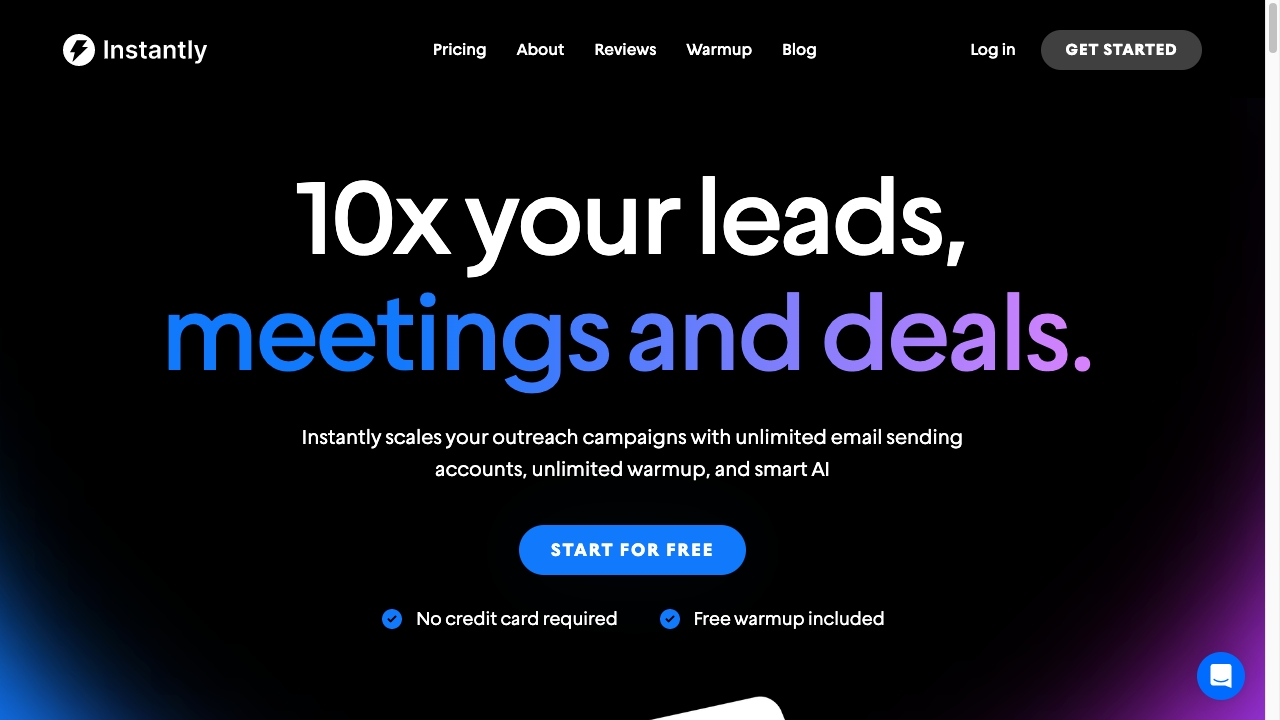
Instantly.ai earns the first position because it addresses the operational side of outbound marketing automation, not just message generation. Unlimited email accounts and warmups are meaningful when an agency manages multiple campaigns or client identities. Add AI-powered lead enrichment and personalization, advanced lead filtering, and buying signals, and the platform becomes a practical system for turning prospect data into automated outreach. Its reported 2.2M monthly visits also gives it the strongest market signal in this field. The catch is that deliverability and configuration still require disciplined setup; automation does not excuse poor targeting or weak messaging.
Best for
Agencies running outbound campaigns for multiple clients
Teams that need multiple email accounts and warmups
Operators combining a lead database with automated outreach
Limitations
Pricing can be a factor for smaller businesses
Requires setup and configuration to maximize effectiveness
The strongest value appears in outbound workflows, not broad lifecycle marketing
Shortlist signal: Add Instantly.ai when outbound volume, deliverability, and AI-assisted lead qualification are your main bottlenecks.
2. ActiveCampaign

- Solopreneurs
- Free 14-day trial
- Starts at Starter: $15/mo
- Usage signal: 565.8K
Why it matters
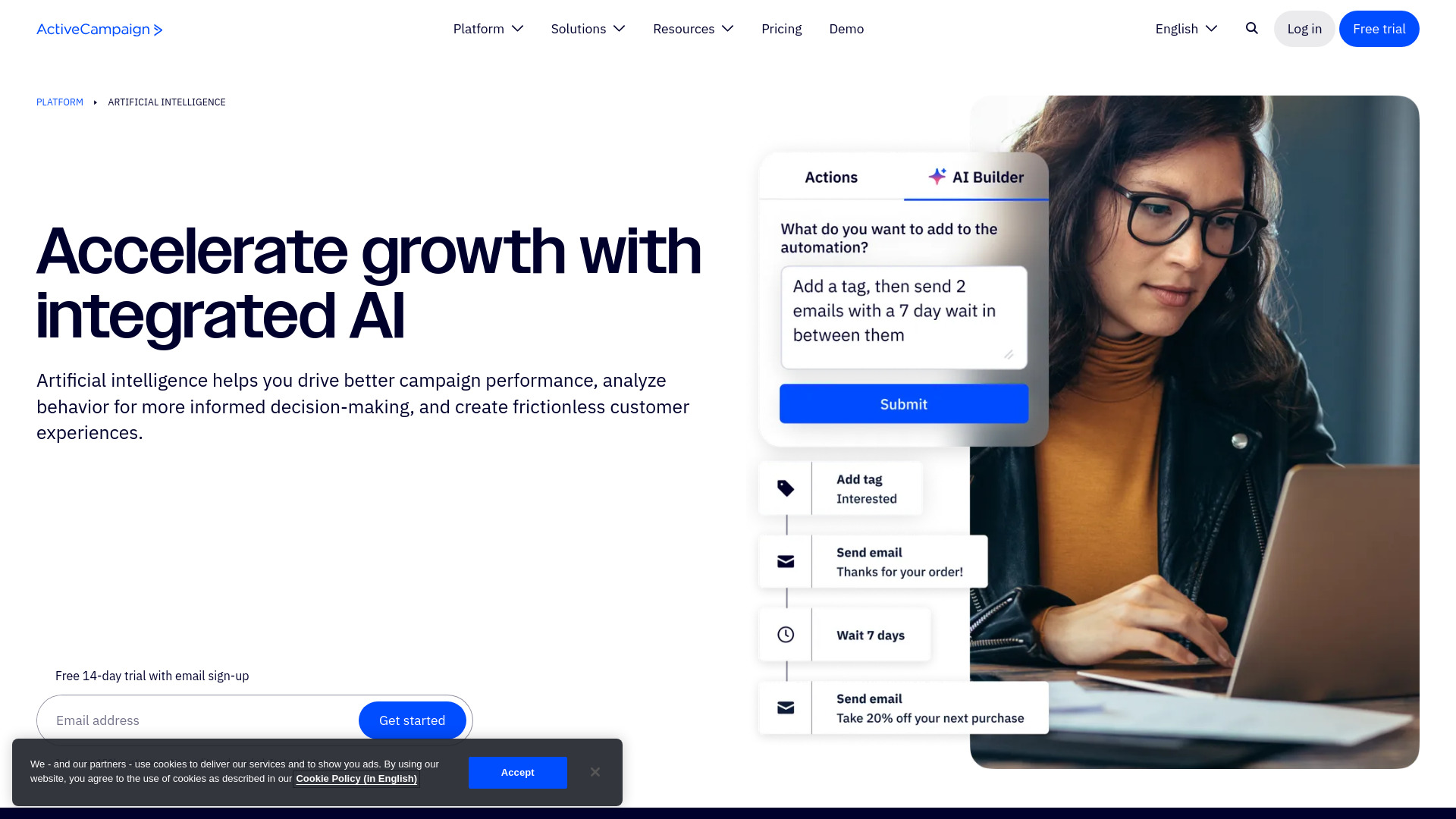
ActiveCampaign is the most recognizable all-rounder here. Its mix of marketing automation, omnichannel marketing, content creation, generative AI, and predictive sending makes it easier to connect campaign logic with customer communication. That breadth is why it ties for the highest score. It is a better starting point than a narrow outbound tool when your team needs to coordinate multiple channels and keep customer experiences in one operating layer. I would still budget time for training: the platform's range is useful only when the team can maintain the automations it builds.
Best for
Solopreneurs and small teams building repeatable customer journeys
Marketers who need omnichannel automation rather than email alone
Teams that want predictive sending and generative AI in the same platform
Limitations
Can be expensive for small businesses as needs expand
Some features have a steep learning curve
Broader functionality may be more than a simple outreach workflow requires
Shortlist signal: Choose ActiveCampaign when you want one established system for automation, channels, content, and customer experience decisions.
3. Beam AI

- Businesses of all sizes
- Free plan available
- Starts at Check vendor pricing
- Usage signal: 114.0K
Why it matters
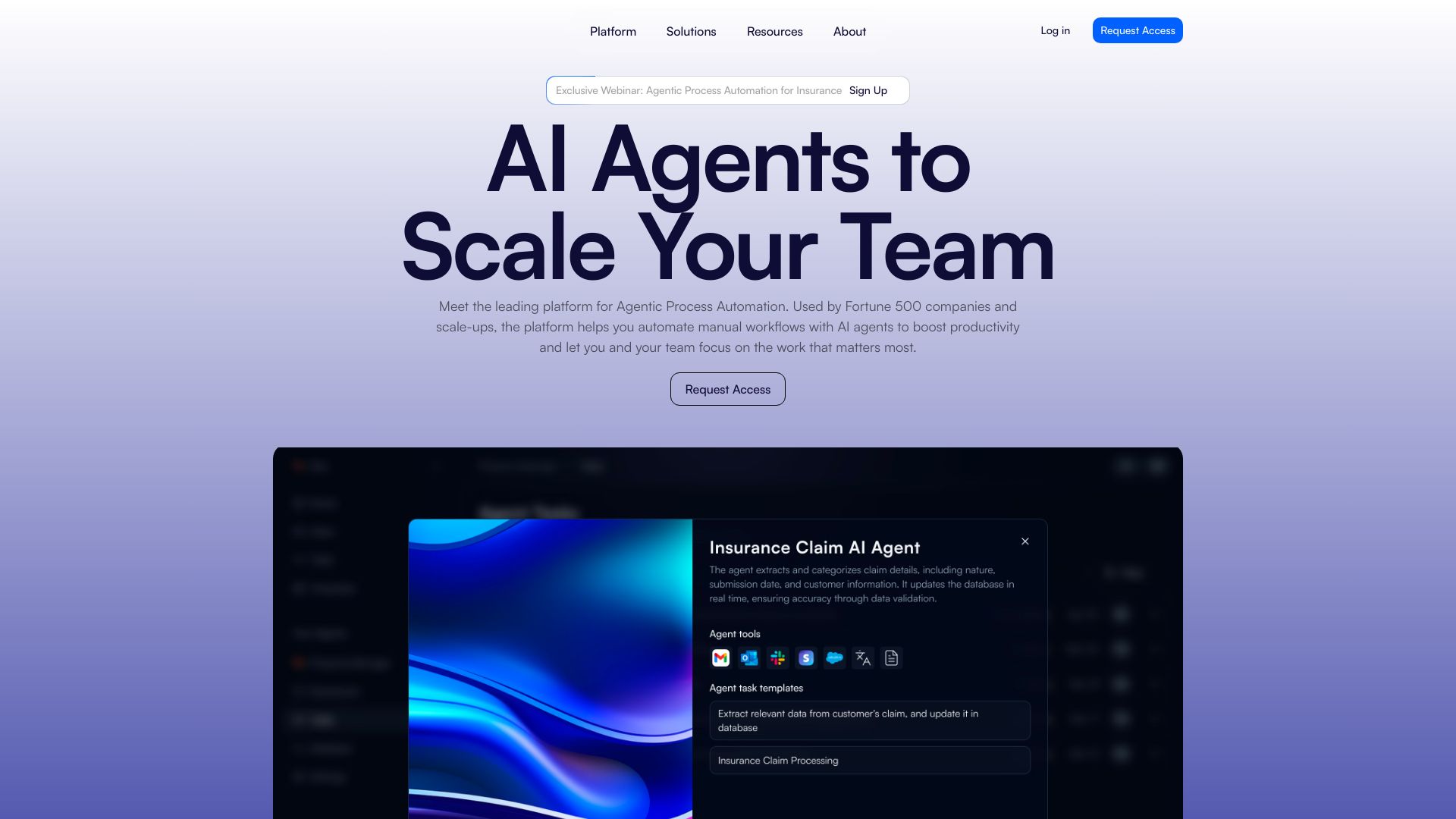
Beam AI takes a different route from conventional campaign software. Its core proposition is agentic process automation: teams can build and deploy AI agents, then use multi-agent capabilities for more involved processes. That makes it relevant when marketing automation is tangled with research, qualification, internal handoffs, or repetitive operations. The reported 114.0K monthly visits suggest meaningful interest, but the more important evaluation is whether you can define a process clearly enough for an agent to execute. This is a platform for workflow redesign, not a quick copywriting add-on.
Best for
Businesses automating repeatable processes across departments
Teams that want to build and deploy AI agents
Operations and marketing leaders exploring multi-agent workflows
Limitations
May require initial setup and configuration
New users may face a learning curve
Pricing is hidden behind a sales or vendor-information step
Shortlist signal: Put Beam AI on the list when your marketing problem is a process bottleneck rather than a lack of campaign templates.
4. ERP.AI

- Leading organizations
- Free 10 users and 1,000 agent credits
- Starts at Check vendor pricing
- Usage signal: 26.5K
Why it matters
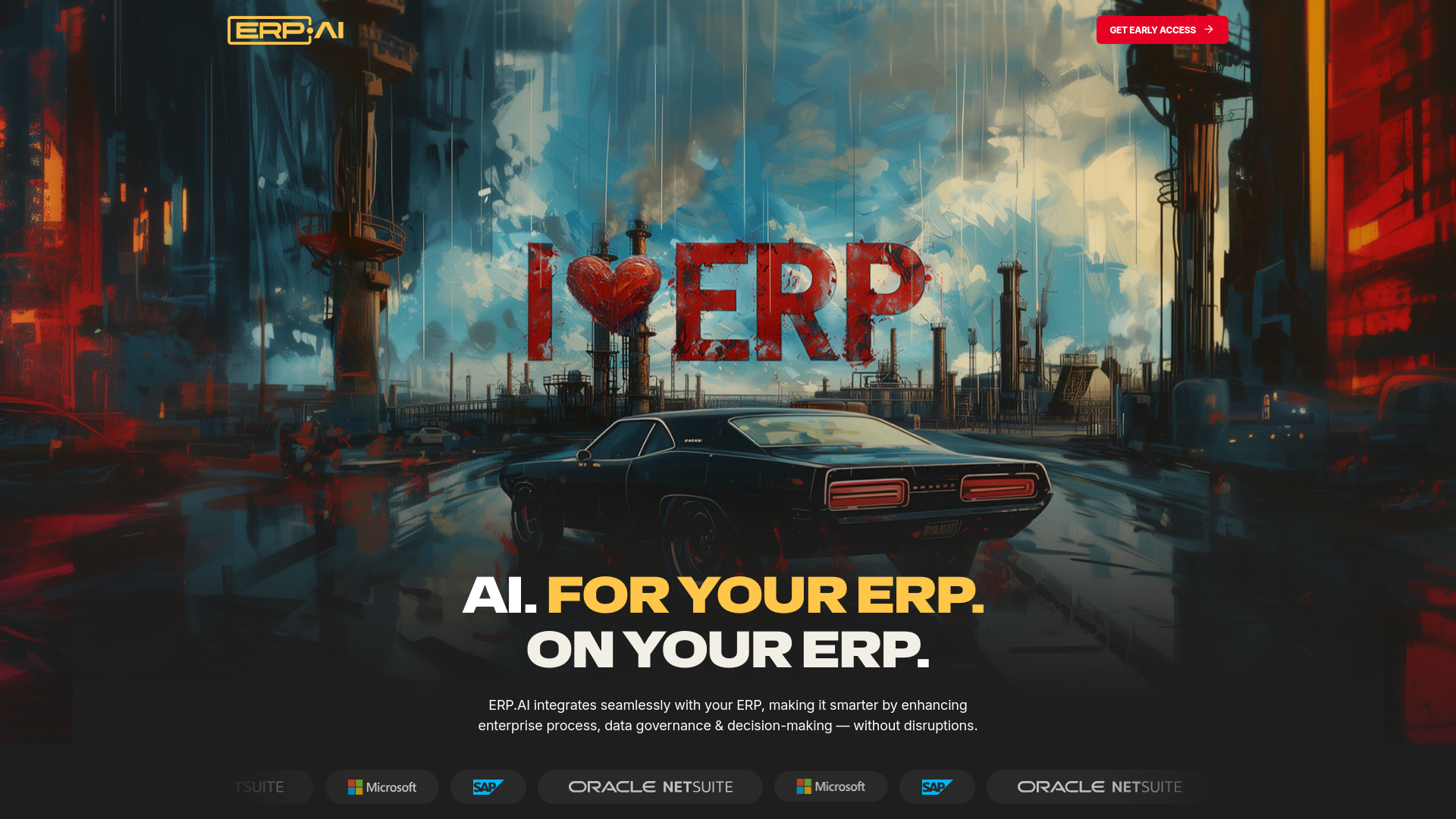
ERP.AI is an unexpected but valuable alternative for enterprise marketing automation because it puts business systems at the center. AI-powered applications on demand, autonomous AI agents, and unified enterprise knowledge can help organizations connect campaign or customer workflows with the operational data already held in an ERP environment. That is a stronger angle than adding another disconnected marketing dashboard. The trade-off is substantial integration work: an ERP-centered deployment can require IT resources, especially when on-premises systems are involved.
Best for
Leading organizations with ERP-based processes
Teams that need autonomous actions around enterprise data
Buyers looking for on-demand applications and unified knowledge
Limitations
Requires integration with existing ERP systems
On-premises deployment may need significant IT resources
Pricing details require a direct vendor conversation
Shortlist signal: Consider ERP.AI when enterprise data governance and ERP workflow automation matter more than traditional campaign management.
5. Enterprise Bot

- Customer service managers
- Free plan available
- Starts at Check vendor pricing
- Usage signal: 12.0K
Why it matters
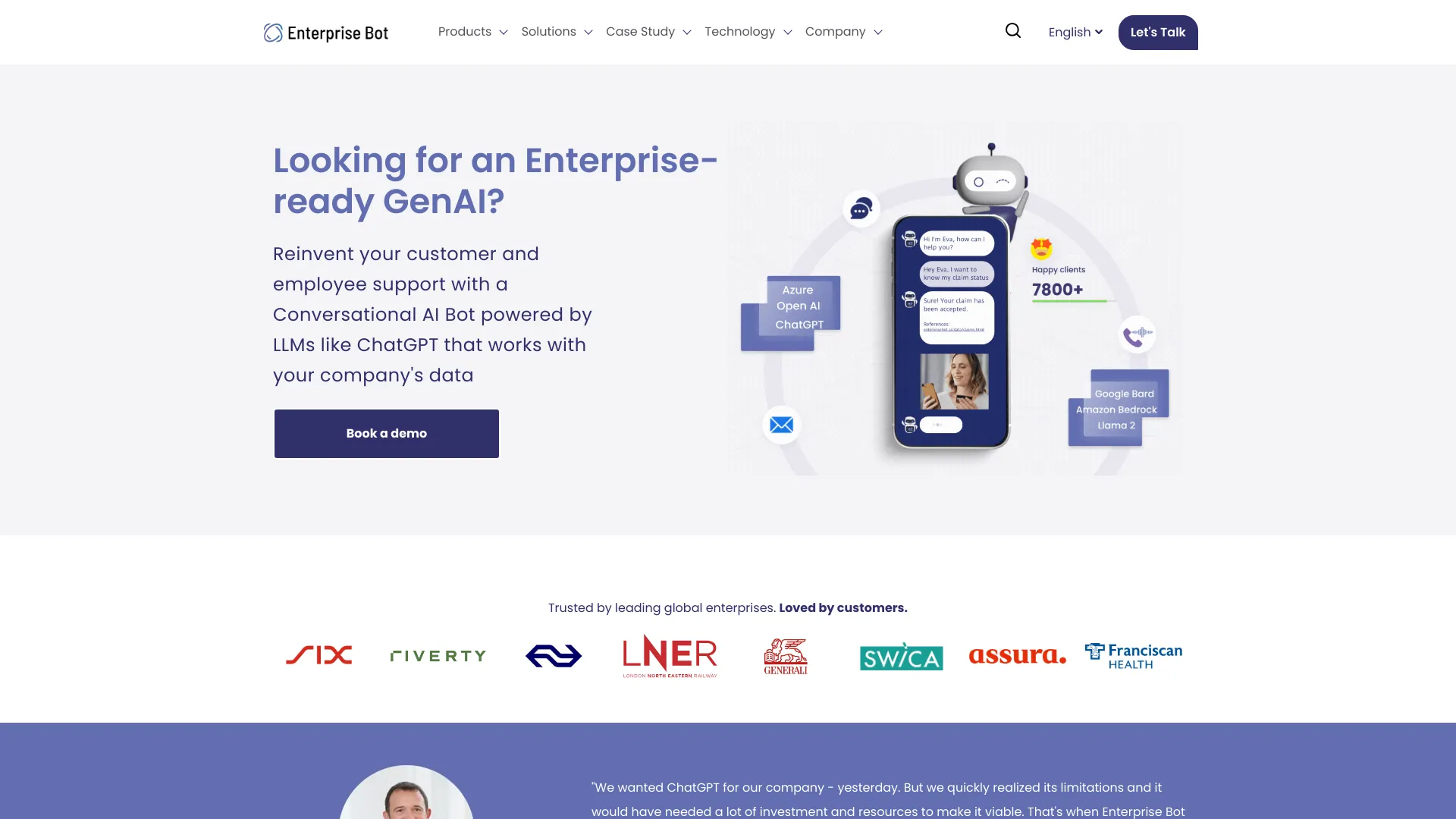
Enterprise Bot expands the meaning of marketing automation into the conversations that shape retention and customer experience. Its suite includes EB AIDA for AI-powered chatbots, EB ERA for email response automation, and EB AIVA for voice bots. That combination is especially relevant to customer service managers who want consistent responses across channels without treating chat, email, and voice as separate projects. Industry-specific options such as TravelAI and RetailAI add a useful vertical angle. Expect implementation and customization work before the system reflects your brand, policies, and escalation rules.
Best for
Customer service managers automating customer and employee support
Organizations handling chat, email, and voice interactions
Industry teams that benefit from specialized conversational workflows
Limitations
May require an initial implementation investment
Customization may be needed for specific business needs
Pricing is not presented as a simple self-serve starting point
Shortlist signal: Choose Enterprise Bot when conversational support, rather than campaign sequencing, is the highest-value automation opportunity.
6. AdsGency AI

- Marketers
- Free plan available
- Starts at Check vendor pricing
- Usage signal: 7.1K
Why it matters
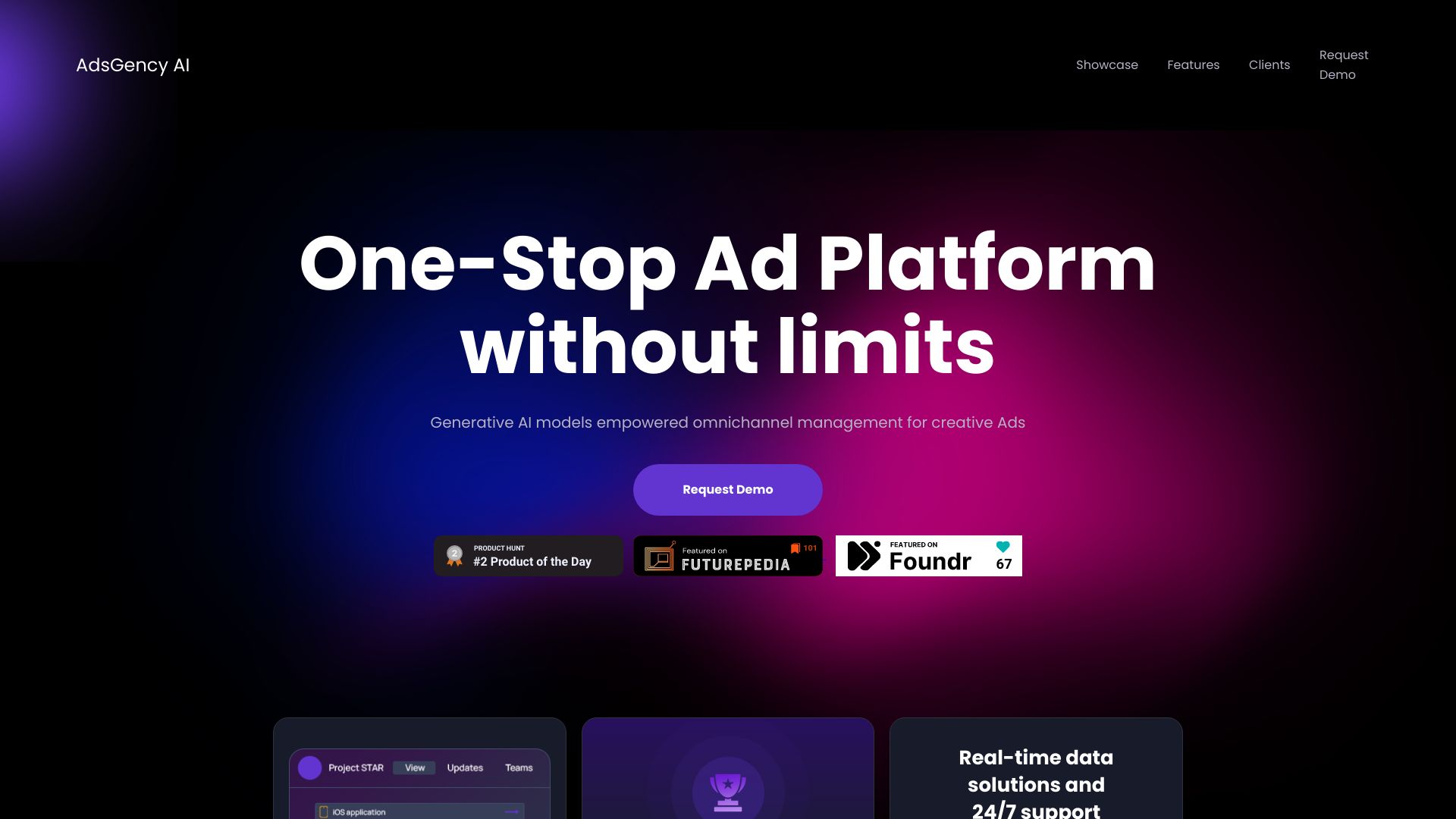
AdsGency AI is built for the paid-media portion of the funnel. AI-powered ad creation, precise audience targeting, and campaign automation give marketers a unified place to move from creative production to ongoing optimization. That focus makes it a sensible adjacent option for teams that already have CRM and email systems but struggle to keep paid campaigns moving. The limitation is also its defining boundary: this is not automatically a replacement for a full customer-lifecycle platform. Teams should test how much creative control they retain and where human review fits into approvals.
Best for
Marketers managing multiple paid campaigns
Teams that need audience targeting and campaign automation together
Advertisers looking for real-time analytics and optimization workflows
Limitations
May require training to use the complete feature set
AI reliance may reduce creative control for some users
Pricing requires a vendor check before procurement
Shortlist signal: Add AdsGency AI when paid acquisition is the clearest automation gap and ad production is slowing campaign velocity.
7. AI Marketing CRM Software

- Sales teams
- Free plan available
- Starts at Starter: $29.99 / Month
- Usage signal: Not listed
Why it matters
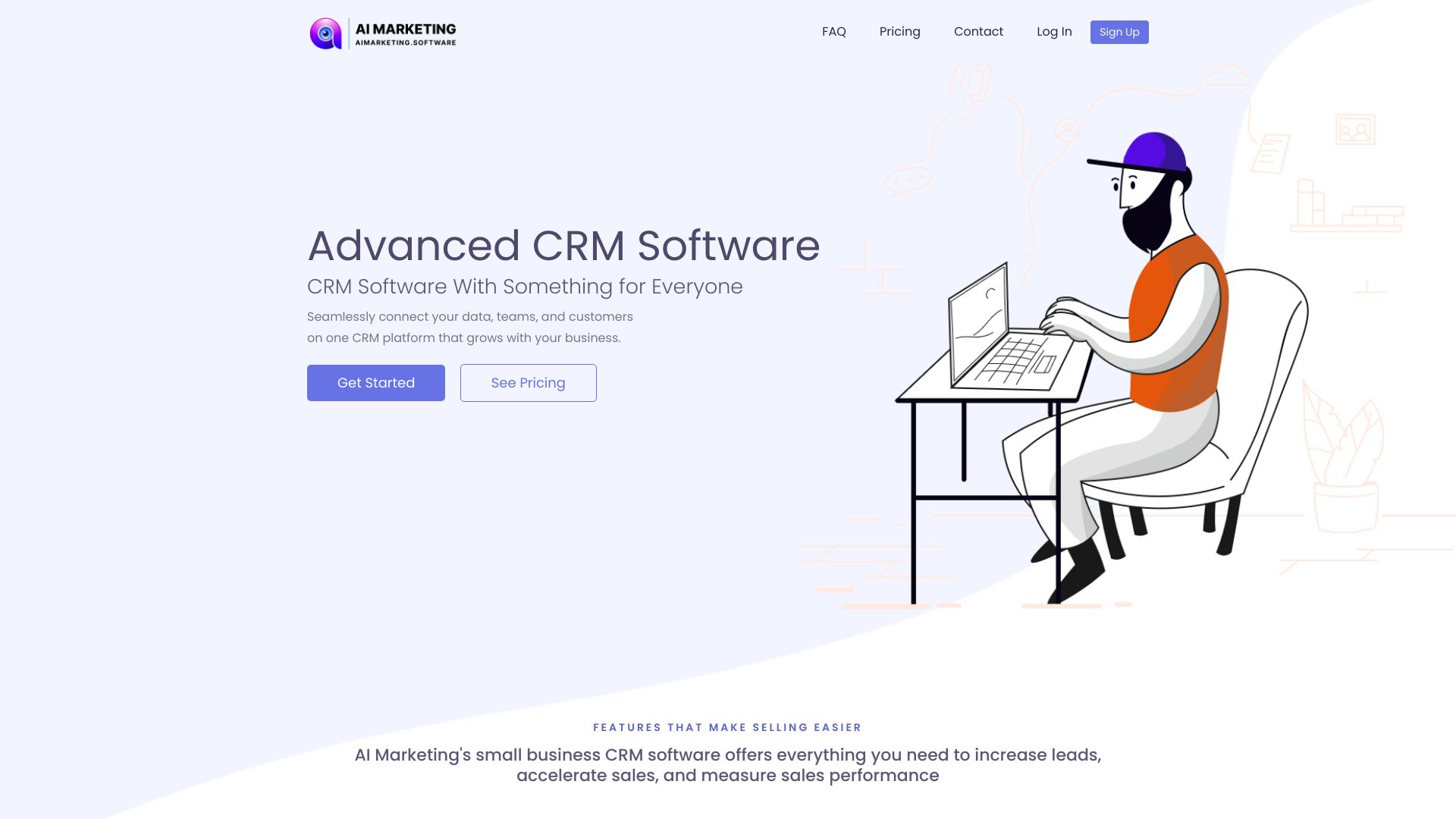
AI Marketing CRM Software keeps the evaluation grounded in the fundamentals: real-time analytics, personalized communication, and automated workflows. For sales teams, that combination may be more useful than a large collection of specialized AI features because it connects customer context with follow-up activity. The platform is positioned as a scalable CRM, so it can suit teams that want to begin with a recognizable sales workflow and add automation over time. The trade-off is a likely training requirement, and the price may be a barrier for smaller teams.
Best for
Sales teams needing CRM and automated follow-up in one platform
Businesses that value real-time analytics
Teams building personalized communication workflows
Limitations
May require training to use all features effectively
Pricing may be a barrier for some small businesses
The product's strongest case is CRM-led automation, not every marketing segment
Shortlist signal: Start with this platform when your priority is connecting sales records, analytics, personalization, and automated workflows.
8. MyAIMarketing

- E-commerce businesses
- Free plan available
- Starts at Starter: 18 €/mois
- Usage signal: Not listed
Why it matters
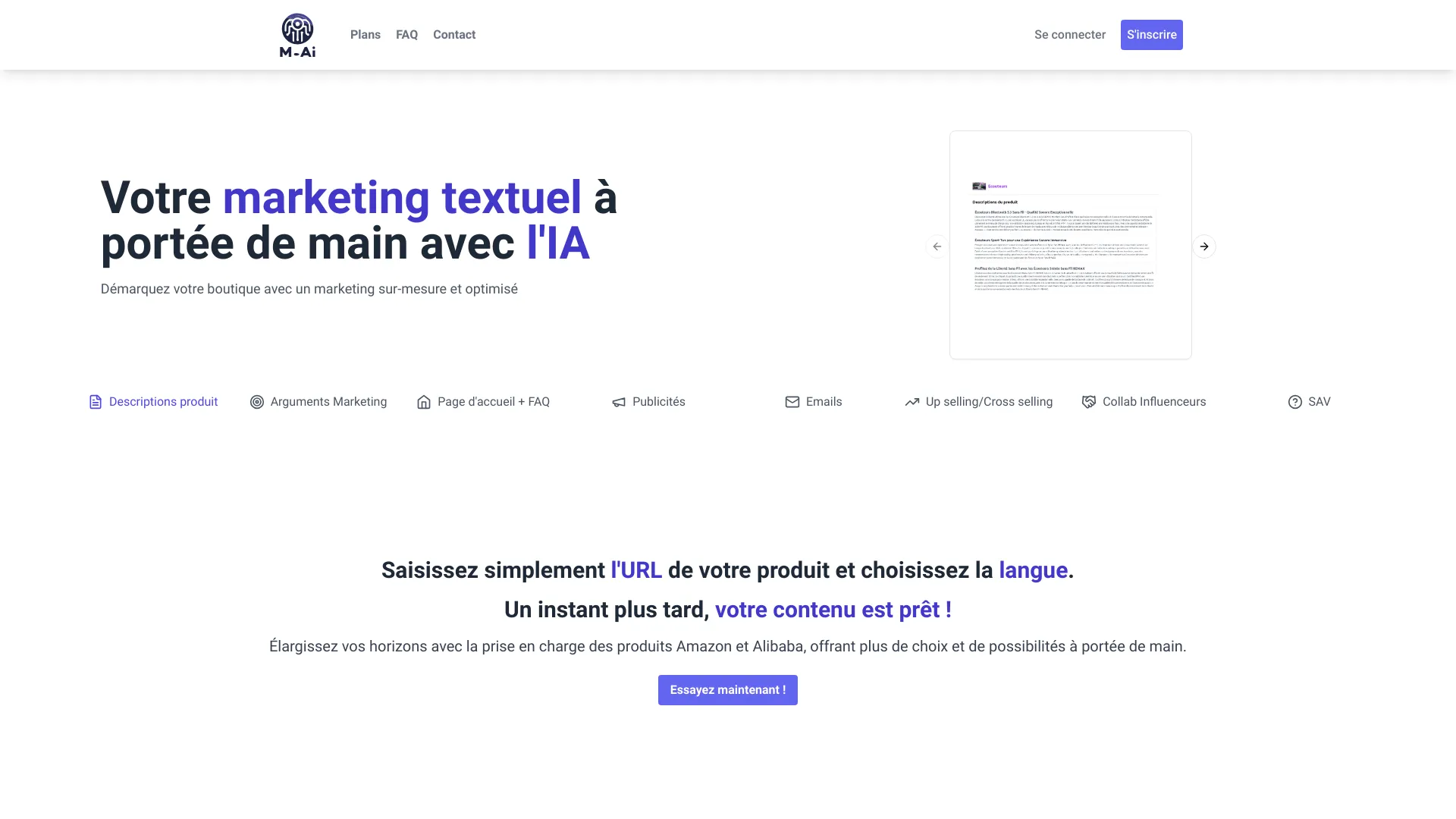
MyAIMarketing takes a focused ecommerce approach: provide a product URL, then generate targeted marketing text, product descriptions, emails, ads, and marketing arguments. That input-to-output workflow is attractive for merchants with large catalogs or small teams that need more campaign variations without writing every asset from scratch. It is narrower than a full marketing automation suite, but that is precisely the point. Buyers should judge it on speed and usefulness of product-led content generation, not expect it to manage every customer journey.
Best for
Ecommerce businesses producing copy across many products
Teams generating descriptions, emails, and ads from product URLs
Marketers who want targeted text without building a large automation stack
Limitations
AI output still needs human review for accuracy and tone
Results depend on the quality of the product URL and input data
The focused content workflow may not replace broader campaign automation
Shortlist signal: Choose MyAIMarketing when catalog content production is the repetitive task consuming your marketing team's time.
9. TEKHUB AI

- Small and medium-sized businesses
- Free plan available
- Starts at Check vendor pricing
- Usage signal: Not listed
Why it matters
TEKHUB AI is best understood as a services-led route into marketing automation. Its offer spans AI software development, AI integration, and AI consulting, which can appeal to SMBs whose needs do not fit an off-the-shelf platform. That flexibility is useful when a team has a specific workflow, legacy system, or integration requirement. It also means the buying process is less comparable to a self-serve SaaS product. Ask for a clear scope, deliverables, ownership model, and ongoing support plan before treating it as a platform purchase.
Best for
SMBs needing tailored AI software or integrations
Teams that want advisory help before selecting an automation workflow
Businesses with requirements that standard SaaS tools do not cover
Limitations
No specific pricing information is readily available
Details on the SaaS platforms offered are limited
Custom work can make timelines and total costs harder to compare
Shortlist signal: Talk to TEKHUB AI when integration or customization is the problem and a packaged marketing platform will not fit.
10. MarketingAI

- SaaS founders
- Free plan available
- Starts at Per URL: $79 $39
- Usage signal: Not listed
Why it matters
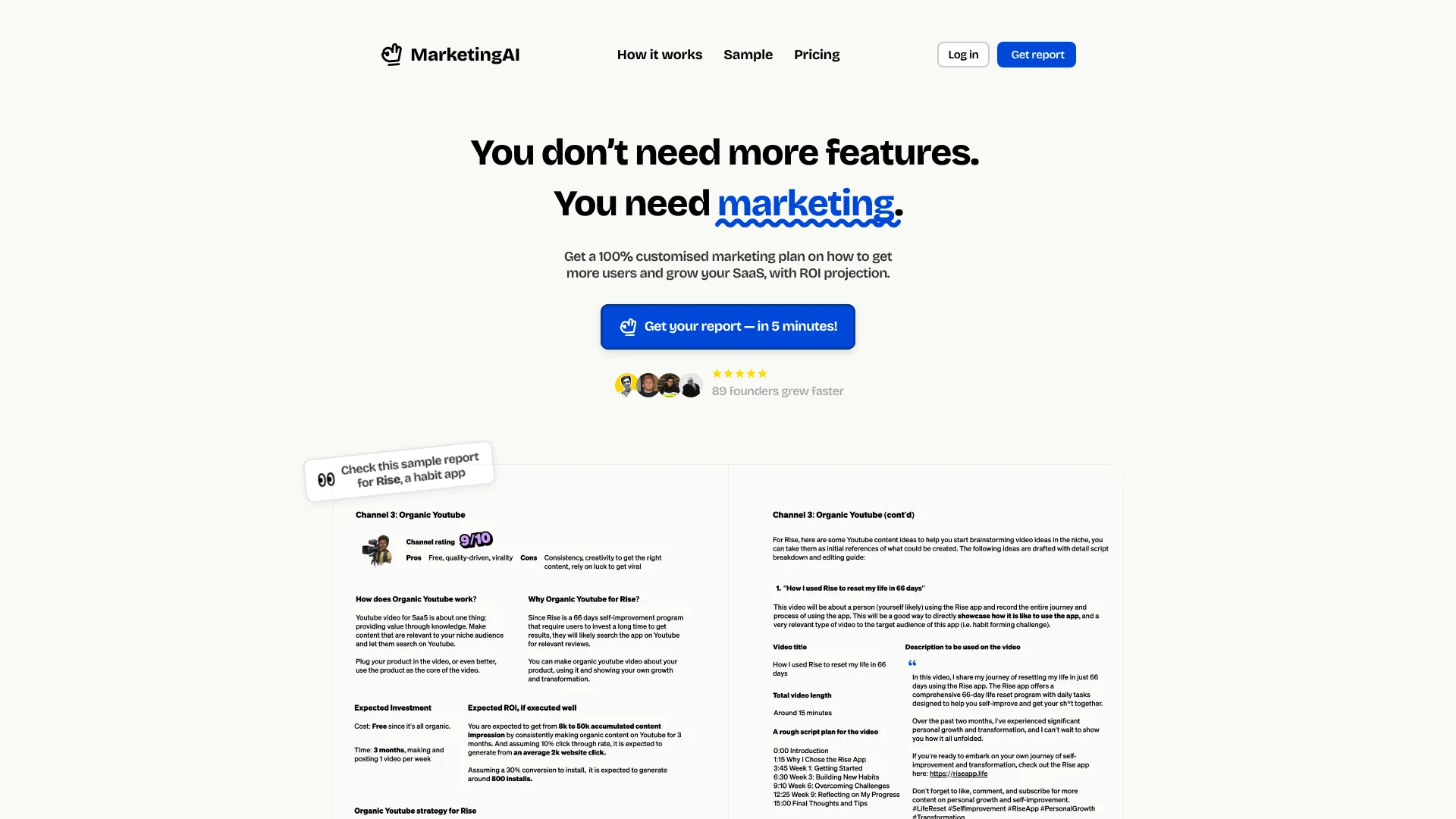
MarketingAI targets the strategy layer rather than day-to-day campaign execution. It generates customized marketing plans, channel selections, and ROI projections, with a reported fast report-generation workflow of around five minutes. For a SaaS founder who needs a structured acquisition plan before hiring a full marketing team, that is a useful starting point. But a generated strategy is still a hypothesis. The cost per URL and reliance on AI for strategic recommendations mean founders should validate the proposed channels, assumptions, and expected returns before committing budget.
Best for
SaaS founders planning user acquisition
Teams that need a channel plan and ROI projection quickly
Buyers using AI research to structure early marketing decisions
Limitations
Cost is charged per URL
AI-generated strategy still needs experienced review
It is more of a planning tool than an end-to-end automation platform
Shortlist signal: Use MarketingAI when strategic planning is the first bottleneck and you need a fast, structured acquisition hypothesis.
What to test before choosing
A convincing demo can hide the work required after purchase. Run the same test brief through the two or three platforms that match your segment.
- 1
Map one complete workflow. For outreach, define the path from lead filtering to personalization and follow-up. For support, test a customer question, escalation, and handoff. For paid media, test creation, targeting, approval, and optimization.
- 2
Inspect the human checkpoints. Ask where a person reviews AI output, approves an action, corrects a response, or stops an agent. Enterprise automation should make control visible rather than assume perfect output.
- 3
Test your actual data. Use a representative product URL, customer record, ERP field, campaign brief, or support question. Generic demo data makes every system look easier than it is.
- 4
Measure setup effort. Record the number of configuration steps, required integrations, custom fields, approval rules, and training sessions. A strong feature list can lose its value if the team cannot maintain it.
- 5
Clarify pricing boundaries. Confirm what counts as a contact, email, agent credit, URL, user, channel, or implementation service. Several tools in this guide require a direct pricing conversation.
- 6
Review output quality. Check personalization, brand tone, factual accuracy, targeting logic, and reporting. Automation that creates more review work is not automation savings.
What to do next
Start with a one-page requirements brief containing your primary workflow, source systems, monthly volume, approval rules, and success metric. Then choose no more than three tools for a hands-on trial or vendor call.
For outbound agencies, begin with Instantly.ai and compare it with ActiveCampaign if lifecycle marketing matters. For agentic or ERP-heavy operations, compare Beam AI with ERP.AI and bring an IT owner into the conversation early. Customer service managers should start with Enterprise Bot, while paid-media teams should test AdsGency AI against their existing ad workflow. If the need is narrower, use AI Marketing CRM Software for sales automation, MyAIMarketing for ecommerce content, TEKHUB AI for custom integration, or MarketingAI for planning.
Do not select a platform because it has the broadest AI feature list. Select the tool that can automate one valuable process reliably, show its work, and fit the systems your team already uses.
Common mistakes when choosing from a complex top list
Treating every tool as a direct substitute. A lead database, ERP agent layer, support bot, and marketing planner solve different problems.
Confusing content generation with workflow automation. Generating an email is not the same as routing a lead, triggering a sequence, measuring an outcome, and stopping when a condition changes.
Ignoring implementation ownership. Enterprise workflows need a named person responsible for integrations, permissions, prompts, review rules, and ongoing maintenance.
Using traffic as a quality score. Usage signals provide context, but a specialist with a smaller audience may fit your process better.
Skipping the data-quality test. AI personalization, product copy, and autonomous actions are only as useful as the records and inputs behind them.
Assuming the advertised free access is a complete trial. Check quotas, contact limits, email limits, credits, channels, and whether key capabilities remain locked.
Comparing prices without comparing units. Monthly subscriptions, per-URL charges, agent credits, implementation fees, and enterprise quotes are not interchangeable.
Letting the demo define success. Set a measurable target before the call, such as faster lead qualification, fewer support handoffs, more usable ad variations, or shorter planning time.
FAQ
Instantly.ai and ActiveCampaign share the highest score at 94/100, but they lead different segments. Instantly.ai is the stronger fit for agency-led outbound outreach, email accounts, warmups, enrichment, and buying signals. ActiveCampaign is the better all-in-one choice when you need marketing automation, omnichannel marketing, content creation, and predictive sending together.