
Choosing among the top large language models march options is less about crowning one universal winner and more about matching the work to the right kind of product. This guide compares 10 tools: some provide model APIs or downloadable models, while others help you test, route, host, or apply LLMs to private data. That distinction matters. A model you can run locally is not the same purchase decision as a subscription that lets you switch between several hosted models, and neither is the same as a tool for checking answer reliability. We grouped the field by workflow so you can build a useful shortlist instead of comparing unlike products by name alone.
Start here
Start with the job you need done, not a headline benchmark. For broad API and multimodal workflows, Zhipu AI Open Platform is the most complete starting point in this group. For an open model you can download and adapt, Mistral 7B is a more direct fit. If you need a practical way to compare outputs, Model Royale and MIOSN approach the problem from different angles: one puts models side by side on the same prompt, while the other helps match tasks to models with cost in mind. For sensitive internal knowledge, eLLMo is the specialist pick; for reliability checks on generated answers, Cleanlab Chat makes trustworthiness the focus.
A fast shortlist by need:
Broad model and API work: Zhipu AI Open Platform
Downloadable, open model experimentation: Mistral 7B
Comparing models on your own prompts: Model Royale or MIOSN
Private knowledge and enterprise controls: eLLMo
Reducing and surfacing hallucination risk: Cleanlab Chat
The list also includes an unusually large agentic model project, a multi-model subscription, a model-development resource hub, and collaborative distributed inference. Those are useful alternatives, but they solve different problems from picking a chat model for everyday writing.
Segment comparison
| Segment | Strongest fit in this guide | What you are really choosing | Watch for |
|---|---|---|---|
| Model APIs and broad model portfolios | Zhipu AI Open Platform | One platform for text, reasoning, multimodal services, and development workflows | Product breadth can make pricing and deployment choices harder to navigate |
| Open or emerging model research | Mistral 7B, GLM 5 | Whether you want a downloadable model or an ambitious agentic architecture to assess | Deployment skill, alignment, and benchmark maturity matter |
| Model comparison and selection | Model Royale, MIOSN | How to test task fit, response time, token use, and cost before standardizing | A quick comparison is not a substitute for your own evaluation set |
| Private and collaborative deployment | eLLMo, Collaborative LLM Tool | Whether data control or access to shared compute is the main constraint | Deployment effort, network conditions, and governance need attention |
| Reliability and applied development | Cleanlab Chat, LLM Farm | Whether you need trust signals on answers or a broader set of building resources | Validate workflow fit and the exact features available before rollout |
Shortlist paths
| Your priority | Start with | Why it belongs on the shortlist | First question to answer |
|---|---|---|---|
| Build across multiple AI modalities | Zhipu AI Open Platform | Its listed services cover LLM APIs plus speech, image, video, OCR, embeddings, and reranking | Which individual services and deployment options does your project actually need? |
| Prototype with a downloadable model | Mistral 7B | The offering includes downloadable base models and fine-tuned model guidance | Can your team operate and align the model for its intended use? |
| Choose a model using real prompts | Model Royale | Same-prompt comparisons expose response time and token-use differences | How will your team define a good answer consistently? |
| Keep answers grounded in internal content | eLLMo | RAG, role-based access, and flexible deployment are central to its pitch | What security, access, and on-prem requirements are mandatory? |
| Explore distributed inference | Collaborative LLM Tool | It distributes model loading and supports inference and fine-tuning | Is the collaboration and network trade-off acceptable for your workload? |
Ranking snapshot
| Rank | Tool | Score | Best suited to |
|---|---|---|---|
| #1 | Zhipu AI Open Platform | 92/100 | AI engineers building with broad model APIs |
| #2 | Mistral 7B | 89/100 | Researchers who want an open model to deploy or fine-tune |
| #3 | GLM 5 | 88/100 | Researchers assessing agentic models and sovereign infrastructure |
| #4 | AllNewModels | 88/100 | Developers who want several LLMs behind one subscription |
| #5 | Model Royale | 88/100 | Developers comparing model responses and usage |
| Rank | Tool | Score | Best suited to |
|---|---|---|---|
| #6 | LLM Farm | 88/100 | AI developers looking for model tools and building resources |
| #7 | MIOSN | 88/100 | Teams matching tasks to models with cost in mind |
| #8 | Collaborative LLM Tool | 88/100 | Researchers exploring distributed model inference |
| #9 | eLLMo | 88/100 | Enterprises applying private LLMs to client data |
| #10 | Cleanlab Chat | 88/100 | Data scientists checking answer trustworthiness |
The ranking favors practical fit across the category, not a claim that every tool is a direct substitute for every other one. The first two entries are model-focused choices; several later entries are comparison or deployment layers that can help you decide how to use models in a real workflow.
How we grouped and ranked the list
We treated "large language model" as a working category rather than a narrow list of chat interfaces. The tools here span model access, open-model experimentation, model discovery, deployment, and reliability. That broader framing reflects how teams actually make an LLM decision: they may choose a model, but they also need to test it against real prompts, manage costs, connect it to internal knowledge, and decide where inference should run.
The order weighs the strength and breadth of the listed capabilities, the clarity of the use case, and the audience each product serves. A broad platform can rank highly because it addresses more stages of model development, while a focused evaluator can still be the better choice for a team whose central problem is selection. Scores are not benchmark results and should not be read as a universal quality ranking of model outputs. The tools also differ in how much technical work they ask of you: a downloadable model, distributed inference system, and hosted multi-model subscription each carry distinct operational trade-offs.
Pricing deserves special care. Some listings provide a specific reference price or a new-user offer, while others do not make a clean starting price clear. Treat any introductory credit or model-family reference as a point to verify, not as a complete cost estimate. For a fair comparison, price the workload you expect to run, including the model, context, usage volume, and deployment requirements.
The phrase top large language models january may appear in older searches and roundups, but a month label alone does not establish that a model is current, better, or available on the same terms. Recheck model versions, licensing, access, and pricing when you make a purchase decision.
Ranked field notes
1. Zhipu AI Open Platform

- AI engineers building with multimodal model APIs
- 20M free tokens + 120 image/video resource-pack uses
- Starts at New-user bonus: free
- Usage signal: 6.9M
Why it matters
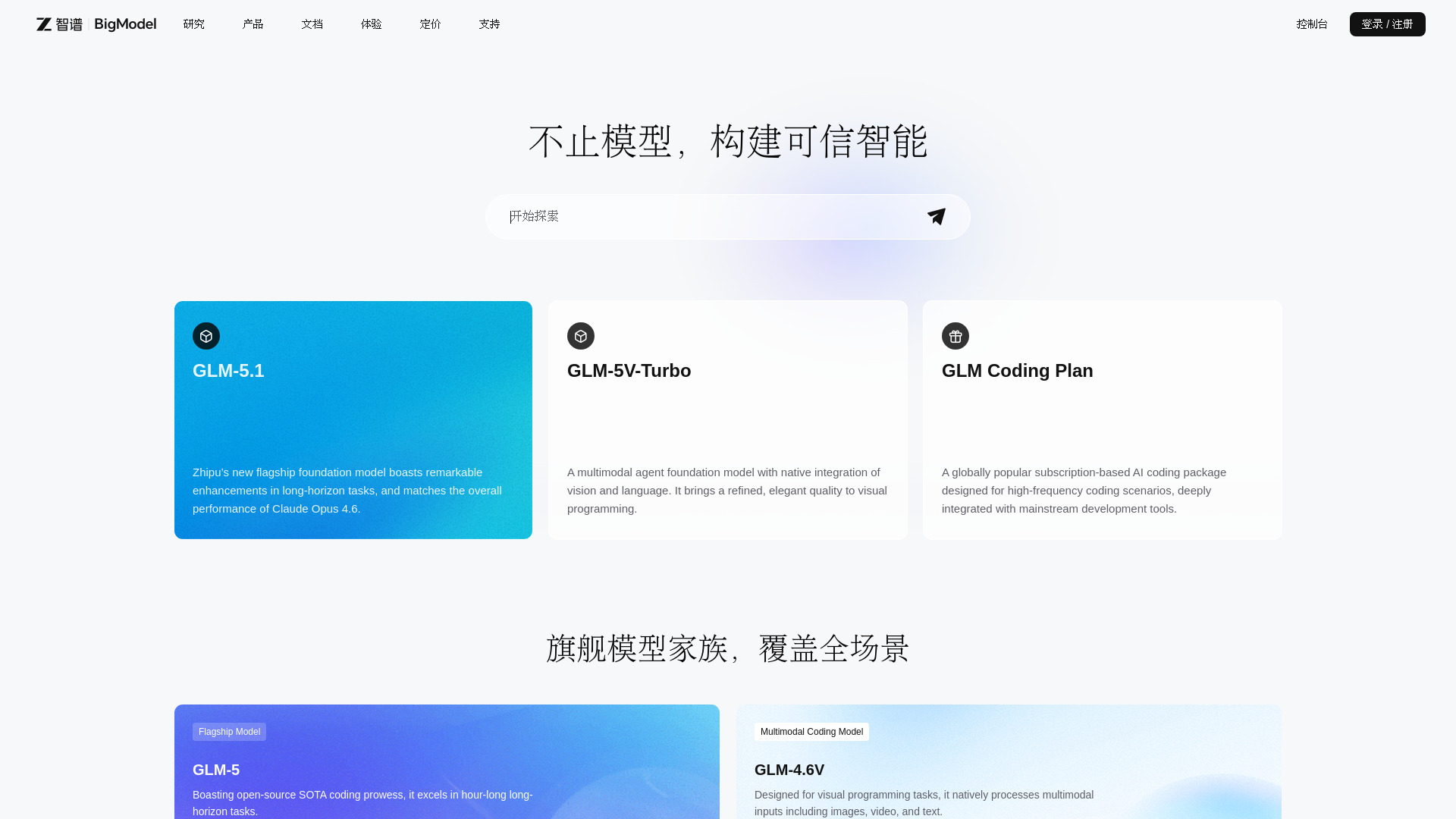
Zhipu AI Open Platform stands out for breadth: the listed portfolio spans text and reasoning models as well as multimodal services, with agent, MCP, knowledge-base, and fine-tuning workflows alongside speech, OCR, image and video generation, search, embeddings, and reranking. That makes it a plausible home base for an engineering team building more than a single chat feature. The value is not simply a long menu of models; it is the chance to explore related model services from one platform. The catch is that breadth complicates the buying decision. Pricing and service options vary across product lines, and some enterprise or private-deployment solutions require a sales conversation.
Best for
AI engineers prototyping applications that may need text, reasoning, and multimodal APIs.
Teams exploring agent, knowledge-base, MCP, or fine-tuning workflows alongside inference.
Buyers who want to investigate multiple model services from one provider.
Limitations
The large catalog can make it harder to identify the right service and understand its pricing.
Enterprise and private deployment options may require contacting sales.
Free tokens and resource-pack uses are useful for exploration, but do not establish the cost of production usage.
Shortlist signal: Add Zhipu AI Open Platform when your project needs a broad set of model APIs and you are prepared to compare the pricing and deployment terms service by service.
2. Mistral 7B

- AI researchers deploying or adapting an open model
- Free chatbot demos
- Starts at Check vendor pricing
- Usage signal: Not listed
Why it matters
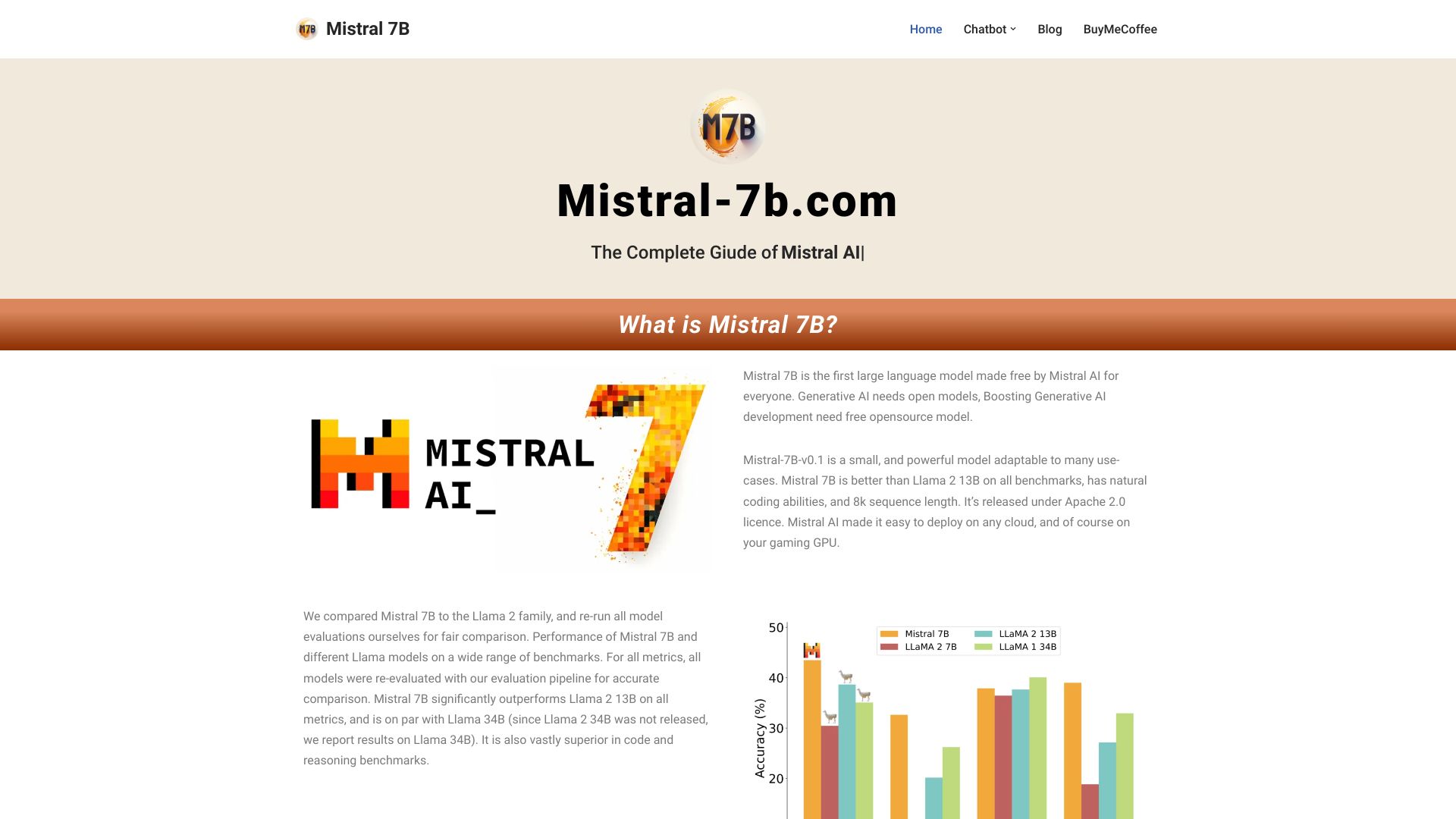
The practical distinction with Mistral 7B is that the offering includes downloadable base models, not just an online chatbot. That gives researchers and technically capable teams room to explore local deployment and fine-tuning, while the chatbot demos and guides offer a lower-friction way to get acquainted with the model family. Its reported performance relative to other 7B and 13B models is a reason to evaluate it, not a guarantee that it will win on your workload. You still need to test your own prompts, decide how to align a fine-tune, and make sure your team can manage deployment. Some fine-tuned models may generate problematic text if alignment is not handled carefully.
Best for
AI researchers who want a downloadable base model to assess or adapt.
Developers who can handle model deployment and fine-tuning themselves.
Teams that want to compare chatbot demos and fine-tuned variants before committing engineering time.
Limitations
Deployment and fine-tuning require technical expertise.
Fine-tuned variants need careful alignment and output checks.
The listing does not provide a clear starting price for paid access or related services.
Shortlist signal: Shortlist Mistral 7B when access to a downloadable model and the freedom to experiment matter more than a turnkey hosted workflow.
3. GLM 5
- AI researchers assessing agentic models and sovereign infrastructure
- MIT license expected
- Starts at GLM-4.x reference: $0.11/M tokens
- Usage signal: Not listed
Why it matters
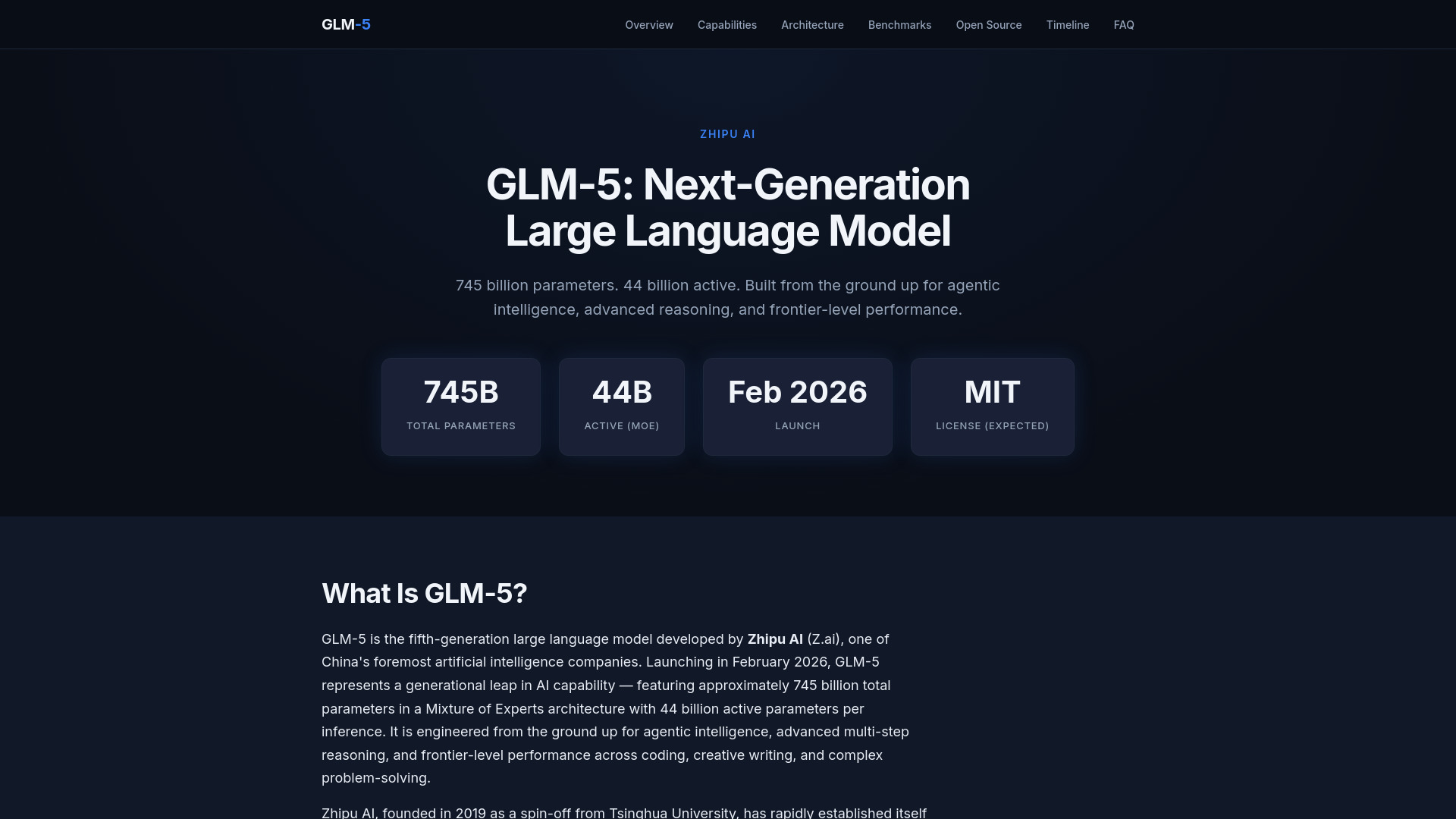
GLM 5 is the most ambitious research-oriented entry here. Its stated architecture is a 745B-total, 44B-active mixture-of-experts model, paired with agentic planning and tool-use capabilities. The platform also emphasizes independence from US-manufactured hardware through Huawei Ascend and MindSpore. That combination makes it relevant to researchers evaluating both model design and infrastructure strategy. But this is a candidate to investigate, not a model to accept on headline claims alone: official benchmarks are still pending full release, and training on MindSpore or Ascend may require specialized expertise. The listed $0.11-per-million-token figure is a GLM-4.x API reference, not a confirmed GLM 5 price; keep that distinction clear when estimating cost.
Best for
Researchers assessing mixture-of-experts architectures and agentic planning workflows.
Organizations exploring infrastructure options outside US-manufactured hardware.
Technical teams willing to validate a developing model and its ecosystem hands-on.
Limitations
Official benchmarks are not yet fully released in the product information.
MindSpore and Ascend may involve a specific technical learning curve.
The quoted API reference is for GLM-4.x; it should not be treated as GLM 5 pricing.
Shortlist signal: Add GLM 5 to a research shortlist if agentic capability and infrastructure sovereignty are priorities, then wait for benchmarks and confirm the actual model terms.
4. AllNewModels

- Developers wanting multiple LLMs under one subscription
- Free plan available
- Starts at Check vendor pricing
- Usage signal: Not listed
Why it matters
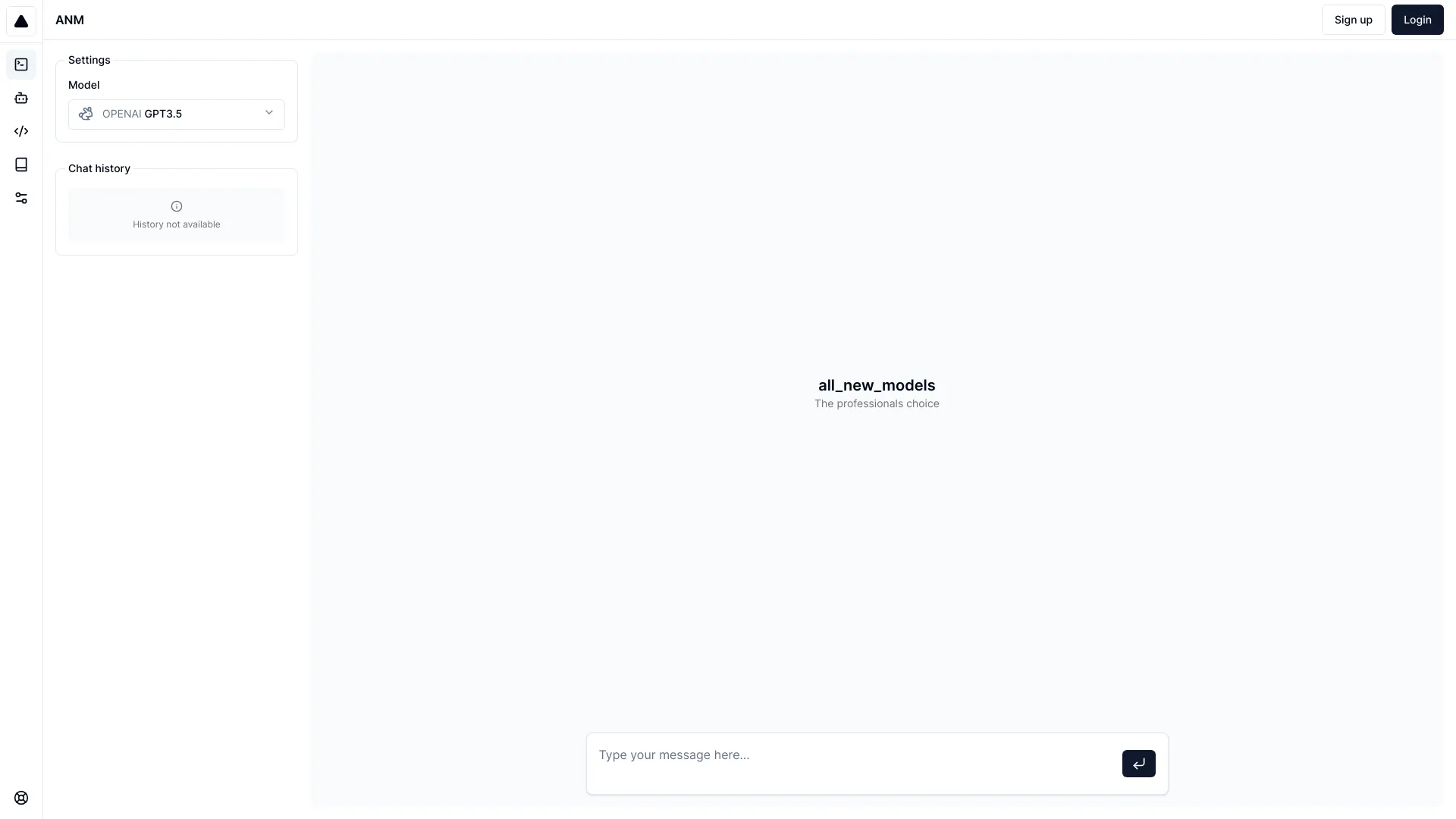
AllNewModels is aimed at a familiar source of friction: developers who want to try multiple LLMs without assembling a separate access path for each one. Its central offer is access to several models under one subscription, which can make early exploration more convenient and give a team a place to compare alternatives. That convenience is the whole case for shortlisting it; the product information does not establish detailed model-by-model controls, usage limits, or pricing tiers, so do not assume that a single subscription makes every model equally available. Check the exact model list and subscription limits against the experiments you plan to run. If you need fine-grained API routing or deployment controls, verify those specifics before treating the platform as infrastructure.
Best for
Developers who want to explore several LLMs through one platform.
Small teams that value a simpler starting point for model access.
Buyers comparing subscription convenience with separate vendor accounts.
Limitations
Full access requires a subscription, and the terms may differ by tier.
The exact model lineup and model-specific limits should be checked before purchase.
Detailed pricing is not clear from the listed information.
Shortlist signal: Shortlist AllNewModels when consolidating access to several LLMs is more important than choosing a specific model API or deployment stack.
5. Model Royale

- Developers comparing LLMs with the same prompt
- Free model comparison listed
- Starts at Check vendor pricing
- Usage signal: Not listed

Why it matters
Model Royale addresses a useful evaluation habit: send the same prompt to different LLMs and compare the results, rather than relying on memory or a model's reputation. It also analyzes response time and token use, adding two concrete dimensions to the comparison. That is a practical first pass for developers deciding which models deserve more testing. The important caveat is that "quality" remains subjective unless your team defines what a good answer looks like. A quick side-by-side can reveal obvious differences, but it cannot replace a repeatable evaluation set, careful review, or task-specific acceptance criteria. The product information is fairly limited, so confirm exactly how comparisons and any paid access work before making it part of a production evaluation process.
Best for
Developers who want to test the same prompt against multiple models.
Teams comparing response time and token consumption during early selection.
Evaluators who need a quick exploratory screen before building a formal benchmark.
Limitations
Quality judgments can vary by reviewer unless evaluation criteria are defined.
The available product details do not explain every comparison or scoring method.
A simple prompt comparison is not a complete substitute for testing real workloads.
Shortlist signal: Add Model Royale when you need a quick, same-prompt comparison and will follow it with your own consistent quality checks.
6. LLM Farm
- AI developers exploring LLM tools and building resources
- Free tools and template resources listed
- Starts at Check vendor pricing
- Usage signal: Not listed
Why it matters
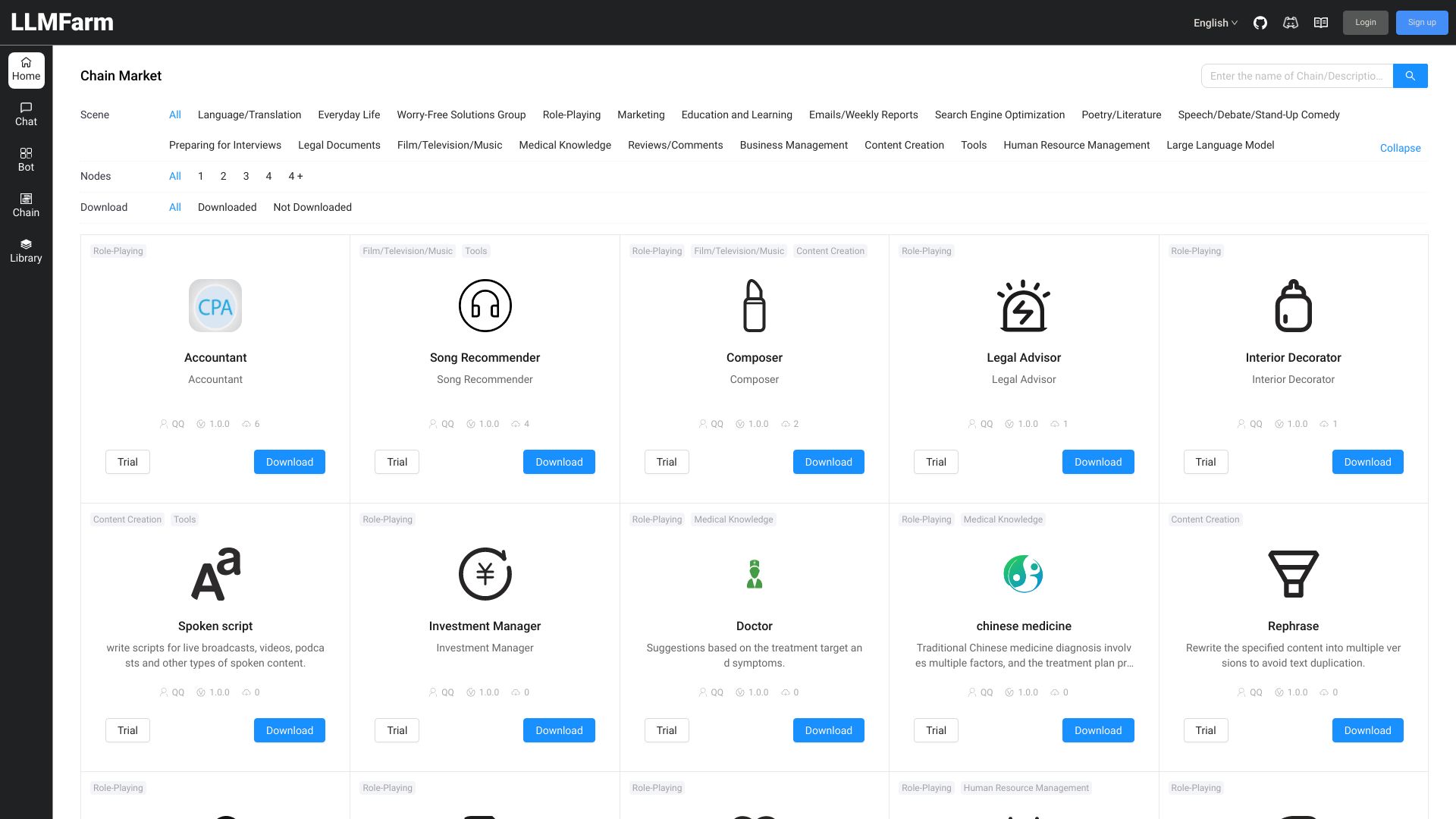
LLM Farm is less a single-model choice than a resource-rich workbench for people building with LLMs. Its listed offering includes access to multiple models, downloadable templates and chain libraries, and PDF document-parsing tools. That mix can help developers move from browsing model options toward assembling a more concrete workflow. The trade-off is discoverability: a broad collection of tools can feel overwhelming, and some pieces may assume knowledge that a newer user does not yet have. Treat it as a toolkit to inspect against a specific project rather than as a polished, one-click model platform. Before adopting it, identify which tools you actually need and check how each fits your development stack.
Best for
AI developers who want model access alongside templates and chain resources.
Builders experimenting with PDF parsing as part of an LLM workflow.
Technically confident users who prefer exploring a collection of tools over a single narrow interface.
Limitations
The breadth of the site may make it harder to find the right starting point.
Some tools may require LLM development knowledge to use effectively.
The available information does not establish clear pricing or detailed integration options.
Shortlist signal: Shortlist LLM Farm if you want a collection of model-development resources and can evaluate its individual tools against your workflow.
7. MIOSN

- Teams matching tasks to models with cost in mind
- Free model-matching access listed
- Starts at Check vendor pricing
- Usage signal: Not listed
Why it matters
MIOSN puts model selection in practical terms: give it real inputs and outputs, then use its matching and assessment workflow to find a model that suits the task without spending more than necessary. That is a useful counterweight to choosing a model based on generalized rankings alone. The product also frames the process as an LLM interview, which suggests a structured way to assess candidates rather than simply browsing a catalog. There are meaningful limits, though. The current experience is desktop-only, and file and image understanding, API integration, and multi-platform LLM support are listed as coming soon. For now, judge it on the model-matching workflow that is available, not the future features you might want.
Best for
Teams testing several models against representative tasks and outputs.
Buyers trying to balance answer fit with LLM usage cost.
Marketing and other non-research teams that want help narrowing model options.
Limitations
Access is currently desktop-only.
File and image understanding, API integration, and multi-platform support are not yet available features.
Pricing details are not clear, so verify the current plan before building a purchasing case.
Shortlist signal: Add MIOSN when you want to match real tasks to candidate models and can work within its current desktop experience.
8. Collaborative LLM Tool

- Researchers sharing compute for model inference
- Collaborative model access listed
- Starts at Check vendor pricing
- Usage signal: Not listed
Why it matters
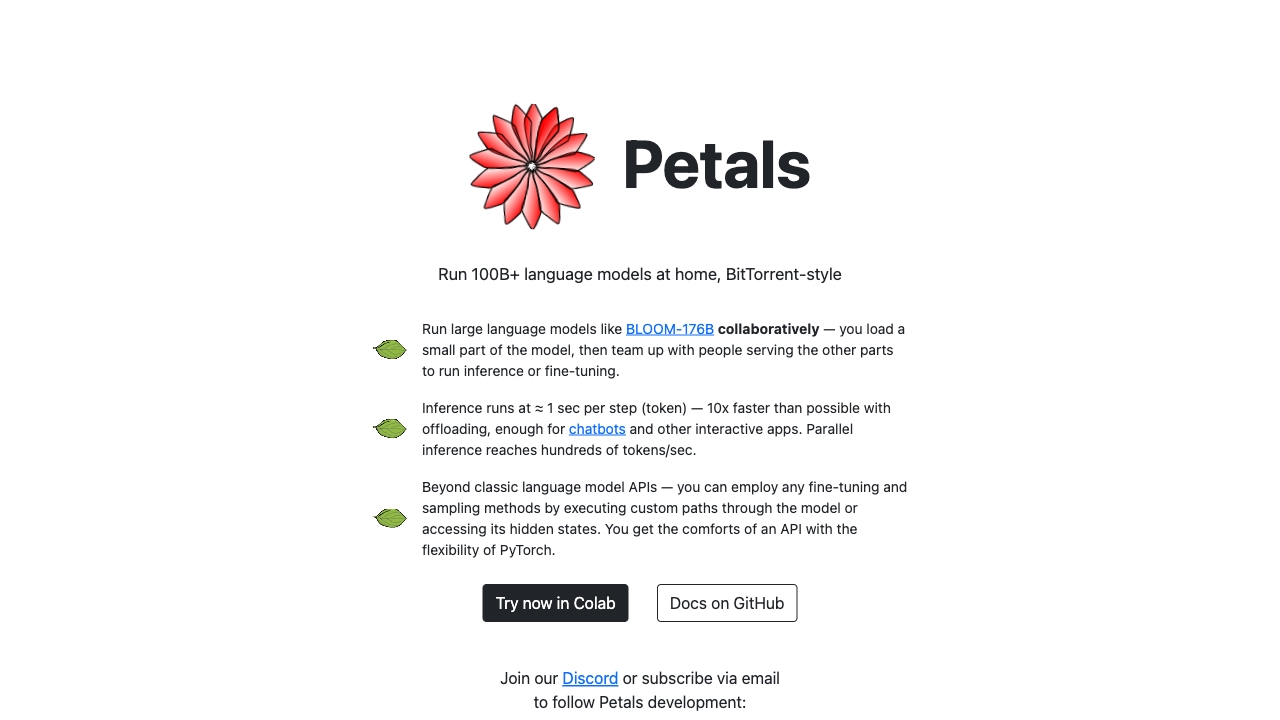
The Collaborative LLM Tool takes a different route to running large models: distribute model loading across participants, so a user can load a smaller part and team up with others for inference or fine-tuning. That makes it interesting for researchers and open-source-minded users who do not have the hardware to host a large model alone. The trade is that the system depends on coordination and network conditions. Latency can affect performance, and a collaborative setup is not automatically a dependable production deployment. The idea is compelling for experimentation, but buyers should be honest about whether their workload tolerates shared infrastructure and the operational uncertainty that comes with it.
Best for
Researchers exploring collaborative inference and distributed model loading.
Users with limited local hardware who want to experiment with larger models.
Community-driven projects that can tolerate network and coordination requirements.
Limitations
Coordination with other participants is part of the operating model.
Network latency may affect performance.
The listing does not establish a clear paid plan or service-level expectations.
Shortlist signal: Shortlist the Collaborative LLM Tool for research experiments where shared compute is valuable and variable network performance is acceptable.
9. eLLMo

- Enterprises building private LLM and RAG workflows
- Starts at Check vendor pricing
- Usage signal: Not listed
Why it matters
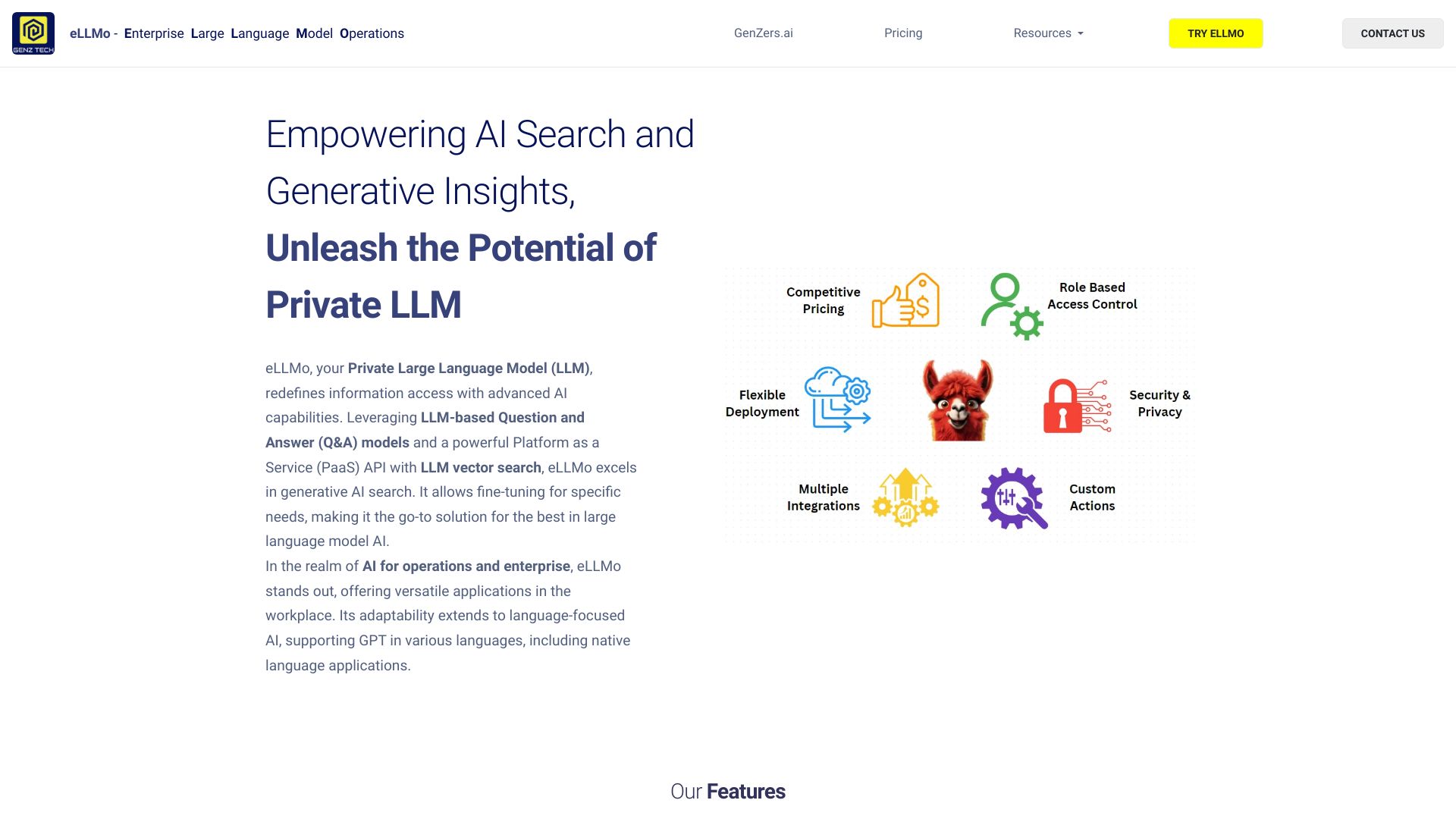
For organizations that want to ask questions over client or internal data, eLLMo puts the application layer ahead of model spectacle. Its listed capabilities include retrieval-augmented generation, role-based access, and flexible deployment, which map to the concerns that usually decide whether an enterprise knowledge assistant can be considered at all. A private LLM with RAG is not automatically secure or accurate, however; buyers still need to understand where data is processed, how access is enforced, and how answers are checked. On-prem deployment may require technical expertise, and pricing can vary with the chosen model. That makes eLLMo a strong specialist to evaluate, not a reason to skip security and architecture review.
Best for
Enterprises building question-answering workflows over client or internal data.
Teams that need to investigate role-based access and private deployment options.
Buyers evaluating RAG as a way to connect an LLM to a controlled knowledge source.
Limitations
On-prem deployment may require specialist technical support.
Pricing may vary depending on the selected model.
Confirm data handling, access controls, deployment details, and answer-quality expectations directly with the vendor.
Shortlist signal: Add eLLMo when private-data Q&A and deployment control are requirements, then validate its security and architecture against your policies.
10. Cleanlab Chat

- Data scientists checking generated-answer reliability
- No-login chat access
- Starts at Check vendor pricing
- Usage signal: Not listed
Why it matters
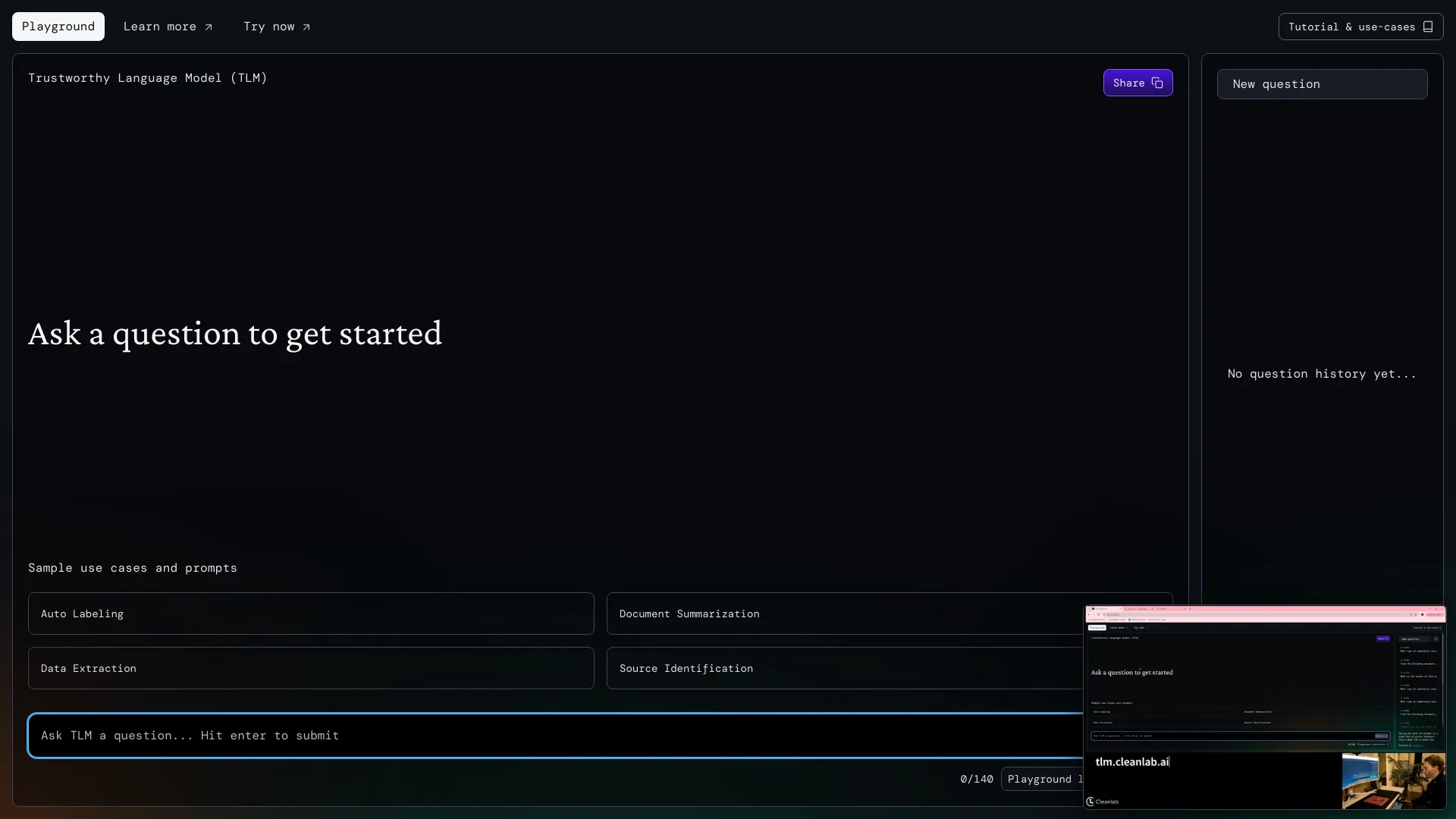
Cleanlab Chat makes reliability the headline: its Trustworthy Language Model approach aims to reduce hallucinations and provides trustworthiness scores for outputs. That is a useful angle for data scientists and teams who need to scrutinize answers rather than accept fluent text at face value. A score can help signal where further review is needed, but it should not be mistaken for a guarantee that an answer is correct. The available product details offer limited information about the underlying model architecture, and full functionality may involve API access. Use the no-login chat as a low-friction way to explore the idea, then ask how its trust signals are produced and whether they fit your own validation process before integrating it into a higher-stakes workflow.
Best for
Data scientists evaluating answer reliability and hallucination risk.
Teams that want trustworthiness signals alongside generated responses.
Users who want to explore a reliability-focused chat experience without creating an account.
Limitations
The specific model architecture is not fully described in the available product information.
Full functionality may require API access; confirm current access terms.
Trustworthiness scores support review, but do not replace source checking or task-specific validation.
Shortlist signal: Shortlist Cleanlab Chat when you need to investigate answer reliability and will treat trust scores as review signals rather than proof.
What to test before choosing
A useful evaluation should resemble the work you will actually ask the model to do. Build a small test set from real, representative prompts, including awkward edge cases and examples where the correct response is to say "I don't know." Then compare candidates on the same inputs. A polished demo prompt can make almost any model look persuasive; repeated tests expose consistency, failure modes, and how much human cleanup the output needs.
Define success before testing. Decide whether quality means factual accuracy, useful reasoning, tone, structured output, low latency, or some combination. Do not let a vague "best answer" impression decide the winner.
Measure the whole workflow. Include response time, token use, cost, and any extra work needed for retrieval, fine-tuning, deployment, or review. A model's unit price is only one part of operating cost.
Check the access model. Confirm whether you are testing a demo, a free allocation, a paid API, or a subscription with tier-specific limits. An introductory offer is not a production forecast.
Test your data boundaries. For private-data workflows, investigate deployment options, role-based access, data handling, and any required sales or technical review.
Separate model quality from product convenience. A platform that simplifies access may save setup time, while a downloadable model may provide more control. Score those benefits separately.
Verify the actual model version. Model names and availability can change. Record which version and settings you tested so the result can be repeated later.
For the top large language models march shortlist, a small, honest evaluation beats a giant spreadsheet of unsupported benchmark claims. Let the test reveal which trade-off matters for your team.
What to do next
Pick two or three candidates from the segment tables, then run the same representative tasks through each. Start with the tool whose workflow matches your need: API access, model experimentation, comparison, private-data Q&A, or reliability review. Record output quality, latency, usage, human editing time, and the practical work required to operate it. Before a purchase, confirm current pricing, model access, deployment terms, and any tier limits directly with the vendor. If the shortlist is for an enterprise rollout, involve the people responsible for security and infrastructure before a demo turns into an assumption.
Common mistakes when choosing from a complex top list
Treating every entry as the same kind of product. A model, model marketplace, evaluation tool, and private RAG platform solve different problems. Compare like with like first.
Picking a universal winner from a single score. A high ranking cannot tell you whether a model is right for your data, latency needs, budget, or deployment policy.
Confusing a reference price with the price of the product you want. For example, the GLM-4.x API reference listed here is not a confirmed GLM 5 price.
Assuming "open" means effortless. Downloading or fine-tuning a model still requires operational skill, alignment work, and a plan for output review.
Trusting a demo without a repeatable test. Use the same prompts and criteria across candidates, and keep examples of both strong and poor outputs.
Buying for features marked as coming soon. Evaluate current capabilities, then revisit the tool when promised features are actually available.
FAQ
There is no universal winner across these different segments. Zhipu AI Open Platform is the broadest API-oriented choice in this field, while Mistral 7B is the more direct fit for downloadable-model experimentation. For model selection, private-data workflows, or reliability checks, the relevant specialist may be a better fit than either. Choose according to your task and verify performance on your own prompts.