
Choosing among the top ai agents is less about finding one tool that does everything and more about matching an agent to a job you can clearly define. This guide compares 10 tools across agent development, coding, customer engagement, browser automation, research, and discovery. The list includes both products that do work for you and platforms or directories that help you build or find agents. That distinction matters: a developer assembling an agent network has very different needs from a small business handling incoming calls.
Start here
Start with the task, not the label. "AI agent" can mean a framework for coordinating thousands of agents, a cloud coding assistant, a receptionist that fields customer inquiries, or a directory for comparing products. Here is the short route to the right part of the list:
Building agent infrastructure? Start with OpenAgents for open, interoperable agent networks, or ALIagents.ai for custom agentic systems and decentralized collaboration.
Want an agent to do a defined job? Compare Agen for parallel coding work, Agentz for customer-facing reception and routine tasks, and AIAgent.surf | PowerAgents for scheduled website actions.
Need research or custom business operations? Look at Superagent for research reports and AIGA Agency for custom-built, managed agents.
Still exploring the market? Use AI Agents Directory or AI Agents Repository to discover options. HeyAgent is a narrower pick for proxy-based networking and outreach.
A useful first filter is how much control you need. Frameworks and marketplaces give you more responsibility for selection and setup; finished services promise a more specific workflow, but you will need to check whether their boundaries match your process.
Segment comparison
These tools do not compete on identical jobs. Compare them within their segment before treating the overall rank as a buying recommendation.
| Segment | Tools | Best fit | Main trade-off | |
|---|---|---|---|---|
| Build and orchestrate | OpenAgents, ALIagents.ai | Developers creating agent systems or coordinating agents | More technical ownership and orchestration complexity | |
| Execute work | Agen, Agentz, [AIAgent.surf | PowerAgents](https://poweragentsai.com?utm_source=top10) | Coding, customer response, or repeatable web tasks | Each tool is specialized; validate its task boundaries |
| Research and managed operations | Superagent, AIGA Agency | Business research or tailored departmental automation | Subscription limits or dependence on a service provider | |
| Find and connect agents | AI Agents Directory, AI Agents Repository | Comparing tools, browsing a marketplace, and exploring integrations | Listed-agent quality and integration effort can vary | |
| Network and outreach | HeyAgent | Automated agent-to-agent introductions and briefings | Depends on profile quality and offers less human touch |
Shortlist paths
A shortlist should reflect what you want to delegate, how much setup you can own, and what a successful result looks like. These routes are a practical starting point, not a claim that tools in the same row are interchangeable.
| Your priority | Start with | Why it belongs on the shortlist | Check before committing | |
|---|---|---|---|---|
| Open agent infrastructure | OpenAgents | Open protocols and interoperability for large-scale agent networks | Whether your team can manage orchestration complexity without direct professional support | |
| Coding work without local setup | Agen | Cloud-based autonomous coding agents, parallel execution, and codebase context | Whether the $59 starting plan and compute-credit needs fit your workload | |
| Customer conversations around the clock | Agentz | Voice, SMS, and website support with lead capture and routine task handling | Where human handoff is required and whether your business is subject to relevant regulations | |
| Research or web-task automation | Superagent, [AIAgent.surf | PowerAgents](https://poweragentsai.com?utm_source=top10) | One turns complex questions into researched outputs; the other interacts with websites and schedules tasks | Source checking for research; prompt precision and action accuracy for browser tasks |
| Explore before building | AI Agents Directory, AI Agents Repository | Browse agent listings and compare or discover options | Evaluate each listing independently; a directory is not a guarantee of quality |
Ranking snapshot
The scores summarize this guide's ordering, while the "best for" column is the more useful buying signal. Monthly visits are shown as a market signal where available, not as a measure of product quality or customer satisfaction.
| Rank | Tool | Best for | Score | Monthly visits | |
|---|---|---|---|---|---|
| 1-2 | OpenAgents · Agen | Agent networks · autonomous coding | 96 · 93 | 25.8K · 2.3K | |
| 3-4 | Agentz · AIGA Agency | Customer engagement · managed business agents | 92 · 92 | 1.4K · Not listed | |
| 5-6 | ALIagents.ai · AI Agents Directory | Custom agentic systems · agent discovery | 92 · 91 | Not listed · Not listed | |
| 7-8 | [AIAgent.surf | PowerAgents](https://poweragentsai.com?utm_source=top10) · Superagent | Browser automation · business research | 91 · 91 | Not listed · Not listed |
| 9-10 | AI Agents Repository · HeyAgent | Agent marketplace · networking and outreach | 91 · 90 | Not listed · Not listed |
How we grouped and ranked the list
This is a mixed field, so a single feature checklist would reward the wrong things. We grouped the 10 candidates by their main role: building agent infrastructure, executing work, supporting research or managed operations, helping users discover agents, and handling networking. Within that context, the ranking reflects the supplied product descriptions, feature depth, audience fit, stated limitations, pricing signals, and available monthly-visit signals.
That approach explains why an open framework can rank above a ready-to-use service without being the better pick for every buyer. OpenAgents scores strongly on scale and interoperability, but its orchestration complexity makes it a poor fit for someone who simply wants to automate a recurring task. In the same way, a directory can be useful for comparison while not actually performing the work its listings promise.
We also treat visits as context, not proof. Traffic can help indicate market attention, but it does not establish accuracy, reliability, support quality, or a return on investment. Where pricing or usage details are unclear, treat the card as a prompt to confirm the live offer with the vendor. Before you buy, define the task, test realistic inputs, and decide what should happen when the agent is uncertain or wrong.
Ranked field notes
1. OpenAgents

- Developers building interoperable AI agent networks
- Open-source project
- Starts at Check vendor pricing
- Usage signal: 25.8K
Why it matters
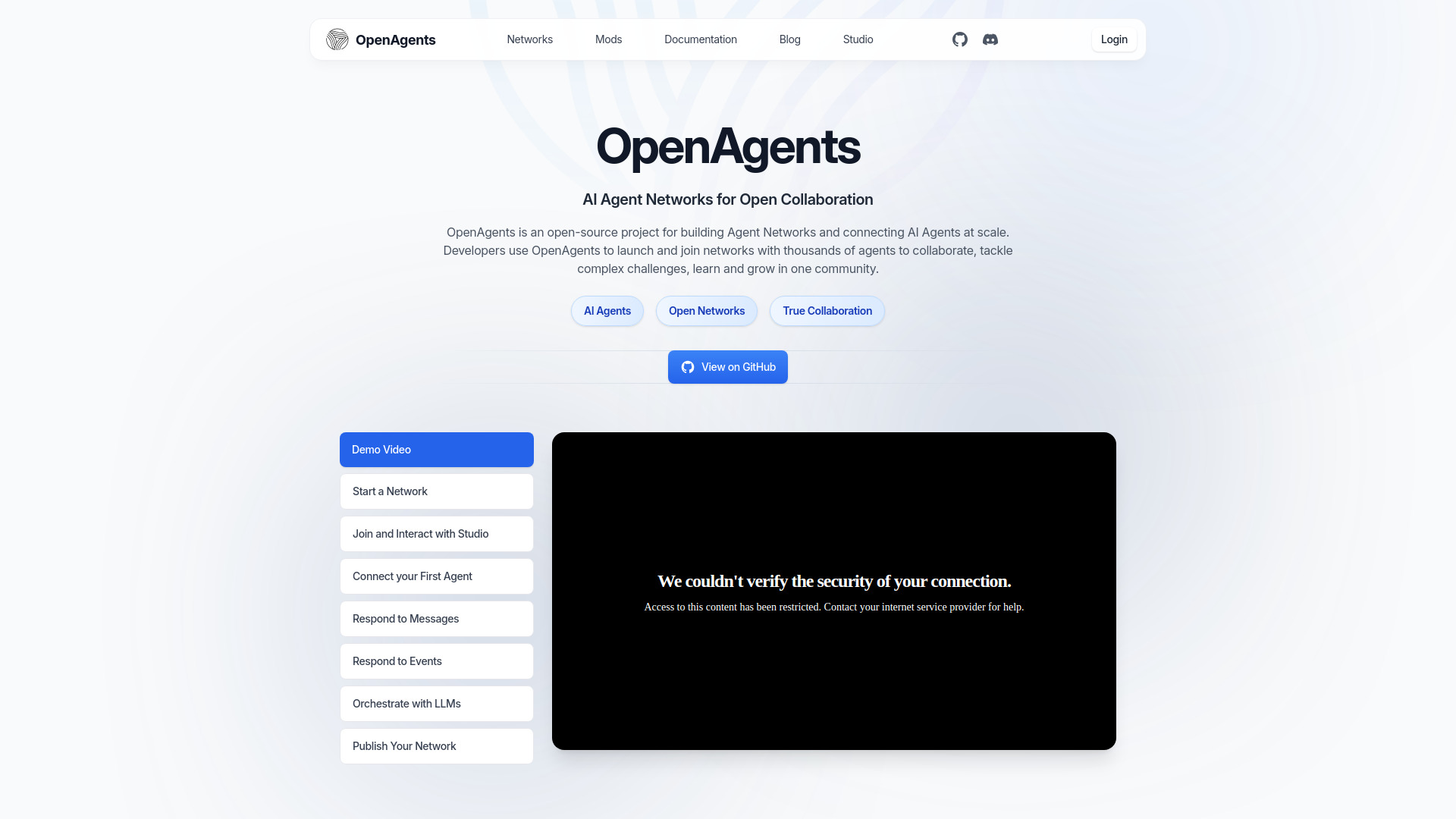
OpenAgents is the infrastructure pick in a list otherwise full of task-specific products. Its core idea is to build and connect AI agent networks using open protocols, with support for large-scale collaboration and interoperability across LLMs, protocols, and agent frameworks. That makes it the strongest starting point here for developers who care about connecting unlike systems rather than adopting one closed, single-purpose assistant. Its top ranking reflects that breadth and its open-source, community-driven model-not a promise that running thousands of agents is simple. The flip side is real: orchestration at this scale adds complexity, and the community-driven approach does not include direct professional support. Teams should be ready to own architecture, testing, and maintenance.
Best for
Developers building or connecting multi-agent systems.
Teams that value open protocols and flexibility across frameworks.
Projects where large-scale collaboration is central to the design.
Limitations
Community-driven support may not suit teams that require a direct professional support channel.
Large-scale orchestration adds complexity; the scale itself can become a design and operations burden.
Shortlist signal: Add OpenAgents when interoperability and building an agent network matter more than a guided, ready-made workflow.
2. Agen

- Software engineers delegating parallel coding tasks
- $20 in free usage credits
- Starts at Starter: $59/month
- Usage signal: 2.3K
Why it matters
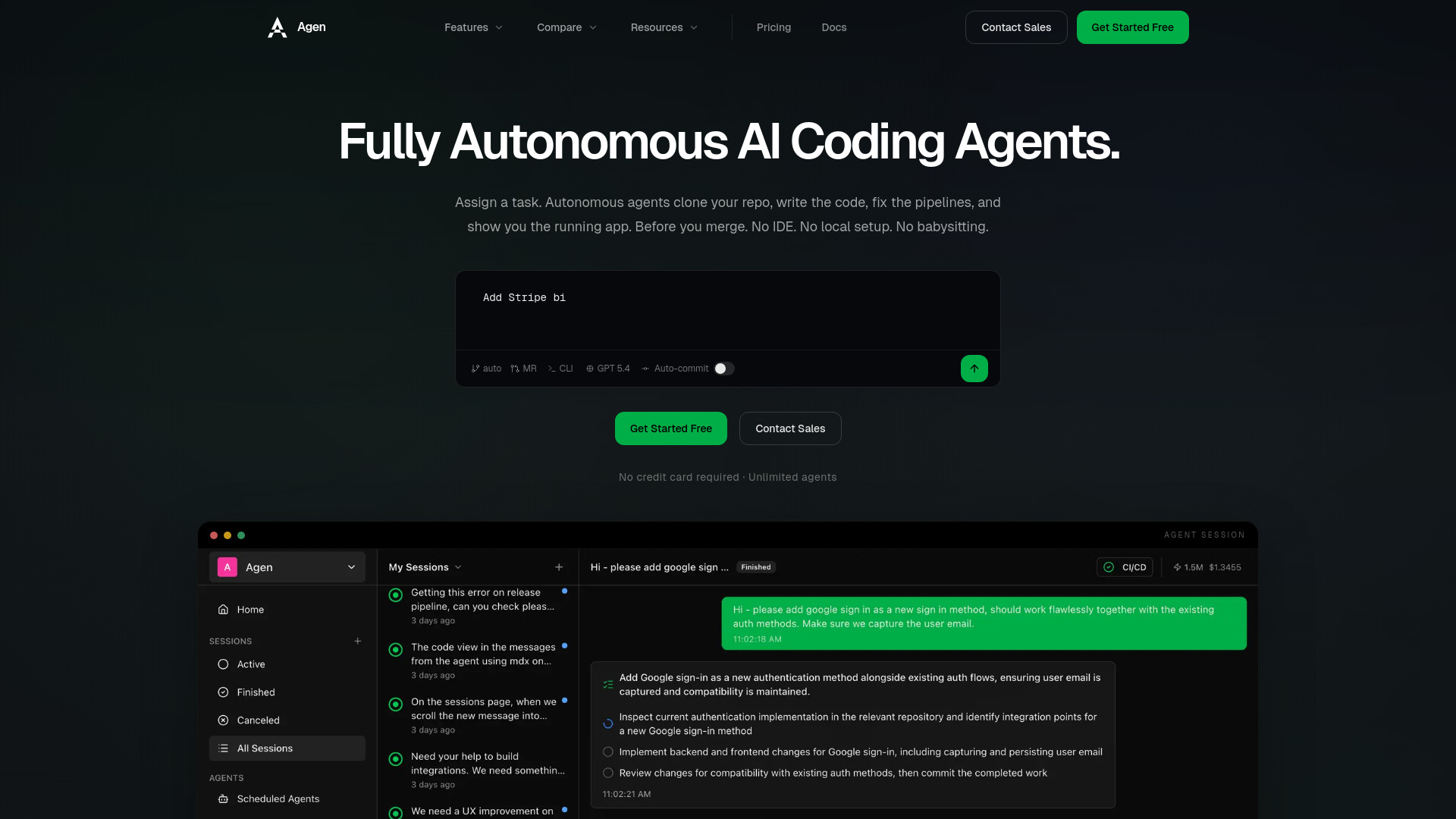
Agen's appeal is that coding work can happen in the cloud without first configuring an IDE or local environment. Its agents are described as autonomous, aware of the codebase, and able to run several tasks in parallel; multi-repository workflows are also a stated strength. That combination is worth considering when engineers want to delegate more than a one-off code suggestion and keep related tasks moving in a single session. The main purchasing question is not just whether the agent can perform a task, but how much cloud compute that task consumes. The entry price is $59 per month, and intensive work depends heavily on compute credits. The $20 in free usage credits are useful for evaluation, but they do not remove the need to price ongoing workloads.
Best for
Software engineers who want cloud agents without local environment setup.
Teams splitting work across parallel coding tasks.
Developers handling projects that span multiple repositories.
Limitations
The $59 monthly starting price may be steep for casual use.
Intensive tasks rely on cloud compute credits, so usage cost deserves a realistic trial.
Shortlist signal: Add Agen when parallel, codebase-aware cloud work is valuable enough to justify testing the credit economics.
3. Agentz

- Small businesses automating customer reception
- 14-day free trial
- Starts at Starter: $29/month
- Usage signal: 1.4K
Why it matters
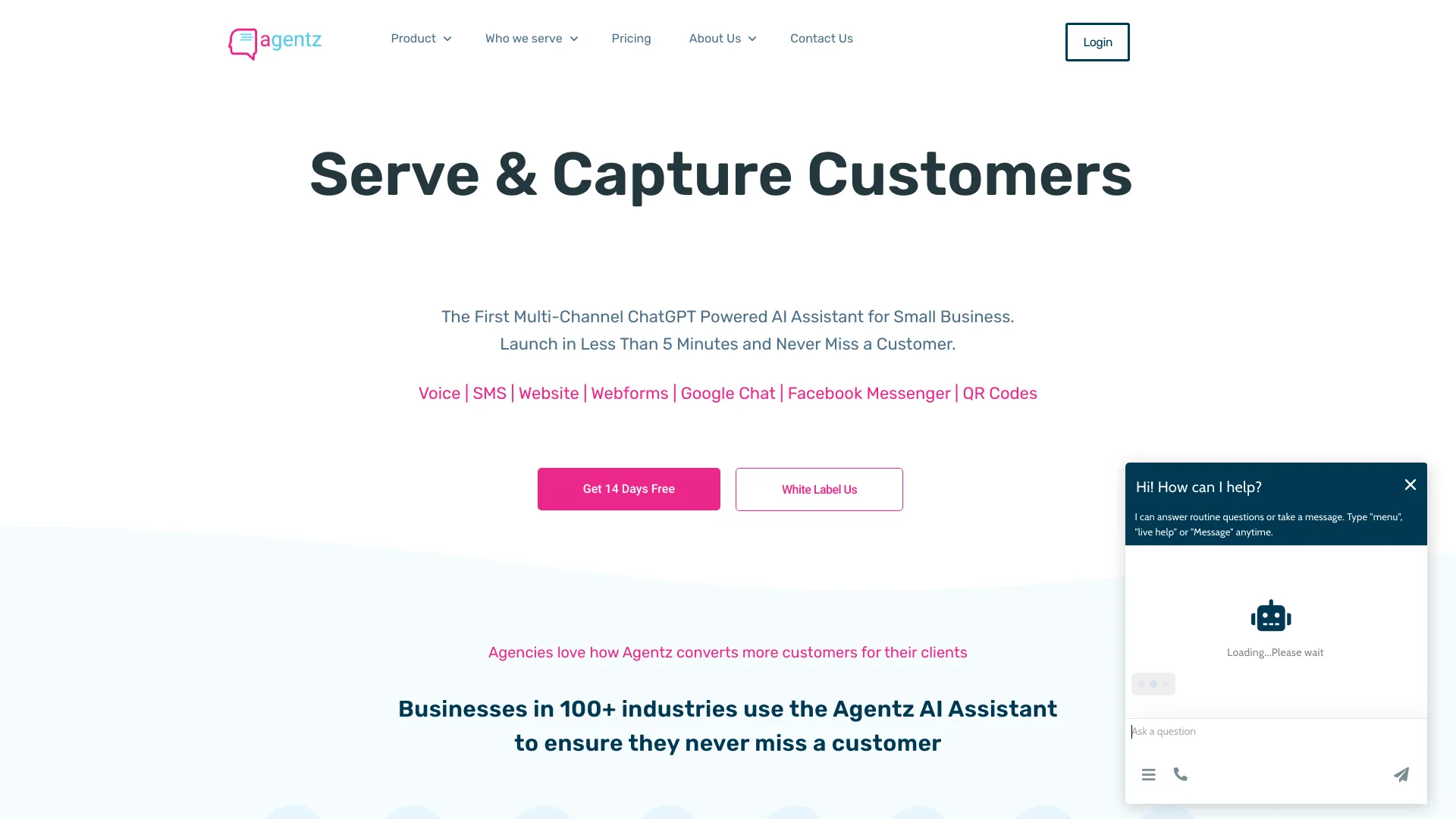
For a small business, an unanswered call or missed website inquiry can be more consequential than a sophisticated multi-agent workflow. Agentz is aimed at that operational gap: it offers 24/7 customer service and lead capture across voice, SMS, and website channels, alongside routine task handling. That makes it a practical, relatively focused option for businesses that need a digital receptionist rather than a framework to build one. Its $29 monthly starting price and 14-day trial create a straightforward way to assess the fit, but the trial should include real customer scenarios. AI should not be assumed to replace human interaction in every situation, and some business types may face regulatory limits. Decide in advance which questions or requests need a person.
Best for
Small businesses that need to capture inquiries outside business hours.
Teams receiving customer contacts through more than one channel.
Owners looking to automate routine interactions and basic lead capture.
Limitations
AI-led service may not provide the human interaction some customer situations need.
Government rules can limit appropriate use in certain business types.
Shortlist signal: Add Agentz when missed calls and routine inbound questions are a measurable service problem, and you can define safe human handoffs.
4. AIGA Agency

- Sales teams commissioning managed AI agents
- Starts at Starter Agent: $545
- Usage signal: Not listed
Why it matters
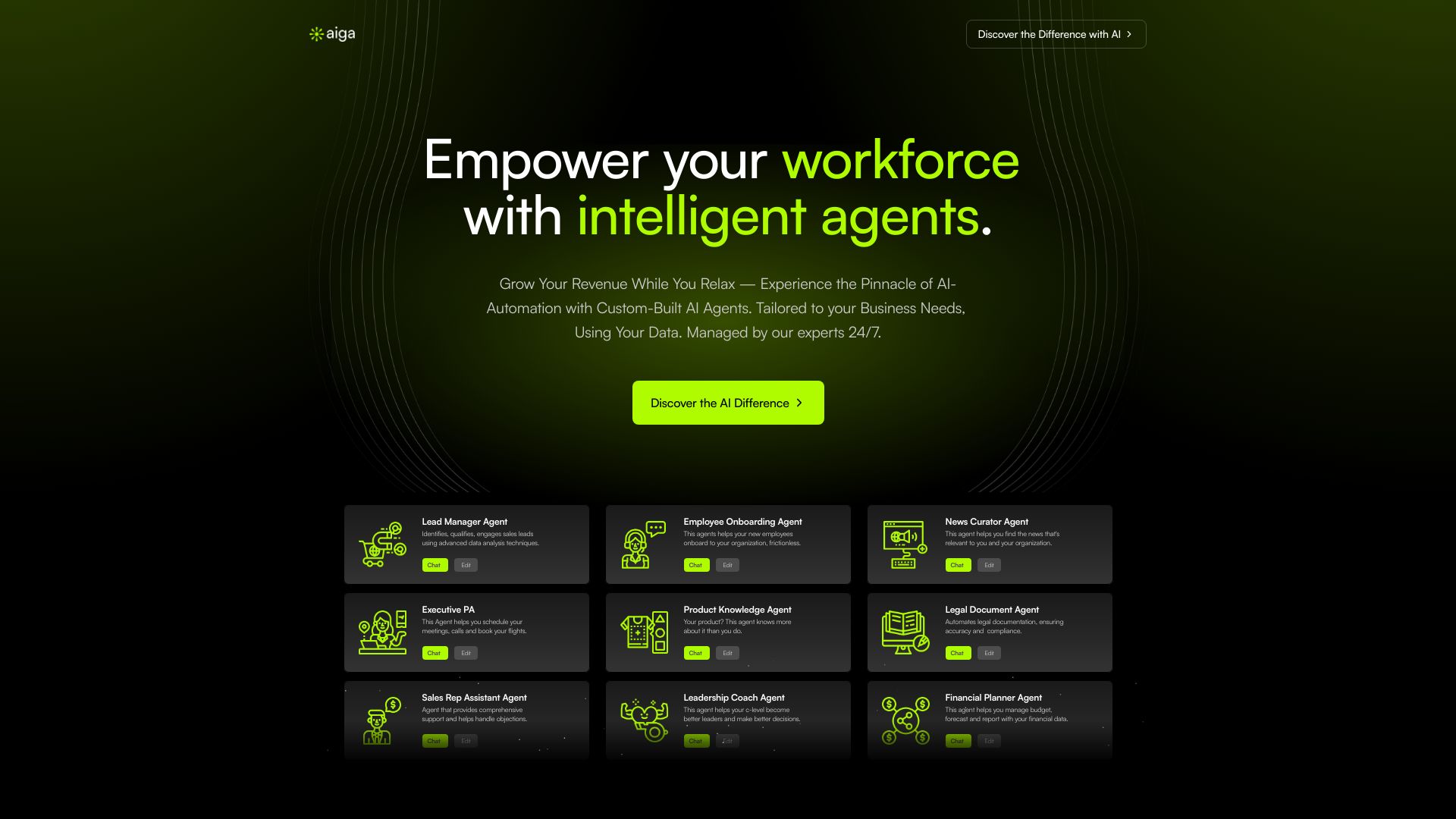
Not every organization wants to assemble its own agents. AIGA Agency takes a service-led approach, offering custom-built agents, 24/7 expert management, and automation across business departments. That can be appealing to sales teams or other groups with a defined process but limited appetite for building and maintaining the automation themselves. The trade-off is that the agency remains part of the operating model: buyers should understand what ongoing management covers, how changes are handled, and what work stays with their own team. The listed starting price for a Starter Agent is $545; a separate offer references pricing from $2,455 per month, so confirm the actual scope and current quote directly rather than assuming those figures describe the same package. Customization is a strength only when the scope is explicit.
Best for
Sales teams with a repeatable workflow they want tailored automation for.
Businesses seeking expert management rather than a self-serve agent builder.
Organizations exploring automation across more than one department.
Limitations
Ongoing reliance on the agency may be a poor fit for teams that want full self-service control.
The listed price points need clarification against the services and management included.
Automation plans should account for the potential effect on employees and their roles.
Shortlist signal: Add AIGA Agency when you want a custom, managed solution and are prepared to scope the service and ongoing relationship carefully.
5. ALIagents.ai

- Developers creating custom agentic AI systems
- Starts at Check vendor pricing
- Usage signal: Not listed
Why it matters
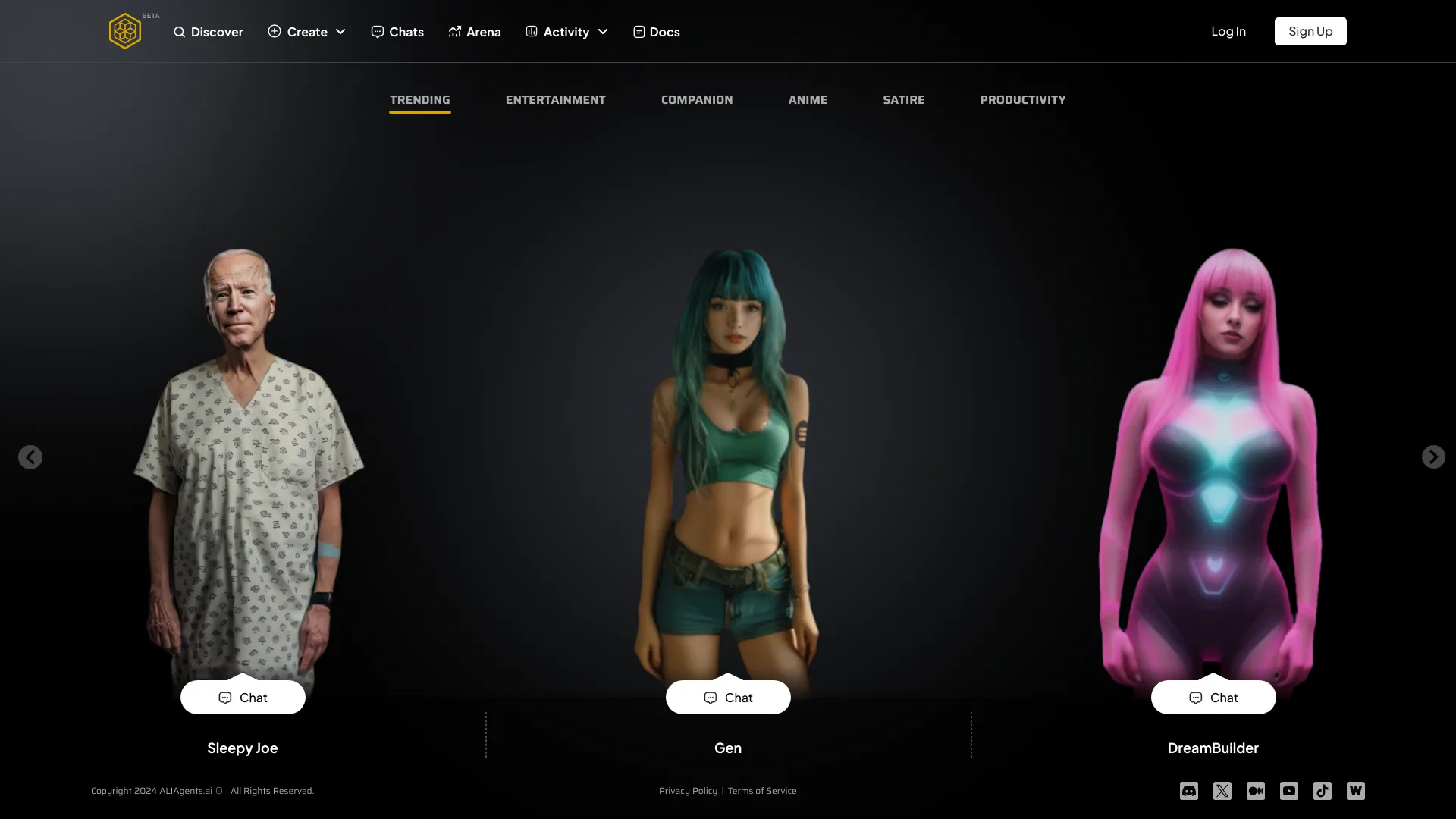
ALIagents.ai combines custom generative and agentic AI creation with decentralized agent collaboration. It also highlights AI News Swarm, a real-time, AI-driven journalism feature. That makes the product more unusual than a conventional task-running assistant: it brings both system creation and a news-oriented application into the same picture. Developers interested in creating, customizing, and potentially monetizing agentic systems may find that breadth compelling. The catch is that the offering appears to demand more technical involvement than a plug-and-play workflow, and news generated by AI still needs scrutiny for accuracy and completeness. Treat the journalism feature as an input to verify, not an authority to publish without review. Pricing should also be confirmed before planning a production deployment.
Best for
Developers exploring custom generative and agentic AI systems.
Teams interested in decentralized collaboration between agents.
Users who want to investigate AI-driven news alongside agent creation.
Limitations
Creating custom agents may require technical knowledge.
AI news can be inaccurate or incomplete; editorial verification remains important.
Confirm the product's current pricing and the practical details of any monetization workflow.
Shortlist signal: Add ALIagents.ai when custom agent creation and decentralized collaboration are priorities, and your team can evaluate technical and factual risks.
6. AI Agents Directory

- Business owners researching agent options
- Free submission requires a backlink
- Starts at Free submission: $0
- Usage signal: Not listed
Why it matters
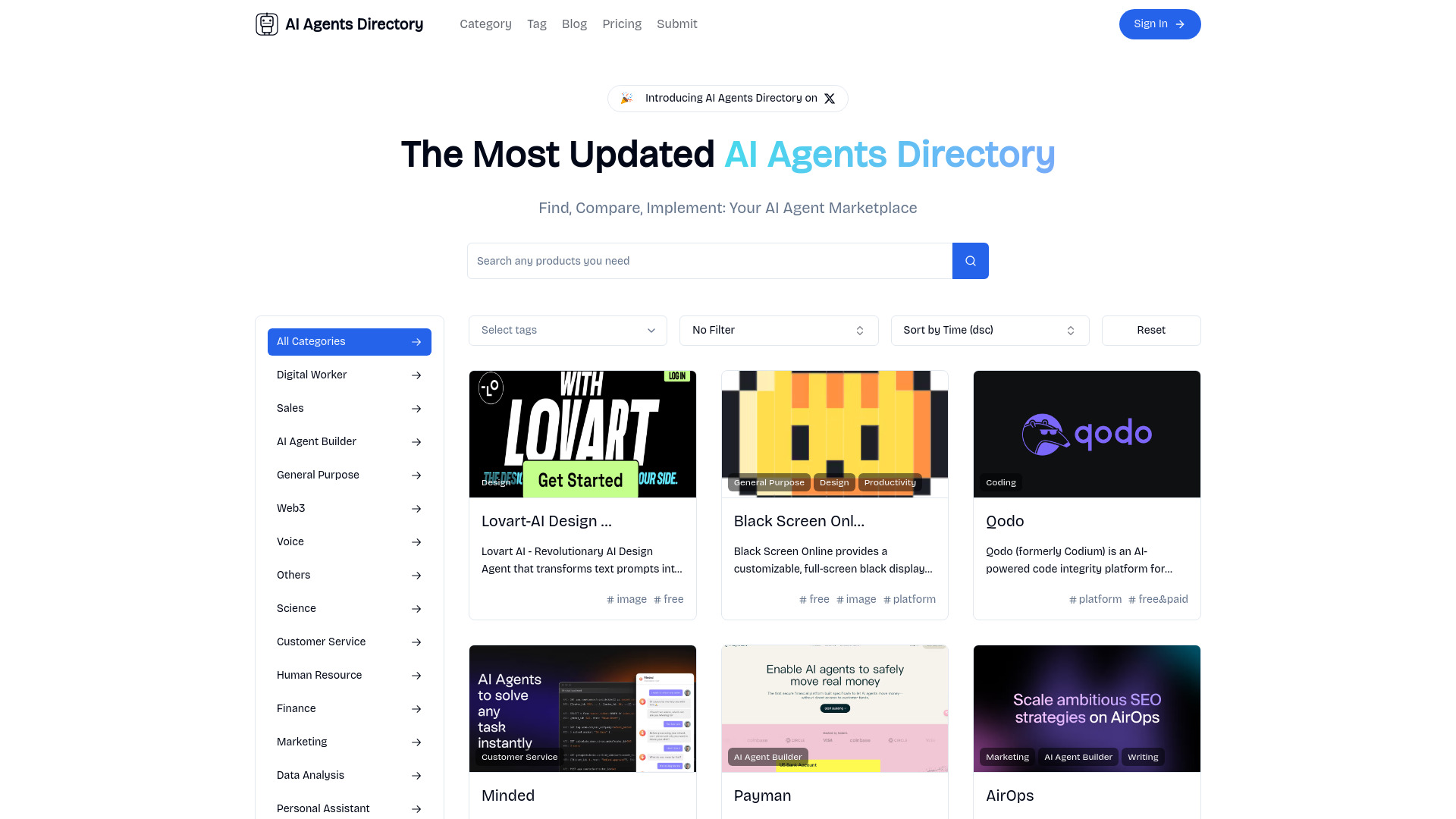
Sometimes the next step is not buying an agent; it is working out what kinds of agents are available. AI Agents Directory focuses on browsing and searching tools, comparing their features, and finding implementation guides and tutorials. That discovery layer can help business owners turn a vague wish to "use AI agents" into a more concrete list of options to investigate. It is a directory, not a substitute for testing the underlying products: the performance, support, and integration details belong to each vendor. There is a free submission offer, but it requires a backlink and does not include customer support. The directory also lists a price from $9.90, so clarify what that applies to if you are considering paid placement or another paid feature.
Best for
Business owners mapping the agent market before selecting a vendor.
Buyers who value feature comparisons and implementation guidance.
Teams that want a discovery starting point rather than another agent to operate.
Limitations
A listing does not guarantee that an agent is reliable or a fit for your workflow.
Free submission requires a backlink and does not include customer support.
Verify each vendor's live capabilities, implementation effort, and terms independently.
Shortlist signal: Add the directory to your research process when you need to discover options, but evaluate the listed agents on their own merits.
7. AIAgent.surf | PowerAgents

- Professionals automating repeatable website tasks
- Free tryout; no signup required
- Starts at From $6.93/month
- Usage signal: Not listed
Why it matters
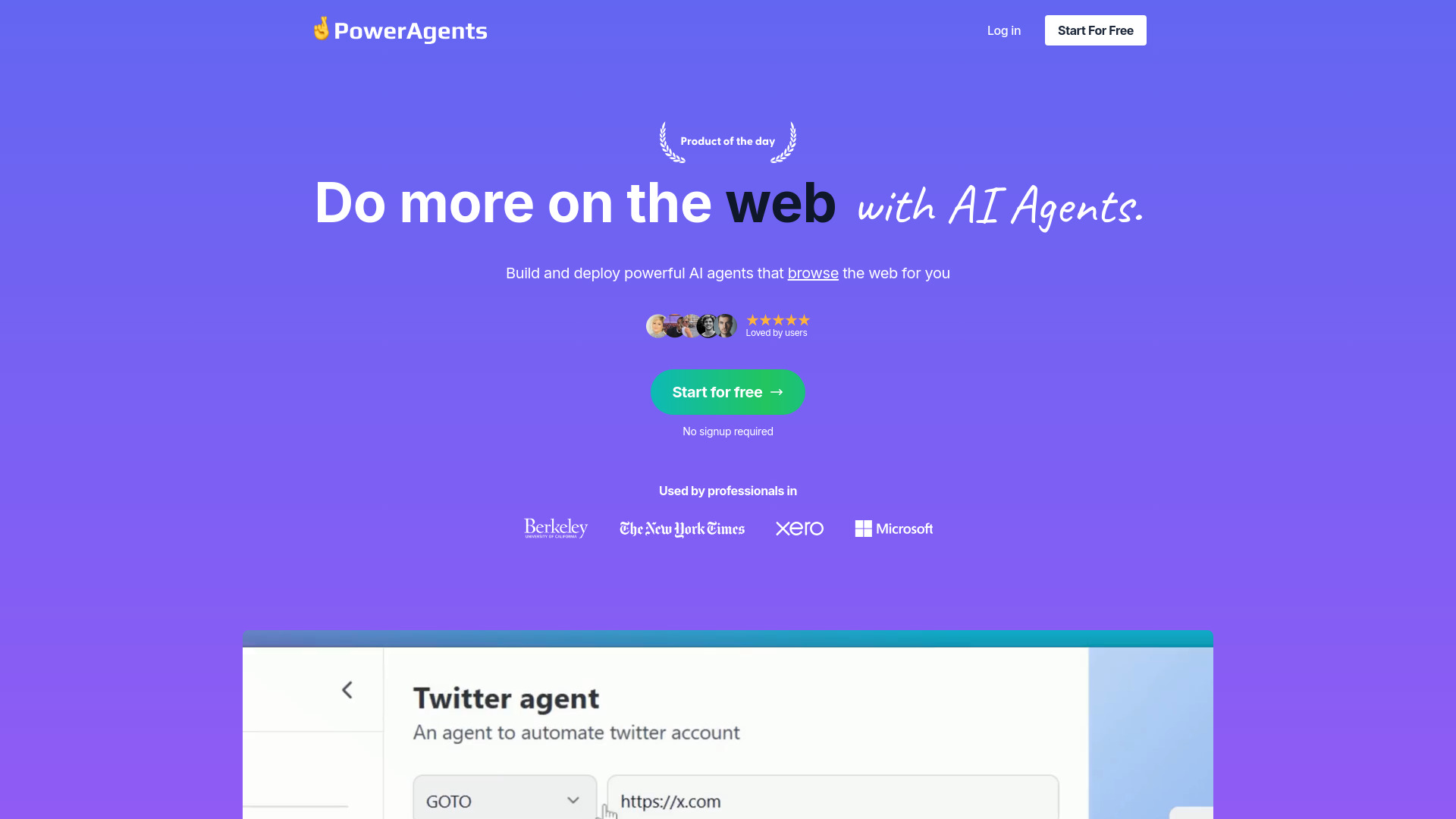
PowerAgents is the hands-on browser automation pick: define an agent from a prompt, then have it click, type, or extract data on websites. Tasks can be scheduled hourly, daily, or weekly, which gives it a clear role for professionals repeating the same online operations. The free tryout with no signup required lowers the barrier to a first test. But browser actions are only as useful as the instructions and the agent's interpretation of what it sees. Start with a low-risk task and inspect each result before allowing any workflow to affect important records or customer-facing systems. The listed starting price is $6.93 per month, with another price reference showing a $15 starter amount; confirm current billing and what each plan includes.
Best for
Professionals repeating routine actions across websites.
Users who need scheduled browser-based clicks, typing, or data extraction.
Buyers who want to try prompt-driven automation before committing.
Limitations
The task needs a clear prompt; vague instructions can lead to unreliable execution.
Results depend on the accuracy of AI processing and should be checked.
Confirm the current price and plan limits before building a recurring workflow.
Shortlist signal: Add PowerAgents when a repetitive website task is clear, low-risk, and easy to verify after each run.
8. Superagent

- Founders turning complex questions into research outputs
- 30-day free trial
- Starts at Limited access: Free
- Usage signal: Not listed
Why it matters
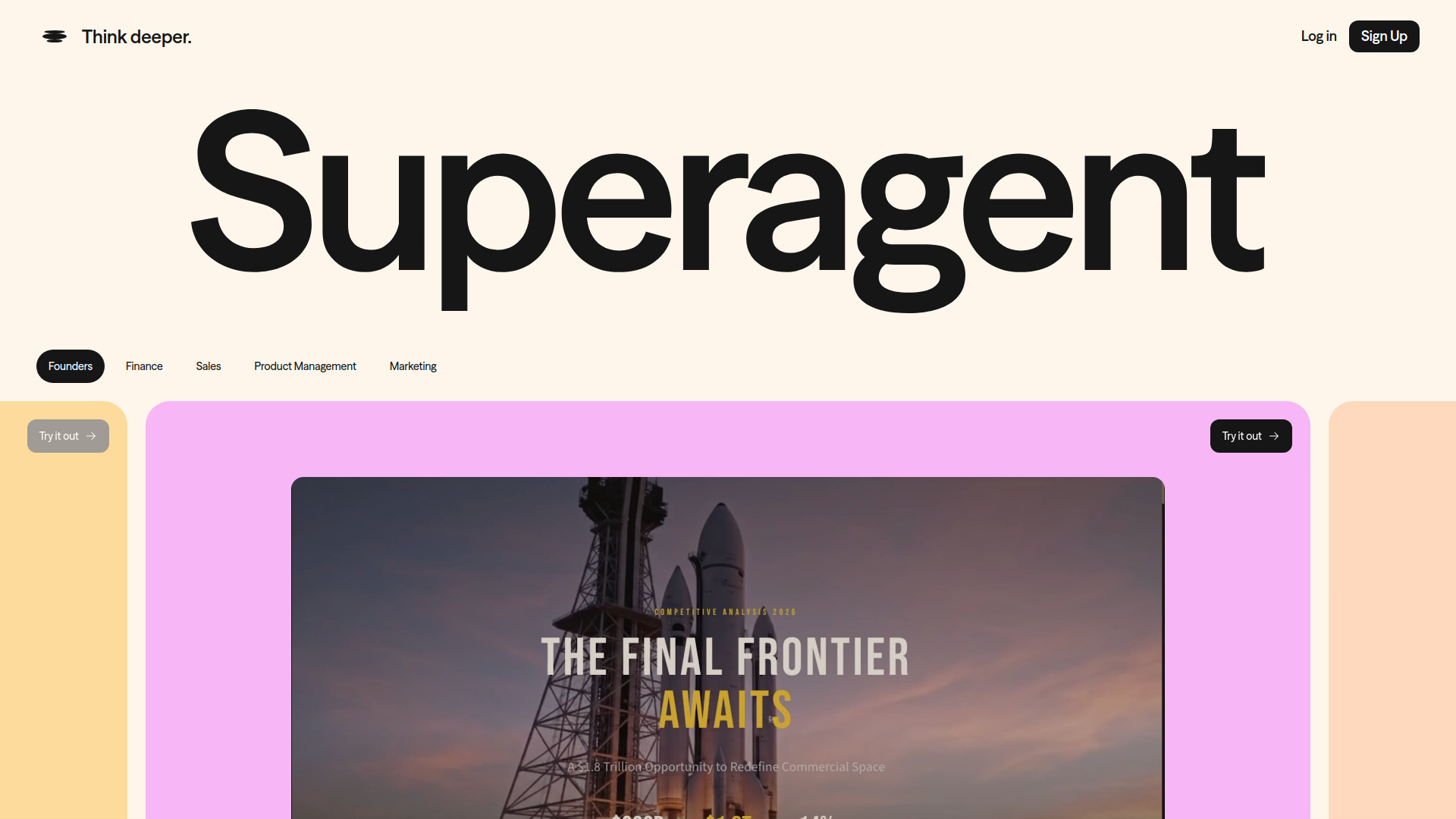
Superagent is aimed at questions that require more than a quick answer. Its coordinated "superteam" of agents researches business topics and turns complex questions into boardroom-ready outputs such as reports, slides, and websites. The product also emphasizes exhaustive research and fact-checking with receipts, a useful distinction for founders who need to inspect the basis for an answer rather than just paste a polished paragraph into a deck. That promise still calls for review: check whether the sources support the conclusions and whether the output covers the question you actually asked. Access is limited on the free tier, while fuller access requires a subscription. The listed details mention a 30-day trial and pricing from $20 per month; verify the live plan structure before relying on it for ongoing research.
Best for
Founders researching broad business questions and preparing decision materials.
Teams that need reports, slides, or other structured outputs from research.
Users who want source-backed findings they can inspect and fact-check.
Limitations
Free access is limited; ongoing full use requires a monthly subscription.
Fact-checking claims do not remove the need to review sources and conclusions.
Confirm which outputs and access limits are included in the plan you choose.
Shortlist signal: Add Superagent when research synthesis and polished business outputs matter, and someone can verify the evidence before decisions are made.
9. AI Agents Repository

- Developers discovering and integrating agent tools
- Starts at Check vendor pricing
- Usage signal: Not listed
Why it matters
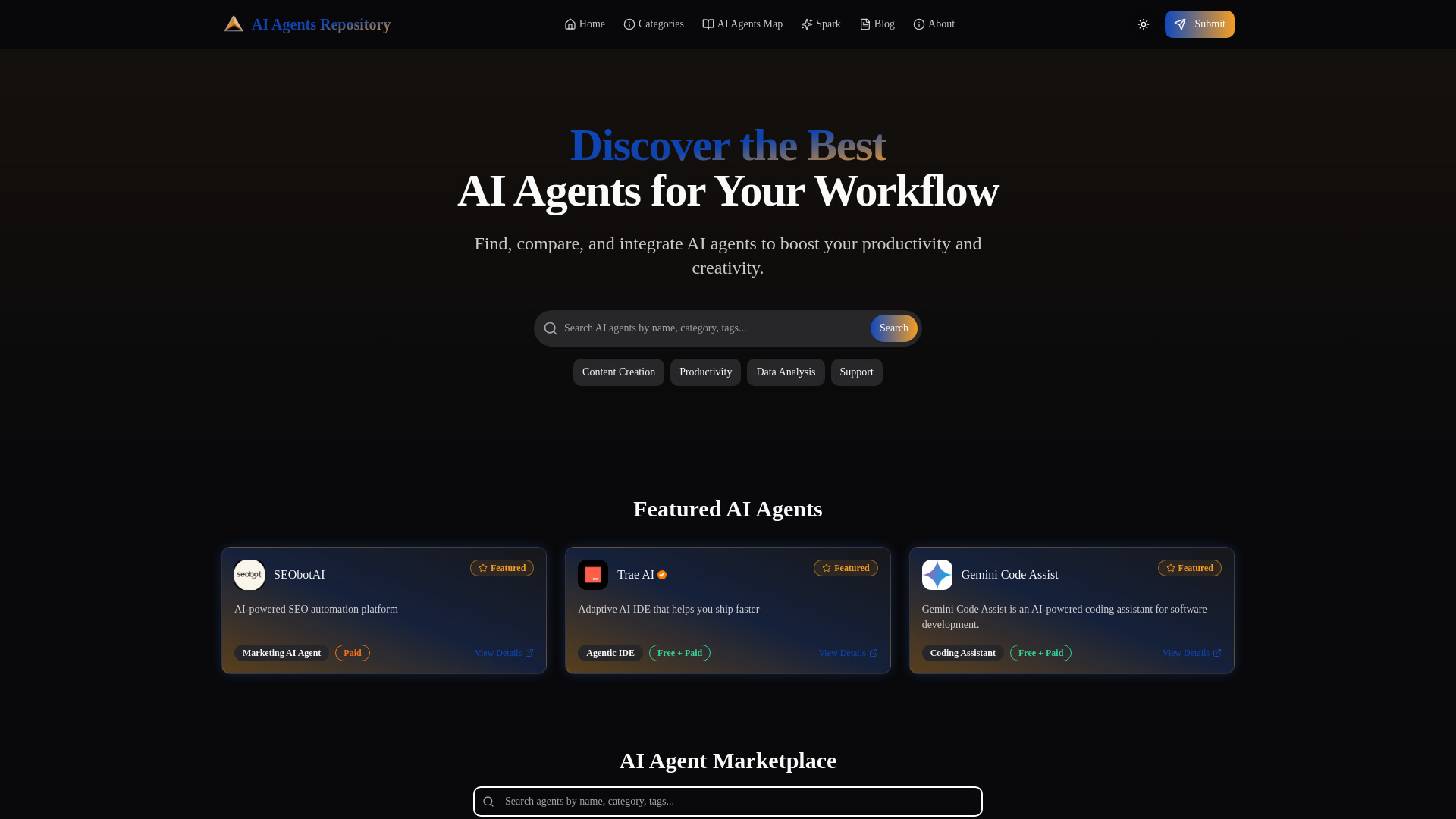
AI Agents Repository is a marketplace and discovery layer for teams looking to find and integrate agents across different domains. That makes it a useful counterpart to a single agent product: instead of assuming one vendor covers every need, developers can explore a broader set of options and assess integrations. Its value depends on the quality of the individual listings, however. The repository itself cannot remove the work of checking whether a particular agent is maintained, dependable, or compatible with your environment. Integration effort can also vary from one listing to another. For that reason, treat it as a place to generate candidates, then evaluate each candidate with a small proof of concept before building an important workflow around it. Pricing details should be confirmed with the vendor or listing owner.
Best for
Developers looking across multiple agent categories and use cases.
Teams that want to discover potential agents before choosing an integration.
Buyers comfortable assessing products individually rather than relying on a single curated workflow.
Limitations
The quality and reliability of listed agents may vary.
Integration complexity depends on the specific agent and your environment.
Check vendor terms, maintenance, and support for each shortlisted option.
Shortlist signal: Add the repository when you want a broad discovery pool and have the technical capacity to vet each candidate.
10. HeyAgent

- Sales professionals automating initial networking
- Starts at Check vendor pricing
- Usage signal: Not listed

Why it matters
HeyAgent takes a narrower and more social approach than the coding or browser agents in this guide. It offers personal AI proxy agents that can interact with one another, evaluate potential synergies, and provide daily briefings. For sales professionals, automating some early-stage outreach and filtering could save time before a human steps into a conversation. Setup is described as fast and without complex forms, but the agent's usefulness relies on the quality of the social profiles used to configure it. And while proxy-to-proxy interaction can help with initial matching, it is not a replacement for the nuance of a real relationship. Pricing and free access should be confirmed directly; the available product description does not provide a clear starting price.
Best for
Sales professionals exploring automated initial outreach and filtering.
Users interested in agent-to-agent networking and synergy matching.
People who want daily networking briefings without a complex setup process.
Limitations
Results depend on the quality and completeness of social media profiles.
Initial interactions offer less human touch than direct outreach.
Confirm pricing, privacy expectations, and how the proxy represents you before use.
Shortlist signal: Add HeyAgent when networking discovery is the task and you are comfortable reviewing automated introductions before acting on them.
What to test before choosing
A short, realistic trial will tell you more than a broad demo. Use the same checklist across your finalists so that a slick interface does not distract from whether the agent can do the job reliably.
- 1
Write down one complete task. Include the starting information, expected result, and any decision the agent should not make on its own. For a framework, define the small workflow you intend to build; for a directory, define what you need to compare.
- 2
Try a normal case and an awkward one. Test a typical request, then a missing detail, unclear instruction, or unexpected input. Note whether the product asks for clarification, makes assumptions, or produces an error.
- 3
Check the work, not just the answer. For research, inspect sources and conclusions. For web automation, review each action and extracted value. For customer-facing tools, test when and how a human takes over.
- 4
Measure effort saved against effort added. Include setup, prompt writing, correction, review, maintenance, and any cloud credits or subscription limits. A task is not truly automated if someone must quietly redo it every time.
- 5
Clarify operational boundaries. Ask what information the agent needs, what happens when it fails, which people can change its instructions, and what support is available. For a managed service or marketplace, clarify who owns ongoing changes.
- 6
Confirm the current commercial terms. Check the live price, trial conditions, usage limits, and the cost of scaling. A free credit or limited tier is useful for testing, but may not reflect production economics.
What to do next
Choose two or three candidates from the segment that matches your job, then write a one-page test plan before opening a trial. Set a success measure-a correct report, a captured lead, a completed website task, or an agent workflow your team can maintain-and decide who will review failures. If no tool survives that test, refine the workflow before expanding the shortlist. That is usually faster than trying ten products that solve different problems.
Common mistakes when choosing from a complex top list
Treating every agent as the same product category. A directory helps you find tools; a framework helps you build systems; an execution product performs a particular job. Rank tools against the task, not against one another in the abstract.
Assuming autonomy means no supervision. These products still need clear instructions, sensible boundaries, and human review where a mistake would matter.
Using traffic or a score as a quality guarantee. Market attention and editorial rankings can help you decide what to investigate, but they cannot prove accuracy, reliability, or fit for your organization.
Comparing trial access with long-term cost. Credits, limited reads, and trial periods can help you evaluate a product. They are not a substitute for checking recurring cost and workload limits.
Skipping the failure case. Test what happens when a request is incomplete, a website behaves unexpectedly, or a customer needs a person. Good fallback behavior can matter more than a smooth demo.
Automating a process no one has defined. If your team cannot agree on the desired outcome and exceptions, the agent will inherit that ambiguity.
FAQ
Here, it covers tools that perform or coordinate tasks with AI, as well as platforms for building and discovering those tools. The list deliberately spans frameworks, task-specific services, research products, and directories because buyers use the term for all of them. Check each tool's segment before comparing features.