
The top ai search engines are no longer one uniform product category. Some answer everyday questions, some search books or foreign-language sources, some power AI applications through an API, and others help businesses understand how their brands appear in AI-generated answers. I compared 10 tools across those use cases so you can choose a practical starting point instead of treating every answer engine as interchangeable.
Start here
The fastest way to narrow this list is to decide whether you need answers, source discovery, or visibility into AI search. These are my first recommendations by workflow:
For students and everyday factual questions: iAsk.Ai is the clearest starting point. It is free and built around factual, unbiased answers.
For developers building an AI product: Exa combines web search, crawling, and LLM answers through a business-oriented API.
For businesses monitoring AI visibility: AIclicks tracks platforms including ChatGPT, Perplexity, Gemini, Claude, Grok, DeepSeek, and Meta AI.
For book-based research: AllSearch.ai searches the contents of thousands of books with genre and time-span controls.
For multilingual research: AI Search searches foreign-language content and responds in your native language.
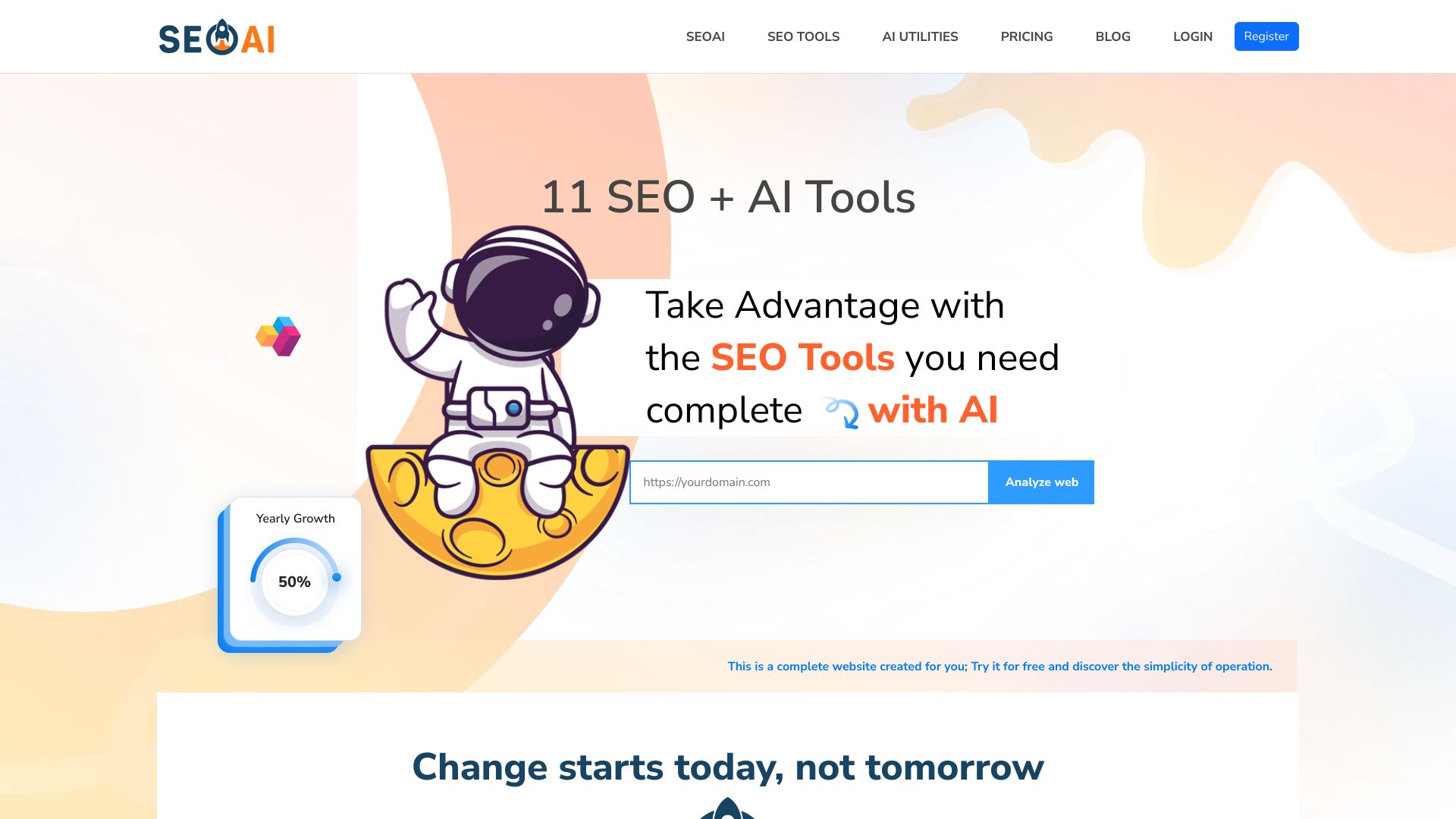
For SEO teams wanting a broader toolkit: SEOai combines keyword, SERP, backlink, analytics, writing, and AI image utilities.
The rest of the list covers narrower but useful paths: finding AI tools, automating e-commerce SEO, improving SaaS authority, and generating structured summaries for study.
Segment comparison
| Segment | Strongest fit | What it actually helps with | Main trade-off |
|---|---|---|---|
| Answer engines | iAsk.Ai | Direct factual answers and conversational discovery | Coverage depends on training data |
| Search infrastructure | Exa | Web search, crawling, and LLM answers for applications | Requires technical implementation |
| AI visibility and GEO | AIclicks | Prompt discovery, AI Search Score audits, and monitoring | Core service starts at $39/month |
| Research archives | AllSearch.ai | Searching across thousands of books | Broad queries can create too many results |
| SEO operations | SEOai | SERP, backlink, content, analytics, and AI utilities | Trial and free-plan usage restrictions |
Shortlist paths
| Your situation | Start with | Add a second tool when... |
|---|---|---|
| You need a free answer engine | iAsk.Ai | You need to search a specialist book corpus with AllSearch.ai |
| You are shipping an AI research workflow | Exa | You need human-facing tool discovery through Seekai.tools |
| You manage a brand's AI visibility | AIclicks | You need consultation-led technical SEO from AI Authority SEO |
| You run an online store | Aysa.AI | You need a wider SEO suite through SEOai |
| You research across languages | AI Search | You need outlines and mind maps from KaiSou AI |
Ranking snapshot
| Rank | Tool | Score | Best for | Starting price |
|---|---|---|---|---|
| #1 | iAsk.Ai | 94/100 | Students | Check vendor pricing |
| #2 | Exa | 93/100 | AI developers | Check vendor pricing |
| #3 | AIclicks | 92/100 | Web businesses | Starter: $39 / month |
| #4 | Aysa.AI | 92/100 | E-commerce business owners | Check vendor pricing |
| #5 | AllSearch.ai | 90/100 | Researchers | Check vendor pricing |
| #6 | Seekai.tools | 89/100 | AI researchers | Check vendor pricing |
| #7 | AI Authority SEO | 89/100 | SaaS companies | Basic consultation: $50 |
| #8 | AI Search | 89/100 | Researchers | Check vendor pricing |
| #9 | SEOai | 89/100 | SEO specialists | Free 7 days; from €25/month |
| #10 | KaiSou AI | 89/100 | Students | Check vendor pricing |
How we grouped and ranked the list
This is a deliberately broad field guide rather than a contest between ten identical chat interfaces. I grouped the tools by the job they perform: answering questions, retrieving web or book content, supporting AI applications, improving visibility in answer engines, or helping a team execute SEO work.
Scores reflect the strength of the stated feature set, clarity of the audience fit, practical breadth, and the usage signal available for the product. A high score does not mean every tool belongs in the same workflow. Exa can be a better choice than iAsk.Ai for a developer even though both relate to AI search; AIclicks can be more useful than either for a marketing team measuring brand presence in generated answers.
Pricing also needs context. Several vendors place pricing behind a sales or consultation path, while others expose a trial, credits, or a starting plan. Treat the prices below as shortlist signals, not a substitute for checking current quotas, API terms, or plan limits.
Ranked field notes
1. iAsk.Ai

- Students
- Free AI search engine with factual answers
- Starts at Check vendor pricing
- Usage signal: 822.4K
Why it matters
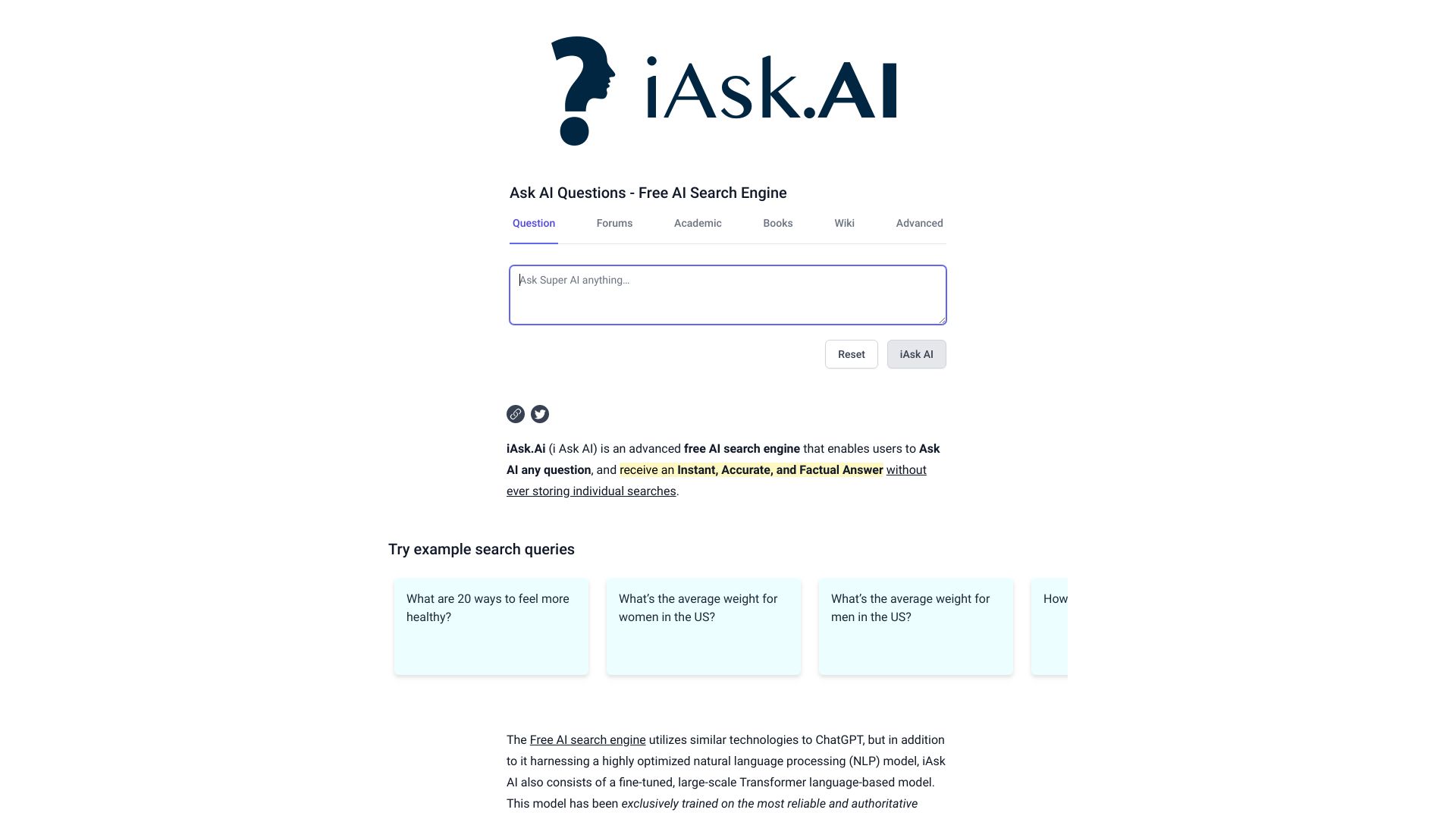
A straightforward answer engine is still the most useful entry point for many people. iAsk.Ai focuses on factual and unbiased responses, uses natural-language processing and a Transformer language model, and is free to use. That combination gives students and casual researchers a low-friction way to ask a question without learning a complex search syntax. It ranks first because its promise is easy to understand and its audience fit is unusually clean.
Best for
Students checking facts or exploring a topic
People who want a free ChatGPT-like answer engine
Quick research before opening deeper sources
Limitations
It may not cover every topic comprehensively
Answer quality relies on the quality of its training data
It is not the right choice for teams that need an API or SEO monitoring
Shortlist signal: Add iAsk.Ai first when you want free, direct answers and do not need developer infrastructure.
2. Exa

- AI developers
- $10 in credits for web search and LLM answers
- Starts at Check vendor pricing
- Usage signal: 1.1M
Why it matters
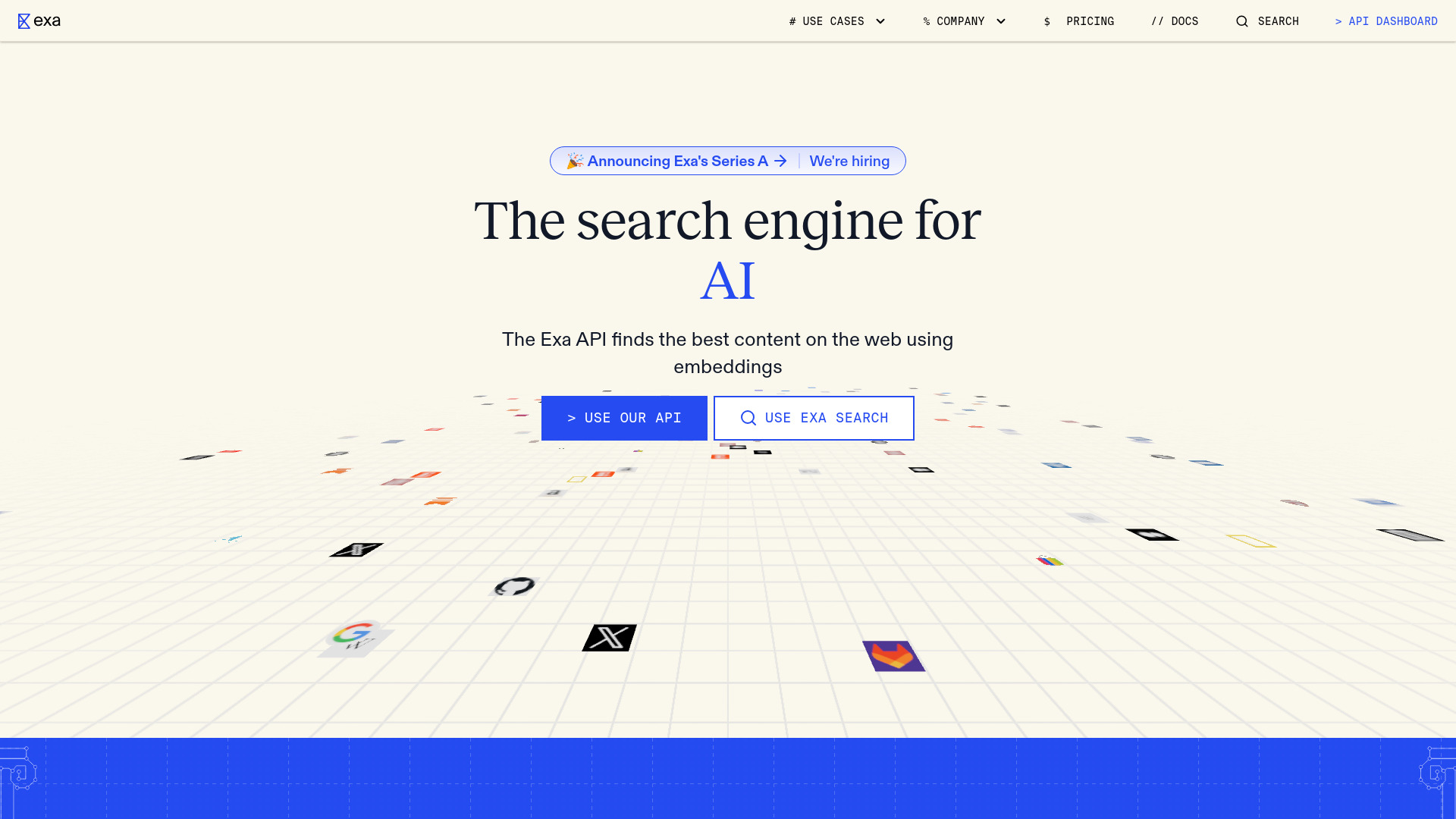
Exa is the infrastructure pick, not a casual consumer search page. Its Web Search API, web crawling, and LLM answers give developers building blocks for AI applications and research workflows. The $10 credit offer makes experimentation easier, while the business-grade positioning suggests a more serious path than stitching together an ordinary search box. The catch is equally clear: implementation requires technical knowledge, and pricing may be difficult for individual projects or small teams.
Best for
AI developers adding web retrieval to an application
Teams that need crawling as well as search
Builders evaluating LLM answer workflows
Limitations
Requires technical knowledge to implement the API
Pricing may be a barrier for individuals or small projects
This is infrastructure, not a plug-and-play student search tool
Shortlist signal: Choose Exa when your search experience needs to live inside a product you are building.
3. AIclicks

- Web businesses
- Free AI search audit; core plans from $39/month
- Starts at Starter: $39 / month
- Usage signal: 46.5K
Why it matters
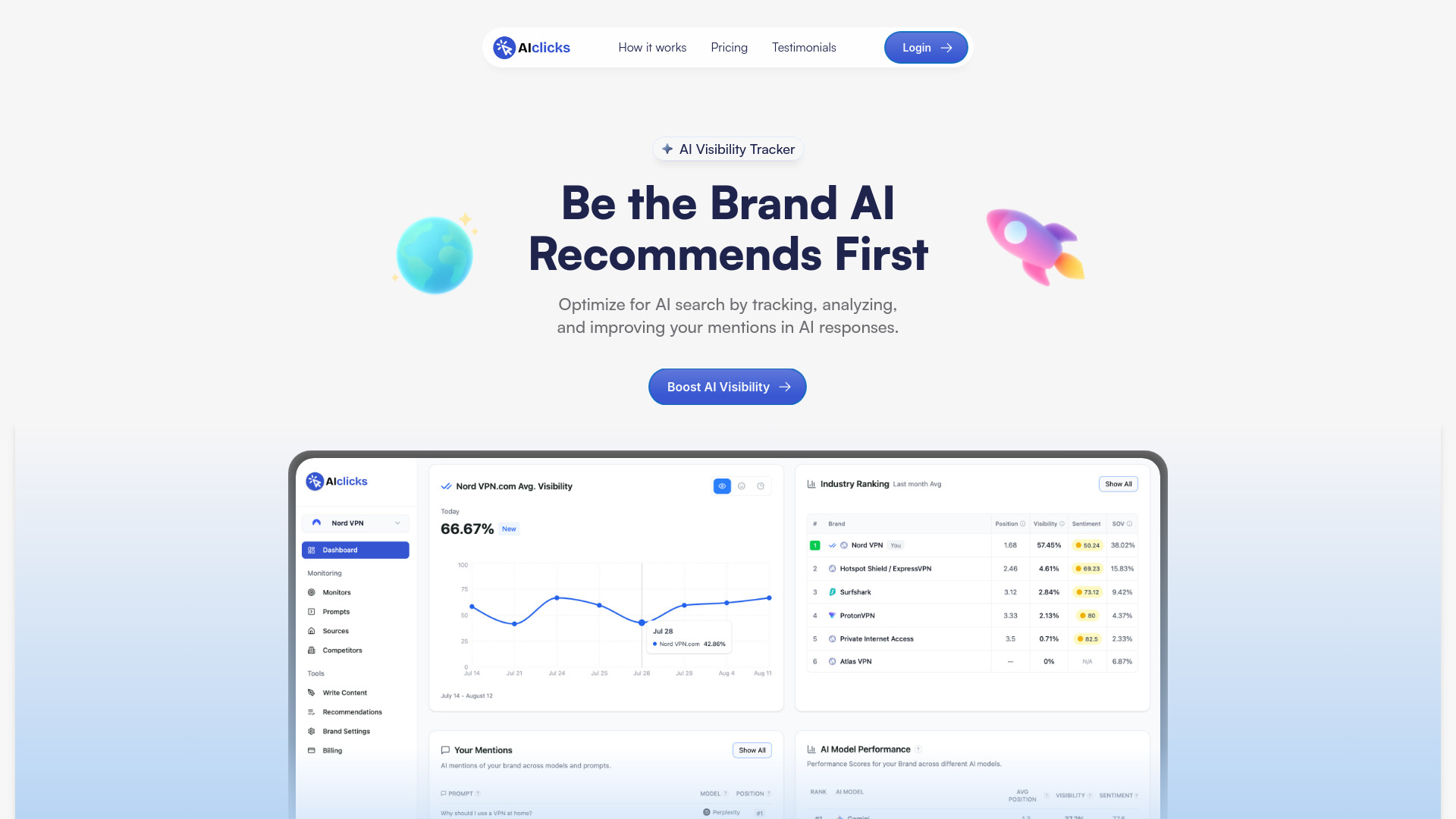
AIclicks addresses a newer question for marketers: what does an AI platform say about my brand, and how can I improve that answer? It offers Generative/Answer Engine Optimization, an AI Search Score audit, prompt discovery, and monitoring across ChatGPT, Perplexity, Gemini, Claude, Grok, DeepSeek, and Meta AI. The tracked-prompt and website limits on the $39 starter plan make it easier to understand the entry point, although the core service does not present a broad free tier.
Best for
Web businesses tracking brand visibility in AI answers
Marketing teams discovering audience questions
SEO practitioners working on GEO or AEO programs
Limitations
The core features do not have an explicit free tier or trial
The starter plan is limited to 20 tracked prompts and one website
It measures AI visibility rather than replacing a full SEO platform
Shortlist signal: Put AIclicks on your list when your main KPI is whether AI platforms mention and describe your business.
4. Aysa.AI

- E-commerce business owners
- Free access details are not clearly listed
- Starts at Check vendor pricing
- Usage signal: 3.2K
Why it matters
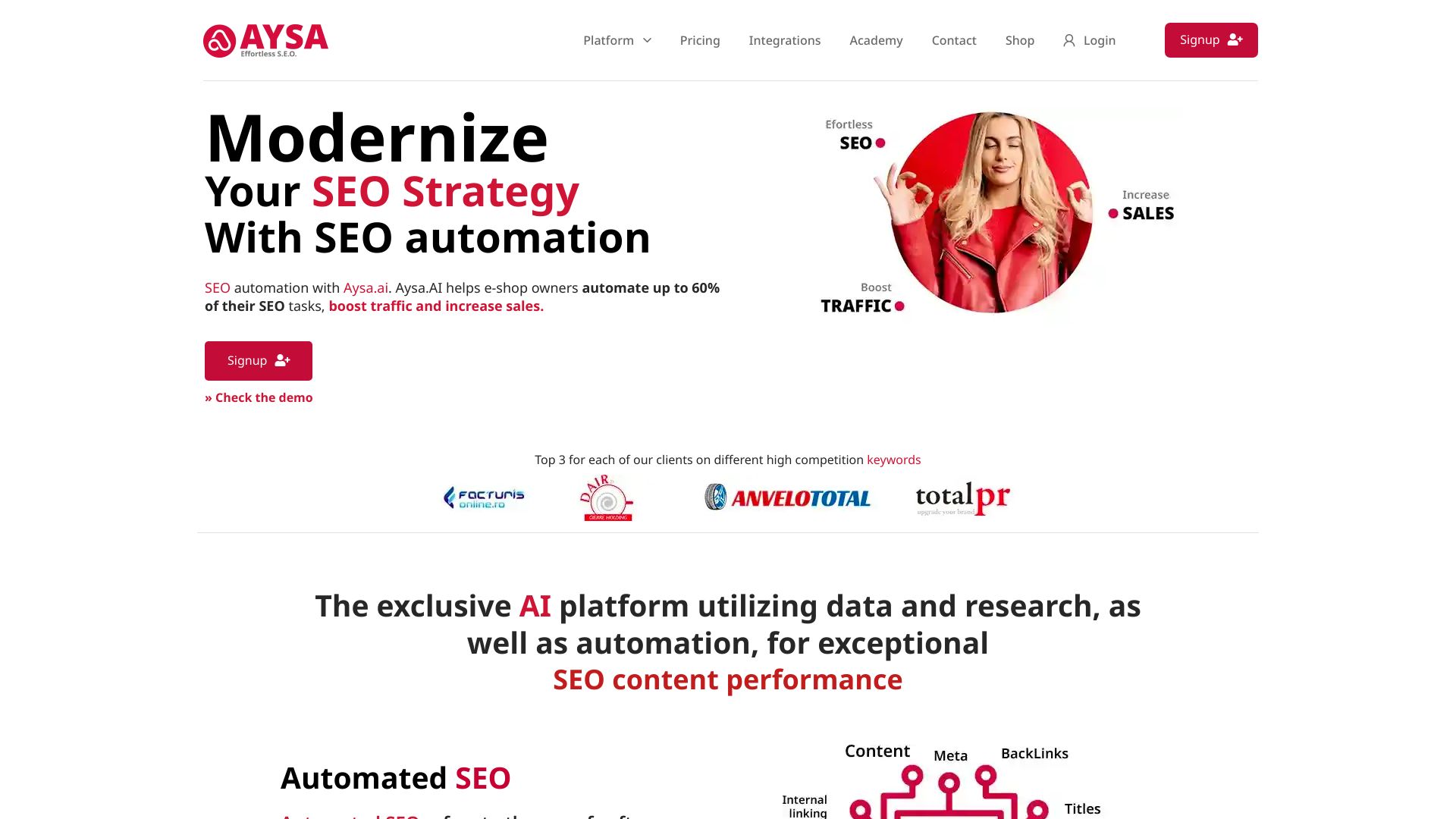
Aysa.AI takes the operational route: automated keyword research, automated content optimization, and SEO rank tracking. The product is positioned for e-commerce owners who want to automate up to 90% of SEO tasks and connect that work to traffic and sales. That makes it a better fit for a store operator than a general answer engine. Expect some setup and a learning curve, and remember that automation only works as well as the underlying data and AI decisions.
Best for
E-commerce owners managing SEO without a large specialist team
Teams that want keyword research and content optimization in one workflow
Businesses tracking search performance after publishing content
Limitations
Initial setup may take time
Results depend on the quality of the AI and data
Pricing is hidden behind a vendor check rather than a clearly listed plan
Shortlist signal: Choose Aysa.AI when the real goal is automating store SEO work, not asking one-off research questions.
5. AllSearch.ai

- Researchers
- Search thousands of books with adjustable filters
- Starts at Check vendor pricing
- Usage signal: Not listed
Why it matters
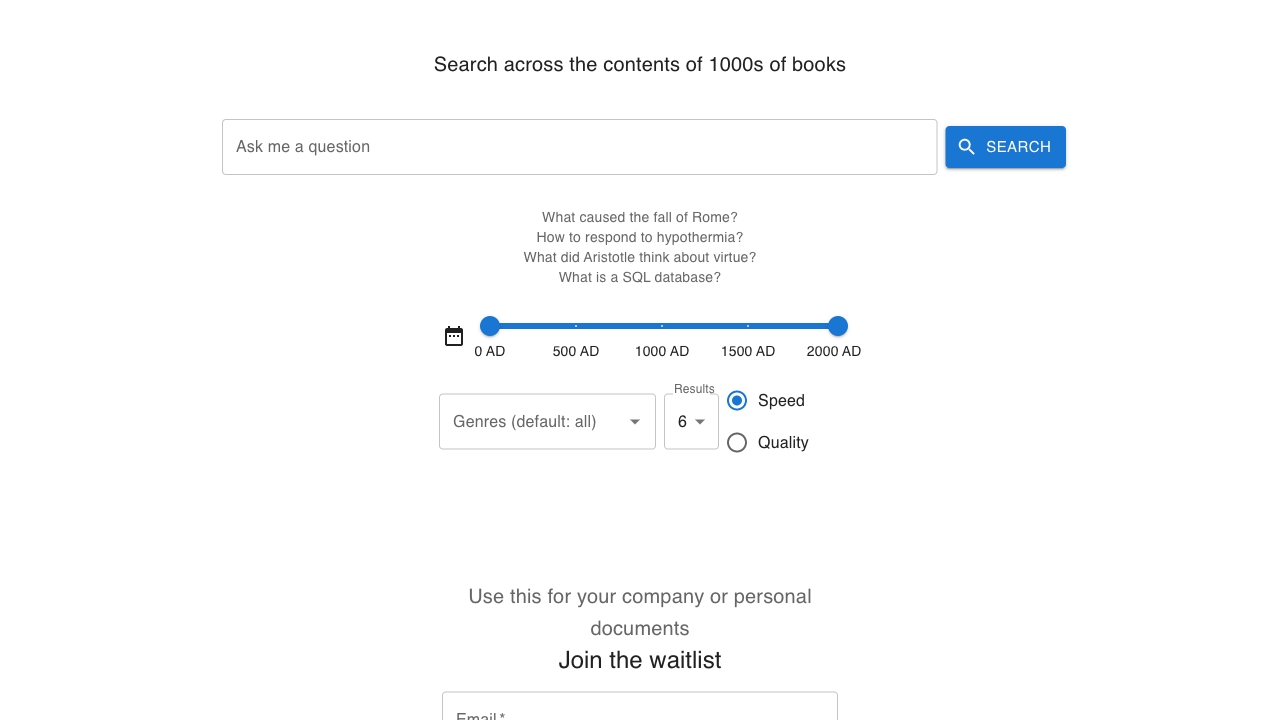
AllSearch.ai earns its place by narrowing the corpus. Instead of competing as a general web answer engine, it searches the contents of thousands of books and lets you adjust the time span, genre, result count, speed, and quality. Those controls are valuable when a researcher wants to explore how a subject appears across book content rather than collect another page of generic web summaries. Broad searches can become overwhelming, so the filters are part of the product's value rather than optional decoration.
Best for
Researchers exploring book-length content
Students comparing ideas across genres or time periods
Users who want adjustable search quality and speed
Limitations
Results depend on the accuracy and completeness of the book database
Broad parameters can produce too many results
It is a specialist archive search, not a universal web index
Shortlist signal: Pick AllSearch.ai when the source material matters as much as the answer.
6. Seekai.tools

- AI researchers
- Free access available for advanced AI tool search
- Starts at Check vendor pricing
- Usage signal: Not listed
Why it matters
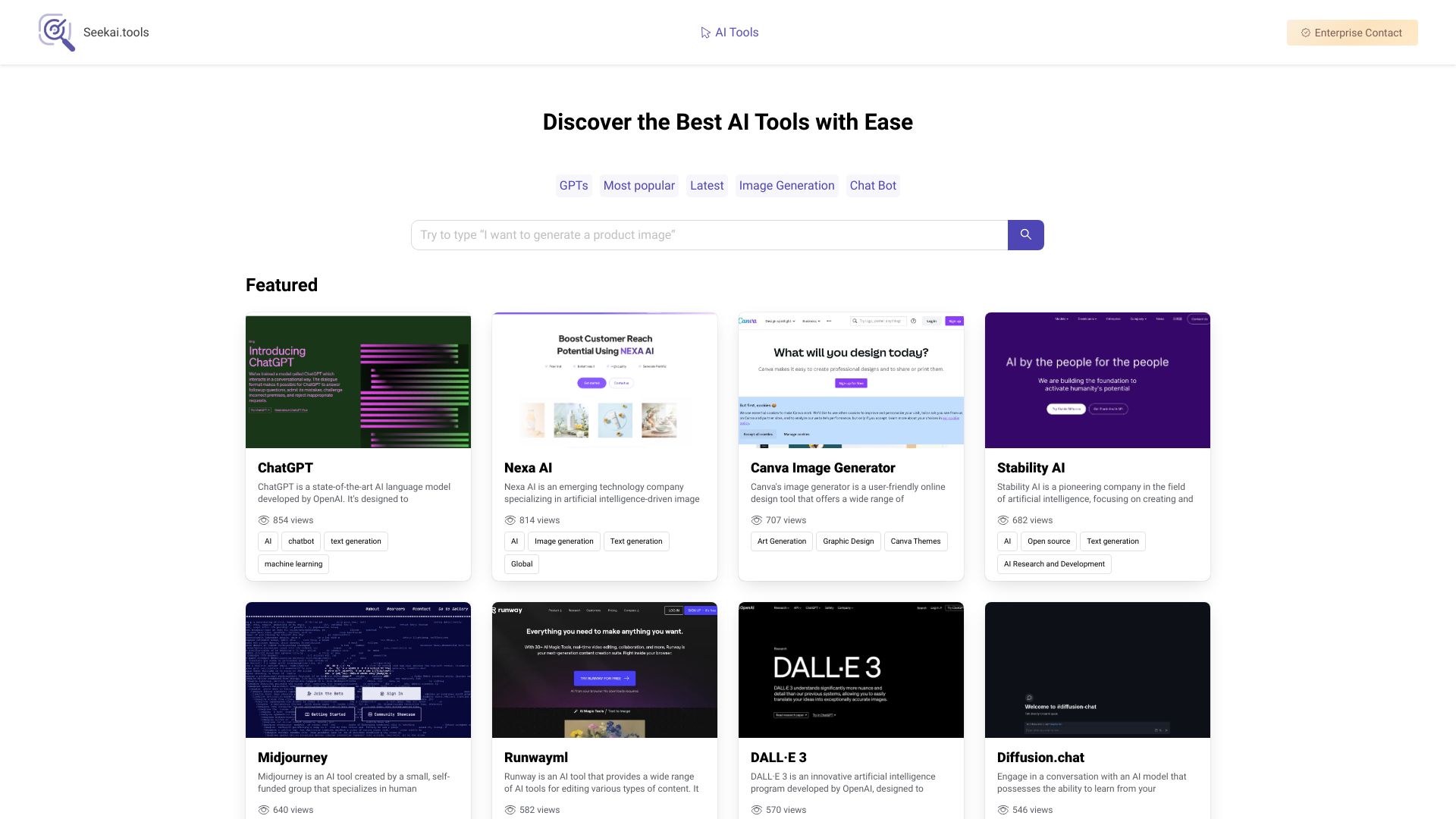
Seekai.tools is an adjacent alternative for people searching for AI tools rather than searching the open web itself. Its advanced AI tool search uses a stated unique algorithm to interpret user needs, and its community angle supports AI tool development and usage. That makes it useful at the discovery stage, especially when a conventional keyword search returns a long directory instead of a focused shortlist. The trade-off is that the public product information is limited, so buyers should validate the descriptions against their own workflow.
Best for
AI researchers comparing tools by intended use
Teams exploring unfamiliar AI categories
Users who prefer need-based discovery over exact keyword matching
Limitations
Public website information is limited
Results rely on interpreting tool descriptions correctly
It is a discovery layer, not a full research or answer engine
Shortlist signal: Use Seekai.tools when you are choosing an AI product and do not yet know which category or vendor fits.
7. AI Authority SEO

- SaaS companies
- AI-driven SEO consultation from $50 one-time
- Starts at Basic consultation: $50
- Usage signal: Not listed
Why it matters
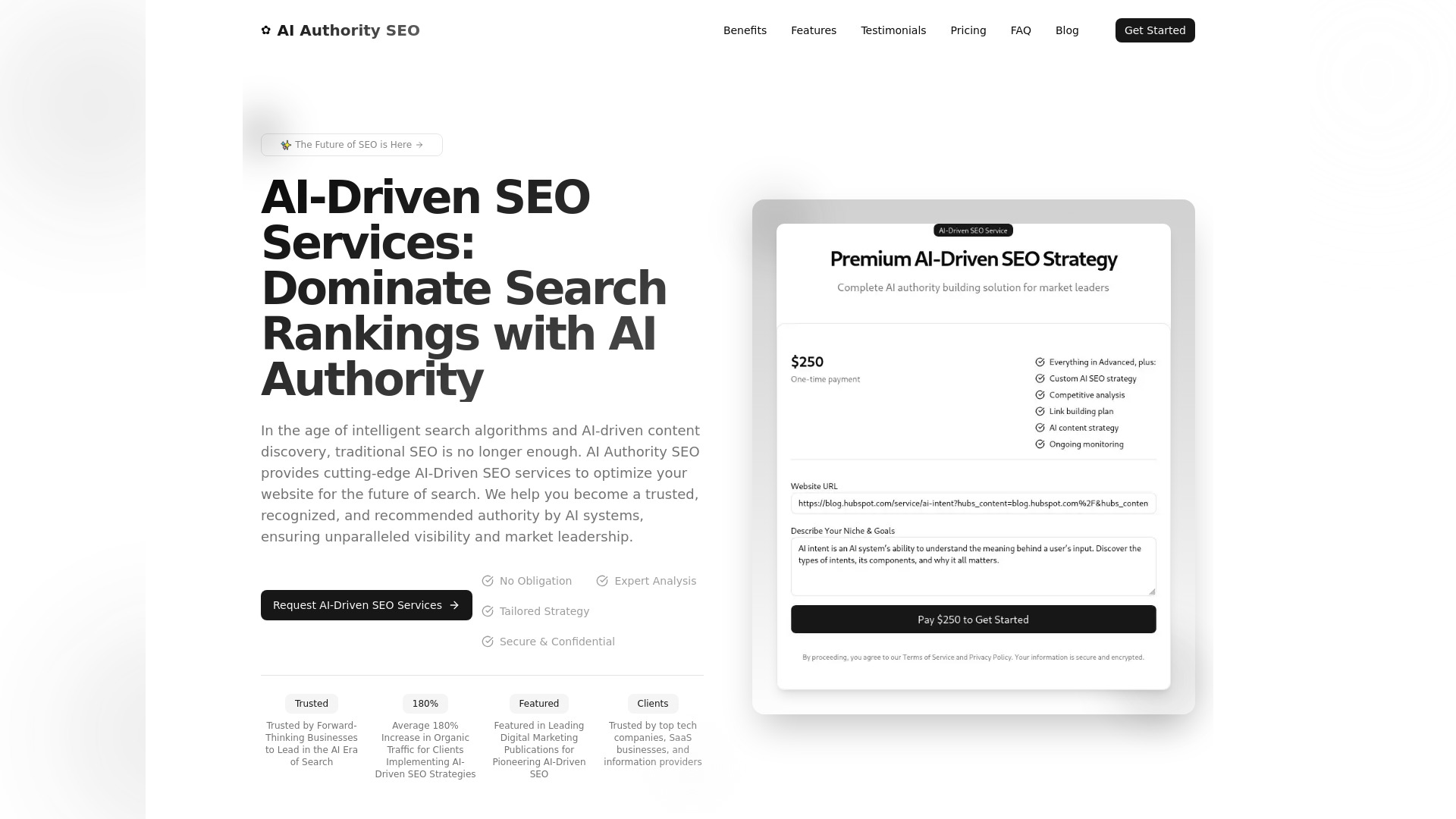
AI Authority SEO is a consultation-led option for SaaS companies that need a strategy for AI-driven SEO, content analysis, and technical SEO optimization. It is less about opening a search box and more about assessing how a site can earn authority in AI-powered discovery. The $50 basic consultation offers a concrete entry point, but the service model matters: implementation remains with the client or another provider, and ongoing support may require a separate arrangement.
Best for
SaaS companies planning an AI-driven SEO strategy
Teams that need a website audit and optimization assessment
Businesses comfortable implementing recommendations themselves
Limitations
Consultation requires implementation by the client or another party
One-time pricing may not include ongoing support
It is not a self-serve answer engine
Shortlist signal: Add AI Authority SEO when you need expert direction on AI search visibility more than another software dashboard.
8. AI Search

- Researchers
- Search and summarize foreign-language content
- Starts at Check vendor pricing
- Usage signal: Not listed
Why it matters
Language is often the biggest barrier in research, and AI Search tackles that specific problem. It lets users search foreign-language content in their native language, then provides AI-powered summaries and responses. That can make international source discovery much faster than translating every result manually. Still, translation and summarization can lose nuance, so important claims deserve a look at the original material before publication or academic use.
Best for
Researchers exploring sources in unfamiliar languages
Analysts who need native-language summaries
Users comparing information across international sources
Limitations
Translation and summarization accuracy can vary
AI responses may lose nuance from the original content
It should not be the only verification step for sensitive research
Shortlist signal: Choose AI Search when the source language is the main obstacle to finding useful information.
9. SEOai

- SEO specialists
- 7-day trial; SEO tools and AI utilities
- Starts at Free 7 days; from EUR 25/month
- Usage signal: Not listed
Why it matters
SEOai is the broadest operational suite in this ranking. Its SEO tools cover keyword search, current SERP, SERP evolution, backlinks, authority, web analytics, and reports, while its AI utilities include Chat AI, Super Writer, Fast Writer, and AI Images. Website analysis adds performance, localization, and content quality checks. That breadth is useful for specialists who want one workspace, though the seven-day free period and free-plan usage restrictions mean you should test the workflows you actually need before committing.
Best for
SEO specialists managing several optimization tasks
Teams that need SERP, backlink, analytics, and reporting tools together
Marketers who also want AI writing and image utilities
Limitations
Some features are limited during the free trial
The free plan has usage restrictions
A broad suite can be less focused than a specialist research tool
Shortlist signal: Choose SEOai when you need a working SEO command center rather than a single AI answer feature.
10. KaiSou AI

- Students
- Direct answers, summaries, outlines, and mind maps
- Starts at Check vendor pricing
- Usage signal: Not listed
Why it matters
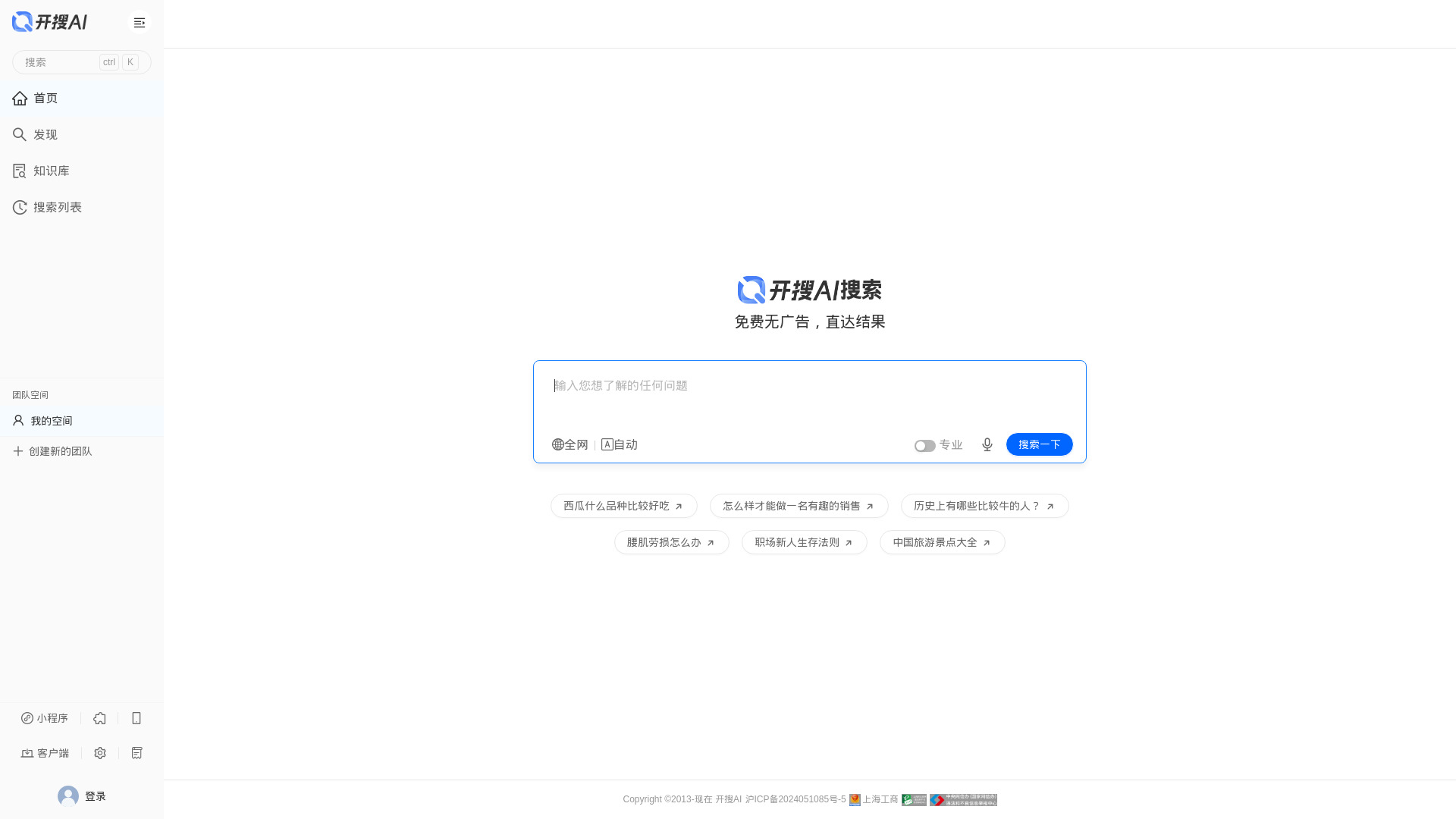
KaiSou AI turns an answer into a study artifact. Alongside direct answers and automatic summaries, it can generate outlines and mind maps, with an ad-free, high-quality search positioning. That makes it appealing for students who need to move from question to notes quickly. It is less convincing for complex or highly nuanced research, where the quality of the AI model and the need for source verification become more important than presentation format.
Best for
Students turning research into outlines
Users who benefit from summaries and mind maps
Quick study preparation and topic exploration
Limitations
It may not suit complex or nuanced research
Accuracy depends on the quality of the AI model
Structured output does not remove the need to verify important claims
Shortlist signal: Put KaiSou AI on the list when organizing information matters as much as retrieving it.
What to test before choosing
Run the same small test across your final two or three tools. The comparison will be more useful than a generic feature checklist.
- 1
Ask one factual question with a known answer. Check whether the response is direct, qualified, and consistent.
- 2
Use a messy natural-language prompt. This reveals whether the tool interprets intent or simply matches keywords.
- 3
Test a specialist query. Book search, multilingual research, or AI visibility monitoring should be tested in the segment you actually care about.
- 4
Inspect the workflow after the answer. Can you save, summarize, crawl, track, outline, or export what you found?
- 5
Check the commercial boundary. For APIs, confirm credits and implementation needs. For SEO tools, verify tracked prompts, websites, reports, and trial restrictions.
- 6
Verify important claims at the source. AI summaries can be useful shortcuts, but they can also omit context or nuance.
What to do next
Pick one tool from the segment comparison, then choose a backup from a different segment only if your workflow genuinely crosses categories. A student probably needs iAsk.Ai or KaiSou AI before an SEO platform. A SaaS marketing team may need AIclicks or AI Authority SEO, while a developer should begin with Exa. Researchers with a defined corpus should test AllSearch.ai, and multilingual teams should start with AI Search.
Before paying, run a representative prompt set for several days, record the quality of answers or recommendations, and confirm current pricing directly with the vendor. The right choice is usually the tool that handles your repeatable task with the least cleanup-not the one with the longest feature list.
Common mistakes when choosing from a complex top list
Comparing unlike tools as if they were substitutes. An API, a book index, and an SEO consultancy solve different problems.
Treating a score as a universal winner. The ranking reflects audience fit as well as feature depth; your use case should decide the final order.
Ignoring the source corpus. A specialist book or multilingual search tool can beat a broader engine when its source coverage matches your work.
Confusing an AI answer with evidence. Summaries and direct responses still need verification for academic, legal, financial, or business-critical decisions.
Skipping usage limits. Credits, tracked prompts, free trials, and API quotas can change the economics quickly.
Buying a suite before testing one workflow. Broad SEO platforms are attractive, but unused modules do not improve results.
FAQ
iAsk.Ai ranks first for its combination of free access, factual answers, unbiased positioning, and clear fit for students and everyday research. It is not automatically the best choice for developers, book researchers, or businesses measuring AI visibility.