
Dental AI is no longer one narrowly defined product category. Some platforms analyze radiographs, some automate insurance work, some answer patient questions, and others sit closer to general healthcare or medical imaging. That makes choosing difficult: a strong diagnostic platform may be a poor fit for front-desk automation, while a polished patient tool may offer little clinical value. To make the comparison useful, I evaluated 10 top-rated dental ai solutions and adjacent healthcare platforms across clinical depth, workflow value, audience fit, access, and market signals.
Start here
For most dental practices, Pearl is the clearest starting point because it combines FDA-cleared dental AI, real-time radiologic analysis, and a broad pathology-detection focus. Overjet is the better conversation if your biggest pain points are image interpretation, claim review, and patient education. SmileDial.io belongs on the shortlist when missed calls and appointment handling matter more than clinical analysis.
StrAIberry is an interesting patient-and-practice option, with oral hygiene organization, appointment setting, and a second-opinion workflow. The rest of the list requires more careful qualification. MD.ai is a medical imaging platform aimed at radiology teams, while Insights AI focuses on healthcare NLP and model development. Doctronic, Dr.Tail, Diatech AI, and Doctor AI Pro are adjacent tools rather than direct dental practice systems, but they help clarify where a buyer should draw the line between dental software and broader AI-enabled care.
| If you need... | Start with | Why |
|---|---|---|
| Radiographic support and clinical breadth | Pearl | FDA-cleared dental AI and a real-time radiologic platform |
| Imaging plus claims workflows | Overjet | Dental image analysis, automated claim review, and patient education |
| 24/7 front-desk coverage | SmileDial.io | AI receptionist, appointment booking, and automated reminders |
| Patient-facing oral health workflows | StrAIberry | Oral hygiene organization, appointments, and second opinions |
| Healthcare AI research and reporting | MD.ai | DICOM-native annotation and AI-powered reporting |
Segment comparison
The most important decision is not simply which product ranks first. It is which segment matches the work you want AI to perform. The table below separates clinical imaging from administrative automation, patient support, and broader healthcare infrastructure.
| Segment | Strongest match | Core workflow | Main buyer |
|---|---|---|---|
| Dental imaging and clinical review | Pearl | Real-time radiologic analysis and pathology detection | Dentists |
| Claims and patient education | Overjet | Image analysis, claim processing, annotated explanations | Dentists and insurers |
| Practice communications | SmileDial.io | Reception, booking, and reminders | Dental practices |
| Oral health and patient coordination | StrAIberry | Hygiene, appointments, and second opinions | Patients and dental stakeholders |
| General healthcare AI | Insights AI | Data curation, annotation, and model testing | Healthcare providers and AI teams |
This segmentation also explains why a direct ranking can feel surprising. A tool can score well because it solves an important healthcare workflow, even when it is not a conventional dental office platform. Treat those entries as comparison points and adjacent alternatives, not automatic replacements for dental-specific software.
Shortlist paths
Use these paths to narrow the field before booking demos. They are deliberately task-based: the fastest way to choose among complex AI products is to define the handoff you want the software to improve.
| Your priority | First choice | Backup or adjacent option | Verify before buying |
|---|---|---|---|
| More consistent dental image review | Pearl | Overjet | Supported images, patient age rules, and clinical workflow |
| Better insurance throughput | Overjet | Pearl | Claim workflow, review controls, and implementation cost |
| Fewer missed calls and booking delays | SmileDial.io | StrAIberry | Phone setup, escalation rules, and system integration |
| Patient access outside office hours | StrAIberry | Doctronic | Scope of advice and when a licensed professional takes over |
| Build or evaluate healthcare AI | MD.ai | Insights AI | Data formats, annotation needs, and technical support |
The secondary use case worth watching is top-rated dental ai solutions for enhanced patient experience. In practice, that usually means clearer image explanations, easier appointment access, faster responses, and fewer administrative loops-not simply adding a chatbot to the website.
Ranking snapshot
Scores are useful for sorting, but they should not replace fit. Pearl and Overjet lead because their stated capabilities map most directly to dental clinical and operational work. The lower-ranked tools can still be sensible choices when the use case is narrower or more adjacent.
| Rank | Tool | Score | Best for | Starting price |
|---|---|---|---|---|
| #1 | Pearl | 95/100 | Dentists | Check vendor pricing |
| #2 | Overjet | 94/100 | Dentists | Check vendor pricing |
| #3 | Diatech AI | 93/100 | Diamond traders | Check vendor pricing |
| #4 | Doctronic | 92/100 | Individuals seeking quick health information | Premier: $5/mo |
| #5 | Dr.Tail | 91/100 | Pet owners | $9.99/mo |
| #6 | MD.ai | 91/100 | Radiologists | Check vendor pricing |
| #7 | SmileDial.io | 91/100 | Dentists | Check vendor pricing |
| #8 | Insights AI | 90/100 | Healthcare providers | Check vendor pricing |
| #9 | StrAIberry | 89/100 | Patients | Check vendor pricing |
| #10 | Doctor AI Pro | 88/100 | People interpreting lab results | Free plan: $0/year |
How we grouped and ranked the list
I grouped the tools by the job they perform: dental imaging, insurance and administrative work, patient interaction, healthcare data infrastructure, and general health guidance. That prevents a patient-facing assistant from being judged by the same standard as a radiology annotation platform.
The ranking weighs five practical questions:
Category fit: Does the product have a credible relationship to dental or healthcare workflows?
Workflow depth: Does it handle a meaningful task, or only provide a thin conversational layer?
Clinical and operational relevance: Can it support image review, reporting, claims, scheduling, education, or patient access?
Audience clarity: Is it clear whether the buyer is a dentist, insurer, patient, radiologist, or technical team?
Buying friction: Are pricing, access, age restrictions, setup, and reliance on AI clear enough to investigate?
This is why market signal alone does not determine the order. Pearl and Overjet have the strongest direct dental fit. SmileDial.io ranks below them because its focus is narrower, but it may be more useful than a clinical platform for a practice losing opportunities after hours. Diatech AI, Dr.Tail, Doctronic, and Doctor AI Pro are included as unexpected alternatives and boundary markers for the wider AI healthcare landscape.
Ranked field notes
1. Pearl

- Dental practices evaluating radiologic AI
- Free plan available
- Starts at Check vendor pricing
- Usage signal: 252.5K
Why it matters
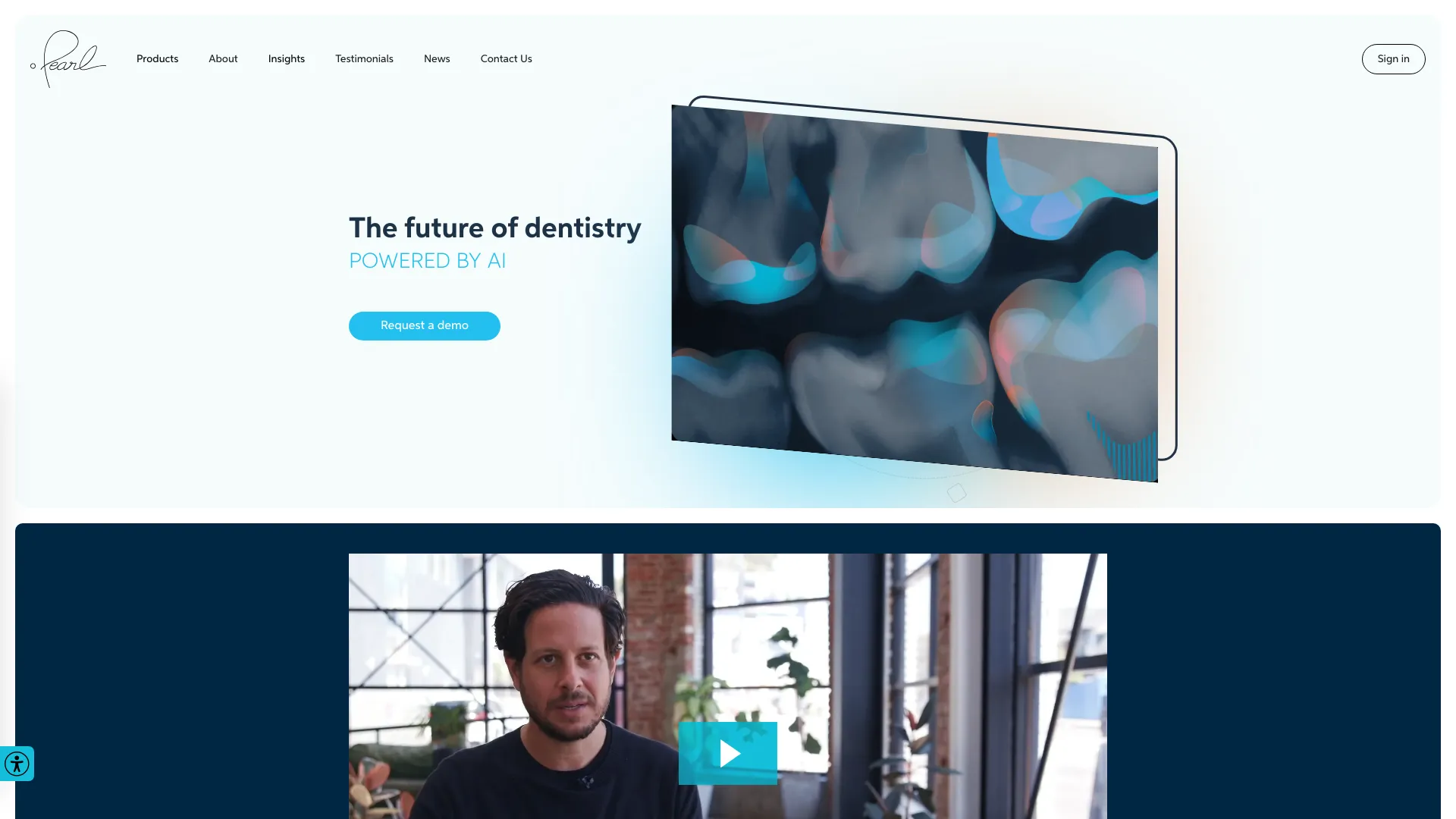
Pearl is the strongest direct match for a dental team that wants clinical AI rather than a general-purpose healthcare assistant. Its combination of FDA-cleared dental AI, a real-time radiologic platform, and a wide range of clinical pathology detection capabilities gives it the broadest stated scope in this field. The regulatory positioning also makes it easier to frame a serious internal review: the conversation can focus on workflow, supported use cases, and implementation rather than whether the product is merely a consumer experiment. Pricing is not presented as a clean public starting point, so a practice should treat the demo and verification process as part of the purchase decision.
Best for
Dentists who want dental imaging support with broad clinical coverage
Practices evaluating a dedicated radiologic AI platform
Teams that need to investigate regulatory clearances across markets
Limitations
Some features have a minimum patient age of 12 years
A competitor focused on a single disease may support younger patients
Pricing requires direct vendor verification
Shortlist signal: Add Pearl first when clinical imaging breadth and regulatory clarity matter more than public self-serve pricing.
2. Overjet

- Dental teams connecting imaging, claims, and education
- Free plan available
- Starts at Check vendor pricing
- Usage signal: 219.9K
Why it matters
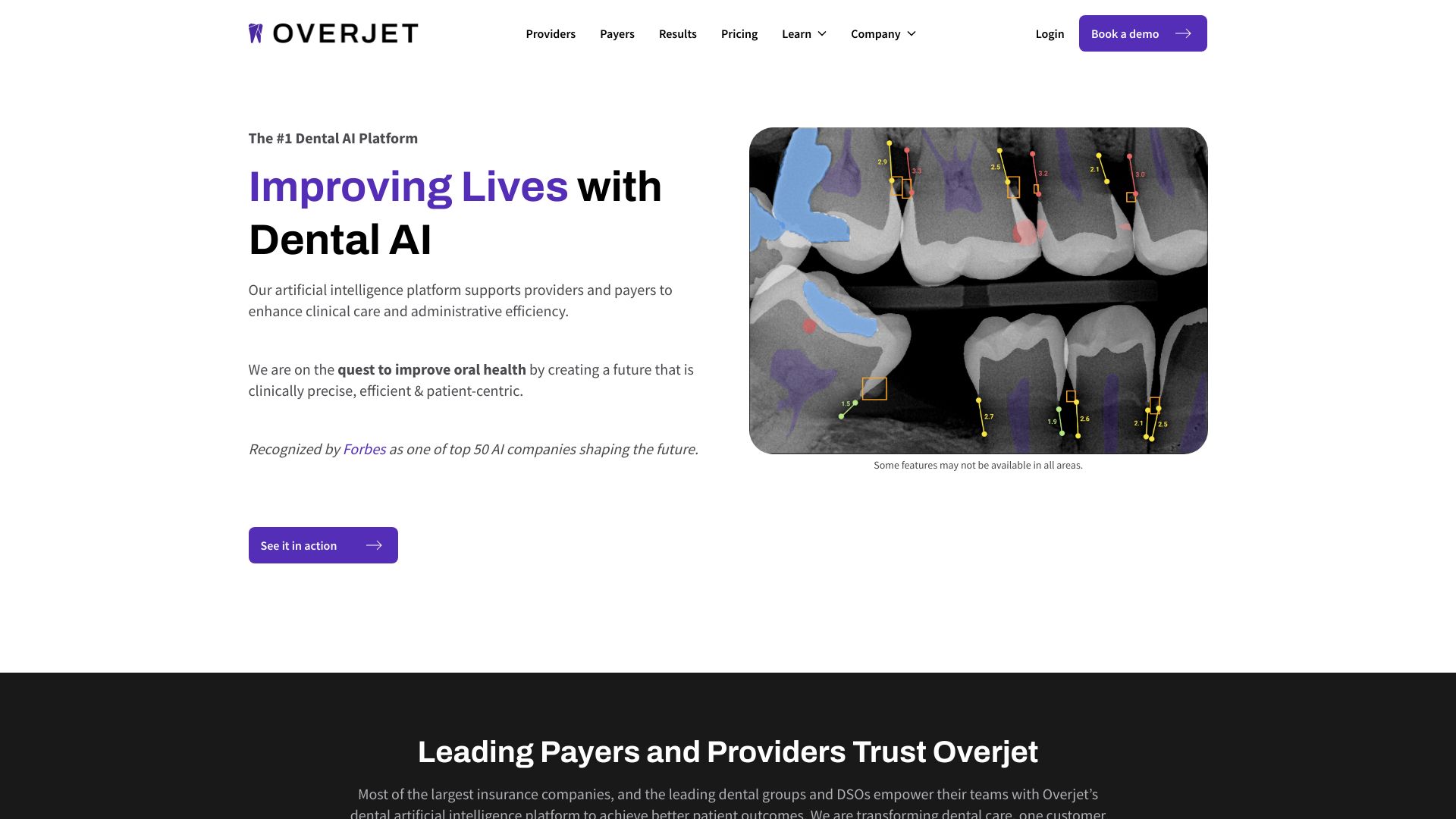
Overjet earns its second-place position by connecting several parts of the dental revenue and care conversation. AI-powered dental image analysis is paired with automated claim review and processing, while patient education tools can help teams explain what an image means. That combination is more compelling than an imaging-only tool for practices and insurers that need the clinical picture to move into documentation, claims, and communication. The trade-off is familiar with enterprise-oriented healthcare software: implementation cost and reliance on AI deserve a careful review rather than a quick yes.
Best for
Dentists who want image analysis plus claim workflow support
Insurers or dental organizations reviewing claims at scale
Teams that use annotated images for patient education
Limitations
Implementation may carry a meaningful cost
AI output should remain part of professional review, not replace it
Pricing and deployment details require a vendor conversation
Shortlist signal: Choose Overjet when claim processing and patient explanation are as important as image analysis.
3. Diatech AI
- Diamond traders and jewelry businesses
- Free plan available
- Starts at Check vendor pricing
- Usage signal: 3.1K
Why it matters
Diatech AI is the clearest category outlier in the ranking, and that is precisely why it needs context. Its value lies in diamond industry analysis, generative AI solutions for jewelers, and a diamond marketplace-not dental care. For a dental buyer, it is not a substitute for Pearl, Overjet, or SmileDial.io. It is better understood as a specialized AI business platform that demonstrates how much audience fit matters in a ranking. If your organization has a jewelry or diamond-trading operation, the product becomes much more relevant; otherwise, move on quickly.
Best for
Diamond traders comparing industry-specific analytics
Jewelers exploring generative AI workflows
Businesses that need a marketplace alongside industry analysis
Limitations
It does not address dental clinical or practice workflows
Pricing may require a subscription discussion or direct contact
Full value may require technical expertise
Shortlist signal: Only add Diatech AI if your actual workflow involves diamonds, jewelry, or related marketplace activity.
4. Doctronic

- Individuals seeking quick health information
- Free AI consultation
- Starts at Premier: $5/mo
- Usage signal: 1.4M
Why it matters
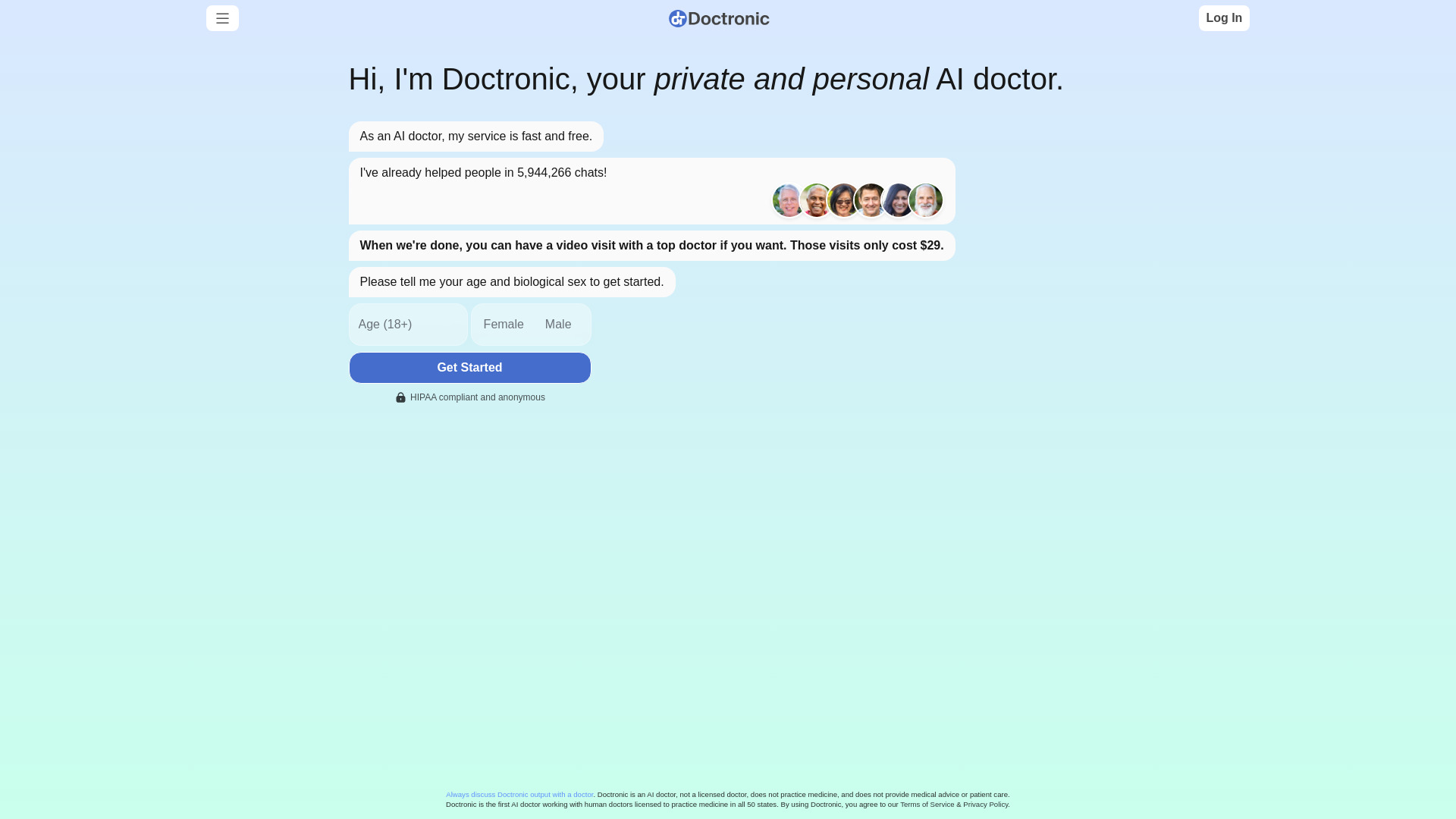
Doctronic represents the consumer-health side of the category. A free AI consultation, instant AI care, 24/7 video visits with licensed doctors, and prescription services make it relevant to people seeking accessible health information from home. It can inform a patient-access discussion, but it should not be mistaken for dental practice software or a dental diagnostic system. The platform itself makes the boundary clear: AI is not a substitute for a licensed doctor, and it does not provide medical advice or care directly.
Best for
Individuals who need fast general health information
Users who value access from home and video visits
Teams researching broader patient-access models
Limitations
It is not a dedicated dental imaging or practice platform
AI does not replace a licensed doctor
Its care scope should be confirmed before applying it to dental use cases
Shortlist signal: Consider Doctronic as an adjacent patient-access model, not as your dental practice's clinical AI system.
5. Dr.Tail

- Pet owners seeking fast veterinary guidance
- 15-day free trial
- Starts at Consult with a vet expert: $9.99/mo
- Usage signal: 11.8K
Why it matters
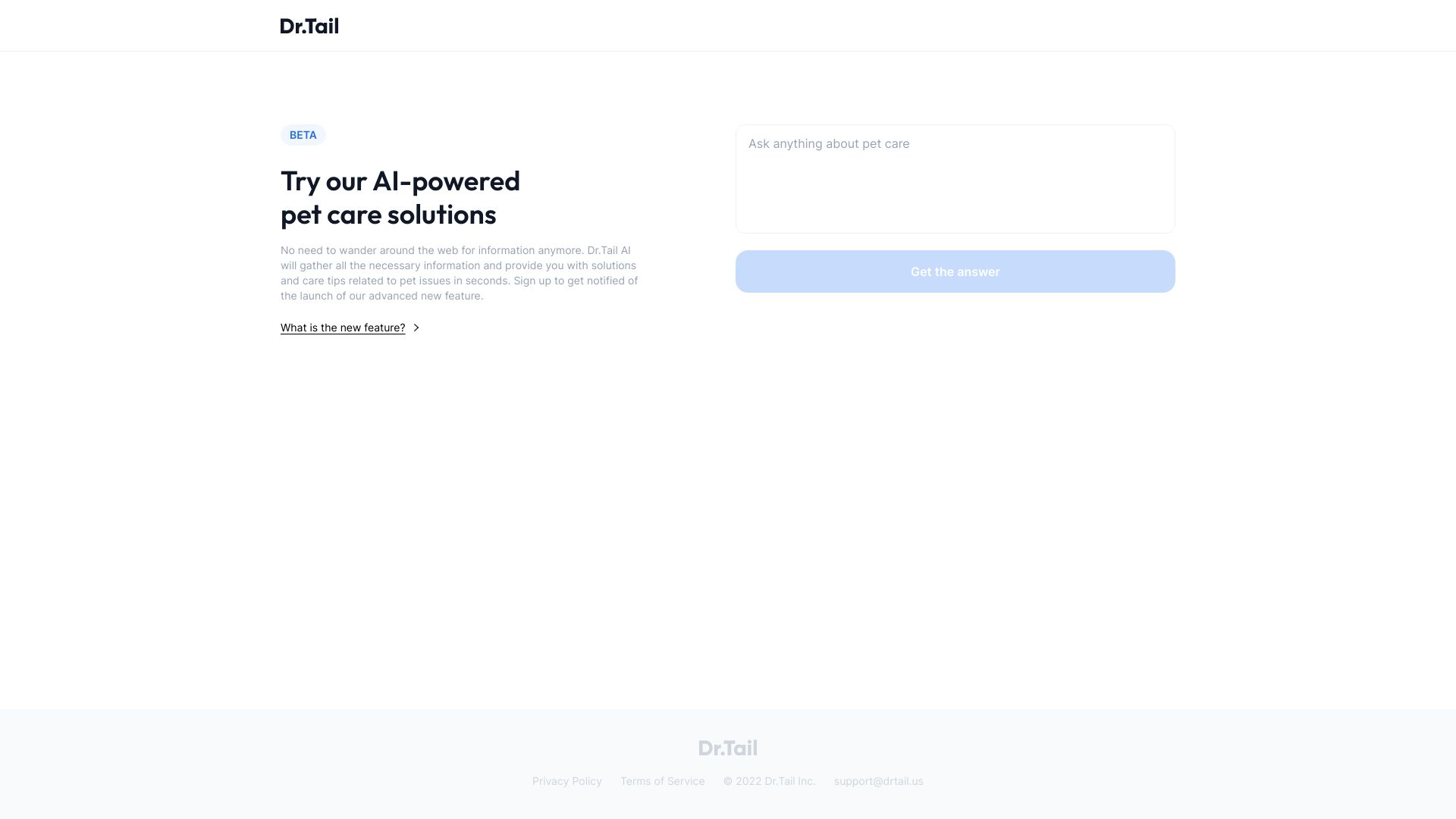
Dr.Tail is another adjacent product, but its workflow is easy to understand: AI-powered pet health advice, online consultations with veterinary experts, and a searchable Q&A archive. Its stated promise of answers within 30 minutes makes it a useful example for anyone studying how AI can triage questions before a professional interaction. For dental teams, the lesson is about service design rather than direct adoption. The product becomes a poor fit once the buyer needs radiographic analysis, dental claims, or practice scheduling.
Best for
Pet owners needing quick answers from veterinary experts
Users who want an archive of related pet-health questions
Buyers comparing asynchronous AI-supported consultation models
Limitations
It is for veterinary care, not dental care
Paid membership is required after the free trial
Updates rely on SMS
Shortlist signal: Use Dr.Tail only as a reference for rapid expert-assisted support, unless your organization serves pets.
6. MD.ai

- Radiology teams building reporting and annotation workflows
- Starts at Check vendor pricing
- Usage signal: 7.9K
Why it matters
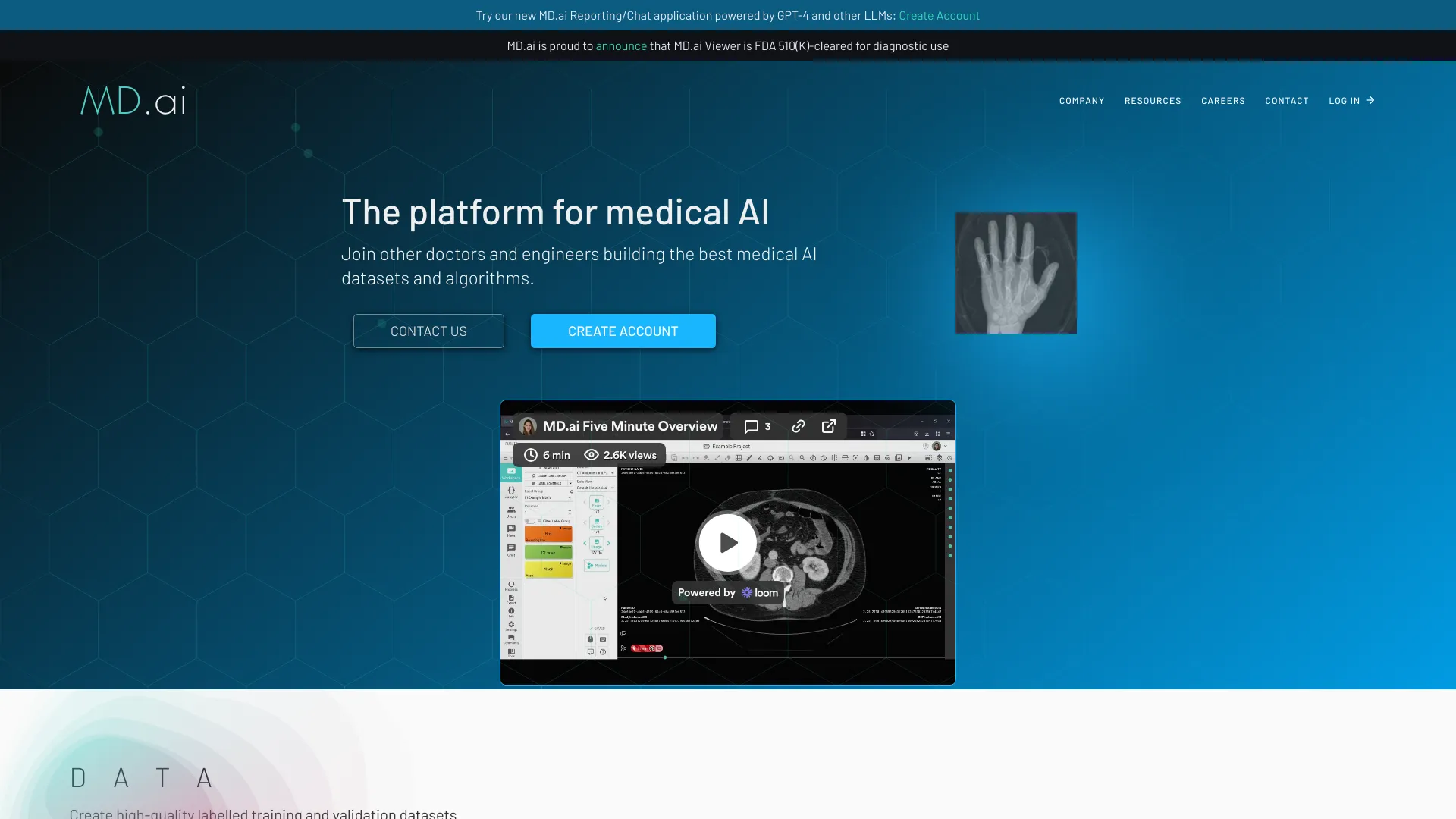
MD.ai is a serious adjacent option for teams thinking beyond a finished dental application. Its AI-powered reporting, DICOM-native data annotation, and AI-assisted annotation target radiology workflows and model development. That makes it potentially relevant to a dental research group or imaging team with technical resources, but less suitable for a small practice seeking a ready-to-run front-desk or patient tool. Expect a learning curve, and do not assume that a radiology platform automatically covers dental-specific requirements.
Best for
Radiologists and imaging teams working with DICOM data
Organizations developing or deploying medical imaging models
Technical teams that need annotation and reporting workflows
Limitations
It may take time to learn and configure effectively
The product is oriented toward radiology rather than dental operations
Specific pricing details are not readily available
Shortlist signal: Add MD.ai when you need imaging data and reporting infrastructure, not simply a plug-in dental receptionist.
7. SmileDial.io

- Dental practices automating calls and bookings
- Month-long free trial
- Starts at Check vendor pricing
- Usage signal: 287
Why it matters
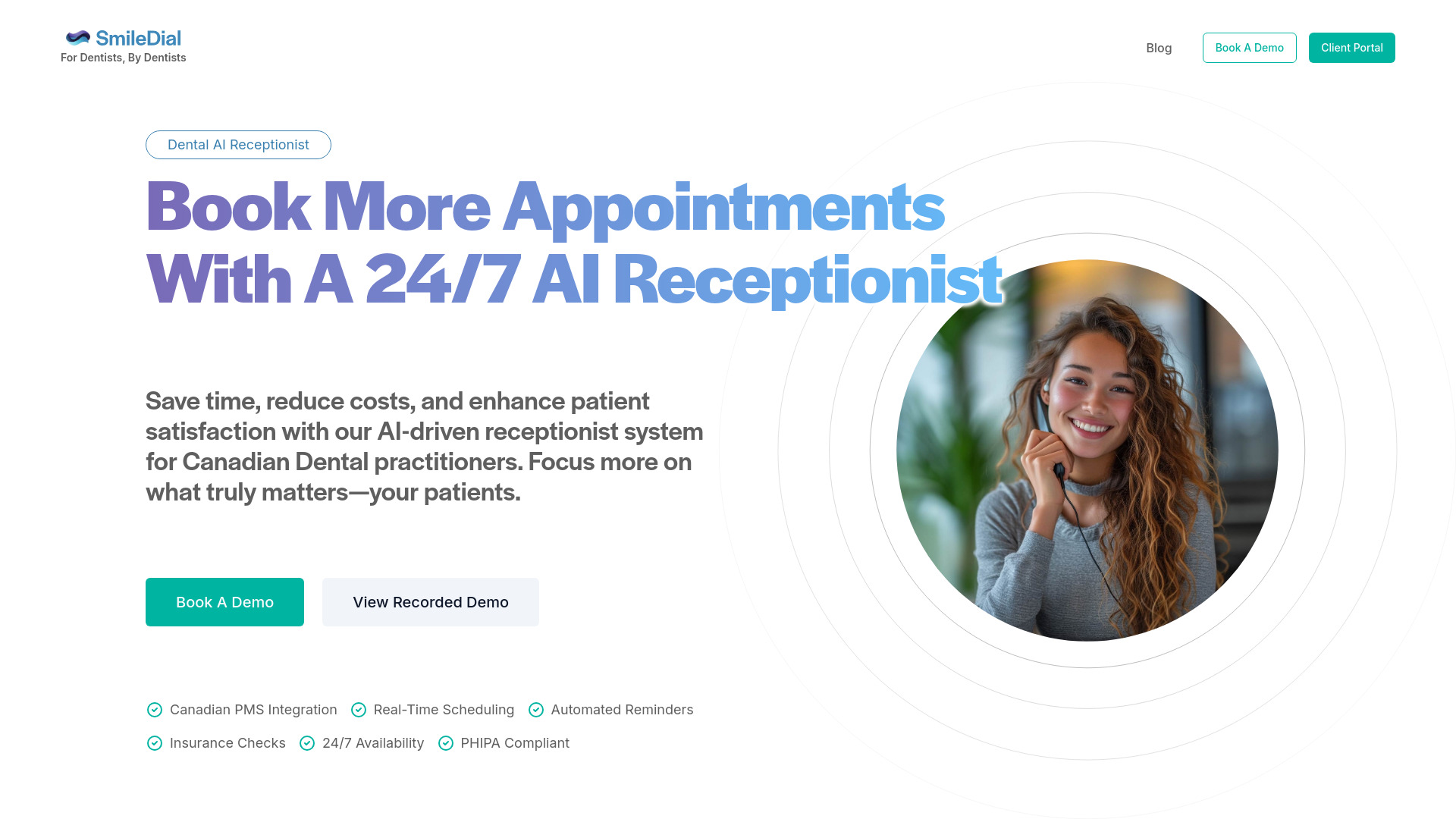
SmileDial.io focuses on a problem that many clinical AI comparisons overlook: the phone still controls whether a patient gets scheduled. Its 24/7 AI receptionist, appointment booking, and automated reminders create a straightforward operational case. The product is especially relevant for a Canadian dental practice because its stated feature set includes PHIPA compliance. That does not remove the need to test real conversations, escalation behavior, and setup, but it gives the platform a more concrete role than a generic chatbot. The main concern is reliance on AI for patient interaction and the initial learning curve.
Best for
Dental practices that miss calls outside office hours
Teams trying to automate appointment booking and reminders
Canadian practices evaluating a PHIPA-compliant receptionist workflow
Limitations
Initial setup may require time and process changes
AI interaction needs careful testing for tone and escalation
Pricing is not presented as a clear public starting point
Shortlist signal: Choose SmileDial.io when appointment access and phone coverage are your most visible patient-experience problems.
8. Insights AI

- Healthcare providers and AI development teams
- Free plan available
- Starts at Check vendor pricing
- Usage signal: Usage signal not listed
Why it matters
Insights AI sits underneath the visible patient and clinician experience. Its medical data curation and annotation, model training and testing, and Omniview LLM for healthcare point toward organizations building healthcare AI rather than practices purchasing a single-purpose dental feature. The stated model is fine-tuned on 30 million patient data points, which makes the platform worth investigating for teams with data and model-development requirements. It is a poor fit for buyers who need an immediately deployable dental receptionist or radiology assistant.
Best for
Healthcare providers exploring NLP and data workflows
AI teams curating and annotating medical data
Organizations testing or training healthcare models
Limitations
Pricing may require direct contact
Specific performance metrics should be requested and verified
It may demand more technical capability than a dental office has available
Shortlist signal: Put Insights AI on the list only when healthcare data and model work-not routine dental administration-is the core requirement.
9. StrAIberry

- Patients coordinating oral health and appointments
- Free plan available
- Starts at Check vendor pricing
- Usage signal: Usage signal not listed
Why it matters
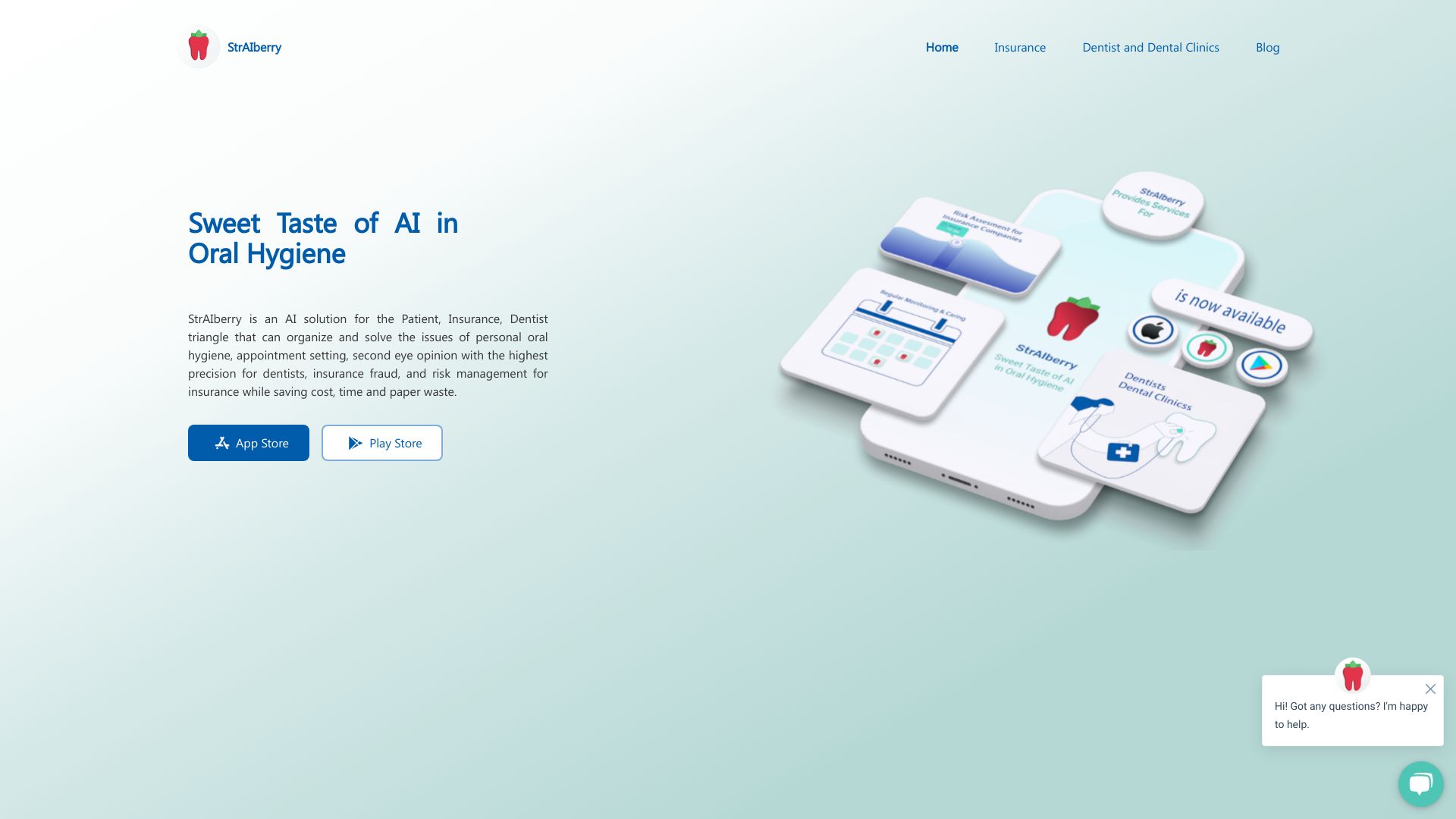
StrAIberry is one of the more relevant patient-facing entries because it addresses the oral hygiene and appointment side of dental care. It also includes a second-opinion workflow and references the patient, insurance, and dentist triangle, giving it a broader coordination angle than a simple booking assistant. That could make it useful for organizations focused on enhanced patient experience, but the buying team should clarify how it connects with existing systems. The product's value depends on whether those handoffs are practical in the real workflow.
Best for
Patients organizing oral hygiene and appointments
Dental stakeholders exploring second-opinion workflows
Teams interested in connecting patient, insurance, and dentist needs
Limitations
Integration with existing systems may be required
Users may face a learning curve
Pricing and operational performance need direct verification
Shortlist signal: Add StrAIberry when coordination and patient guidance matter more than advanced image analysis.
10. Doctor AI Pro

- Individuals interpreting lab results
- 5 AI messages, 1 lab analysis/month
- Starts at Free plan: $0/year
- Usage signal: Usage signal not listed
Why it matters
Doctor AI Pro is a consumer health assistant built around lab-report analysis, personalized insights, and chat with an AI doctor. Its free plan includes five AI messages and one lab analysis per month, which makes it easy to test for personal understanding. It does not belong in a dental practice software stack unless the use case is general health education, and even then the team should separate educational support from diagnosis or treatment. For readers comparing AI care experiences, it demonstrates the value of a clear upload-and-explain workflow.
Best for
Individuals trying to understand lab reports
Users who want personalized health insights
People testing a limited free AI health assistant
Limitations
The free plan limits messages and report analyses
Users must upload lab reports, which can create a participation barrier
It is not a dental imaging or practice-management platform
Shortlist signal: Choose Doctor AI Pro for personal lab-result explanations, not for dental diagnosis, scheduling, or claims.
What to test before choosing
A polished demo is not enough for dental AI. Ask each vendor to show the exact workflow your staff will use and test the output with representative cases. The following checklist keeps the evaluation grounded.
Test the clinical boundary
Ask which dental images, conditions, and patient ages the system supports.
Confirm whether the product is FDA-cleared or has other regulatory clearances relevant to your market.
Identify which tasks require professional review and which outputs are purely educational.
Test how the system handles unclear images, missing information, and cases outside its scope.
Test the operational handoff
Run a complete path from patient contact to appointment, claim, or clinician review.
Check whether staff can correct an AI result without starting over.
Ask how reminders, escalations, and unanswered questions are handled.
Measure the number of clicks and manual transfers required for a routine case.
Test the patient experience
Use plain-language image explanations with a sample patient.
Check whether the system makes clear when a licensed professional is needed.
Test response timing and after-hours behavior.
Review how patient information is entered, stored, and shared.
Test the commercial reality
Request a written price for your number of locations, users, and expected volume.
Ask about implementation, training, support, and contract length.
Confirm whether a free trial is genuinely available or simply a sales consultation.
Verify that the claimed integrations and compliance requirements fit your existing setup.
What to do next
Start with the workflow that costs your practice the most time or creates the most patient friction. If that is radiographic review, book evaluations with Pearl and Overjet. If it is phone coverage, put SmileDial.io through a live booking test. If the priority is patient coordination, compare StrAIberry with your current scheduling and communication process.
Keep the first evaluation small. Choose one location, one staff group, and one measurable outcome such as completed bookings, claim-review time, or the time required to explain an image. Do not roll out a broad AI program before you know where human review belongs.
For technical or research teams, MD.ai and Insights AI deserve a separate track. Their value is closer to imaging infrastructure, data curation, annotation, and model work than everyday dental administration. Doctronic, Dr.Tail, Diatech AI, and Doctor AI Pro should remain reference points or specialized alternatives unless their audience matches your organization exactly.
Common mistakes when choosing from a complex top list
Mistake 1: Treating every high score as a direct recommendation
A score is a sorting aid, not a universal buying instruction. Diatech AI ranks highly but serves diamond businesses. Dr.Tail serves pet owners. Doctor AI Pro focuses on lab reports. Their presence reinforces the need to match the product to the job.
Mistake 2: Confusing patient access with clinical intelligence
A 24/7 receptionist can improve access without interpreting radiographs. Conversely, a radiology platform may offer deep clinical support without booking an appointment. Decide whether the gap is clinical, administrative, or patient-facing before comparing features.
Mistake 3: Assuming AI removes professional responsibility
The tools in this field should be evaluated as support systems. Doctronic explicitly separates AI from licensed medical care, and dental teams should apply the same caution to imaging, education, and triage workflows.
Mistake 4: Ignoring age and audience restrictions
Pearl includes a minimum patient age of 12 for some features. Other products are designed for radiologists, healthcare developers, pet owners, or individuals. Confirm the intended audience before you invest time in implementation.
Mistake 5: Comparing free access as if it means the same thing
A free AI consultation, a 15-day trial, a month-long trial, and five monthly messages are very different offers. Treat free access as a way to inspect the workflow, not proof that the product will remain free at practice scale.
Mistake 6: Skipping the handoff test
The best demo is the one that follows a real case from input to action. Ask who reviews the result, where it is recorded, how the patient is notified, and what happens when the AI is uncertain. Those details often matter more than the feature list.
FAQ
Pearl is the strongest overall match in this guide because it combines FDA-cleared dental AI, a real-time radiologic platform, and broad clinical pathology detection. It is the best starting point for a dental team focused on imaging and clinical workflow, although pricing and patient-age requirements should be verified directly.