
AI music has split into several very different products: prompt-to-song generators, stem editors, creator studios, developer APIs, and tools for background listening. That makes choosing among the top ai music options harder than scanning a single score. This guide compares 10 tools, explains where each fits, and flags the limitations that matter once you move beyond a quick demo.
Start here
The fastest way to narrow the list is to start with the job, not the feature count. AirMusic is the broadest option for producers who want generation, voices, video, and stem work in one place. Music AI is the more technical pick when separation, mixing, and mastering matter more than composing from a blank prompt. For a no-signup experiment, music0 AI is unusually straightforward; for a production integration, AI Music API is the obvious specialist.
Use this quick shortlist:
Want one creative workspace: AirMusic
Need serious audio processing: Music AI
Compose from text, images, or lyrics: Aimusic
Make instrumental tracks from lyrics: AI Music Lab
Try long tracks without an account: music0 AI
Build music into a product: AI Music API
Extract vocals or stems: AI Music Sampler
Keep a small monthly credit budget: aiMusician.ai
The final two entries need more caution. AI Rap Music is currently suspended, while AI Harmony Feast is aimed at relaxation, focus, and sleep rather than hands-on production. They remain useful signals for the breadth of this category, but neither should be your first purchase.
Segment comparison
| Segment | Best fit | Standout option | What to check first |
|---|---|---|---|
| Full creative studio | Producers making tracks and visuals | AirMusic | Credit limits and paid stem tools |
| Audio post-production | Engineers separating, mixing, or mastering audio | Music AI | Storage, concurrency, and vendor pricing |
| Prompt-based composition | Hobbyists and creators starting from text or lyrics | Aimusic | Monthly tokens and output consistency |
| Developer infrastructure | Music products and automated workflows | AI Music API | Supported providers and rights responsibility |
| Stem extraction and utility | Musicians cleaning up existing recordings | AI Music Sampler | Per-use costs and source-audio quality |
A useful distinction: a high score in this table does not mean every tool generates complete songs. Music AI and AI Music Sampler are valuable precisely because they work on existing audio. Treating them like direct competitors to a text-to-music generator will produce a bad shortlist.
Shortlist paths
| Your starting point | Follow this path | Why it works |
|---|---|---|
| I have a prompt or lyric | Aimusic -> AI Music Lab | Compare broad composition with a more instrumental workflow |
| I already have a recording | Music AI -> AI Music Sampler | Test separation, cleanup, and export quality |
| I make social video content | AirMusic -> music0 AI | Pair a broad studio with a fast no-login option |
| I am building a music feature | AI Music API | Start with latency, provider coverage, and rights review |
| I need background sound | AI Harmony Feast | Its focus is mood and listening rather than production |
Ranking snapshot
| Rank | Tool | Score | Best for | Monthly visits |
|---|---|---|---|---|
| #1 | AirMusic | 95/100 | Music producers | 149.2K |
| #2 | Music AI | 95/100 | Audio professionals | 82.5K |
| #3 | Aimusic | 95/100 | Amateur music enthusiasts | 53.4K |
| #4 | AI Music Lab | 95/100 | Musicians | 18.9K |
| #5 | music0 AI | 94/100 | Content creators | 10.6K |
| #6 | AI Music API | 94/100 | Music businesses | 2.3K |
| #7 | AI Music Sampler | 93/100 | Musicians | 774 |
| #8 | aiMusician.ai | 93/100 | Musicians | 185 |
| #9 | AI Rap Music | 91/100 | Musicians | Not listed |
| #10 | AI Harmony Feast | 91/100 | Students | Not listed |
How we grouped and ranked the list
This is a field guide rather than a popularity contest. First, we separated creation, transformation, infrastructure, and listening products. A generator needs a fair test against other generators; a stem tool needs to be judged on the usefulness of its separation workflow instead.
We then weighted feature depth, audience fit, ease of getting started, visible access terms, and market signals. The score is a screening aid, not a guarantee that every generated track will sound good. Prompt-based systems can vary from one attempt to the next, and audio separation always depends partly on the original recording.
Usage signals provide context but do not decide the ranking. That is why AirMusic and Music AI lead for different reasons, while AI Music API earns a high position despite a smaller visible audience: it addresses a business workflow rather than casual discovery. We also kept a suspended service in the list because its current status is itself important information for anyone researching the category.
Ranked field notes
1. AirMusic

- Music producers
- 10 credits free
- Starts at Free: $0.00/mo
- Usage signal: 149.2K
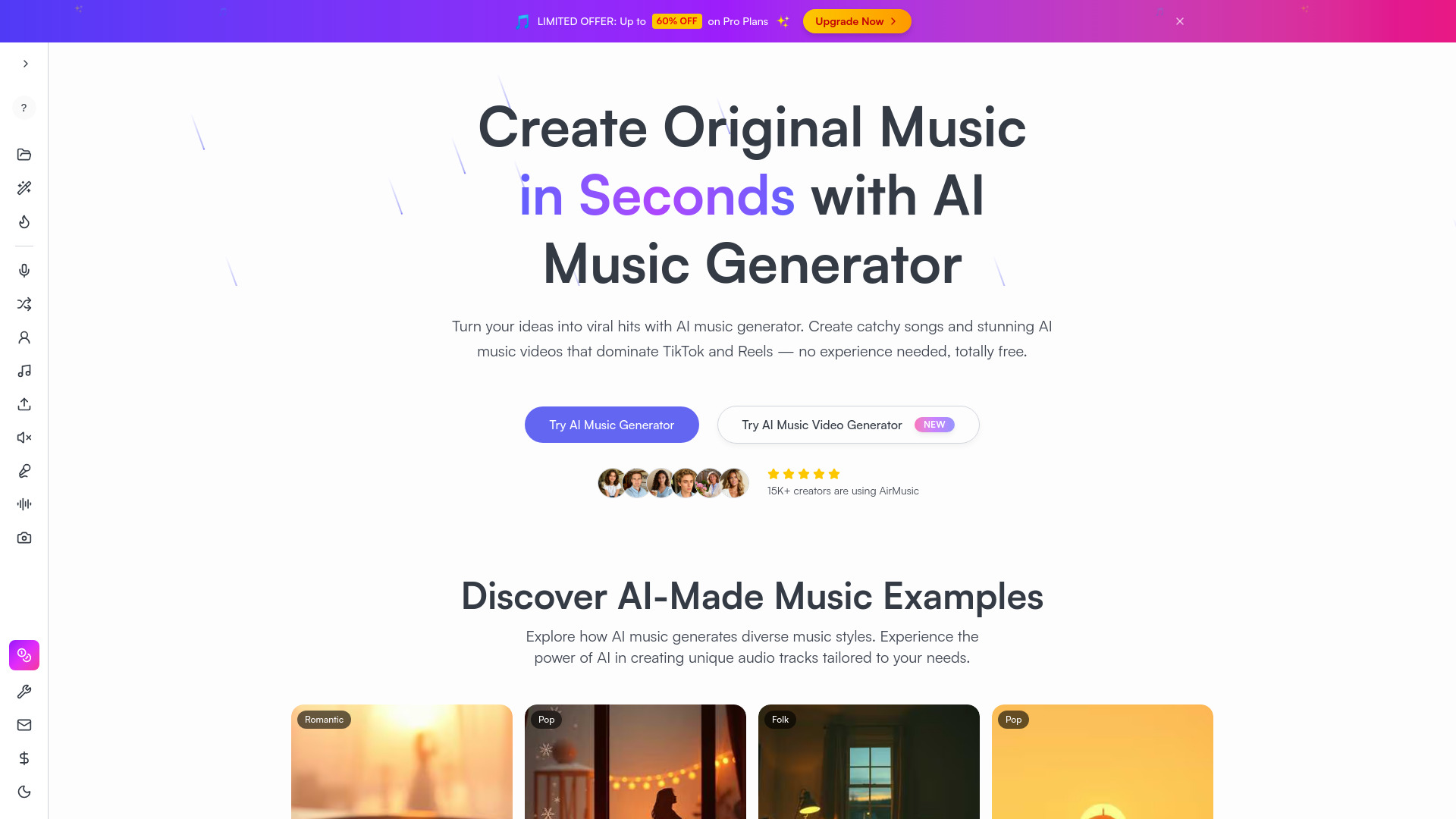
Why it matters AirMusic earns the top spot because it covers the widest creative path in this field: generate music and video from text or images, work with AI singing voices, clone voices, remove vocals, and separate stems. That combination is more useful than a narrowly impressive song generator when you are moving from idea to publishable asset. The free allowance is enough to test the workflow, but the 10-credit ceiling means serious production quickly becomes a paid-plan decision.
Best for
Producers who want generation and audio editing in one workspace
Creators making tracks alongside AI-generated music video content
Teams experimenting with singing voices, vocal removal, or cloning
Limitations
The free version is limited to 10 credits
Advanced features such as Stem Splitter require a paid plan
The breadth of the suite may be unnecessary if you only need simple background tracks
Shortlist signal: Add AirMusic when you want one broad studio for generating, editing, and pairing music with visuals.
2. Music AI

- Audio professionals
- Free 48h storage; 2 concurrent jobs
- Starts at Check vendor pricing
- Usage signal: 82.5K
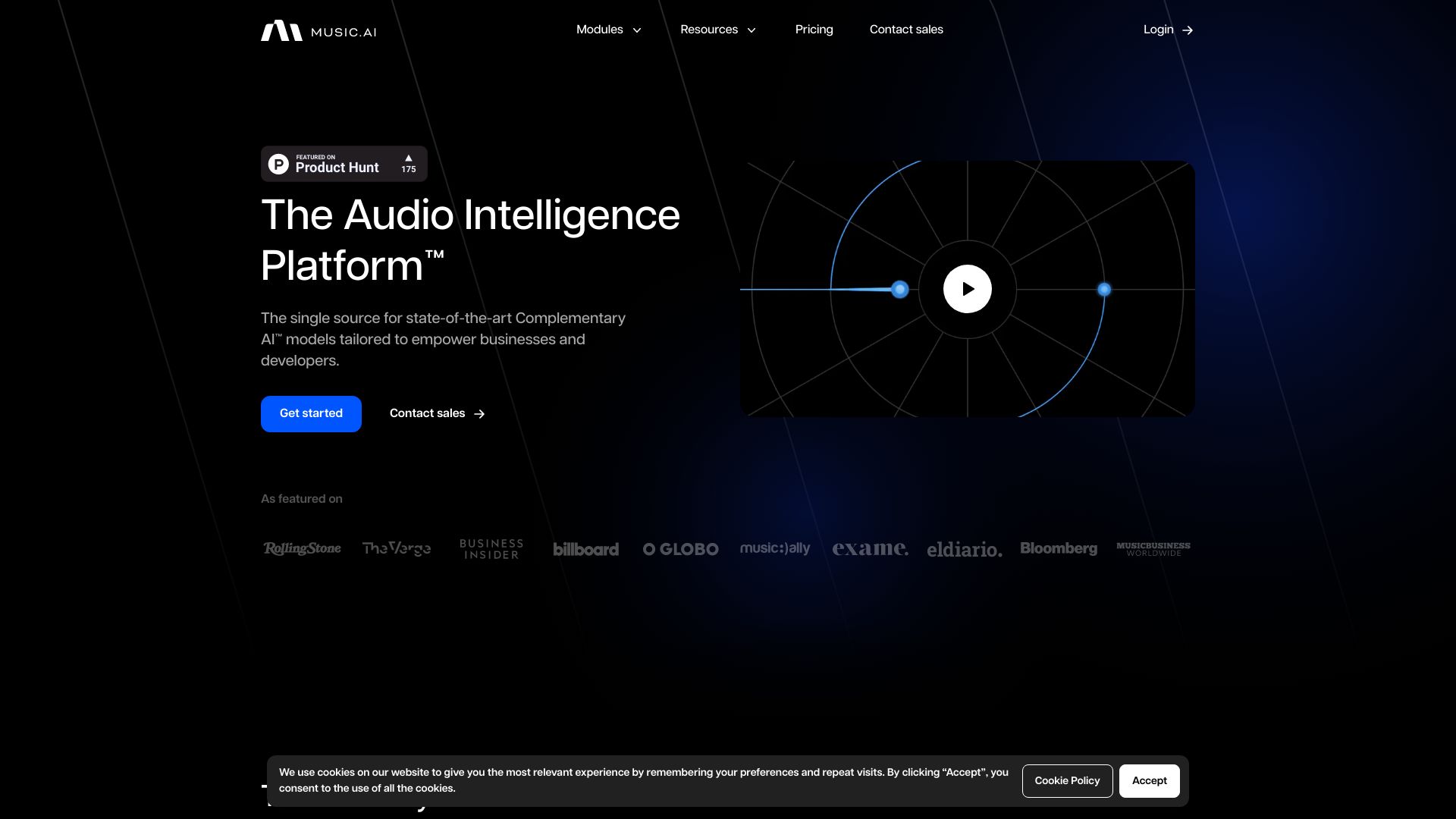
Why it matters Music AI is less about conjuring a song from a sentence and more about giving audio teams useful processing tools. Stem separation, AI-driven mixing and mastering, and voice transfer or swapping make it a strong fit for professionals handling source material. The platform is also positioned for building and scaling audio products, so it belongs on a different shortlist from consumer-first composition apps. The catch is commercial clarity: pricing is not stated cleanly on the main page, and you need to understand how the platform's workflow fits your operation before committing.
Best for
Audio professionals separating vocals and instruments
Teams evaluating AI mixing, mastering, or voice workflows
Developers and businesses that need a platform rather than a single creative feature
Limitations
Pricing is not explicitly stated on the main page
Full value depends on adopting the platform workflow
A specialist seeking only quick song ideation may find it more than they need
Shortlist signal: Choose Music AI when audio separation and production processing matter more than prompt-based composition.
3. Aimusic

- Amateur music enthusiasts
- 150 tokens for new users
- Starts at Free: $0
- Usage signal: 53.4K
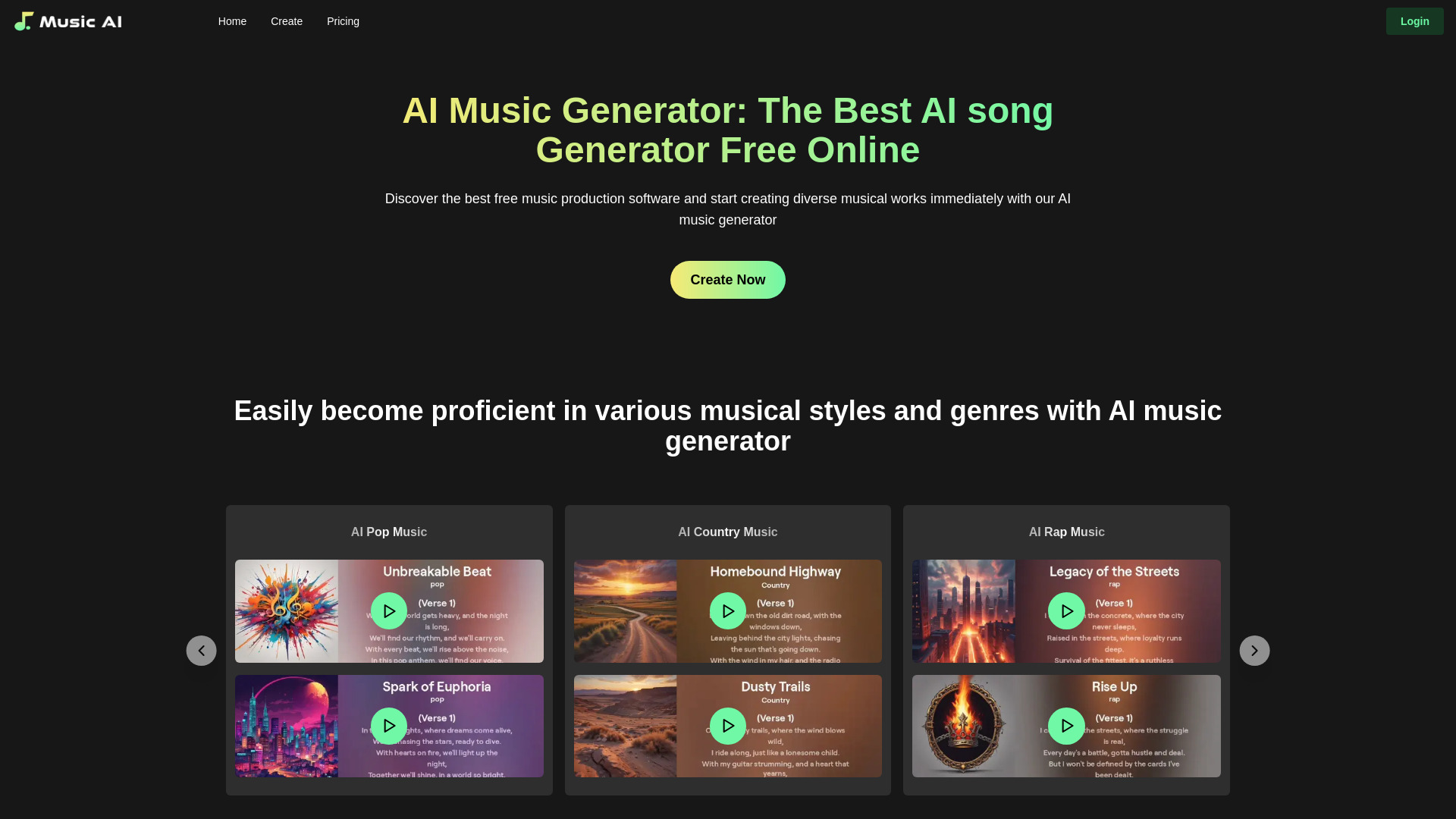
Why it matters Aimusic makes experimentation approachable by accepting text, images, and lyrics as starting points. That gives beginners several ways into composition: describe a mood, use a visual prompt, or bring in words they have already written. Its support for a wide range of styles and genres adds useful creative room. New users receive 150 tokens, but the limited free credits and subscription requirements mean you should treat the allowance as an audition rather than a long-term free tier.
Best for
Amateur creators turning lyrics or ideas into complete music
Users who prefer visual prompts alongside text prompts
Hobbyists exploring multiple genres without a complex production setup
Limitations
Advanced features require a subscription plan
The free plan has limited credits
AI output may still need selection and iteration before it fits a finished project
Shortlist signal: Put Aimusic on your list when you want the most flexible starting point for text, images, and lyrics.
4. AI Music Lab

- Musicians
- Free generation available
- Starts at Basic: $12/month or $149/year
- Usage signal: 18.9K

Why it matters AI Music Lab has a clear creative angle: turn lyrics into music or create instrumentals across different styles and fusion genres. That makes it a sensible middle ground for musicians who want more direction than a generic mood prompt but do not need a full audio engineering environment. The pricing is easier to understand than several competitors, with a Basic plan listed at $12 per month or $149 per year. Still, track limits vary by plan, so prolific users should calculate their expected monthly output before deciding.
Best for
Musicians starting with lyrics or a defined song concept
Creators exploring style combinations and fusion genres
Buyers who prefer monthly or one-time payment options
Limitations
AI generation may not consistently deliver the intended result
The number of tracks per month depends on the plan
It is not presented as a granular manual editing suite
Shortlist signal: Choose AI Music Lab when lyric-led composition and transparent entry pricing are your priorities.
5. music0 AI

- Content creators
- 100% free; no signup required
- Starts at Check vendor pricing
- Usage signal: 10.6K
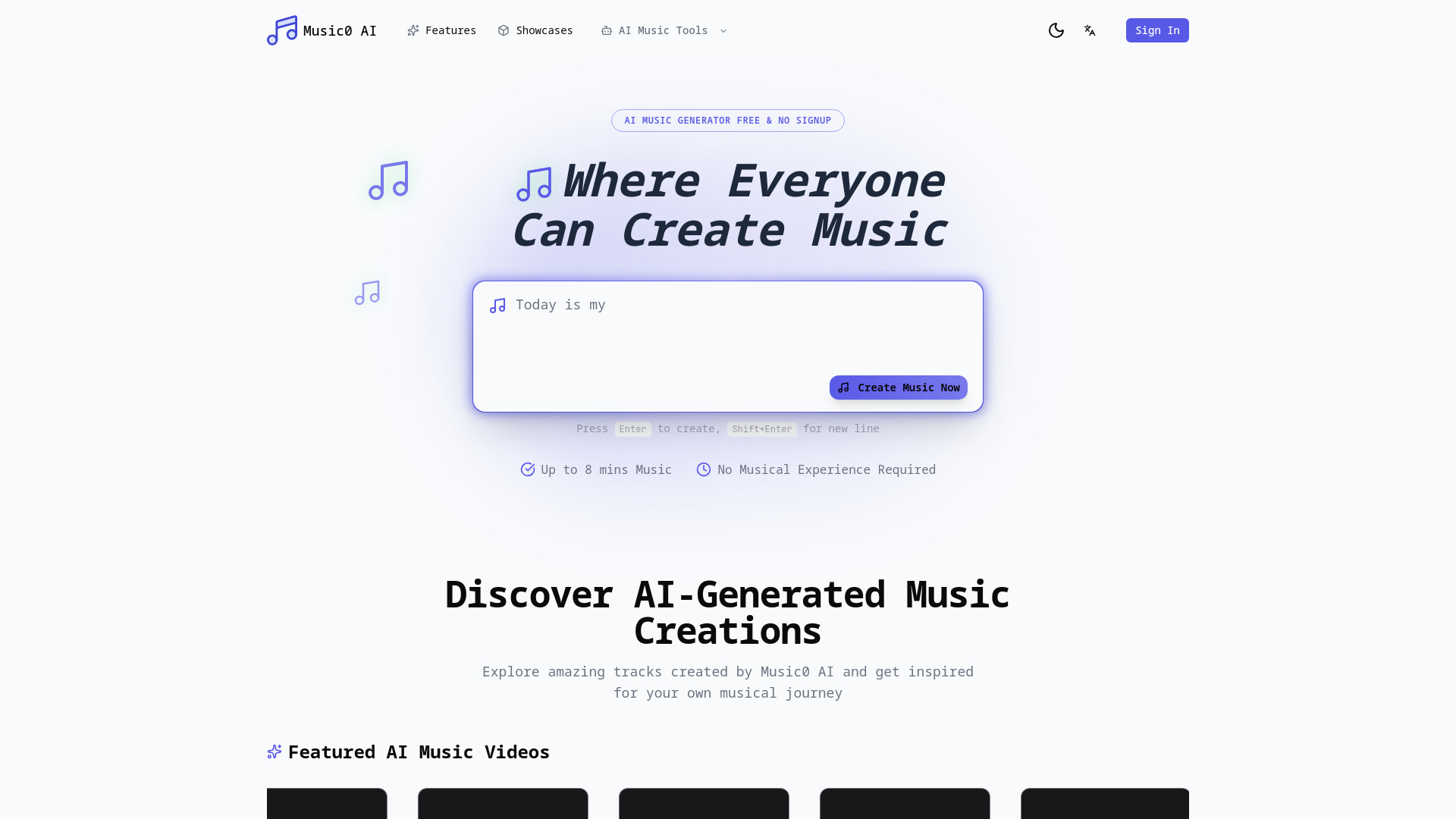
Why it matters music0 AI removes much of the usual trial friction: no signup or login is required, and it can generate tracks up to eight minutes long across more than 50 genres. It also includes a music video maker with synchronized visuals and offers MP3 plus up to 4K video export options. That is a compelling setup for content creators who need something usable quickly. The trade-off is control. The workflow relies on text prompts and does not show an advanced manual editing suite for detailed instrument-level changes.
Best for
Video creators who need music and synchronized visuals together
Users testing AI composition without creating an account
Projects that benefit from longer tracks and broad genre coverage
Limitations
No advanced manual editing suite is shown for granular instrument control
Text prompts may require precise wording for specific outcomes
Verify current usage and commercial terms before building a recurring workflow
Shortlist signal: Start with music0 AI when speed, long tracks, and no-signup access beat deep editing control.
6. AI Music API

- Music businesses
- From $10 for 1,000 credits
- Starts at Weekly: $29.9/week
- Usage signal: 2.3K
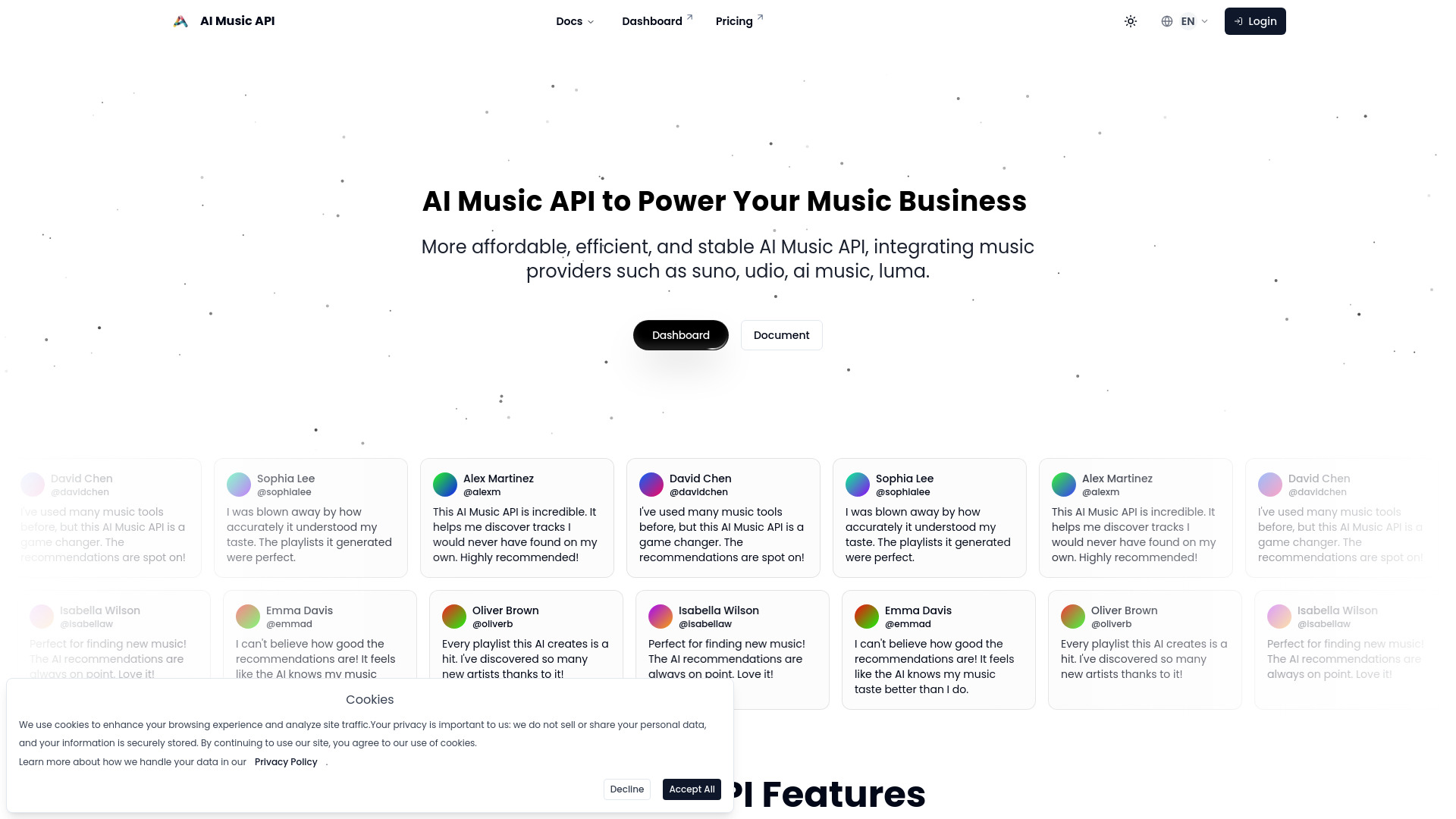
Why it matters AI Music API is the specialist choice for teams that want to put generation inside a product, service, or automated workflow. It advertises integrations with multiple music providers, including Suno, Udio, AI Music, and Luma, along with rapid response times and a lower-cost positioning than official platform calls. That flexibility can be valuable for a business building around music rather than simply making one track. But the responsibility moves to you: model coverage is not fully clear, and copyright handling for generated music requires user oversight.
Best for
Music businesses embedding generation into an application
Teams comparing several provider connections through one API
Developers who care about affordable usage and responsive calls
Limitations
Specific supported music models are not fully detailed
Copyright handling remains the user's responsibility
API pricing and credit economics deserve testing at realistic volume
Shortlist signal: Add AI Music API only when you need programmable music generation, not just a browser-based songwriting tool.
7. AI Music Sampler

- Musicians
- Free track separation available
- Starts at Check vendor pricing
- Usage signal: 774
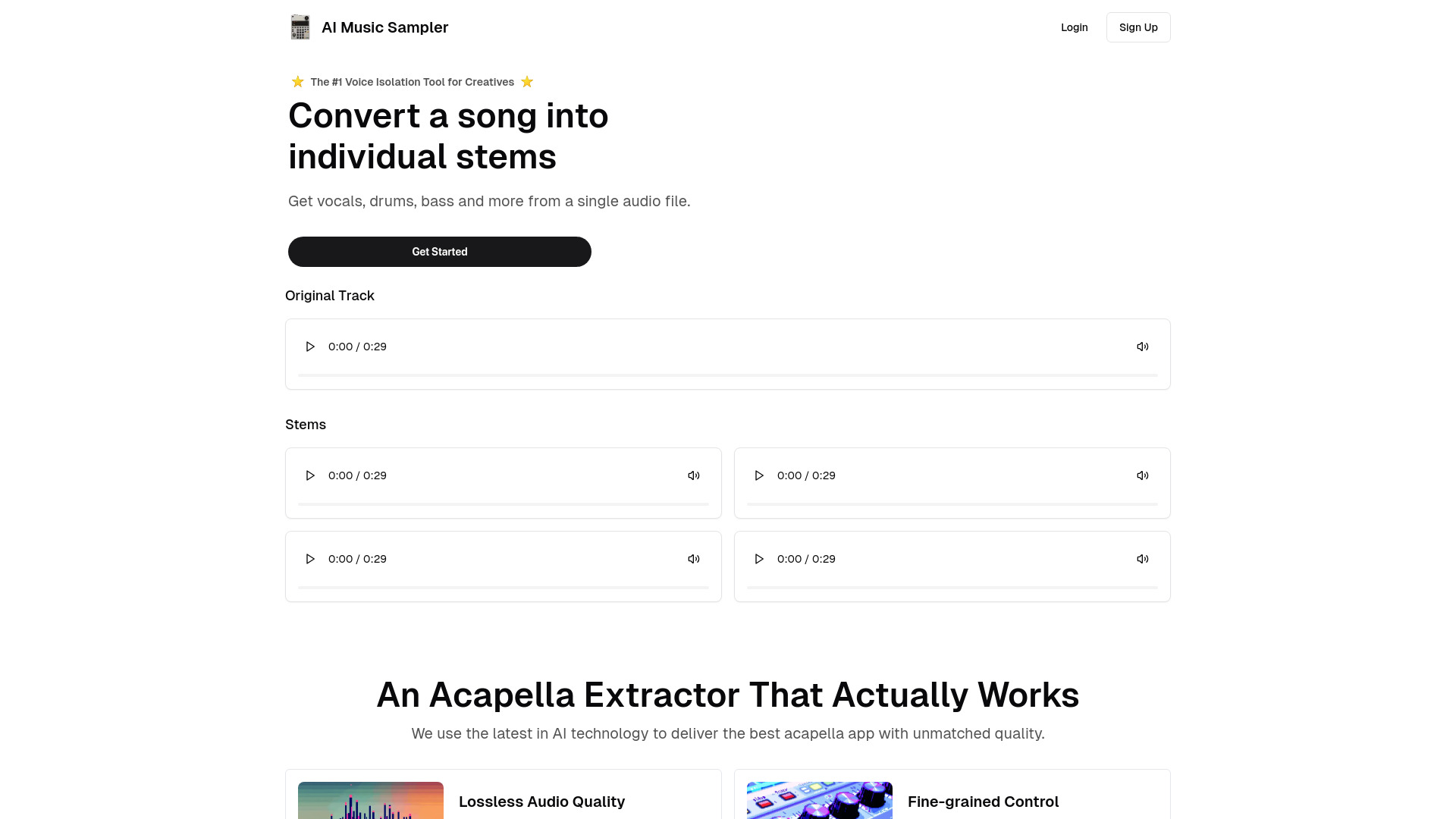
Why it matters AI Music Sampler solves a practical problem: separating vocals and other audio elements from an existing recording. It supports MP3, WAV, AIFF, and FLAC, and its lossless WAV output is a useful detail for musicians who plan to keep working after extraction. This is not a song generator, and that is exactly why it can be valuable. It belongs in a cleanup, remix, rehearsal, or sampling workflow. Expect results to depend on the source audio, and remember that pay-per-use pricing can become uncomfortable if you process files frequently.
Best for
Musicians isolating vocals or separating tracks
Remixers working with common compressed and lossless formats
Users who need WAV output for continued production
Limitations
Pay-per-usage can be expensive for frequent users
Separation accuracy depends on the original audio quality
It is a focused utility rather than a complete composition environment
Shortlist signal: Pick AI Music Sampler when the job starts with an existing recording that needs usable stems.
8. aiMusician.ai

- Musicians
- 25 credits per month
- Starts at Hobby: Free
- Usage signal: 185
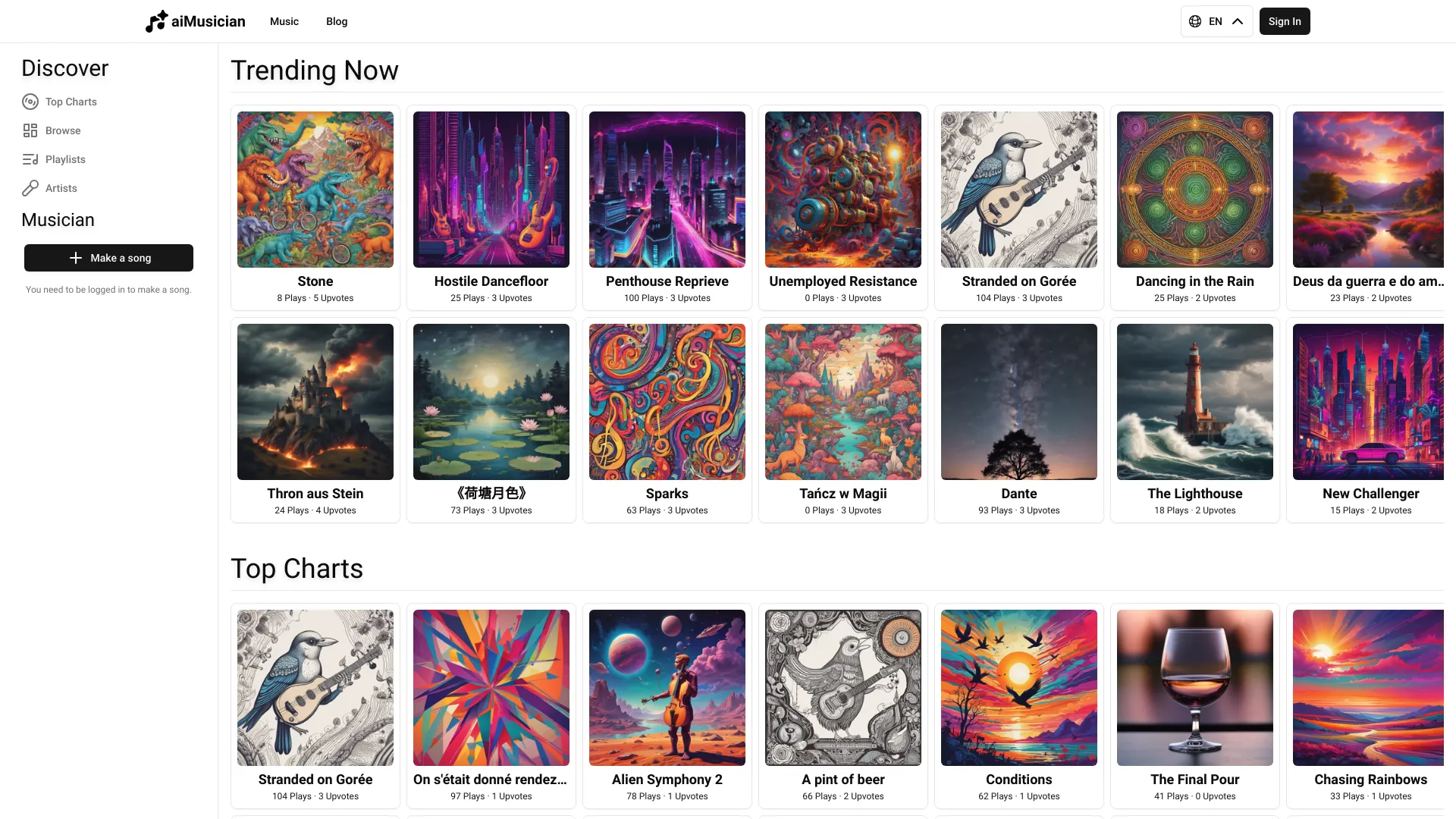
Why it matters aiMusician.ai combines AI music generation with image-to-music and lyric-generation tools, so it is useful for creators who move between visual inspiration, words, and sound. The Hobby plan provides 25 credits per month, and unlimited downloads are a notable advantage when the output is worth keeping. The modest usage signal suggests a smaller product footprint than the leaders, so I would test the actual generation flow and export experience before making it part of a professional pipeline.
Best for
Musicians who want image-to-music experiments
Creators working from lyrics as well as musical prompts
Users who value unlimited downloads on a free or entry plan
Limitations
The free version has limitations
Refunds are not available
The smaller visible audience makes hands-on validation especially important
Shortlist signal: Consider aiMusician.ai when image-to-music and a 25-credit monthly allowance fit your experimentation habits.
9. AI Rap Music
- Musicians
- Free access details require verification
- Starts at Check vendor pricing
- Usage signal: Not listed
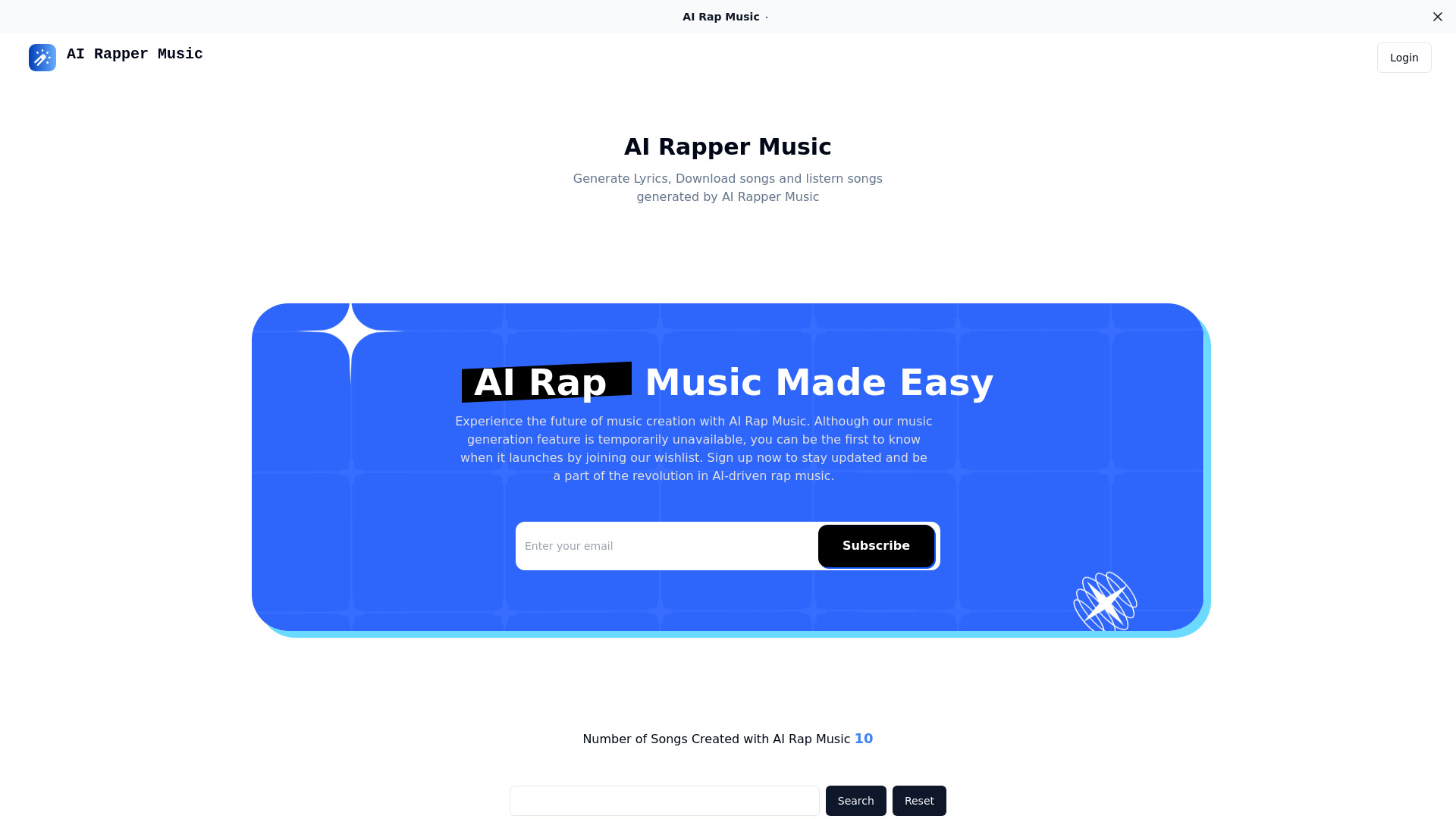
Why it matters AI Rap Music represents a narrower creative direction, with AI-driven tools positioned around music creation and experimentation. That could appeal to musicians looking for a focused rap-oriented starting point, but the practical buying case is currently weak because the service is suspended and information is limited. Its rank should be read as a category signal, not a recommendation to build a live project around it today.
Best for
Musicians curious about rap-focused AI creation concepts
Researchers tracking specialized music-generation products
Early explorers willing to wait for service availability
Limitations
The service is currently suspended
Limited information is available because of the suspension
Current pricing, access, and workflow cannot be treated as dependable
Shortlist signal: Keep AI Rap Music on a watchlist, but do not shortlist it for an active production deadline while it is suspended.
10. AI Harmony Feast

- Students
- Free access details require verification
- Starts at Check vendor pricing
- Usage signal: Not listed
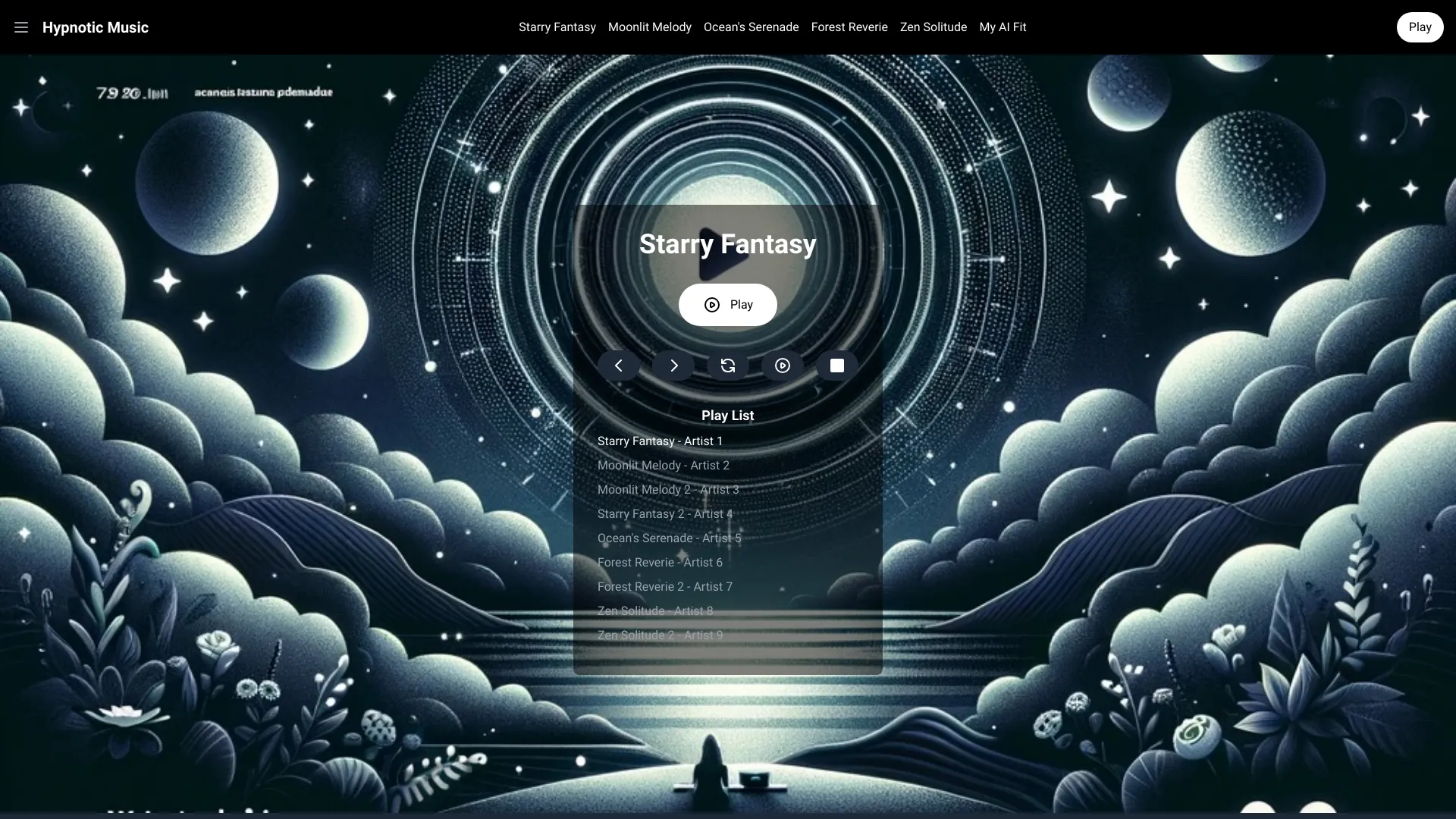
Why it matters AI Harmony Feast is an unexpected but useful alternative for readers whose idea of AI music is personalized listening rather than production. It focuses on AI-generated music for relaxation, focus, and sleep, with multiple styles designed around different moods. Students and people building a concentration routine may find that more relevant than a song generator. The product gives less detail about customization, though, so treat the experience as a mood-oriented service rather than a controllable composition tool.
Best for
Students seeking focus or sleep-oriented background music
Listeners who want varied moods without producing tracks themselves
Buyers exploring personalized auditory experiences
Limitations
Customization options are not described in much detail
Its value depends on whether AI-generated audio suits your focus routine
It is not a replacement for a production, editing, or stem-separation tool
Shortlist signal: Choose AI Harmony Feast only when your goal is focus, relaxation, or sleep rather than making and exporting music.
What to test before choosing
Run the same small test across two or three finalists instead of judging from a single impressive sample. For generators, use one prompt with a clear genre, mood, duration, and intended use. Listen for whether the result follows the brief, whether repeated generations feel meaningfully different, and whether the arrangement holds together beyond the first few seconds.
For audio tools, upload a representative file rather than a pristine demo. Test vocal bleed, instrument separation, artifacts, export format, and how long the result takes. Music AI and AI Music Sampler should be judged on those practical outputs, not on whether they produce a catchy original song.
Also test the boring details that become expensive later:
How many credits does one usable generation consume?
Can you download the output in the format your editor needs?
Are commercial and copyright responsibilities clear?
Does the free allowance reset, expire, or only apply to new users?
Can the service handle your expected volume without manual repetition?
Does the API expose the provider and model behavior you need?
What to do next
Pick one primary workflow and one fallback. A producer might start with AirMusic, then compare Aimusic for prompt flexibility. An audio engineer might test Music AI against AI Music Sampler on the same recording. A content team could compare music0 AI's quick, no-login path with AirMusic's broader video and audio suite.
Before paying, create a short evaluation pack: three prompts, one existing audio file, one export requirement, and one rights question. Keep the results side by side. This will tell you more than a generic demo because it exposes the exact friction your team will face every week.
Finally, verify current pricing, credit rules, service status, and licensing directly with the vendor. This matters especially for tools with unclear pricing, usage-based billing, or suspended availability.
Common mistakes when choosing from a complex top list
Treating every tool as a song generator. Music AI and AI Music Sampler are processing tools, while AI Harmony Feast is primarily for listening. Match the product type to the work.
Comparing free credits as if they were equivalent. Ten credits, 25 monthly credits, 150 tokens, and no-signup access do not necessarily produce the same amount of usable audio. Test the cost per acceptable result.
Ignoring the editing handoff. A convincing generation is only useful if you can export it, separate it, or place it into your existing production workflow.
Assuming a high score settles rights questions. Copyright and commercial-use responsibility can vary. Ask the vendor directly before publishing client work or building a paid product.
Overlooking service health. A suspended tool may look interesting in a comparison but is not a practical choice for a deadline.
Using traffic as a quality proxy. Market signals help with context, but a smaller API or specialist utility can be a better fit than a popular consumer generator.
FAQ
AirMusic is the strongest overall match in this field because it combines text- and image-based generation, music video creation, AI singing voices, voice cloning, vocal removal, and stem separation. Its free version is limited to 10 credits, so confirm the paid workflow before relying on it for regular production.