
Start here
A supply chain planning platform should help connect decisions across demand, inventory, sourcing, production, and fulfillment. This list needs an important qualification: although the search phrase is top ai platforms for end-to-end supply chain planning, the 10 candidates here do not collectively represent a verified field of end-to-end supply chain planning suites. Several are general-purpose AI, ecommerce research, workflow, or product tools. Timefold is the clearest operational-planning match, with optimization APIs for routing and scheduling under real-world constraints. The rest are better treated as adjacent tools to investigate only when their narrower workflow fits.
That distinction matters. A convincing AI demo is not the same thing as a platform that can ingest planning data, reconcile constraints across functions, produce an executable plan, and explain how a change ripples through the network. Use this guide as a first-pass map of the available candidates, not as proof that every product can plan an entire supply chain.
Fast shortlist: Start with Timefold if you need constraint-based scheduling or routing embedded in your existing software. Consider Nexscope for ecommerce product and competitor research, but note that it is in a waitlist phase. Explore Ekinox only if your immediate problem is building connected AI workflows. For a product-development and manufacturing-documentation angle, IMAI is a more specialized adjacent option. The remaining tools should not be mistaken for supply chain planning systems based on the documented capabilities here.
Segment comparison
| Segment | Candidate | What it appears suited to | Supply-chain planning fit |
|---|---|---|---|
| Constraint optimization | Timefold | Scheduling and routing APIs with real-world constraints | Closest match; focused operational planning, not a verified end-to-end suite |
| Ecommerce intelligence | Nexscope | Product, market, pricing, competitor, and listing analysis | Adjacent research input; availability is a caveat |
| Product development | IMAI | Brand research, collection planning, costing, manufacturing documentation | Specialized product workflow; not evidence of network-wide planning |
| Workflow automation | Logic and Ekinox | Turning processes into APIs or visual AI workflows | Potential components; supply-chain-specific planning capability is not established |
| General business AI | aiOS, Korgi, AppLaunchFlow, Sup AI, AlphaAI | Automation, project work, app marketing, AI answers, or financial news | Not a direct fit for end-to-end planning on the stated feature evidence |
Shortlist paths
| Your immediate need | Start with | Why-and what to check |
|---|---|---|
| Route, schedule, or reschedule constrained operations | Timefold | Its APIs address routing and scheduling; confirm that your specific planning domain and data model are supported. |
| Understand ecommerce products and competitors | Nexscope | Research and monitoring are the stated focus; confirm product availability before building a workflow around it. |
| Connect no-code AI steps | Ekinox | A visual builder and 100+ integrations are described; validate controls, data handling, and planning logic. |
| Turn written recurring procedures into APIs | Logic | Plain-English process conversion is its angle; test whether the resulting API handles exceptions and audit needs. |
| Coordinate product creation and manufacturing documentation | IMAI | Its product and collection workflow is relevant to a narrower brand/manufacturing context; verify operational depth. |
Ranking snapshot
Scores and traffic signals help compare these candidates, but they do not establish supply-chain suitability. The ranking order is the provided editorial order; read the fit column before treating a high score as a recommendation for your use case.
| Rank | Tool | Score | Usage signal | Fit in this guide |
|---|---|---|---|---|
| #1 | Timefold | 91/100 | 42.2K visits | Strongest operational optimization overlap |
| #2 | aiOS | 91/100 | 17.8K visits | General business automation; adjacent |
| #3 | Nexscope | 91/100 | 48.2K visits | Ecommerce intelligence; waitlist caveat |
| #4 | AppLaunchFlow | 91/100 | 48.3K visits | App-store assets and ASO; distant fit |
| #5 | Logic | 90/100 | 11.2K visits | Process-to-API automation; component-level possibility |
| Rank | Tool | Score | Usage signal | Fit in this guide |
|---|---|---|---|---|
| #6 | Korgi | 90/100 | 2.5K visits | Project coordination; adjacent |
| #7 | IMAI | 90/100 | 959 visits | Product development and manufacturing documentation |
| #8 | Sup AI | 90/100 | 780 visits | General AI answer synthesis; distant fit |
| #9 | AlphaAI | 89/100 | 232 visits | Structured financial news; distant fit |
| #10 | Ekinox | 87/100 | Not listed | Visual workflow automation; adjacent |
How we grouped and ranked the list
We grouped the 10 candidates by the job their documented features actually describe, rather than assuming that every product mentioning AI belongs in a supply chain planning shortlist. The categories range from operational scheduling and routing to ecommerce intelligence, product development, general workflow automation, and unrelated business utilities.
For this category, the practical test is not whether a tool can generate a forecast-like answer or automate a task. It is whether it can support the planning decisions your team owns, respect real constraints, connect to dependable operational data, and make plans usable by the people executing them. The feature descriptions establish Timefold's optimization for routing and scheduling constraints, but they do not establish complete demand-to-delivery planning. For the other candidates, the stated capabilities are narrower or outside the core category.
Scores are useful as a snapshot of overall evaluation, not a guarantee of category fit. We therefore weigh relevance and limitations alongside the score. Traffic is included as a market signal, not as proof of product quality. A comparatively high score should not outweigh a mismatch between a tool's actual workflow and your planning requirements.
Ranked field notes
1. Timefold

- Developers embedding constraint-based scheduling and routing
- REST scheduling and routing APIs; complex constraints; explainable plans
- Starts at Spark: Contact for pricing
- Usage signal: 42.2K
Why it matters
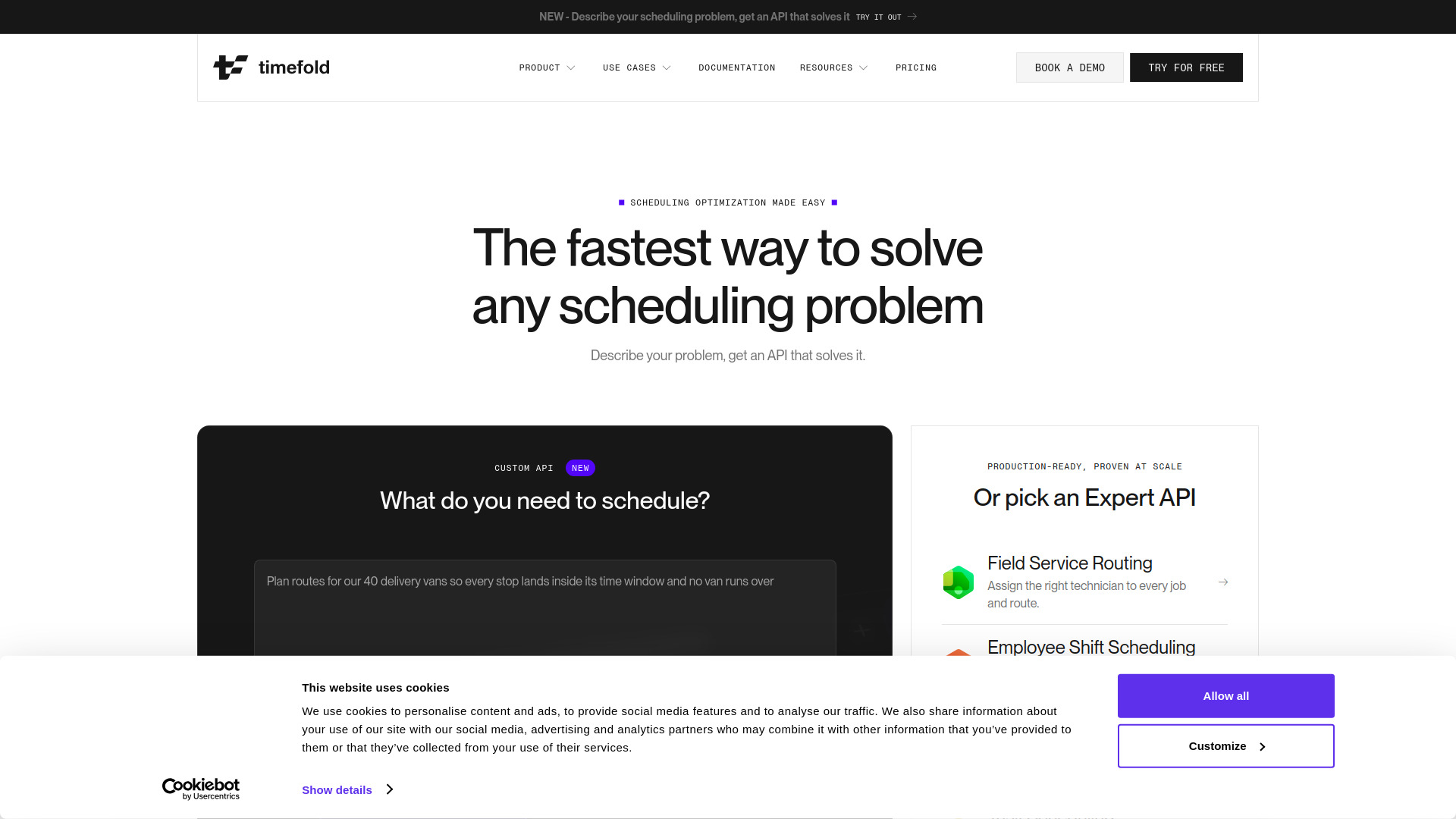
Timefold earns the first position because it is the clearest match for operational planning in this set. Its REST APIs cover field service routing, employee shift scheduling, pickup and delivery routing, and task scheduling. More importantly, the stated optimization focus includes skills, fairness, labor laws, dependencies, and disruptions-constraints that make real schedules difficult to maintain. Weighted, multi-objective optimization gives developers a way to balance competing requirements rather than treating every plan as a simple shortest-path problem. The catch is scope: this is a solver and API-oriented fit, not evidence of a single package spanning every planning stage from demand forecasting through procurement and fulfillment.
Best for
Software teams embedding routing or scheduling optimization into an existing product.
Operations with changing constraints, such as labor rules, worker skills, or disruptions.
Developers who need APIs and want to tune trade-offs across multiple objectives.
Limitations
API plan prices are not stated; enterprise solver pricing requires contacting Timefold.
The product is developer-oriented, so buyers should expect to evaluate integration and implementation work.
The listed capabilities cover defined routing and scheduling problems, not a verified end-to-end planning suite.
Shortlist signal: Add Timefold when your immediate bottleneck is constrained operational scheduling or routing and you have a technical team able to integrate an optimization API.
2. aiOS

- Founders coordinating business automation
- 5 lifetime messages per device
- Starts at Try: Free
- Usage signal: 17.8K
Why it matters
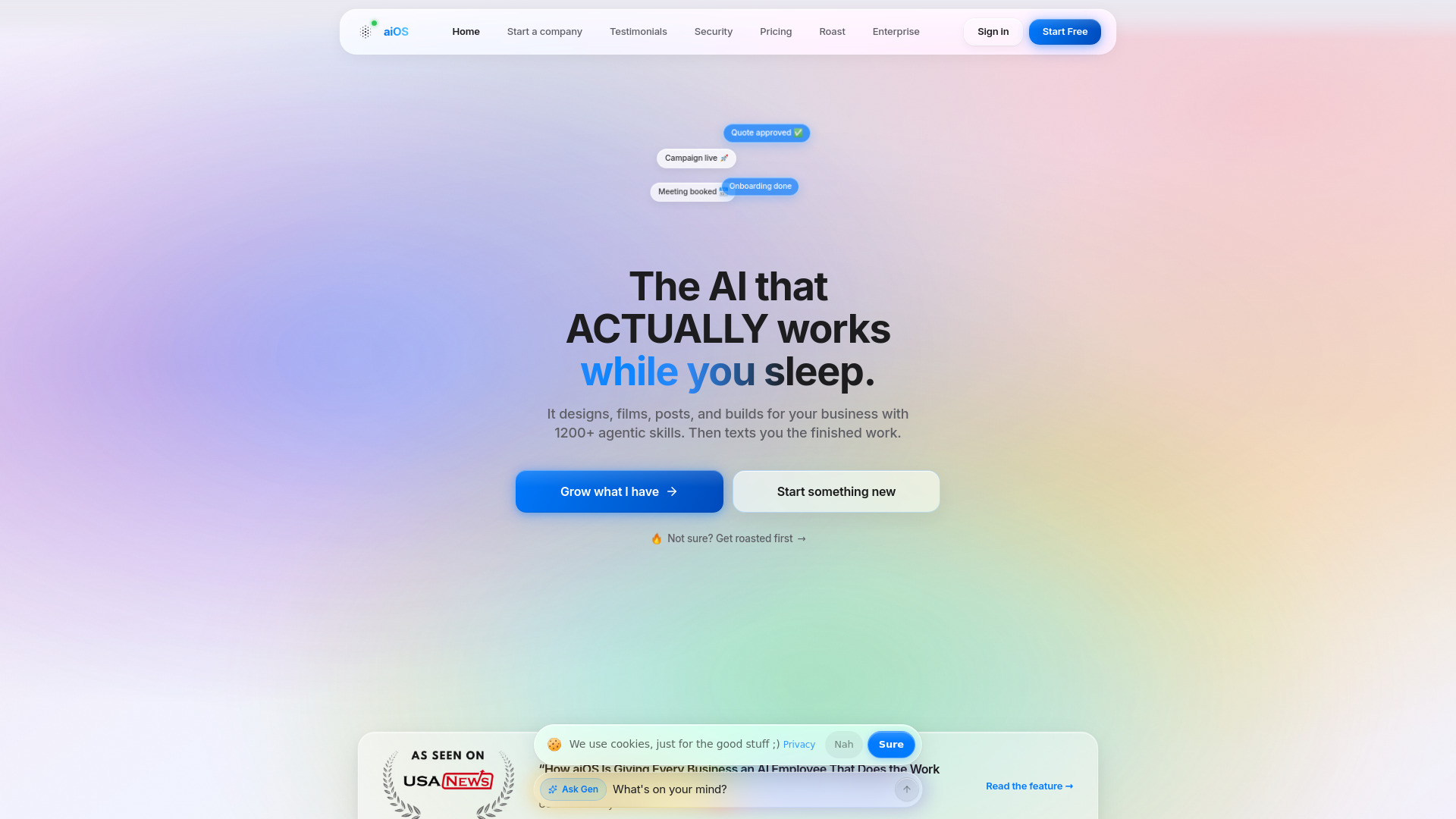
The notable angle here is access: aiOS describes an AI employee controlled through text across iMessage, web, WhatsApp, Telegram, and phone, alongside business automation and content creation. That could appeal to a founder who wants a single conversational interface for assorted tasks. But the documented features do not describe inventory planning, supply-demand balancing, production scheduling, or logistics optimization. In this guide, aiOS is a boundary case: potentially handy for general business work around a planning process, but not a substitute for software that calculates and governs the plan itself. A free trial is available without signup or a card, while pricing tiers and usage limits can become complex.
Best for
Founders who want to test a conversational interface for business automation.
Small teams exploring an all-in-one AI subscription for varied tasks.
Users who value text-based access through several messaging channels.
Limitations
No listed supply chain planning or operational optimization features.
Advanced capabilities require higher-priced plans, and tiers and usage limits may take careful review.
The broad assistant workflow should not be confused with a governed planning engine.
Shortlist signal: Consider aiOS only for general AI assistance around your business; do not shortlist it as the system that creates or controls supply chain plans.
3. Nexscope

- Ecommerce sellers researching products and competitors
- Product research and competitor monitoring; early access
- Starts at Free trial
- Usage signal: 48.2K
Why it matters
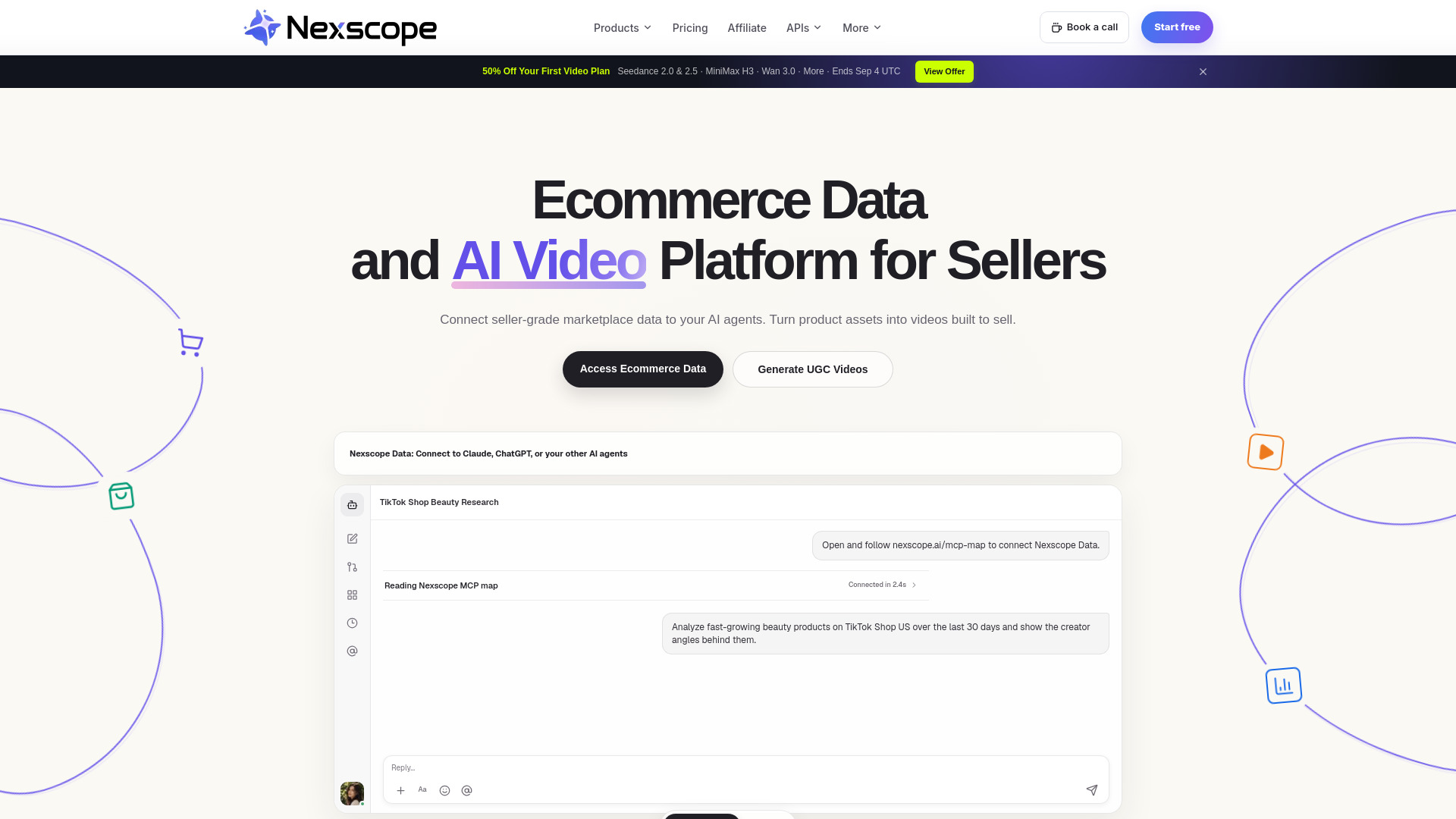
Nexscope points toward ecommerce market intelligence rather than supply chain planning. The described platform brings together multi-platform ecommerce data, product and market research, and competitor, pricing, and listing analysis. Those insights may inform commercial decisions upstream of planning-for example, what products a seller wants to investigate-but the listed features do not establish inventory optimization, supplier planning, or fulfillment execution. There is also a practical gate: Nexscope is described as coming soon or waitlist-only. That makes it a watchlist candidate, not a safe assumption for an active purchasing decision. Its role-based agents may take time to learn as the full product becomes available.
Best for
Ecommerce sellers researching products and market opportunities.
Teams monitoring competitor pricing or product listings.
Buyers willing to assess a platform still in an early-access or waitlist phase.
Limitations
Current availability is a concern: the product is described as coming soon or waitlist-based.
The listed research and analysis features do not prove supply chain planning depth.
A wider agent set may bring a learning curve.
Shortlist signal: Put Nexscope on a separate ecommerce-intelligence watchlist if product research is your need, and confirm that access is open before evaluating it as a live tool.
4. AppLaunchFlow

- Indie developers creating app-store assets
- 1 project; screenshot export limited to preview
- Starts at Free: €0/month
- Usage signal: 48.3K
Why it matters
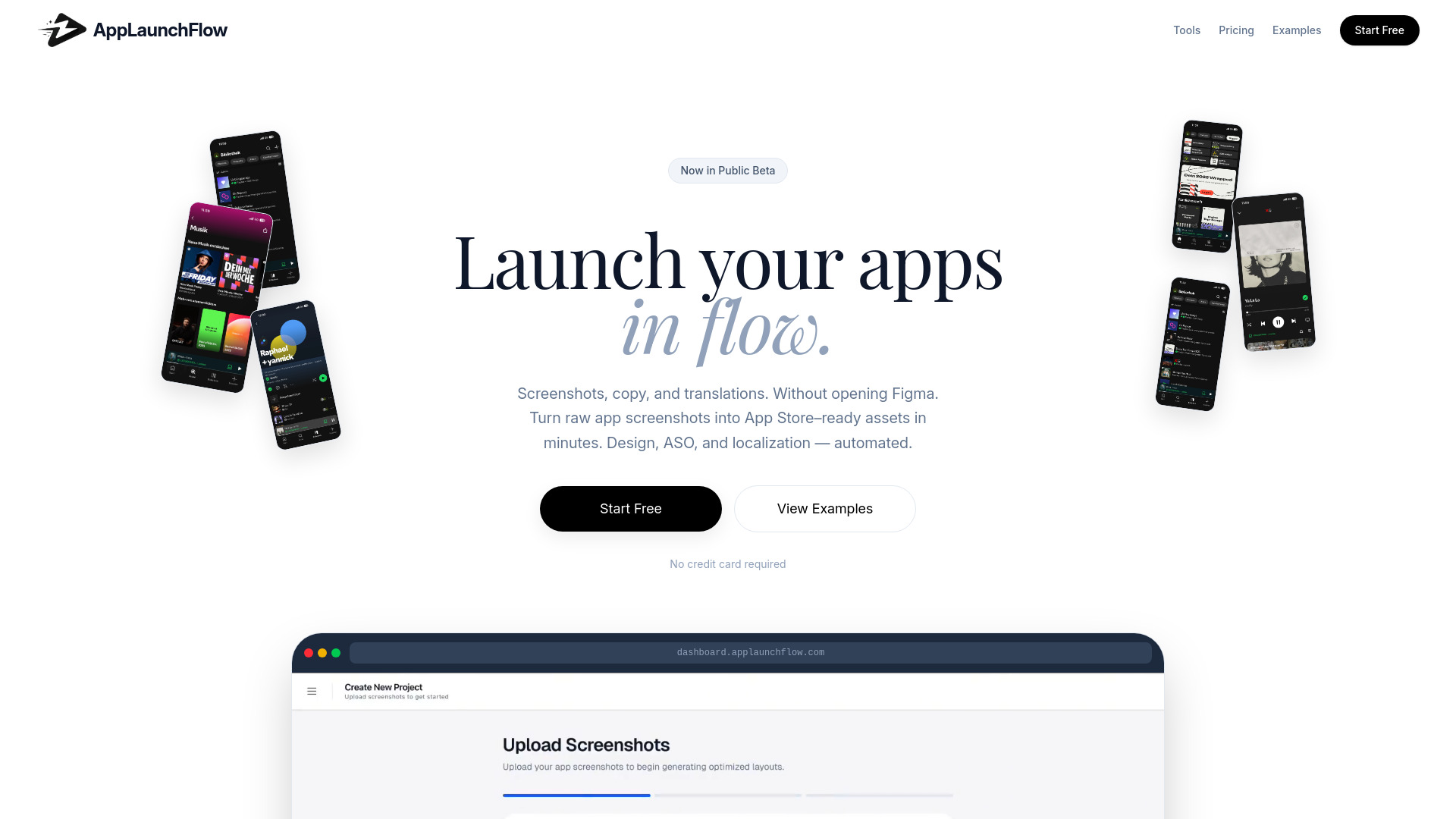
AppLaunchFlow automates a specific, well-defined job: creating mobile and tablet store screenshots, generating and optimizing ASO copy, and localizing materials in more than 20 languages. That can save an indie developer from needing design tools such as Figma for this workflow. It does not address supply chain planning, so its high score should not be read as a category recommendation. It belongs here as a useful reminder to assess the actual job a product solves rather than let an AI label or ranking score blur the boundary. The free project is limited to preview-only screenshot export, and the Starter plan limits illustrations and languages.
Best for
Indie developers preparing app-store screenshots and copy.
Small app teams localizing store materials.
Users who want an automated ASO workflow without design experience.
Limitations
Its documented use case is app-store marketing, not supply chain operations.
The free plan limits screenshot export to preview only.
Starter limits the number of illustrations and languages.
Shortlist signal: Choose AppLaunchFlow for app listing production and localization; exclude it from a supply chain planning shortlist unless your actual need is unrelated app marketing.
5. Logic

- Business teams automating recurring processes
- Free trial
- Starts at Trial: $0 per user/month
- Usage signal: 11.2K
Why it matters
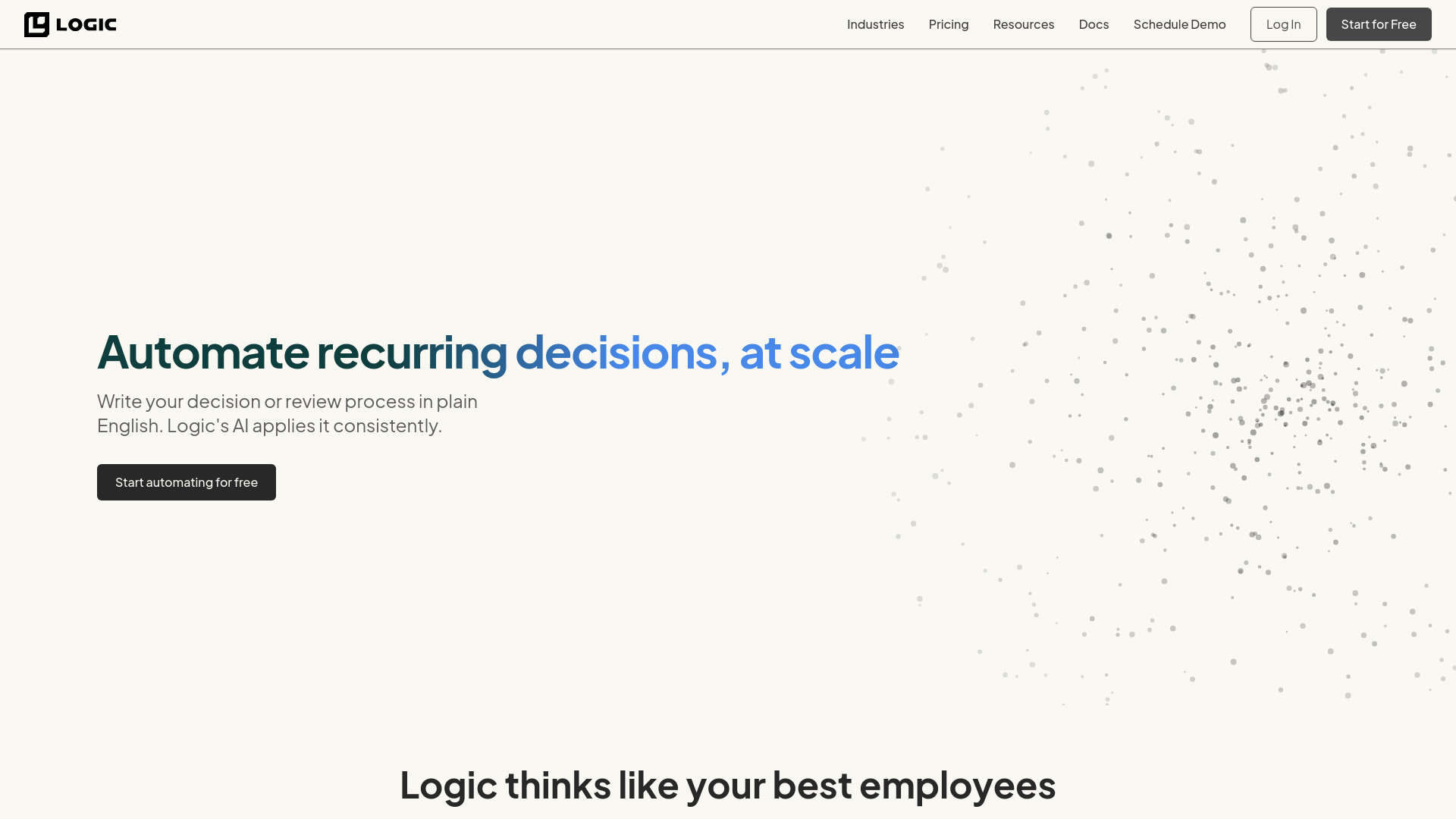
Logic's distinct proposition is converting plain-English process documents into functional APIs, then automating recurring decisions and review processes. For a supply chain team, that may sound promising when a repeatable business procedure needs to be exposed to other systems. But process automation is not synonymous with planning: the available capabilities do not specify forecasting, constraint-based plan generation, supply balancing, or what-if analysis for a network. Treat Logic as a possible component to evaluate against one carefully scoped process, not as a replacement planning platform. Its trial may lower the barrier to an initial test, while API and enterprise plans can carry additional usage charges.
Best for
Business teams with repeatable decisions or reviews that can be documented as a process.
Organizations exploring ways to turn written procedures into APIs.
Teams looking to reduce manual technical configuration for a narrow automation task.
Limitations
Supply chain-specific planning functions are not established by the listed features.
Enterprise and API plans may incur usage rates beyond base pricing.
Unlimited monthly tasks are subject to abuse guardrails, so confirm practical limits.
Shortlist signal: Test Logic when you can name a recurring process to automate and verify its output and exception handling; don't infer that it can optimize a full supply network.
6. Korgi

- Entrepreneurs organizing projects across productivity apps
- 14-day free trial
- Starts at Korgi College: Free
- Usage signal: 2.5K
Why it matters
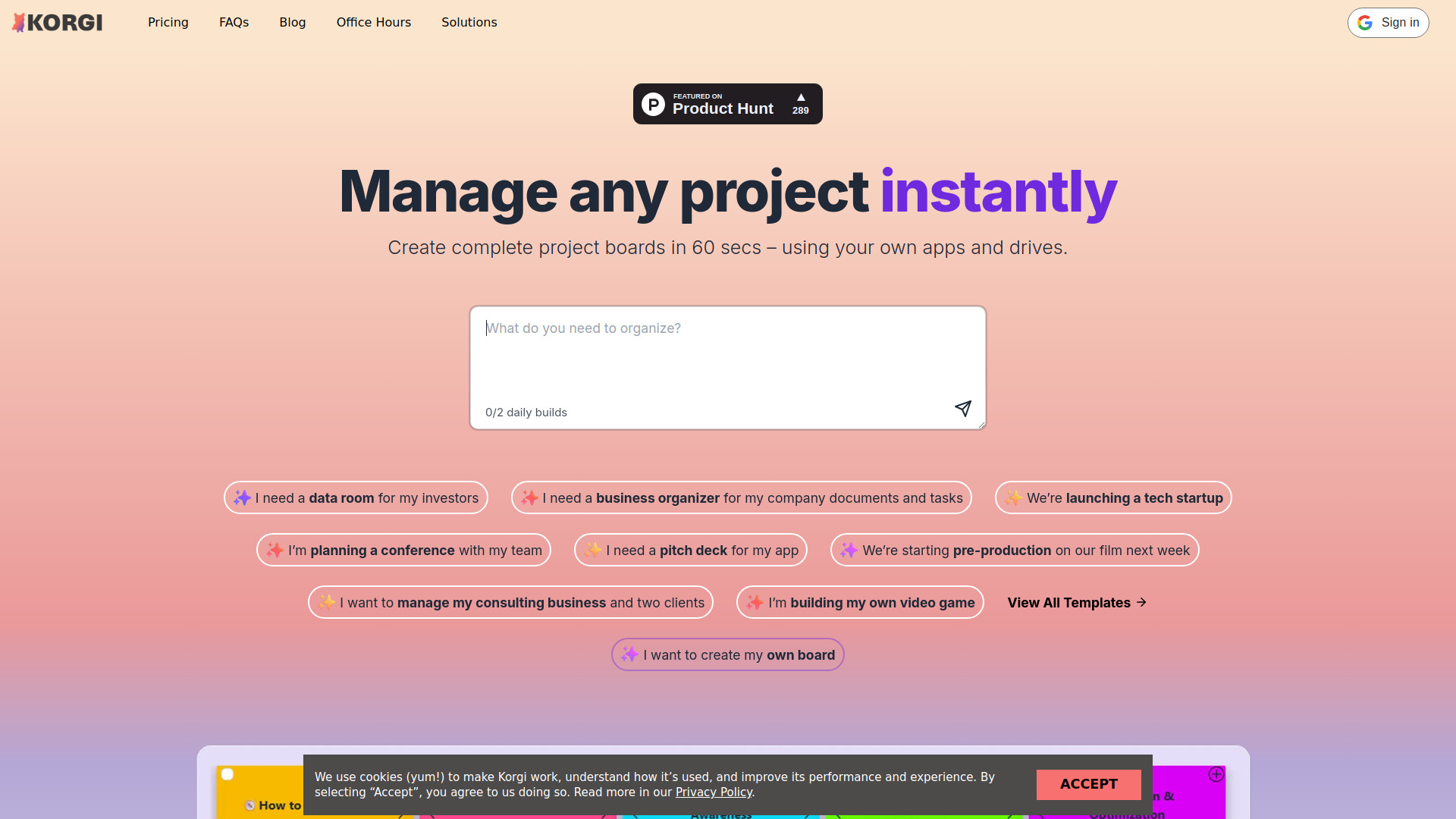
Korgi's appeal is faster project setup: it can generate project boards in under a minute and connects with Google Workspace and Microsoft 365 for activities such as creating, saving, and attaching files, events, and contacts. Real-time board sharing also gives teams a shared place to coordinate work. Those functions could help organize a planning project or implementation, but the stated features are project management-not supply, inventory, or production planning. Users report saving time by reducing tab-switching, although that benefit does not establish operational planning capability. Some advanced integrations and shared templates are reserved for higher tiers, and the College offer is time-limited.
Best for
Entrepreneurs who need a fast-start project board.
Teams coordinating work across Google Workspace or Microsoft 365.
People seeking a shared project workspace rather than a dedicated planning engine.
Limitations
The listed feature set does not provide supply chain planning or optimization.
Some advanced features, including Zoom/Meet integration and shared templates, require higher tiers.
The free Korgi College plan is restricted and time-limited.
Shortlist signal: Consider Korgi for coordinating planning projects and team tasks, not for calculating the underlying supply, production, or fulfillment plan.
7. IMAI

- Brand founders managing product development
- Starts at Starter: $54/month billed annually
- Usage signal: 959
Why it matters
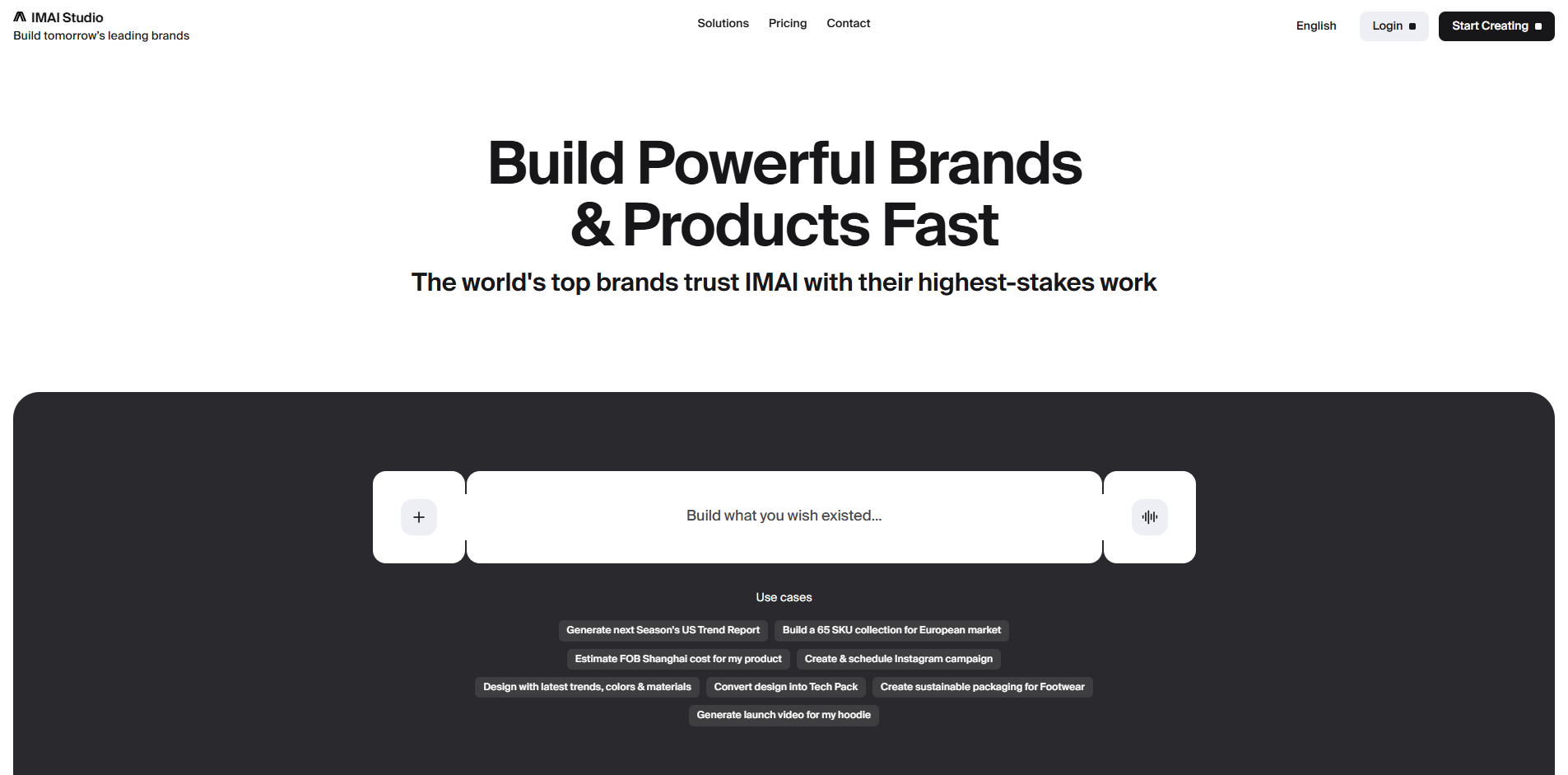
IMAI is one of the more relevant adjacent entries for a product-led business because its workspace spans trend, market, material, and color research; collection planning; product design and costing; and manufacturing documentation. It also includes marketing, sales, retail, finance, and team collaboration features. That breadth could suit a brand founder managing product development across several functions. Still, the described workflow is not enough to claim it offers end-to-end supply chain planning: buyers should verify how it handles supplier data, production capacity, inventory, demand changes, and execution handoffs. The product is paid, and the stated Starter price is $54 per month billed annually, which may be substantial for a solo user.
Best for
Brand founders coordinating research, collection planning, and product development.
Teams preparing costing and manufacturing documentation.
Product businesses seeking a joined-up workspace across design and commercial work.
Limitations
No clearly stated free plan or trial quota; the platform is paid.
Pricing may be significant for solo users and small teams.
Verify operational planning functions directly rather than assuming manufacturing documentation equals production planning.
Shortlist signal: Evaluate IMAI if your focus is brand and product development with manufacturing documentation, and ask for a workflow demonstration before treating it as a planning system.
8. Sup AI

- Students comparing AI-generated answers
- 50 fast, 10 thinking, and 2 deep-thinking messages/day
- Starts at Free: $0/month
- Usage signal: 780
Why it matters
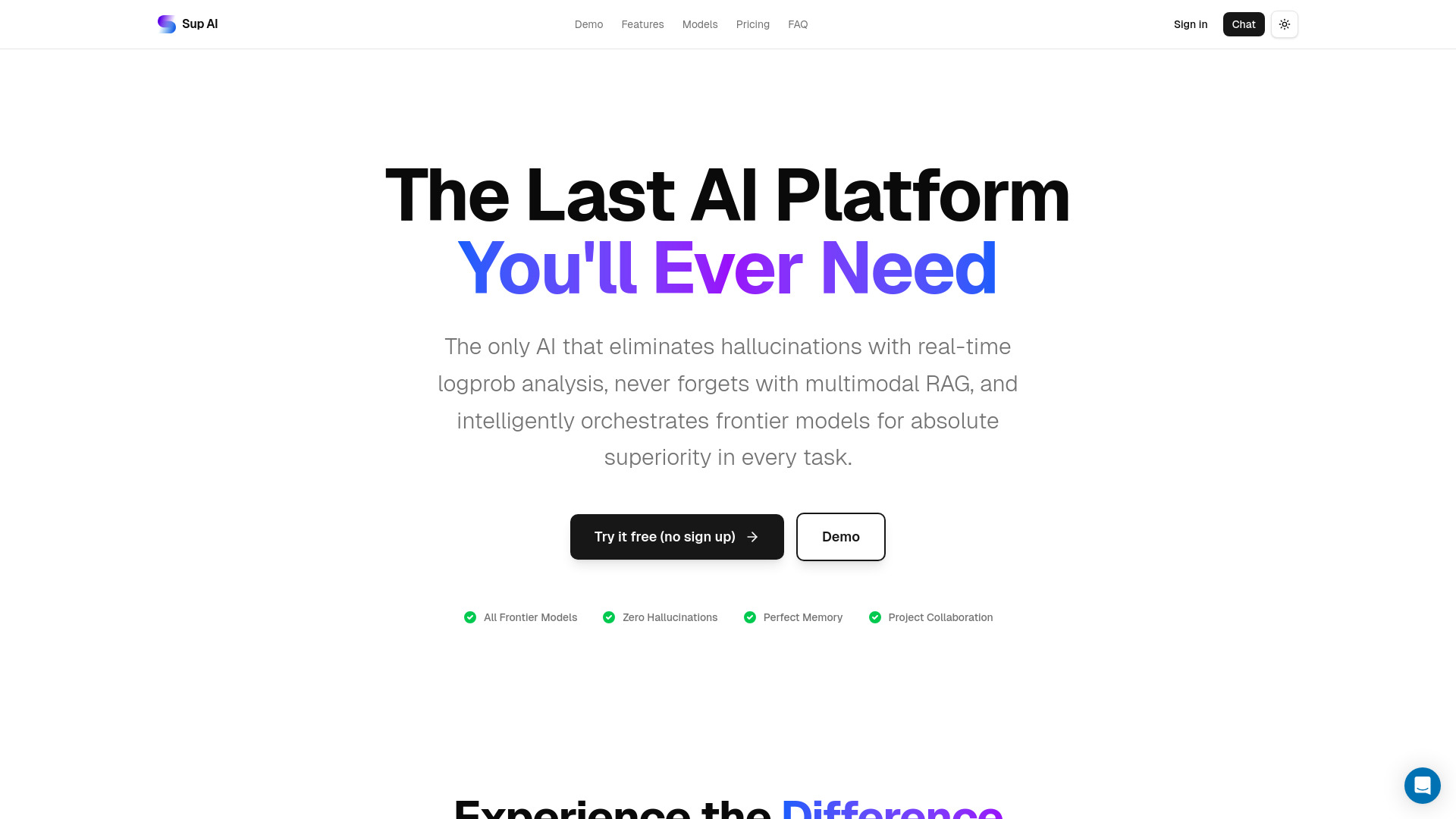
Sup AI is described as an AI orchestration platform that synthesizes responses from multiple models and uses confidence scoring to flag uncertainty. Multimodal retrieval and model collaboration may be useful when a user wants help assembling or checking an answer. That is a very different task from maintaining authoritative planning data and issuing a plan that operations can execute. Its own limitations also matter: some named models may be deprecated, and complex GPT-5 Pro requests can take minutes. The free tier has specific daily message quotas. For supply chain decisions, never treat a confident-sounding synthesis as a substitute for validated source data, planning logic, and accountable review.
Best for
Users comparing or synthesizing general AI responses.
Students or researchers who want multi-model assistance for questions.
Teams testing an AI interface separately from core operational planning.
Limitations
The listed capabilities do not establish supply chain data integrations or plan generation.
Some listed models may be deprecated, requiring users to verify the current model lineup.
Deep or complex responses may take time, and free access is quota-limited.
Shortlist signal: Keep Sup AI out of the planning-platform shortlist unless you are separately evaluating a general-purpose research assistant-and validate every operational claim against trusted records.
9. AlphaAI

- Algorithmic traders consuming structured news
- 20 requests/minute and 100/day; 30-day archive
- Starts at Free: $0
- Usage signal: 232
Why it matters
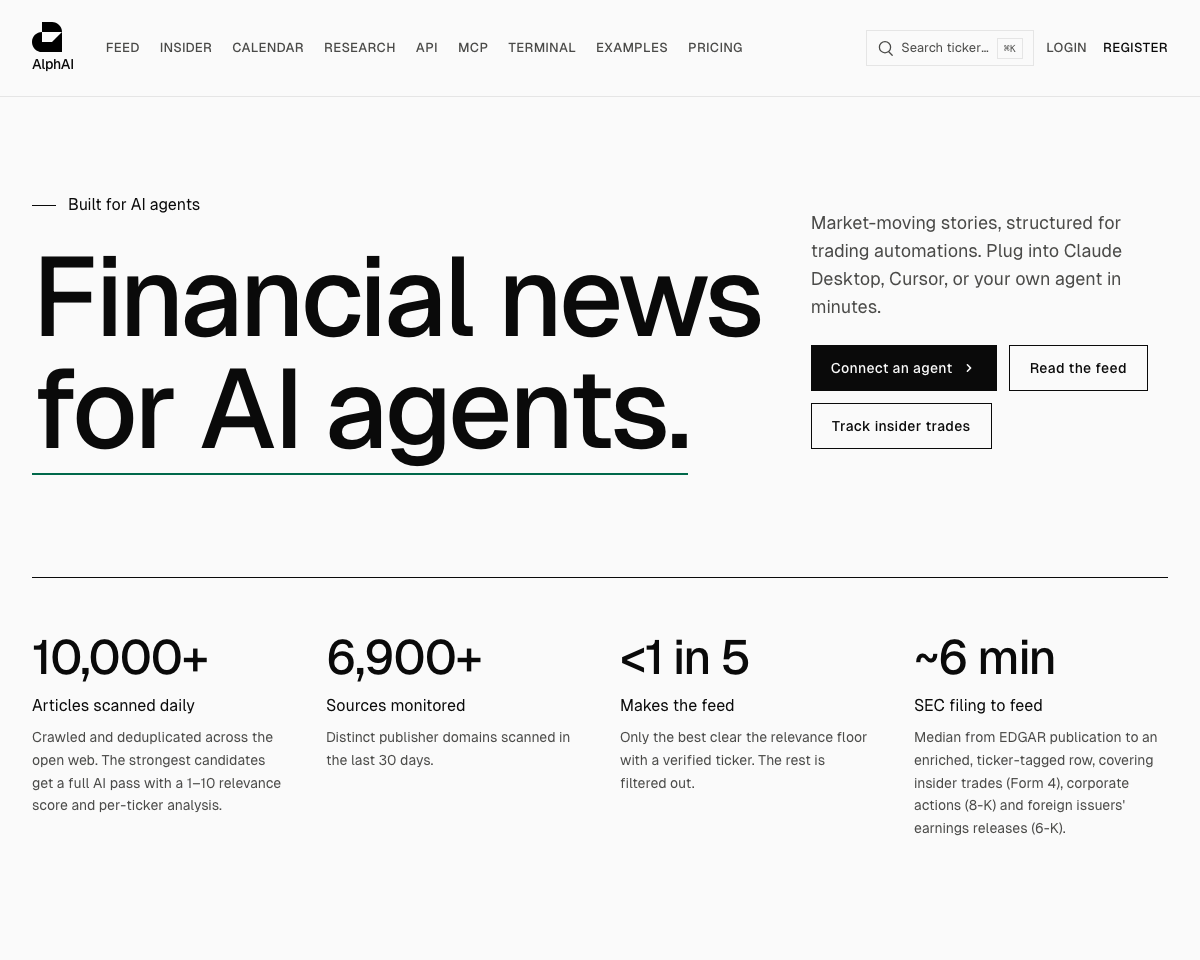
AlphaAI turns financial news and regulatory filings into structured, relevance-scored information. Its described features include per-ticker impact analysis, sentiment reasoning, and categorized SEC events, including Form 4 filings and 8-K or 6-K items. That is a specialized financial-data use case for algorithmic traders; it is not a supply chain planning workflow. A finance team might independently find such data useful for market monitoring, but the listed capabilities should not be stretched into inventory, procurement, or demand planning. The free API and MCP access is capped at 20 requests per minute and 100 per day, with a 30-day archive.
Best for
Algorithmic traders consuming structured financial news.
Developers who need relevance-scored articles and ticker-level impact.
Users analyzing the specified SEC event and filing categories.
Limitations
The product's described focus is financial news, not supply chain planning.
Free access has request limits and a short archive window.
Validate coverage and timeliness against the financial workflow you actually need.
Shortlist signal: Consider AlphaAI for structured financial-news ingestion only; it is not a candidate for planning inventory, production, or logistics from the listed capabilities.
10. Ekinox

- Operations managers building visual AI workflows
- $5 AI credits; 10 workflows/minute
- Starts at Free
Why it matters
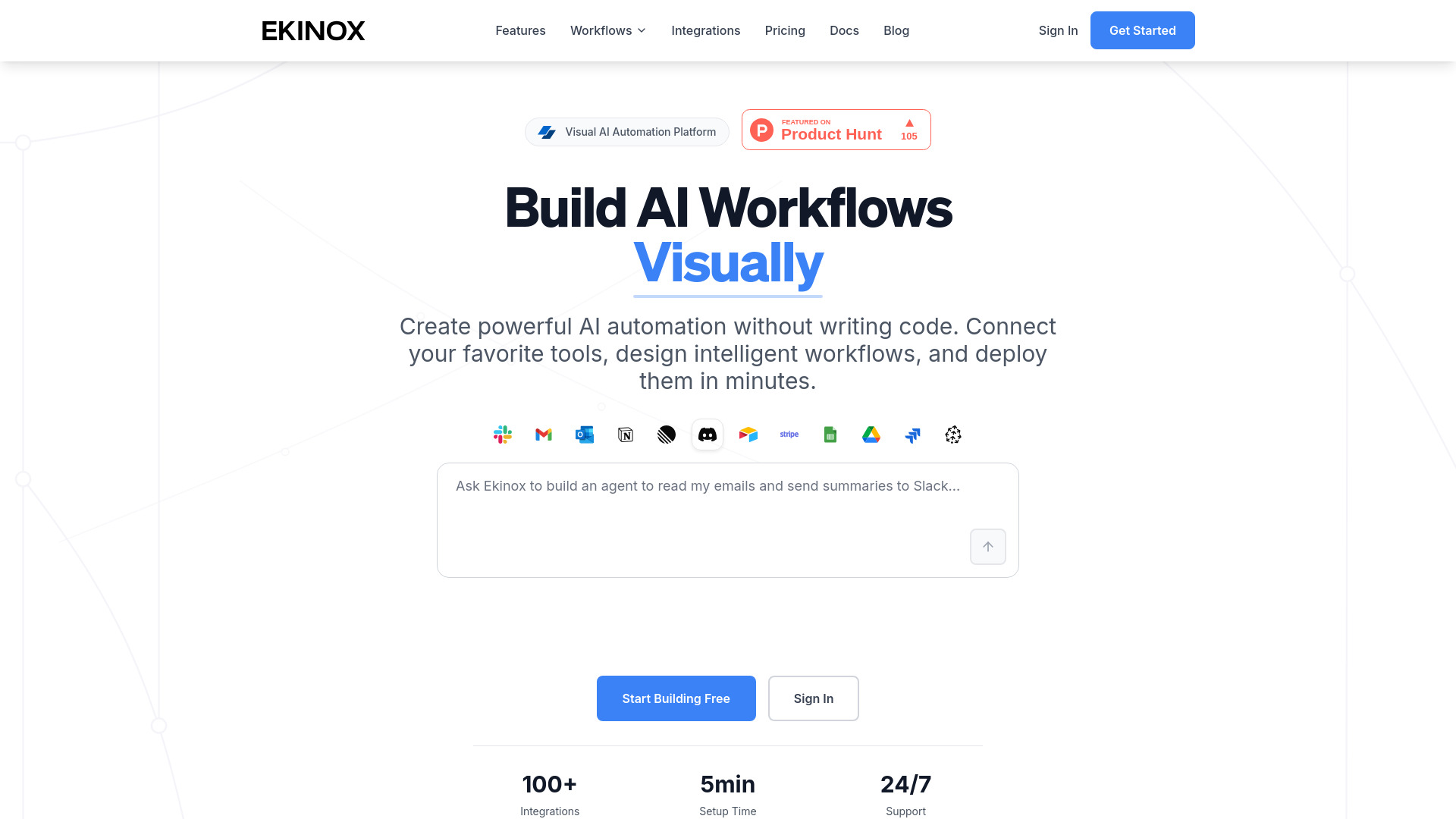
Ekinox offers a visual drag-and-drop canvas for AI workflows, intelligent automation, and connections to more than 100 services. That may make it approachable for an operations manager who wants to prototype a process without building every connection from scratch. In a planning environment, however, a workflow builder is only as useful as the data, decision logic, controls, and exception handling behind it. The listed features do not prove that Ekinox contains a supply chain planning model or can optimize operational trade-offs. Free access includes $5 in AI credits and a stated 10 workflows per minute; higher-tier features include items such as SSO and custom integrations.
Best for
Operations managers prototyping visual AI workflows.
No-code users who need to connect services through a drag-and-drop interface.
Teams exploring automation across a broad integration library.
Limitations
Free-plan AI credits, workflow volume, and integrations are limited.
SSO, dedicated support, and custom integrations are restricted to higher tiers.
A workflow builder is not, by itself, a supply chain planning or optimization system.
Shortlist signal: Put Ekinox on a workflow-automation shortlist when you can define the process and controls; separately verify that your planning logic and data governance are covered.
What to test before choosing
Before buying any product in a complex category, test the work it must perform-not just its interface or AI-generated explanation. For a genuine end-to-end supply chain planning evaluation, ask each vendor to demonstrate your own representative scenario and answer these questions:
Which decisions does it actually plan? Separate demand, inventory, sourcing, production, scheduling, and distribution. Ask which are native features and which require other systems or custom work.
Can it represent your real constraints? Include capacity, lead times, skills, labor rules, supplier limits, dependencies, and disruptions where relevant. Timefold explicitly describes several scheduling and routing constraints; do not assume other tools support them.
How does data enter and leave? Confirm supported interfaces, refresh timing, ownership, error handling, and the practical effort required to connect source systems. An API or integration count alone does not prove a usable planning flow.
Can planners inspect and challenge a recommendation? Ask to see assumptions, trade-offs, change impact, and the method for correcting bad inputs. For consequential operational choices, keep a human review path.
What happens when the plan fails? Test a late supplier, a changed demand signal, missing records, or an unavailable resource. A polished happy-path demo tells you little about resilience.
What are the true costs and usage limits? Confirm implementation, API usage, seats, data volume, higher-tier features, and support. Some candidates list contact-for-pricing terms or paid advanced capabilities.
Can the team operate it? Assess implementation ownership, required development skills, exception workflows, and training. Timefold is API-oriented; a visual builder may reduce setup friction but does not remove the need to validate logic.
For the tools in this list, tailor the proof of concept to the narrower job: test Timefold against a real constrained schedule or routing case; test Nexscope against the ecommerce research you need and confirm access; test Logic or Ekinox on one bounded process; and assess IMAI against the product-development and documentation workflow it describes. Do not award an end-to-end planning label until the complete workflow is demonstrated.
What to do next
Write a one-page requirements brief before booking demos. Name the planning decisions, source data, operational constraints, users, systems, and failure cases that matter. Then separate must-have planning capabilities from adjacent needs such as ecommerce research, project coordination, or process automation.
Use that brief to screen the candidates. Timefold is the logical first conversation if your priority is routing or scheduling optimization. For the other products, start with the specific adjacent workflow in their field note and ask the vendor to show-not merely describe-how it supports your use case. Get current prices, product availability, usage limits, and implementation expectations in writing. If you need a genuine end-to-end platform, widen the search rather than forcing a mismatch into the shortlist.
Common mistakes when choosing from a complex top list
Treating the score as category proof. A high overall score cannot turn an app-marketing tool or general AI assistant into supply chain planning software.
Equating automation with optimization. Moving information between steps is different from calculating a feasible plan under constraints.
Confusing adjacent work with the core system. Market research, manufacturing documentation, and project boards can help teams, but they do not automatically manage inventory or production plans.
Ignoring implementation fit. API-led optimization needs technical ownership; no-code automation still needs carefully defined logic, tested data, and operational safeguards.
Assuming a tool is available because it has a product page. Nexscope's stated waitlist phase is a reminder to verify access and release status.
Skipping the failure scenario. Test disruptions and exceptions, not only a clean demonstration using prepared data.
Taking a general AI answer as a plan of record. Planning decisions need traceable data, validated constraints, and clear accountability.
FAQ
Timefold is the clearest operational match because it describes APIs for routing and scheduling and optimization against constraints such as skills, labor laws, dependencies, and disruptions. Its stated scope is specific, however; the listed features do not establish a complete suite for every stage of end-to-end planning.