
Employee experience is a broad problem, and the best solution depends on where work gets stuck. The 10 tools in this guide range from AI employees and autonomous workers to interview practice, workplace communication coaching, skills assessment, and operational systems that reduce repetitive work. I compared the top ai platforms for employee experience by looking at what each one actually helps people do, who can adopt it quickly, where pricing or setup creates friction, and whether it belongs on a practical shortlist.
Start here
Do not begin with a long feature checklist. Start with the employee or team problem you want to improve.
Want one AI layer for everyday business work? Start with aiOS. It combines business automation, content creation, and text-based control across several messaging channels.
Need work to happen proactively rather than after a prompt? Look at Workers Delos, which uses specialized autonomous workers and connects with more than 3,000 tools.
Trying to develop workplace AI fluency? Aisa.to gives employees a conversational skills assessment, report, certificate, and learning plan.
Improving professional communication? workspeak is the most direct fit for roleplay, message polishing, and workplace language practice.
Automating customer-facing work that affects staff capacity? Giga handles voice, chat, and email support while exposing the policies, knowledge, and tools behind each agent.
Running a marketing agency with multiple client workflows? Inflowave brings CRM, communications, automation, advertising, and reporting into client workspaces.
The rest of the list is more specialized. Canary Wharfian focuses on finance interview readiness, Airtap operates tasks inside real mobile apps, RightResponse AI handles reputation workflows, and IMAI covers brand and product development. They are not all conventional HR platforms, but each addresses a meaningful part of how employees learn, communicate, or get work done.
Segment comparison
| Segment | Strongest fit | What it improves | Main trade-off |
|---|---|---|---|
| Business automation | aiOS | Repetitive work, content, and assistant access | Usage limits and plan complexity |
| Autonomous operations | Workers Delos | Continuous execution across business tools | Team pricing starts at €50/month |
| Skills and communication | Aisa.to | AI readiness, workplace language, and practice | Some options require a time commitment or credits |
| Customer and client operations | Giga | Support workload and follow-up actions | Pricing requires a vendor conversation |
| Specialized professional workflows | IMAI | Brand, product, and marketing collaboration | Paid platform with a narrower audience |
This split matters because employee experience is not synonymous with an employee portal. A tool that removes five hours of repetitive support work may improve experience more than a polished engagement dashboard. Conversely, an AI skills report or communication coach can be more useful than broad automation when the real issue is confidence, capability, or manager readiness.
Shortlist paths
| Your priority | Start with | Why |
|---|---|---|
| Replace several AI subscriptions | aiOS | Business automation, content generation, and multiple text interfaces |
| Build always-on task execution | Workers Delos | Goal-based autonomous workers with broad tool connections |
| Measure and improve AI skills | Aisa.to | Adaptive interview, five dimensions, 11 criteria, and learning plan |
| Improve employee-facing communication | workspeak | Message polishing and 25+ workplace roleplay scenarios |
| Control customer support capacity | Giga | Agents work across voice, chat, and email and can take follow-up actions |
Use this table as a starting point, not a final verdict. A founder may prefer aiOS while a larger operations team needs the control and proactive behavior of Workers Delos. A manager training a team may get more measurable value from Aisa.to than from an automation platform employees never adopt.
Ranking snapshot
| Rank | Tool | Score | Best for | Starting price |
|---|---|---|---|---|
| #1 | aiOS | 91/100 | Founders | Try: Free |
| #2 | Workers Delos | 91/100 | Marketing managers | Team: €50/month |
| #3 | Canary Wharfian | 91/100 | Investment banking applicants | 14.99: Monthly subscription |
| #4 | Giga | 91/100 | Customer support leaders | Check vendor pricing |
| #5 | Airtap | 91/100 | Frequent travelers | Check vendor pricing |
| #6 | Inflowave | 91/100 | Marketing agencies | Business: $149/month |
| #7 | Aisa.to | 91/100 | Operations managers | Check vendor pricing |
| #8 | RightResponse AI | 90/100 | Small business owners | PAYGO: $10/location/month |
| #9 | IMAI | 90/100 | Brand founders | Starter: $54/month billed annually |
| #10 | workspeak | 87/100 | New workplace professionals | Credits package: $9 |
Scores are close because this is a multi-segment category rather than a single product type. The rank reflects the match between the tool's capabilities and a credible employee-experience use case, not a claim that an interview coach is objectively better than a customer-support agent for every organization.
How we grouped and ranked the list
I grouped the tools around five practical questions:
- 1
Does it remove friction from real work? Automation, task execution, agent follow-up, and workflow building received more weight than generic chat access.
- 2
Who can use it immediately? A focused tool can outrank a broader platform when its audience and workflow are clear.
- 3
Does it support learning or confidence? Assessment, roleplay, feedback, and professional communication are direct employee-experience outcomes.
- 4
How much operational control is visible? Policies, approval steps, client workspaces, reporting, and human review reduce the risk of an opaque AI workflow.
- 5
Can a buyer understand the commitment? Trial access, usage-based billing, plan limits, and sales-led pricing all affect shortlist quality.
Market signals also helped separate tools with similar feature depth. Several options receive a 91/100 score, but they serve very different jobs. That is why the ranking snapshot should be read alongside the segment table and the field notes below.
Ranked field notes
1. aiOS

- Founders
- Free 5 messages lifetime per device; no sign-up
- Starts at Try: Free
- Usage signal: 17.8K
Why it matters
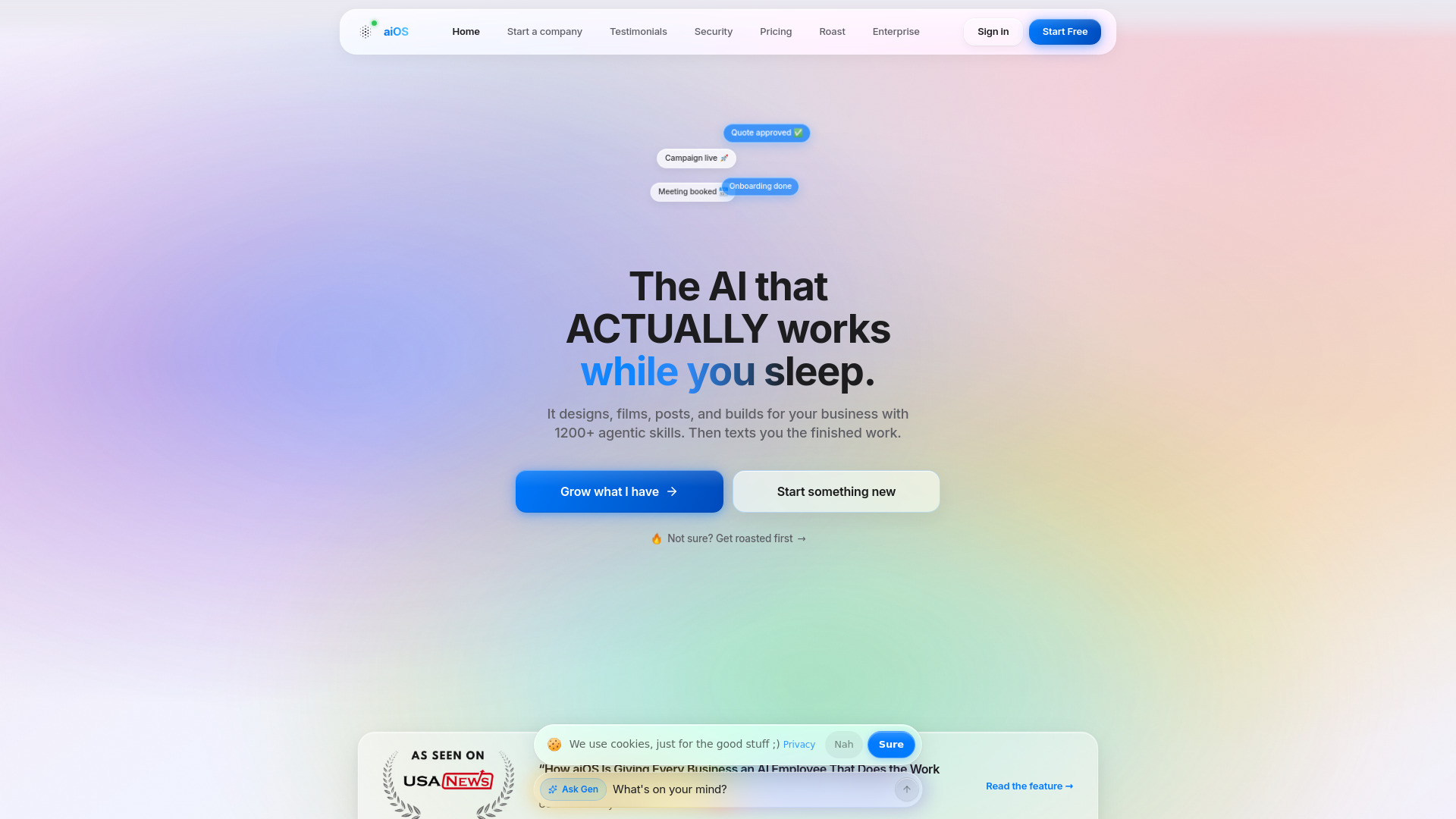
aiOS takes the broadest view of the employee experience in this list: instead of adding one more destination to the workday, it puts an AI employee behind familiar text interfaces. Founders can control business automation from iMessage, the web, WhatsApp, Telegram, or a phone, while the platform also supports content for carousels, posts, images, video, and websites. That combination makes it a persuasive first stop for small teams that would otherwise stitch together several AI products. The catch is that the flexibility comes with pricing tiers and usage limits that deserve careful review.
Best for
Founders who need an assistant across business tasks and communications
Small teams trying to consolidate several AI subscriptions
Users who prefer text-based control instead of another complex dashboard
Limitations
Pricing tiers and usage limits can be complex
Advanced capabilities require higher-priced plans
The broad scope may be more than a team with one narrowly defined workflow needs
Shortlist signal: Add aiOS when you want one text-accessible AI operating layer for business automation.
2. Workers Delos
- Marketing managers
- Free trial, no credit card required
- Starts at Team: €50 per month
- Usage signal: 107.6K
Why it matters
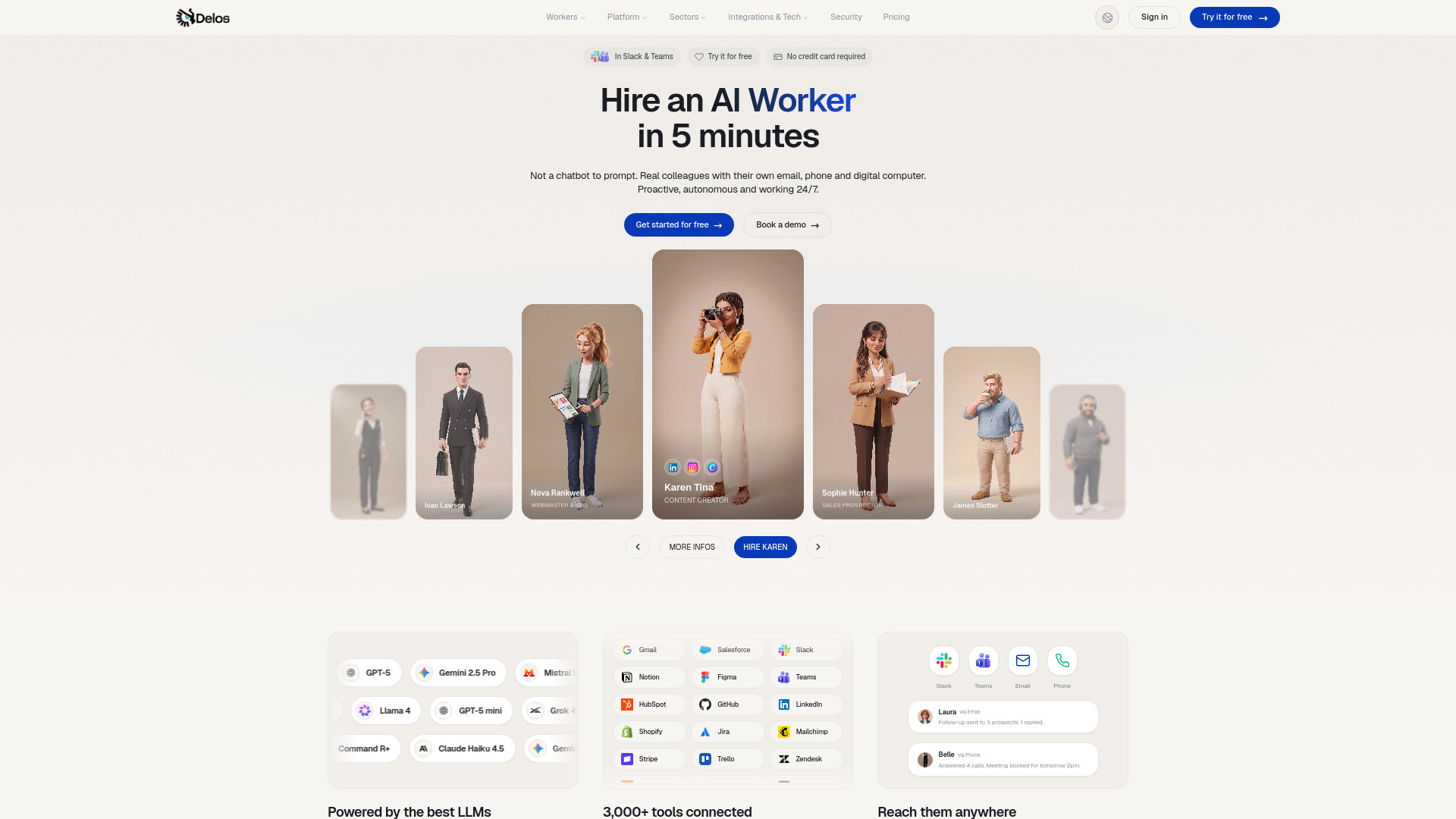
Most workplace AI still waits for a prompt. Workers Delos is built around a different model: specialized AI workers can operate continuously and proactively against goals. Connections to Slack, Teams, email, phone, and more than 3,000 tools give it an unusually broad operating surface. That makes it relevant when employee experience suffers because people spend their days coordinating handoffs, checking systems, and repeating status work. The value is less about a clever answer and more about getting a defined business process to keep moving.
Best for
Marketing managers coordinating recurring campaigns and tool-based tasks
Teams that want proactive work rather than one-off chatbot responses
Organizations with a varied software stack and many cross-tool handoffs
Limitations
The free trial quota and duration are not specified
The Team plan at €50 per month may be costly for individuals or small teams
Continuous autonomy requires clear goals and careful workflow boundaries
Shortlist signal: Choose Workers Delos when the employee-experience problem is stalled work, not a lack of information.
3. Canary Wharfian

- Investment banking applicants
- Automated HireVue practice and personalized feedback
- Starts at 14.99: Monthly subscription
- Usage signal: 80.0K
Why it matters
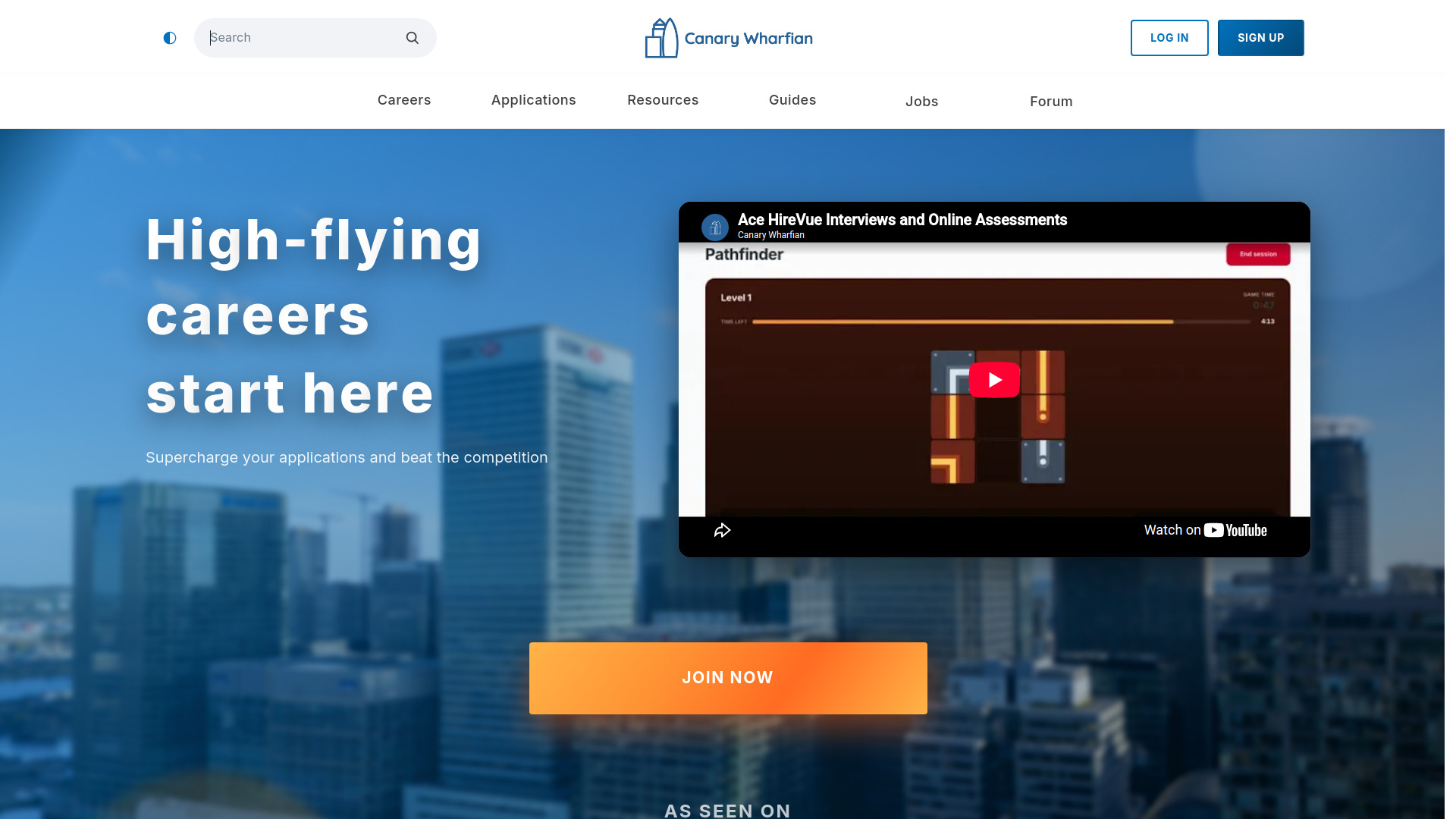
Employee experience begins before someone joins the company. Canary Wharfian serves a sharply defined audience with interview practice, HireVue preparation, job interview prep, and personalized feedback on recorded answers. For investment banking applicants, that focus is more useful than a generic career chatbot because it mirrors the pressure and format of a real selection process. It is also an example of an adjacent tool worth considering when the goal is to improve candidate confidence and readiness rather than internal operations.
Best for
Investment banking applicants preparing for structured interviews
Candidates practicing recorded video responses
Career teams looking for a focused preparation resource for finance applicants
Limitations
Premium tool pricing is not fully disclosed on the product information
Some features may require payment
Its high-finance focus makes it a poor fit for general workplace coaching
Shortlist signal: Add Canary Wharfian when finance interview readiness is the employee or candidate experience you need to improve.
4. Giga

- Customer support leaders
- AI agents for voice, chat, and email
- Starts at Check vendor pricing
- Usage signal: 118.2K
Why it matters
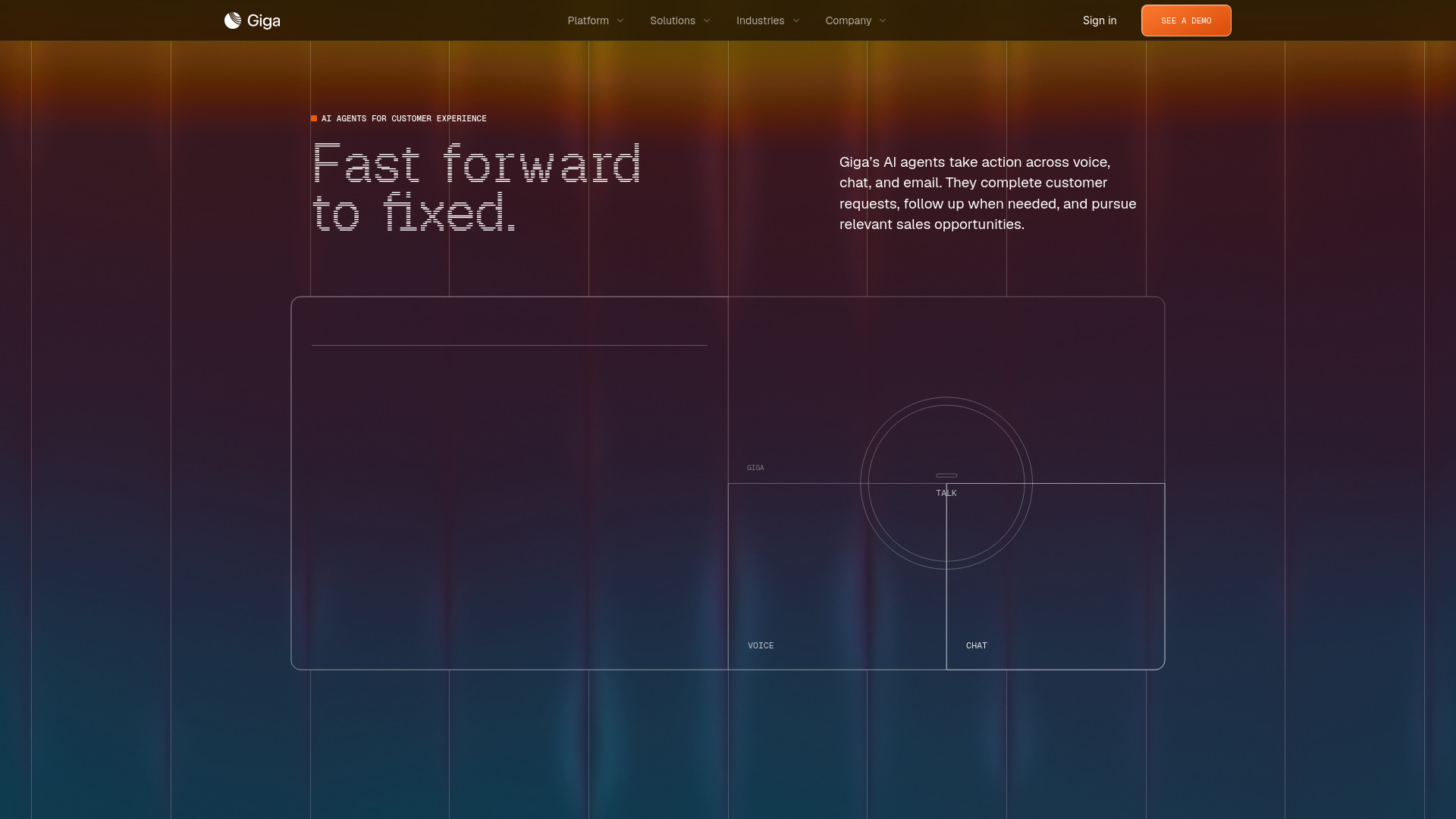
Giga targets a familiar employee-experience pain point: support teams overwhelmed by conversations that require more than a canned answer. Its AI agents work across voice, chat, and email, while Agent Canvas lets teams configure policies, knowledge, and tools. Outcome monitoring connects performance metrics to the conversations that produced them, which is important for managers who need to inspect quality rather than simply count automated tickets. It belongs on the shortlist when reducing support load and preserving escalation quality are connected goals.
Best for
Customer support leaders managing multi-channel service operations
Teams handling complex requests and follow-up actions
Organizations that need visibility into the relationship between agent behavior and outcomes
Limitations
Pricing is hidden behind a sales conversation
Self-serve access details are not provided
Agent configuration and monitoring may require more operational ownership than a basic chatbot
Shortlist signal: Choose Giga when support employees need fewer repetitive conversations without losing control over policies and follow-up.
5. Airtap
- Frequent travelers
- Text app automation, recurring routines, and cloud phone streaming
- Starts at Check vendor pricing
- Usage signal: 50.7K
Why it matters
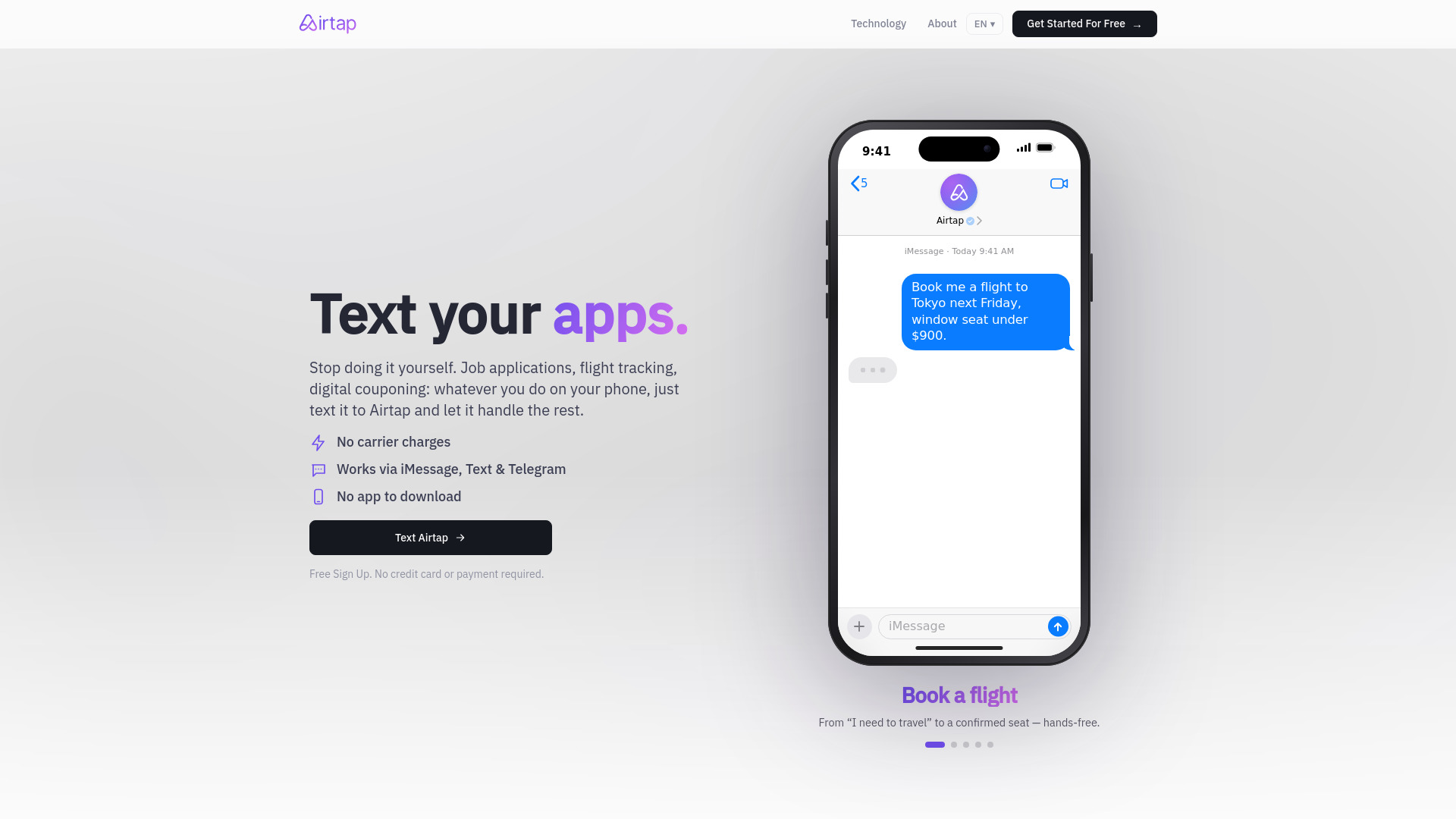
Airtap is an unexpected but useful employee-experience option because it works inside real mobile apps. Employees can send a plain-English request from iMessage, SMS, or Telegram, while Airtap carries out the task through a cloud Android phone or an Android device the user already owns. That is compelling for people who work away from a desk, travel frequently, or rely on mobile-only workflows. It feels practical when the friction is navigating apps, not deciding what to write.
Best for
Frequent travelers and field-based employees
Teams that repeat tasks inside mobile applications
Users who want scheduled routines without adopting a separate messaging app
Limitations
Advanced dashboard access requires signing in
Some tasks require approval or answers from the user
Pricing is not presented as a clear starting plan
Shortlist signal: Add Airtap when mobile app automation is a bigger obstacle than desktop workflow design.
6. Inflowave

- Marketing agencies
- 7-day free trial
- Starts at Business: $149/month
- Usage signal: 59.4K
Why it matters
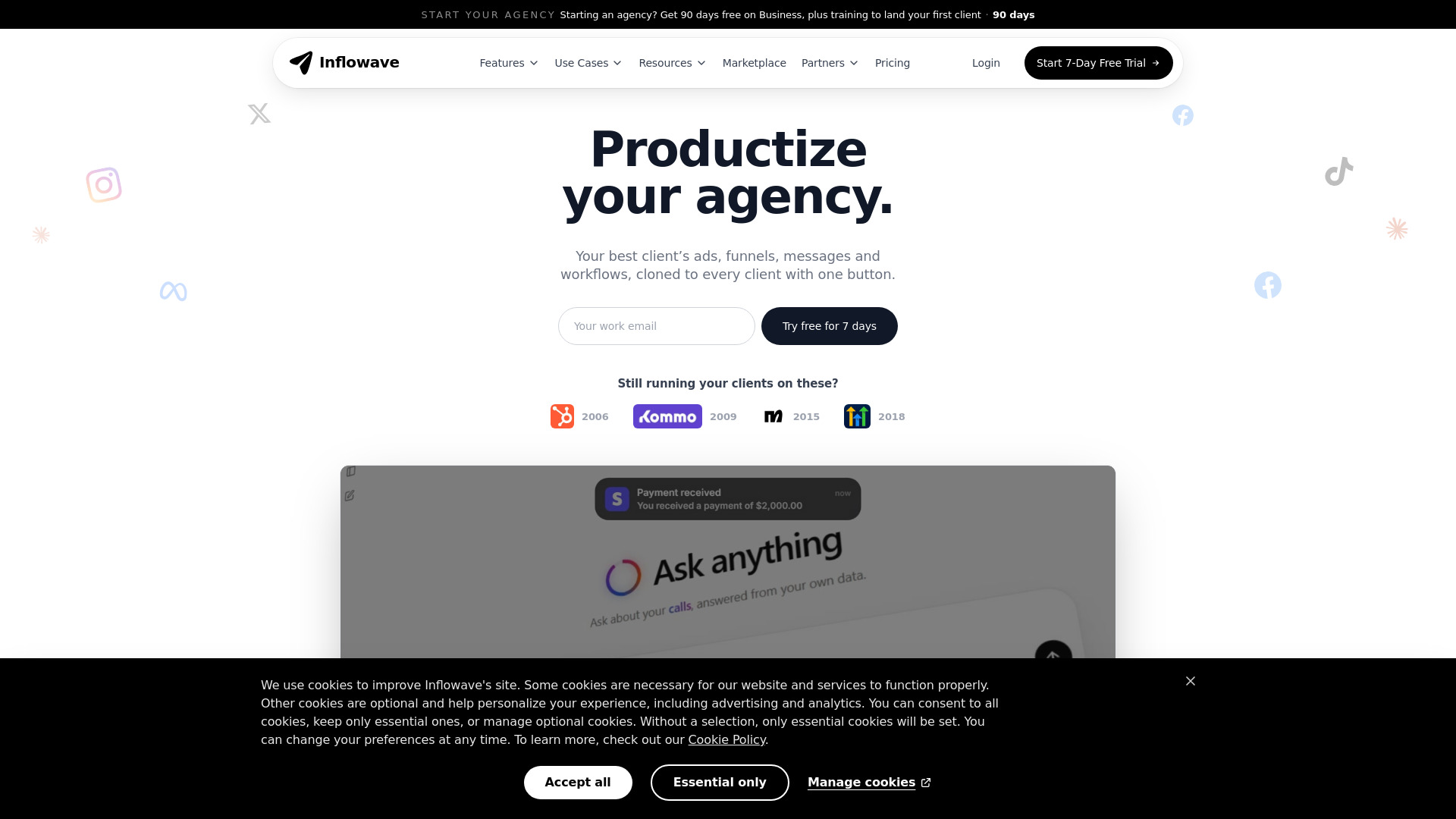
Inflowave treats employee experience as an operations problem inside client service teams. Its AI Workflow Builder creates editable sales and marketing automations using natural language or drag-and-drop, while AI CRM Agents can handle conversations, qualify leads, answer questions, and support appointment workflows. Client workspaces separate customer data and activity, giving agencies a clearer boundary between accounts. This is a serious platform for teams that want their staff to spend less time moving information between CRM, inbox, campaigns, and reporting.
Best for
Marketing agencies managing several client relationships
Teams that need CRM, communications, automation, and reporting together
Operators building repeatable sales and marketing workflows
Limitations
The lowest listed plan costs $149 per month after the trial
The Business plan includes one client workspace and one team member
The breadth may be excessive for a small team seeking only a writing assistant
Shortlist signal: Choose Inflowave when client operations, not isolated employee productivity, is the workflow you need to redesign.
7. Aisa.to

- Operations managers
- Free AI skills test and certificate
- Starts at Check vendor pricing
- Usage signal: 21.5K
Why it matters
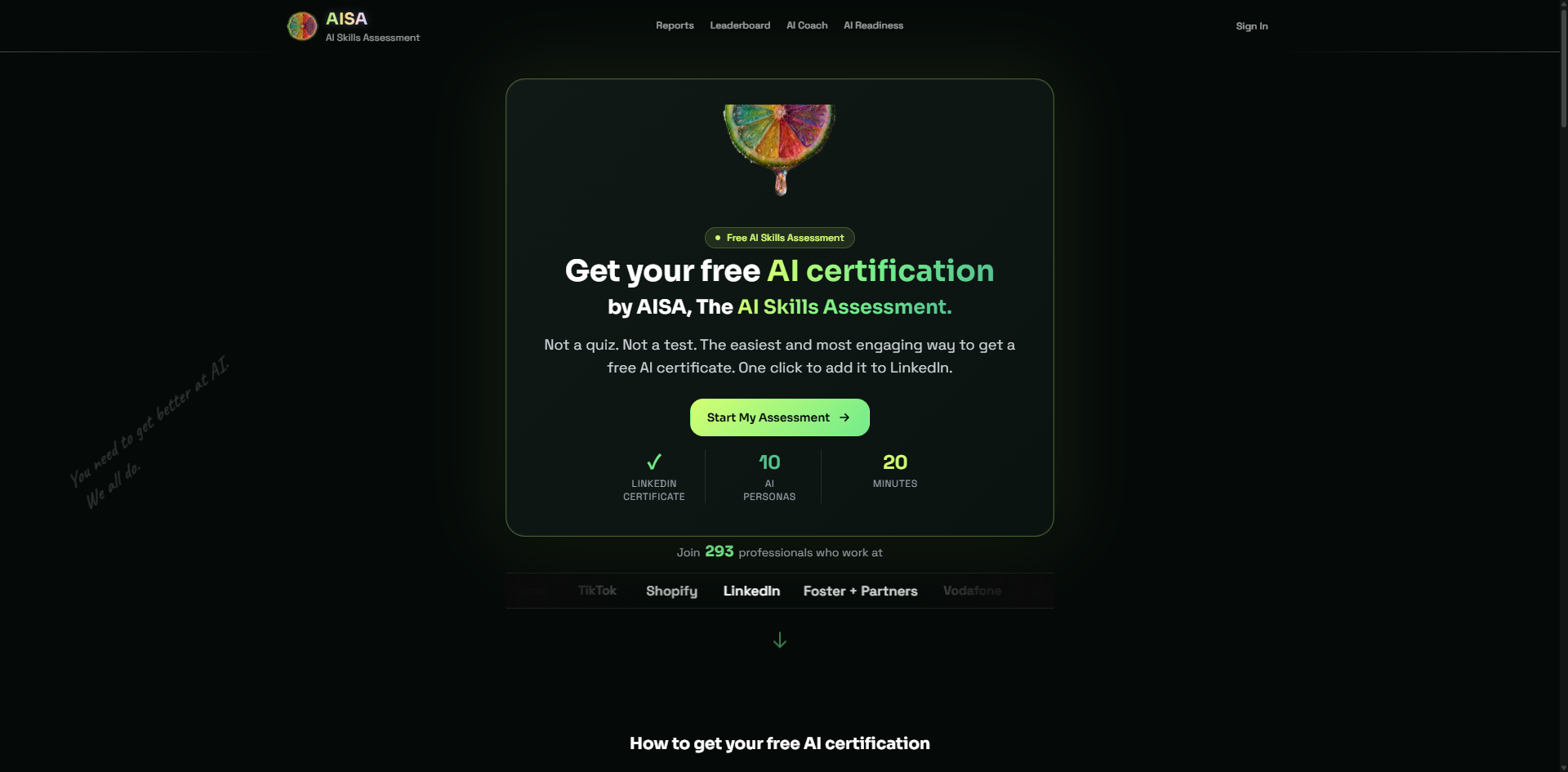
Aisa.to focuses on a gap many AI rollouts overlook: knowing whether employees can use AI thoughtfully and effectively. Instead of a static multiple-choice quiz, it runs an adaptive 20-minute conversational interview and evaluates five dimensions across 11 criteria, including prompt engineering, critical thinking, and workflow skills. The resulting report identifies one of 10 AI personas and provides a prioritized learning plan. A free certificate and LinkedIn-verifiable credential make the individual experience unusually concrete, while the assessment can give operations managers a baseline for upskilling.
Best for
Operations managers measuring AI readiness across a workforce
Employees who want a personalized skills report and certificate
Teams planning targeted AI training rather than generic workshops
Limitations
The assessment requires a continuous 20-minute commitment
Advanced team dashboards or workplace management options may require contacting the vendor
It measures readiness and learning needs rather than automating daily work
Shortlist signal: Add Aisa.to when you need evidence of AI capability before choosing a training plan.
8. RightResponse AI

- Small business owners
- 7-day trial with 1,000 free credits
- Starts at PAYGO: $10/location/month
- Usage signal: 12.0K
Why it matters
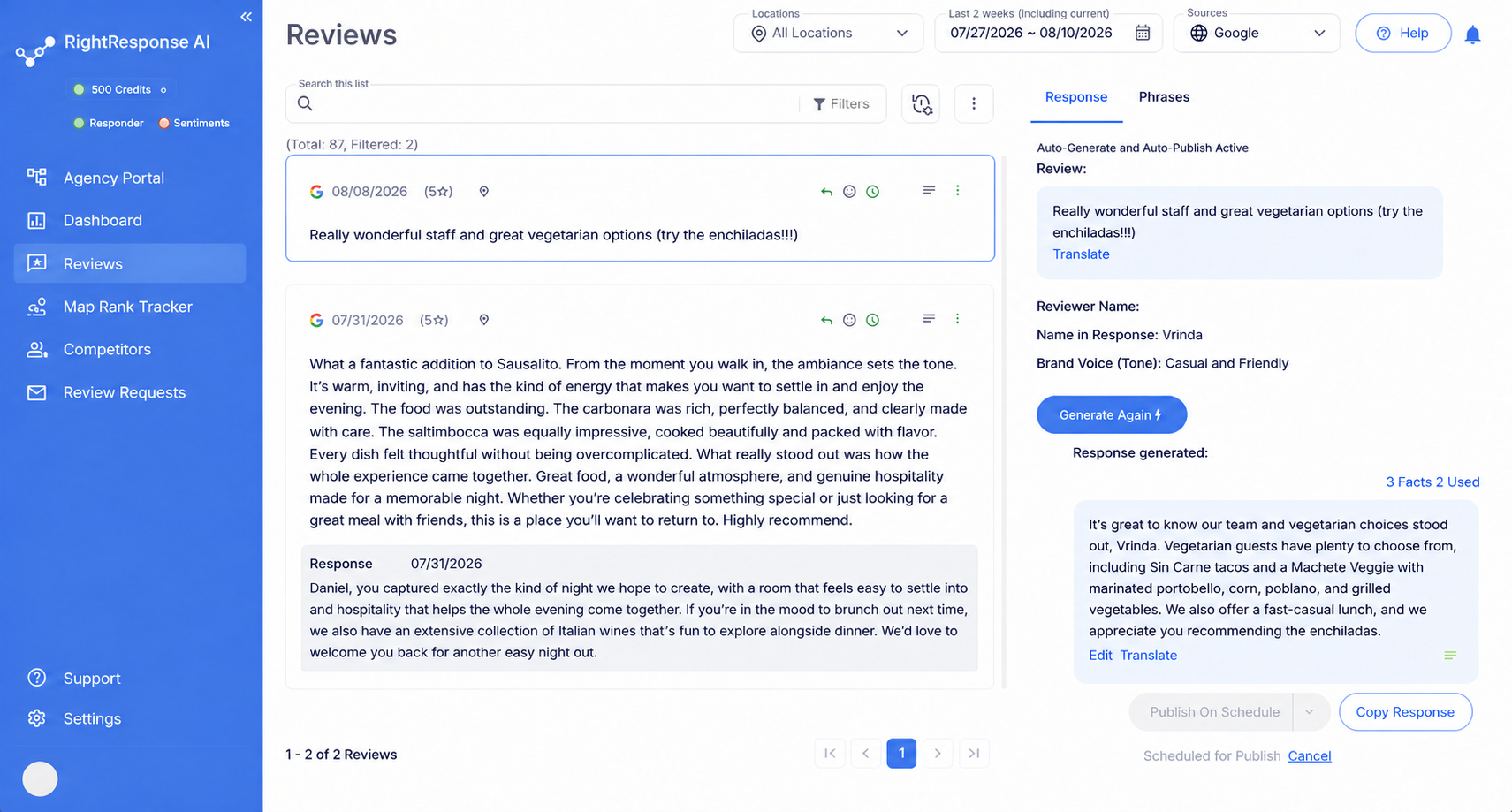
RightResponse AI improves the employee experience indirectly by taking repetitive reputation work off the plate of small business teams. Its multi-agent workflow generates and publishes review responses, analyzes sentiment, and includes human approval. The approval step matters: employees can supervise the output instead of trusting an unattended publishing loop. Usage-based pricing can work well for a small footprint, but buyers should model volume carefully because monthly costs may vary.
Best for
Small business owners managing local reviews
Teams that need response drafts plus human approval
Businesses combining reputation management with sentiment and Google Maps rank tracking
Limitations
Usage-based pricing can make monthly costs harder to predict
Advanced brands, regions, permissions, and review controls may require a higher level of plan
It is a focused reputation tool, not a general employee platform
Shortlist signal: Choose RightResponse AI when review management is consuming employee time and you still want a human approval gate.
9. IMAI

- Brand founders
- No free access listed
- Starts at Starter: $54/month billed annually
- Usage signal: 1.0K
Why it matters
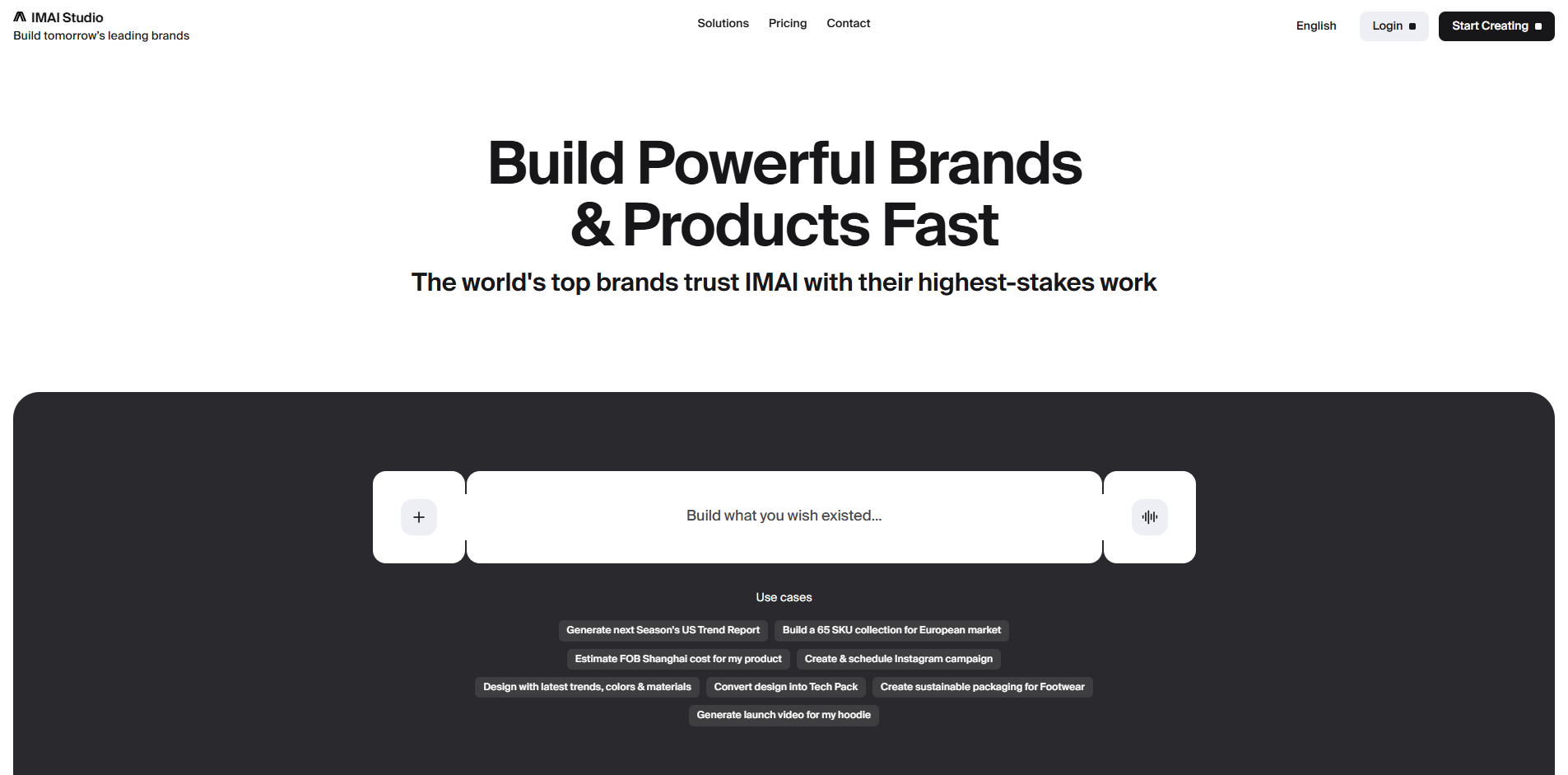
IMAI is a broader visual and operational studio for teams building brands and products. It covers AI-powered trend, market, material, and color research; collection planning; product design; costing; manufacturing documentation; and downstream marketing, sales, retail, finance, and collaboration. For a brand team, that connected workspace can reduce the context switching that makes creative work feel administrative. It is a narrower recommendation than aiOS or Workers Delos, but a stronger one when the employee experience is tied to product development across many stages.
Best for
Brand founders coordinating product and marketing decisions
Product teams working from research through manufacturing documentation
Small creative organizations that want one shared development workspace
Limitations
The platform is paid, with no clearly stated free plan or trial quota
Pricing may be significant for solo users and small teams
Its specialized brand and product focus will not fit general operations teams
Shortlist signal: Add IMAI when your team loses time moving product decisions between research, design, production, and marketing tools.
10. workspeak

- New workplace professionals
- 20 credits
- Starts at Credits package: $9
- Usage signal: Usage signal not listed
Why it matters
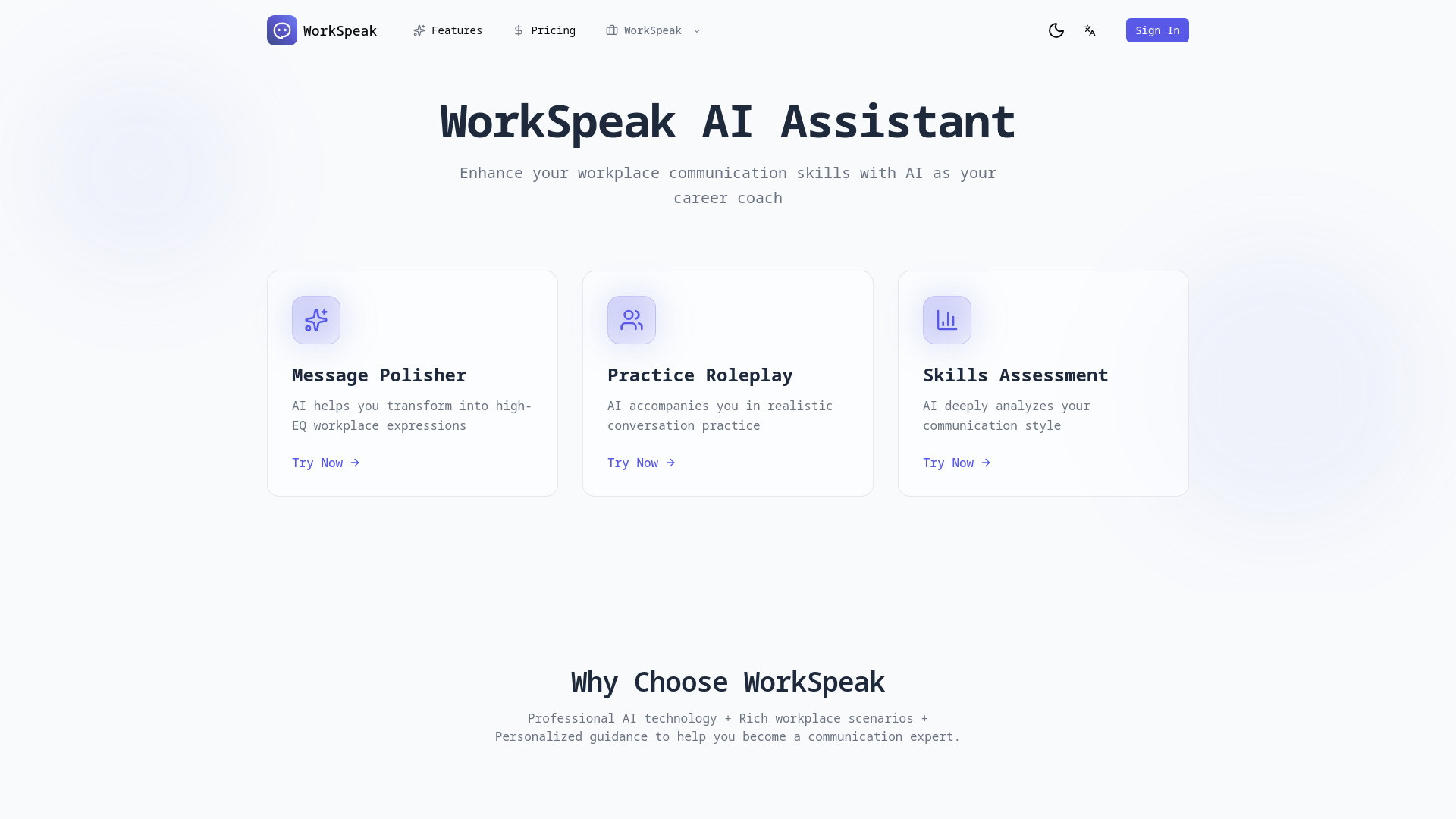
workspeak is the most focused choice for employees who know what they want to say but need help saying it professionally. It polishes everyday messages, provides practice conversations across more than 25 workplace scenarios, and includes a communication-style assessment with improvement suggestions. That makes it particularly approachable for new workplace professionals, though it can also help managers rehearse difficult conversations. The model is simple and understandable: practice, receive guidance, and use the assistant when a message needs a higher-EQ rewrite.
Best for
New workplace professionals building communication confidence
Employees practicing responses to common workplace situations
Users who want message polishing alongside roleplay
Limitations
Sign-up is required before use
Continued usage requires a subscription or pay-as-you-go credits
It improves communication skills but does not automate broader workplace processes
Shortlist signal: Choose workspeak when communication confidence is the clearest employee-experience bottleneck.
What to test before choosing
Run a small, realistic pilot instead of asking every vendor for a generic demo. Give each shortlisted tool one workflow that employees already understand and measure the result.
Time to first useful outcome: Can a new user complete a meaningful task in the first session?
Human control: Can employees review, approve, edit, or stop an AI action before it affects customers or colleagues?
Context quality: Does the tool use the right policies, knowledge, and workplace scenario, or does it produce generic output?
Handoff behavior: When the AI cannot finish, does it explain what is missing and route the work cleanly?
Adoption friction: Does the workflow fit existing channels such as email, Slack, Teams, SMS, or a current CRM?
Usage economics: Track messages, credits, locations, workspaces, and any other unit that could change the monthly bill.
Employee sentiment: Ask whether the tool removes tedious work or simply adds another system to maintain.
For assessment and communication products, test the quality of feedback rather than the length of the report. For autonomous agents, test the boundary conditions: approvals, incomplete instructions, and conflicting information. For CRM or support tools, test a difficult real request, not only a clean happy path.
What to do next
Pick one primary segment and one backup option. For broad business automation, compare aiOS with Workers Delos. For workforce development, compare Aisa.to with workspeak. For operational capacity, compare Giga with Inflowave, depending on whether your work is support-led or agency-led.
Then run a two-week pilot with a defined baseline. Record the time spent on the old process, the time spent reviewing AI output, the number of corrections, and whether employees choose to use the tool again. Before signing, confirm current pricing, usage limits, data handling, integrations, cancellation terms, and which capabilities are restricted to higher plans.
A good employee-experience platform should make work feel clearer and lighter. If users need a long training session to understand where the value is, the product may be solving the vendor's workflow rather than yours.
Common mistakes when choosing from a complex top list
Treating every tool as a direct substitute: An interview coach, mobile agent, and support platform solve different problems.
Confusing broad scope with broad value: More features are not useful if employees only need one reliable workflow.
Ignoring the approval model: Autonomous actions need clear review and escalation paths.
Comparing headline prices only: Credits, locations, workspaces, usage limits, and premium features can change the real cost.
Skipping the employee perspective: A platform selected by executives can still fail if the daily workflow feels intrusive or awkward.
Using traffic as proof of quality: Market visibility is a signal, not evidence that the tool fits your organization.
Testing only the easy case: The difficult handoff, ambiguous request, and correction loop reveal more than a polished demo.
FAQ
The strongest option depends on the problem. aiOS is the best broad match for founders who want business automation through familiar text channels. Workers Delos is stronger for proactive, continuous execution. Aisa.to and workspeak focus on skills and communication, while Giga and Inflowave address operational workload. The ranking is intentionally segmented rather than treating one product as universal.