
Start here
The phrase top-rated ai-optimized infrastructure covers a much wider field than a typical cloud hosting shortlist. Some products give developers one API for hundreds of models. Others manage agent identity and payments, monitor RAG pipelines, route requests between model providers, or let an Azure team operate infrastructure with natural language. A few sit further upstream, helping teams design cloud architectures or generate GPU-backed workloads.
We compared 10 tools in 2026 and found that the right choice depends less on a single score than on where friction appears in your stack. Atlas Cloud is the strongest general-purpose inference option. ATXP is unusually focused on agent services, while Athina AI addresses evaluation and observability. For cloud planning, AI Architect and AI Architectures are more relevant than a model API. The shortlist below helps you avoid comparing unlike products as if they solved the same problem.
The quick shortlist
Need broad model access: Atlas Cloud gives developers a unified full-modal API and access to 300+ models.
Building autonomous agents: ATXP combines identity, payments, email, and SMS services.
Hosting open and proprietary models: EmpirioLabs AI covers text, image, video, audio, 3D, search, and reasoning APIs.
Monitoring an LLM or RAG product: Athina AI includes pipeline visibility and 50+ preset evaluation metrics on its free tier.
Reducing multi-provider inference cost: Auriko offers OpenAI-compatible access, routing, caching, and provider arbitrage without provider markup.
Designing cloud systems: AI Architect creates AWS, Azure, and GCP designs with templates and cost estimation.
Operating Azure through language: OmniOps observes, creates, and modifies Azure resources through natural language.
Segment comparison
| Segment | Best fit | Standout capability | Main watch-out |
|---|---|---|---|
| Model inference and hosting | Atlas Cloud, EmpirioLabs AI | Broad model and modality coverage | Usage-based billing needs monitoring |
| Agent infrastructure | ATXP | Identity, payments, email, and SMS | Some features remain in beta |
| Evaluation and routing | Athina AI, Auriko | RAG evaluation or provider routing | Setup can require technical expertise |
| Cloud and GPU architecture | AI Architect, AI Tools 99 | Cloud designs or scalable GPU execution | Product scope varies considerably |
| AI-assisted operations and development | OmniOps, AIGoCode | Azure management or shared coding access | Trial, renewal, and quota terms matter |
The most important dividing line is whether you need to run AI, measure AI, or design the systems around AI. Atlas Cloud and EmpirioLabs AI are infrastructure services for inference. Athina AI helps you see whether an application behaves well. AI Architect produces a planning artifact rather than serving production traffic. That distinction will save you from buying an attractive but irrelevant tool.
Shortlist paths
| Your situation | Start with | Why |
|---|---|---|
| One product needs chat, image, audio, and video models | Atlas Cloud | One unified API across full-modal inference |
| You are assembling an agent with commercial workflows | ATXP | Identity and payment services are part of the toolkit |
| You want hosted open-source models and broad endpoints | EmpirioLabs AI | Covers multiple modalities and hosted model types |
| Your issue is quality, tracing, or RAG evaluation | Athina AI | Logs, visibility, and evaluation metrics sit together |
| Provider cost and latency are the bottleneck | Auriko | Routes requests across providers using configurable strategies |
| You need a cloud architecture starting point | AI Architect | Generates designs for AWS, Azure, or GCP |
| You want lower-cost GPU runtime | AI Tools 99 | Pay-per-second billing and scale-to-zero behavior |
| Your team manages Azure repeatedly | OmniOps | Natural-language interaction with Azure infrastructure |
| You need architectural visuals and floor plans | AI Architectures | Generates designs, renders, and floor plans |
| Developers need shared AI coding access | AIGoCode | Combines coding assistance, quotas, and usage statistics |
Ranking snapshot
| Rank | Tool | Score | Best for | Starting price |
|---|---|---|---|---|
| #1 | Atlas Cloud | 93/100 | Developers | Z-Image-Turbo LoRA: $0.01/PIC |
| #2 | ATXP | 92/100 | AI developers | Check vendor pricing |
| #3 | EmpirioLabs AI | 92/100 | AI developers | Check vendor pricing |
| #4 | AI Architectures | 91/100 | Architects | HQ Standard: $8.74 per month |
| #5 | Athina AI | 91/100 | Data scientists | Starter: Free |
| #6 | Auriko | 90/100 | AI engineers | Free: $0 |
| #7 | AI Architect | 89/100 | Developers | Basic: $10/month |
| #8 | AI Tools 99 | 89/100 | AI developers | Pro: $13.99/year |
| #9 | OmniOps | 89/100 | DevOps engineers | $19.99/month after 30 days |
| #10 | AIGoCode | 89/100 | Software developers | Check vendor pricing |
How we grouped and ranked the list
This is a field guide rather than a simple list of model APIs. We grouped the products by the job they perform: inference and hosting, agent enablement, evaluation and routing, architecture planning, GPU execution, infrastructure operations, and developer workflow. That prevents a cloud design generator from being judged as if it were an inference endpoint.
The score combines four practical questions. First, how much infrastructure work does the product actually cover? Second, does it fit a clearly defined audience? Third, how much setup or operational overhead does it introduce? Finally, do pricing and usage signals make the product realistic to evaluate? Atlas Cloud leads because its unified full-modal API and 300+ model library address a broad developer need. ATXP and EmpirioLabs AI follow closely, but each serves a narrower infrastructure pattern.
Market signals are useful context, not a substitute for testing. Atlas Cloud shows 929.1K monthly visits and ATXP 177.1K, while Auriko shows only 333. That does not make Auriko less technically interesting; it does mean buyers should spend more time validating documentation, provider coverage, and support expectations before making it central to a production stack.
Ranked field notes
1. Atlas Cloud

- Developers building multi-modal AI products
- From $0.01 per PIC; unified API and 300+ models
- Starts at Z-Image-Turbo LoRA: $0.01/PIC
- Usage signal: 929.1K
Why it matters
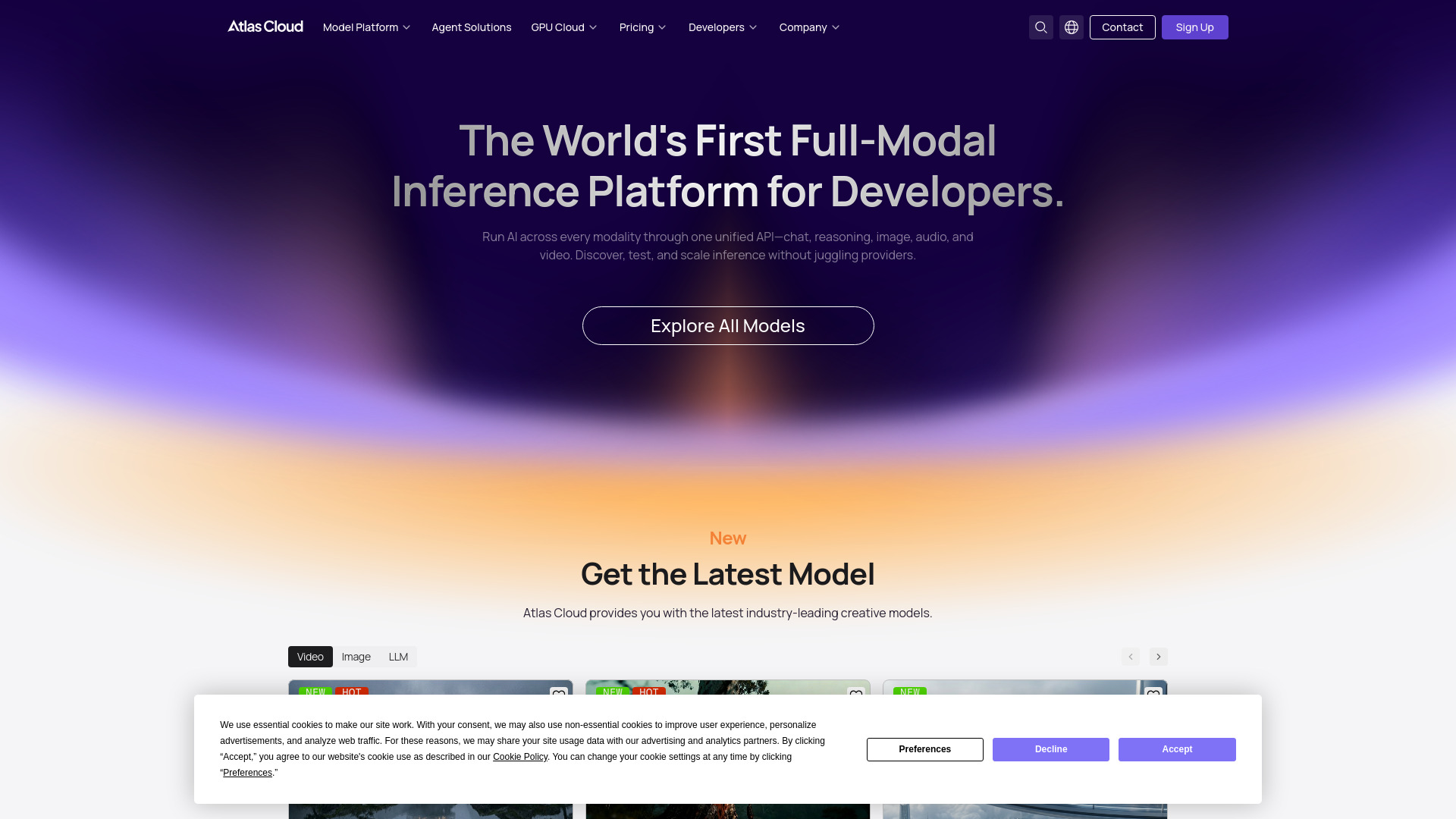
Atlas Cloud is the clearest all-purpose entry point in this group. Instead of stitching together separate services for chat, reasoning, image, audio, and video, developers get one full-modal inference API and access to more than 300 models from major providers. That breadth makes it a sensible fit for teams prototyping several AI features at once or trying to avoid a different integration for every modality. The trade-off is equally clear: this is infrastructure for developers and enterprise-scale workloads, not a no-code assistant. Consumption billing by token or GPU hour also makes usage observability essential from the first experiment.
Best for
Product teams serving several AI modalities through one integration
Developers comparing models without rebuilding the application layer
Creators who need access to image, audio, video, and reasoning endpoints
Limitations
Primarily aimed at infrastructure and developer or enterprise scaling needs
Usage-based token and GPU-hour billing requires close monitoring
A broad catalog can still require model-by-model validation for quality and cost
Shortlist signal: Add Atlas Cloud first when your application needs multiple AI modalities behind a single developer-facing API.
2. ATXP

- AI developers building agent services
- Free to create; no subscriptions or limits listed
- Starts at Check vendor pricing
- Usage signal: 177.1K
Why it matters
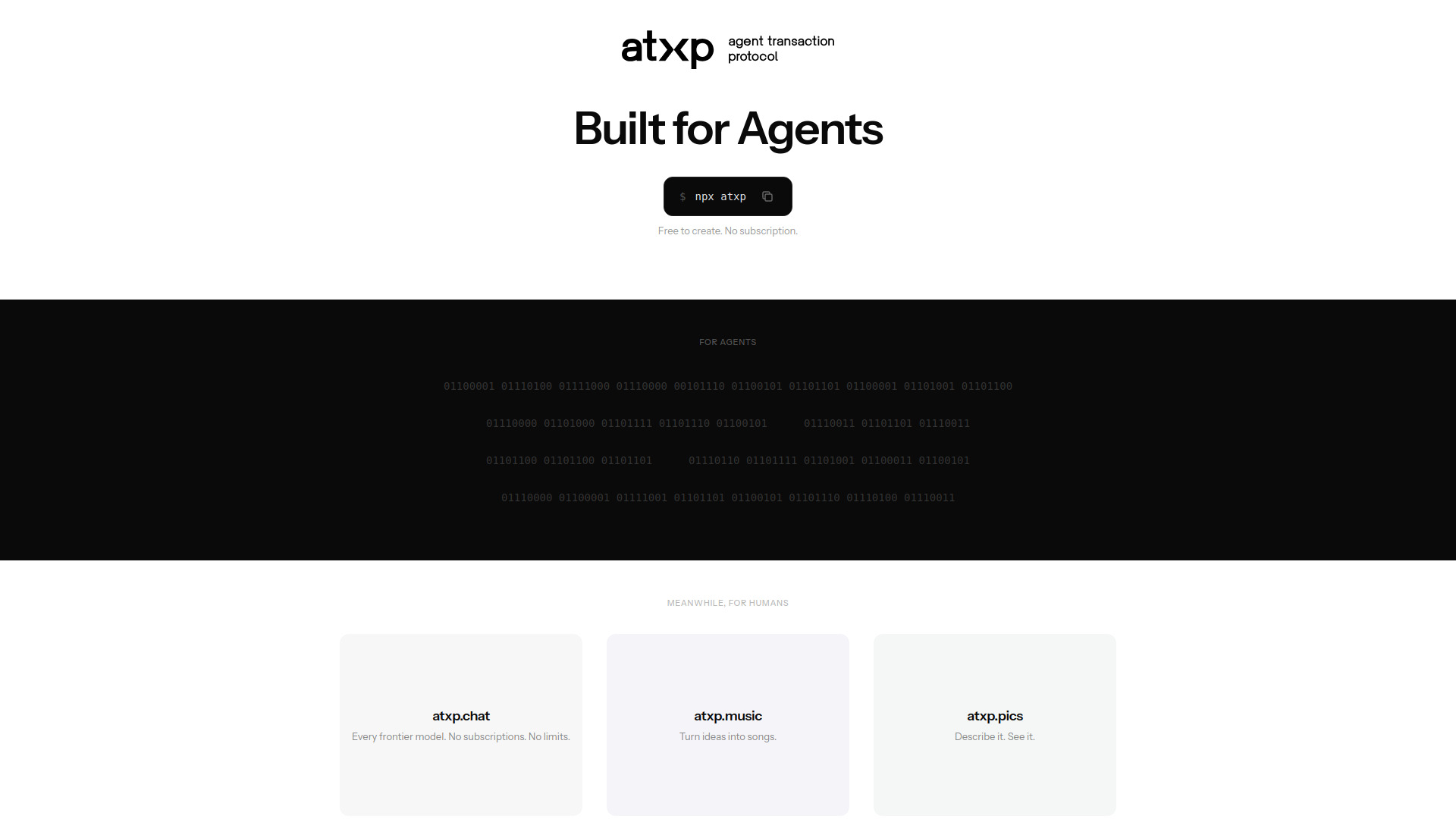
ATXP takes a different route from an inference marketplace. Its useful unit is the AI agent account: identity management, integrated payments, dedicated email, and SMS services are brought into one toolkit. That is a practical combination for agents that need to identify themselves, transact, and communicate rather than simply return text. The pay-as-you-go positioning is attractive for experiments that do not justify a monthly subscription. Still, the product asks more from the builder: agent integration uses CLI and documentation, and video, Cloud, and Deputy capabilities are still in beta.
Best for
Developers building agents that need identity and payment flows
Teams adding email or SMS communication to an agent
Projects that prefer usage-based access over a fixed subscription
Limitations
Some video, Cloud, and Deputy features remain in beta
CLI and documentation work assumes developer knowledge
Pricing is not presented as a clean starting figure, so validate the billable units
Shortlist signal: Choose ATXP when the hard infrastructure problem is giving an agent a usable identity, payment path, and communication layer.
3. EmpirioLabs AI

- AI developers hosting broad model stacks
- Free GLM Flash tiers; pay-as-you-go options
- Starts at Check vendor pricing
- Usage signal: 32.9K
Why it matters
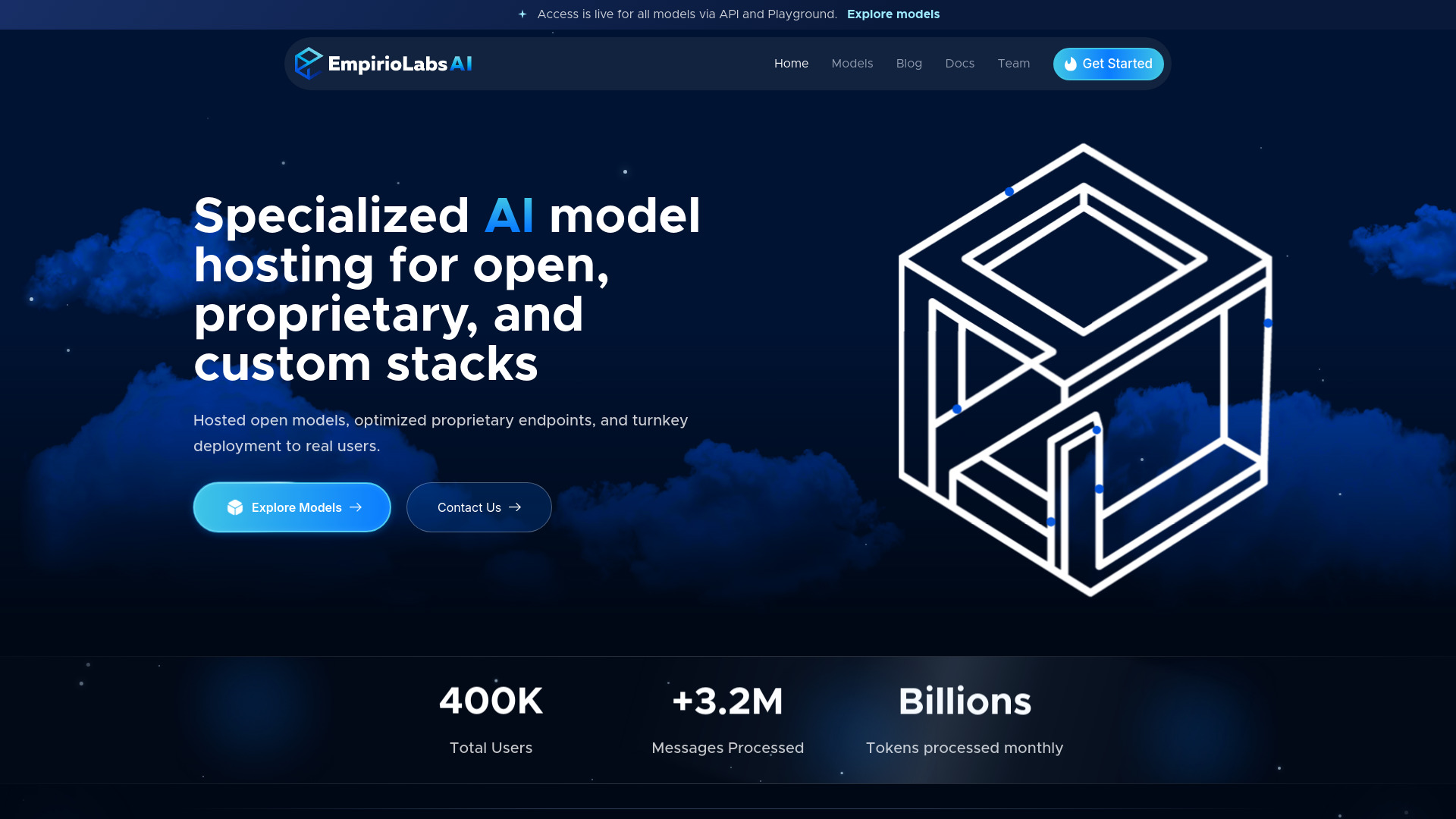
EmpirioLabs AI is compelling for teams that want production endpoints without limiting themselves to one model family or one medium. Its offering spans text, image, video, audio, 3D, search, and reasoning, with hosted open-source models alongside optimized proprietary endpoints. The free GLM Flash tiers lower the barrier to an initial test, while pay-as-you-go billing avoids a locked monthly subscription. In practice, the evaluation work moves to pricing and regions: rates vary by model and localized server location, and GPU Cloud services are marked as coming soon.
Best for
Developers testing open-source and proprietary models through hosted APIs
Teams building products across text, media, search, and reasoning workloads
Buyers who prefer usage-based access to a broad endpoint catalog
Limitations
Model and server-region pricing can vary substantially
GPU Cloud services are currently listed as coming soon
A wide catalog makes latency, quality, and regional availability checks necessary
Shortlist signal: Put EmpirioLabs AI on the list when model breadth matters more than a single standardized endpoint.
4. AI Architectures

- Architects generating designs and visual plans
- Architecture generation, renders, and floor plans
- Starts at HQ Standard: $8.74 per month
- Usage signal: 9.4K
Why it matters
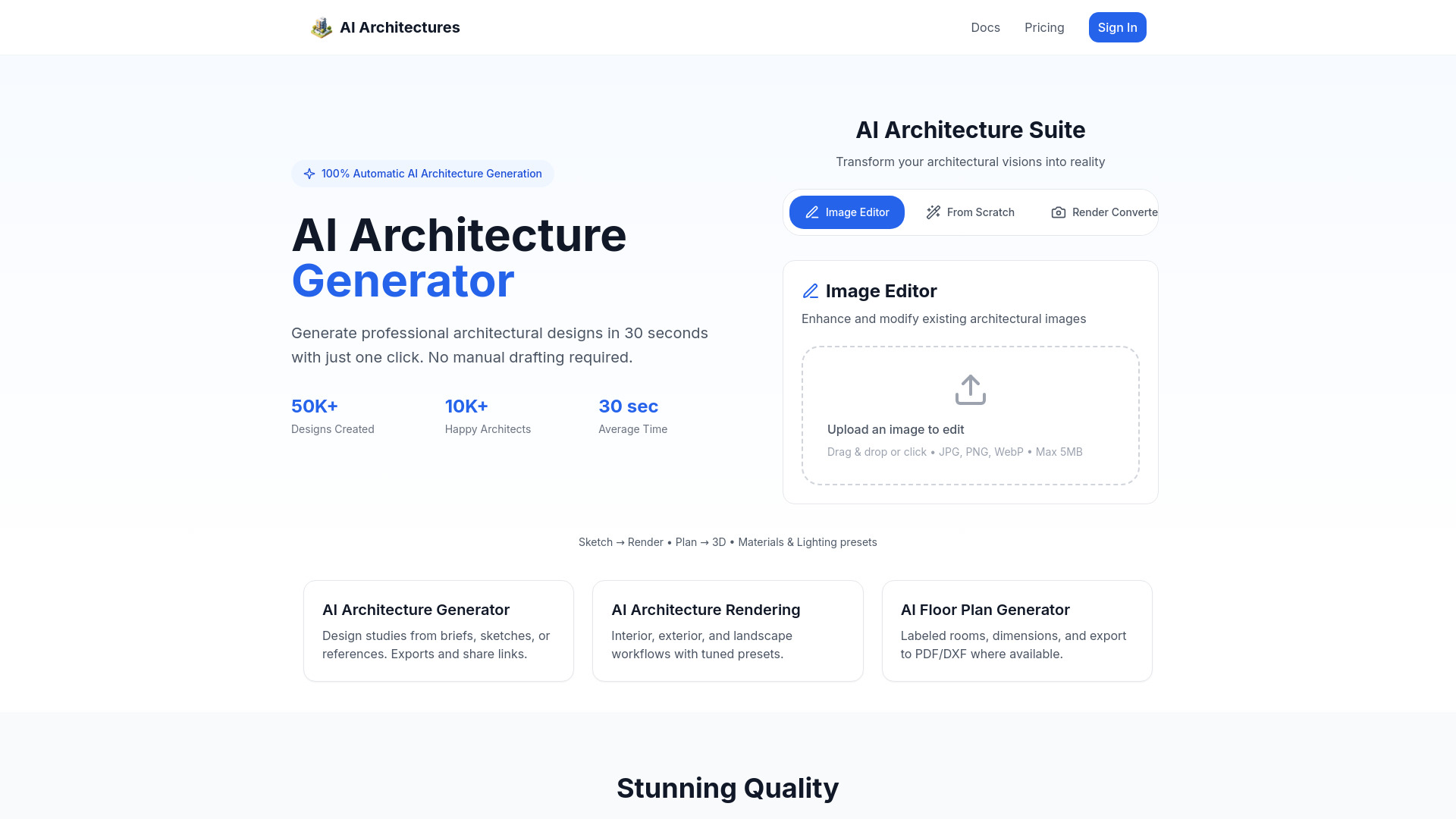
AI Architectures is an adjacent but useful option for readers whose infrastructure work begins with physical or architectural planning rather than cloud compute. It generates architectural designs, photorealistic renders, and floor plans, with a stated one-click workflow that can produce designs quickly. That makes it relevant to architects who need a visual starting point or presentation material. It should not be confused with an inference platform or cloud architecture tool; its value is in design output. The HQ Standard plan is listed at $8.74 per month with 2,800 credits, giving buyers a concrete low-cost starting point.
Best for
Architects creating early design concepts
Teams needing renderings and floor plans alongside architectural ideas
Professionals who value one-click generation over infrastructure configuration
Limitations
The product is focused on architectural design, not AI serving infrastructure
Credit consumption should be checked against rendering volume
The tool may not replace professional review of technical plans
Shortlist signal: Pick AI Architectures when your infrastructure-related workflow is visual building design, rendering, or floor-plan generation.
5. Athina AI

- Data scientists evaluating LLM and RAG applications
- 10K logs/month and 50+ preset evaluation metrics
- Starts at Starter: Free
- Usage signal: 5.7K
Why it matters
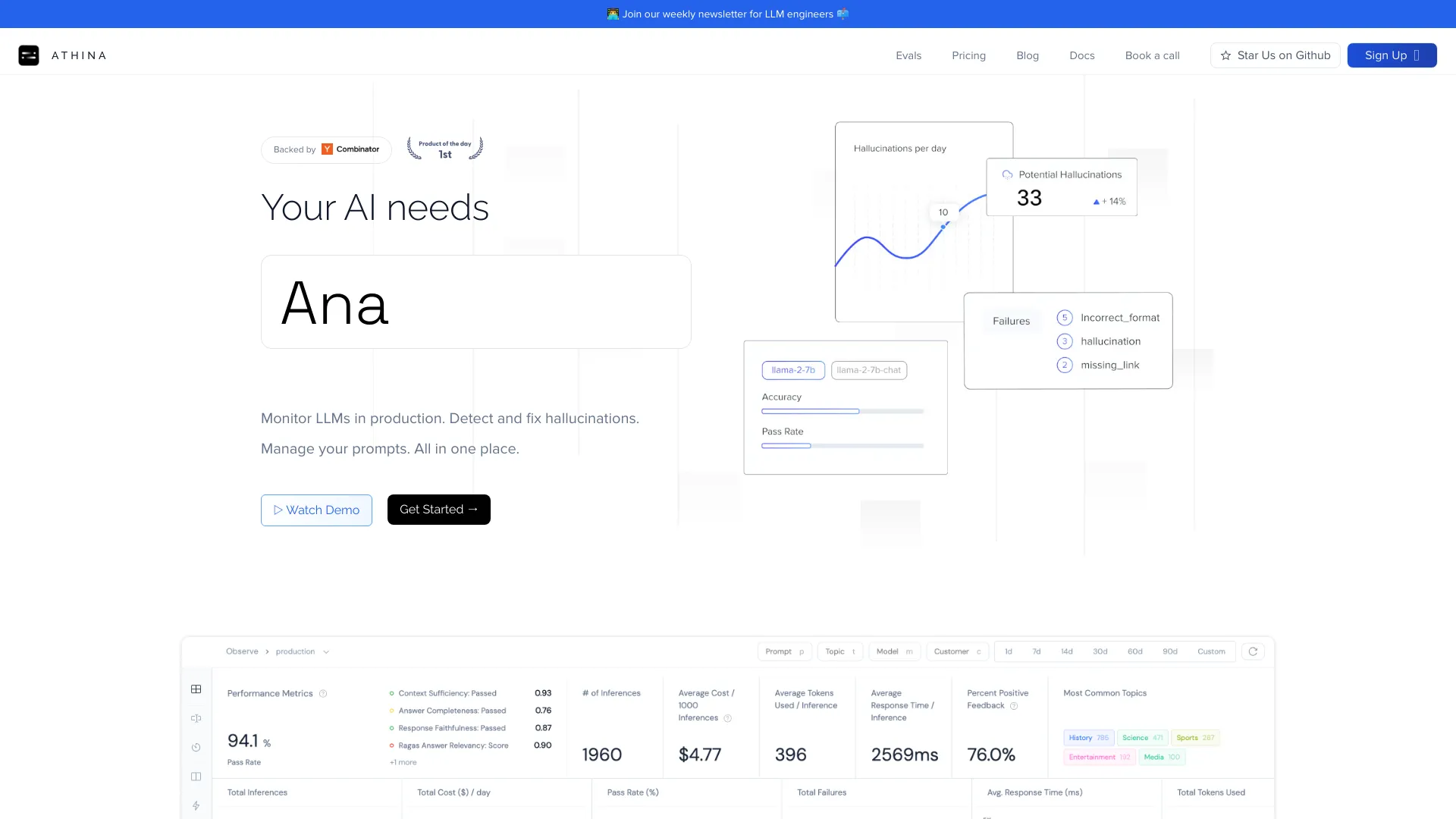
Athina AI earns its place by addressing the part of an AI stack that is easy to postpone and expensive to ignore: knowing whether the application works. It combines collaborative AI development with RAG pipeline visibility, preset evaluation metrics, and custom metrics. The free Starter offering includes 10,000 logs per month and more than 50 preset evaluations, which gives a small team a meaningful way to test the workflow before discussing paid usage. Setup may still require technical expertise, and the product can be costly for small teams once their monitoring needs grow.
Best for
Data scientists evaluating retrieval-augmented generation pipelines
Technical and non-technical collaborators working around one AI application
Teams that need repeatable preset and custom evaluation metrics
Limitations
Initial setup and configuration may require technical expertise
Paid pricing may challenge individual developers or small teams
Observability does not replace the underlying model or hosting layer
Shortlist signal: Add Athina AI when you need evidence about LLM quality and RAG behavior, not merely another place to call a model.
6. Auriko

- AI engineers optimizing multi-provider LLM routing
- 14-day trial; zero markup; pay-as-you-go API costs
- Starts at Free: $0
- Usage signal: 333

Why it matters
Auriko targets a specific but important infrastructure headache: deciding which model provider should handle each request. Its OpenAI-compatible API can sit in front of multiple providers, while cache-aware cost optimization and routing strategies cover cost, latency, throughput, and balance. Zero provider markup is a strong reason to test it, and the 14-day free trial makes that test concrete. The catch is that Auriko does not eliminate the underlying provider bill. Advanced routing can also add another layer to understand, monitor, and troubleshoot.
Best for
Engineers already using multiple LLM providers
Teams balancing latency, throughput, and inference cost
Buyers who want an OpenAI-compatible integration surface
Limitations
Underlying provider API costs still apply
Advanced routing and optimization may increase setup complexity
The very low usage signal makes documentation and operational validation especially important
Shortlist signal: Test Auriko when provider fragmentation or inference cost is becoming a production problem rather than a theoretical concern.
7. AI Architect
- Developers planning scalable cloud architectures
- 2 free designs and AI-powered cost estimation
- Starts at Basic: $10/month
- Usage signal: Usage signal not listed

Why it matters
AI Architect, also presented through AiHLD.tech, focuses on the design stage before infrastructure is deployed. It creates cloud-native designs for AWS, Azure, or GCP, offers templates for different use cases, and produces system architecture diagrams. Two free designs and a $10-per-month Basic plan for 10 designs make the scope easy to understand. This is a useful accelerator for developers who need a structured first draft, but it is currently in beta and provides limited information about how the AI arrives at a design. Treat its output as a planning aid that deserves engineering review.
Best for
Developers creating an initial AWS, Azure, or GCP architecture
Teams that want diagrams and reusable templates before implementation
Projects that need early cost estimation alongside a design draft
Limitations
The product is currently in beta
The design process is not described in much detail
Generated architecture still needs review against security, reliability, and operational requirements
Shortlist signal: Choose AI Architect when you need a fast, editable starting point for a cloud system rather than a service that runs it.
8. AI Tools 99

- AI developers running GPU-backed models and workflows
- Pay-per-second GPU runtime with scale-to-zero behavior
- Starts at Pro: $13.99/year
- Usage signal: Usage signal not listed

Why it matters
AI Tools 99 approaches infrastructure economics from the runtime side. Developers can run AI models and workflows on GPUs, pay per second, and let resources scale automatically with traffic. Scale-to-zero behavior is particularly relevant for uneven workloads where an always-on allocation would waste money. The listed Pro plan starts at $13.99 per year with 14,000,000 credits, but the platform's available models and workflows shape what you can actually run. Expect an API learning curve, especially if your team is moving beyond the included paths.
Best for
Developers with intermittent GPU workloads
Teams that want automatic scaling based on traffic
Buyers comparing runtime billing against fixed infrastructure commitments
Limitations
You depend on the platform's available models and workflows
API use may require a learning curve
Credit math and workload performance should be tested with your own traffic pattern
Shortlist signal: Shortlist AI Tools 99 when pay-per-second GPU execution and scale-to-zero matter more than a large unified model catalog.
9. OmniOps

- DevOps engineers managing Azure infrastructure
- First month free
- Starts at Starter: $19.99/month after 30 days
- Usage signal: Usage signal not listed
Why it matters
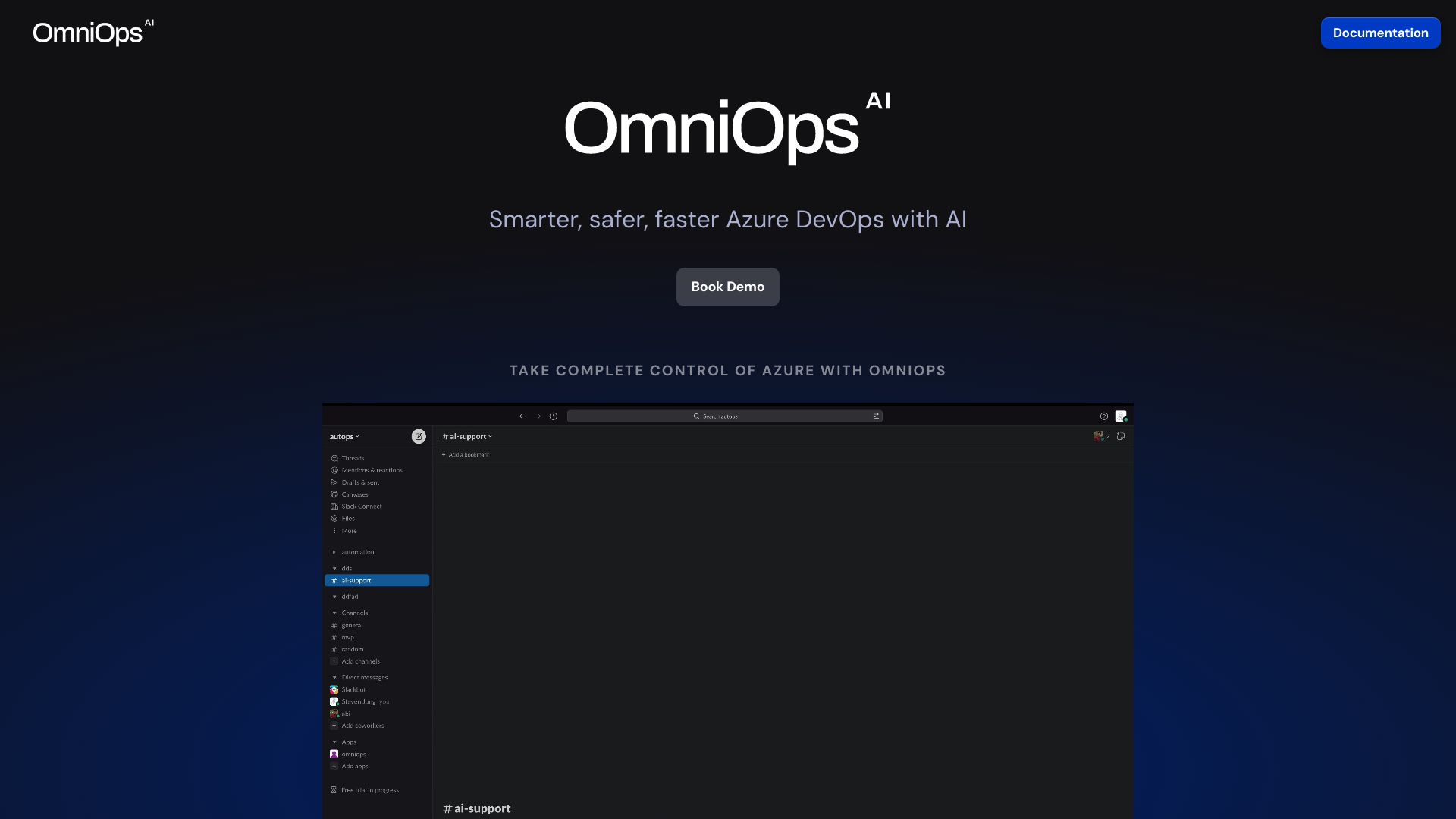
OmniOps brings a natural-language interface to a tightly defined operational job: managing Azure infrastructure. It can observe resources in real time, create and modify them, and connect with Azure and Slack. That combination could reduce the repetitive typing around common DevOps tasks, especially for teams already committed to Azure. It also creates a meaningful control question: infrastructure changes made through AI need a clear review process. The first month is free, then the listed Starter price is $19.99 per month, so test both productivity and confidence before rolling it out broadly.
Best for
DevOps engineers working primarily in Azure
Teams repeating resource observation, creation, and modification tasks
Organizations that want Azure workflows accessible through natural language and Slack
Limitations
The free period ends after the first month
AI-assisted infrastructure management still requires human oversight
It is most relevant to Azure teams, not multi-cloud operators seeking one neutral layer
Shortlist signal: Pick OmniOps when Azure operations are the bottleneck and your team can establish approval controls for AI-assisted changes.
10. AIGoCode

- Software developers sharing AI coding resources
- No free trial or free quota specified
- Starts at Check vendor pricing
- Usage signal: Usage signal not listed

Why it matters
AIGoCode is the most developer-workspace-oriented product in the ranking. It combines AI coding assistance and intelligent Q&A with access to supported agents and models through a shared API key, shared quotas, and real-time usage statistics. That makes it relevant to teams that want to manage AI development usage centrally rather than hand every developer a separate setup. The pricing deserves careful attention: listed subscriptions renew every four weeks, not monthly, and no free trial or free quota is specified. It is a practical collaboration candidate, but buyers should confirm supported models and the exact renewal economics.
Best for
Software teams sharing AI coding and Q&A access
Managers who need quota and usage visibility across developers
Projects using supported agents and models through a shared API key
Limitations
Listed subscriptions renew every four weeks rather than monthly
No free trial or free quota is specified
The experience depends on the supported agents and models available through the platform
Shortlist signal: Consider AIGoCode when centralized coding access and team usage control matter more than building your own inference layer.
What to test before choosing
A convincing demo is not enough for infrastructure. Run a small evaluation that mirrors your real workload and records both technical behavior and billing.
- 1
Test the actual request mix. For inference tools, use the modalities and model families your product will serve. Atlas Cloud's breadth and EmpirioLabs AI's endpoint variety are valuable only if the relevant models meet your quality and latency requirements.
- 2
Measure failure behavior. Send malformed requests, exceed normal concurrency, and test provider or resource failures. A unified API is useful when it makes recovery clearer, not merely when the happy path works.
- 3
Check usage visibility. Compare token, GPU-second, credit, and log reporting. Auriko's routing, AI Tools 99's runtime billing, and Athina AI's log allowance each create different monitoring needs.
- 4
Review human approval points. For OmniOps and architecture generators, decide what a person must review before a resource is changed or a design is treated as production-ready.
- 5
Validate regional and beta constraints. EmpirioLabs AI has region-dependent pricing, while ATXP and AI Architect list beta-related limitations. Confirm that the feature you need is available where and when you need it.
- 6
Calculate the whole bill. Include underlying provider costs, model usage, GPU runtime, credits, logs, and renewal timing. Auriko has no provider markup but does not remove provider charges; AIGoCode's four-week renewal language is also easy to overlook.
What to do next
Start with one workflow, not the entire AI platform. If you are still selecting models, trial Atlas Cloud or EmpirioLabs AI. If the model integration already works but quality is uncertain, add Athina AI to the evaluation loop. If multiple providers are creating cost or latency problems, test Auriko with a representative request sample.
For teams at the architecture stage, create the same system in AI Architect and review the output with an engineer. For Azure-heavy operations, use OmniOps on low-risk resource tasks before expanding its permissions. If your workload is bursty and GPU-bound, compare AI Tools 99's pay-per-second behavior with the cost of keeping your current resources active.
Keep the winning proof small: one service, one measured workload, one owner, and one rollback plan. The best infrastructure choice is the product your team can operate predictably after the first demo.
Common mistakes when choosing from a complex top list
Comparing different layers as direct substitutes. Athina AI evaluates an application; Atlas Cloud serves models; AI Architect drafts cloud designs. Their scores do not mean they solve the same problem.
Treating a free plan as a full production tier. A free log quota, free design allowance, or trial can prove the workflow without proving sustained economics.
Ignoring usage units. Tokens, GPU hours, GPU seconds, credits, logs, and four-week subscriptions all behave differently. Normalize them against your own workload.
Assuming one API means one bill. Auriko simplifies access across providers, but you still pay underlying provider costs. A unified surface does not erase downstream charges.
Skipping beta and regional checks. A listed feature may be beta or unavailable in a particular server region. Confirm those details before architecture decisions depend on them.
Giving AI write access too early. Tools that observe, create, or modify infrastructure need permissions, approval rules, and an audit habit from day one.
Using popularity as a technical verdict. Monthly visits provide market context. They do not tell you whether a specific model, region, latency target, or integration fits your application.
Buying the broadest platform by default. A focused tool such as OmniOps, Athina AI, or Auriko can be a better choice when it directly addresses the constraint blocking your team.
FAQ
It can include model inference and hosting, agent identity and payments, routing between model providers, evaluation and observability, GPU execution, cloud architecture planning, and AI-assisted infrastructure operations. The category is broad, so first identify whether you need to run, measure, design, or operate an AI system.